Code Moment | Wang Di in Conversation with KH Automotive Technologies Co., Ltd. — On Hard Tech Entrepreneurship, Investing with the Trend, and the Rise of Hard Tech

Hard-tech investing is more complex and demands a sharper market instinct — but that’s precisely what makes it compelling.
Recently, 36Kr hosted its WISE 2023 Business King Conference in Beijing, organized around six major themes: "The Next 3,650 Days," "In the Current of Industry," "The Advancing Internet of Everything," "AI and Commercial Growth," "Global Brands Eyeing China," and "Technology First, Innovating Together." The two-day event brought together business leaders from across sectors for top-tier conversations — asking questions of the present, offering answers for the future.
Peng Suping, senior writer with 36Kr's EV team, was joined by Guo Chuan, Chairman and CEO of KH Automotive Technologies, and Wang Di, Managing Director at Source Code Capital, for a roundtable on "hard tech entrepreneurship."
Hard tech startups have been a hot topic in China's venture capital world over the past two years. KH Automotive Technologies, a leading domestic supplier of air suspension systems, represents a classic case. Its transformation from a technology consultancy into a production enterprise, while blazing trails in uncharted industrial territory, has been anything but easy. Guo explained how KH seized the moment and overcame challenges:
"KH has been working in this field for over a decade, staying focused on one direction, building solid technical expertise and deep experience. When China's new energy vehicle industry took off, we were able to quickly seize the opportunity, fill in our gaps, and leap ahead."
Source Code Capital, one of KH's investors, has also been making broad bets in hard tech in recent years. Wang shared his experience and insights on hard tech investing. He emphasized the need for realistic expectations around commercialization timelines: "You can't compare it to internet or AI-enabled traditional industries. It's impossible for a new technology to achieve significant revenue scale in just three to five years."
"To complete the transformation from technology to business, a company needs strong product capability, engineering capability, and market capability — and sometimes you also need external forces to push things forward," Wang said. "Hard tech investing is more complex and demands a better feel for the market, but that's precisely what makes it appealing."
The following is a transcript of their conversation:
Peng Suping: Hard tech has been all the rage in VC circles these past two years. Domestic hard tech startups may now be facing unprecedented opportunities to engineer their technologies into real-world applications. Against this backdrop, we'd like to hear some of the unique stories from hard tech entrepreneurship. Let's start with introductions from both of you — including how you two first connected.
Guo Chuan: Hello everyone. I'm Guo Chuan, Chairman and CEO of KH Automotive Technologies. Let me briefly introduce our history. We started as Changchun Konghui in 2007, founded by Academician Guo Konghui as a technical consultancy. Thanks to some forward-looking R&D projects in electronically controlled suspension, and with the evolution of the industry, we seized the right moment to relocate to Zhejiang — specifically Huzhou, our first production base — for our second founding. This happened to coincide with the rise of China's new energy vehicle industry.
The basic logic is this: domestic automakers and domestic models historically struggled to move upmarket. With new energy vehicles, they could leave behind engines and transmissions, and over the past two to three decades, domestic automakers have indeed made progress and can now pursue premium positioning. Electronically controlled suspension, or air suspension, is one of the signature features of premium vehicles. KH had more than a decade of accumulated expertise in this area, and with our entrepreneurial launch, we happened to hit the right moment. We secured design wins from Voyah and Li Auto, and grew rapidly.
We're currently supplying nine vehicle models, including the Li Auto L9 and L7, and three Voyah models. Next year, we'll have 17 more models in mass production. Our domestic market share has reached 42%, roughly equal to the combined share of the second and third-place players.
We're honored to have connected with Source Code Capital. They led our Series B round and have provided exceptional post-investment support. As KH now builds production bases and branch offices across various locations, Source Code Capital makes introductions and accompanies us in negotiations with local governments.
Wang Di: Hello everyone, I'm Wang Di from Source Code Capital. Source Code is a venture capital firm that invests in "applications extending from technology into various fields." We cover stages from early growth through maturity. Personally, I focus on the broad industrial sector — specifically new energy vehicle components, industrial automation, and industrial software. Around 2021, as an early investor in Li Auto, we noticed changes in chassis actuators brought about by electric vehicles through our interactions with the company. This led to our initial exchanges and consultations with Mr. Guo. Perhaps because I focus more on growth-stage investments, this direction was still very early in 2021, so we maintained ongoing contact. We had several online exchanges in 2022. By that summer, the feasibility and necessity of this category had reached an inflection point. Li Auto's strong endorsement of KH gave us great confidence, and we ultimately led KH's Series B round in September 2022.
Peng Suping: KH has worked in chassis dynamic mechanics for many years. What triggered the second founding, from Changchun Konghui to Zhejiang Konghui?
Guo Chuan: Changchun Konghui was established in 2007. At that time, we weren't manufacturing or supplying electronically controlled suspension — it was purely a technical consultancy doing simulation analysis, bench testing, road testing, and chassis tuning, all for OEMs, focused on vehicle comfort and handling. By chance, we accumulated technical expertise in electronically controlled suspension, including algorithms and integration capabilities — this was around 2010, but the timing for industrial entrepreneurship wasn't yet visible.
However, around 2016, many domestic automakers — Hongqi, NIO, ZEEKR — were in discussions with foreign suppliers about putting electronically controlled suspension and air suspension on their vehicles in the coming years. We sensed that domestic opportunities in this space were beginning to emerge.
For the past two to three decades, electronically controlled suspension had only been used in premium vehicles. Domestic automakers were essentially blank in this area, and the domestic supply side was blank too. If a domestic supplier wanted to build a business in this direction, its first customer would inevitably be a domestic automaker. We're grateful for the arrival of the new energy vehicle era, which allowed domestic automakers to move upmarket and adopt electronically controlled suspension — giving startups like KH our opportunity.
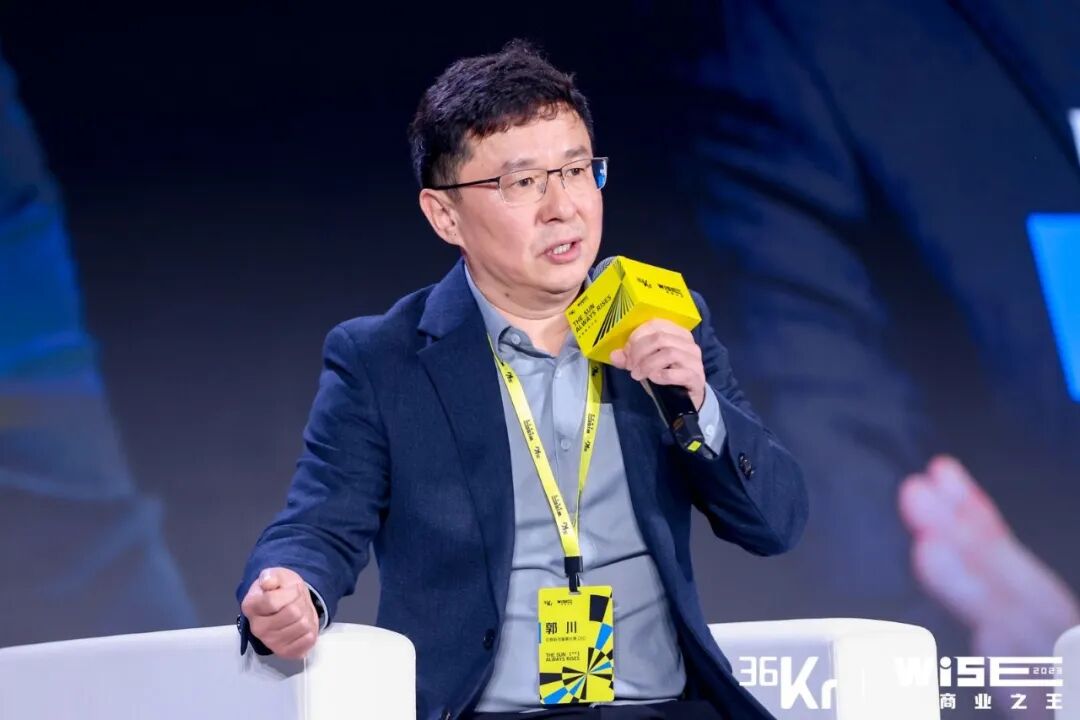
Guo Chuan, Chairman and CEO of KH Automotive Technologies
Peng Suping: Source Code has invested in many hard tech companies in recent years. How does Source Code select sectors? What makes hard tech startups different from other types of ventures?
Wang Di: That's a big question. The characteristic of hard tech is that systematic mapping is very difficult. Businesses in the industrial chain have their logic and their systems, but overall they're scattered. Among the institutions that do well here, the minimum requirement is top-down identification of where slightly larger systematic opportunities lie — combined with bottom-up broad market coverage to sense which categories are at the 0-to-1 inflection point, or the 1-to-10 inflection point. At this point in time, when we look at hard tech projects, one important question we often discuss internally is: why is this project ours?
A company deeply rooted in the industrial chain that ultimately connects with an investor must have its "cause." We've distilled this into several important dimensions: first, cognition; second, access; third, empowerment.
KH is a good example. On cognition: many auto parts investors in 2021 and 2022 were looking at chassis-related actuators — suspension, steering, braking. Everyone felt suspension was an interesting category where the overseas giants weren't active, but whether it could actually take off lacked market consensus. At that point, Li Auto was the most committed NEV maker in pushing air suspension. Their clarity on the product-definition importance of air suspension and the value logic it created for customers was very sharp. We had multiple exchanges and believed that at that moment, this was a highly amplified key factor. This is the first dimension of cognition.
The second dimension of cognition: when looking at manufacturing or hard tech projects, you need a very clear framework. We look at industrial projects through the lens of three fundamental industrial elements — materials, equipment, and process. Materials determine product performance, equipment determines production efficiency, and process determines production yield. The combination of the three determines cost. This is a basic framework.
When we looked at KH, Mr. Guo and his team had self-developed all three. On materials, they were developing their own rubber compounds. On equipment, their core automation equipment was self-developed. On process, the core processes were also developed in-house. This is how you build long-term competitiveness.
The second level is access. Not all access is equal. In other industries, sometimes a phone call is enough. In industry, being able to name five or ten customers or key industry figures who are genuinely valuable to a founder, or having important insights where you discover overlapping understanding — that's also access. Different types of access create vastly different boundaries for both investors and companies.
The third point is empowerment. The VC industry itself is evolving. When doing early and growth-stage investing, firms need to do many things alongside companies, pushing value forward. Just now, walking over with Mr. Guo, we were discussing how our post-investment colleagues basically check in every few days on where he is, to see if there are collaboration opportunities in that location. Hard tech projects actually place new demands on investment institutions. I believe every investor should have an industrial perspective or industrial pathway, with the ability to create value within the industry.
Peng Suping: From a small, refined technology supplier to a scaled mass-production parts supplier, what changes and capabilities were required for the company and for you personally through this transformation? Were there any particular difficulties, and how did you overcome them?
Guo Chuan: If we define Changchun Konghui as the first founding, then Zhejiang Konghui is the second founding. What is second founding? It's the transformation from a technology company into a production enterprise, while simultaneously blazing trails in uncharted territory — because KH is the first company to achieve OEM mass production supply of passenger vehicle air suspension systems. The combination of these two factors made our second founding extremely difficult. Fortunately, we had a clear understanding of where our weaknesses lay.
Technology companies excel at R&D and design development, but may be weaker in production processes, quality control, supply chain management, and so on. During the second founding, we indeed encountered many pitfalls, setbacks, and sleepless nights — funding shortages, discovering organizational gaps just before mass production, talent attrition, insufficient understanding of critical processes, quality issues.
How did we overcome these? Nothing more than cutting paths through mountains and building bridges across rivers — knowing where your weaknesses are and working hard to address them. For organizational gaps, we strengthened our structure. For process deficiencies, KH took a controlling stake in an excellent production process equipment company; we now work closely together, sending new processes there for development. For funding, whether through bank loans or finding excellent investment institutions like Source Code Capital, we actively solved the problem. One decision I got right was resolving to move from Northeast China to the Yangtze River Delta region, to better address talent, funding, and supply chain challenges.
Peng Suping: In the transition from a technology company to a small and medium-sized supplier, how did funding requirements change?
Guo Chuan: When we started Zhejiang Konghui's second founding, we thought 30 to 50 million RMB would be sufficient to do well and achieve positive cash flow. As we went deeper, we realized that wasn't the case. Because we positioned ourselves as a system-level supplier, involving many components, we needed to move upstream and extend horizontally, making fixed asset investments. When market demand for your product is surging and your growth is rapidly accelerating, you're probably short of funds — because the money coming back may not cover the next stage of investment. We've now completed our Series C and hope to have a Series D before IPO next year, though our cash flow situation is improving.
Peng Suping: The hard tech space doesn't lack companies with strong technical capabilities. Mr. Wang, how do you judge whether a company's technology has reached a stage where it can be industrialized?
Wang Di: Technology has its own iteration cycles. I don't necessarily look at the technology itself. Actually, between technology and business, there's a significant organizational challenge. I break it down into three areas: product capability, engineering capability, and market capability.
First, there's an uncrossable chasm from technology to product. Most hard tech projects don't produce consumer-facing products; their products are B2B, existing within fixed links of the industrial chain. Between technology and product, one driver is customer needs, the other is insight into scenarios. What startups do is marginal improvement — based on deep customer understanding, abstracting where technology can iterate. The move from abstraction to product capability is crucial.
Second is engineering capability. KH's revenue this year may be six to seven times last year's, with overall capacity perhaps increasing tenfold. Capacity ramp-up in manufacturing is extremely difficult, especially in IDM mode. Ramping up follows its own patterns, and with new products, there are many difficulties along the way. So engineering capability matters greatly.
Third is market capability. Selling to B2B customers follows completely different logic than selling to consumers. B2B customers only care about tangible results, and as large organizations, selling to them is selling comprehensive solutions, requiring corresponding market talent. When looking at early-stage startups, especially technology-driven ones, this is often underappreciated. Solution sales is a significant discipline that requires truly capable people to execute.
Additionally, you need correct expectations for hard tech commercialization cycles. Using the internet or AI to transform traditional industries can sometimes happen quickly, but hard tech is different — it iterates within the industry. I once saw data showing that from founding to IPO, hard tech companies average nearly 13 years. My first reaction wasn't that 13 years is long — I actually thought it seemed short. For industry veterans, like KH's second founding, if you count Mr. Guo's team from their first founding, it's definitely approaching 20 years.
Second, whether there's external change driving this forward. Some fields have import substitution pushed from the top down; some are incremental markets; some have new scenarios emerging. Watching a technology become a business, and that business become a successful company, remains a complex, market-intuition-intensive endeavor. That's also the appeal of hard tech investing.
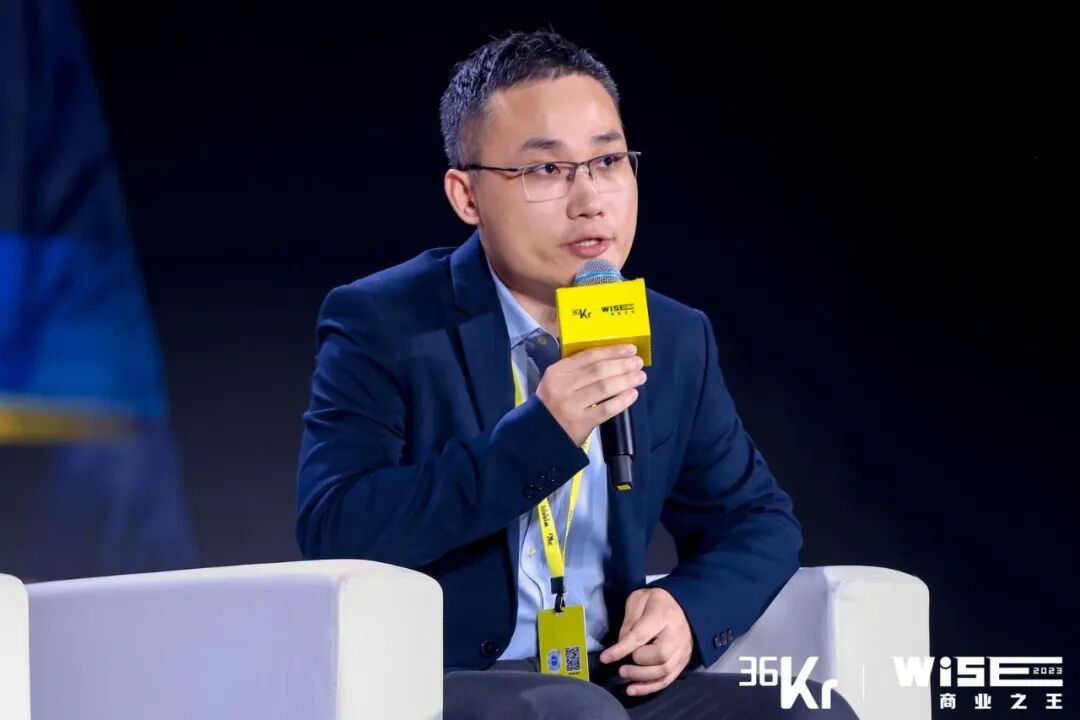
Wang Di, Managing Director at Source Code Capital
Peng Suping: Mr. Wang mentioned the long cycles, and I can see Mr. Guo deeply relates. As you've transformed technology into market applications in the industry, how do you judge shifts in the broader trend?
Guo Chuan: The broader trend — following the news and current affairs gives you a basic feel. What I'd emphasize is that entrepreneurship does require luck, but you need the necessary preconditions plus the right timing to succeed. The precondition is persistence, staying on the right path. Take KH as an example: the arrival of the new energy vehicle era was our timing. We seized this opportunity because of our accumulated years of work — we never gave up, we persisted, and we formed the right positioning.
Peng Suping: After completing its role transformation, KH has also been tirelessly deploying resources in technology, including upstream material self-production of rubber bellows. In technology deployment, what boundaries or principles do you follow?
Guo Chuan: KH's current positioning remains a specialized supplier in the electronically controlled suspension niche. Our strategy basically involves grasping both mechanical and electrical aspects, always positioning ourselves as a system-level supplier.
Peng Suping: From the perspective of hard tech entrepreneurship, KH is now on a fairly good trajectory, with solid results in technology, product, and market. From your perspective, what further support is needed to reach even greater heights?
Guo Chuan: Drawing on KH's case, I'll mention two aspects. First, KH will increase its internationalization efforts next year. A company like ours must go global, and we hope to receive support and guidance from local governments or higher-level authorities. For us, this is also uncharted territory — our team lacks experience in this area, and we hope to receive support.
Second, I want to address the healthy development of the industrial ecosystem. In China, the auto industry has operated for two to three decades as a market with powerful buyers. Payment terms, for instance — you might deliver and wait months before receiving a six-month acceptance bill. Settlement conditions — when after delivery you can actually settle. Li Auto's settlement terms are excellent, with very high payment quality. KH's healthy development is closely tied to Li Auto's support in this regard. But some other buyers use three-warehouse outbound settlement, or vehicle-line settlement, or even post-production-line settlement, adding many intermediate steps. We need more frequent inventory checks, increasing workload — these are very real issues.
The state recently spoke about supporting private enterprises, with detailed provisions on clearing things like the triangular debt from years past. I believe the state has recognized this issue and is increasingly supporting the private economy. For the healthy development of this industry, everyone should speak up, because individual voices are weak. It can't always be powerful buyers and weak suppliers. This requires corresponding support from national policy and law.
Wang Di: Following Mr. Guo's point, this situation is improving. I've been looking at manufacturing for about eleven or twelve years. Ten years ago, for example, it was extremely difficult for domestic parts companies to enter Chinese customers' supply chains. China's own industrial chain sometimes performed quite well but had no opportunity — this was determined by decades of industrial structure and development stage. Much has changed. In many sectors, from scientific instruments to precision equipment, from domestic products to components, the overall logic of moving upmarket is quite clear. In this process, the entire industrial ecosystem is genuinely changing. We believe more and more OEMs, as their own revenue and profits improve, will increasingly resemble Li Auto in offering better commercial terms to supply chain companies. Entrepreneurs should have more confidence in China's end market.
Peng Suping: The rise of China's new energy industry has also lifted suppliers like KH Automotive Technologies. We believe that as the industry further develops, the relationship between upstream and downstream in the supply chain will become more balanced and healthy. Thank you both for sharing. We'll conclude this roundtable here. Thank you all for listening.