Code Moment | GalaxySpace Launches Four Satellites in One Rocket, Forming World's First Wheel-Formation Satellite Constellation

The satellite has successfully entered its designated orbit, and the launch mission has been completed with complete success.


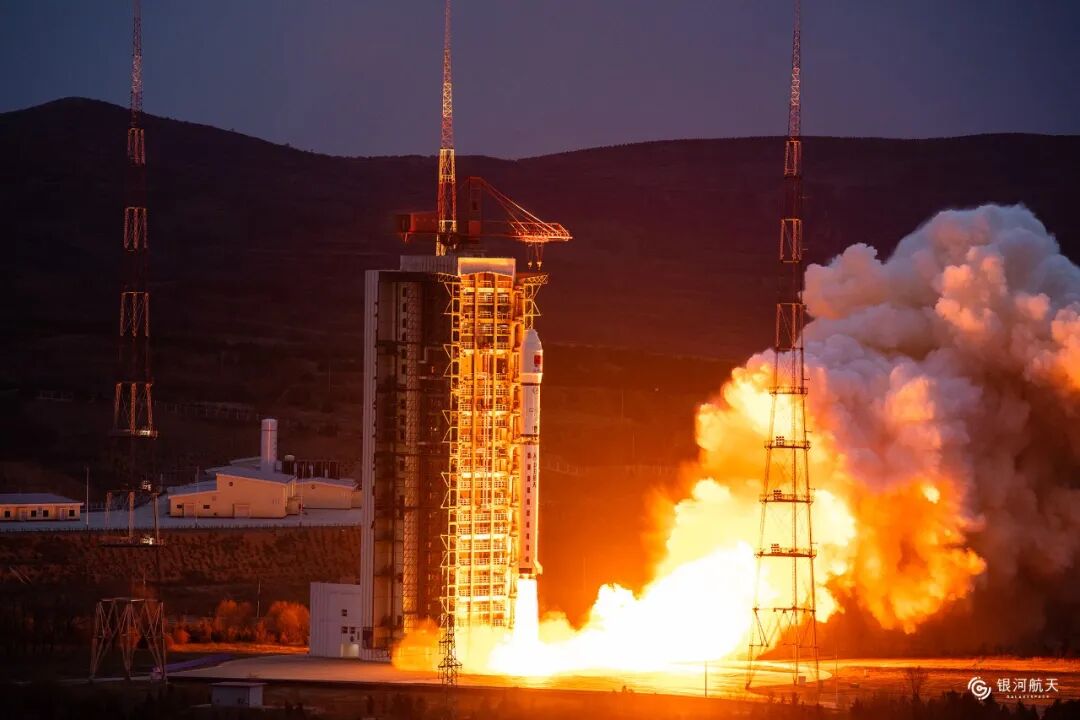
At 6:50 PM on March 30, 2023, China successfully launched four Interferometric Synthetic Aperture Radar (InSAR) satellites — the Hongtu-1 01 constellation — from the Taiyuan Satellite Launch Center using a Long March 2D carrier rocket in a "one rocket, four satellites" configuration. The satellites entered their planned orbits and the mission was completed successfully.
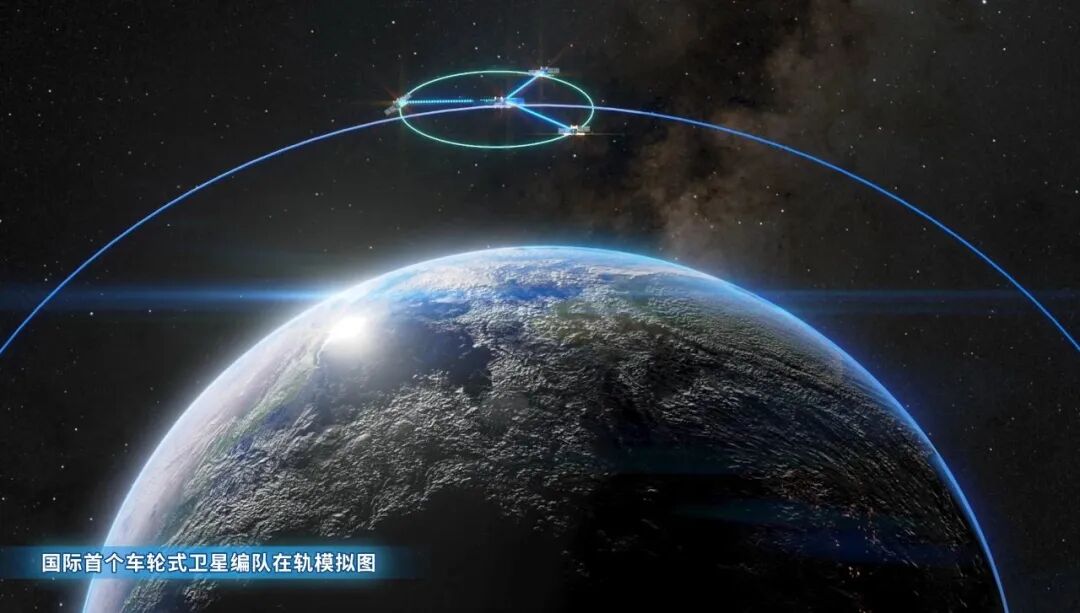
The four-satellite constellation consists of one primary satellite and three auxiliary satellites. It is the world's first four-satellite formation-flying X-band InSAR Earth imaging system, and the first wheel-formation satellite constellation in orbit. The primary satellite weighs approximately 320 kg, with each auxiliary satellite weighing approximately 270 kg.
As the world's first wheel-formation satellite constellation, the four satellites fly through space like the spokes of a wheel. The primary satellite sits at the center, with three auxiliary satellites evenly distributed along the rim. Using inter-satellite communication links and phase synchronization links, and with the auxiliary satellites positioned just a few hundred meters from the primary satellite, precise orbital control ensures the stability and spatial safety of the formation. Compared with traditional interferometric satellite systems, the wheel formation offers advantages of relatively stable configuration, multiple interferometric baselines, and high mapping efficiency.
The constellation is capable of 1:50,000 scale mapping of non-polar regions worldwide, enabling rapid and efficient high-precision land mapping across the globe. It offers millimeter-level deformation monitoring, providing data support for the survey and prevention of ground subsidence, collapse, landslides, and other disasters — a powerful tool for early identification of major geological hazards in complex terrain. It also features sub-meter high-resolution wide-swath imaging, enabling high-quality all-weather, day-and-night Earth observation. Overall, the technology reaches an internationally leading level.
For the small-batch production of civil SAR satellites, GalaxySpace dramatically improved development efficiency through digital simulation, automated testing, and process optimization during satellite design, integration, and launch site testing — reducing development time by more than 60% compared with conventional approaches.
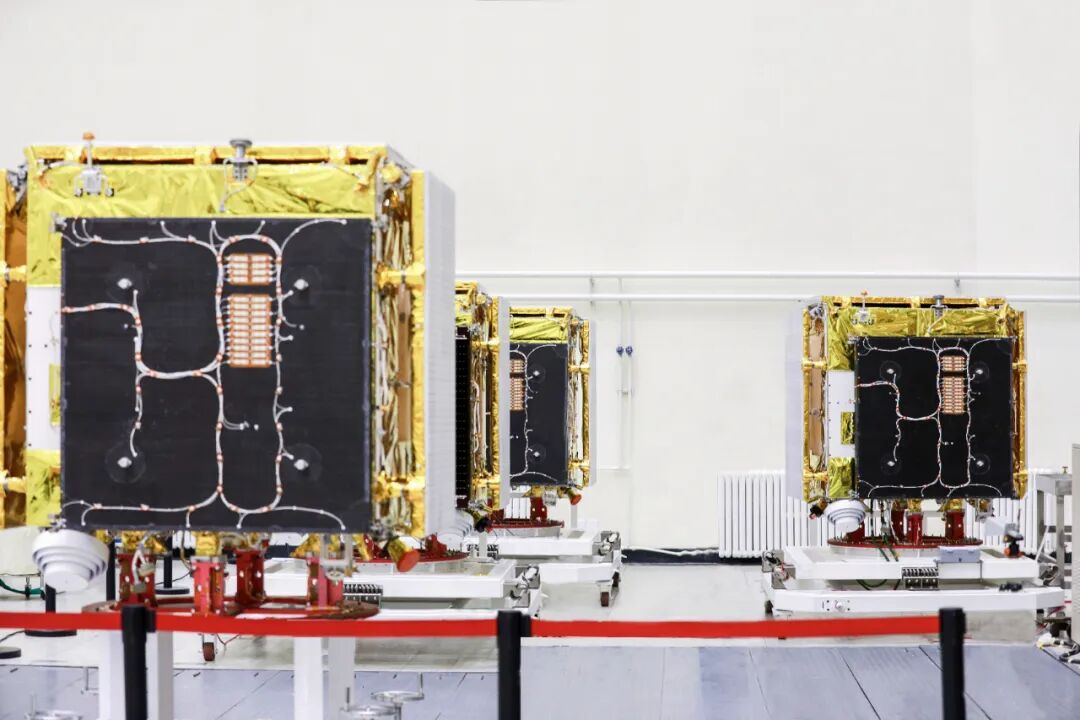
GalaxySpace's four InSAR satellites. Through the batch production of these four SAR satellites, GalaxySpace validated its capabilities in vertical supply chain integration. All components and subsystems involved in the satellites are independently controlled, and by continuously integrating industrial manufacturing systems, the company is building a new commercial aerospace industry ecosystem and accelerating space infrastructure development. Going forward, GalaxySpace will accelerate technological innovation and low-cost satellite mass production. As more satellite types are launched, it will drive the construction of intelligent space-based information networks integrating communications, computing, and sensing — steadily advancing toward an era of high-speed, ubiquitous, integrated space-ground networks.