Code Moment | Js.Design Announces Tens of Millions of Dollars in Series B+ Funding, Existing Shareholder Source Code Capital Follows On

Co-defining China's design tools with Chinese designers
#MaKe Key Updates from Source Code Capital and MaHui Members

Chinese cloud-based UI design tool Js.Design recently completed a B+ round of financing worth tens of millions of dollars. The round was led by Unicorn Capital Partners, with continued follow-on investment from existing shareholders Source Code Capital, Coatue Management, and SIG Asia Investments. Cygnus Equity served as the exclusive financial advisor. Source Code Capital was a co-lead investor in Js.Design's A+ round and has continued to support its A++ and B rounds.

Js.Design
According to sources, Js.Design has been making bold moves since completing this counter-cyclical financing, achieving notable results in product capabilities, user growth, and industry influence. The company has completed multiple upgrades to product features, performance, and user experience, and recently opened its plugin API to global users — allowing all developers, design teams, and enterprises to freely customize plugins based on their own needs, significantly enhancing practicality and extensibility. Alongside these product improvements, Js.Design has also achieved million-level user growth and jointly launched the "Design Open Source Initiative" with UI China, contributing to the development of China's design open-source ecosystem and creating value for the industry.
Filling the Gap in Domestic Professional Design Software,
Real-Time Online Collaboration Boosts User Efficiency
In recent years, as market and business environments have shifted, domestic enterprises have placed unprecedented emphasis on "efficiency," broadly stimulating demand for productivity tools. However, constrained by technical barriers and engineering complexity, there remains substantial room for domestic software to fill gaps in the professional-grade productivity tools market.
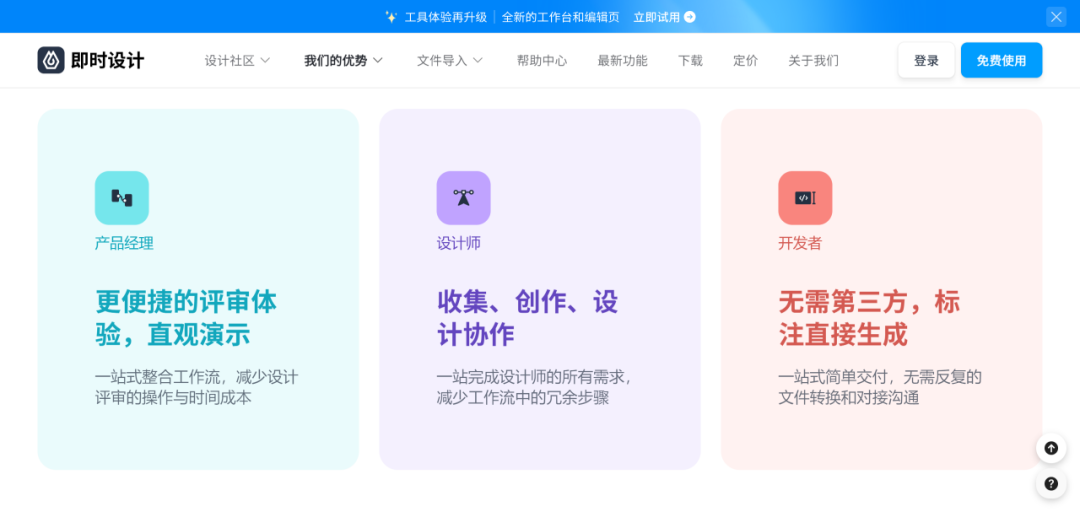 Cloud-based real-time collaboration for greater efficiency
In this environment, Js.Design launched in September 2020 as China's first professional-grade cloud-based UI design software. Users quickly discovered that Js.Design was not merely a UI design tool, but an online collaboration platform for product and R&D teams. To date, Js.Design has developed comprehensive Sketch foundational features alongside advanced Figma capabilities, supporting multi-user real-time online editing with broadcast-level synchronization. Additionally, its product prototype interaction wiring, built-in developer annotation and slicing, and real-time comment feedback features enable one-stop fulfillment of product and R&D team needs, boosting remote collaboration efficiency.
In China, local software like Adobe's suite and Sketch remain mainstream tools for designers. The cloud-based, collaborative wave that Figma sparked overseas has created significant opportunities for Js.Design's domestic growth. The vast market space and first-mover advantage in filling the gap for domestic cloud-based professional design software have become important factors enabling Js.Design to complete this counter-cyclical financing.
Driving Product Engine Through Daily Iterations,
Building a Co-Creation Atmosphere with Users
In previous coverage, the Js.Design founding team stated: "Product capability improvement is core — efficient feature iteration is what drives rapid user growth." Their performance over the past year appears to validate this.
In March 2022, Js.Design announced it had surpassed one million users. In the comment section of that announcement, many users' messages centered on "witnessing Js.Design's growth." The impression of "a product that gets better to use every day" has become nearly universal among Js.Design users.
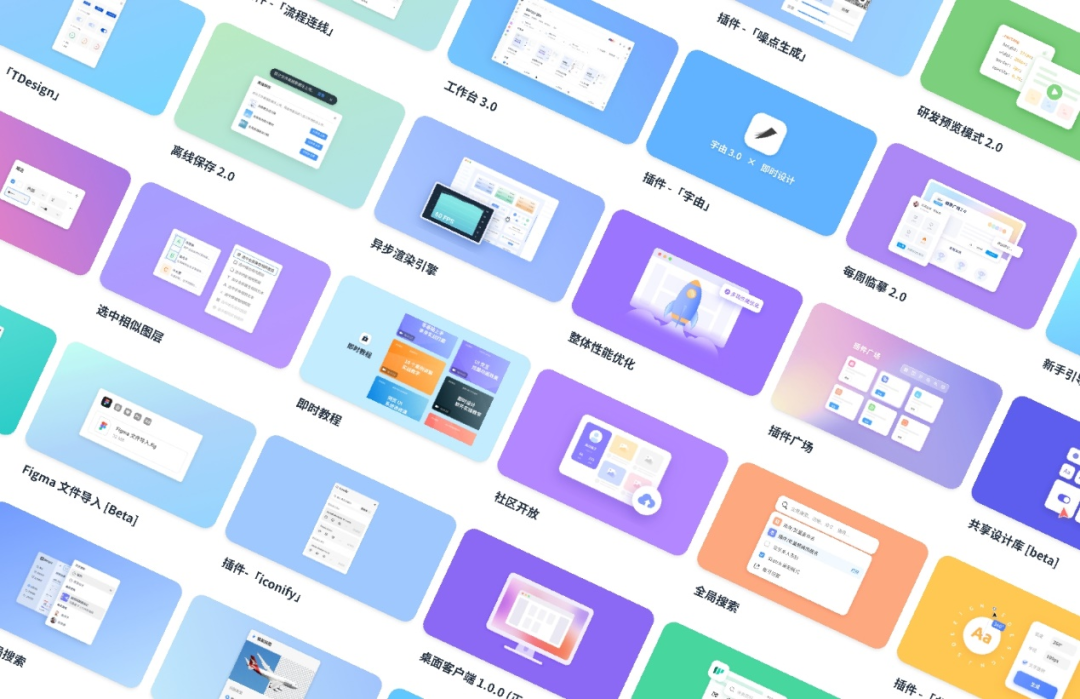
Rapid product feature upgrades
Take Js.Design's recently launched Workspace 3.0 as an example. After detecting users' growing file management needs, the Js.Design team comprehensively optimized file lists, folder covers, and team directories to help users immediately find what they need — earning widespread user praise while demonstrating that efficiency gains hide in the details. This consistent, thoughtful attention to users has built a connection between Js.Design and its users that transcends the conventional "user" and "productivity tool" relationship.
"A large portion of our user growth comes from spontaneous promotion by existing users," the Js.Design founding team revealed, attributing this to their persistent product-driven approach. "After all, we're building a product that users interact with for 4-5 hours every day. You can't fake whether something works well or not. So we've maintained a daily iteration rhythm to keep the product continuously improving." The founding team also noted, "Our users are incredibly enthusiastic about submitting feature requests, pushing us on timelines, and giving optimization feedback every day. This culture of co-creating products with users has injected tremendous energy into Js.Design's product capability improvement and user growth, and gives us strong confidence in sustainable long-term development."
On the commercialization front, Js.Design has also conducted in-depth cooperation and exploration with many well-known domestic enterprises, with the phased achievements from this period expected to be distilled into more diverse solutions to provide better service to enterprise clients in the future.
"Js.Design from China"
In recent years, incidents such as Matlab banning Chinese universities and Figma banning DJI have brought the urgency of domesticization and autonomy in professional-grade software to the forefront. As the only product in the domestic market that had already launched Figma file import functionality before the DJI ban incident, Js.Design has attracted considerable attention and expectation — will Js.Design carry the banner of autonomy for domestic design software and become the "Chinese Figma"? The Js.Design team has its own perspective on this.
"On one hand, we will move at maximum speed to catch up to Figma in overall product experience — encompassing product capabilities, plugins, community, and more. To achieve this goal, a smooth and efficient financing rhythm is essential, as it allows us to stay focused on improving product capabilities," the Js.Design founding team stated. "On the other hand, we will continue innovating and developing features based on domestic market needs. Designers and product/R&D teams in China have different working habits, cultures, and business processes compared to those abroad. We believe that what domestic users truly need isn't a Chinese version of Figma, but an autonomous product with overall experience on par with Figma. We hope to achieve this goal as soon as possible — first becoming a widely recognized 'Js.Design from China,' and then competing with top overseas products in the future."
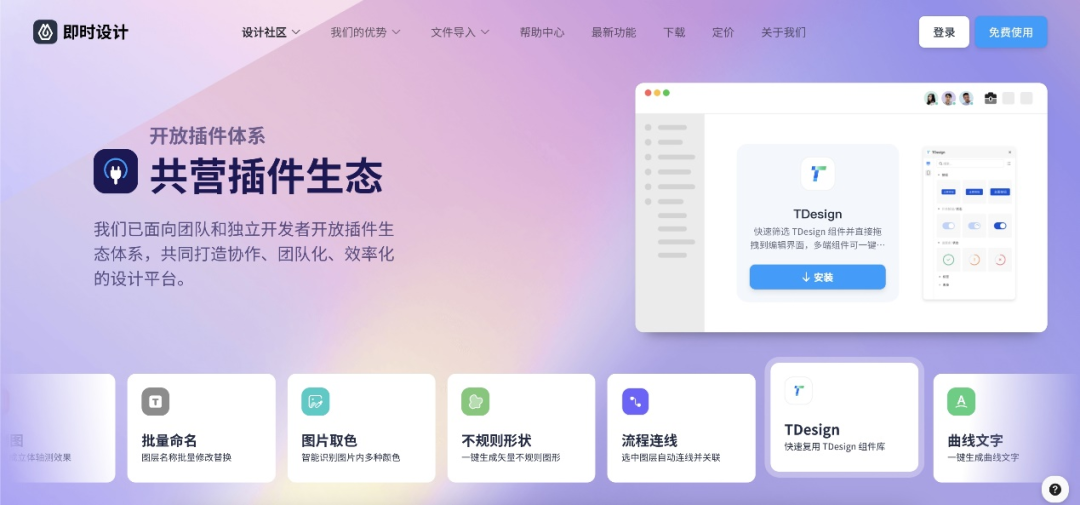
Ongoing plugin ecosystem development
According to sources, Js.Design has now officially opened its plugin API to global users, allowing all developers, design teams, and enterprises to fully leverage the API's extensibility to freely customize plugins — not only for internal team use, but also for release to all Js.Design users. Meanwhile, dozens of plugins have already launched in Js.Design's plugin community. This open ecosystem will qualitatively elevate Js.Design's tool attributes, with its own rapid iterations combined with future massive third-party plugins bringing unimaginable new vitality to this design tool through true mass co-creation.
Currently, Js.Design's team has grown to nearly 100 people, maintaining a product and R&D ratio above 75%. With capital favor and user recognition, this team — which has consistently focused resources and energy on "making the product better to use every day" — continues to grow and strengthen. According to the Js.Design founding team, they expect to double team size within this year and hope more like-minded partners will join to collectively realize the vision of "defining China's design tools together with Chinese designers."


MaKe | Metaverse UGC Platform "BUD" Completes $36.8 Million Series B Financing, Existing Shareholder Source Code Capital Follows On

MaKe | Sirius Pharma Announces 150 Million Yuan Series A Financing, Source Code Capital Participates

MaKe | "inCreate" Announces $5.4 Million Angel Round Financing, Source Code Capital Participates

MaKe | Cataya Bio Announces Series A Financing Exceeding 100 Million Yuan, Source Code Capital Leads

MaKe | Keyi Tech Announces New Round of Financing
Click "Read Original" for more Source Code Capital portfolio companies