Code Moment | Unitree Raises Nearly 1 Billion RMB to Advance Technology for Global Progress


According to reliable sources, intelligent robotics company Hangzhou Unitree Technology Co., Ltd. (hereinafter referred to as "Unitree"), completed its Series B2 funding round in early 2024 before the Lunar New Year, raising nearly RMB 1 billion. Investors in this round include Meituan, Jinshi Investment, and Source Code Capital, with existing shareholders Shenzhen Capital Group, China Internet Investment Fund, Rongyi Capital, Dunhong Capital, and Midas Stone Capital following on. The company stated that the funds will be used primarily for product R&D, business expansion, and team building.
This article is from "Unitree" (WeChat ID: gh_94d203cdfd40)
Over the past year, robotics and generative AI (GPT, Sora) have been the biggest global hotspots.
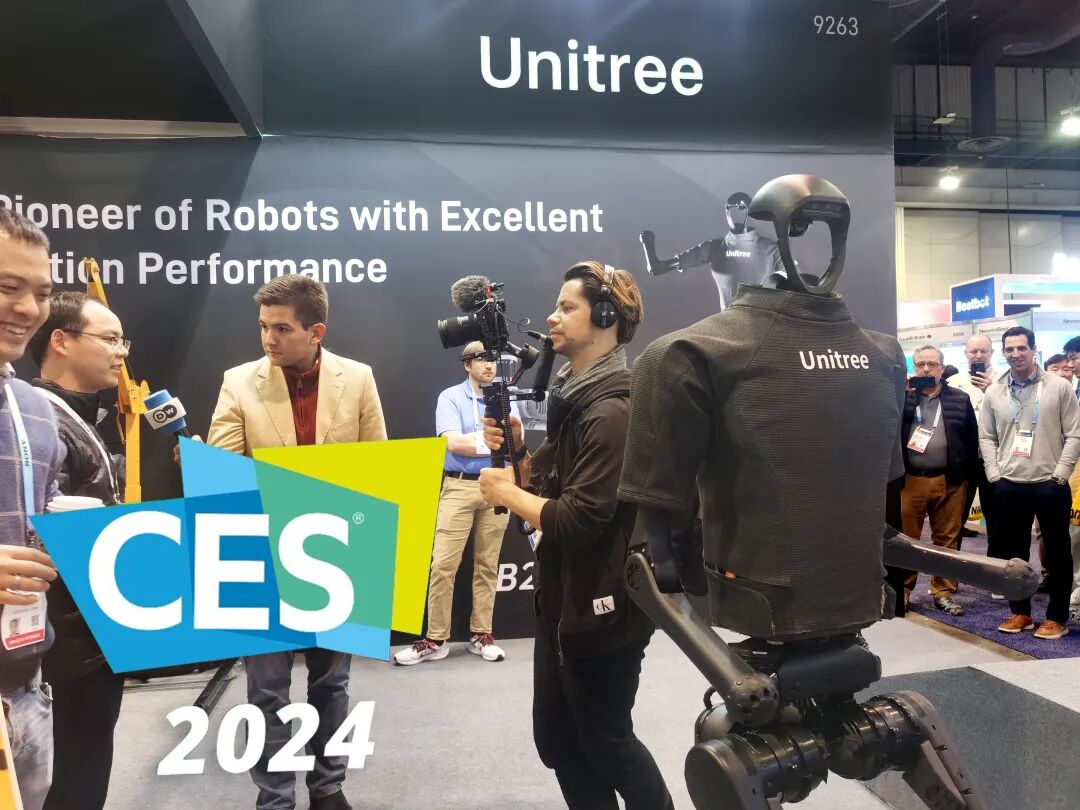
Among these, general-purpose humanoid robots, as the best vehicle for general AI, have also been in the spotlight throughout the past year. At the end of 2023, the renowned robotics website The Robot Report compiled its annual list of nine major topics in the North American robotics market, with more than half involving humanoid robots — and Unitree, as the only Chinese company, made the list. Chen Runze of Source Code Capital noted that robotics and automation represent a critical endowment for China's technological innovation. In recent years, driven by advances in AI, robots have made varying degrees of progress in perception and understanding, motion control, autonomous navigation, and manipulation capabilities — creating possibilities for deeper market penetration. Through long-term industry tracking, we have observed Unitree's sustained and solid efforts in the legged robotics space, driving the commercialization and scaled mass production of new-form-factor robots to achieve a leading global position, while continuously breaking through on the general-purpose robotics technology stack. With a sound commercialization strategy, strong R&D capabilities, and an ambitious team vision, we believe Unitree has the potential to become a world-class robotics leader. At CES 2024 in Las Vegas in January — the "Spring Festival Gala of tech" — Unitree's H1 drew particular attention as the only humanoid robot capable of running autonomously on-site.
Growth: Accumulation Before Breakthrough
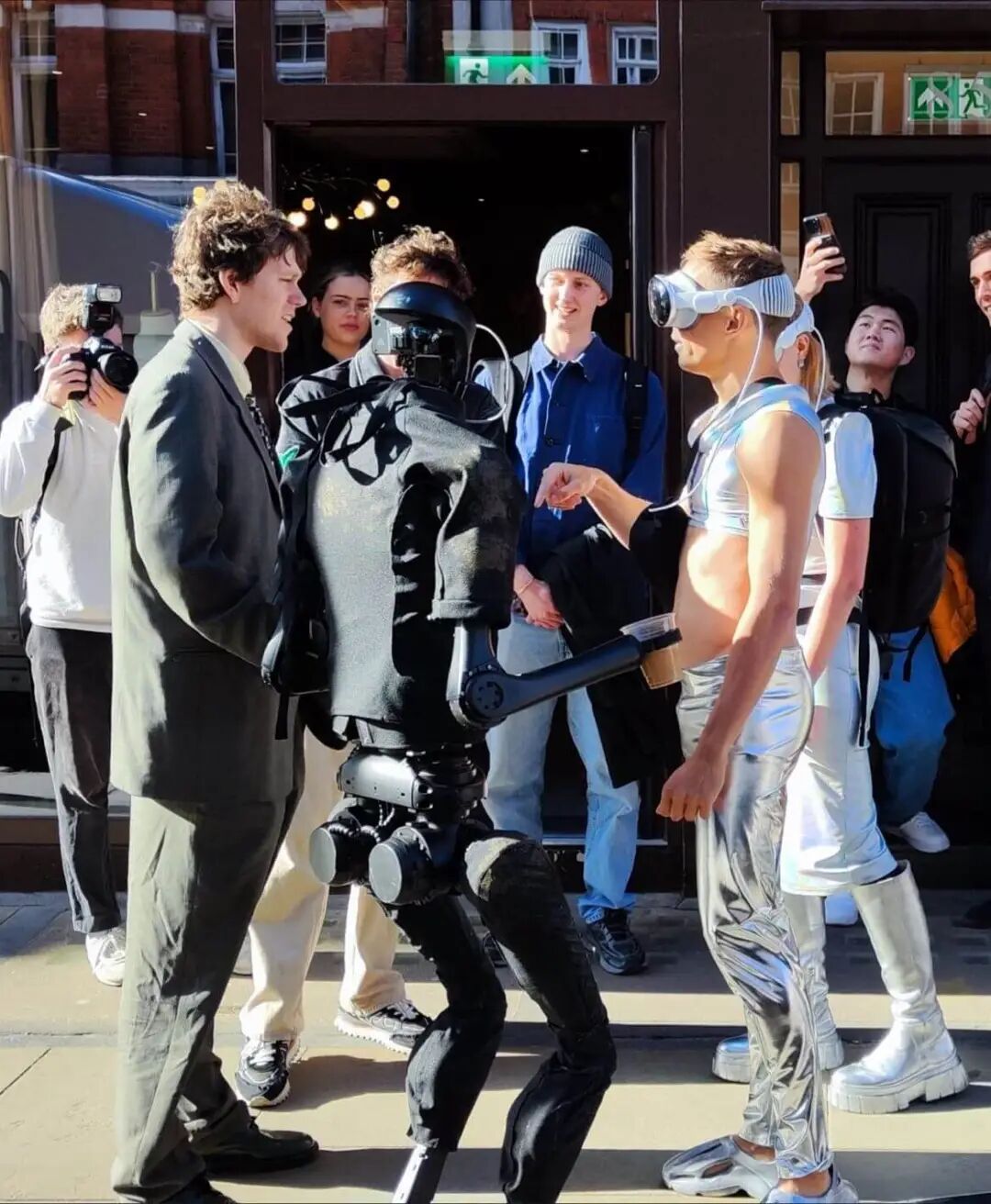
The much-watched general-purpose humanoid robot H1 (with optional dexterous hands) was actually developed by Unitree in just the first half of 2023, with small-batch production and delivery achieved in the second half of that year. Currently, H1 is rapidly iterating through AI-driven programming, improving by the day. In just six months, it has undergone several major version upgrades and already reached world-class levels among comparable products.
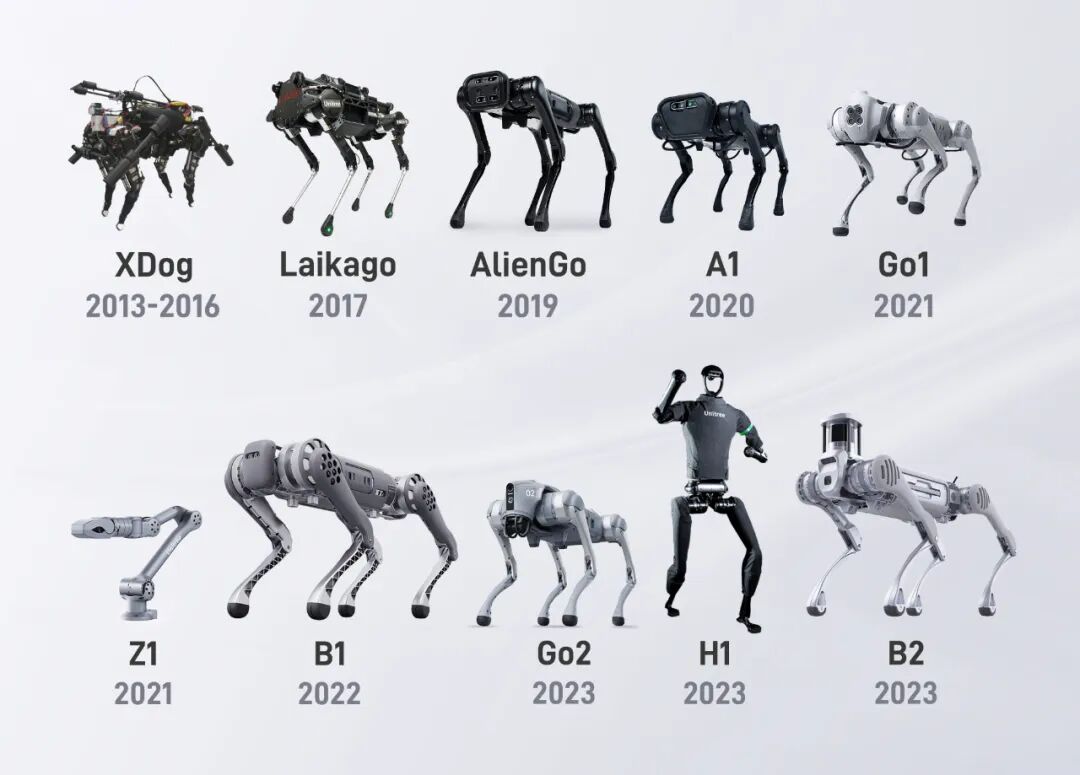
Many must be curious: how does Unitree achieve such rapid R&D and evolution? The answer is actually simple, perhaps even somewhat remarkable — accumulation before breakthrough: Unitree founder Xingxing Wang completed his first robotics project, a bipedal humanoid robot, entirely on his own in 2009 during his freshman winter break. Then, during his master's studies from 2013 to 2015, he once again worked alone to develop the XDog, a low-cost, high-performance, purely electric quadruped robot — from the underlying motor driver boards and overall mechanical structure to the complete motion control algorithms. It reached top-tier levels in the global academic robotics community at the time, pioneering the global low-cost, high-performance legged robotics technical approach. To this day, most mainstream quadruped and bipedal robots worldwide use similar solutions.
After graduating in 2016, Xingxing Wang founded Unitree and officially embarked on his entrepreneurial journey, establishing the company's vision of "using technology to drive world progress."
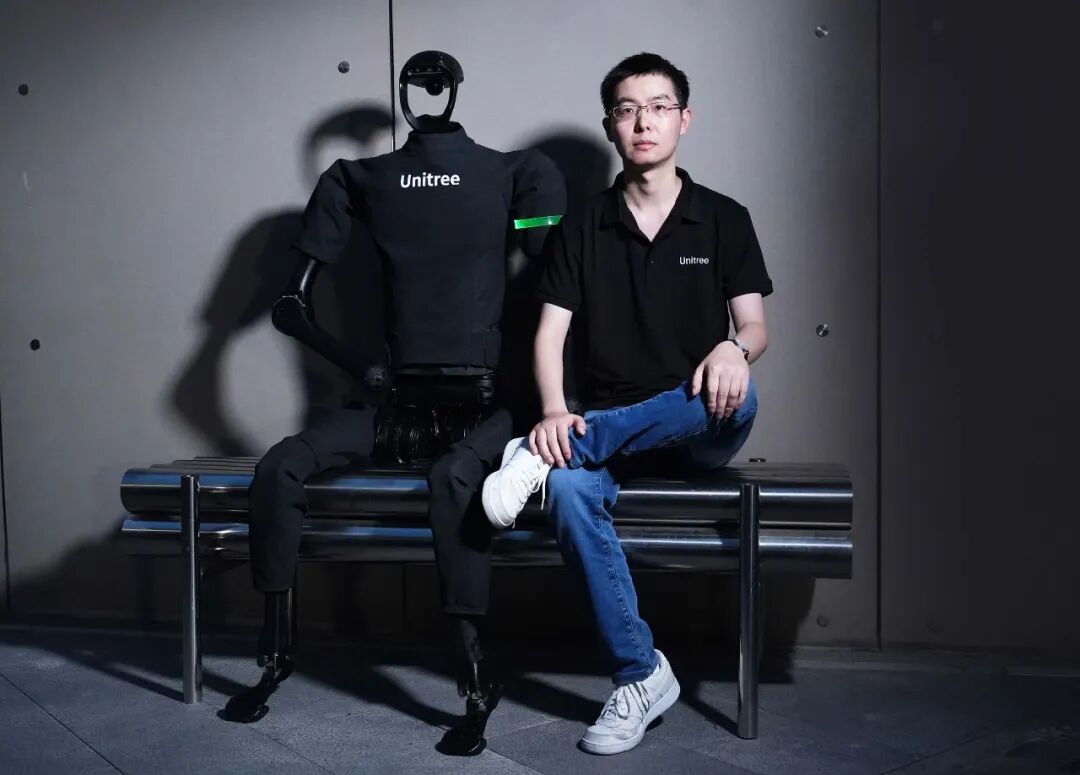
After more than seven years of rapid development, Unitree has gradually grown from a one-person, three-person team to a company of several hundred people. Through the collective efforts of the entire team, Unitree has achieved a series of important milestones in the global high-performance quadruped robotics space: earliest to propose the technical approach, earliest to commercialize it, and for years maintaining the leading position globally in both shipment volume and sales, accounting for at least 60% of global shipments. These achievements have brought Unitree extensive global attention and recognition. According to industry insiders, Unitree has laid a solid foundation in robotics over the past few years: self-developed high energy density joint motors, reducers, 3D LiDAR, and other core robot components; in addition to self-developed perception and motion control algorithms for traditional robotics, it is also developing and refining AI world models for robotics. This is why H1 has become the most cost-effective humanoid robot in the world. Many have stated frankly: "Over the past few years, Unitree has provided extremely cost-effective robots globally, and together with robotics researchers worldwide, has significantly advanced robotics AI progress. It is no exaggeration to say that the motion AI used in the vast majority of humanoid robots today has largely been migrated from quadruped robots — otherwise, global humanoid robot progress would not have been so rapid."
Results: Continuous Breakthroughs
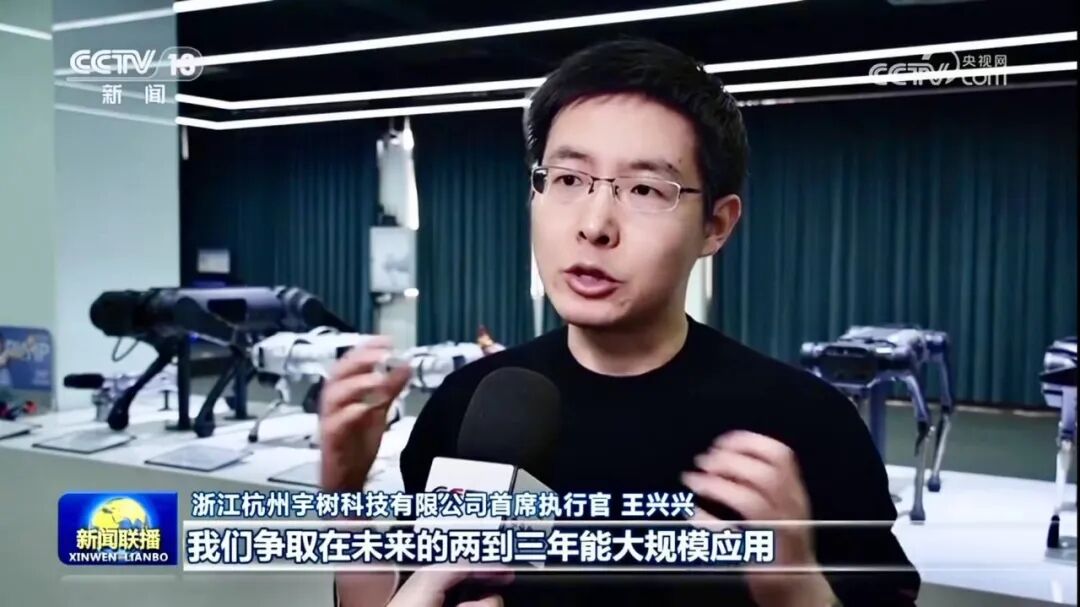
In January 2024, on CCTV's Xinwen Lianbo (Evening News), Xingxing Wang was interviewed as a representative of key enterprises for an in-depth segment on "accelerating release of growth potential in China's manufacturing sector."
Many may remember the Hangzhou Asian Games several months ago, where the internet-famous robot dogs that collected discuses and transported javelins were Unitree's, affectionately nicknamed "attention grabbers" by people across China.
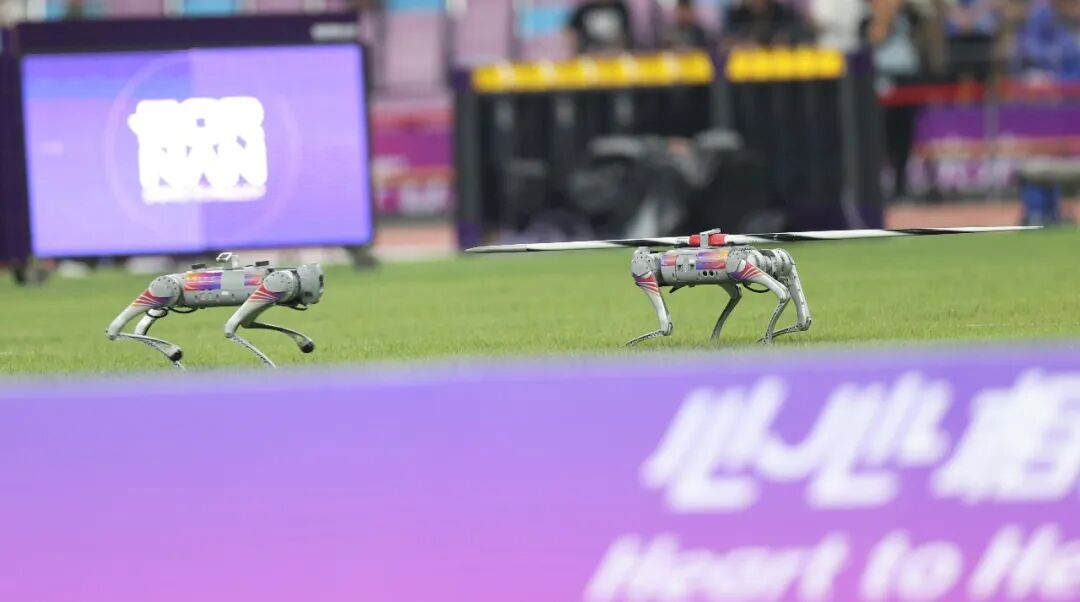
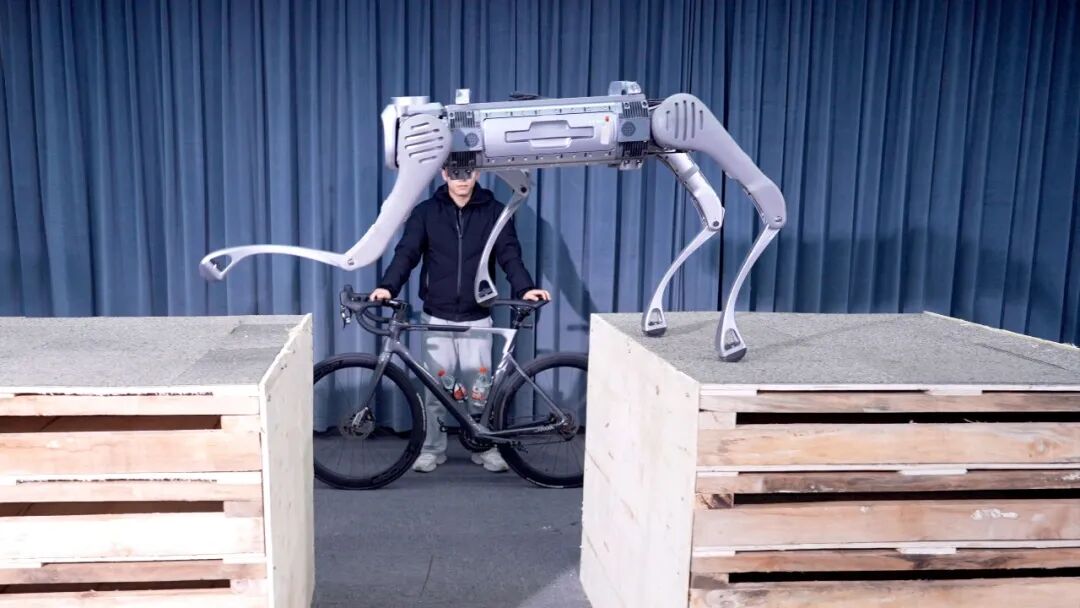
In recent years, Unitree has made frequent appearances on major domestic and international stages: the 2021 Lunar New Year CCTV Gala, the 2022 Winter Olympics opening ceremony, the 2023 Super Bowl pre-game show (America's "Spring Festival Gala"), the 2023 Hangzhou Asian Games and Asian Para Games, and more — repeatedly drawing widespread social attention. Industry insiders know that since 2017, Unitree has consistently deepened its industry applications, becoming a pioneer in落地 applications such as power line inspection and fire rescue across China. Their industry-focused quadruped robot B2 features outstanding load capacity and extreme stability. It is currently deployed in dozens of projects, including a State Energy Group power plant inspection robot dog project, a 220kV substation inspection robot dog project for a certain power grid, a 500kV ultra-high voltage substation inspection robot dog project, and a fire emergency robot dog project for a certain provincial fire rescue corps — bringing more efficient and safer solutions to various industries.
According to official data, Unitree has filed over 180 patent applications domestically and internationally, with over 150 patents granted. It has been recognized as a National High-Tech Enterprise, a national-level "Little Giant" specialized and sophisticated enterprise, a Gazelle enterprise, a First Set (Set) Equipment certified entity, a Zhejiang Provincial High-Tech Enterprise Research and Development Center, a Zhejiang Provincial Specialized and Sophisticated SME, and more. It is understood that Unitree is the first and currently the only quadruped robotics company in China to receive national-level "Little Giant" specialized and sophisticated enterprise status.

Goal: A New Industrial Revolution
Generative AI is incredibly hot, but still distant from ordinary people's daily lives. Looking back over the past year, one can see that AIGC has barely changed ordinary people's production and daily lives. But robotics AI is different — once breakthroughs in large-model robotics AI become clearly apparent (perhaps tomorrow), a new industrial revolution will occur, completely upending every person's life as it exists today.
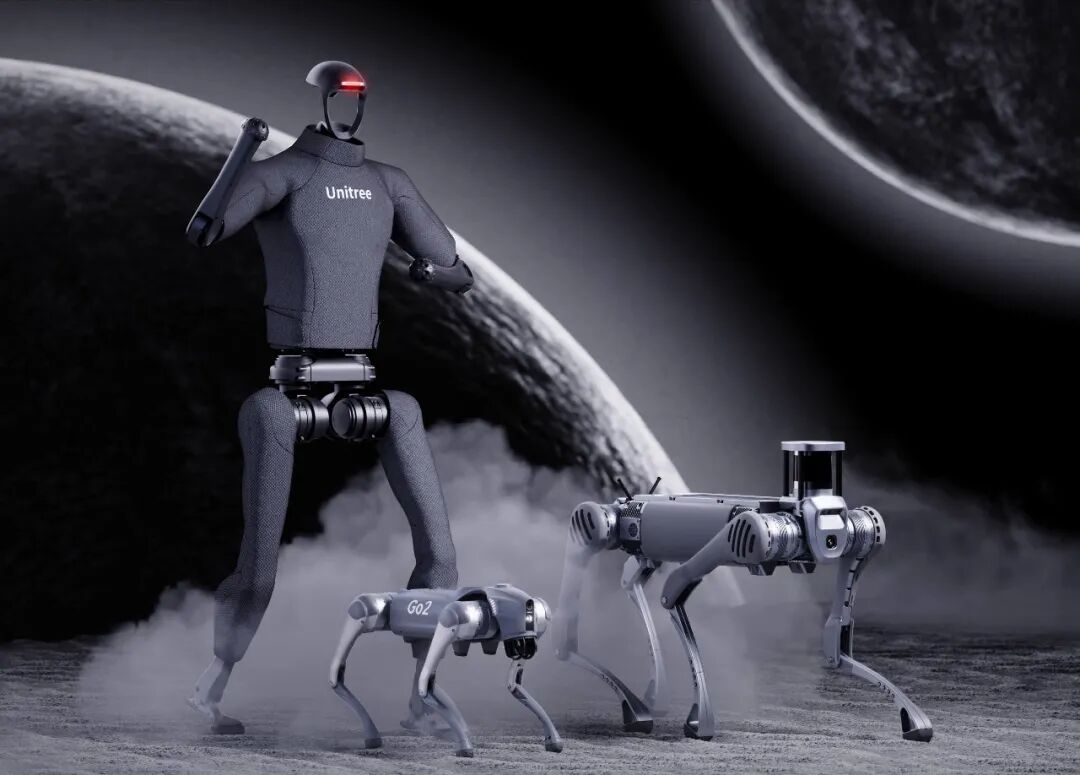
If you want to seize this greatest opportunity in human history — the biggest moment for human civilization — and want to help push forward the development of robotics AI world models, hurry up and join Unitree. Word is they're very short on people. Grasp this most critical opportunity in hundreds of millions of years!
An interesting anecdote: According to internal Unitree sources, Xingxing Wang mentioned that when he first learned about AI, he immediately fell in love with neural networks. Back in 2010, as a freshman, he had basically read through all the neural network-related books in his university library — at a time when neural network AI was an extremely niche field. In 2010, he wrote a small paper for a computer science course assignment, with a thesis along the lines of: as neural network scale increases, AI capabilities will grow stronger and stronger!