Code View | *China Enterprises* Exclusive Interview with Xingshi Wang, Managing Partner of Source Code Capital: Finding Certainty in an Uncertain Era

The criteria for what makes a good company have become more diverse, making it harder for investment firms to evaluate them.
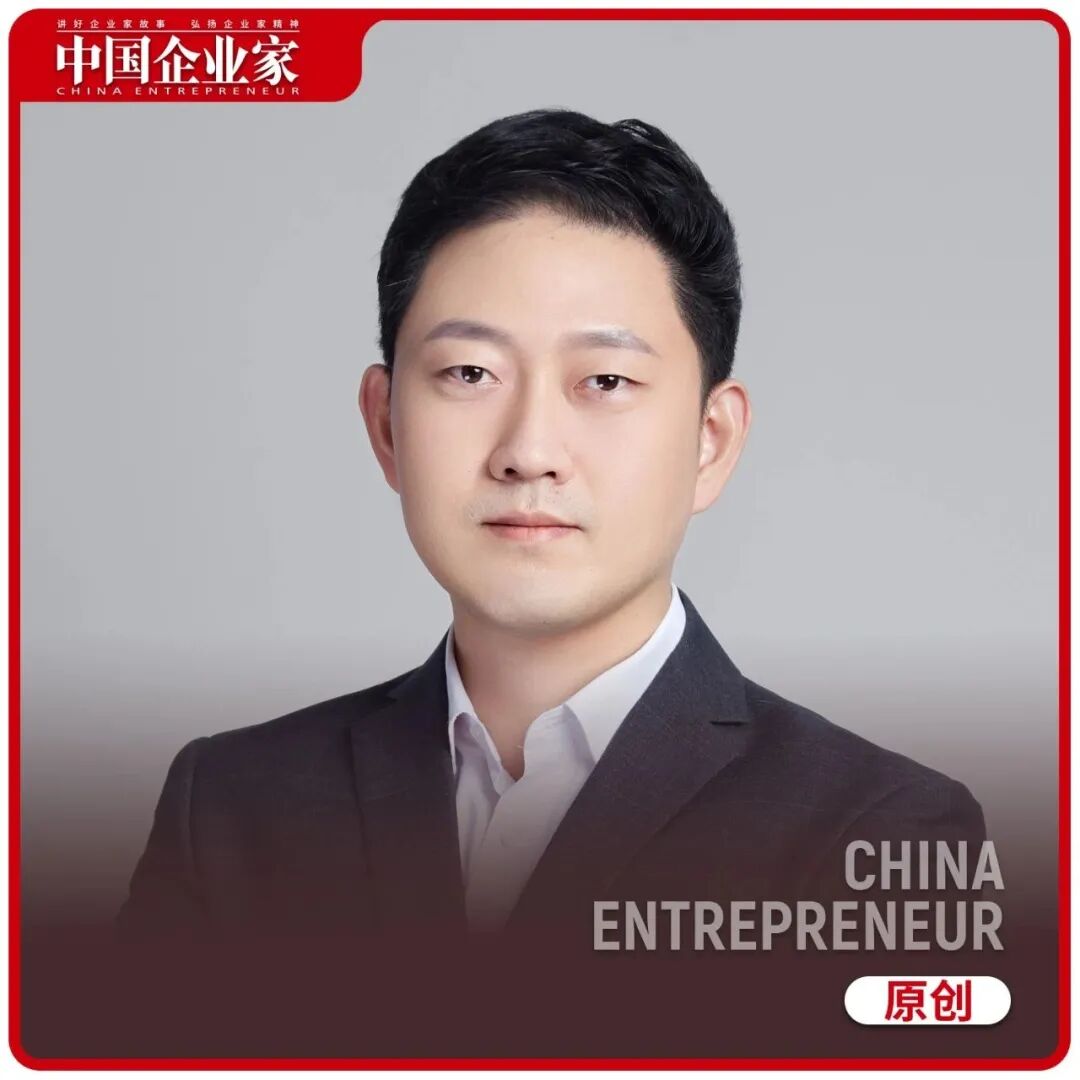
The definition of a "good company" has become more diverse, making it harder for investment firms to judge.
As an investment firm that has been deeply involved in the AI field for many years, Source Code Capital has been actively deploying in large language models, application layers, and other areas.
"We ran the numbers every which way, and our prediction is that ultimately, no more than 10 independent teams in China will build large language models," Xingshi Wang, managing partner at Source Code Capital, told China Entrepreneur. "Given our size and strategy, it probably makes more sense to find a few of them to invest in."
Wang was promoted to managing partner at Source Code Capital in the first half of 2023. Beyond "betting on" the AI technology behind large models, Source Code Capital also focuses on industrial digitization, robotics, advanced manufacturing, green development, enterprise software, life sciences, consumer, and international expansion. To date, the firm has invested in over 300 startups. Behind well-known companies like ByteDance, Meituan, KE Holdings, and Li Auto, you will find Source Code Capital.
In 2014, Yi Cao founded Source Code Capital. At the time, a wave of internet companies had successfully gone public. Not only had internet companies and their founders accumulated substantial wealth, but they had also created a talent overflow, with many people searching for new angles and opportunities to start businesses. This was an excellent time for Source Code Capital to enter the industry. During this period, multiple internet CEOs including Yiming Zhang, Xing Wang, Xiang Li, and Jinbo Yao became LPs of Source Code Capital.
Wang also joined Source Code Capital in 2014, focusing primarily on automotive and mobility, real estate, and e-commerce. "At the time, everyone was in a mindset of wanting to charge forward," Wang recalled.
As the firm continued to grow, entering and staying in the first tier of primary-market investment firms became Source Code Capital's clear positioning.
Since 2020, the venture capital industry has undergone dramatic changes both internally and externally. The trend of deglobalization has had a major impact on the direction of innovation in the sector. Both startups and investment firms face enormous pressure and challenges.
"In today's environment, we need to stay in the first tier even more," Wang said. This is also an important safeguard for the firm to navigate the current uncertain environment — when the industry fluctuates, not only do LPs tend to allocate capital to top-tier firms, but startups also prefer to seek backing from leading institutions when raising funds.
But market logic remains unchanged. "The best companies, regardless of the environment, can continuously create value and deliver returns to shareholders. They can go public when capital markets are favorable, and even if they face setbacks at IPO, their stock will gradually rise."
In Wang's view, whether it's investment logic or company operations logic, not much has changed from the past. For investment firms, investing in the best companies remains the most important thing.
But Wang also believes that, relatively speaking, there are fewer good companies now. "The bigger challenge for investment firms is how to find one good company among the many they evaluate."
The following is an edited transcript of Wang's interview with China Entrepreneur:
01 The Underlying Logic of Change
In the nine years since Source Code was founded, I don't think we've ever encountered as much change as we see today.
Starting in 2020, we began strategically paying attention to and discussing how international relations would affect industries and the economy. Now, under the influence of many uncertain factors, some deglobalization trends have gradually emerged, affecting the economic level, then transitioning to finance, education, people's livelihoods, and other sectors. We judge that when this trend reaches finance, it will impact our (venture capital) industry.
In the past, various industries might have operated on the principle that "whatever the United States has, China must have too, and do it even better" — what was commonly called "me too & me better." During this period, market sentiment was strong. Chinese and American investors and capital markets largely shared similar tastes for most industries. Chinese companies flourished across different capital markets — A-shares, U.S. stocks, Hong Kong stocks. Talent and technology flowed freely.
But today, the macro environments and industry regulations of different countries have changed significantly. Combined with market, customer, and other factors, companies in certain industries and categories find that listing in the U.S. is much harder than before. A-shares entered the era of full registration this year, while Hong Kong has been innovating frequently. Both markets emphasize technology, R&D, and innovation attributes for prospective listed companies, yet are also forging their own differentiated paths... The increasing differentiation among capital markets has led to greater divergence among investors in different markets, with each market developing its own valuation system. Many companies face increasingly singular paths to going public.
This change has already transmitted to the primary market, profoundly affecting financing for unlisted companies and the entire valuation system. This has indirectly driven changes among primary-market investors.
Our sense is that the overall "temperature" this year is somewhat lower than we anticipated at the end of last year. Our job is to invest in good startups, especially at very early stages. But today, the overall number of good companies is fewer than we expected. Because the overall economic recovery trend is weaker than we anticipated, growth in many industries falls short of our expectations, and correspondingly, new opportunities for outstanding entrepreneurs have decreased.

Source: Visual China Group
The underlying logic is that both external and internal elements are changing dramatically. First, technology across industries is changing dramatically, with some industries potentially seeing new era-defining technologies. Second, market environments are changing. Many sub-sectors struggle to maintain long-term high-speed growth, with most in a state of fluctuation. Finally, capital chains are changing. Previously, capital supply was abundant and going public was relatively easy; companies could access funds through various financing methods. But now, adjustments in regulatory policy and industry trends produce dramatic effects — this change doesn't mean "getting worse," but uncertainty is increasing. Almost everything has uncertainty.
In the past, we might have just needed to find the certain direction among the elements and follow that path. Everyone only cared about competition, about gaining more market share. Now we must compete on a foundation of uncertainty.
Beyond these external factors, companies themselves are changing internally — efficiency methods, management methods, collaboration methods all face corresponding challenges and require adjustments.
With all kinds of internal and external uncertainties, the difficulty of doing things is certainly greater than before. To use an analogy, previously everyone drove an automatic car: put it in gear and hold the steering wheel. Now it's a manual transmission — the driver must operate inside the car while also paying attention to constantly changing external road conditions.
In this situation, I think entrepreneurs and founders face greater challenges than before, and investment firms do too.
A characteristic of this industry is that capital supply doesn't distribute evenly across all firms. Once the industry fluctuates, LPs tend to allocate funds to top-tier firms. If a new firm emerges at such a time, LPs may be conservative, perhaps unwilling to support a newly established firm. This is why I say Source Code Capital needs to stay stable in the first tier — first-tier firms face relatively less fundraising pressure. This is a structural change. Once the overall market liquidity decreases, the top tier is relatively less affected, while the mid-to-long tail is more affected.
In this situation, all firms will adjust their fundraising strategies — scale, pace, sources of LP capital, etc. Although a diversified fundraising structure brings greater challenges, it also brings two significant benefits. First, diversified sources can address various uncertainties. Additionally, in today's environment, accomplishing anything requires all kinds of help. Diversified LPs can provide corresponding resources and assistance to portfolio companies, supporting them to develop better.
02 Finding Certainty
Uncertainty has always existed; it's just greater now. Investment firms must try to find some relative certainty in an uncertain environment.
The underlying technology in certain tracks still follows discernible patterns. For example, new energy remains a major future trend, aligned with national goals of carbon peaking and carbon neutrality — very important objectives and driving forces. As energy structures gradually change, the true underlying technology — clean energy completely replacing traditional energy — still has a long road ahead. Including rapidly developing photovoltaic technology, corresponding energy storage technologies, and terminal power equipment substitution — all these technology iterations have long-term development trends that will bring corresponding changes and opportunities.
Beyond technology upgrades bringing corresponding development trends, consumer remains a long-term track as well. A typical pattern is that consumer-focused investors are going down to lower-tier markets. Because consumer startups aren't well-suited to first-tier markets — comprehensive costs are too high. For example, Tastien, the Chinese-style burger chain we invested in, has many locations, but you'd be hard-pressed to find one in Beijing temporarily.
Behind this is actually some stratification of consumer spending power. Even within a single city, there is stratification or folding. For instance, the product structure on shelves in Beijing's outer Fifth Ring Road areas or urban villages may differ from what's in the Guomao CBD.
With consumer stratification, you only get a feel for it by going to first-tier cities and then looking deeper. Actually, consumer companies positioned in lower-tier markets may not necessarily be located in lower-tier cities. If it's a food company, the factory is probably still in one of the usual locations — it's just that the channel customers are in lower-tier markets. If it's restaurants, many now use pre-made dishes or semi-finished products with cold chain logistics and supply chains, so the company may still be in major cities. But you do need to go down deeper to see the more real situation.
Today, the directions investors are putting money into are no longer the internet companies of Beijing, Shanghai, and Guangzhou from before — they've gone much deeper into various industries.
The typical nature of consumer is that money must be spent. With so many people, China's consumer market is large enough. But consumer itself is constantly changing. Everyone has hopes for a better life. Especially under the influence of the pandemic in recent years and the current overall economy, public aesthetics have become increasingly diverse. Everyone is confident and has their own value judgments.
In the past, people might have felt that buying the most expensive or what everyone agreed was good was the right choice. But today, people tend more toward choosing what they personally like. In this situation, consumer naturally gradually differentiates. The key for entrepreneurship is finding the right positioning.
The same applies to investment. When each new opportunity arrives, you can't just "charge" at it and be done — you need to think about the logic behind it, whether it has a certain trend that can continue. You can't be new for new's sake.
In retrospect, many changes in consumer categories have underlying causes. For example, coffee and milk tea have naturally high user stickiness — they give consumers a little boost, but the lowest cost is only 10–20 yuan. And as per capita GDP reaches a certain level, certain consumer expenditures increase proportionally. The public will buy and add things to improve quality of life — small appliances and other consumer categories may emerge from this. These deeper underlying causes are what allow trends to sustain.
Challenges Under the Technology Wave
With the entire industry facing uncertainty, whether companies and the investment firms behind them can catch the rapidly developing technology wave is key to "not falling behind."
In my view, business competition is extremely brutal. The internet era was a typical "7-2-1" — the first place feasts, second place barely survives, third place onward lives precariously. Not just the internet industry; business competition in other industries is similar, though this brutality may mainly be at the level of competing on product, strategy, etc.

Source: Visual China Group
But in the face of era-defining technology, it's a different kind of brutal. Once a company falls behind on a new technology trend, the subsequent challenges become substantial. We were fortunate enough to catch the AI mega-era.
But careful study shows that each era's technological progress isn't a single path. Technology development always has forks. Before ChatGPT, many people probably didn't think OpenAI's GPT model was the right approach. Even today, academic experts hold varied views.
How to choose the new generation's technology path? This is a challenge for all companies and entrepreneurs. Including previous choices like display panels, electric vehicle technology — at each inflection point there were many paths. Entrepreneurs must choose the right technology; investors must choose both the right technology and the right entrepreneur. This is a huge challenge for everyone.
As for how to respond to challenges from technology iteration, I think some past views are quite illuminating. When Elon Musk was building electric vehicles, many people felt battery costs were too high, and the engine-transmission internal combustion architecture was mature enough — why bother with electric cars? But Musk believed batteries were expensive because scale was insufficient. Because all battery raw materials are minerals, when production scale is large enough, prices will come down. This is what's called first-principles thinking.
Facing uncertain technology paths, thinking in a more底层 way — finding potentially longer-term trends or more underlying principles — is more valuable.
Second, in strategy and tactics, we should learn from some large companies to some extent, ensuring all kinds of layouts are in place. Beyond the few technologies a company focuses on developing, it should also stockpile several technologies. Even if these technologies appear to be completely different paths from current development directions, they should still be stockpiled. Some large companies may also invest in companies along the industry chain.
Additionally, companies and entrepreneurs must continuously pay attention to changes in frontier technology. All technology development is non-linear. Even after judging the development curve and choosing a technology to research, unselected technologies don't mean they won't produce inflection points.
A typical example is the GPT model. In the past, many institutions including those in the United States may have felt that OpenAI was just making models bigger and bigger — what would result, no one knew, and not many people paid attention. But suddenly, OpenAI made the Chat approach work. Looking back, everyone felt this direction (of scaling up) was right.
So entrepreneurs must maintain keen observation and attention to all new technologies. If they sense something has changed, they must adjust direction promptly.
Reprinted from China Entrepreneur, author: Kong Yuexin