Code View | Is 41 the Optimal Age for Innovation?

Be a partner on the entrepreneurial journey, powering China's economic upgrade and transformation.
MaHui Insights
Source Code Capital invests in technology-driven innovation,
and in the creation of lasting, real value.
Innovation is a key metric for China's technological development. As an investment firm focused on technology, Source Code Capital is committed to discovering and backing enterprises with an innovative spirit and the potential to lead technological breakthroughs — serving as true partners to entrepreneurs and supporting China's economic transformation and upgrading.
The Best Age for Innovation? 41
Economies worldwide commonly use Total Factor Productivity (TFP) to measure national technological innovation levels — a critical indicator for understanding economic development. Specifically, TFP captures all output-affecting factors excluding external inputs like capital and labor. In short, TFP is productivity. Research shows that both a country's total scientific publications and its PCT (Patent Cooperation Treaty) patents as a share of GDP are positively correlated with relative TFP values. In other words, TFP can measure both knowledge innovation and technological innovation.
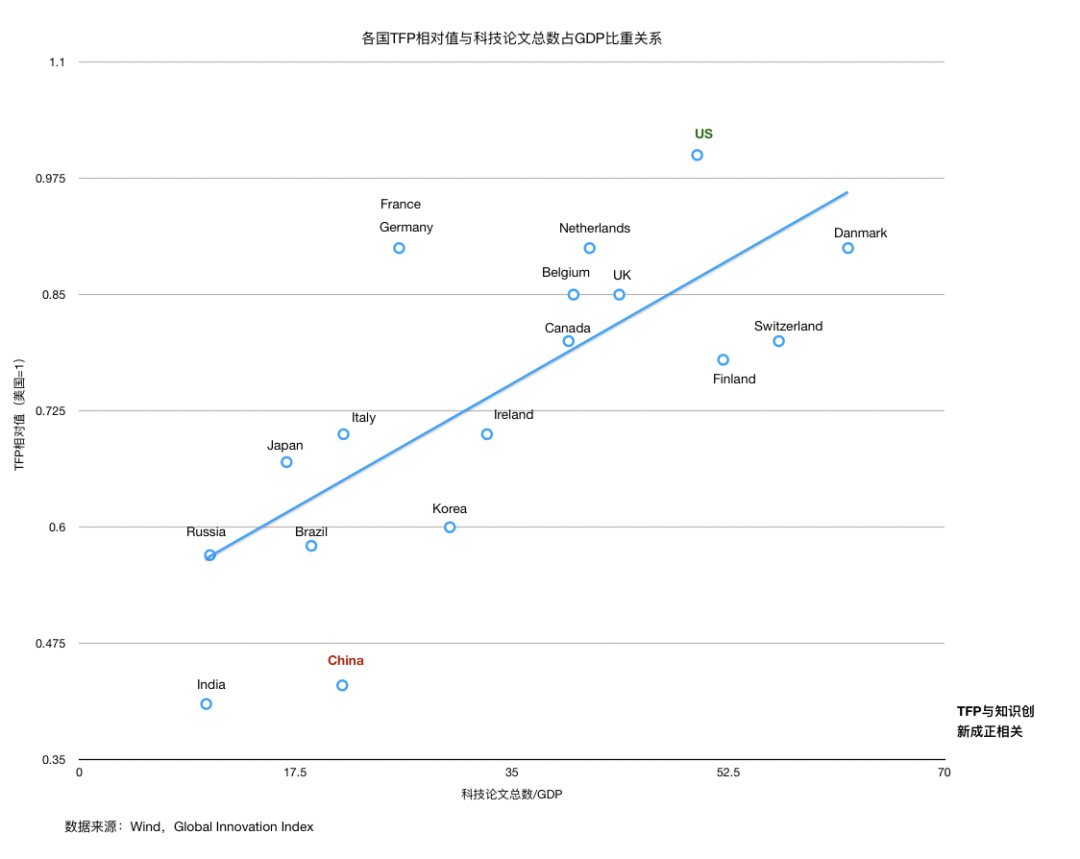
Relationship between relative TFP values and scientific publications as a share of GDP by country
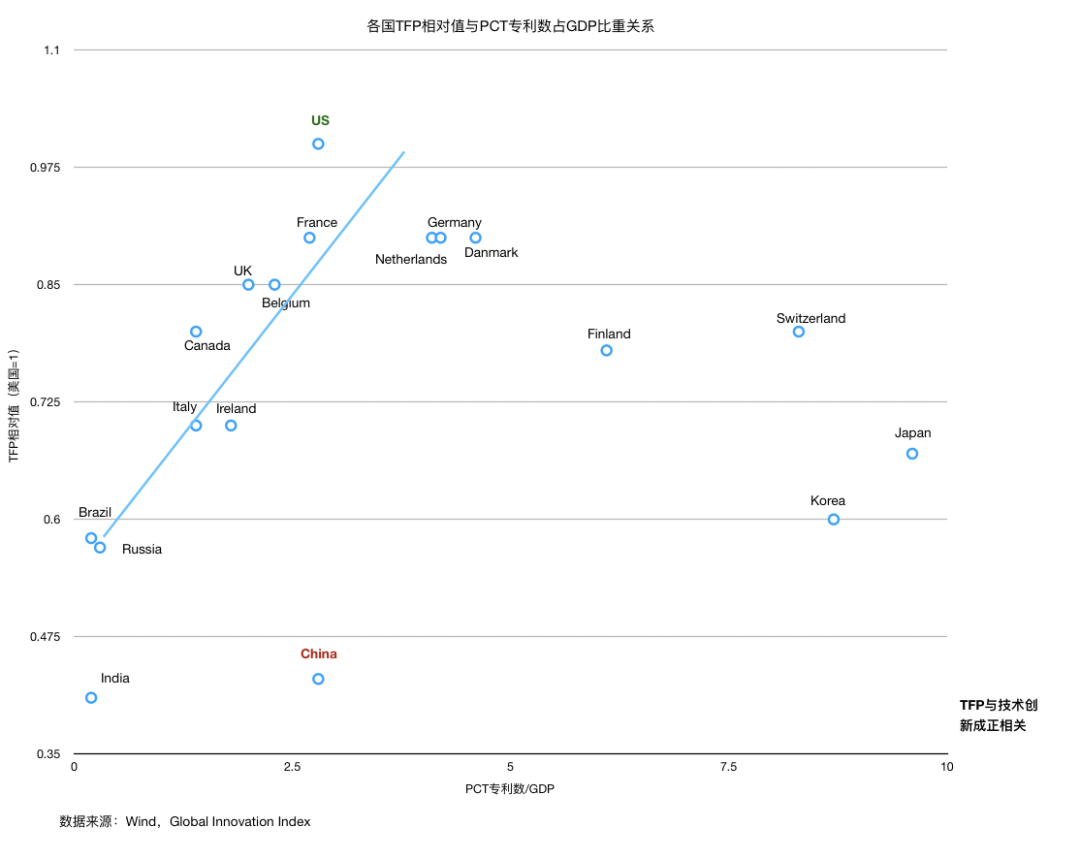
Relationship between relative TFP values and PCT patents as a share of GDP by country
The present moment represents a critical juncture in China's economic trajectory. In his report to the 19th Party Congress, General Secretary Xi Jinping stated: "We must adhere to quality first and efficiency priority, take supply-side structural reform as the main thread, and promote quality transformation, efficiency transformation, and动力 transformation in economic development, improving total factor productivity." This underscores China's high level of attention to future TFP growth.
Over the past three years, China has issued multiple policies encouraging enterprise innovation. Take the 2020 "14th Five-Year Plan" proposal of "taking the domestic cycle as the mainstay" — the policy explicitly positioned Chinese enterprises to play an important role in expanding domestic demand, encouraging firms to make technological innovation their primary long-term development direction and striving to keep core technologies firmly in their own hands. Faced with an evolving international landscape, China is grounding itself in knowledge, technology, and product innovation to establish a foothold domestically while looking globally.
Currently, China's knowledge innovation is characterized by significant follow-on research and hotspot-chasing phenomena. According to reports compiled by the Chinese Academy of Sciences' Institutes of Science and Development, China has produced strong pioneering research results in hotspot areas spanning applied mathematics, biomedicine, engineering, and nanoscience.
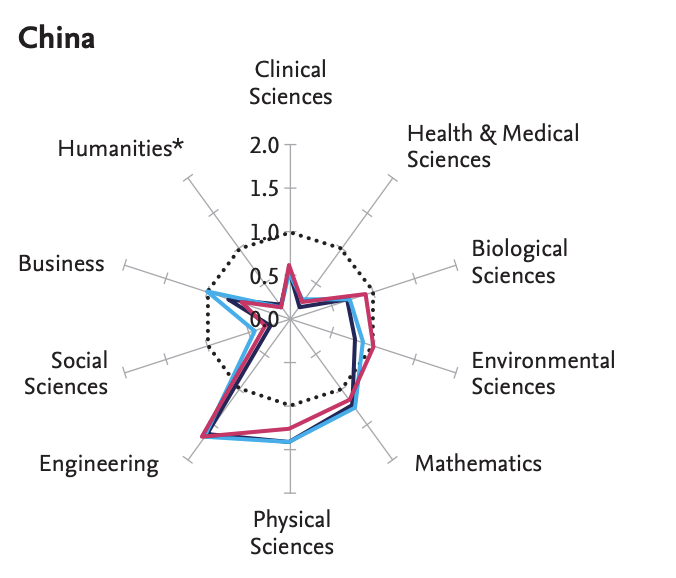
China's research layout focuses primarily on engineering, mathematics, and physics
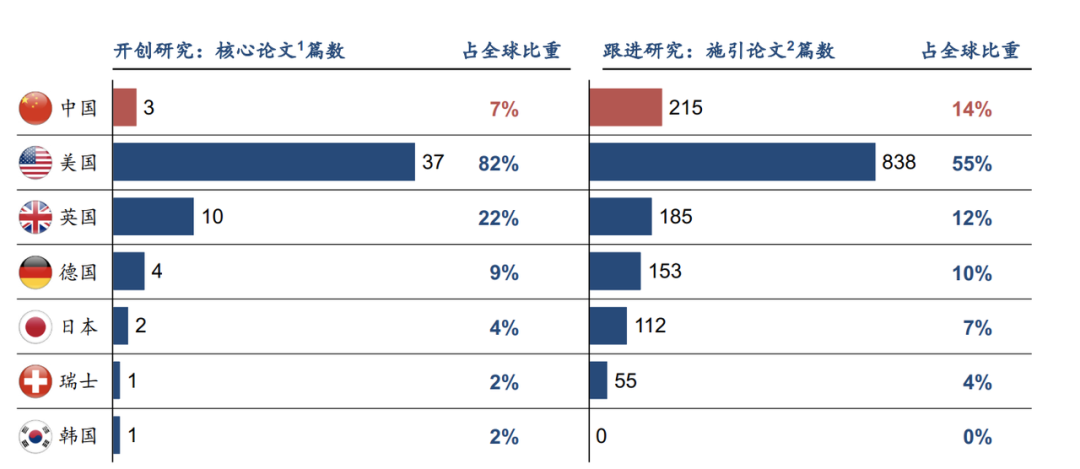
China shows more follow-on research on specific hotspots
Knowledge innovation depends on talent cultivation, which requires extended periods. Comparing with neighboring Japan: from a成果产出 time perspective, Japan's knowledge innovation talent cultivation took 23 years. Looking at Nobel Prize-winning timelines, other countries including the United States, Germany, and France all experienced 20-25 year cycles for knowledge innovation talent development. Some experts estimate that China will enter a period of abundant Nobel Prize achievements after 2035-2040, during which innovative talent cultivation should be vigorously developed.
The best age for innovation? 41. Age structure significantly affects the supply-demand dynamics of product innovation. Experts analyzing age data from Nobel laureates and major patent and product inventors between 1900-2000 found that 42% of these innovators achieved their breakthroughs between ages 30-40. Deeper analysis revealed that the optimal innovation age has been increasing over time. By 2020, it stood at approximately 41.
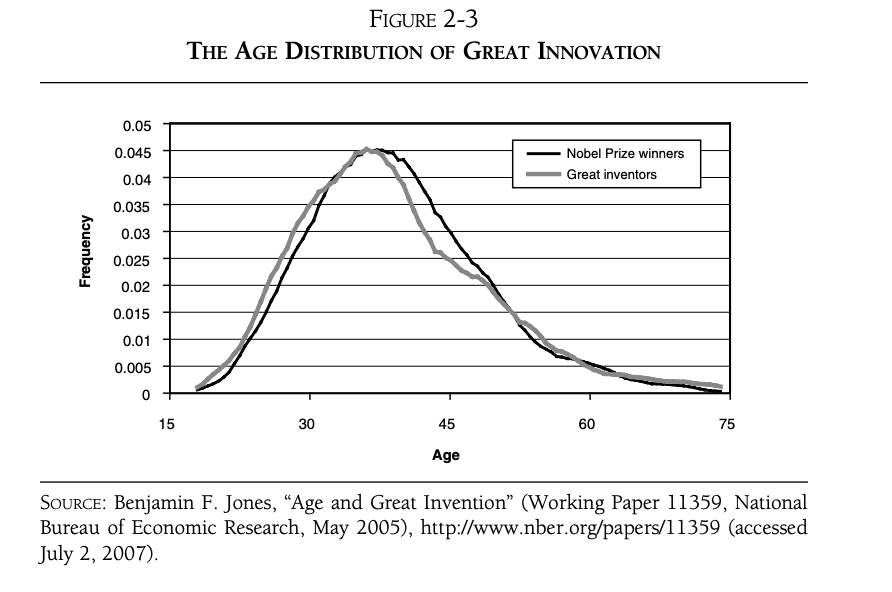
Age distribution of Nobel laureates and inventors
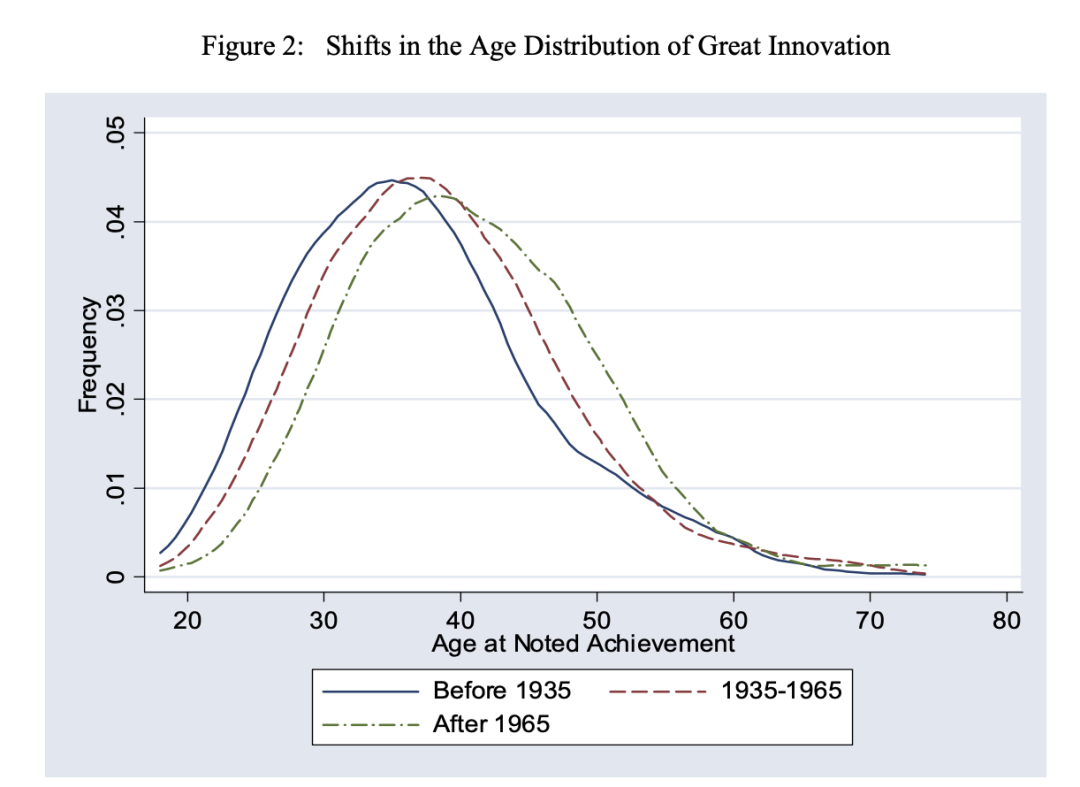
Optimal innovation age increasing over time
Startups Are More Innovative
Looking back at the contrasting technological innovation paths of the United States and Japan over the years: although the dominant forces differed completely — the US mainly pursued product innovation led by enterprises, while Japan pursued technology innovation led by government — both offer the same lesson: using product-driven technological innovation is the superior approach.
1. Domestic Demand Promotes Product Innovation
Since product innovation expands markets and thereby boosts the economy, countries with high consumer demand derive greater benefits from product innovation. In January this year, the National Bureau of Statistics of China disclosed key economic data showing that consumption's contribution to economic growth has steadily risen in recent years. "In 2021, final consumption expenditure contributed 65.4% to economic growth, driving GDP up by 5.3 percentage points, reflecting the vitality of China's consumer market and the potential of its domestic demand market."
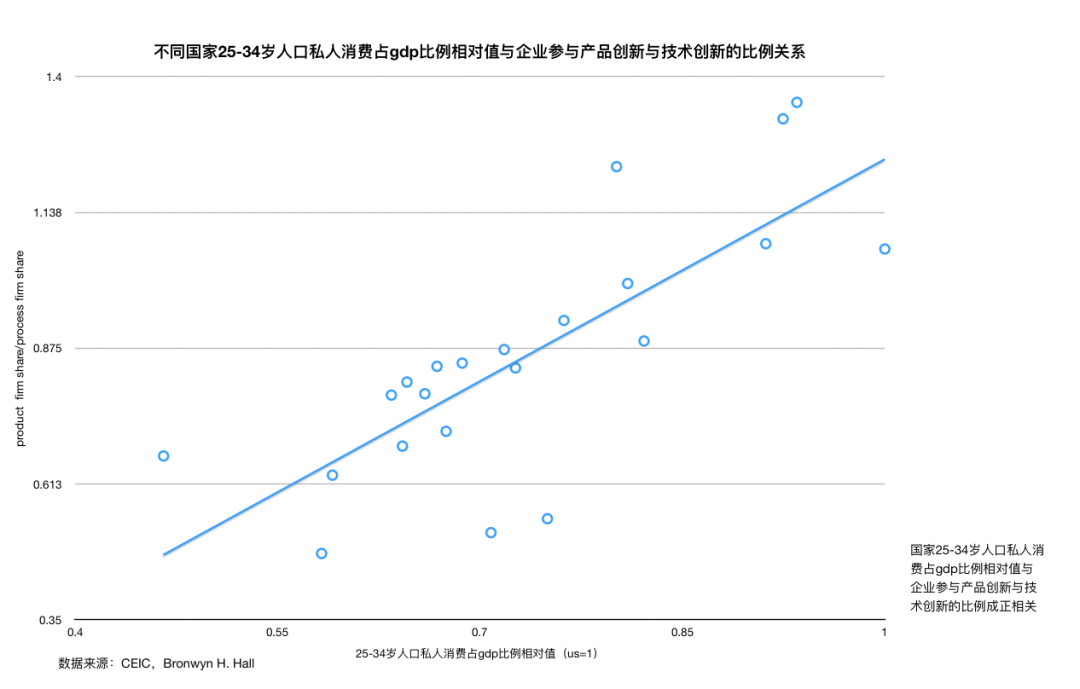
Data source: CEIC, Bronwyn H. Hall
Data shows that the relative value of private consumption by 25-34 year-olds as a share of GDP is positively correlated with product innovation. Stable, high consumer demand promotes rapid product iteration and improves innovation efficiency.
2. Both R&D Investment and Venture Capital Drive Product Innovation
As corporate R&D investment increases, so does product innovation output. In 2019, researchers from the University of Amsterdam and Erasmus University Rotterdam compared relative R&D investment scale with relative product innovation output across 900 enterprises, finding that R&D investment can drive product innovation to a certain extent — but as investment approaches a threshold near its ceiling, the marginal efficiency of product innovation actually decreases. In other words, the research path is long; cutting-edge R&D faces technical barriers and requires extended cycles to see returns.
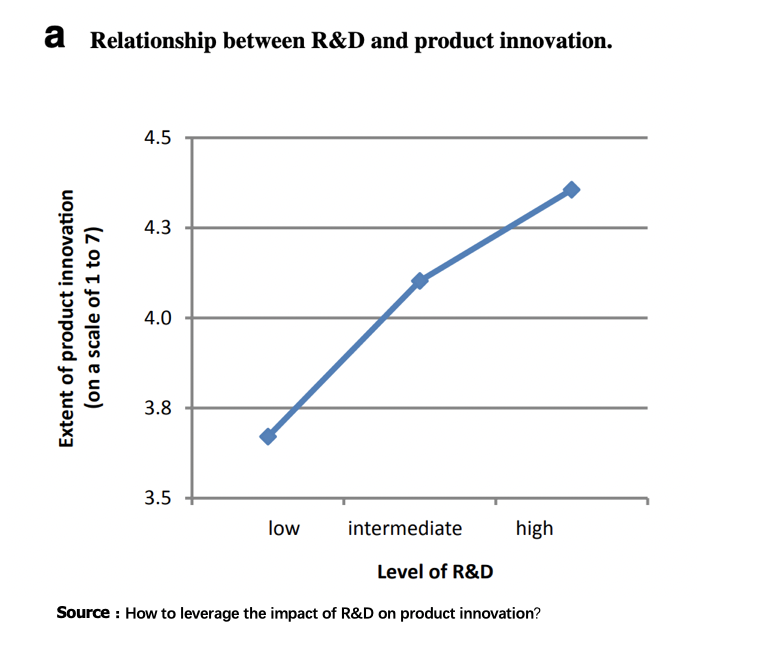
Data source: How to leverage the impact of R&D on product innovation? (Cornelis, 2019)
Some research indicates that startups possess stronger product innovation capabilities. The logic behind this isn't hard to grasp: for startups, survival is the primary goal. Facing complex market environments, startups must innovate constantly just to stay alive — and they must push innovation to the extreme. The VCs standing behind startups help drive product innovation and create lasting, real value.
The DNA of Venture Capital: Driving Innovation
Looking at the relationship between venture capital as a percentage of GDP and entrepreneurship activity across countries in 2016 and 2020, venture capital promotes entrepreneurial activity. Comparing the two: although China's VC activity has risen, entrepreneurship activity has clearly declined; in the US, both VC activity and entrepreneurship activity are rising, with VC becoming more efficient at driving entrepreneurship.
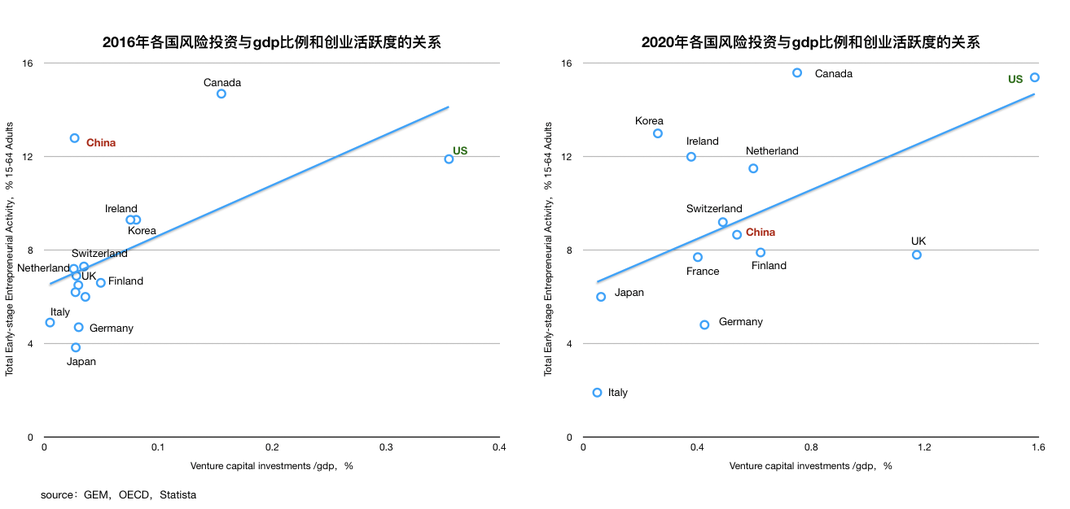
Data source: GEM, OECD, Statista
Tracing back to the 1980s, Silicon Valley's unique and powerful product innovation culture was driven by venture capital and entrepreneurial culture, experiencing a critical development phase from zero to one. Influenced by Steve Jobs' cultural输出, Silicon Valley continuously launched disruptive innovative products. The rapidly developing venture capital of that era fueled this innovation culture, with Silicon Valley characterized by a preference for original products, tolerance for failure, and an entrepreneurial spirit.
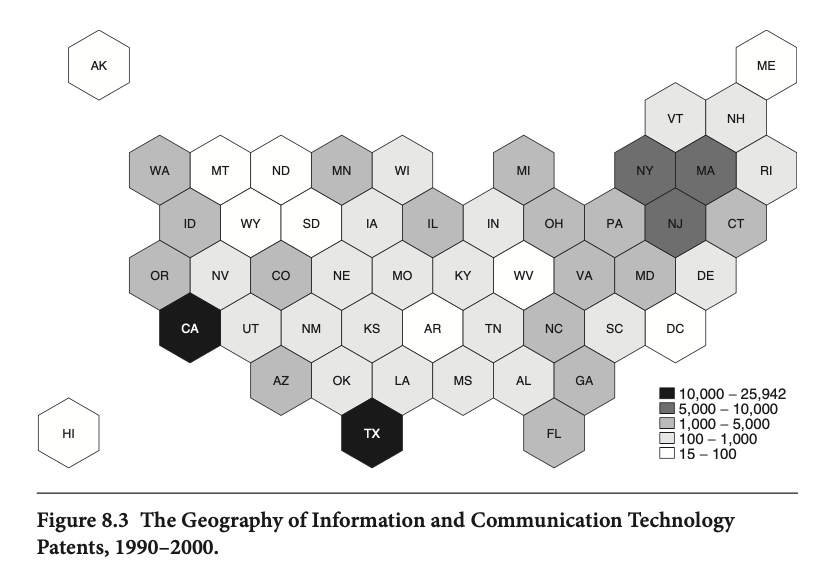
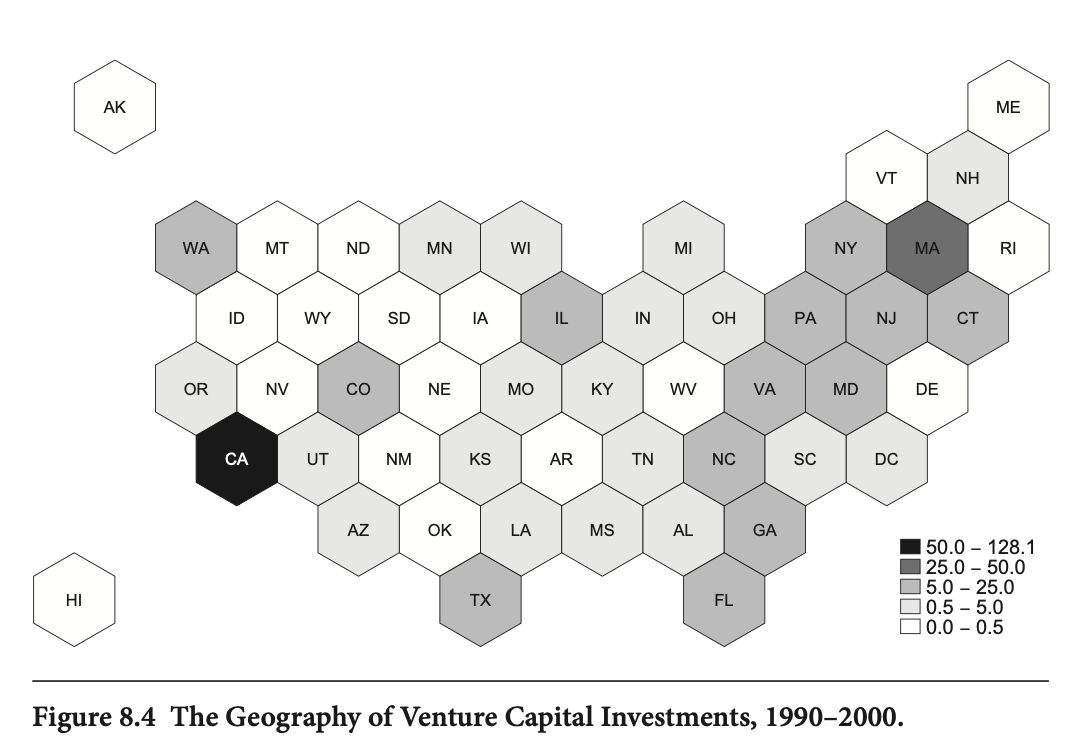
Silicon Valley is the origin of American innovation:
US innovation (top) and venture capital (bottom) are centered in Silicon Valley
Furthermore, respecting originality and strengthening intellectual property protection are essential on the path of innovation. Since IP protection plays different roles for economies at different development stages, China has noticeably intensified its IP protection efforts in recent years. In October 2021, the State Council issued the "14th Five-Year" National Intellectual Property Protection and Utilization Plan, comprehensively strengthening IP protection to stimulate innovation vitality throughout society.
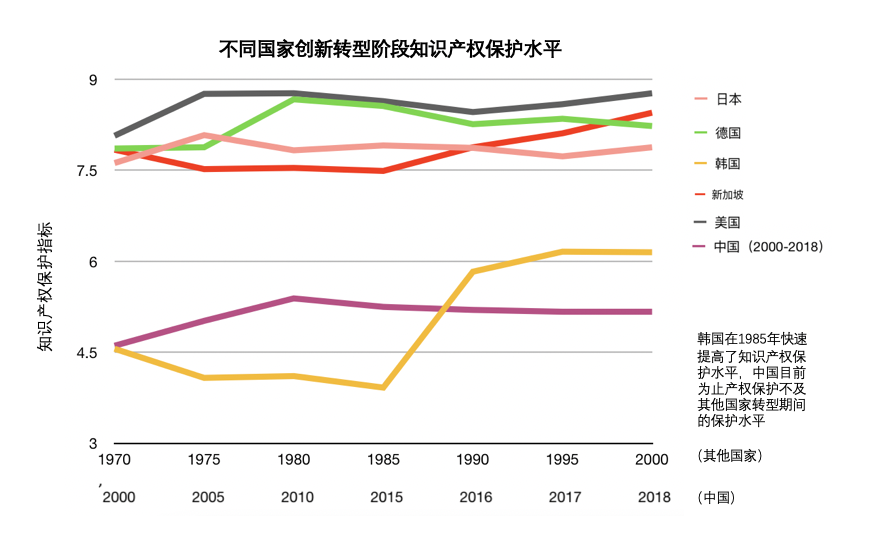
Comparison of IP protection intensity during transition periods across countries vs. China
Since its founding, Source Code Capital has insisted on investing in entrepreneurs with an original spirit. Source Code is a partner on the entrepreneurial journey, respecting the returns on innovation, encouraging investment in R&D, nurturing innovation culture, and contributing to the continuous advancement of technological innovation to create lasting, real value.

Interact to Win a Book
Are you at your optimal innovation age? A young achiever or a late bloomer?
What research directions would you like to see? Leave a comment and share your thoughts with us.
If your topic is selected, we'll send you a MaHui book~
References
[1] Source Code Capital Research Group Internal Report
[2] Editorial. "Editorial: Understanding Economic Development Through TFP, Like a Master Butcher Carving an Ox." Yicai. [OL], 2017-10-30. https://m.yicai.com/news/5361895.html
[3] Chinese Academy of Sciences Institutes of Science and Development, Chinese Academy of Sciences Documentation and Information Center, Clarivate Analytics, 2018 Research Fronts: Pioneering and Follow-on Research [R], 2018-10-24.
[4] The Central People's Government of the People's Republic of China, "State Council Notice on Issuing the '14th Five-Year' National Intellectual Property Protection and Utilization Plan" [OL], 2021-10-28. http://www.gov.cn/zhengce/content/2021-10/28/content_5647274.htm
[5] Economic Daily. "NBS Relevant Department Head Interprets 2021 Annual Key Economic Data" [OL], 2022-1-18. http://www.gov.cn/xinwen/2022-01/18/content_5669005.htm
[6] Cornelis V. Heij1, Henk W. Volberda1, Frans A.J. Van den Bosch2 and Rick M.A. Hollen, How to leverage the impact of R&D on product innovation? The moderating effect of management innovation, R&D Management, published by RADMA and John Wiley & Sons Ltd, 2019.
- MaHui Insights | Source Code Capital's Wang Di: Focusing on Energy Cleanization and End-use Electrification
- MaHui Insights | Yungang Huang, Source Code Capital: Maintaining a Stable, Long-term Tech Investment Rhythm Through Peaks and Valleys
- MaHui Insights | Source Code Capital's Chang Kaisi: Technological Change Reshapes Moats, Tech Entrepreneurship Breaks Boundaries
- MaHui Insights | Xingchen Zhang, Source Code Capital: From Zero to One in Tech-Driven Innovation
- MaHui Insights | 2020: First-tier Funds Enter Robotics
- MaHui Insights | Yungang Huang, Source Code Capital: What Entrepreneurs Need Most Is the Resilient, Bold "Spirit of Exploration"
- MaHui Insights | The "Tech + Biomedical" Crossover: A New Investment Consensus on Integrated Innovation
For more MaHui members, click "Read Original" to view