Code View | Gong Li of Source Code Capital: Doing Due Diligence at Dawn, I Saw the "Ordinary People" Who Live in the Depth of Night

Investors must experience the full spectrum of reality, exploring the ordinary yet profound sources of value.
With International Women's Day just behind us, we wanted to keep the celebratory spirit alive by sharing something substantive and deeply personal: an internal talk by Gong Li, a female investor at Source Code Capital.
Gong Li invests in technology, but she spent years focused on supply chain — a field that often had her conducting due diligence deep into the night. She's crouched in freezing pre-dawn unloading warehouses, ridden along on cross-province trucking runs, and navigated wholesale markets where vehicles and pedestrians collide in chaotic rhythm. These singular experiences opened her eyes to something beyond the spreadsheet: the supply chain software companies she evaluated weren't just cutting costs for clients — they were tangibly improving the daily lives of ordinary workers on the front lines. Story by story, she grew more certain that truly powerful investing isn't just about backing unicorns; it's about reaching into the texture of real lives and creating value for society at large.
Women's Day may last twenty-four hours, but the stories of women investors and founders continue far beyond. #CodeView will keep bringing you distinctive perspectives, showcasing the exploratory spirit of women in investing who persistently pursue value creation and meaning.


I'm Gong Li, but everyone calls me "Dali" — as in, you gotta put some muscle into it to make miracles happen! I'm glad to have this chance to give an internal talk, sharing some real experiences from my due diligence work and the reflections that grew out of them.
Due diligence — DD — is the daily bread of an investor's life.
Some people imagine it as flying somewhere, chatting with the founder or CEO over a meal and drinks, then heading back to the hotel to sleep. The calendar looks packed, but the actual work feels pretty relaxed. Well, my DD wasn't quite like the stories you've heard. When I first joined Source Code Capital, I covered supply chain, so my due diligence often happened in the middle of the night.
What is supply chain, exactly? The steamed bun you grab at FamilyMart each morning, the takeout you order for lunch, the dress you bought on Taobao, the computer from JD.com — every step those products pass through before reaching your hands, that's supply chain. You can feel how much more efficient it's become: Taobao offers three-day, next-day, even same-day delivery. I bought a face mask on JD.com yesterday morning, and it arrived this morning. But do you know what these products actually go through before they get to you?
Today I want to share three stories. Let's call them the Late Night Collection.

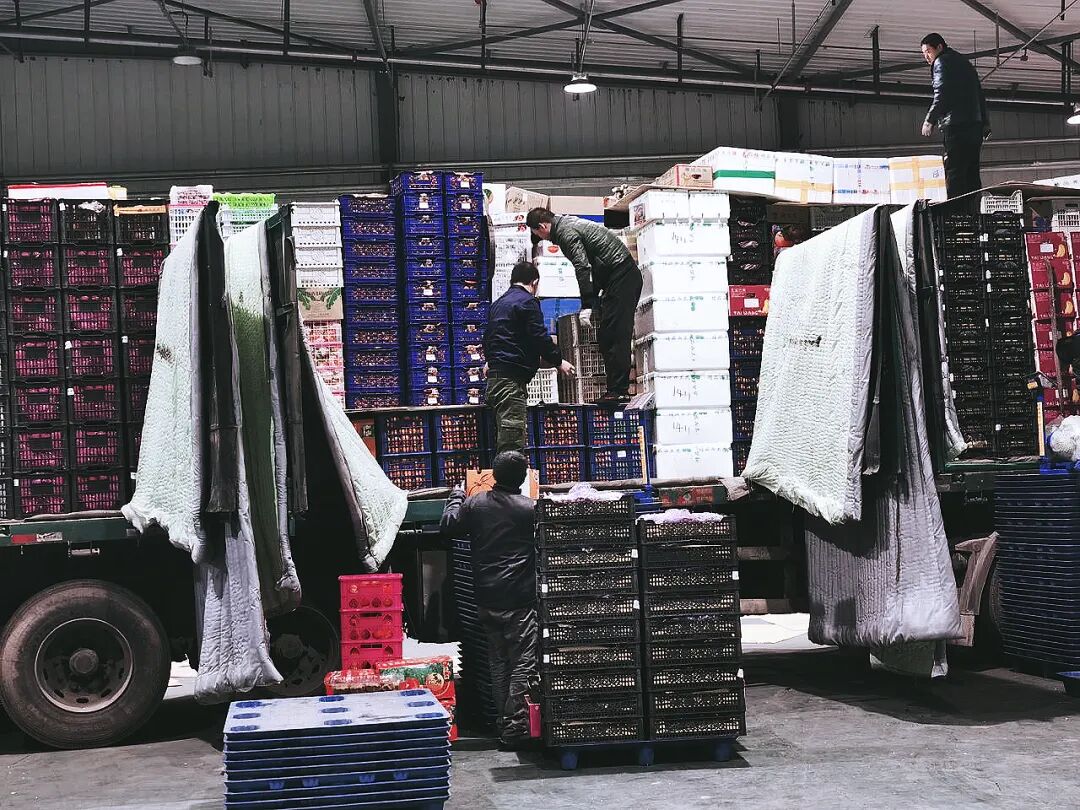
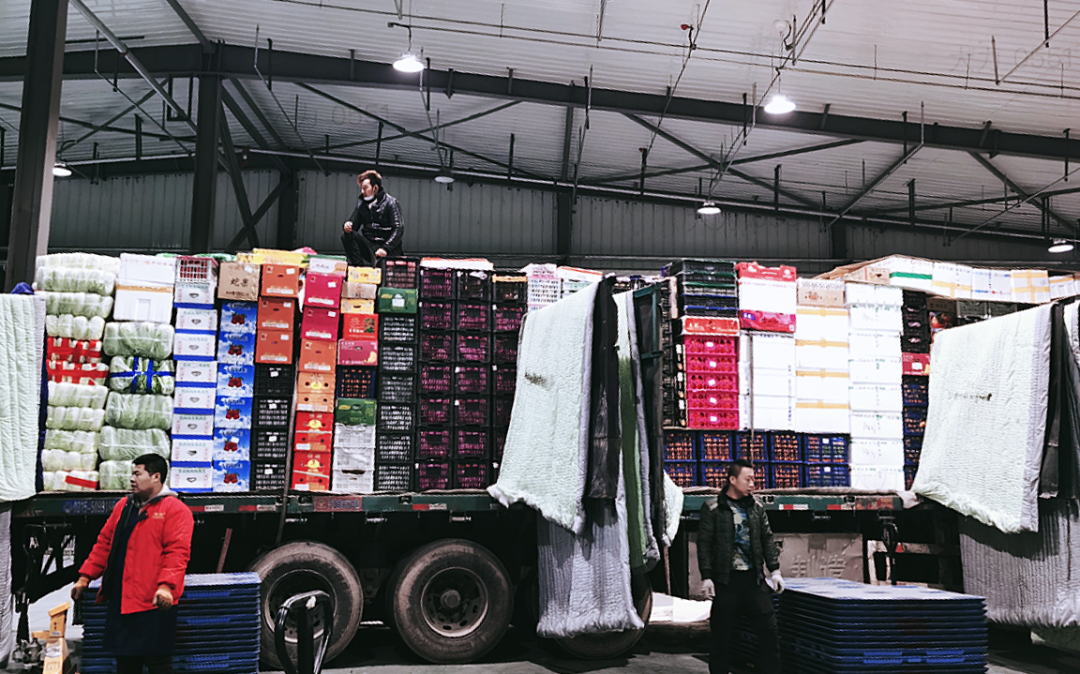
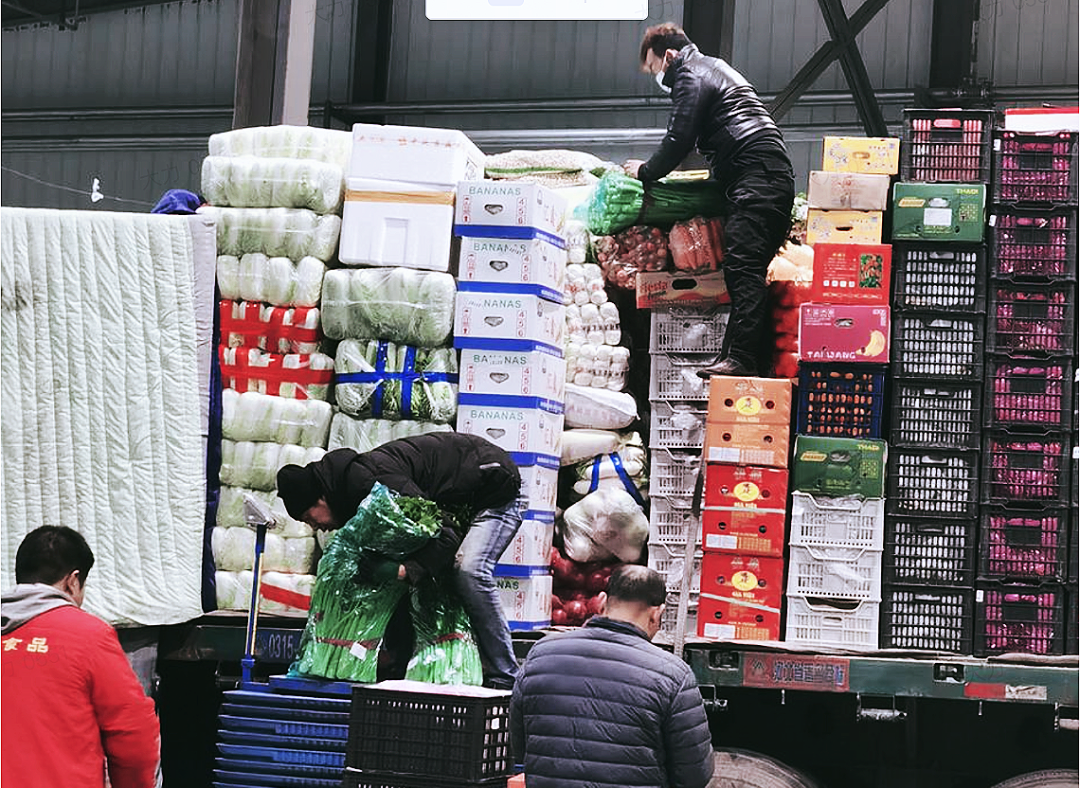
The man in this photo, I call him the "Unloading Brother."
It was a winter pre-dawn in Hohhot, Inner Mongolia. A truck had just arrived after several hours from Zhengzhou, and these "Unloading Brothers" began unloading the cargo, sorting it into different delivery routes, then loading it onto small vans for the final stretch to retail stores. They started at 1 a.m. and finished around 4 a.m. The working conditions were brutal, the job hazardous.
My story with the "Unloading Brother" in the photo began when I crouched nearby with nothing better to do and struck up a conversation. I noticed a long row of bedding piled in a corner of the warehouse, with a small space heater running — someone was sleeping here at night.
So I asked a particularly naive question: "If you need to sleep halfway through unloading, why not finish earlier and go home to rest?" The "Unloading Brother" said: "Actually, after we finish unloading around four or five, we sleep here for two or three hours. Then I take the bus into the city for my other job. I'm actually a restaurant cook."
This stunned me. Seeing my blank expression, he pointed at the others and told me: "All these guys are restaurant cooks too. After seven or eight in the morning, we head into the city to cook, working until eight or nine at night. Then we catch the bus back to this suburban warehouse to unload goods."
To break the awkwardness, I asked something even more foolish: "This work must be pretty hard, right?" I immediately regretted it — if he told me it was forced by circumstance, I'd have absolutely nothing to say.
But unexpectedly, his attitude was remarkably positive: "I think it's much better now. Before, we constantly mixed up the delivery routes during sorting. Wrong route meant lost goods, and we'd all be shouting at each other, wasting huge amounts of time. But later, computers could automatically print the labels, and they printed accurately. We rarely made mistakes anymore, efficiency improved, and I could sleep a few extra hours every day. Sometimes after my cook shift ends, I can even go home to see my daughter before coming back to move goods. It's actually gotten a lot easier."
What struck me then was this: the computer-printed labels the "Unloading Brother" described were supply chain management software or delivery route optimization software. We never imagined that behind the cost savings and efficiency gains for clients, this software was also genuinely improving the lives of frontline workers — meaning he could go home to see his daughter and wife after work, or grab an extra hour or two of sleep.
Such an ordinary, warm little happiness.

Now let's turn the clock on the product circulation chain to 5–7 a.m.: After unloading and reloading, the goods need to start moving into the city.
As a very diligent and responsible investor (ha!), I always insisted on riding along with the delivery trucks — even cross-province big rigs, the kind you definitely swerve to avoid on the highway, the ones associated with overloading and drowsy driving.
When the companies I was evaluating heard I wanted to ride along, they were always extremely cautious. They'd carefully select from dozens of drivers the one who looked most honest and decent, or sometimes they'd somehow dig up a female driver from the roster for me to accompany. And so I met a female driver — I call her the "Lady Delivery Driver."
I encountered an incident while riding along on a delivery run in Chengdu.
This "Lady Delivery Driver" was moving five or six boxes of fruit from her van into a fruit store. The store owner signed a receipt and then told her the count was wrong: "I only received five boxes, how can you write six?" She insisted: "I definitely moved six boxes down." The two began arguing.
Why couldn't I judge the situation? Because after an all-night drive, by 10 a.m. I was completely wiped out, "Ge You lounging" in her passenger seat. I only got out of the vehicle when I saw them arguing.
The fruit store owner said: "Either hurry to your next delivery — this receipt has nothing to do with you anyway; or sign for five now, and if you find the missing box, just bring it later, no rush."
But the "Lady Delivery Driver" was particularly stubborn. She said straight out: "I remember clearly that I moved six boxes. Let's look again, or check your store's security cameras." This was interesting — as soon as she said this, the owner's attitude changed. Then the owner's husband suddenly emerged, saying he seemed to have made a mistake, thinking it was yesterday's shipment, and had moved it to the back. In the end, all six boxes were successfully signed for.
Later in the truck, I asked her with genuine admiration: "Your pay has nothing to do with the receipt signature — it's actually tied to your delivery speed. Every order is a race against time. Why be so stubborn about something like this?"
She explained that getting this job was incredibly precious to her. She had spent over a decade as a seamstress in a garment factory in Jiangsu or Zhejiang. The factory manager thought she was meticulous and had wanted to promote her to factory accountant, but family changes brought her to Chengdu to look for work.
Jobs were hard to find. Through someone's introduction, she started driving for Lalamove. She took out a loan to buy a vehicle and began taking orders, but the volume and income were highly unstable. It wasn't until she started taking orders from this supply chain company that she found stable daily orders with consistently growing volume. She felt this work was precious, and she had referred many relatives and friends to become drivers for the company.
At work she was extremely conscientious and responsible. If drivers were asked to arrive at 4 a.m., she'd show up at 3:30 a.m. to help everyone sort through the cargo and check each driver's orders for errors.
She said finding stable work wasn't easy, and the company had given her tremendous trust. She felt obligated to carry that goodwill forward.
This story moved me. I added her on WeChat. Her WeChat name was "A Beautiful Day."
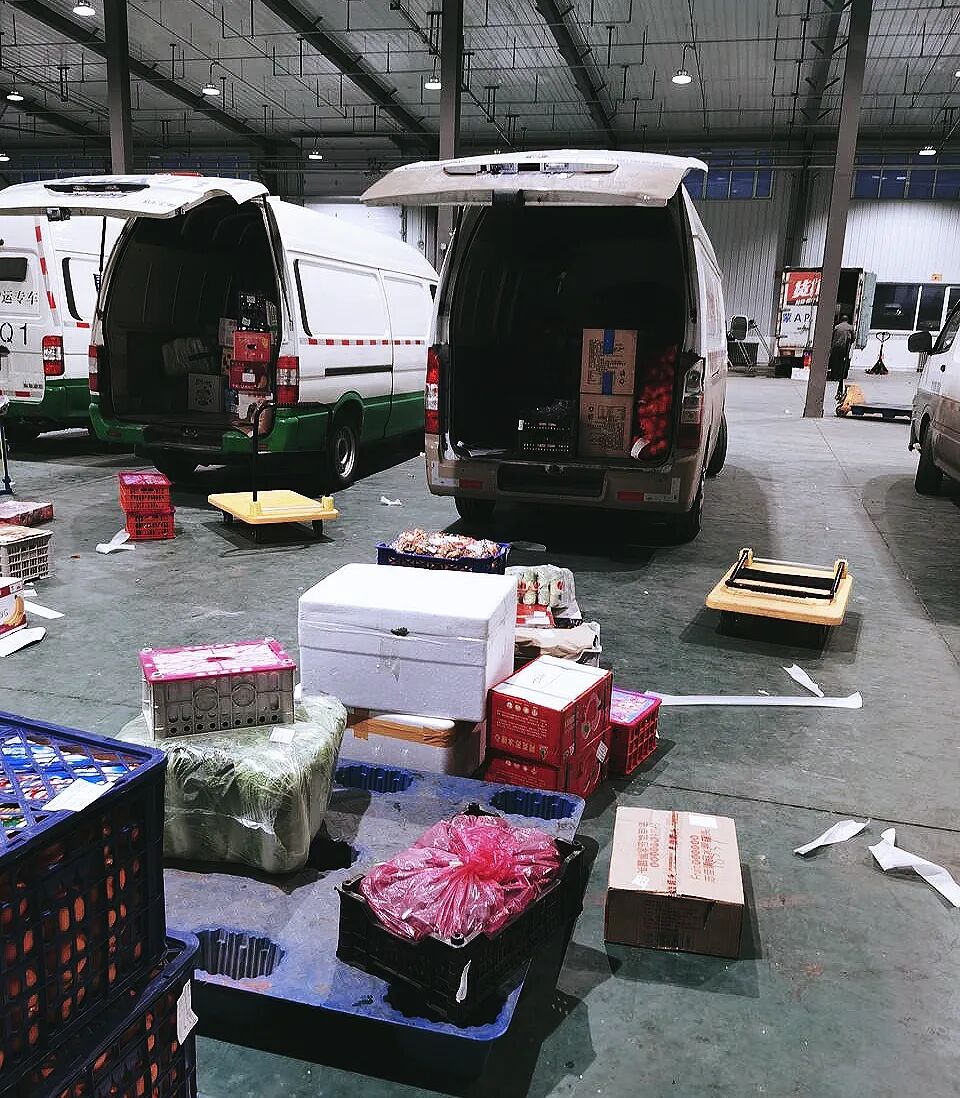
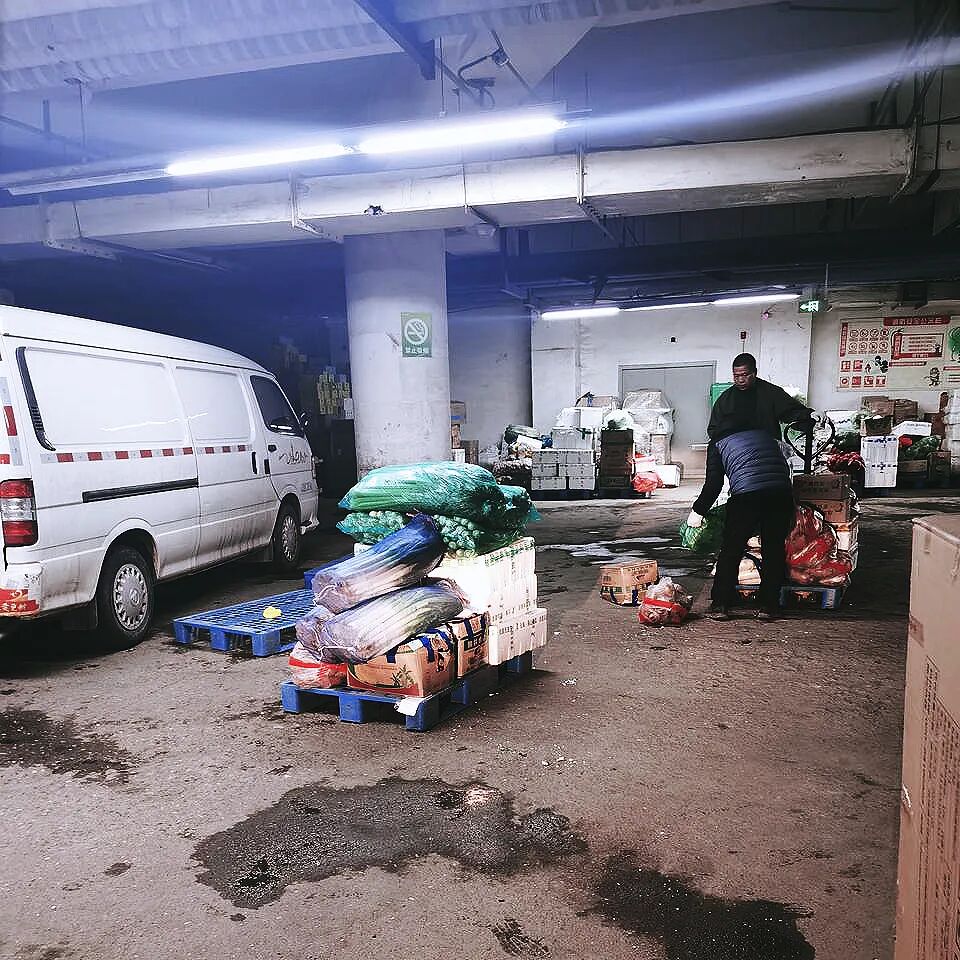
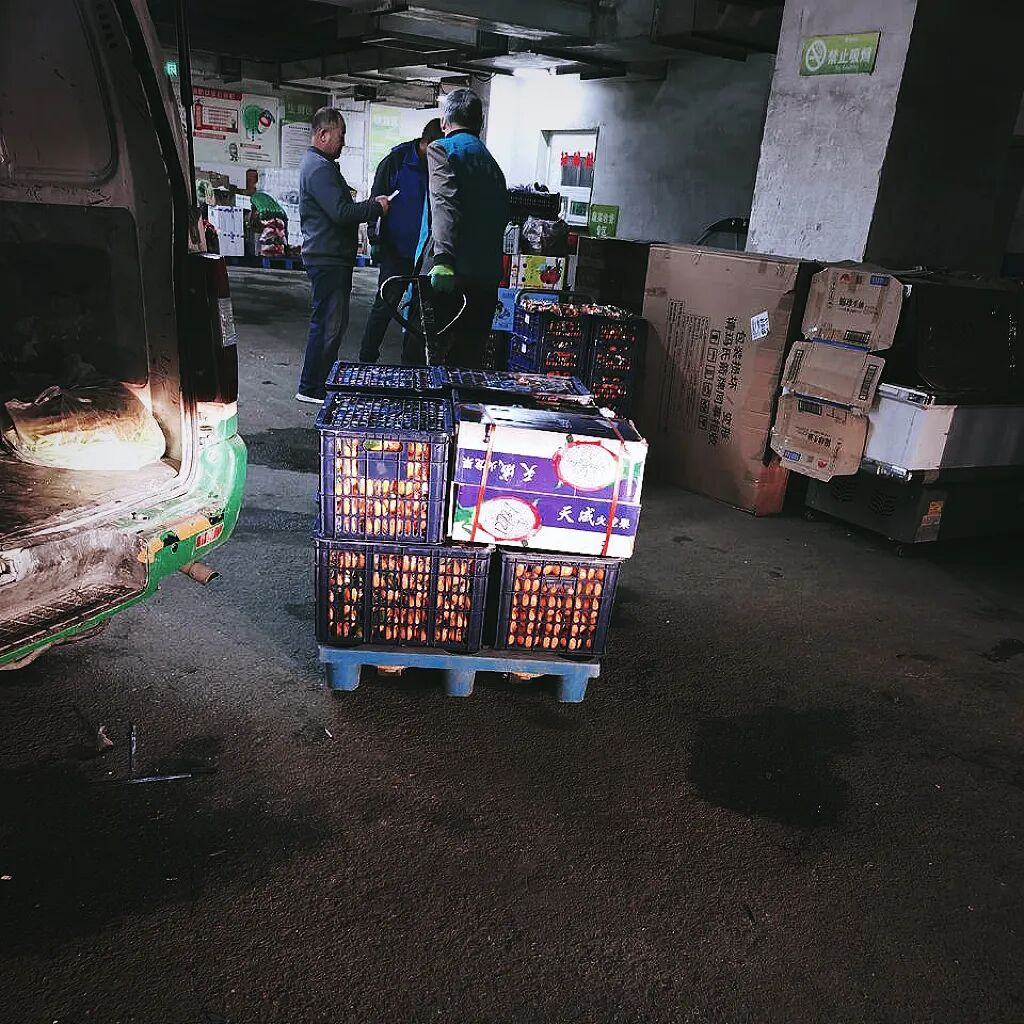

The protagonist of the third story is a young woman I call the "Banana Room Girl." A banana room is the ripening chamber for bananas, located within the wholesale market's fruit trading area. I met this "Banana Room Girl" at midnight, when the wholesale market had just opened for business. The market at night was packed with people, the ground littered with fruit peels and vegetable leaves, vehicles and pedestrians weaving and colliding in every direction.
What surprised me about the "Banana Room Girl" was that in this environment, she had made herself up beautifully — full makeup, freshly washed hair.
I told her: "In such a noisy, messy market, it's the first time I've seen someone dress up so carefully." She said: "In this line of work, the most people I see are at night. Even if I can only meet people in the depths of night, I still want to be beautiful." This touched me.
From the stories above, you can probably grasp the actual operating hours of the supply chain — from the wholesale market through the entire circulation chain. The wholesale market opens at midnight and operates until noon the next day, with 5–6 a.m. being something of a peak period. The logistics segment basically involves arrivals at the warehouse in the early morning hours, with picking and sorting from 2 a.m. to 4–5 a.m., and departures from 5–6 a.m. through noon.
The people on this supply chain, including us miserable supply chain investors, all live in the depths of night.
I'd basically start due diligence at 2 a.m., finish delivery rides past noon, feel completely soul-departed, and only recover by the following noon.
Beyond that, I frequently encountered things that sent my mood in negative directions.
Once while riding along in Inner Mongolia, I ran into the season's first heavy snowfall. It was bitterly cold, and I hadn't dressed warmly enough. I had to follow this ultra-straightforward guy walking ten minutes from the park entrance to deliver goods to a small shop entrance. I felt like my face was being blown off.
Another time was even worse. One week I was watching a suspense drama. The plot reached a scene where a human corpse suddenly appeared among rows of hanging pork carcasses, and no one could figure out what happened, the case unsolved for the longest time. The scene was so shocking that it terrified me for half a week. Extremely unfortunately, that same week I happened to be visiting a fresh food warehouse in Beijing. After watching their vegetable sorting line finish work, I entered their cold storage facility. The door pushed open, and there on the wall hung twenty pork carcasses — exactly like the movie frame. I nearly burst into tears on the spot!
There were also moments of genuine anger. When I was examining one company's community group-buying business, I witnessed a scene: an inspector demanding kickbacks from an elderly deliveryman, refusing to sign the receipt without a bribe — either take it back or wait here. The key thing was, this old man was quite advanced in years, couldn't even speak Mandarin clearly, and had driven dozens of kilometers at night to deliver goods, only to be shaken down for kickbacks. I felt furious, enraged.
In all these stories, the most important thing isn't us — it's these ordinary people living in the depths of night.
Every day we eat fresh vegetables and fruits. Express delivery achieves same-day or next-day delivery, faster and faster. Even every convenience store, supermarket, wet market, hardware store, and Pagoda outlet downstairs from us — the stocked shelves, the timely replenishment — all of these are delivered to us through the nonstop, around-the-clock labor of millions of ordinary people in the dead of night.
I used to think my own life was easy and simple. But I discovered that behind this ease lies such an enormous world, so many people who have actively chosen to live in the depths of night, all so that we can have a more relaxed and comfortable day. My biggest realization: things that look effortlessly obtainable are actually so hard-won.
The greatest meaning of investing, for me, isn't having a job that looks glamorous, traveling everywhere, chatting with various big shots, or experiencing novel things. Rather, it opens a door, showing us what the real world looks like. Through this door, we truly see the lives and struggles of millions of ordinary people across the country. Because of them, our present lives are possible — this is my deepest reflection on investing.
Investors vote with their convictions for what they believe in most deeply. The things we invest in might be just a simple piece of software, or just a robot moving goods on the ground, but it can let some people sleep an extra half hour, let them go home to see their families, let them gain a job, or let their products sell farther, let them directly hear consumer feedback — I believe these are all things that can push society in a positive direction, and this is one of the reasons this work continues to inspire me.
Finally, I'm also continuously searching for better perspectives to observe this world more deeply. I hope that one day I'm not just an observer, but truly an entrepreneur, a participant, genuinely throwing myself in to create bigger change.
Most investors have the capacity to make some changes — to speak out against injustice, to vote with their convictions for what they believe in, what they love, what they persist in. I hope all of you can find, now or at some point in the future, those things that make you feel passionate about persisting, that let you bring some simple happiness to yourself, to people around you, even to people far away.
Because life really is short, so you must dare to listen to your own voice, find the things and people you love, and vote for them!