Code Watch | Source Code Capital's Jihong Zhang: How Restaurant Entrepreneurs Can Break Through the Winter and Welcome Spring

#CodeView
Source Code Capital invests in technology-driven innovation,
and in the creation of lasting, authentic value.
This article is excerpted from: Canyelaoban Neican (Restaurant Owner Insider)
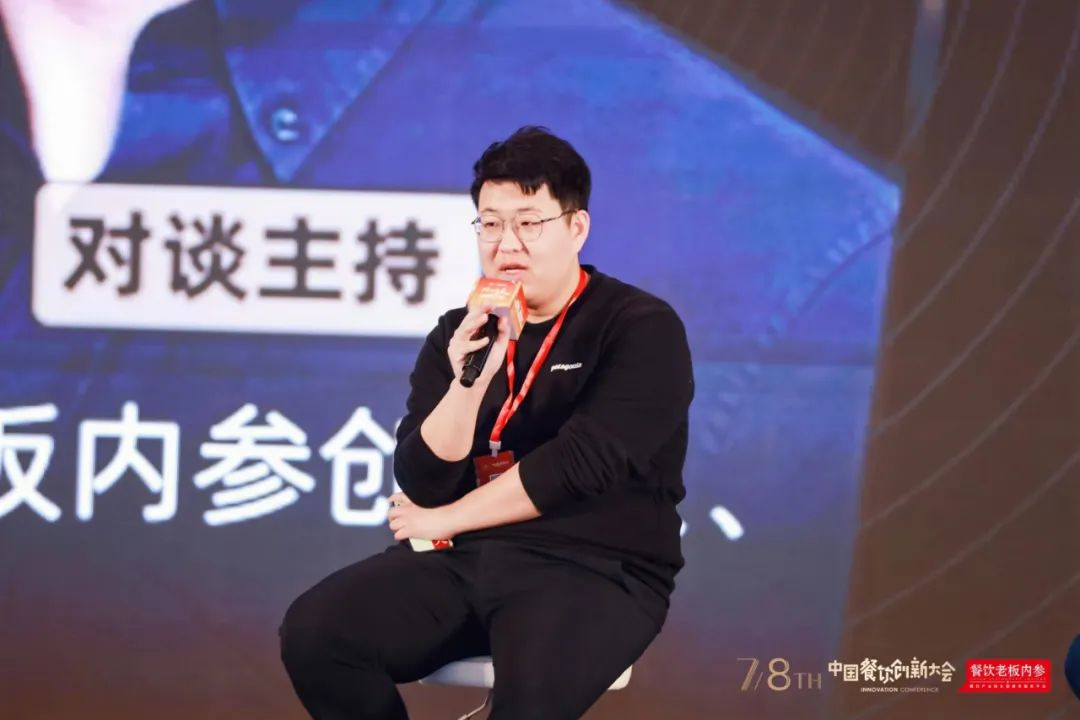
Recently, Jihong Zhang, Investment Vice President at Source Code Capital, was invited to speak at the China Catering Innovation (Biennial) Conference, where he shared his perspectives on the current state and future of China's restaurant industry and investment.
Selected highlights:
Q1: What's the overall picture of the restaurant industry and capital over the past three years? What new trends will emerge in the coming years?
Jihong Zhang: First, I believe restaurant entrepreneurs are gradually developing a more mature and accepting view of capital. Over the past decade, capital left some scars on the industry in certain cases, and there was a period when everyone essentially "demonized" capital. That has changed dramatically in the past three years. Restaurants' acceptance and embrace of capital has increased significantly, and they're able to recognize the positive help and value capital can bring to their future development. I see this as a major shift.
Second, after the three-year pandemic period, perceptions of franchising and partnership models have also shifted — not just among investors, but among restaurant entrepreneurs themselves. Views on development model choices have evolved, and the value of franchising has been re-evaluated and recognized.
Third, many companies that previously operated behind the scenes in the restaurant industry are gradually coming to the surface. Typical examples are upstream players in food manufacturing, supply chain, and related supporting services. In the past year or two, these have been increasingly visible in both primary and secondary markets.
Q2: What are the common characteristics and evaluation criteria of strong restaurant projects?
Jihong Zhang: Looking at restaurant companies Source Code has invested in over the years — for example, in tea drinks there's ChaYanYueSe, in fried chicken and burgers there's Tastien, in fried snacks there's Xijie Fried Skewers, and in Lanzhou beef noodles there's Chenxianggui. Some are company-owned, others are franchise models.
When it comes to good projects, I believe the first thing is still the category and segment model it operates in — this is the most fundamental foundation. In an excellent category and segment, even when the macro environment is weak or internal and external challenges arise, its anti-cyclical and risk-resistant capabilities and vitality will be stronger. At the same time, the resistance and challenges to overcome during scaled growth will be fewer and more manageable — achieving more with less effort.
Second is innovation. In today's competitive environment, you still need some degree of innovation to break out. For restaurant companies, what's more important is grasping the right degree and direction of innovation. Looking back at companies that have achieved success in the industry in recent years, you'll find they were likely built on excellent category foundations plus correct micro-innovation. The former is the root; the latter provides a window and possibility for breakthrough. This innovation might manifest in format and model, product, or management — something worth deep reflection for all colleagues here.
But even so, the two points above probably account for less than fifty percent of the weight. For restaurant companies to truly succeed over longer time horizons and endure, it ultimately comes down to the team. Especially through the turbulence of recent years, I've increasingly come to see the team as the true "ballast," "pillar," and "engine" of a company. The resilience of outstanding restaurant entrepreneurs is something I deeply admire. I've learned a great deal from them — including their focus and immersion in their work, their strong desire and drive to learn, and their continuous iteration and evolution amid complex environments and changes.
Q3: There's been a narrative in recent years that capital has overvalued certain new restaurant concepts, that there's excessive froth, and that some funded brands have failed or underperformed. Some media have said they were "forced to ripen" or depleted by capital. What's your view on these perspectives?
Jihong Zhang: I think everyone should view "froth" rationally. Whether capital markets are cold or hot, capital is ultimately finance, and cyclicality is in finance's DNA — it's an inherent attribute with its own internal logic, so it's unavoidable. Markets have their peaks and their ice ages, just like the four seasons.
So rather than discussing market fluctuations, I think it's more meaningful to consider this question together — as a restaurant company's leadership team and founder, how can you better leverage capital and harness resources. This is a more worthwhile topic.
When markets are good and conditions are more relaxed, the cost and difficulty of seeking capital are much lower. At such times, how do we use capital to repair the roof while the sun shines and prepare for winter? How do we use the talent resources, intellectual resources, and social resources behind capital to build a stronger company, lay a better foundation for future development, and establish competitive moats? And when conditions are tough, how do we draw on past accumulation and respond nimbly — as this year's conference theme puts it, "grow with patience and break through the winter"? This reflects a team's grasp of development rhythm and its ability to effectively utilize capital.
This applies not just to restaurants but many other industries. Some companies raised too much money, and it became a hot potato — they ended up doing many inefficient things while neglecting fundamental internal problems. So the amount of money isn't the key to understanding or judging this issue. What matters is maintaining a clear and calm mind, doing the right things at different stages of the market and your company. Capital and resources are merely "weapons" and "tools" on your path to success.
Q4: Speaking of cycles, our conference theme this year is "Grow with Patience, Break Through the Winter." What advice would you give on how restaurant companies can navigate the current cycle and achieve确定性增长?
Jihong Zhang: First, in the near term, you definitely need to tenaciously survive through the darkest hour before dawn. The general expectation for recovery is around April or May of next year — there are still more than four months from today. At the tail end of the cycle, you must ensure you can survive.
Then comes "growth." I think after experiencing a cycle, people's understanding of "growth" may evolve in dimension and substance. In the past, when people discussed growth, it was mostly horizontal growth — outward-looking growth. But much of a company's growth and change may be internal, vertical growth that isn't visible externally. It's worth asking yourself: When my company's horizontal scale and external growth may not be that large, has my internal capability and vertical skeleton grown? Perhaps the flesh isn't growing, but the bones are becoming stronger — this is also a form of growth, and one with even higher quality. When the next cycle comes and external nutrients are abundant, you may be able to unleash even greater power.
In the "post-pandemic era," regarding how to pursue development, I believe the following aspects are worth deep reflection, effort, and adjustment:
- Model optimization. How to make your model and unit economics more vital, enhancing their necessity in both material and spiritual value. How to operate more lightly, lower your break-even point, and make your cost structure lighter, thereby increasing your margin for error.
- Development model. In the post-pandemic era, from national policy directions to employment protection to supporting "individual and micro-business economy." Some companies that were previously strong in product, operations, and brand capabilities may have reached a juncture where they should consider whether partnership or franchise models can build new engines for the next phase of development.
- Synthesizing the above, there's a saying I find particularly apt that I'd like to share with all restaurant colleagues: Only by "planning carefully before acting" can you "act with determination."
Jihong Zhang joined Source Code Capital in 2017, focusing on investments in consumer and robotics sectors. Previously, he worked at Yimei Capital, participating in direct investments in technology and consumer industries as well as fund investments in China and overseas markets. In the chain restaurant and retail space, he has led or participated in investments including ChaYanYueSe, Xijie Fried Skewers, Chenxianggui, Linji Convenience Stores, and KE Holdings.


- CodeView | Source Code's Wu Jian: Reassessing the Value of Manufacturing
- CodeView | Power Laws — Understanding Complexity in a Non-Random World
- CodeView | Source Code's Dual-Carbon Investment: Exploring New Species Through Full-Chain Layout
- CodeView | China Electric Power News Interview with Source Code's Wang Di: Industry Inflection Point Arrived, Vast Market Space
- CodeView | A Day of Green Power Living
- CodeView | Source Code's Yungang Huang: How Does AI4S Land in Different Stages, Industries, and Markets?
- CodeView | Source Code's Yungang Huang: "Cross-Disciplinary Intersection" Driving Innovation in Healthcare
For more CodeGathering members, click "Read Original" to view