Code View | Source Code Capital Partner Wu Jian Attends Zhongguancun Forum: Hard Tech Investment Is Right on Time

Investing in hard-tech startups isn't just about putting in money — it's also about what you do after the check clears.
Hard tech has become a focal point for both the government and society at large, and hard tech startups are gradually rising to prominence in this wave. But investing in hard tech requires capital to have greater "patience."
"For many hard tech startups, the journey from zero to one is when they need money the most — and when they most lack orders. What investment firms need to do goes beyond simply putting in capital; they need to focus on how to create value for portfolio companies post-investment, while getting the balance right." On May 28, at the Zhongguancun Forum's Hard Tech Investment and Development Forum, Jian Wu, partner at Source Code Capital, was invited to attend and share his views on industry topics including "how to build a healthy and effective hard tech investment ecosystem" and "how to address the massive uncertainty in early-stage hard tech investing."
Wu believes that developing China's hard tech sector is an imperative path. On this thorny road, it requires not only the meticulous cultivation of hard tech entrepreneurs, but also the combined efforts of government, society, and investment institutions. In the relationship with portfolio companies, investment institutions need to play not just the role of "capital provider," but also deliver strong post-investment services. Given the long investment cycles characteristic of hard tech, investment institutions need to think more multidimensionally about macro direction, industry connections, and exit pathways to reduce "uncertainty."
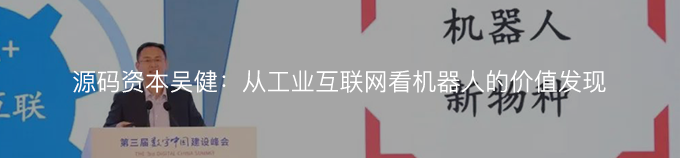
 (Jian Wu, Partner at Source Code Capital, at the "High-Level Dialogue" session of the Zhongguancun Forum - Hard Tech Investment and Development Forum)

01
Investing in Hard Tech Startups: Not Just "Capital," But Heavy Emphasis on Post-Investment Support
In Wu's view, hard tech investment is well-timed. From a market fundamentals perspective, encouragement for hard tech from the state, society, and capital has reached unprecedented levels in recent years, with the government rolling out substantial support policies for certain "chokepoint" areas. Wu noted: "What hard tech startups often need most is for investment institutions to help them land orders, especially from benchmark customers. Given this specific environment, the 'degree' of involvement is crucial — you can't not help, but you also can't help too much, or you end up doing what the portfolio company should be doing itself. Source Code Capital is currently exploring how to make our post-investment support more robust, to better help hard tech companies create value, though there remain considerable challenges."
 (Jian Wu, Partner at Source Code Capital, delivering a speech)
Wu stated that Source Code Capital currently manages 35 billion RMB in assets, with a substantial portion of its 300+ portfolio companies being hard tech enterprises. Its investment coverage spans the full development cycle from seed stage through early and growth stages, with investment areas including intelligent manufacturing, industrial digitization, life sciences, and international expansion.
02
Three Key Levers for Enhancing Effectiveness and Certainty in Hard Tech Investment
Early-stage hard tech investing inherently carries massive uncertainty. So how can investment effectiveness and certainty be improved? Addressing this question, Wu proposed three key levers based on Source Code Capital's own practice: big-picture thinking, industry connectivity, and diversified exit pathways.
 (Jian Wu, Partner at Source Code Capital, delivering a speech)
First is big-picture thinking. Only with a macro perspective can one better capture major trends and avoid directional errors. What constitutes big-picture thinking? Wu explained it mainly comprises two aspects. One is global trend awareness — taking AI as an example, the mainstream players are all in the United States, which is one major direction to grasp. The other is national industrial policy; merely reading the 14th Five-Year Plan may not be enough — to see more clearly, one needs to dig deeper into the plans and technology roadmaps of each vertical sector.
The second key lever is industry connectivity. In hard tech, all financially-oriented investment institutions are vigorously trying to increase their industry attributes, and the best way to achieve this is by establishing more channels of communication with industry players. For instance, after ChatGPT emerged, many industry players were thinking about how to connect with it. Industry players' strength lies in having certain industrial foundations and diverse industrial perspectives; financial investment institutions' strength is having sharper instincts and more efficient follow-through. Combining the two may uncover more new investment opportunities.
The third point is exit pathways. Having experienced the shifts of the past two to three years, uncertainty about future capital market directions has been increasing year by year. Hard tech investment cycles are long — so long that even fund-of-funds' lifespans may not last until an IPO. Investment institutions have exit possibilities at various stages, so investors need to pay more attention to more commonly used exit methods such as M&A.