MaHui Member Mech-Mind Lists on Hong Kong Stock Exchange | Conversation with Tianlan Shao: Focus on Fundamentals, Always Day 1, Stay True to Long-Termism
Source Code Capital co-led Mech-Mind's Series B+ round in 2020, then made two follow-on investments in its Series C, for a total of three rounds.

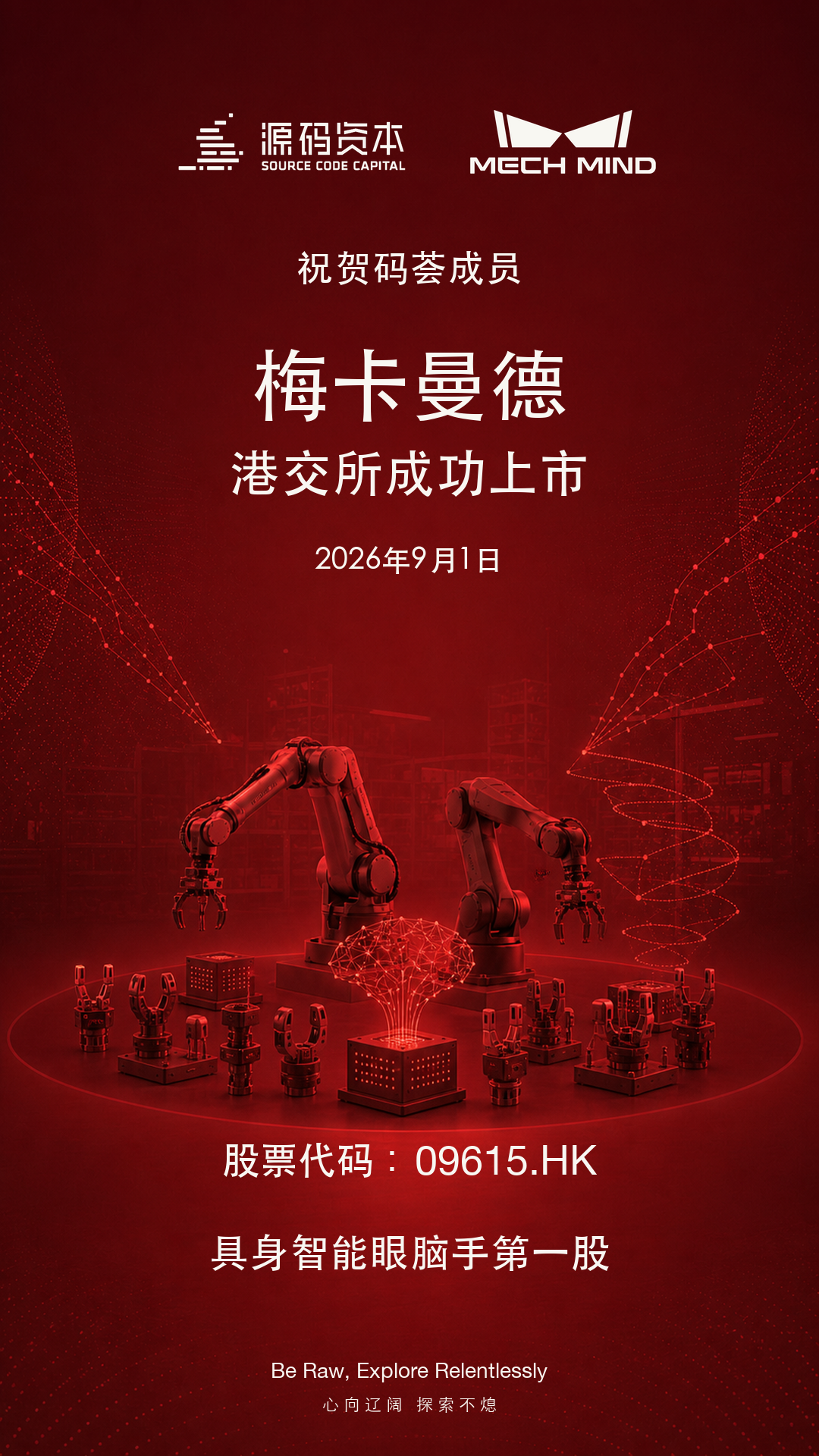
Today, MaHui member Mech-Mind officially listed on the Hong Kong Stock Exchange, becoming the first public company in embodied AI vision-brain-hand integration, with stock code 09615.HK. The IPO offered 23.1406 million shares globally at HK$101.70 per share, raising approximately HK$2.353 billion; as of 9:35 AM today, its market cap exceeded HK$12 billion. This marks the fourth robotics company in Source Code Capital's portfolio to go public, following Woan Robotics (06600.HK), LD Robot (01236.HK), and Unitree (688836.SH).
Source Code Capital (hereinafter referred to as Source Code) co-led Mech-Mind's Series B+ round in 2020 — a time when "intelligent robots" were far from consensus, as Mech-Mind founder and CEO Tianlan Shao puts it. Source Code subsequently doubled down twice in the company's Series C, investing a total of three times, witnessing and accompanying the company through its most critical development phase to today's capital markets debut. It remains one of the company's important long-term institutional shareholders.
Since its investment, Source Code has supported Mech-Mind across talent recruitment, brand building, policy consulting, business development, capital raising, knowledge sharing, and ecosystem engagement, continuously fueling the company's growth.
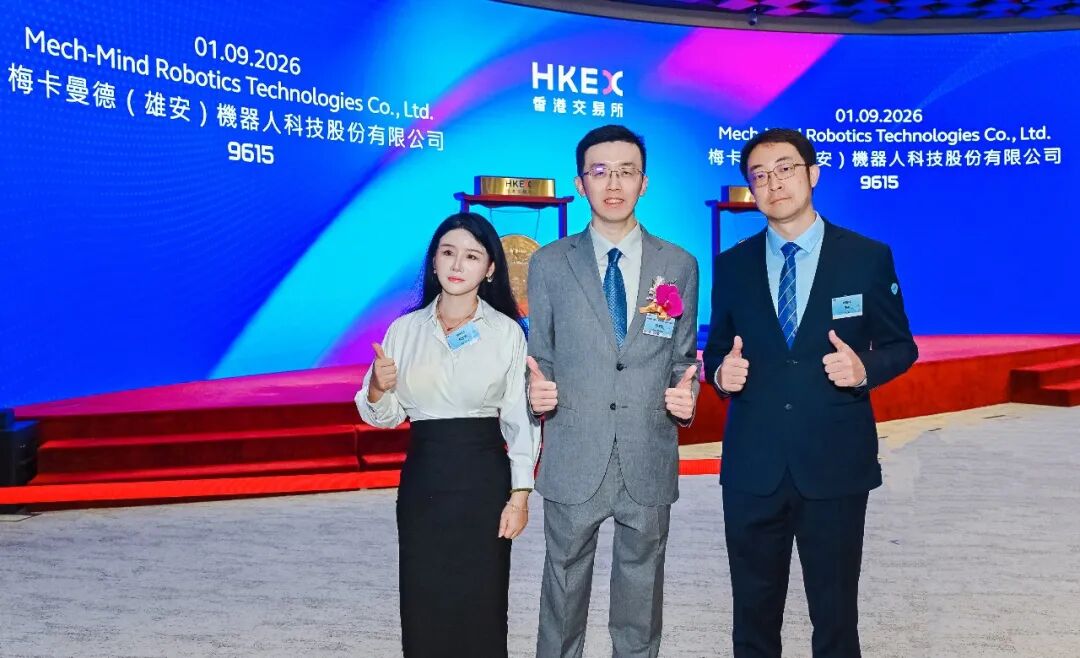
Mech-Mind founder and CEO Tianlan Shao (center) with the Source Code Capital team at the listing ceremony
On the eve of Mech-Mind's IPO, we sat down with Tianlan Shao: Over the past decade, how did Mech-Mind gradually apply a direction that had yet to form consensus into broad scenarios? How does he judge what to do and what not to do? And from 2020 to today, how does he understand the relationship between Source Code and Mech-Mind?
The following is an edited transcript of our conversation:
1
Ten Years: What Changed? What Didn't?
Source Code: Mech-Mind is now ten years old. Setting aside revenue, funding, or deployment numbers, what do you see as the single most important leap the company has made?
Tianlan Shao: That's actually quite an interesting question. I think the most important leap has been taking "intelligent robots" from a distant concept and making it concrete, making it real.
When we started, including when Source Code invested in us, "intelligent robots" was still "pre-consensus" — the exploration and foresight of a few. Today, it's become broad industry consensus, and we've validated it step by step through actual technology and products.
Here's an analogy. When a child is just born, saying they'll become a scientist, firefighter, or world champion is still a distant wish. But once they start training and competing, the path forward gradually clarifies, and the same goal becomes "within reach."
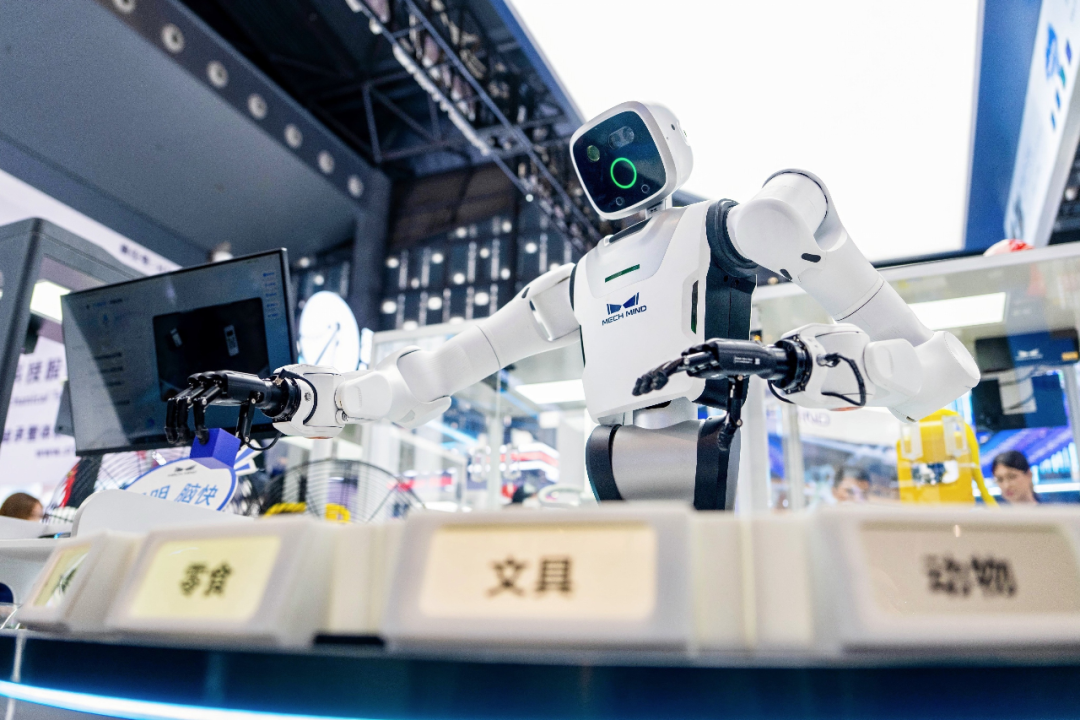
Mech-Mind is the same. We said we wanted to build a robot brain — an ambitious goal. Now, we can discuss more concretely: what capabilities should a robot brain have, what architecture and approach to broadly adopt, what to do first and what next, and which industries and customers to serve.
Source Code: Moving from vague imagination to concrete implementation — was there a clear signal when you felt "this is starting to work"?
Tianlan Shao: I'd boil it down to three things: clear demand, good results, and efficient delivery. I've mentioned in talks a maturity scale from 0 to 10. The mark of this leap is when customers start replicating on their own: they have clear, real demand, we deliver good enough results, and we can complete delivery efficiently. Only when these three align does something truly become concrete.
Starting around 2021 and 2022, the demand we encountered was no longer just exploratory pilot projects from innovation departments at large companies. More and more genuine production needs began emerging. For serious industrial applications, customers don't place large orders right away — they typically start with small-scale trials and validation. Once validation is complete, replication accelerates.
Source Code: You've mentioned more than once that the company "hasn't changed much" over these ten years. Specifically, what was determined early on and remains unchanged today?
Tianlan Shao: What's changed is the technology; what hasn't is the direction. I still have the pitch deck I showed Source Code in 2020, and I found the 2018 version too. Looking at them now, the products, case studies, and overall presentation were quite rough.
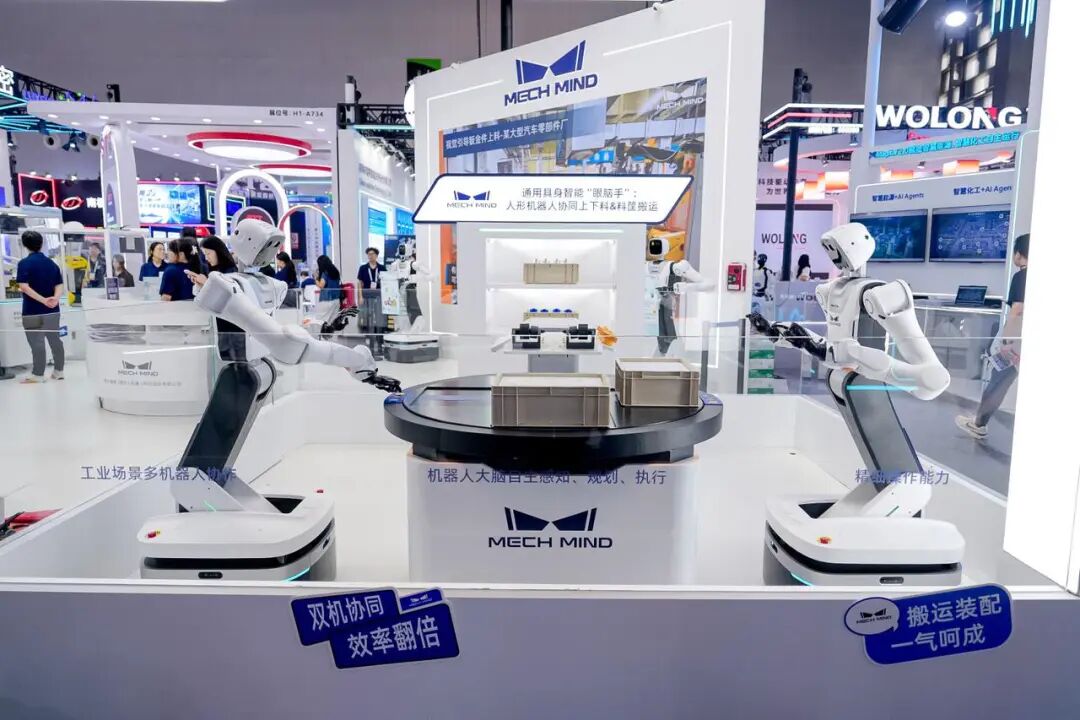
But what they describe is almost exactly what we're doing today: building robot brains, developing AI, vision, and planning capabilities around robot brains, creating standardized products that work across industries and robot platforms; not building complete machines, not doing system integration. We now call it "one brain, multiple forms" — that term didn't exist then, but it was the same idea: robot forms can vary, while brain capabilities can gradually unify.
Over the years, specific technologies, product capabilities, and business scale have all advanced. But our product form, business model, target markets, core competitiveness, and position in the industry haven't fundamentally changed.
Source Code: Mech-Mind now derives half its revenue from overseas. Between "selling products abroad" and "becoming a truly global company," what do you think still separates the two?
Tianlan Shao: We started on international expansion very early, and it wasn't just about moving product. Our products target global demand, and delivery, service, and ecosystem need to globalize too. We now have offices in Japan, the United States, South Korea, and Germany, and we're continuously building local capabilities. These capabilities have taken shape but haven't yet reached a high level of maturity. The ideal state is being able to collect demand from global customers and cover them with service capabilities.
Overseas customer attitudes have also shifted. When Source Code first invested in us, customers saw these technologies as "future technology." Now, more customers say "I want it today," viewing us as ready-to-deploy forces that can immediately help them achieve automation. Our earliest international business actually radiated outward from China: first completing validation at Chinese factories of multinational corporations, then following those customers as they replicated globally.
2
What to Do? What Not to Do?
Source Code: Mech-Mind has consistently focused on developing robot brains. How do you judge your capability boundaries — what must you do, and what do you deliberately avoid?
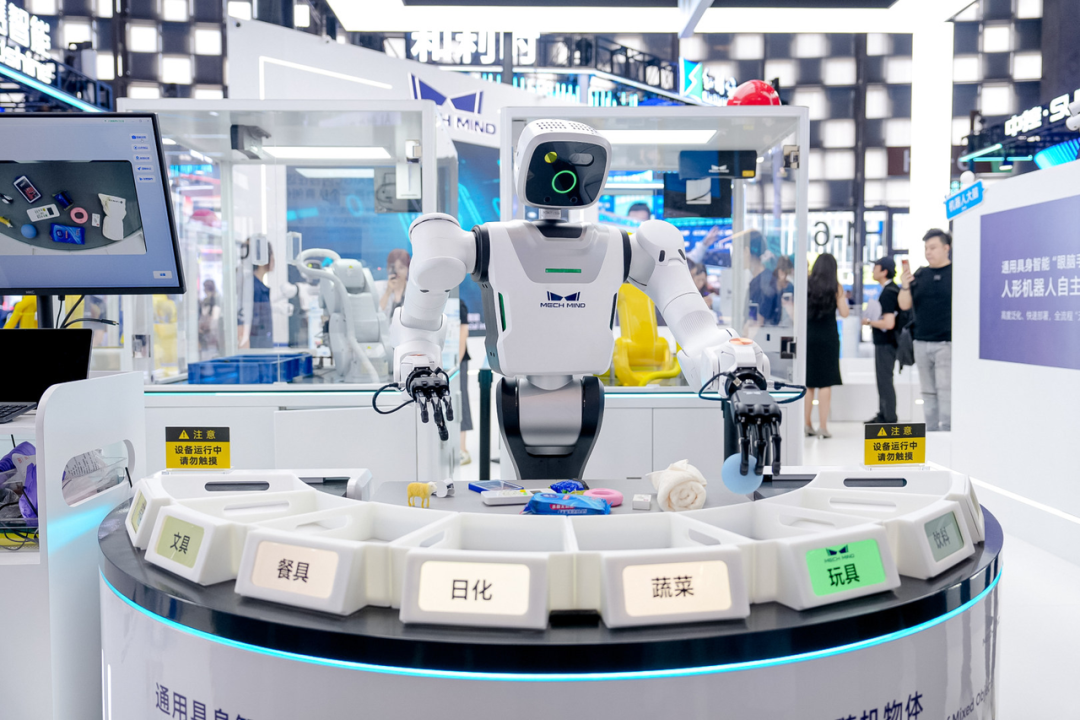
Tianlan Shao: Our absolute core is the robot brain, because we're called Mech-Mind, and I myself come from a computer science background. I have two criteria for whether to do something: first, only do standardized core technology products, not custom projects; second, anything functionally and responsibility-wise inseparable from the robot brain must be done together.
For example, a robot's "eyes" and "hands" are both highly coupled with the brain. When a grasp fails, it's hard to tell whether it's "poor eyesight" or a "fuzzy brain." Capabilities where function and responsibility can't be separated must be unified.
Conversely, parts that can be clearly delineated in responsibility and already have mature market supply — like robotic arms and mobile bases — we don't redundantly build. We cover all standardized capabilities inseparable from the robot brain; what can be separated, or what's non-standardized, we don't do.
Source Code: But building standardized products and industry infrastructure means giving up many "apparently faster" opportunities. Was there a choice you actively passed on that you now look back on with relief that you resisted?
Tianlan Shao: The most obvious is not doing custom system integration. Custom system integration is a massive industry — it's not bad, it's just different from what we're building.
In a startup's early days, when standard products aren't mature enough, revenue growth tends to be slow. Taking on a few customization projects can easily boost revenue in the short term; but it also continuously consumes R&D resources, capital, and organizational energy, gradually throwing off the company's rhythm. It's actually a trap.
We chose to honestly build products. Standard products start slower — they require sustained R&D, validation, and customer education. But once the product matures and customers complete validation, it can be continuously replicated. What we truly want to build is a cross-industry, cross-application robot brain, not growth dependent on one custom project after another.
Source Code: Technology hype cycles have come and gone over the years. How do you judge what to absorb and what to avoid?
Tianlan Shao: I think an important core competency for a technology company is what I'd call "technical taste."
Some tech waves prove genuine, others false. Some later prove correct — like Transformer, generative AI; others prove to be detours or dead ends. Technical taste is the ability to judge whether an emerging technology represents a promising direction, a distant concept, or a wrong turn. This judgment doesn't come from nowhere — it requires hands-on R&D, exposure to real demand, extensive testing, and staying connected with people truly on the front lines. Like Yiming Zhang, who to this day personally maintains communication with many researchers precisely to preserve this technical taste.
The premise for not chasing hype is having taste yourself; without it, you can only follow the hype. We emphasize absorbing technological progress with judgment, but we're absolutely not insular. Including Agent systems, world models, and other emerging technologies, we're continuously researching and investing. Technology will keep evolving, but product form and business model shouldn't change frequently; the more ideal state is technology driving product and business, with data and feedback from business in turn feeding back into technology, creating a self-reinforcing loop.
Source Code: At this listing milestone, if you had to give Mech-Mind a definition, how would you want the outside world to understand this company?
Tianlan Shao: We're most afraid of being misdefined, so we put the answer in the company name itself: Mech-Mind. What we do is give robots brains, make them more intelligent.
We'll certainly have specific products, and we'll solve specific problems like loading, handling, assembly, cutting, welding, gluing. But if you only see one particular product or application scenario and use that to define Mech-Mind, it's like "blind men touching an elephant." These are just facets of Mech-Mind's business; what we always center on is robot intelligence.
3
Why Source Code?
Source Code: In 2020, Source Code led Mech-Mind's Series B+ round. At the time, intelligent robots were far from the attention they receive today. Do you remember the first meeting between the two sides?
Tianlan Shao: Very clearly. Usually when investors first meet founders, they start with "tell me about your company." But Source Code told me right away: "I'm going to invest in you." That was pretty startling — I wondered if it was some kind of scam.
As we talked more, I realized Source Code had done extensive homework before the meeting. They had solid understanding of our market position, industry applications, technology development, including related companies in the sector. Much of what I prepared to present, they already knew. So they had formed a fairly clear judgment by the first meeting, without much need for introductions from scratch or catch-up due diligence. Our discussions quickly moved to more specific topics.
Source Code: Compared to other investment institutions you were in touch with then, what was different about Source Code?
Tianlan Shao: What impressed me deeply at the time: Source Code first researched the sector and companies, formed its own judgment, then came to the founder. I really liked this research-driven style. At the same time, it was willing to believe in a future that was still small and unproven today.
Of course, Source Code has a "willingness to bet" side, but it's not betting blindly. Being willing to bet means believing in something that hasn't become consensus and is still small in scale; but it's absolutely not blind betting — it's doing thorough homework on the sector, the company, the technology, and the customers before making a move. Both daring to bet and doing solid preparation — I think that's a great balance.
Source Code: From leading the Series B+ in 2020, to two subsequent follow-on investments, three rounds total over these six years. Has your understanding of Source Code changed?
Tianlan Shao: I don't think Source Code has changed much fundamentally — two things: first, very professional; second, very patient.
Over these years, Source Code has never asked us to do things for short-term performance that don't align with our long-term direction. I think only with sufficiently professional research and confidence in one's judgment can you avoid repeatedly replacing your original judgment with short-term results. Source Code both believes in the company and gives it space to accumulate and validate at its own pace.
This patience manifests in two specific ways. First, on business direction. Our business model is standardized, generalized products, so early accumulation is relatively slow. When the company hadn't been fully validated and was still quite small, Source Code recognized our approach of building deep strength for later breakthroughs, and gave us sufficient patience.
Second, on capital markets. Source Code gave us some guidance; we've moved fairly steadily, not pursuing pushing valuation very high in the short term. Building deep strength for later breakthroughs sounds easy, but during the accumulation process, when occasionally asked whether you could move faster, Source Code never made that demand of us.
Another point: Source Code as an institution itself has stayed on the front lines, very active, having gone through complete startup cycles. The market has risen and fallen several times over these years; institutions that can maintain this level of activity and judgment are actually quite rare.
Source Code: If you set aside the standard definition of "investor and portfolio company," how would you characterize the relationship between Mech-Mind and Source Code?
Tianlan Shao: We're more like "partners" — specifically, "startup partners."
Source Code was among the first institutions to make a substantial bet on us when we were still early and not fully validated. It continued investing later, accompanying the company all the way to today, and also provided lots of help. To me, that's a "startup partner."
4
A Person Who Needs to "Figure It Out"
Source Code: Setting aside external labels like Tsinghua returnee, technical elite — what's Tianlan Shao like in daily life?
Tianlan Shao: There probably isn't anything particularly surprising. I'm very stable in life. If you met me seven or eight years ago, you might find I'm still wearing pretty much the same clothes, and early photos don't look that different from today.
I think I'm someone who very much pursues "figuring things out." Why does a product look this way, what are the company's product model, strategy, organization, and development rhythm, including the relationship with capital markets — I want to think through all of it logically. Before I do something, I must understand clearly what I'm actually doing.
To think things through, I read a lot. Source Code's post-investment product Code Class sends me many books every quarter. I can't read every one, but I read some. Now with AI, I also use it to help me read papers, financial reports, and history, including neurobiology — because I previously worked at Tsinghua's Brain Research Institute.
It all comes down to the same thing: I can't accept "doing it because someone said so, because everyone does it" — I always need to first understand why.
Source Code: How do you judge whether you've "figured something out"?
Tianlan Shao: Nothing more than two things: first, underlying logical deduction; second, whether there's sufficient reference.
You can't just listen to what others say, or follow the crowd. I read business history, company biographies, financial reports — like the China Shakes the World series, and many books about Huawei. History has far more examples of failure; you must think things through from the root, not just imitate the "form" of what others do.
For example, what rhythm should company fundraising and valuation maintain, why go global and how to do it — on one hand, deduce from underlying logic; on the other, seek references, like seeing how Siemens and FANUC did it. In the end, it's still two things: principles and references.
Source Code: If you were destined to leave one evaluation of yourself with the outside world, what would you want it to be?
Tianlan Shao: Seek truth from facts, keep pace with the times. Not arrogant, not small-minded.
Source Code: Ten years into entrepreneurship, what's the biggest difference between you now and when you first returned to China in 2016?
Tianlan Shao: I think it's a deeper, more embodied understanding of long-termism.
When I first came back, I hadn't seen that much yet. Ten years of entrepreneurship, you see many companies trying various so-called "shortcuts," you experience different cycles, and many outcomes aren't good. Seeing more, you better understand what can truly create long-term value. When you see some short-term approaches again, you no longer think "maybe this works too," "maybe this is fine too."
When you truly believe in what you're doing — that's the foundation of long-termism. Why you can persist long-term, in the end, is because you truly believe in it.
Interview Notes:
This interview was scheduled during the most intense final sprint before Mech-Mind's listing, with Tianlan Shao speaking with us for over an hour between two meetings. Throughout the conversation, he rarely discussed the listing itself, focusing more on how a company maintains its own rhythm amid the noise.
From that rough pitch deck in 2020 to knocking on the capital markets' door today, Mech-Mind has taken a path that wasn't fast, but was sufficiently solid. And Source Code Capital happened to be the one that understood it early and was willing to walk the entire way.