How can a "systematic, productized" mindset be applied to post-investment services?

The "four horizontals and four verticals" post-investment service system and the product model of "demand, supply, and circulation."
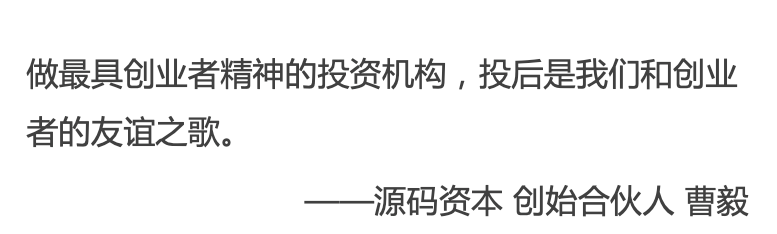
On January 7, 2020, Source Code Capital held its "2019 Annual Post-Investment Service Report" in Beijing. For the first time, the event presented a comprehensive overview of Source Code's approach to "systematized, productized" post-investment services. Nearly a hundred entrepreneurs from Ma Hui and investors attended.
To date, Source Code Capital's portfolio includes nearly 150 companies. In 2019, it completed 672 post-investment service actions, up 57.7% from 2018. Of these, 49.7% served early-stage investments and 50.3% served growth-stage investments. By sector: industrial internet accounted for 41.4%, consumer 29.6%, finance 15.9%, and international expansion 13.1%.
Driven by its mission to "create value for companies and grow alongside entrepreneurs," Source Code Capital's post-investment services follow the principles of "constant companionship, rapid assistance, and abundant creation" — continuously iterating and optimizing on a foundation of systematization and productization.
The "Four Horizontals, Four Verticals" Post-Investment Service System
Source Code's systematization comprises two parts: "structural systematization" and "service systematization." "Structural systematization" refers to the organizational structure of the post-investment team. The structure's systematization determines the team's service systematization. Systematization is like a map for post-investment services, ensuring we can provide complete, correct, and forward-looking support.
Organizational structure is the foundation of all post-investment work and a critical part of systematization. Source Code established a Post-Investment Management Committee to coordinate and optimize resources for maximum efficiency. Under this committee, functional departments address entrepreneurs' varied needs: policy research, brand and PR, human capital, capital对接, and more.
"Service systematization" means providing entrepreneurs with post-investment support across multiple cycles and dimensions of business development. To this end, Source Code mapped entrepreneurs' needs on the vertical axis and service types on the horizontal axis, constructing the "Four Horizontals, Four Verticals" framework — a visual expression of systematized post-investment services and a long-term strategy.
On the vertical axis, entrepreneurs' concerns are divided by time and space. By time: long-term focus on strategy, short-term focus on growth. By space: internal focus on organization, external focus on resources.
On the horizontal axis, entrepreneurs at different stages have varying needs for any given type of support. Source Code provides four solution types — general, customized, proactive, and supplementary — comprehensively meeting entrepreneurs' needs. These correspond to four service categories: "sunshine for all" (universal support), "sending charcoal in snowy weather" (critical aid), "repairing the roof before it rains" (proactive preparation), and "adding flowers to brocade" (enhancement). Guided by this framework, Source Code has already developed 23 post-investment service products.
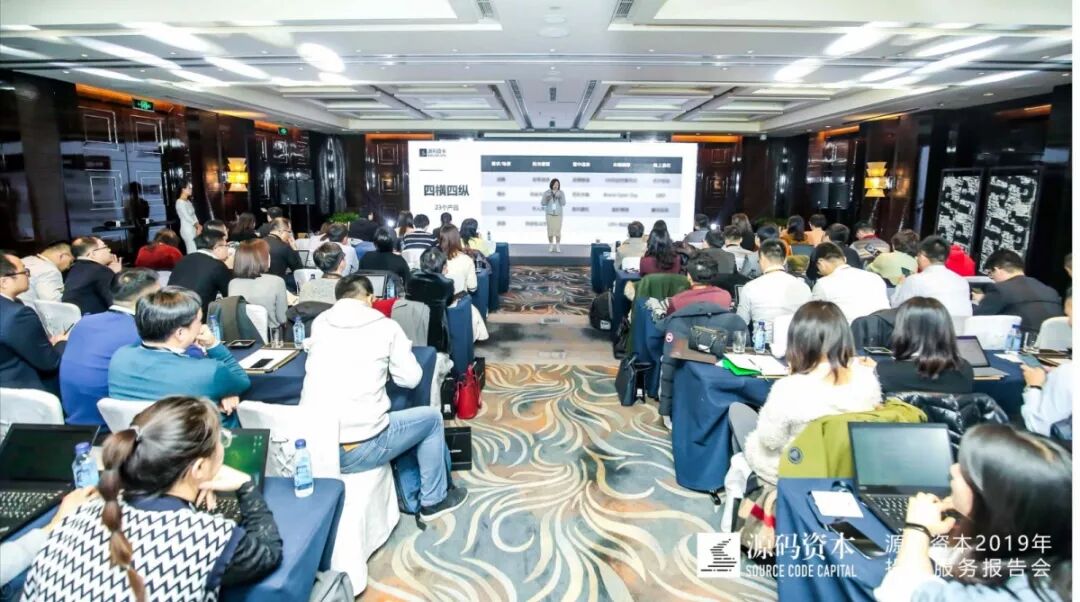
"Four Horizontals, Four Verticals" presentation
The "Demand, Supply, and Circulation" Product Model
As portfolio companies at different stages multiply, so do post-investment demands. To efficiently capture and categorize needs, enable rapid allocation and optimized supply, and thereby reduce costs and improve efficiency, Source Code designed a "Demand, Supply, and Circulation" model. Applying product thinking to this model ensures Source Code remains focused on user value, delivers higher-ROI post-investment services, and continuously expands boundaries to grow alongside portfolio companies.
In "circulation productization," the goal is to understand portfolio companies' real needs as quickly as possible while ensuring these needs are efficiently routed internally. Source Code then locates and deploys relevant resources to help companies address pain points in the shortest time possible. The demand对接 process must be standardized, process-driven, and normalized — a core characteristic of product thinking.
Take the "Post-Investment Half-Day Tour" product. To standardize and processize entrepreneur对接, Source Code's post-investment team designed this dedicated service for demand matching. After becoming a Source Code portfolio company, entrepreneurs are invited — along with their core business teams — to meet face-to-face with all functional colleagues on the post-investment team, achieving zero-distance, zero-lag demand-supply对接.
The "Post-Investment Half-Day Tour" follows a standardized流程: ice-breaking, introduction to Source Code's post-investment services, the founder sharing their original vision, company overview, current status, and needs; then direct对接 and discussion of needs with each business function; prioritization of issues to distinguish primary and secondary concerns; and clarification of subsequent execution for various post-investment products.
For founders and their teams, beyond receiving preliminary solutions on-site, they gain understanding of Source Code's post-investment services and team members — making it easier to mobilize resources going forward. For Source Code's functional departments, beyond rational understanding of the entrepreneur and company, they develop an intuitive team profile on a human level, facilitating more efficient post-investment service delivery.
In "supply productization," another feature of product thinking is that product design must approach problems from the user's perspective and continuously iterate to meet evolving needs. For example: refining and implementing strategy at the early stage, building and磨合 core teams, expanding product categories during growth, iterating and scaling mid-platform technology, and universal challenges like financial compliance, financing and bond issuance, and equity incentives — all require post-investment support from the entrepreneur's first-person perspective, synchronized and co-evolving with the company's development.
Take the flagship product "Code Brain." All course themes originate from genuine needs of Ma Hui entrepreneurs: sharing practical干货, visiting star companies, mental exercise check-ins, guidance from seasoned experts, and more. By end of 2019, Code Brain had held 23 sessions, serving nearly 650 entrepreneur participants. In 2020, beyond established course types, Code Brain will undergo comprehensive upgrades addressing new questions and needs raised by Ma Hui entrepreneurs. Through the lens of the "Demand, Supply, and Circulation" model, Source Code's product design and R&D constitute the supply side — genuinely starting from entrepreneurs' needs at different stages, continuously self-optimizing, and forming a complete product闭环.
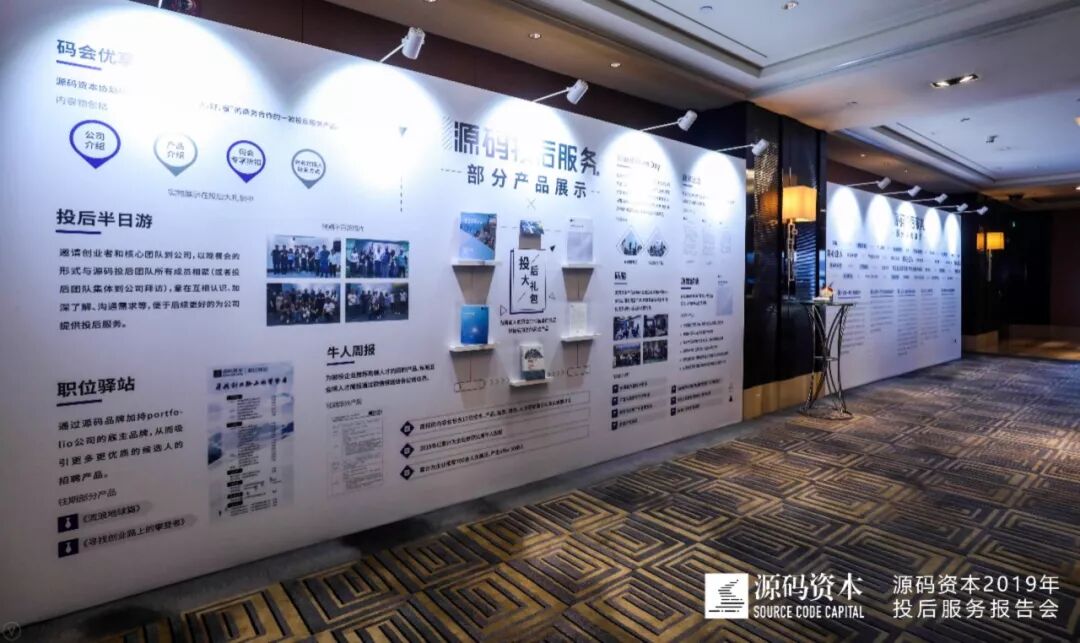
Source Code post-investment service products on display
Perspectives on Post-Investment Services
Q1: What about the view that good companies don't need help, and bad companies can't be helped?
Source Code Post-Investment: This is a common market perception. It's undeniable that entrepreneurs are exceptional people, but startup success requires the right timing, location, and people. Beyond needing to be fundamentally strong, entrepreneurs also need support from various quarters. So Source Code continuously builds capacity, hoping to become part of the entrepreneurial resource ecosystem — providing strong support when entrepreneurs need it, fulfilling our mission to "create value for companies and grow alongside entrepreneurs."
Q2: What drives Source Code Post-Investment to keep advancing?
Source Code Post-Investment: In our eyes, entrepreneurs are resilient, daring individuals with dreams of changing the world. The entrepreneurial journey is inevitably rugged. Source Code's post-investment team hopes to assist from the entrepreneur's perspective, using our vantage point and professional capabilities to participate in and advance this world-changing process.
Source Code emphasized post-investment services from its founding. The fund has consistently supported post-investment development in "people, resources, and capital" — guiding our intentions, providing trust and space, enabling the team to focus on value creation itself.
"You're shaped by who you're with." The post-investment team is fortunate to learn from exceptional entrepreneurs and grow alongside them — truly a high-density, high-quality form of nourishment. As the team's mental, physical, and emotional capacity, data, algorithms, and computing power improve, we can in turn support Ma Hui entrepreneurs. This cycle enables the team to provide more professional, deeper, and more efficient post-investment services that meet entrepreneurs' needs.


Engage with Source Code Post-Investment
The above covers part of Source Code Capital's post-investment service annual report. Want to say something to Source Code Post-Investment? What's your take on Source Code's post-investment services? Leave us a comment — the top 10 most popular comments will receive a special gift from Source Code Post-Investment. Happy New Year in advance!