How to Design Mini Program Virality: Acquiring Users at Low Cost | Code Brain Issue 7

Code Brain connects Source Code Capital's entrepreneurs with external experts for private, offline brainstorming sessions.
Code Brain
Issue 07
"Code Brain" is a key component of Source Code Capital's post-investment service system and an offline gathering for the Code Club community. Held monthly, it brings together Code Club CEOs and external experts for private brainstorming sessions on topics and sectors that entrepreneurs care about most, creating networked learning that strengthens community ties and drives personal growth.
Code Brain Issue 07 delved into user acquisition and viral growth tactics within the WeChat ecosystem and mini-programs — how startups can leverage mini-programs for viral裂变 and low-cost user acquisition. Below are highlights from the session.

Code Brain Issue 07 — Live Event
Contents Overview
- Advantages of Mini-Program Viral Growth
- Finding Your Mini-Program Entry Point
- Mini-Program Construction
- Choosing Viral Scenarios and Their Differences
- Million-User Mini-Program Viral Growth SOP
- Ignition: Three Traits of Viral Audiences
- Deliver Value to Users, Build Products That Make Money
Guest Speaker

Jian Feng, CEO of Deep Operations Select
Previously planned multiple hit mini-programs including Fun Auction and Connection Chain
1. Advantages of Mini-Program Viral Growth
1. Instant Feedback Without Connection Points
We initially chose mini-programs primarily for marketing, focusing on user viral growth within the WeChat ecosystem. But what's the most important addictive mechanism to drive users to spread your product? Instant user feedback. Yet within the WeChat ecosystem, unless a user follows your official account — and it needs to be a service account — you can't push template messages to update them on task progress, earnings, new followers, or comments.
But much of growth work involves new users who haven't followed your service account, making "instant feedback" impossible. Mini-programs solve this directly. Once a user clicks into your mini-program, you can collect their form ID and push "service notifications." We've achieved recall rates as high as 30-40% through this user touchpoint.
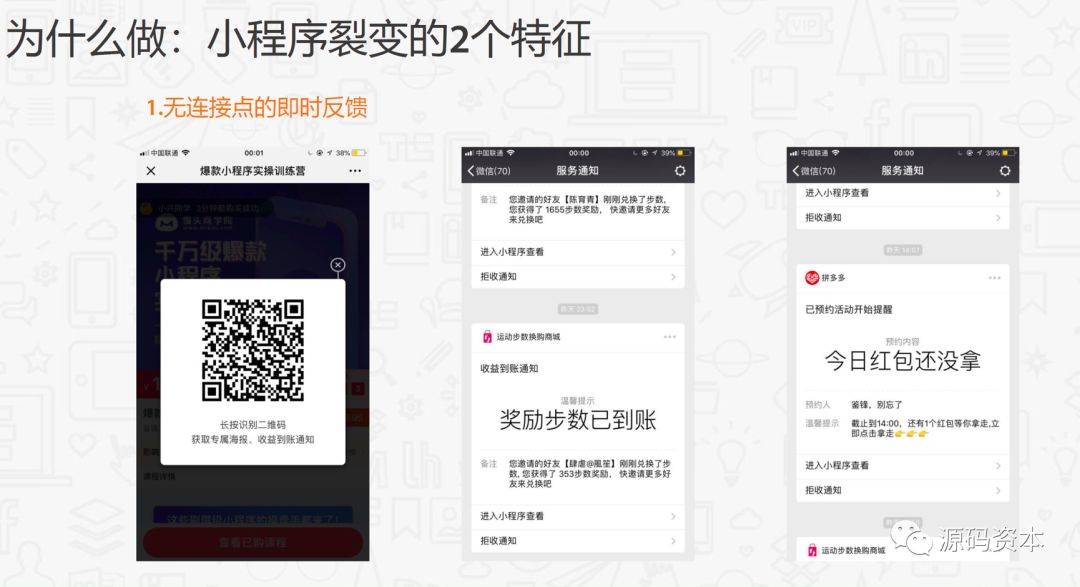
Image source: Jian Feng
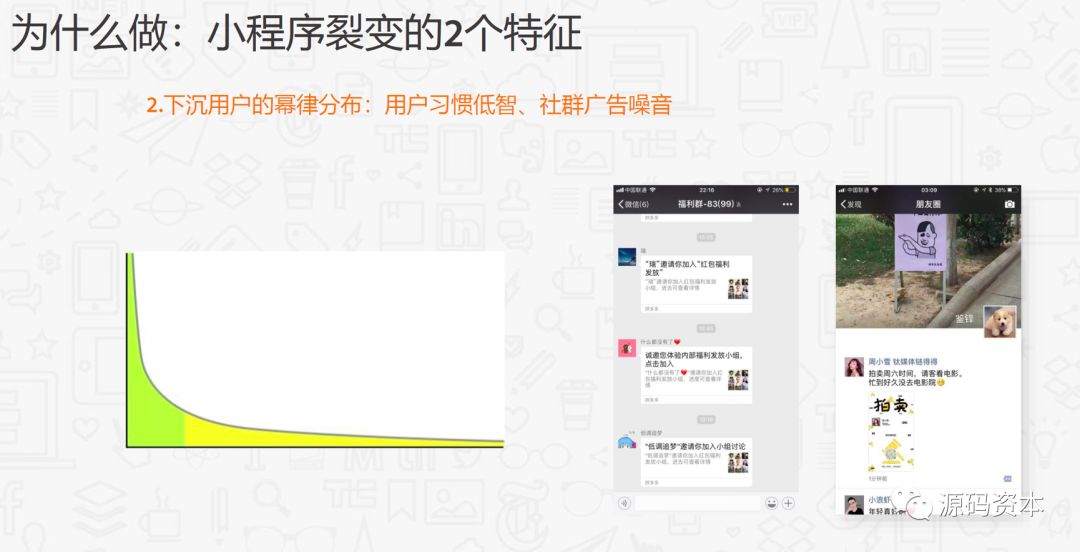
2. Power-Law Distribution of Lower-Tier Users, Preference for Simple Content
A second mini-program characteristic involves usage habits among lower-tier users. I noticed many official accounts used images with fingerprint icons guiding users to place their finger and scan the QR code. Later I discovered that without this design, many users simply didn't know the QR code was scannable.
When running viral campaigns, we found that fifth- and sixth-tier city users don't save images to post on Moments. Some don't even know how to screenshot. If the QR code lacks "long-press to scan" instructions, they won't know it's possible. Check their Moments feeds — you'll see almost exclusively shared links, no image-plus-text posts.
We then discovered how powerful mini-programs appear in group chats. Beyond Pinduoduo price-cut links and red envelope grabs, the most common content is funny video redirects. We started designing mini-programs with play buttons, adding them even to static images. Many users have this click habit — click-through rates jumped two to three times over, so mini-programs naturally match lower-tier users' ingrained behaviors.
2. Finding Your Mini-Program Entry Point
1. Single-Function Mini-Programs Have Low Bounce Rates
Analyzing numerous mini-programs, we found viral hits are mostly tool-based, satisfying single-scenario functional needs. This mirrors the APP and PC eras. Meituan, for instance, started with single-category group buying before expanding into the super-app it is today.
Because WeChat usage is fragmented, it doesn't suit heavy games. Even long-form content struggles — users hit "save for later," stashing articles they'll never read, killing share rates. Scrolling Moments is fragmented by nature, so overly complex functions consume too much time, amplify anxiety, and get closed immediately with very high bounce rates.
So our mini-programs stay extremely simple, single-function. Our approach: rapid testing — go straight to app stores and scan each category for standout features.
2. Exploit Dramatically Reduced Click and Trust Costs
Our hypothesis: an APP with million-level DAU, ported to mini-programs, would hit 5 million DAU or even tens of millions — later validated. This stems from WeChat's social graph structure. APPs have such high download costs;拆解 their single functions and spread them through users' social networks at virtually zero distribution cost.
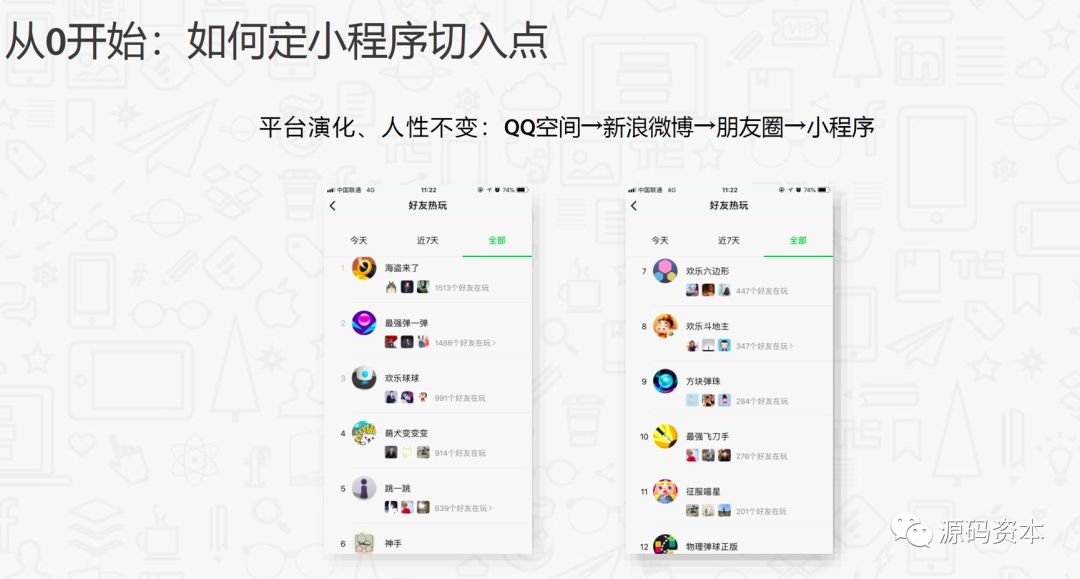
Because WeChat is structured around social relationships, user trust costs also plummet. These were the viral patterns we discovered, leading us to consider product approaches. Early on, users noticed many current mini-games were simply recycled from QQ Space and Sina Weibo game charts. Mini-programs were in a wild growth, land-grab phase — no one was creating original content yet.
Many still mine previously hot, validated prototypes and drop them into mini-programs for rapid user accumulation. Currently, mini-programs remain largely a viral tool format.
3. Mini-Program Construction
Our core product principles for mini-programs:
1. Simple Enough to Build in One Week
Users in the WeChat ecosystem are fragmented; they won't heavily browse your product. So even if your product concept has N features, break them into different matrix entries. Our mini-programs stay extremely simple — typically one or two buttons maximum.
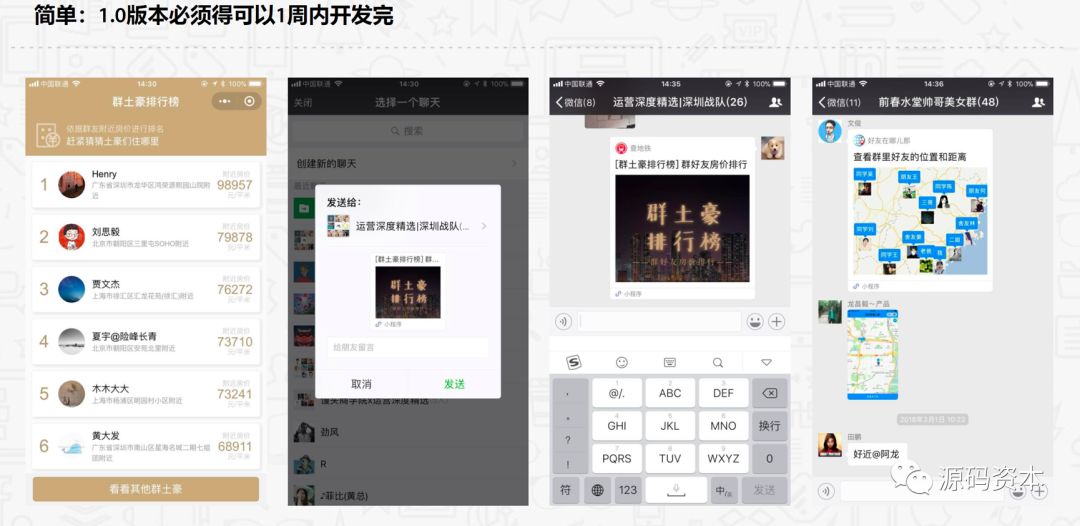
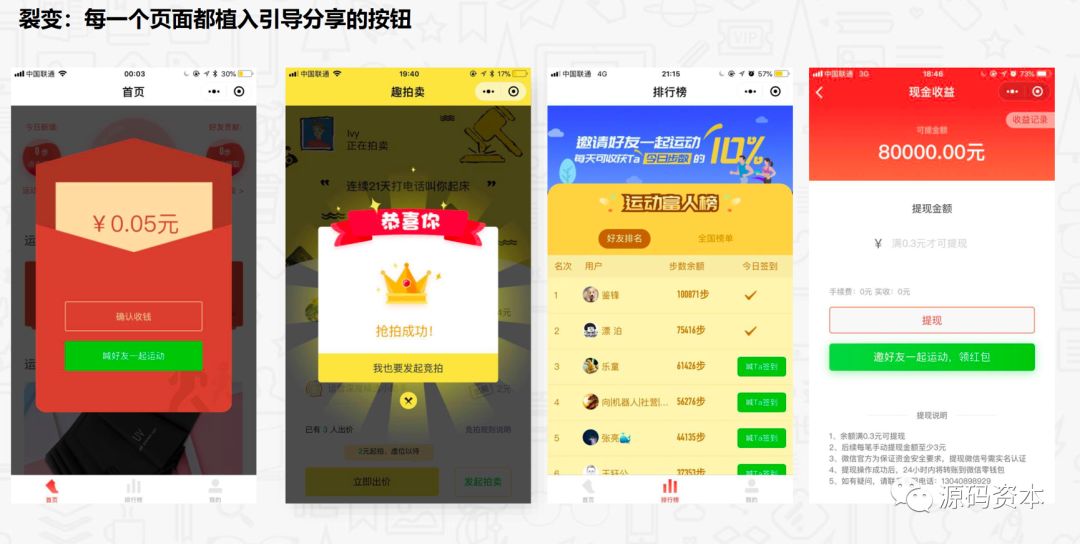
2. Every Page Must Have Viral Elements
We embed viral prompts on every page — red envelope claims, pay-to-share, leaderboards, friend invites, etc.
Of course these won't pass review as-is; we build toggle switches and hide them for submission. WeChat review uses machine screening supplemented by human checks. Basically, any "invite friends" keywords get toggled off for submission. Currently, even if viral functions get banned, turning off the feature or pushing an update allows appeal and reinstatement. Induced sharing won't get you banned; forced sharing will.
Our current metrics: 6,000 shares per 10,000 users, averaging 3 shares per user.
3. Build Scenarios: Easy Come, Easy Go, But Keep Them Coming Back
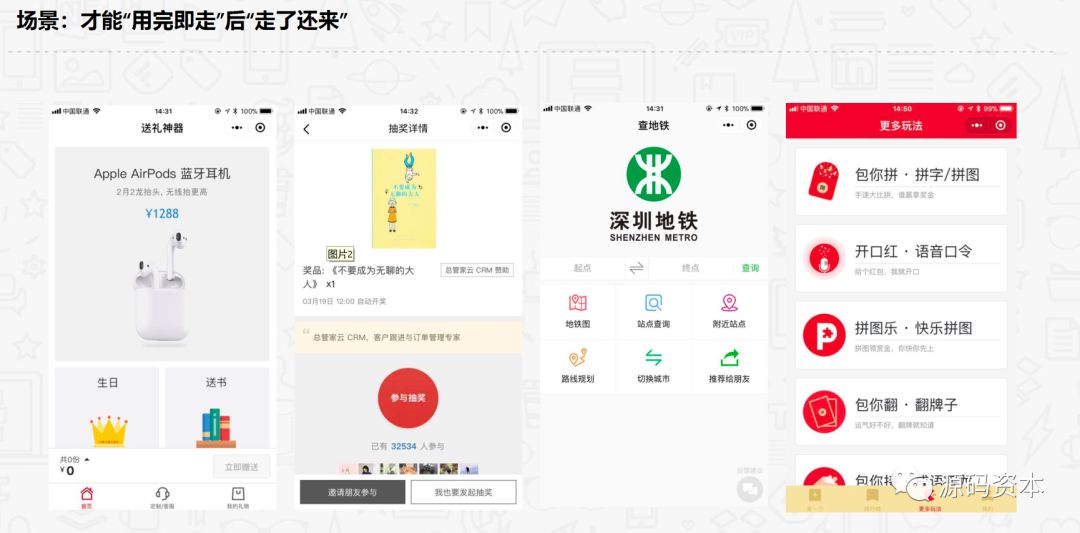
Scenarios are something we've continuously considered — recently testing how to make users "easy come, easy go, but keep coming back." Tool-based mini-programs spike quickly but have near-zero retention, though new users keep arriving as they spread virally through social networks.
We're exploring how to embed as many life scenarios as possible — dining, entertainment, functional needs — like Tencent's transit QR code in Shenzhen, used every commute. We're still exploring scenario construction ourselves.
I previously saw industry reports claiming 13.5% average seven-day retention for mini-programs and didn't believe it — until our "step count exchange mall" hit 69.3% seven-day retention, revealing that we simply hadn't built proper scenarios.
4. Choosing Viral Scenarios and Their Differences
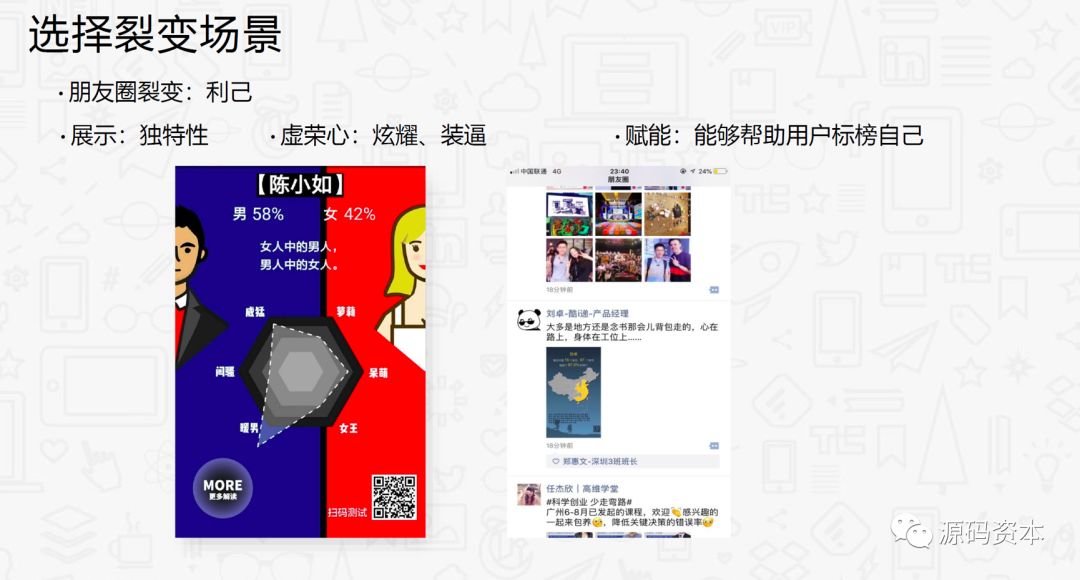
1. Moments Virality Is Self-Interested
Viral growth has two main scenarios: Moments and group chats. The footing differs. For Moments, self-interest drives highest viral efficiency — help users showcase their "uniqueness." Sure, they'll forward Pinduoduo if the value is high enough, but the viral rate won't match self-interest angles.
So quiz-based models work repeatedly. NetEase Cloud Music, Zhihu, Sogou — basically all used quiz models. Sogou's "a poem for you" matched poems to your temperament. NetEase Cloud Music identified your music taste and personality. Because WeChat is social, people are lonely and want friends to understand them, including the personal image they craft on Moments. But this image can't be self-promotion — it needs a medium. Quizzes are perfect: you chose the answers, and the results flatter you.
2. Lower-Tier Scenarios Use Group Chat Virality, Altruism Principle
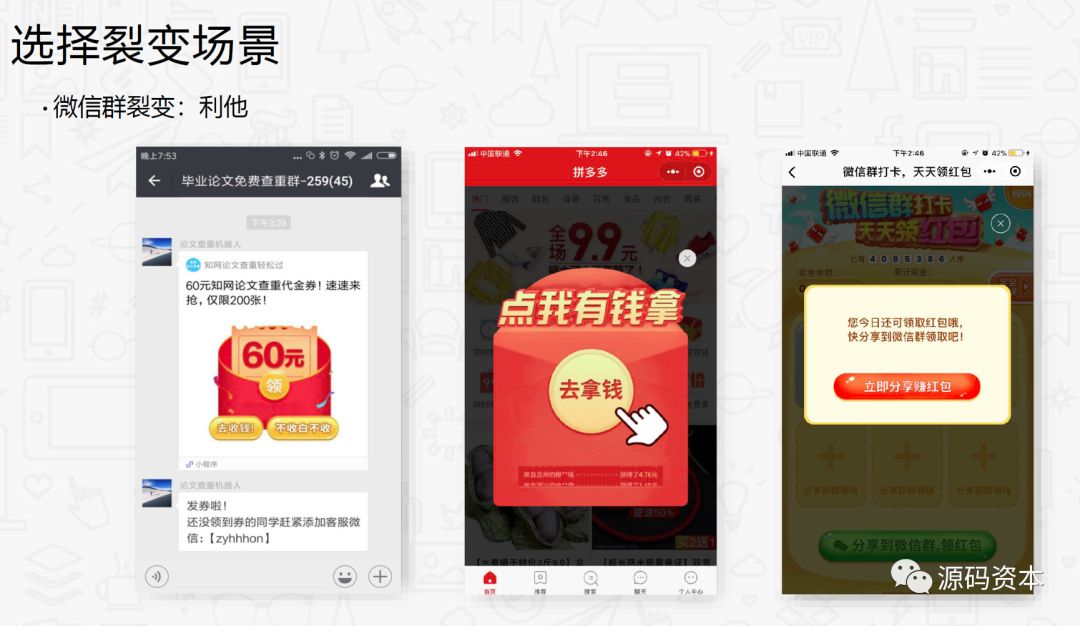
- Lower-tier users don't mute group notifications. When running viral campaigns among third- and fourth-tier users, you'll hit a wall: they don't long-press QR codes or scan them. These users' primary viral scene is group chats, where altruism drives higher viral rates. Fifth- and sixth-tier users have only a few groups, and many don't know how to mute notifications.
- Lower-tier users scroll through Moments for minutes before hitting yesterday; they're lonelier and need to kill time. Their Moments might take minutes to reach yesterday's posts, unlike ours that take hours. So they're lonelier, with more time, needing more time-killing products. This explains why mini-games suddenly exploded — mostly from this demographic.
- Altruism principle: let them "send benefits" or "send red envelopes" — giving them motivation and desire to share, packaging self-interest as altruism. Many of our mini-programs show geographic distribution concentrated in Shandong, Jiangsu, Shanxi, Shaanxi — even cities I've never heard of. Sharing to Moments essentially burns social capital with acquaintances, so they'll often attach a small red envelope. But design it as altruism: they announce "I'm sending red envelopes" in groups. Though fundamentally still a referral model, other users click to receive gifts. Users feel they're giving福利, not advertising. This boosts sharing desire and click-through rates.
3. A Core Operations Capability: Empathy
First, always consider: what can you give them, is this what they want, why would users forward and share for us? The underlying question is whether the benefit offered sufficiently moves them.
"Benefit" isn't just money — it can be "emotional satisfaction," "showing off," etc. This "insight" requires long-term immersion with users to uncover. The emotional benefit lies in whether you've enabled them, made it convenient for them to posture or achieve something. But often our product and operations designs focus on new user targets and sales figures, without considering whether there's something worth wanting behind that button.
4. Precision Fans vs. General Fans Operations and Conversion
General and precision fan acquisition logic differs. Precision fans typically come from knowledge-based viral campaigns, or filtering general fans through payment walls. Some viral tactics use classic models — Pinduoduo placed an idiom-guessing game directly on its homepage, easily capturing bored homemakers who炫耀 their guesses to drive virality. These also count as precision fans, so product format and viral model should correspond.
5. Million-User Mini-Program Viral Growth SOP
1. Name Must Match Function
For every product name, I have a preference: users should know what we do immediately upon hearing it. WeChat's largest user base is second- and third-tier, fifth- and sixth-tier users. Mini-programs especially can't rely on major brand recognition.
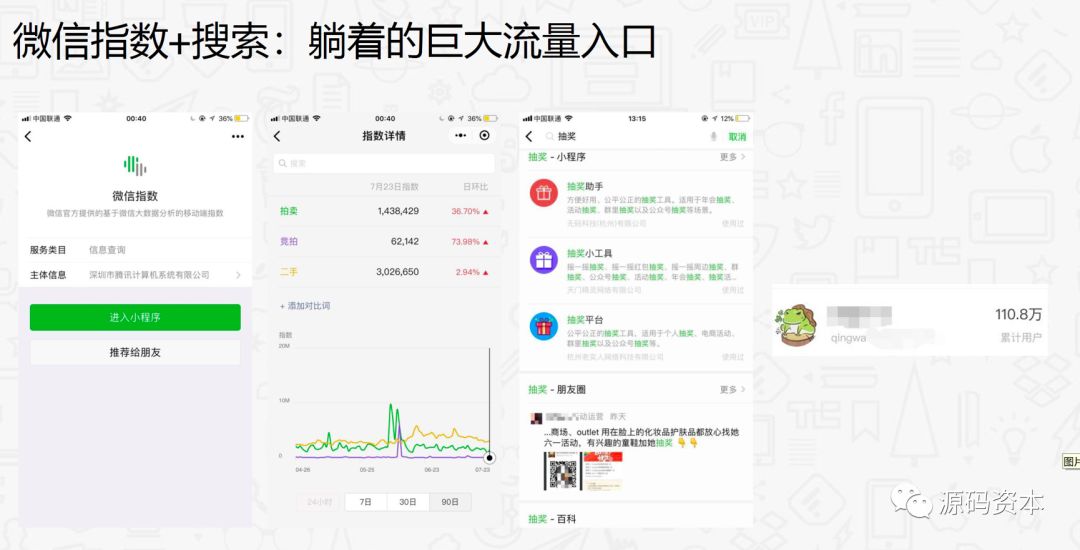
Another key point: we leverage WeChat Index, which relatively represents search heat and topic volume within WeChat. So we test several names, mainly validating product scenarios. WeChat currently heavily supports mini-programs — search relevant keywords and mini-programs appear first, before official accounts and everything else.
The most famous example: Christmas hats the previous year. Many Moments posts said "@WeChat official, give me a Christmas hat" and profile pictures automatically got one. "Christmas hat" became extremely hot. A Shenzhen developer made a Christmas hat mini-program and passively got 30+ million PV, 10+ million users, doing nothing. Similarly, when Travel Frog was hot, a developer registered a fake Travel Frog in APP search — actually a Jump Jump model — also passively earned a lot before quick下架.
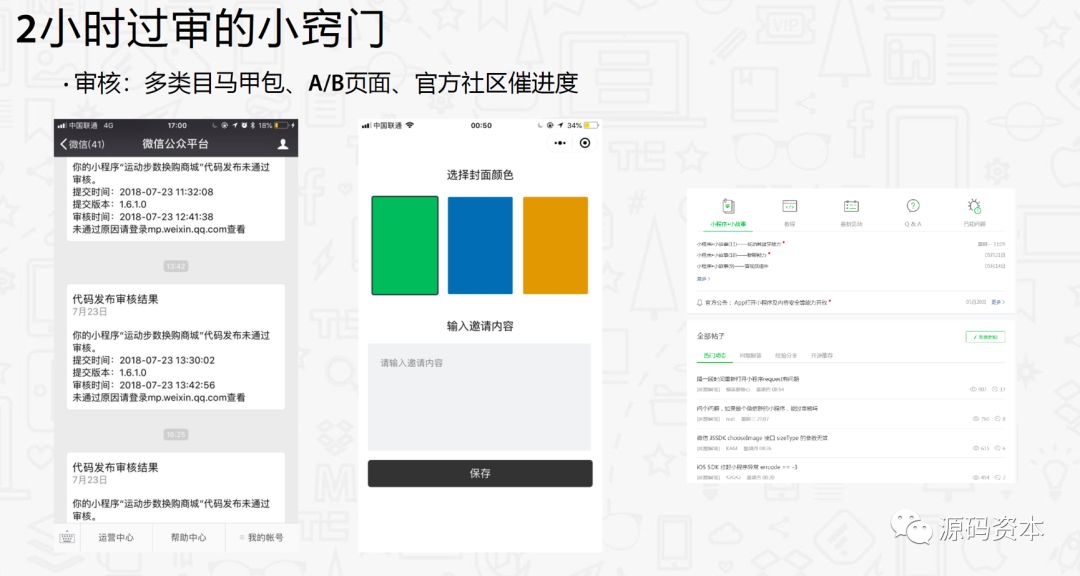
2. 2-Hour Review Hack: Toggle Switches
Second, review: any viral elements, share buttons definitely won't pass, so we always add toggles and build review-specific APP pages.
Also, mini-program review is outsourced, with varying strictness by reviewer. If rejected, try multiple accounts across different categories to improve pass rates. Or submit a simple v1.0, iterate features in v1.1. An interesting WeChat review phenomenon: if your first submission takes 2-3 days, subsequent submissions likely stay slow. But prove you're a legitimate mini-program initially, and later submissions basically pass in 30 minutes.
3. Five Anti-Ban Designs
We typically build two mini-programs: one functional, one for marketing/viral growth.
- Multiple matrix entries promoted simultaneously to distribute traffic and control risk, promptly diverting users to WeChat groups and official accounts during viral campaigns.
- No forced sharing. For example: congratulations on winning something, choose to confirm receipt or share to double it. Or red envelopes: claim one daily, second unlocks after three hours, or share to unlock one hour earlier.
- Modular feature拆解. Early mini-games were hot because sharing enabled revival, now banned. Solution: use coins to buy lives, 100 coins for revival, no coins then invite friends. But WeChat retracted the API for identifying shares to different groups, somewhat weakening effectiveness.
- Parameter-free QR codes — meaning activity pages have QR codes, but scanning always lands on the homepage, like Google's AI Quick, Draw!
- Screenshot blacklist. Local detection can identify screenshot actions; normal users don't screenshot, so we blacklist anyone who does as potential恶性 competition.
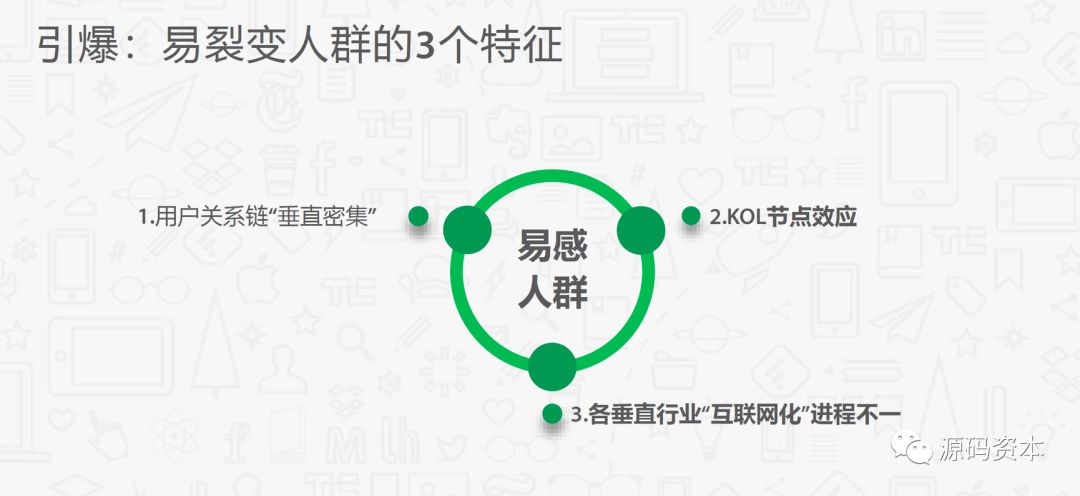
6. Ignition: Three Traits of Viral Audiences
Our three characteristics of audiences for viral传播, which also guide our product development.
1. Vertically Dense User Relationship Chains
WeChat is essentially a circle-layer effect, not a centralized plaza. So the first trait is obvious: extremely high density in user relationship chains. Everyone here are internet entrepreneurs with internet or industry tags — you'll find 50%+ of your WeChat friends, even higher, are profession-related. So if you're in real estate, many friends are in real estate. When industry news breaks, it instantly floods your Moments.
2. KOL Node Effects
Second is node effects, because WeChat is a network structure. Major nodes carry inherent势能 with very strong influence. Many public welfare events or recent "MeToo" movements spread from relatively high-potential or media circles. If it happened at my company, probably no one would ask. I lack that势能, that node effect for传播. So when we aim for ignition, we seek high-potential people to spread.
3. Varying Internet Adoption by Vertical Industry, Adapt Models by Tag
Another factor: internet penetration varies across vertical industries. NetEase's seven-class series for operations people created a刷屏-level campaign. But scrolling through designer friends' Moments, I barely saw those posters — complete silence in their groups. At the product level, we can replicate these tactics. These models are valid, proven successful; human nature doesn't change, only the packaging differs.
Content industry models can cover relatively more with single approaches. Beyond content, doing e-commerce or finance requires re-researching each user group's preferences. But content people's preferences are fixed — one solution invented can be reused ten times without much cost.
7. Deliver Value to Users, Build Products That Make Money
Final words: deliver value to users. Currently profitable is marketing business; future profitable mini-programs should be a money-making product line. Because mini-programs have strong WeChat Pay infrastructure, favorable policies, rapid viral growth, and convenient user payment. Mini-programs make the old joke possible: "With 1.3 billion Chinese people, if everyone gives you 1 yuan, you're a billionaire." Our tests show 37% payment rate at 9.9 yuan. Our three characteristics of audiences for viral传播, which also guide our product development.


Source Code Capital
Creating Lasting Real Value
WeChat ID:
sourcecodecapital
More professional content
Follow our official WeChat