A Step-by-Step Breakdown of the U.S. IPO Process

A practical handbook covering the essential preparations and key considerations across all three phases of going public: pre-IPO, during the IPO, and post-listing.

Since the STAR Market and ChiNext successively adopted the registration-based IPO system, the A-share market has seen a surge in listings. Influenced by international political and economic conditions, some Chinese concept stocks have reset their listing paths, opting for secondary listings in Hong Kong or returning to A-shares; meanwhile, the US stock market, with its mature capital market system, remains favored.
To help Ma Hui growth-stage member companies timely and comprehensively understand evolving capital market trends, Source Code Capital's Post-Investment Energy Center, from April to September this year, invited senior experts from top investment banks including CICC, Morgan Stanley, and Huatai International, as well as experienced CFOs and board secretaries from well-known enterprises, to host six closed-door thematic sessions. From multiple perspectives, they shared insights with Source Code growth-stage member company CEOs and executives on A-shares, Hong Kong stocks, and US stocks.
We've distilled the key takeaways into five articles, to be shared sequentially. We hope to learn together with you through connected learning.
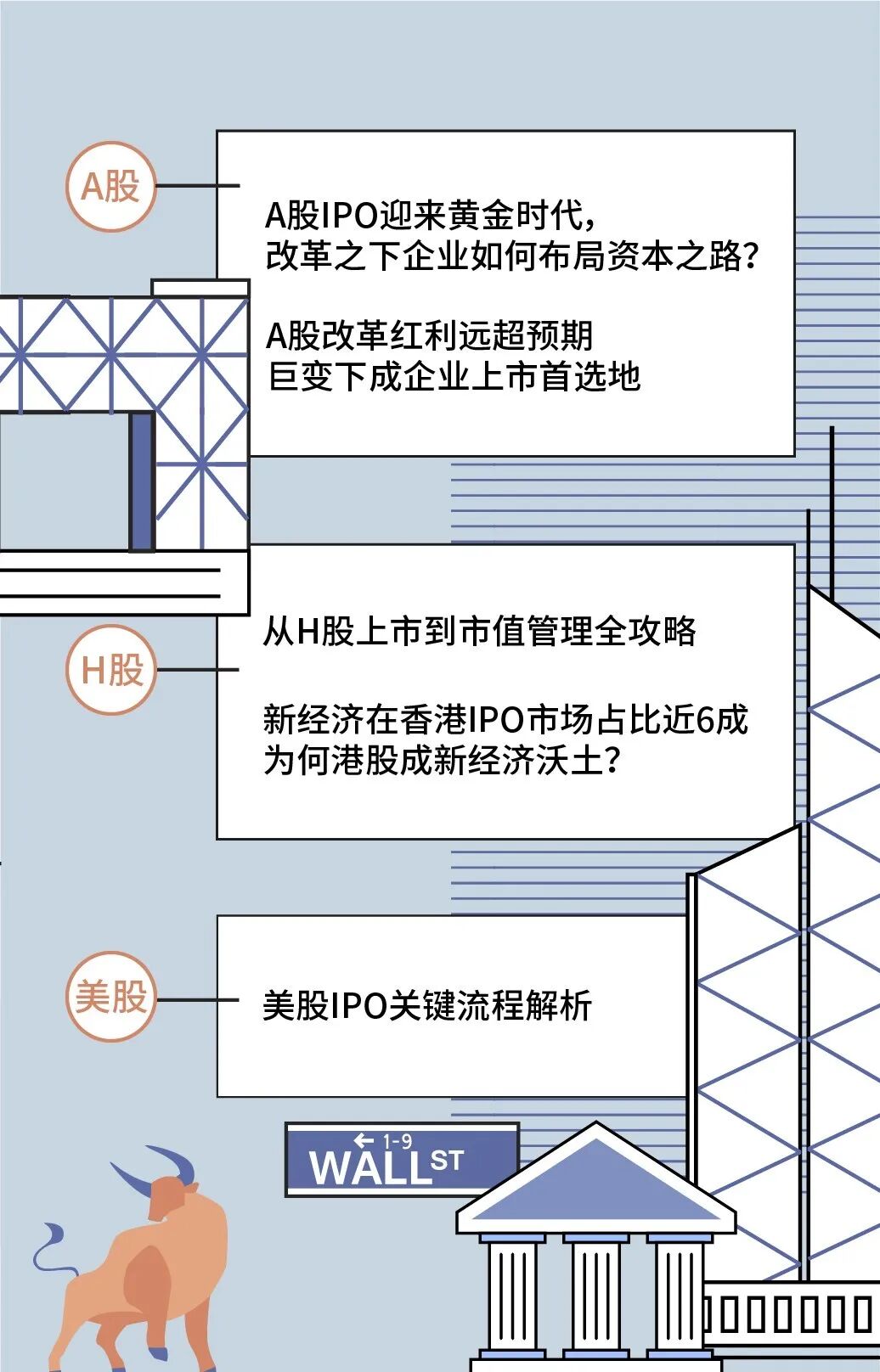
Key Highlights Preview
The COVID-19 pandemic has delivered a massive shock to the global economy, sending capital markets worldwide into a period of violent fluctuation. As China gradually brought the outbreak under control, new infrastructure initiatives formally pushed a series of innovation and entrepreneurship hotspots — 5G, industrial internet, big data, cloud computing — to the forefront of policy.
Currently, China is accelerating financial opening-up, foreign financial institutions are adjusting their China allocations, the STAR Market has entered "fast-forward" mode, and voices calling for economic decoupling between China and the United States are growing louder. The listing environment and policies both domestically and abroad have undergone numerous changes. Pre-IPO preparation, roadshow pricing during the listing process, post-listing market value management — these knowledge gaps are critical blind spots that entrepreneurs must fill before taking the final leap.
To this end, Code Brain specially invited veteran CFO Yu Bin for a closed-door online exchange with Ma Hui entrepreneurs. Drawing on listing experiences across three companies, Yu Bin systematically laid out the preparation work and key considerations across three time dimensions — before listing, during listing, and after listing — offering highly practical guidance.
Featured Guest: Yu Bin
Former CFO of LAIX; previously served as CFO of Zhongji Innolight (SZ:300308), CFO and Executive Director of Star TV, Senior VP of Youku Tudou Group, and CFO of Tudou; currently serves as independent director and audit committee chair for multiple US and Hong Kong listed companies. Has led financial operations including domestic and overseas IPOs, major asset restructuring, overseas listings/delistings, privatizations of public companies, and overseas M&A.
Selected excerpts below:
Pre-IPO: Four Things You Must Know
Why do companies go public? What are the benefits? Where to list? As the saying goes, "every reader finds their own Hamlet" — every entrepreneur with listing aspirations has different considerations. Regarding US listings, whatever the rationale or starting point, one must begin with the end in mind and clarify the following questions.
1. What listing brings to a company
First, listing strengthens brand credibility, especially for consumer-facing industries where brand advantage is pronounced. Take one consumer-facing company as an example: in the month of its US listing, new registered users and paying users both hit record highs. The listing enhanced brand recognition and trust among users.
Second, consider the positive impact on customer markets. Take one listed B2B company: most of its clients were US enterprises. As a Chinese company listed in the US, it not only gained deeper understanding of its customer market but also elevated client perception and trust.
Third, listing opens financing channels. Through listing, private companies become public companies, equity structures change substantially, and refinancing channels and methods become more accessible.
Fourth, from an internal management perspective, listing helps optimize incentive mechanisms. For asset-light companies and tech companies that rely more heavily on talent, post-listing stocks have clearer valuations and more liquid option exercise channels, making it easier to attract quality talent.
Finally, many companies view listing as a corporate milestone, including the realization of personal value for founders, while also providing reasonable exit channels for early-stage VC and PE investors.
For entrepreneurs and companies, listing is merely a promising beginning. The path to listing is long, and post-listing companies face more challenges. How to sustain growth after listing is the enduring goal and constant proposition for entrepreneurs.
2. How to choose the right capital market
Selecting a capital market requires attention to: listing standards, market preferences, investor composition, listing processes, difficulty levels, and post-listing regulatory and policy risks.
Objectively speaking, A-shares, Hong Kong stocks, and US stocks each have their own listing standards. For example, the NYSE requires "cumulative pre-tax profits of no less than $100 million over the most recent three years." But to attract listings, the NYSE has also designed flexible mechanisms with different standards — if profit requirements aren't met, valuation or revenue test standards can apply instead. We recommend companies conduct listing compliance tests and feasibility studies to understand whether they meet target market requirements.
Another consideration is the distinct preferences of each capital market, mainly regarding industry and scale. For instance, the Hong Kong market has long favored large companies with high market caps. In recent years, Hong Kong has gradually evolved — introducing policies like "weighted voting right shares" and "relaxed profit standards" — giving more attention and opportunities to smaller innovative enterprises. US capital markets tend to recognize proven, mature business models; companies with listed comparables in the US market relatively easily gain favor with capital markets and investors. We recommend companies track changes and preferences across markets based on their own industry and scale, selecting the most suitable market.
Third, consider investor composition. The ratio of institutional to retail investors participating in IPOs varies across markets. For example, in Hong Kong, if IPO subscription exceeds certain multiples, a set proportion must be allocated to retail investors — unlike US and A-share markets. Companies should consider the institutional-retail mix when selecting markets.
Finally, pay attention to listing processes and post-listing regulatory environments. For US and Hong Kong stocks, especially the US, listing processes are relatively simple registration-based systems focused on information disclosure rather than regulatory approval, making the process more controllable — typically completable in six to eight months. However, the post-listing regulatory environment, including short-selling mechanisms and media disclosure channels, is diverse and mature, making regulation relatively stringent. A-shares, by contrast, are like China's college entrance exam: masses crossing a single narrow bridge, with high barriers to entry, but lower costs to maintain listing status and lower risks of delisting or litigation.
3. How to choose listing timing
First consider external market conditions: on one hand, the competitive market environment you face; on the other, the overall capital market window.
When fierce competition exists in your industry, if you don't seize first-mover advantage in listing, becoming the second entrant brings not only a more complex listing process but also market cap constraints imposed by the first. As the second to list in a fiercely competitive field, the same issues will be heavily scrutinized, with disclosure requirements benchmarked against the first.
One AI education company began full commercialization in the second half of 2016 and listed in September 2018. Beyond various assessments, this timing was driven by two main factors: first, Chinese concept stocks were in a favorable listing window; second, the education track was intensely competitive, and the company sought to emerge as the AI education leader. From a competitive containment perspective, the timing was correct as the first AI education stock.
Choosing optimal listing timing requires judging whether external and internal listing conditions have matured.
4. Companies must prioritize multiple preparation efforts
First, assess whether the business model is stable and on a gradual upward trajectory. We don't recommend startups list during business transformation or innovation phases. As public companies post-listing, markets expect stable performance and have lower tolerance for business transformation than private markets. During transformation or innovation periods, stock prices are often affected.
Second, determine whether financial data has been audited under US accounting standards. Most Chinese companies compile financials under Chinese accounting standards for annual tax filing. Pre-listing requires adjusting financials to US standards — a rather complex, time-consuming process that requires early preparation.
Additionally, you must build an internal team meeting public company standards. Many startups early on devote more energy to developing business and capturing market share, not heavily prioritizing back-office team building. When assessing listing readiness, beyond business teams, founders need to strengthen back-office construction — finance, legal, and internal control teams all need suitable talent in place.
Finally, pre-listing companies need to determine target capital structure, an important measure of financing scale. Also prepare listing entity equity structure, including trust establishment, corporate governance structure, board composition, internal control processes, and early sorting of gray areas. These are all preparation items companies need to address before listing.
During IPO: Focus on Key Milestones Around the Timeline
1. Select quality teams
The listing process involves many third-party teams: underwriters (possibly multiple depending on financing scale), Chinese counsel, US counsel, auditors, D&O insurance providers, depositary institutions, investor relations teams, prospectus printers, investment bank sales forces, equity research analysts, etc. When assembling teams, research their historical deal experience and pay attention to post-IPO performance of their past deals. Many teams will showcase successful IPOs — but also examine subsequent performance. This is often overlooked.
Additionally, when selecting teams, emphasize the team composition itself rather than merely considering the brand and reputation behind them. Most important is alignment between the team's values and working style and the company's. A good team makes the entire IPO process very smooth; conversely, a poor fit may affect IPO progress.
2. Rigorously execute the timeline
From project kickoff, team selection, SEC hearings, roadshows, to the IPO bell — strict adherence to timelines is critical. On one hand, strictly follow the timeline; on the other, face reality. We recommend developing multiple timelines for different scenarios, anticipating various possible issues and situations.
3. Financial projections directly impact valuation
Valuation is built on three-to-five-year financial and business projections. If the company currently has no profits, valuation typically uses a PS model. For profitable companies, markets often expect a PE model. In recent years, investors have grown more cautious, so more mixed models are used — PS combined with future profit PE models.
Financial projections and valuation actually reflect the company's business direction and conditions, so this sorting work is very important for companies and founders. Moreover, solid financial and business projections significantly impact post-listing market cap. Therefore, when developing three-to-five-year projections, thoroughly discuss with the CEO and COO — don't let finance build these in isolation.
After completing projection models, communicate repeatedly and thoroughly with underwriters and analysts to help them understand the business. Analysts will independently develop valuations based on company projections. At this stage, companies, investment banks, and analysts will negotiate on valuation levels. Whatever model is used and whatever valuation analysts provide, solid foundational financial projections directly impact company valuation and business.
4. Roadshows require repeated practice
Roadshows have two parts: testing-the-waters roadshows and formal roadshows. Testing-the-waters roadshows mainly gauge capital market sentiment — they're often bidirectional: seeing which investors are interested while validating the company story, business, and model, understanding investor thoughts and feedback. Valuable investor questions during testing-the-waters roadshows merit management team discussion afterward.
Investors often say: "The best roadshows follow the Elevator Pitch rule — if you can tell your story clearly in the time an elevator travels from floor one to ten, that's truly impressive." This illustrates, in a sense, that investors expect CEOs to be both comprehensive and concise.
Many people focus energy on PowerPoint. Actually, more time should be spent on presentation and practice. Many founders overlook this. How to deliver PowerPoint content in the simplest, most direct way — this is very important and requires repeated practice.
5. Find the optimal investor mix
The optimal mix needs to balance stock price stability and liquidity based on the company's stage and scale. For smaller companies, we recommend focusing on long-term investors, supplemented by hedge funds and a small retail portion. Because smaller companies receive relatively limited attention in early listing, they generally need three to four quarters of stable performance before attracting more investor interest. For larger companies, a 50:50 mix can be considered, ensuring certain liquidity so stock price and valuation timely reflect business development. Additionally, if existing investors subscribe to shares at IPO, there's typically a 180-day lock-up. Whether to have existing investors subscribe is also a liquidity consideration.
Finally, when allocating and determining investor mix, competition between underwriters will also affect company decisions. Underwriters all want to secure more investment opportunities for their clients, so as the company side, you must have your own positioning. Generally, final pricing happens relatively quickly — allocation and pricing occur on the last afternoon. At this point, underwriters tend to be quite aggressive, and some CEOs are swayed by this situation.
In recent years, US capital market investors have also been changing. First, China-background investment managers and institutions have noticeably increased. This trend has some positive effect on Chinese concept stocks gaining recognition in US capital markets. Additionally, investors have developed certain preferences around corporate social responsibility. Compared to previously focusing solely on business models, larger funds like Soros Fund, under equal conditions, prefer investing in companies with certain social responsibility and contribution — such as education and healthcare industries.
Post-IPO: Companies Face Multiple Tests
1. Risk control
The most important thing post-listing is risk control. Once Chinese concept stocks list in the US, they're put under a magnifying glass, with detailed disclosure requirements, and daily management statements carry amplified effects. Additionally, the overall US regulatory environment is more complete than China's, with mature short-selling mechanisms and short-selling institutions. Foreign media, especially business media, have very high degrees of freedom — media coverage is another aspect of increased post-listing risk.
Therefore, risks must be disclosed in detail in the listing prospectus, with continued updates in annual reports post-listing, ensuring open and relatively realistic disclosure. In this process, CEOs tend to be aggressive, willing to share business direction or development strategy; but from a risk control perspective, CFOs take a conservative stance on such predictive, data-light disclosures — conservatism's benefit is greater safety.
For risk control, internally: on one hand, compliance internal control audits must be conducted in the first year post-listing; on the other, companies should proactively conduct comprehensive internal control reviews, including internal control team establishment — considerations to address before listing, fundamentally preventing various risks. Many companies merely meet listing requirements, then for long periods post-listing don't hire internal control teams or engage specialized external internal control firms to conduct reviews — this approach is inadvisable. Additionally, strengthen risk compliance cost control through purchasing D&O Insurance.
2. Adhere to disclosure rules
Post-listing, strictly adhere to disclosure rules, including quiet period equity handling. Issue quarterly and annual reports on time, and control risks around disclosure completeness. After quarterly and annual report releases, companies should also communicate promptly with analysts and investors, updating them on latest developments. Even if short-sellers attack, having already achieved timely and accurate information disclosure is an important prerequisite for defeating most short-selling institutions.
3. Market value management
The core of market value management is doing your core business well. Solid business is the foundation of all stories, and what CEOs and CFOs should truly care about. A company's market value core lies in business, not merely what stories you can tell, how you tell them, or how often you go out telling them.
For Chinese concept stocks, especially smaller-cap companies, be mentally prepared: stock prices may not perform well in the first year post-listing. First, because investor turnover probability is low, resulting in insufficient liquidity. However, if smaller companies perform well on business and quarterly results, with above-expectation performance, they will likely attract investor attention after four quarters, creating market value appreciation opportunities.
Beyond this, market value management techniques and processes also matter. Unified external communication口径 is something many companies neglect. Many companies make mistakes that damage their market value. The CEO has one storytelling approach, the IR team has another. Though roles may be divided with different content from different angles, there should be unified口径 for external communication, avoiding inconsistent messaging that impacts market value or creates vulnerabilities for short-sellers.
Regarding investor management, we recommend building a database of all contacted investors, regardless of whether they've purchased company stock. Include: fund size, PM educational background, personal preferences, career history, fund portfolio companies, especially Chinese concept stocks. Update this database regularly, thoroughly understanding these investor preferences, including institutional changes — knowing yourself and your opponents in market value management.

【Comment Interaction】 We welcome your exchange with us on the startup listing journey. The top 5 most-liked comments will receive a copy of Civilization, Modernization, Value Investing, and China from Code Brain.
"About Code Brain"
Code Brain is a key component of Source Code Capital's systematic, productized post-investment service system, and a star post-investment service product through which Source Code Capital fully serves Ma Hui entrepreneurs' cognitive upgrading. At every stage, we deeply understand and continuously explore entrepreneurs' needs, iterating Code Brain in real-time so entrepreneurs at different stages receive sustained nutritional input, achieving the important goal of post-investment services that "truly help," and creating unique value for entrepreneurs.