New Economy Listings Account for Nearly 60% of Hong Kong's IPO Market — Why Has Hong Kong Become Fertile Ground for New Economy Companies?

How can you gain a comprehensive understanding of Hong Kong's capital markets, and what are the requirements for a Hong Kong IPO?

Since the STAR Market and ChiNext introduced their registration-based IPO systems, A-shares have seen a surge in listings. Amid shifting international political and economic conditions, some US-listed Chinese companies have rerouted to Hong Kong for secondary listings or returned to A-shares. Meanwhile, the US stock market remains attractive thanks to its mature capital market infrastructure.
To help growth-stage portfolio companies of the Code Community stay timely and fully informed about evolving capital market trends, Source Code Capital's Post-Investment Energy Center, from April to September this year, invited senior experts from top investment banks including CICC, Morgan Stanley, and Huatai International, as well as veteran CFOs and board secretaries from well-known companies. From multiple perspectives, they hosted six closed-door themed sessions for CEOs and senior executives of Source Code's growth-stage portfolio companies covering A-shares, Hong Kong stocks, and US stocks.
We've distilled the key insights into five articles, to be shared in succession. We hope to learn and grow together with you.
Highlights Preview
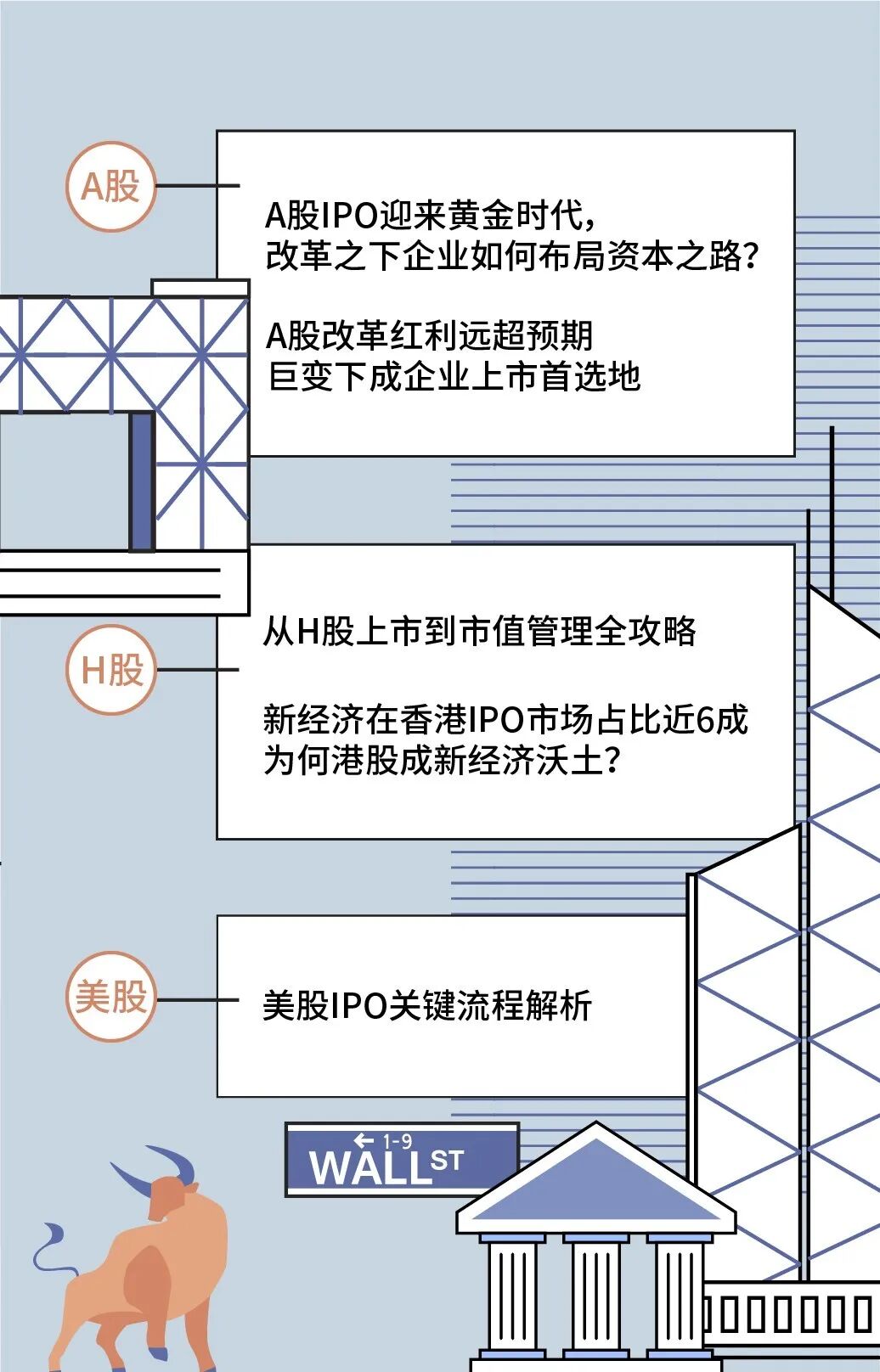
Hong Kong stocks have been a capital market favorite in recent years. From 2009 to 2019, Hong Kong ranked first globally in total funds raised across all exchanges, reaching $303 billion — surpassing the NYSE, Nasdaq, Shanghai Stock Exchange, and Shenzhen Stock Exchange. In 2019 alone, Hong Kong completed more IPOs than any other exchange. As one of the world's largest IPO markets, Hong Kong topped global IPO fundraising four times in the past six years. How to fully understand Hong Kong's capital market, and what are the requirements for a Hong Kong IPO?
Code Brain invited Zeng Luhai, Managing Director of Huatai International's Investment Banking Division, and Tian Lai, Executive Director of Huatai United Securities, to share their investment banking perspective on Hong Kong IPOs. They detailed the overview and characteristics of Hong Kong's capital market, Hong Kong IPO structures and processes, and Hong Kong refinancing methods, while forecasting future trends and exploring opportunities for companies seeking Hong Kong listings.
Selected highlights below:
Hong Kong Becomes the Preferred Overseas Listing Venue for Mainland Companies; New Economy Companies Account for Nearly 60%
Currently, Hong Kong's capital market is an investment hotspot shaped by full market competition, and it will actively integrate into national development. A Hong Kong listing also brings companies access to more high-quality international institutional investors.
What are the characteristics of Hong Kong's capital market? First, it is constantly evolving. For example, Alibaba's shift from Hong Kong to a US listing drove reforms in Hong Kong's capital market: allowing companies with weighted voting right structures to list in Hong Kong, and permitting pre-revenue companies — specifically in the healthcare sector — to list there. Second, it gives retail investors greater participation. Third, timelines are relatively clear, typically 3 to 5 months for approval. Fourth, financing methods are relatively diversified. Fifth, lock-up periods are shorter. Sixth, it serves as a platform for overseas M&A.
Overall, Hong Kong has become the preferred overseas listing venue for mainland companies due to several advantages: it is a truly international market; the most reliably connected market to mainland China; has ample primary market capital to accommodate large listings; offers rich issuance structures; is one of the primary markets of choice for new economy companies; has efficient refinancing and M&A markets with free capital operations; features shorter major shareholder lock-up periods with flexible increases and decreases in holdings; offers abundant derivative financial instruments for convenient portfolio management; has seen valuation centers for key industries rise and gaps narrow; and is deeply connected through Stock Connect, gathering global liquidity support. Companies listing in Hong Kong have flexible listing structures: for example, red-chip structures, pure H-shares, A-then-H, H-then-A, NEEQ+H, and listed companies spinning off subsidiaries for Hong Kong listings, among others.
Currently, "new economy" has replaced "old economy" as an important component of Hong Kong's market. The Hong Kong Stock Exchange's 2018 listing rule reforms made it more conducive for "new economy" companies to list, further increasing the market's attractiveness. The stereotypical impression is that only large state-owned enterprises and central SOEs list in Hong Kong, but looking at Hong Kong listed companies' market capitalization from 2010 to the first half of 2020, new economy companies' share has continuously risen and now approaches 60%, meaning new economy has become more than half of Hong Kong's IPO market.
In both 2018 and 2019, nearly half of fundraising came from new economy enterprises. In 2018, 218 companies listed with IPO funds raised reaching HK$288 billion, of which 32 were new economy and biotech companies (accounting for 49.4% of total funds raised); in 2019, 183 companies listed with IPO funds raised reaching HK$314.2 billion, of which 47 were new economy and biotech companies (accounting for 49.1% of total funds raised).
Active Hong Kong IPO Market; Mainland Capital's Growing Presence
While Hong Kong has many IPOs, trading volume has long been criticized. The Hong Kong Stock Exchange's overseas trading proportion has consistently exceeded local trading. Currently, southbound capital has become a force that cannot be ignored in the Hong Kong stock market. Including many Chinese enterprises that have established investment institutions in Hong Kong, trading volume there is very active, and the proportion of trading volume from mainland China continues to rise, with mainland capital's scale gradually becoming more prominent.
From a liquidity perspective, Hong Kong stock liquidity is undergoing fundamental change, with average daily trading volume exceeding HK$100 billion since 2018. Southbound capital has activated the Hong Kong stock market, and more mainland capital will flow into Hong Kong stocks in the future.
It is commonly believed that Hong Kong's capital market is heavily influenced by the US capital market, but data shows Hong Kong stocks' correlation with A-shares is gradually increasing. Currently, the AH-share premium rate is at a historical high. With the inflow of southbound capital and the rising proportion of mainland investors, the A-share and Hong Kong stock pricing systems will tend toward integration, and the high premium situation is expected to gradually ease.
A-share IPOs used to be extremely difficult, typically requiring many years to complete review and listing. In recent years, registration-based reform has substantially shortened timelines, but refinancing still requires review. The Hong Kong Stock Exchange, meanwhile, provides abundant post-listing financing channels, including follow-on offerings, block trades, rights issues, and warrant issuance; companies can issue new shares six months after their IPO.
From an investor channel perspective, among Hong Kong market investors, local investors account for only 30%, while over 60% of overseas investors come from the US, UK, and mainland China. Looking at the 2020 Hong Kong IPO market overview, in the first eight months, 92 companies listed in Hong Kong with fundraising approaching HK$150 billion. June saw the return of JD.com and NetEase as US-listed Chinese companies, raising over HK$50 billion. Many giants prefer listing in Hong Kong because its financial market has global capital participation with ample capital.
Hong Kong IPO Structure and Process: Typically T+7 Months to Listing
The Hong Kong Stock Exchange's Main Board listing requirements are to satisfy any one of the profit test, market capitalization/revenue test, or market capitalization/revenue/cash flow test. Additionally, Main Board applicants must have substantially the same management for at least the three preceding financial years (i.e., substantially the same management) and unchanged ownership for at least the most recent financial year (i.e., unchanged control).
Specifically, the profit test requires minimum aggregate profit of HK$50 million over the last three years and minimum market capitalization of HK$500 million; the market capitalization/revenue test requires minimum market capitalization of HK$4 billion and revenue of at least HK$500 million in the most recent financial year; the market capitalization/revenue/cash flow test requires minimum market capitalization of HK$2 billion, revenue of at least HK$500 million in the most recent financial year, and aggregate operating cash flow of at least HK$100 million over the last three financial years.
The basic Hong Kong listing process is roughly divided into four stages: preliminary preparation (transaction preparation), execution (involving due diligence, document preparation, etc.), marketing and offering (pre-roadshow, roadshow, pricing), and listing and trading (involving listing and post-market stages). The overall listing plan (timeline) typically completes intermediary selection and launches the listing in Month T, holds board and shareholders' meetings to approve the Hong Kong issuance plan and submits the A1 application to the Hong Kong Stock Exchange by the end of Month T+3, passes the Hong Kong Stock Exchange hearing in late Month T+6, and completes listing in late Month T+7.
General Hong Kong IPO Considerations
Hong Kong listings require attention to issuance ratio, use of proceeds, internal controls, connected transactions, compliance and regulation, land and property valuation, corporate governance, and tax, social insurance, and housing fund matters. Specifically:
- Issuance ratio: According to Hong Kong Stock Exchange listing rules, public shareholding must be at least 25% of the company's total issued share capital; if the company's market capitalization exceeds HK$10 billion, and the Exchange is satisfied that the number of securities and the distribution of holdings still allow the relevant market to operate properly, the Exchange may accept a lower percentage of public shareholding between 15% and 25%. If the company has no shareholders that can be regarded as public shareholding before listing, the issuance amount must meet the minimum public shareholding (15% to 25%); if it does, the issuance amount may be lower. For spin-offs by listed companies, an introduction listing may be used, distributing shares directly to original parent company shareholders without requiring a public new share issuance.
- Use of proceeds: There are no special restrictions on use of proceeds under Hong Kong listing rules, but the Exchange will require clear and specific use of proceeds and proportions, with relatively detailed usage plans — though substantially simplified compared to A-share IPO fundraising planning and usage. The State Administration of Foreign Exchange requires clear use of proceeds to obtain exchange settlement approval; communication with SAFE should begin early.
- Internal controls: Directors and sponsors need to assess whether the company's internal control and management systems are effective at the time of listing. Market practice is to engage an internal control advisor to issue a dedicated internal control investigation report for directors and sponsors; the internal control advisor's typical working method involves reviewing the company and individual major subsidiaries' internal control manuals, management interviews, and walkthrough testing of some key business cycles. The internal control advisor can work closely with auditors to identify issues early and should assist the company in completing remediation of major issues before submitting the A1 application; to help the company resolve all internal control issues as soon as possible and since internal control advisors generally charge by project, it is recommended to engage an internal control advisor shortly after project launch.
- Connected transactions: According to Hong Kong Stock Exchange listing rules, companies need to organize all connected transactions during the reporting period; if there are continuing connected transactions, three-year transaction amount caps must be set. As for requirements to issue announcements or obtain independent shareholders' approval for such continuing connected transactions, exemptions may be applied for from the Exchange before listing. The Exchange does not prohibit connected transactions, but if connected transactions constitute a major part of the listed company's performance period or future operations, it may raise the Exchange's concerns about the company's financial, management, and operational independence; all connected transactions must be based on fair pricing and terms. Companies need to demonstrate that transactions with connected parties are conducted according to normal commercial terms and normal business procedures, with pricing principles consistent with independent third-party transactions.
- Compliance and regulation: During the listing process, companies need to provide legal counsel with past (especially the most recent three complete years) non-compliance incidents and regulatory inspection records for legal counsel to issue a listing legal opinion; additionally, to facilitate communication with the Exchange, companies should provide relevant records to sponsors as early as possible, and notify sponsors immediately when incidents occur to prepare responses; companies should disclose material or systematic non-compliance incidents and related follow-up measures (especially improvements to internal control mechanisms) in the prospectus, and depending on circumstances, professional intermediary teams may need to issue relevant opinions.
- Tax, social insurance, and housing fund: Before submitting the A1 application, companies need to obtain no-tax-arrears certificates, environmental assessment certificates, and certificates of full payment of social insurance and housing fund contributions for each subsidiary; since most regions in China have local regulations and measures regarding enterprises' social insurance contributions for employees, companies must obtain confirmation letters from relevant regulatory authorities during the listing application process to prove no underpayment or non-payment of social insurance and housing fund; at the listing project launch stage, each legal entity under the company should communicate with relevant regulatory authorities as early as possible and obtain various compliance confirmation letters.
H-Share vs. Red-Chip Listing Comparison
There are two types of Hong Kong listings: red-chip structure and H-share structure. Red-chips are reviewed by the Hong Kong Stock Exchange, while H-shares require an additional review by the CSRC's International Department, so H-shares have a two-step review while red-chips have a one-step review. However, since the 2018 reform, H-shares have in principle only reviewed legal issues, respecting law firms' opinions when reviewing legal issues and only providing some window guidance on industries, such as real estate, entertainment, etc. Red-chips don't have this issue, so most real estate companies list via red-chip structure. Currently, many internet companies involving red-chip structures also need to build VIE structures. The general Hong Kong listing timeline is 6 to 8 months, not including red-chip construction; building a red-chip structure may add 1 to 3 months.
Currently, sponsors and underwriting syndicates are key factors for successful IPO issuance. Domestic review was theoretically "review first, issuance second," but currently looking at STAR Market and ChiNext issuance, under the registration system, Chinese A-share issuance is gradually aligning with international practice and becoming more market-oriented. In Hong Kong, this has always been the case — you need both a strong sponsor for the IPO, with early involvement to provide optimal solutions before formal launch, coordinating all relevant parties to ensure smooth progress; and more importantly, a strong underwriting team. Hong Kong IPOs generally use a multi-tier underwriting syndicate structure, with each tier playing different roles in project execution and marketing.
Notably, the 2018 reforms by the Hong Kong Stock Exchange and CSRC allowed innovative healthcare companies, including pharmaceuticals (small molecule drugs), biologics, and devices (including diagnostic devices) — innovative companies without revenue — to list in Hong Kong under Chapter 18A. Chapter 18A requires that core products "have passed the concept development stage," meaning they have completed Phase I and are beginning Phase II clinical trials.
For Hong Kong's weighted voting right structure, there are certain market capitalization requirements. The requirements are market capitalization of at least HK$40 billion at listing, or market capitalization of at least HK$10 billion and revenue of at least HK$1 billion in the most recent financial year.
Hong Kong Refinancing Methods: Placements, Rights Issues, and Convertible Bonds
Regarding Hong Kong refinancing, the main methods are placements, rights issues, and convertible bonds. Hong Kong placements (or share placements) are analogous to domestic private placements but simpler. Companies can obtain a general mandate from shareholders at the annual general meeting to issue up to 20% of existing total share capital; when placing with independent investors, if the placement price discount to the then-reference stock price does not exceed 20% and the issuance does not exceed 20% of total share capital, issuance can proceed within the authorization validity period at an opportune time. Otherwise, special general meeting authorization is required.
The rights issue mechanism issues new shares to all existing shareholders on a pro-rata basis. For example, in a 10:1 rights issue, existing shareholders would have the right to subscribe for 1 new share for every 10 shares currently held. Rights issues can raise relatively large amounts of capital with the highest certainty while maintaining major shareholders' existing ownership percentages.
Convertible bonds have advantages including short execution time at issuance, lower cost, and no immediate equity dilution; but the major disadvantage is that conversion is uncontrollable, so the company's debt ratio has uncertainty. When designing terms, companies need to balance the equity and debt characteristics of convertible bonds based on market conditions and their own needs.

[Comment & Interact] We welcome your exchange and interaction with us on startups' path to listing. The top 5 most-liked commenters will receive a copy of Civilization, Modernization, Value Investing and China from Code Brain.
"About Code Brain"
Code Brain is a key component of Source Code Capital's systematic, productized post-investment service system, and a star post-investment service product that Source Code Capital has developed to fully serve Code Community entrepreneurs' cognitive upgrading. At every stage, we deeply understand and continuously explore entrepreneurs' needs, iterating Code Brain at any time so that entrepreneurs at different stages receive continuous nutritional input, achieving the important goal of post-investment services that "truly help," and creating unique value for entrepreneurs.