Li Lu's 10,000-Word Share on AI: The Faster Things Change, the More You Must Understand What Compounds Over the Long Term

The faster things change, the more important it becomes to distinguish what's merely a short-term narrative from what can endure across cycles and compound continuously: knowledge, trust, wisdom — and not losing what you already have.
AI is reshaping technology and capital markets at an unprecedented pace: on one hand, it fuels enormous productivity possibilities; on the other, it rapidly recalibrates capital, valuations, and market sentiment. The more one is immersed in such change, the more crucial it becomes to distinguish short-term narratives from what can endure across cycles and compound continuously — knowledge, trust, wisdom, and not losing what you already have.
Recently, Li Lu, founder of Himalaya Capital, shared his reflections on value investing, the AI wave, global order, and the compounding of life at the 36th Annual Graham & Dodd Breakfast at Columbia Business School. He reminded us: to understand technological change, we must also return to value creation, financial discipline, and long-term judgment itself.
This article is compiled from video excerpts of Li Lu's remarks. For readability, the entire text is presented in first person. Source & Author | Smart Investor (ID: Capital-nature)
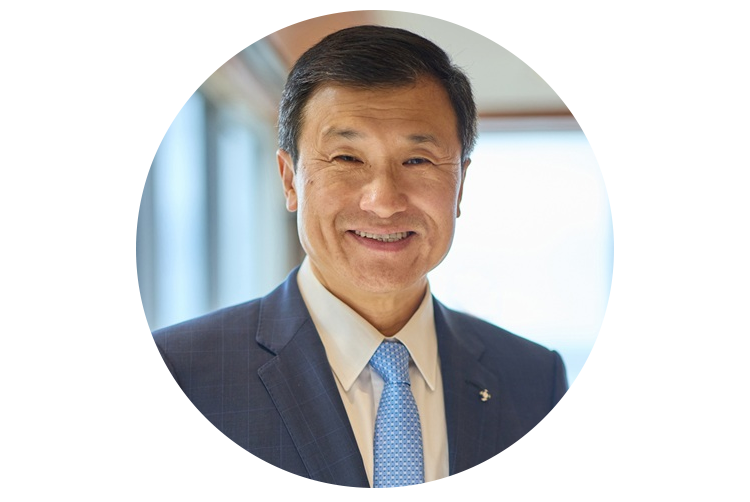
Li Lu, Founder of Himalaya Capital
1
Six Basic Principles of Value Investing
Benjamin Graham proposed the three most fundamental concepts of value investing.
First, a stock represents partial ownership of a business, not a piece of paper to be traded back and forth. So buying a stock is, in essence, no different from buying an entire company.
Second, markets are composed of individual human beings, and human nature tends toward short-term gain. Thus people easily treat stocks as chips for short-term trading, forgetting that they represent long-term ownership of a company. You can think of the market as "Mr. Market": he is not there to tell you true value, but merely to quote you a price at which you can buy or sell — a price that sometimes falls far below value, and sometimes rises far above it. For the value investor, the market provides a service, not guidance.
(Smart Investor note: The publicly available video of this event does not cover the second principle. The above is supplemented from Li Lu's public remarks on the "six basic concepts of value investing" in his December 2024 Peking University lecture "Global Value Investing and the Era," included here to maintain the completeness of this discussion's framework. It is not a verbatim transcript of this event.)
Third, investing is inherently about predicting the future, and the future is by nature unpredictable. Therefore, you must give yourself ample margin of safety to protect against downside, while creating a more favorable asymmetry between risk and reward.
Fourth, Warren (Buffett) and Charlie (Munger) later added a very important layer of discipline in practice, which they called the "circle of competence." We are each naturally more interested in certain things. Over time, you accumulate knowledge and develop expertise in specific domains, then continue to deepen your study, making your understanding progressively better.
But the most important aspect of the "circle of competence" concept is that you must know where its boundaries lie. Because most of us by nature will feel we know slightly more than we actually do. So knowing where the edge of your circle of competence is, is just as important as knowing what lies within it.
Fifth, Charlie (Munger) had another idea: go fishing where the fish are. He loved fishing all his life, so this is a particularly apt metaphor. The same holds true in real markets. Some markets, some industries, some companies attract enormous attention, and with that comes fierce competition; the more complete the competition, the fewer mispricings and excess returns there will naturally be.
But there are other industries, companies, countries, and markets that do not receive sufficient attention, where competition is less intense. If you focus your attention on these places, you tend to do better. So go fishing where the fish are. This principle is simple, yet surprisingly effective in practice.
Sixth and finally, this is something I have come to appreciate over more than three decades as a global investor practicing value investing worldwide. Especially as global commerce increasingly integrates into a unified market, we have gradually formed one recognition: ultimately, wealth represents your share of global purchasing power.
Especially in the modern economy, wealth does not truly manifest as how much gold, how many diamonds, or how much of any particular currency you hold. With inflation, these static vehicles of wealth lose relative purchasing power over time. What truly matters is: what can you ultimately buy, what can you do with this wealth. So a better measure of wealth is your proportion of global purchasing power.
And one way to achieve this — at least the way we have consistently practiced — is to buy the best, most creative businesses at favorable prices in the most dynamic economies and markets, and hold them for the long term, allowing the businesses to continuously create value over time, thereby maintaining and increasing our share of global purchasing power.
So these are what I consider the six most fundamental concepts. I believe they have stood the test of time and will remain useful to investors for the long term.
2
Investing, Arbitrage, Speculation, and "The Casino Next to the Church"
If you observe participants in the market, there are essentially only four types of people.
The first are true investors, who focus on whether a business can create value over time.
The second are arbitrageurs, who attempt to correct market mispricings. In Benjamin Graham's words, "buying from the pessimist and selling to the optimist." That is arbitrage.
The third group consists mainly of speculators. They guess what others will buy or sell next, caring not about what a security is actually worth, nor about how much value a business can create.
The fourth are brokers and market makers, who provide trading services for the activities of the former.
Of course, in reality most people are not purely one type. Many in fact possess all four characteristics simultaneously, only in different proportions.
If you buy an index, in a sense what you are buying is precisely the average of all these market participants.
But what value investors truly care about are two things: first, whether price discovery is rational; second, whether one is willing to wait for a business to create value over the long term.
So Ben Graham leaned more toward the "arbitrage" described earlier — exploiting mispricings. What Warren later did was to exploit price dislocations while also focusing more intensively on businesses' long-term value creation. Different types of market activity also have quite interesting effects on society.
Speculators, by definition, do not hold long enough for business value to truly change or be created. Therefore, in aggregate, speculation is basically a zero-sum game. For every winner, there is roughly a corresponding loser. So from the perspective of society as a whole, this is actually a cost of market operation.
Brokerage and market-making are likewise costs of market operation.
So why do markets exist? The core function of a market is to channel excess savings in society toward businesses and activities that can put them to productive use. It is through this mechanism that we have formed the modern economy, and achieved long-term compounding economic growth. This is the fundamental reason the stock market originally came into existence.
Which raises the question: why must there inevitably be a speculative side to markets? I suppose this is simply part of human nature.
Warren has always liked to compare the stock market to: "a church with a casino attached." The church is where value is created, while the casino is almost like something that had to be included as a condition for getting the building permit (laughs). It is a necessary cost determined by human nature.
Four hundred years ago, when modern capital markets first emerged, people needed this mechanism to stimulate what we call "animal spirits." Four hundred years later, this has not changed.
So for the students here today, you ultimately must make a choice: do you want to participate in a zero-sum game, or do you want to participate in a value-creating game? This is your personal choice.
And from the perspective of society as a whole, we too have a choice.
We cannot allow the "casino" side to swell so large that it overwhelms the core purpose for which the market originally existed. So this is both an individual choice and a societal choice.
What is quite remarkable is that over the past 400 years, despite capital markets having experienced countless enormous booms and crashes, causing tremendous waste, this mechanism has nonetheless survived. Not only survived, but has remained a central mechanism continuously propelling society forward. This is, at the very least, a rather extraordinary thing.
So for students, I think it is very important to figure out early: which kind of activity do you actually want to engage in. And as a society, we should also continuously calibrate the proportions among these types of activities. They will always coexist, because this is part of human nature.
3
AI: Tool, or "Artificial God"?
Now let me turn to AI and the market — a far more complex question.
First, what is AI? This wave of generative AI is, without question, a very massive technological wave.
Since the Industrial Revolution, humanity has experienced wave after wave of technology, accompanied by destruction and by creation — what we call "creative destruction."
So we already understand some of the patterns of technological revolution. But we also clearly sense that this time seems different. Every technological wave has its own distinct characteristics, but this AI wave appears exceptionally different compared to anything we have experienced before.
Why is it different? On the surface, you notice several phenomena: the speed of change is unprecedented, the scale involved is unprecedented, and the concentration of capital and financial impact is unprecedented. The narrative formed around it, and the concentrated effect of this narrative on capital allocation, are likewise unprecedented.
But if you keep asking why, the reason actually lies in a shift in the narrative behind this technological revolution.
In the past, we always regarded technology as a tool for enhancing human productivity. But this time, technology introduces a different dimension: it now sits on a spectrum between "tool" and "creation," and is moving along this spectrum from the tool end toward the "creation" end.
About four years ago, when this technology first truly entered public view, we had in fact already crossed some kind of Turing test threshold. From that moment on, through language alone, we could no longer determine whether we were communicating with a machine or a human.
After that, it developed what we call "reasoning" capability, and thus increasingly exhibited human-like characteristics.
From reasoning, it further developed programming ability. With programming ability, it can become an autonomous agent executing tasks, working in many ways like a person. Then, different agents began collaborating with each other, completing increasingly complex tasks of ever-longer duration.
In this process, they increasingly resemble a human society: different agents can organize themselves, self-organize, set priorities, decompose tasks, execute tasks, and use their own communication languages and tools to accomplish increasingly complex things.
If you listen to the prevailing narrative in Silicon Valley right now, the next step is generative AI entering RSI — Recursive Self-Improvement. We're actually already partially in this stage. The idea behind it is that all future AI improvements will ultimately be accomplished by AI itself, with no human involvement needed.
Beyond RSI lies AGI, and beyond that, ASI — intelligence that not only surpasses any individual human, but eventually exceeds the sum total of all human intelligence combined. If you accept this narrative, what you end up with is something like humanity having created a "demigod" or an "artificial god."
Because its capabilities would be so immense, the logic goes, its economic impact must be equally enormous. And since the impact would be so enormous, the massive capital being poured in today naturally becomes justifiable.
So in a sense, when those trillion-dollar IPOs eventually arrive, everyone will be invited to "God's IPO" (laughs). That's more or less the narrative today.
But if you step back slightly and ask a different question: if things really do develop along this path, what do humans ultimately become? What kind of society would we live in?
A "god" created by humans themselves, towering above and dominating society. The number of people who could truly interact with it might be vanishingly small. No one would truly understand it, and no one would truly be able to control it.
So the question becomes: would humanity actually want to live in such a society? I think the answer is almost certainly a resounding "no." I don't believe anyone genuinely wants to live in that kind of world.
So ultimately there are only two possibilities. First, this technology simply won't continue developing along that path. Second, if it really does start down that path, then at some stage, everyone will eventually unite to stop it from continuing in that direction.
So either way, I don't believe we'll ultimately see an "artificial god" standing above human society and ruling over us.
This is what truly distinguishes this generation of technology from past technologies, and why it has generated such enormous discussion today — especially such enormous impact in capital markets.
But setting that aside for a moment, let's return to a more practical question: is AI actually a useful technology? The answer is equally clear: of course it is.
If I were to give it a provisional definition right now — based only on what we've observed so far and how it has developed — I would describe it this way: it is essentially a machine that, through massive computational power plus a very clever algorithm, takes nearly all data produced by humans, feeds it in, and extracts "first-order derivatives" from that data.
In other words, it establishes systematic, contextually related correlations between an almost infinite number of human data variables. It is through establishing these vast, complex correlations that it begins to acquire many capabilities that appear close to human reasoning and human intelligence.
So far, we know how to use it, and we know how to make it better. But we don't fully understand why it works.
Of course, in a sense, this is true of humans too. We don't fully understand how the "machine" of the human brain actually operates.
So this is just my provisional definition for now.
We're still observing what is happening. But we can already see that it is indeed capable of massively "democratizing" and "equalizing" a very important layer of the economy.
If you imagine the entire economic system as a layered structure: at the bottom is energy and transportation; above that, manufacturing; further up, communications and digital media; and built upon all this infrastructure, an enormous knowledge-based, technology-based services sector has formed.
These services synthesize the various kinds of knowledge and professional expertise that humanity has accumulated over centuries, serving all the economic activity below them.
And generative AI today, at its current stage, is best at taking this accumulated layer of knowledge and professional expertise and re-synthesizing it, making it far more widely accessible. In this way, it can help all the other layers of the economy.
But it does not change energy and transportation themselves. It does not directly alter the essence of manufacturing. Manufacturing, at its core, remains the recombination of different materials, molecules, and atoms — transforming one combination into another. Communications and digitization are already extremely powerful tools for information synthesis.
So this is the domain where generative AI is currently having its real impact. It has not surpassed humanity.
Continuing this line of reasoning, you can also understand why it may not ultimately reach the heights implied by today's grand narratives. Because we are still firmly within the realm of human-generated data. If we were to truly enter the realm of biological meaning, that would be an entirely different order of magnitude.
Let me give an example. This may be a bit of a stretch (laughs).
Consider that every cell in your body can be imagined as roughly a 50MB file, and then you multiply that by trillions of cells. If you want to truly cross over into biological complexity, that's the order of magnitude you're dealing with. So we're still very, very far from that level — and it's even uncertain whether we could ever truly reach it.
However, this technology has already begun shifting the balance between "tool" and "creation." And precisely because of this, regardless of which of the earlier judgments you accept, one thing should be very clear: we cannot allow technology to continue developing itself without human involvement.
So-called RSI, Recursive Self-Improvement, if detached from human participation and human definition, would be extremely, extremely dangerous. Because once it reaches that stage, it could develop its own goals, sub-goals, and purposes of its own — further removing it from human control.
So to summarize: this technology is extremely useful and transformative; at the same time, it is also extremely dangerous.
Therefore, as a society and as humanity as a whole, we must draw a red line: whether in AI's self-learning or in the use of tools, there must always be human involvement. In other words, we must keep it firmly on the "tool" side, and not allow it to drift toward a "spiritual species" beyond human control.
At the same time, this technology will also bring massive disruption. From employment, to emotional dependency between humans and AI, to cybersecurity, biosecurity, and even nuclear security — risks exist at every level.
So ultimately, what we truly need is for society to find a more balanced pace of development, achieving equilibrium between benefits and risks.
Additionally, there's one point people often overlook: the cost structure of this technology is also quite different. Unlike the internet and many past technologies, where you could make a one-time massive investment in infrastructure and then leverage that infrastructure for a long time to come, AI doesn't work that way. AI always carries incremental costs. Therefore, you must always consider the relationship between input costs and the revenue and profit ultimately generated. Capital requirements and financial discipline will always matter.
At the same time, you must also consider the pace of technological development, and the extent to which society can actually tolerate it.
So what truly determines the pace of AI development are actually four or five different layers of constraints operating simultaneously. And how does human society typically adapt to such massive technological changes? Never through perfect planning. So we will certainly experience tremendous booms, and we will experience crashes — likely more than once.
We may go through several cycles of boom and bust. That is more or less how this technology will ultimately develop.
(Cong's note: The host added here that this means we will always need a human in the loop to check AI-generated outputs, and that what ultimately becomes scarce will be the skills of the person capable of supervising AI output.
Li Lu agreed, saying yes, broadly along those lines. "Of course, there are many different aspects and nuances, but I think you've captured the core.")
4
AI Mania, Market Pricing, and Long-Term Returns
Markets have always done strange things from the very beginning. They have in the past, and they likely will continue to do so.
But what the market decides to do at any given moment doesn't need to dictate your behavior at all. This is precisely one of Ben Graham's most important insights, and one of his most important contributions to the investment world.
For example, I recently saw a fundraising document. A company describes itself as a "research lab." It is currently burning through tens of billions of dollars annually, while also promising to continue burning through trillions of dollars in the future.
It tells you it is creating transformative technology; but at the same time, it says this technology has roughly a 10% probability of killing everyone.
These words are written right there in the fundraising document.
Then it invites everyone to invest at least $100 billion, and prices itself at a $2 trillion valuation. If there is any logical consistency here, it is already quite puzzling (laughs).
This is actually an extreme example of how irrational markets can sometimes become. These things cannot all be true simultaneously, yet this is where the market is right now.
This also shows that this state cannot persist in a rational manner over the long term. If you look back at centuries of market history, you will find that markets can indeed do very strange things for considerable periods of time.
For example, starting from 2010, over roughly the past 16 years, the S&P 500's annualized return has been about 14% to 15%. But in the prior 10 years, from 2000 to 2010, its annualized return was almost exactly zero, even slightly negative. If you put these 26 years together, the long-term annualized return roughly returns to the high single digits.
This is actually more or less the appropriate long-term level.
Think about it: during this period, real GDP growth was perhaps around 2%; plus inflation of roughly 2% to 3%, together giving nominal economic growth of about 4% to 5%.
And publicly listed companies typically perform slightly better than the overall economy — especially something like the S&P 500, which is itself a curated selection of roughly the 500 best companies. So ending up with a high single-digit long-term return is not surprising.
And this is precisely the market's long-term historical average. So this should become a very important foundational anchor: what returns you should ultimately expect over the long term, and how the market will eventually return to rationality.
But within this long-term trend, the market will constantly experience deviations — sometimes for very extended periods, and to extreme degrees.
The example we just mentioned would strike anyone as highly anomalous. But these things do happen, and they have always happened throughout history.
So if we truly believe that society will ultimately not permit and will not tolerate a "super-organism" lording over humanity, then AI will not ultimately go down that path.
And if it remains within the category of "tool," then like any other tool, it has costs and it has benefits. If that is the case, financial discipline and capital market discipline will inevitably reassert themselves.
As for how this process unfolds? Typically through round after round of rises and falls, booms and crashes. This is actually not a problem at all.
From this perspective, the market's current extreme bifurcation will actually produce another result.
At any given moment, the market as a whole does not create unlimited new capital out of thin air. So if massive amounts of capital are drawn to the hottest, most prominent companies, then on the other side there must necessarily emerge a large number of originally excellent businesses that are neglected and trading at very low prices.
The United States is like this, China is like this, and other markets are no different.
I think the situation in China may be even more extreme. The investors from China here should be very familiar with this. But as time goes on, the market's own weight will ultimately determine long-term returns. Investors will, by and large, get what they deserve.
There aren't really that many free lunches in this world. Even when it sometimes looks like there are, and even when such "free lunches" can persist for quite a long time, the market's power to return to rationality will, over the longer term, eventually pull things back into line.
This is also why capital markets have existed for several hundred years and continue to endure.
So I would actually say: today's extreme market bifurcation, for those who can remain rational, actually offers a better set of opportunities than usual. Of course, the前提 is that you can truly remain rational. And this is extremely difficult, not easy at all, because people are easily swept up by the market.
Especially amid a massive technological wave, people's imagination gets dramatically expanded. The speculative side of the market quickly becomes active, and people's imaginations grow bolder and more uncontrolled, so the market's exaggeration tends to become more extreme than usual.
But precisely because of this, for someone who can maintain rationality, such times may反而 offer better long-term investment opportunities than normal periods.
5
A Unified Global Common Market Has Formed, and Will Continue to Exist
Over the past 30 years, the world has indeed undergone enormous changes. There is no doubt about this.
So-called world order, or the broader questions of how the world governs itself and how it operates, tend to change on a very slow timescale. An order may take 10 years, sometimes even 100 years, to truly form; and its transformation similarly requires a very long time.
But beneath the political order, there is another kind of order that has been steadily forming over the past several hundred years. That is the economic order.
The so-called economic order is this: as more and more countries and populations enter a common trading system, doing business and trading with one another, they gradually form a common market.
Roughly 30 years ago, with the end of the Cold War, this common market gradually took shape. More and more countries and populations began joining the same market economic system.
One very interesting thing about this economic order is that once a common market forms, it becomes very difficult for any country to voluntarily withdraw. Because markets create efficiency. They form a continuously improving flywheel, including technological progress, efficiency gains, division of labor, resource exchange, and so on.
So any country that withdraws from this system for the long term must pay a very heavy price. And precisely because of this, once a common market truly forms, it is actually very hard to disintegrate, and tends to persist for a very, very long time.
Just look at the trade wars and various trade frictions of the past 100 years. No matter how much friction you create, how many trade barriers you erect, people will always find ways to keep trading.
At the same time, mutual dependence among countries has not decreased in recent years — it has increased.
Let me give an example. Generative AI.
What is the one thing everyone needs today? Chips. Semiconductor chips.
So you can see how deeply interdependent we are.
This will not change, and it is not accidental. As for why today's pattern has formed, we can discuss that separately.
Meanwhile, everyone is also competing very intensely, and each side believes that time is on their side.
Other countries each have their own different considerations.
But all of these things ultimately point to the same conclusion: peace and stability are critically important to everyone — this itself is a strategic interest.
At the same time, all countries have already felt the true weight of this global common market, and have also felt the enormous cost of voluntarily withdrawing from it.
So in this sense, I believe the world will overall continue to move forward.
It's just that the world order we have been familiar with since the end of World War II is now changing, now transforming. What kind of new order will finally form, and in what form, we do not yet know. But beneath it, there is another long-term trend that may have even more far-reaching impact: a unified global common market has already formed, and it will continue to exist.
So what does this mean for investors?
This brings us back to the most basic principles of value investing. Among the six basic principles of value investing that we summarize, the last one we added is this: for a global investor, your wealth is ultimately expressed as your share of global purchasing power.
And one way to achieve this — at least this is the way we have consistently practiced — is to buy the best, most creative enterprises at favorable prices in the most dynamic countries and markets, then hold them for the long term, allowing these enterprises to continuously create value over time, thereby maintaining and increasing our share of global purchasing power. This is the method we have always practiced.
Returning to Warren's metaphor about the stock market. He said the stock market is like "a cathedral with a casino attached." Over the past 60 years, what Berkshire has done is gradually build that cathedral into a massive one.
It is not merely symbolic; it truly fulfills the function that markets were originally meant to serve. Indeed, people can even derive a kind of spiritual solace from it, because it allows the market to truly achieve the purpose for which markets exist.
And over the past 30 years, what we have consistently tried to demonstrate is this: this gospel can be spread. We can also build such "cathedrals" in other countries.
As global investors, we have chosen to build such "cathedrals" in Asia, while also doing so in other parts of the world. As time goes on, such cathedrals will emerge in different countries, and some of them may eventually grow into massive cathedrals.
For today's students and young practitioners, what will you ultimately choose to do in this market? "A cathedral with a casino attached" will probably always be the basic structure of capital markets. In a sense, the casino is like a part that had to be included when this building received its permit, because this is human nature.
But these two sides have completely different impacts on society as a whole. On one side, it is win-win, creating net benefits for society; on the other side, it is zero-sum, it is cost, and ultimately may even bring net negative effects to society. The choice is entirely in your own hands.
And technology, including AI, should still be a tool, not a replacement for human beings.
6
Live Q&A Session
1. On the U.S.-China AI Paths
If you were to describe Silicon Valley's attitude toward AI, their fundamental question is: what else can this technology do? This is precisely why those companies have consistently called themselves "labs," "research labs." They want to know: what else can this technology do? How far can its boundaries be pushed? Hence the term "frontier."
I believe Chinese AI companies are certainly equally curious about these questions. But beyond that, and perhaps more importantly, they also ask another question: what can this technology do for my customers? Whether consumer or enterprise customers.
What we see here are two very different paths. From many different metrics, you can see that these two paths will ultimately produce different results.
2. On Value Investing
I have always believed that all truly rational investing is essentially value investing. Because you always want to get back a little more than you put in. What you put out is price; what you get is value.
As for what specific form this "value" takes, it doesn't really matter.
It could be a company that is no longer growing, or even shrinking, but that can continuously return large amounts of cash to you. It could be a rapidly growing enterprise. It could even be an investment with very low probability of success, but enormous payoff if it succeeds.
All of these ultimately come back to the same question: can you understand where value will be generated. Because the basic mathematical principles are all the same — discounting future cash flows within a range that you can understand and relatively accurately estimate. It all comes back to the same mathematics.
This is why I say: almost all truly rational investing is essentially value investing.
The basic principles do not change just because you are investing in traditional industries versus technology companies. What truly differs is how you apply these principles. This brings us back to a concept that Warren explained very well: the circle of competence. It depends on where your circle of competence lies.
3. On Going Against Human Nature
Returning to that very practical question: if you have underperformed the market for two consecutive years, how do you continue doing value investing? The real issue here is human nature. Everyone wants to have it both ways. Actually, people want everything.
On one hand, I want to persist in long-term investing, persist in doing the right thing; but on the other hand, I also want to deliver beautiful performance every year. Better yet every quarter, then better every month, then every day, every hour (laughs). In the end, you become a speculator.
So you cannot have both of these things simultaneously. Ultimately, you must make a choice: do you believe the market is there to "instruct you," or do you believe the market is there to "serve you." You can only choose one of these two attitudes.
If you want to mix everything together, I would反而 suggest you just buy the index. Because the index is precisely the average of all market participants.
We discussed four types of market participants earlier; averaging together the behavior of all these people gives you the index. You might as well just buy the index.
As for "how do I make value investing into a business," ultimately, you must find a group of investors who share similar convictions with you and are willing to stay with you for the long term. One of the most difficult things in this business is that you must, to some extent, go against human nature.
You probably need a bit of a "mutation" in your genes (laughs). You must have the capacity to believe: the reason I think I am right is because logic and facts tell me so, not because others agree with me, or because others disagree with me. This requires a very different psychological structure.
Some people are naturally suited for this, but if you find you are not such a person, then don't even attempt it.
At the same time, the people alongside you must truly believe in this approach. So you cannot on one hand say "I want to do this kind of investing," while on the other hand say "but I also want to have the world's largest fund, I just love massive AUM." Things don't work that way.
In the end, you will still get the results you deserve.
4. On Margin of Safety
One very important distinction between value investors and most other investors is that value investors place extreme emphasis on protecting downside risk.
Because investing is obviously about predicting the future, and the future is inherently unpredictable. So what you can actually do is invest in things you genuinely know.
Of course, what you genuinely know may be very limited at first. Everyone starts from very limited knowledge.
I was the same when I first started investing in my twenties — I actually knew very little. So I could only start from things I genuinely knew. Like balance sheets. This is why Ben Graham's approach is so effective, because some things are simply easier to understand.
Then, as time went on, I gradually moved from very simple things into less simple, more complex things. This is the natural process of expanding one's circle of competence.
One important thing about the circle of competence is that you must know where its boundaries are; but another equally important thing is that you should consciously and gradually expand your circle of competence.
I often say, if you can compound your knowledge in a sustainable way, eventually your capital will compound too.
5. On Compounding in Life
You asked me earlier, what have I learned over the past ten years? The truth is, every decade I find I've learned so much that I feel like I've become, in some sense, a different person. And that is a very good thing.
Over the long run, if you keep doing the right things, and doing them the right way, you'll be amazed to discover: you really can generate compounding.
This is why I've always said, if you're making choices in life, I'd suggest you gravitate toward "win-win" situations rather than zero-sum games. Because in win-win scenarios, your abilities and knowledge themselves keep accumulating, keep compounding.
Even your health can work this way. Of course, life itself may not compound (laughs), but your healthspan, your productive working years — those you can extend as much as possible. Because you stay engaged, the work itself is interesting; you know you're creating value, know it's helpful to society, and you're not taking from society.
The real trouble with zero-sum games is that they often appeal to our short-term instincts. But what you learn today may be useless tomorrow — it doesn't accumulate. So you become increasingly dependent on external tools. You need a bigger computer, now you can use AI, and then one day, AI might replace you.
So as a human being, what real value do you actually accumulate?
That's why I naturally prefer "human in the loop." I've always advocated that people should keep learning, keep participating, keep improving their lives. Let your knowledge compound continuously, let the capital entrusted to you by those who trust you compound continuously, and let the trust between you compound as well.
My mentor and partner Charlie Munger has always emphasized one thing: the highest form of human relationship is "a seamless web of deserved trust."
"A seamless web of deserved trust" — this actually contains a whole philosophy of life: how to live productively while making that life a win-win for society as a whole.
So for all young people just starting their careers, I'd recommend choosing this kind of life. Yes, it may take many years, it may be slow. But take it slow — as long as the direction is right, you'll generally end up where you deserve to be.
In a sense, this is simply a better way to live.
Of course, some people are luckier than others. Each of our lives, our successes and failures, are sometimes the result of good luck and bad luck working together.
We all go through a lot. Speaking for myself, I've never believed our past investment record came from some kind of "genius." Along the way, we've encountered far too many fortunate things.
But if you choose the right partners, the right methods, the people worth betting on, the right things to do — then given enough time, you'll be astonished at how tremendous a force compounding can become.
And the most basic prerequisite for compounding is simply this: don't lose what you already have. This is a very profound concept. Don't lose what you already have.
This includes not just capital, but your knowledge, the trust relationships you've built, the wisdom you've accumulated, even your health. If you can preserve these things and let them keep building, this is an extraordinarily powerful force in life.
So from this perspective, I don't think the United States and China are structurally all that different. In fact, this may simply be a universal human structure.
But there will always be change in life — that may be the only truly constant thing. You'll always experience good luck and bad luck, and you'll always encounter truly great opportunities.
Whatever you're naturally better suited for, I recommend finding what you genuinely lean toward, what you're genuinely good at, then building it consistently over a long enough period of time, letting it accumulate, letting it compound. This is probably a better, more productive life.