Interview: Tsinghua's Zhao Mingguo on Two Decades of Humanoid Robot Research, From Lone Pioneer to a Crowded Field

A scholar's near-obsessive dedication to their research career

From ASIMO's global sensation in 2000 to today's deep fusion of AI and robotics, two decades have passed in a flash. China's robotics research has traveled a journey filled with challenges and perseverance. In this protracted technological revolution, Zhao Mingguo, a professor at Tsinghua University's Department of Automation, has been like a lamp that never went out — steadfastly illuminating the path forward during the loneliest moments.
"Twenty years on, I am the only one still at it." Behind these words lies a scholar's near-obsessive dedication to scientific research. From beginning independent research in 2004 to finally gaining recognition in 2014, Professor Zhao endured a full decade of quiet, unheralded work. During the coldest years for robotics research, he chose a seemingly solitary path: delving deep into bipedal robot control systems, exploring passive dynamic walking, and attempting to introduce brain-inspired computing into the robotics field.
Starting his robotics career at Tsinghua University in 2000, and later serving as head of UBTECH's Beijing Research Institute, he has consistently stood at the forefront of China's robotics research. As a professor at Tsinghua University's Department of Automation and co-founder of Booster Robotics, Zhao Mingguo is not merely a holdout but also a forward-looking pioneer. Long before reinforcement learning became mainstream, his team had already experimented with this technical approach in a self-balancing bicycle project. Though they chose to pause that line of inquiry at the time, this cautious, non-conformist research attitude precisely embodies the foresight of a seasoned scholar.
In this in-depth conversation, Professor Zhao systematically reviews his research journey for the first time — from fighting alone at the start to now advancing hand-in-hand with numerous peers. This process is, in some ways, a microcosm of China's robotics research evolving from following to keeping pace. Through this interview, we gain not only an understanding of the trajectory of robotics technology but also a sense of the perseverance and conviction that researchers maintain while holding fast in solitude, gazing toward the horizon.
This article is republished from the BAAI Community.
1
Two Decades
Surviving Robotics' Darkest Hour
Li Mengjia: You've been working in the field of legged biomimetic robots for over 20 years. What evolutionary trajectories and paradigm shifts have occurred in robotics research during this period?
Zhao Mingguo: I began paying attention when Honda released the ASIMO humanoid robot in 1997. Around 2000, I visited Tsinghua University just as China was beginning to embrace robotics research. I was fortunate to meet Professor Chen Ken of Tsinghua, who invited me to join a postdoctoral robotics project there. I gladly accepted. So after entering Tsinghua in 2000, I began focusing on humanoid robot control systems.
In the early stages of humanoid robot research, Honda's ASIMO was the primary reference point. Looking back, China was in the starting phase overall: industrial robots mainly relied on imports, and only a handful of domestic institutions had conducted relevant research. Robotics applications were limited, concentrated in specific use cases and algorithm research — a far cry from today's technological level.
In the process of researching humanoid robots, we faced challenges at both the conceptual and technical levels: first, an insufficiently deep understanding of the overall architecture of humanoid robot systems; second, numerous difficulties in concrete technical implementation.
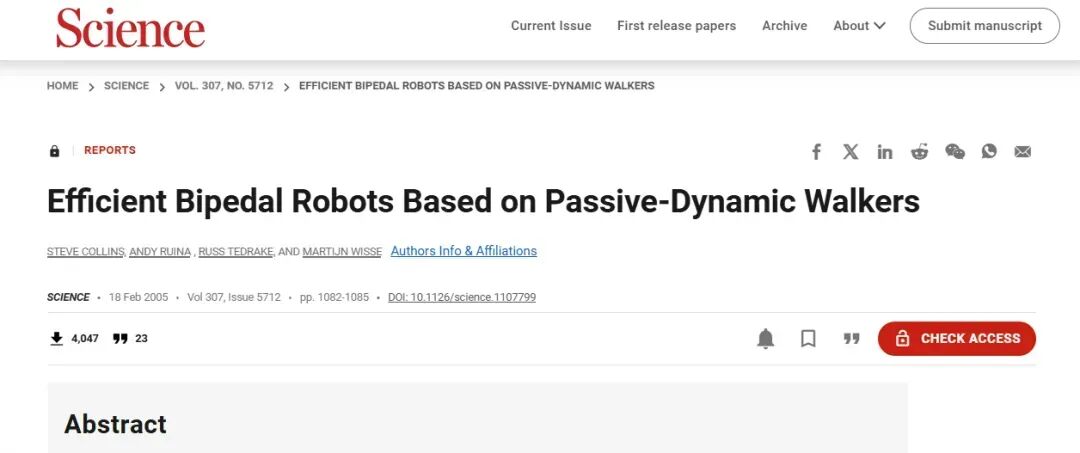 Authors from left: Steve Collins, University of Michigan; Ithaca, Cornell University, et al.
2005 was a major milestone in humanoid robot history. That year, Collins' team at Cornell University published groundbreaking research on passive dynamic walking in Science. Around the same time, Honda's ASIMO achieved a major breakthrough in locomotion speed, reaching 6-9 km/h. Another important development was Boston Dynamics' introduction of the hydraulically actuated quadruped robot BigDog. Its extraordinary balance and environmental adaptability on ice delivered a technological shock comparable to Honda's 1997 robot unveiling — on par with AlphaGo's later breakthrough in AI, though with relatively limited reach at the time.
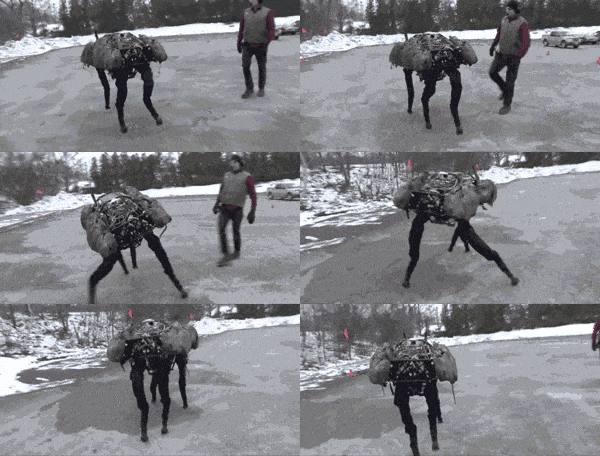 Kicking it on ice couldn't knock it down
Boston Dynamics' and Honda's robots faced energy efficiency challenges. The Cornell team leveraged passive dynamics principles to propose methods for improving energy efficiency, publishing their findings in Science. This discovery prompted the industry to focus on integrating technologies to enhance efficiency and performance, while also sparking widespread interest in passive walking research.
In early 2006, I also began researching passive walking technology. This technology held profound research value from both mechanics and control theory perspectives, and aligned closely with my research philosophy. I achieved some results during 2007-2008.
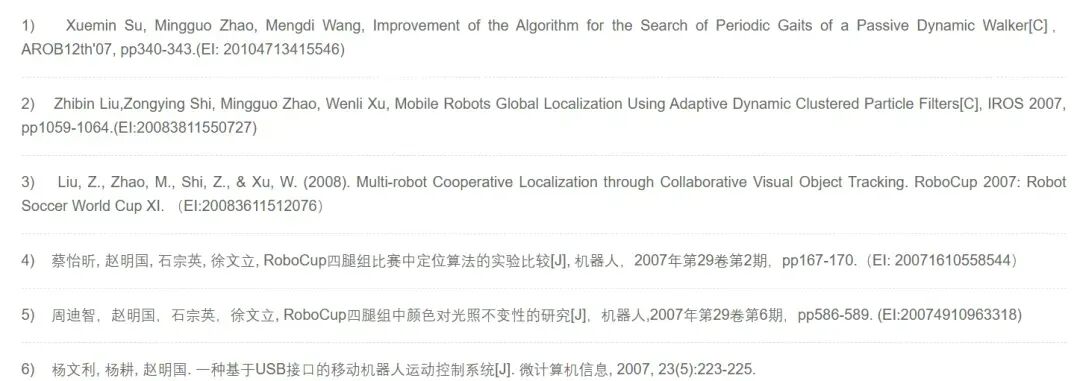 Selected papers published by Zhao Mingguo in 2007
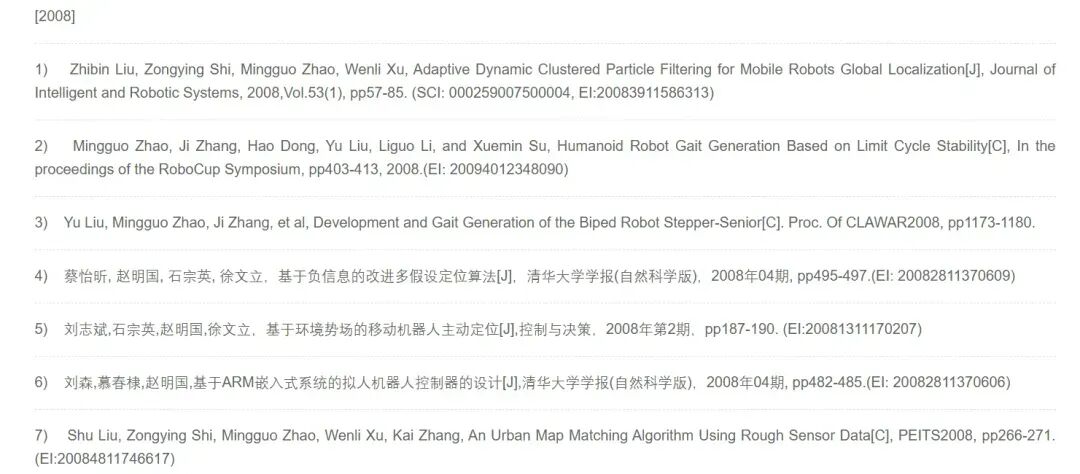 Selected papers published by Zhao Mingguo in 2008
Around 2010, the number of global humanoid robot research teams declined, mainly for two reasons: first, Boston Dynamics' technological lead caused other teams to pivot to other research areas — for example, Professor Martijn Wisse shifted from humanoid robotics to agricultural machinery; second, the technology leaned heavily toward theoretical research with commercial applications still distant. By 2011, theoretical innovation in the field had slowed, and both basic research and application development hit bottlenecks.
The two consecutive DARPA Robotics Challenges (DRC) held in 2013 and 2015 marked a small peak in humanoid robot research. The competitions demonstrated that traditional simple control methods could not meet practical application needs in complex environments. By contrast, optimization-based methods such as Whole Body Control (WBC) and Model Predictive Control (MPC) showed significant advantages. These methods not only effectively solved practical problems but also possessed more complete theoretical frameworks.
As technical trends evolved, I began researching optimization control methods in 2015, with plans to apply them to developing high-performance robot force control systems. During my collaboration with UBTECH, we conducted a series of optimization control studies at the Beijing Research Institute. Thanks to a relaxed research environment without short-term target pressure, we were able to pursue in-depth research at our own pace, exploring multiple technical directions including force-controlled joint design, WBC algorithm development, and MPC method application.
In fact, the theoretical foundations for these methods were established long ago; current work focuses mainly on engineering implementation. With enhanced computing power, these methods can now be practically applied and produce results — a major advance. However, these methods are technically demanding and require professional teams to maintain overall control.
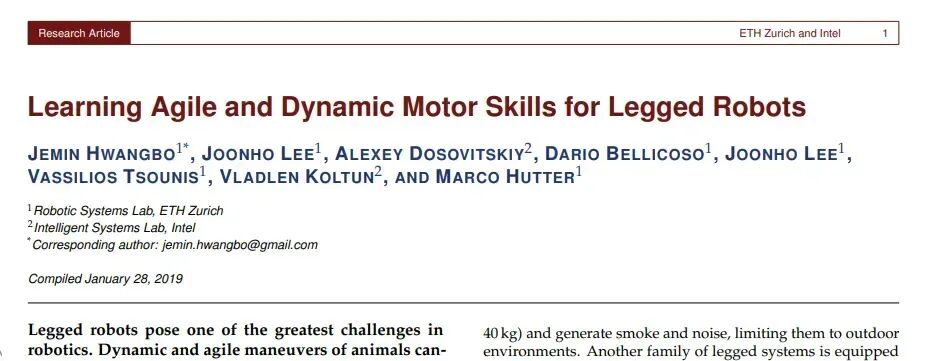 ETH introduced a method for training neural network policies in simulation and transferring them to state-of-the-art legged robot systems
In recent years, ETH Zurich made notable advances in quadruped robotics using reinforcement learning, causing this technical direction to attract widespread attention around 2020. During that period, due to pandemic impacts and the need to complete research on optimization control and brain-inspired computing projects, we did not enter that field. Recently, I have resumed exploring relevant research from a learning perspective, finding that current learning methods have become considerably more mature.
Regarding interdisciplinary research, I turned my attention to brain-inspired computing in 2016-2017. We applied brain-inspired chips to robot platforms and restarted our previous robotics control research methods in the brain-inspired computing domain. From 2021 onward, we participated in the national Brain Project, working to integrate brain-inspired perception, localization, and control functions. Given that dedicated teams were already handling brain-inspired perception and localization, I led my team to focus on brain-inspired control research.
Recently, we've made new breakthroughs in this area, designing novel spiking neural networks (SNN) that mimic biological nervous systems. We've divided these into multiple functional circuits and plan to use SNNs to construct robot systems, particularly for legged robots. The goal is to achieve online learning capabilities by building multi-layer control networks, addressing robot adaptability to load variations, joint errors, and other uncertainty factors.
2
Breaking the Ice
The Pioneering Path of Humanoid Robotics
Li Mengjia: Shifting perspective back to China, what have been the important moments in our country's humanoid robot research?
Mingguo Zhao: The earliest work was probably by Professor Ma Hongxu at the University of Chinese Academy of Sciences, followed by related research at Harbin Institute of Technology. Systematic research in China began in 1998, when Tsinghua University used the first batch of special funding from the "985 Project" to establish a major robotics research program. Around the same time, Beijing Institute of Technology also launched related research. After 2003, Tsinghua temporarily suspended its humanoid robot research due to adjustments in research direction. Under Professor Huang's leadership, Beijing Institute of Technology gradually developed into the most important research force in this field. After 2009, Zhejiang University began to establish its robotics program. Professor Xiong Rong and others developed "Wukong," a robot that could play table tennis.
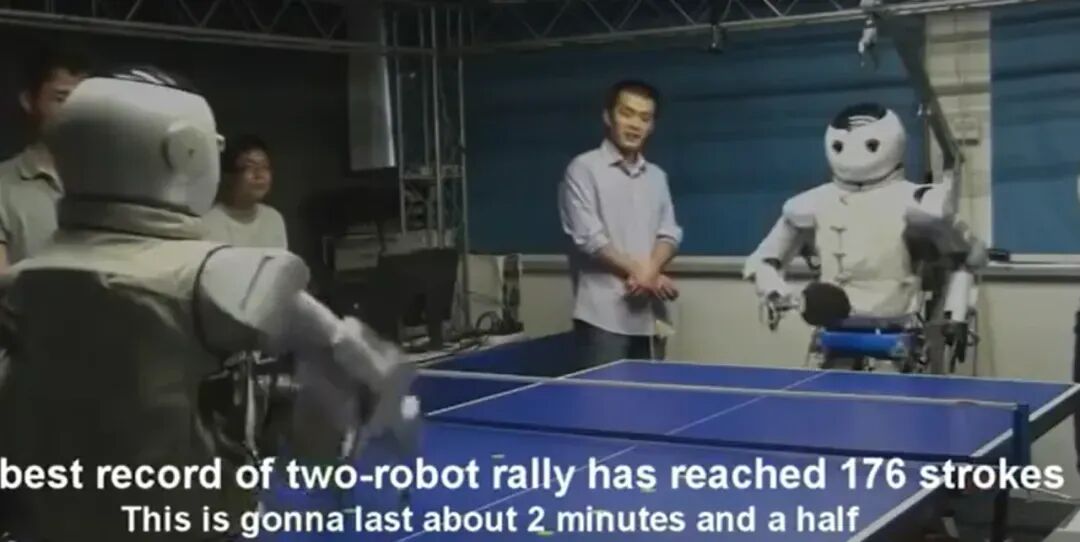 A robot playing table tennis. Image from the internet; please contact for removal if infringing.
By 2015, the landscape of domestic humanoid robot research had gradually become clear: Professor Huang's and Professor Xiong's teams mainly relied on national research funding, while our team obtained commercial support through industry-university collaboration with UBTECH. By around 2020, there were primarily just our three teams in the entire country focused on humanoid robot research. Both Professor Xiong and I started from robotics competitions, gradually accumulating experience and building some influence in this field.
Actually, during that phase, there were relatively few teams engaged in humanoid robot research due to the high R&D investment and technical difficulty. After Tesla announced its humanoid robot plans, it triggered global attention to this field. Relevant Chinese departments subsequently adjusted their strategic layout, with the Ministry of Industry and Information Technology, the Ministry of Science and Technology, and other agencies increasing support for the humanoid robot sector. These policies and funding initiatives spawned numerous research teams and companies entering the field, transforming what had been a relatively niche area of humanoid robot research into a period of rapid development. Currently, China's humanoid robot industry has grown to a scale of 50 to 100 companies. In academia, there are now more than 30 university professors engaged in humanoid robot research.
At present, many provinces and cities are actively promoting the development of humanoid robots, treating it as an important priority. Both in academia and industry, this field is showing vibrant growth. I believe the core logic behind this trend is the massive influx of capital.
Li Mengjia: It's been nearly twenty years since 2005. What was the technical level of Honda and Boston Dynamics back then? Is the difference compared to current technology significant?
Mingguo Zhao: From the perspective of technological development timelines, even Honda's robot technology from 30 years ago remains quite competitive compared to today. Although the technical approaches differ, evaluation needs to be multidimensional.
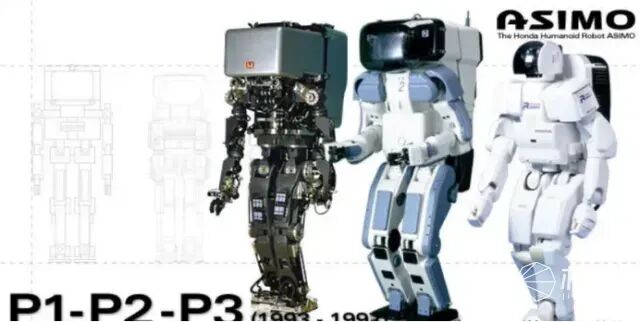
P2 and P3 were released successively in 1996–1997. Image from the internet; please contact for removal if infringing.
Honda began developing robots in the 1980s, giving it 40 years of history. The P2 and P3 robots released in 1997 already achieved stable walking functions, and by 2005 they had reached the level of jogging and single-leg hopping. Looking at core technical indicators — including walking speed, locomotion capabilities, running and jumping functions, and overall product design — there are still few companies that can surpass Honda's technical level from that era.
Looking back at the ASIMO robot developed by Honda during 2005–2010, its performance, particularly in stability, would still require considerable time for current technology to match. Before 2020, bipedal robot R&D remained the exclusive domain of a handful of institutions. This was mainly constrained by two key factors: first, high-quality hardware equipment, and second, mastery of core technical principles. After 2020, as technical barriers lowered, bipedal robot R&D gradually opened up to a broader range of research teams.
The Search for Answers
The Fission Moment in Robot Development
Mingguo Zhao: I've been pondering a question: why have computer and AI technology developed so rapidly while robot technology has advanced relatively slowly? Beyond the obvious factor that robots involve hardware R&D, I believe there's another important reason — the difference in R&D approaches.
The computer field tends to choose problems with global consensus as breakthrough points. Take computer vision: when key technologies like deep neural networks achieved breakthrough progress at a certain node, top global research institutions and companies would concentrate resources into this field. Through three to five years of sustained effort, they not only solved the core problem of visual understanding but also spawned new technical branches during the R&D process. This development model of concentrating superior resources on key problems enables the computer field to continuously break through technical bottlenecks. The development of speech recognition technology and the emergence of large language models like GPT both confirm this point.
Unlike the computer field, robot technology development faces special challenges. First is the fragmentation of research domains: even researchers within the same robotics field have limited academic exchange and technical learning from each other due to differences in research direction, technical approach, and system architecture. Although there are numerous research teams in robot control, each adopts different technical routes, making research results difficult to share and reuse. Even research outputs from high-level teams often have impact limited to small academic circles. Despite the current attention on robot technology, research still shows fragmented characteristics. This dispersed research model makes it difficult to achieve economies of scale, ultimately affecting the development speed of the entire field.
The robotics industry is undergoing major transformation. Though smaller in scale than the AI field, recent changes have been substantial, attracting much excellent talent and capital. This change is accelerating technological progress. Previously, even large companies like Honda innovated relatively slowly. Now, new inventions and results appear frequently, and the robotics industry is beginning to develop rapidly like computers and AI, forming a virtuous innovation cycle.
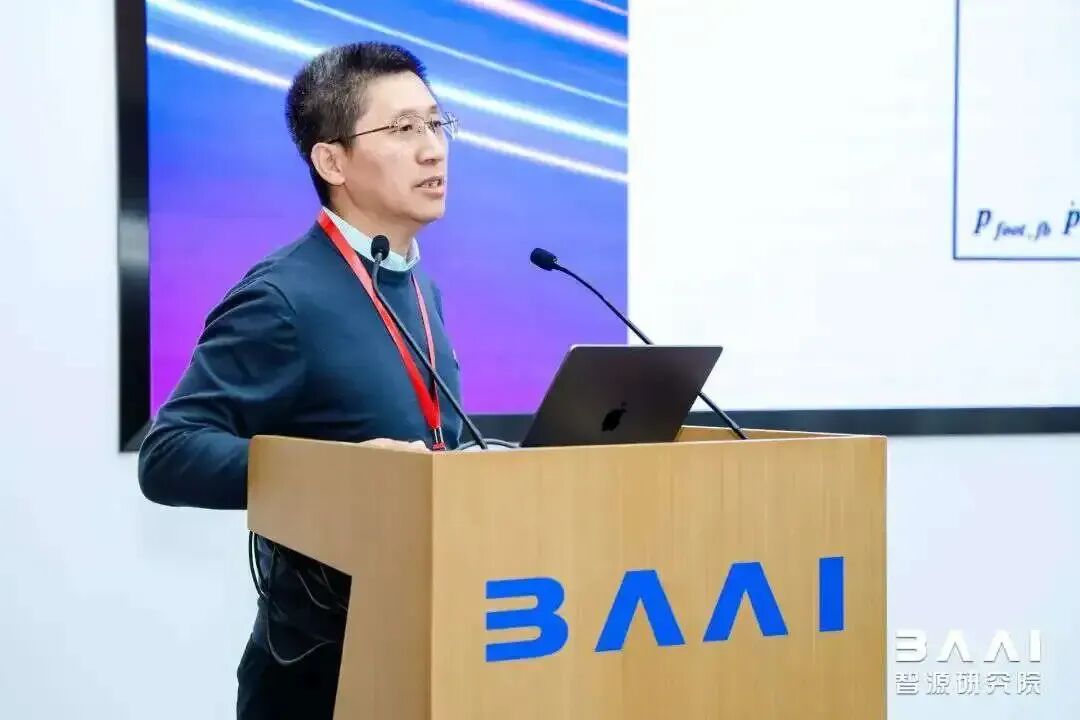
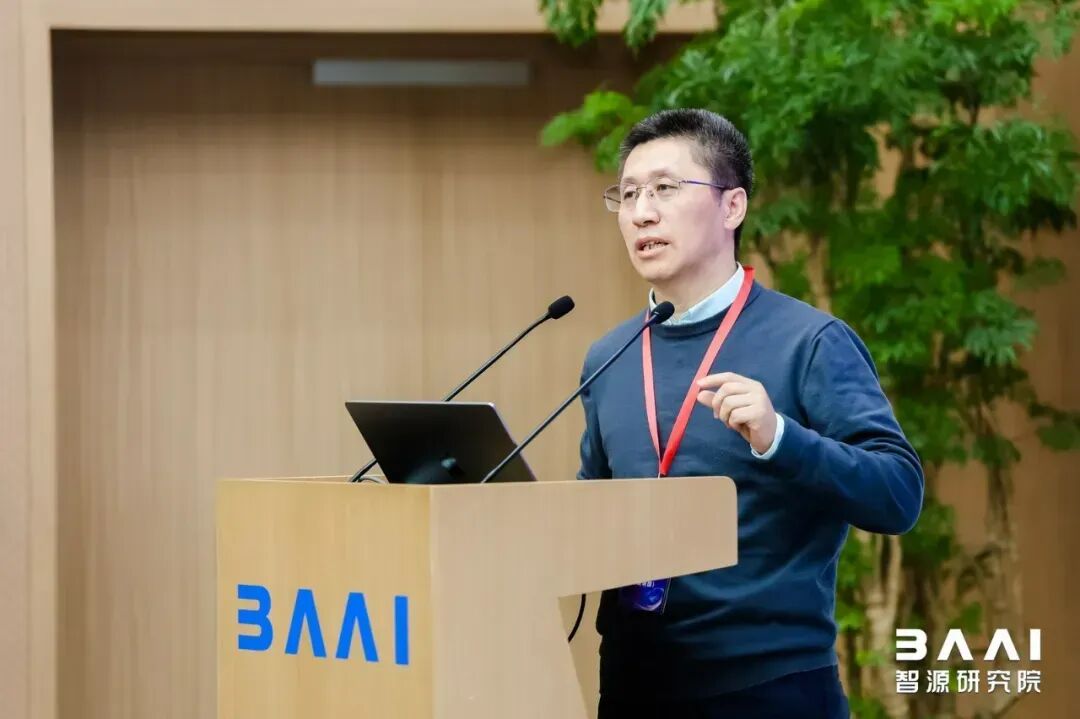
Mingguo Zhao presenting at the BAAI Embodied Artificial Intelligence Summit. See: From Embodiment to Intelligence, Endless Frontiers | Highlights from the BAAI Embodied Artificial Intelligence Summit
At the BAAI Embodied Artificial Intelligence Summit, I emphasized that while maintaining innovation momentum, the robotics field needs to focus on its own technical breakthroughs. Robot development cannot rely solely on the transfer of AI technology; simply applying AI to robots does not equate to achieving true embodied intelligence. If that were all it took, it would only prove the power of AI technology, not the progress of robotics technology. Therefore, robotics researchers need to achieve substantive innovation within their own field.
Li Mengjia: How can we promote integration and collaboration between the AI field and traditional robotics?
Mingguo Zhao: Five years ago I might have held a different view; my thinking is also evolving. Regarding new technologies, I believe we should break down domain boundaries and adopt a pragmatic attitude. Take AI as an example: when methods like reinforcement learning have already been proven feasible, we can directly apply them first and gradually deepen our understanding through practice.
From the overall development trend, robotics researchers should actively embrace AI technology and need to reconstruct their research framework according to AI's development. Robotics practitioners also need to shift their mindset: no longer limited to traditional control theory and optimization perspectives, but rethinking problems from data-driven and machine learning angles. In the next three to five years, as machine learning methods are deeply applied and with sufficient research resources invested, what we hope to see is not just superficial technical applications but deep innovative breakthroughs.
Li Mengjia: How should we understand the new thinking that large models bring to embodied intelligence?
Mingguo Zhao: Compared to traditional computer vision and other technical routes, large model-based solutions have unique advantages. The large model ecosystem provides richer content resources, can accelerate the R&D process, lower technical barriers, and promote industry collaboration and resource sharing. But from current development, large models have not achieved qualitative breakthroughs in cognitive capabilities; their advantages lie more in the completeness and openness of the ecosystem.
Li Mengjia: How should we understand the current large model ecosystem?
Mingguo Zhao: The computer vision (CV) field has formed a complete technical ecosystem. Compared to manually writing algorithms, solutions provided by the open-source community often have better performance. In traditional CV development, we needed to deeply understand the core concepts of projects and tune them in combination with hardware factors like camera parameters, which placed high demands on developers' professional technical skills.
The emergence of large models has greatly lowered this barrier. Developers only need to master the large model's API to handle complex visual tasks. In traditional methods, handling multimodal tasks like vision, language, and video often required collaboration among multiple domain experts. But in the large model era, a single engineer familiar with large model operations can handle it, greatly improving development efficiency.
Therefore, large models as infrastructure provide powerful underlying support for various application developments. This new technical ecosystem has obvious advantages compared to traditional architecture: it not only provides more powerful functions but also significantly improves development efficiency. This technological transformation allows R&D teams to shift focus from underlying implementation to business logic and application innovation. Developers no longer need to deeply handle underlying algorithm writing and tedious parameter tuning, but can focus on optimizing core business logic, greatly improving project quality and efficiency.
However, this also raises a thought-provoking question: despite having such advanced tools, actual progress in certain fields seems not to have met expectations.
Li Mengjia: What are the essential insights that large model technology offers to the robotics field?
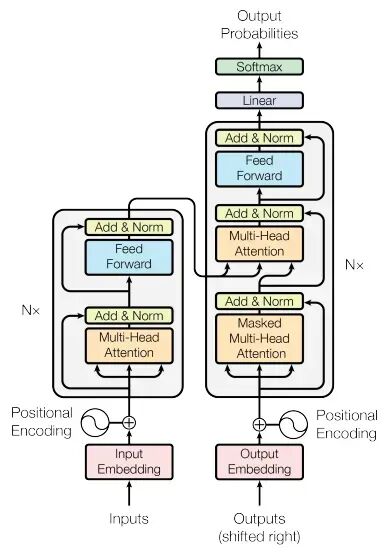
The complete Transformer architecture
Mingguo Zhao: For me, robot system design can draw inspiration from the token mechanism and attention mechanism in the Transformer model. Take "pressing a switch" as an example — we can analyze how humans use multiple senses and allocate attention in this process:
- Approaching: operational attention focuses on vision and proprioception.
- Contact: touch activates, attention to motor control decreases while attention to touch increases.
- Operating: mainly controlling force, confirming operation completion by listening to sounds (like the switch click), not relying solely on touch.
- Feedback: vision dominates again, checking the operation result (whether the light turns on).
Many everyday designs demonstrate the ability to process multiple information streams. Previously we used "weights" or "priorities" to describe the importance of different information, but these may not be entirely accurate.
The "attention mechanism" in Transformer models offers a fresh angle: could we apply this to multimodal robot control? When pressing a switch, is tactile attention most concentrated? When hearing a sound, does auditory attention peak while other senses dial down? Could this approach optimize operations?
Focused Deep Cultivation
Entrepreneurial Exploration in Humanoid Robotics
Li Mengjia: I'd like to learn more about your entrepreneurial journey. What motivated you to start a company, and what is your core vision?
Zhao Mingguo: I'm still fully committed to academic research and take an open view toward commercialization. I don't believe research should be confined to academia. Take the "soccer robot" project — if it remained purely theoretical, its impact would be limited. But if commercialized, it could unlock deeper value.
Many of my students have accumulated substantial industry experience and wanted to combine that with our research findings. So they founded a company and invited me to join. Initially, I suggested the team focus on computing technology R&D, because I believe computational capability is the key to humanoid robots and all complex robotic systems. The team agreed and began working in that direction. However, market practice revealed that developing computing technology alone faces significant challenges at this stage. So we adjusted our strategy to concentrate on core humanoid robot technology, prioritizing integrated robot development.
Market feedback shows that what matters most is the ability to develop the robot body itself. Without mastering body technology, it's difficult to gain recognition from complete-robot manufacturers, and core components struggle to find market application.
Our goal over the next decade is to achieve commercialization of robot technology by focusing on one specific domain. For now, we've chosen a particular scenario — robot soccer — to deepen technical development and explore business models, hoping to build something sustainable. We believe that only by breaking through in one area can we extend successful technology and business models to other domains.
After thorough team discussion, we agreed that with our current capabilities, we shouldn't tackle multiple technical challenges and application scenarios simultaneously — that would exceed our capacity.
In selecting our entry point, we prioritized technical feasibility. First, it aligns closely with our team's expertise. Second, it lays a solid foundation for future expansion. An ambitious goal needs a practically viable first step to get started.
Li Mengjia: I also noticed that Booster Robotics reproduced some of Boston Dynamics' movements.
Zhao Mingguo: That wasn't a technical challenge — our team completed it in just three days. We already had the necessary technical reserves, including suitable robot configurations and continuous motion control capabilities.
Configuration selection was a critical decision in that robot's development. Based on years of research experience, I have deep familiarity with various robot configurations. Our design principle was to avoid replicating widely used solutions, instead seeking innovation space within existing configuration options.
We chose to start with small robots. When Boston Dynamics adopted a similar approach, we quickly decided to demonstrate our technical capabilities. By reproducing and optimizing the relevant movements, the team completed this demo project in very short time. This really showcased our rapid response capability more than any technical breakthrough itself.
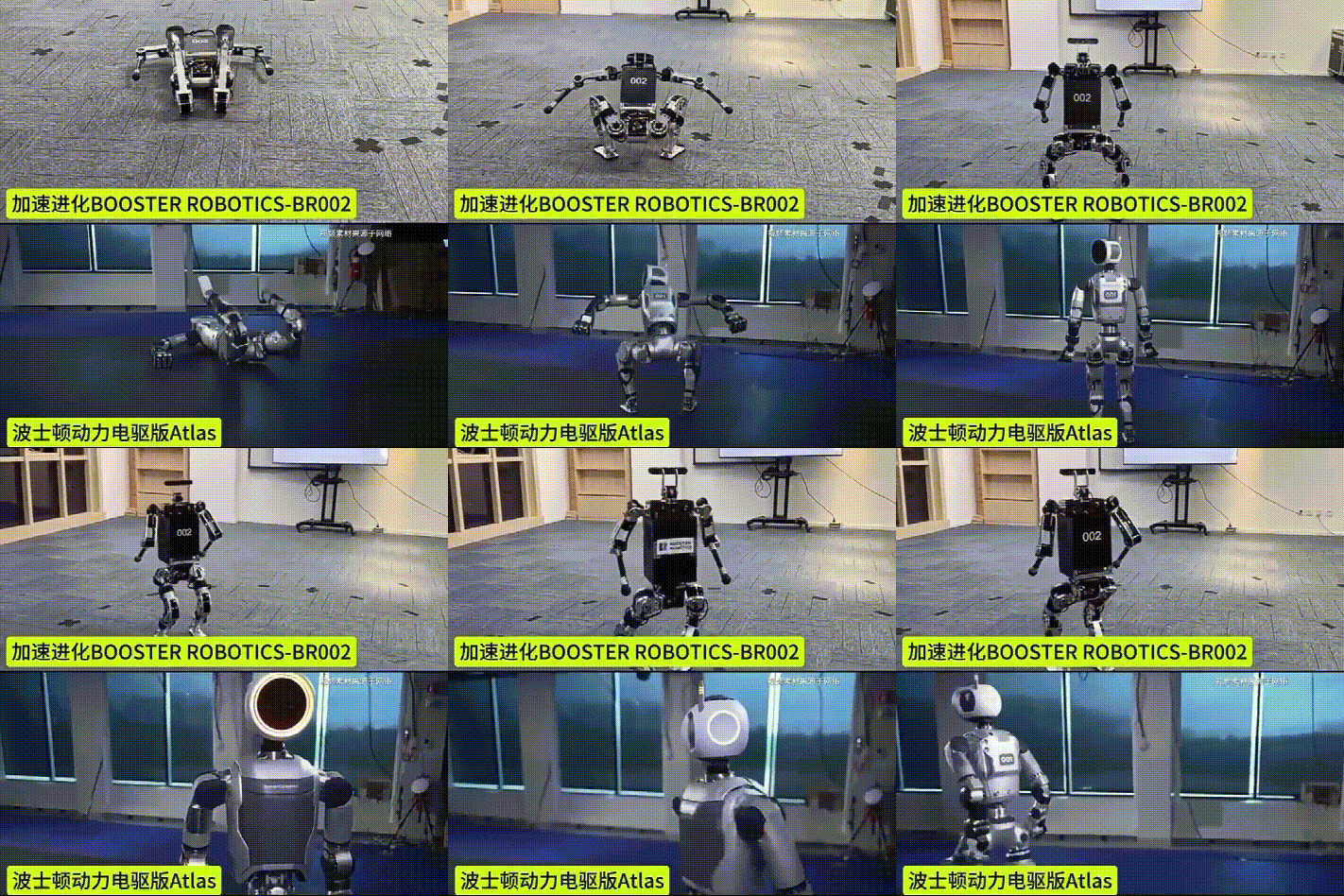
Comparison with Boston Dynamics robot. Source: Internet, please contact for removal
Currently, robot soccer's competitive level hasn't reached the point of attracting broad audiences, so our team is exploring other ways to maintain project visibility. From a broader perspective, what we truly care about is how to use the soccer project to advance cutting-edge technologies like Embodied Artificial Intelligence, and how to develop robot soccer into an entirely new business model, opening up an unprecedented market.
For technology companies, their core value typically manifests in two key areas: technological innovation and commercial value. If you can't offer unique advantages in both technology and business model, competing with established companies that have complete industrial chains — like Tesla, Xiaomi, and others — becomes exceptionally difficult.
In the emerging field of humanoid robots, merely imitating existing models is insufficient because such approaches rarely yield substantive breakthroughs. If you're only competing at the operational level, facing enterprises with abundant resources and first-mover advantages, new companies will struggle to surpass them. However, the humanoid robot industry still has substantial room for growth. By choosing an innovative direction and studying it deeply, new companies have every opportunity to compete alongside industry leaders in the future. This mirrors the business world: even small companies, if they identify the right niche market and build unique advantages, can carve out a place in ecosystems dominated by giants like JD.com, Alibaba, Tencent, and Baidu. The key isn't company size, but whether you can make substantive contributions to the industry and form differentiated competitiveness.
Li Mengjia: You mentioned contributing to industry development, particularly promoting new concepts in Embodied Artificial Intelligence. Specifically, how should we understand these new concepts?
Zhao Mingguo: I'll answer from a technical perspective on how to understand these new concepts. A core challenge currently facing robotics is handling long-horizon tasks. In language models, we focus on processing tokens; in robot manipulation, we need to process continuous action sequences, such as complex behaviors like grasping and placing objects. Short-horizon task handling in robotics is already relatively mature, and the industry is exploring new concepts — mainly large models — to address long-horizon challenges. Large models can provide execution sequence planning for complex tasks, but the crucial question is how to achieve autonomous robot decision-making.
We hope to implement a fully deep learning-based end-to-end robot decision-making system next year. Current systems have limitations including restricted visual perception range, overly simplistic preset behavior patterns, and decision logic that relies on prior knowledge. To break through these constraints, we're exploring new approaches. Briefly, our attempts include: changing traditional task decomposition methods, avoiding breaking complex tasks into fixed steps; abandoning traditional decision trees and state machine methods; using large models to go directly from image recognition to decision-making, replacing traditional computer vision algorithms. This approach will bring new possibilities for intelligent robot decision-making, enabling more flexible responses to challenges in complex environments.
Going Against the Current
The Inheritance of Persistent Scientific Exploration
Li Mengjia: Regarding research talent cultivation — as a mentor who has trained outstanding researchers like Dr. Hao Cheng, while also leading a research team — what academic development advice and experience would you share with young researchers?
Zhao Mingguo: I personally lean toward independent thinking and holding firm to my own views. Years of experience have deeply convinced me: don't轻视 any detail — even seemingly trivial aspects deserve dedicated time for deep study. In areas where others widely doubt, persist in exploration even more. Avoid pursuing projects that appear easy on the surface or offer short-term gains. If an opportunity seems too simple or the payoff too obvious, it often conceals risks. Take my bicycle research project: almost no one was optimistic at the early stage, but through relentless effort, the final research results made the cover of Nature magazine.

Zhao Mingguo's 2019 Nature cover article applying brain-inspired computing technology to vehicle systems
Li Mengjia: How did you identify the bicycle as an entry point at that time?
Zhao Mingguo: In this research, Professor Shi Luping was the principal investigator. I mainly handled experimental implementation and verification, while Professor Shi's team focused on developing the robotic chip architecture. The research origin traces back to my 2014 collaboration with Baidu's autonomous driving team. At that time, the team led by Dr. Kai Yu was still small in scale, but had begun laying out plans for autonomous vehicles. Considering China's special status as a major bicycle nation, they proposed developing an autonomous bicycle. After in-depth investigation by Ni Kai and others, they ultimately chose to collaborate with our Tsinghua University team.
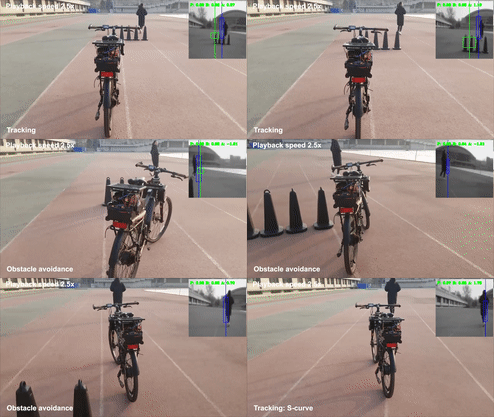
Autonomous bicycle experiment. Source: Internet, please contact for removal
By 2016, we had completed development of all core functions including vehicle tracking and voice recognition. These experiments attracted considerable attention when conducted on campus, and some people recorded and shared related videos. Later, Professor Shi Luping suggested applying his developed chip to our experimental platform for performance verification. Although neither side had previously known about the other's research direction, after discussion we discovered strong complementarity and immediately launched in-depth cooperation that continued until 2019.
This experience gave me profound recognition that human cognition is often limited, and the value of many decisions cannot be immediately apparent. My choice to collaborate with Professor Shi was neither based on personal friendship nor short-term interest, but on recognition and trust in his academic insight. This research cooperation founded on professional judgment ultimately yielded fruitful results.
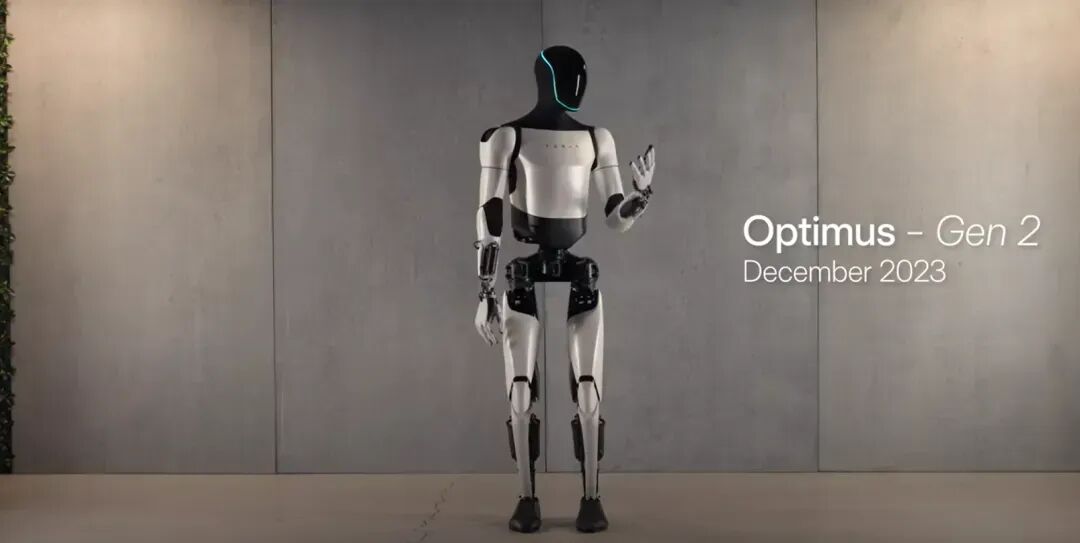
Tesla humanoid robot. Source: Internet, please contact for removal
In fact, none of the work I've done has been in vain. We applied reinforcement learning to two-wheeled self-balancing vehicles quite early, but chose to slow down推进 at that time. I had maintained a cautious attitude toward reinforcement learning until many people made progress in this area, at which point I re-engaged with the research.
Actually, the success of many things doesn't stem from clear motivation, but the final results are often satisfying. Before humanoid robots became prominent, my reputation in the robotics community mainly relied on my bicycle project results. However, the rise of humanoid robots surprised many people. Therefore, I don't recommend that people rush into a field simply because it appears hot. Instead, think deeply, clarify your original intention for entering that field, and follow longer-term goals.
Transcending Boundaries
The Intelligent Transformation of Robotics Research
Li Mengjia: How do you position yourself? As a scholar in traditional robot control and optimization?
Zhao Mingguo: Before this year, I would have said yes, but my thinking has shifted. From undergrad through my PhD I focused on mechatronics, then went deep into control theory. In passive control, I studied mechanics intensively and explored control optimization. I don't carry much baggage — I don't get hung up on identities or professional labels. In this era, the boundaries between disciplines aren't really that clear. A mechanical engineer can dive into AI; a computer scientist can master engineering design.
Take robotics, for example. I believe its core mission is solving problems — arms need to solve manipulation problems, legs need to solve locomotion problems. In the past, locomotion was too difficult, so we had to rely on mechanical methods and simplified models. Now with technological advances, people have turned to optimization techniques, believing they can solve problems more effectively. So to truly solve these problems, you need to learn and apply optimization techniques, or come up with your own innovative methods — no need to be constrained by professional boundaries. Just as cookware evolved from iron woks to rice cookers, facing new technological developments, learning and adapting is the only natural choice.
Li Mengjia: In your research career, could you share a result you're most satisfied with?
Zhao Mingguo: First is the "virtual slope walking" method, combining practical experience from passive walking and control theory. This technique is distinctive — its performance metrics exceeded comparable research, and it influenced and catalyzed numerous follow-up studies.
Second is the autonomous bicycle project, a cross-disciplinary collaboration. We worked with chip design expert Shi Luping to apply innovative chip architecture to bicycle control systems, achieving good demonstration results.
Notably, the bicycle control project revealed the critical role of computing architecture in control systems. We successfully integrated functions that originally required three computers onto a single chip, validating the advantages of neuromorphic computing for control system integration. This gave me important inspiration, prompting me to start paying attention to computing architecture issues in robotic systems. I once discussed with colleagues at the Institute of Computing Technology how a single SoC (system on chip) might address all computing needs for robots. This vision remains forward-looking even today, but truly realizing it will require much more research in complex areas like chip design and operating systems.
Third, in 2019 we published in Nature as a cover article on "Towards artificial general intelligence with hybrid Tianjic chip architecture," which carries significant conceptual importance.
Fourth, we're currently tackling control systems based on spiking neural networks. What's novel is the fusion of neuromorphic computing and machine learning approaches — we expect to reach a stage suitable for public publication by early next year.
Fifth, with Embodied Artificial Intelligence concepts regaining attention, I'm combining this with our legged robot competition project (RoboCup) and promoting this research direction. If we can achieve embodied intelligent applications for legged robots in 2025-2026, that would be an important research result.
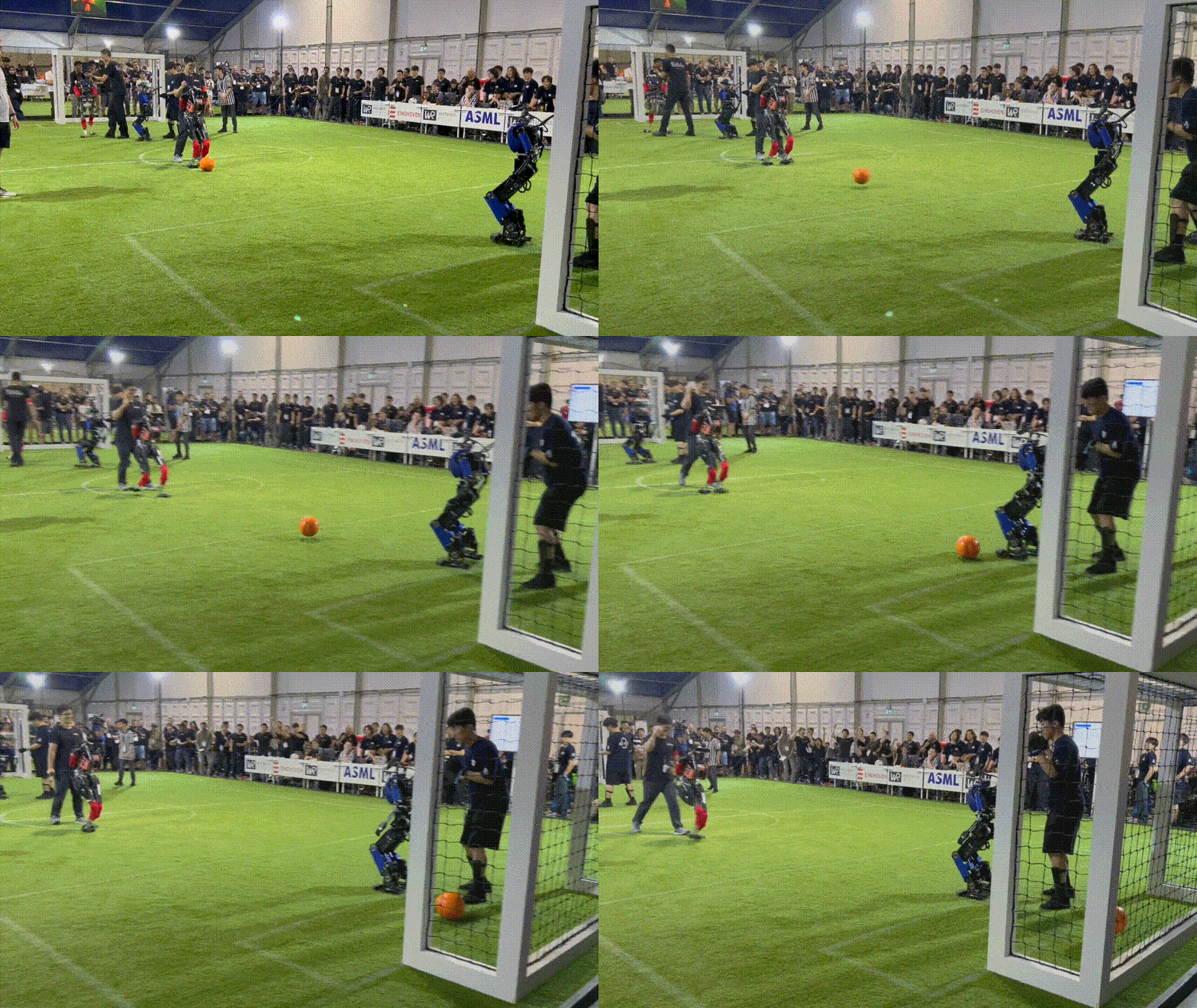
A glimpse of RoboCup 2024. Source: Internet
When I visited ETH Zurich in July 2024, RoboCup and robotics expert Marco Hutter said: "Currently, globally, there are only 3-4 teams conducting humanoid robot soccer research, including yours and UCLA's Dennis Hong team." But the research progress at RoboCup 2024 this July has shifted many researchers' attitudes: humanoid robot soccer is an ideal platform for validating embodied intelligence, involving technology iteration, learning method innovation, biomimetic materials, and many other fields — helping us deeply understand the nature of intelligence and its physical implementation. This is a long-term research direction worth sustained investment.
Veloso, a former professor at CMU, once proposed integrating robot competitions into a unified humanoid robot competition event. Though this proposal was considered somewhat radical, given today's rapid development of AI and humanoid robot technology, this direction deserves serious attention. The development journey from AlphaGo to AlphaFold gives us important insight: AI technology needs to be gradually validated and refined in specific domains. Testing directly in end-application scenarios may produce negative effects due to imperfections. By contrast, validating technology in relatively controlled environments like competitions is more appropriate. For example, failure in a Go match simply proves humans are stronger, whereas errors in protein prediction might lead to questioning of the entire technical direction. So when a technology achieves breakthrough progress in a specific domain, proving it surpasses human capability, other domains can adopt and deepen that technology with greater confidence. This is precisely the value of validating technology through robot competitions.
For me, I want to use "playing soccer" as an entry point to study embodied intelligence, and do it well. If one day people realize this is an excellent idea and significant results are indeed achieved, that would be my satisfaction. I don't expect that I must personally achieve this goal — if others realize it later, we would also be happy.
Li Mengjia: How did you come up with the "playing soccer" scenario at the time?
Zhao Mingguo: The vision of robot soccer traces back to 1993. During the Deep Blue vs. Kasparov chess match, some Canadian scholars posed five key questions about AI applications in the real world, including the idea of having robots play soccer.
In 1996, with Deep Blue expected to defeat human chess players, researchers established the RoboCup Federation. In 1997, at IJCAI — then the most influential conference in AI — the first robot soccer competition was held. Japanese companies like Sony and Honda were major sponsors, strongly supporting this event. Sony even provided quadruped robots for free, and Microsoft also provided important sponsorship. However, the 2008 global financial crisis led major corporations to cut sponsorships, affecting the event's development.
Exploring Boundaries
The Value of Robot Morphology
Li Mengjia: What do you aim to achieve through competitions?
Zhao Mingguo: "Playing soccer like a human" can serve as one of the landmark tasks in the embodied intelligence field. Soccer represents the highest level of bipedal locomotion capability — an extremely challenging research direction. From the perspective of humanoid robot embodied intelligence research, we can divide it into three main categories: lower-limb locomotion control, arm and fine manipulation, and whole-body coordinated movement. Breaking through several typical tasks in each category would mark important progress in embodied intelligence research.
Li Mengjia: Is it necessary for robot morphology to be highly similar to humans? What's the practical value of humanoid design?
Zhao Mingguo: From a functional perspective, not much.
In a fully automated dark factory, whether robots have human appearance doesn't matter, because there's no one there to appreciate them — you can choose three-fingered or six-fingered designs based on actual needs. However, in non-fully-automated environments, robot appearance becomes more important, because people interact directly with robots. Take soccer as an example — audiences don't just want to see victory, they want to see exciting matches. Human basic behaviors and thought patterns also influence our expectations of robots, which explains why works like Westworld are so popular. People tend to imagine robots and AI as scenes from Westworld, which also reflects our philosophical exploration of self-cognition: Who are we? Where do we come from? Where are we going? Could we be robots? Were we created? And so on.

Robots in Westworld. Source: Internet
Taking "playing soccer" as an example, what people care about isn't soccer itself, but whether robots can play like humans. Once the relevant technology matures, it can be applied to other fields. This question divides into two aspects: first, during technology development, other problems can be solved along the way — this belongs to experimental application; second, humanoid robots can attract audiences because people enjoy watching performances. From ancient Roman gladiators to the modern Olympics, humanity's love of competition has always existed. In today's technologically advanced world, robot sports, including soccer, represent a new development direction. Robot sports competitions may have two emphases: first, as experimental scenarios for technology validation, laying groundwork for future applications; second, after technology matures, robot sports competitions becoming commercial scenarios.
Li Mengjia: Robots imitating human appearance and behavior — this isn't just out of technical necessity, but more due to considerations of entertainment value and cognitive compatibility?
Zhao Mingguo: I don't think robots must imitate human technology. Technology isn't the only measure. For example, humans can climb stairs on two legs, but bicycles can reach the same places too. This isn't a simple matter of comparing superiority or authenticity. When discussing robots, people often mention rock goats that can walk on steep slopes, emphasizing the necessity of legged robots where wheels can't reach. Similarly, in many extreme sports sponsored by Red Bull, two-wheeled vehicles can go where legs cannot. What I think matters is the cost of accomplishing something, not whether it can be done.
We invented airplanes not by simply imitating birds, but by using principles of flight to fly farther. In the embodied intelligence field, we don't just imitate human movements — we think about why technology hasn't reached human levels. I believe machines will surpass humans in certain aspects, like how calculators surpass humans at calculation. In the future, machines will also surpass humans at complex tasks.
Future sports will divide into robot sports and human sports: robot sports for people to watch, human sports for pursuing limits and perfection. Machines may exceed humans in speed, but in bipedal running, current robots still can't match humans. We should try to build high-speed bipedal robots — this is part of technological exploration.
We tend to be too utilitarian; we should change this way of thinking and consider problems at a deeper level. Exploration may bring progress across multiple domains — we shouldn't avoid trying just because we're worried technology won't make money. Even if not everyone is interested in robot soccer, as long as some portion of people find it acceptable, we should continue pushing forward, and consider this technology on a longer timescale. This technology may not directly generate commercial value, but it can provide theories and methods for other fields. If robot soccer can become a commercial scenario, all the better.
I care more about whether technology can translate to business than about scale. Even if the soccer market isn't large, creating 100 million in value is still progress, because it represents a transformation from nothing to something. Currently robot soccer hasn't yet formed a commercial landscape, but it has great potential — whether it can reach larger scale in the future, that will take time to verify.
Li Mengjia: In a 100-meter sprint, would legged robots run faster than wheeled ones? Will there be cases where robots run faster than humans?
Zhao Mingguo: In the future, someone will definitely develop bipedal robots that can run faster than humans. The 100-meter sprint is a highly rhythmic sport — it only includes starting acceleration and maintaining speed phases. Athletes just need to sprint with full force to the finish line. Unlike marathons that require energy distribution, the 100-meter sprint doesn't need to consider energy recovery and release. Robots just need to be able to start quickly, accelerate, and maintain speed within 100 meters.
The challenge of the 100-meter sprint, then, is whether you have enough explosive power to reach maximum velocity. The marathon, by contrast, demands far more energy management and storage. The 100-meter dash doesn't require substantial energy reserves — you could even do away with batteries entirely and rely solely on supercapacitors to discharge the needed energy rapidly. However, using existing motor technology for this kind of rapid energy release isn't viable, as it can't meet the demands for both high efficiency and high energy output. Likewise, current robot configurations aren't suited to this kind of high-speed movement.
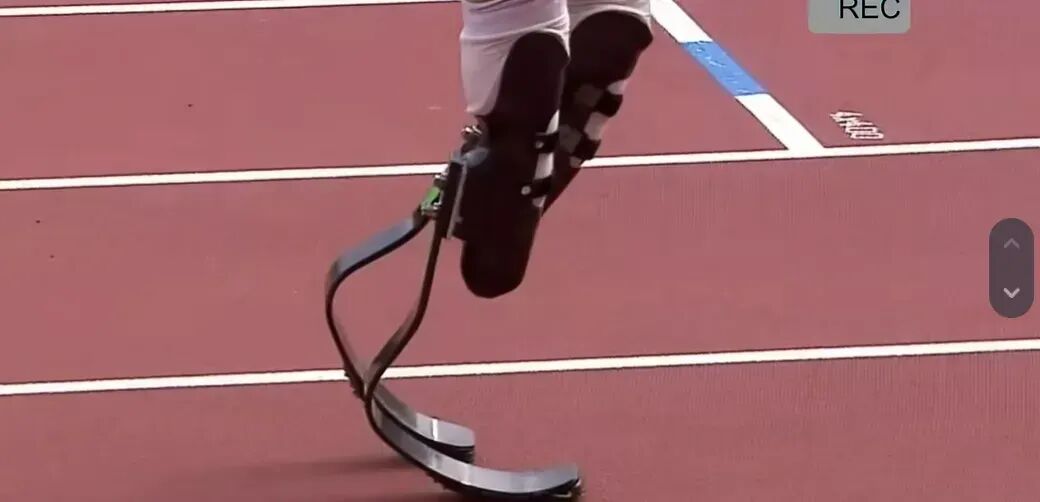 Oscar Pistorius's carbon-fiber prosthetic blades. Image from the internet; please contact for removal if infringing.
Looking back at the 2008 Paralympics, there was an athlete known as the "Blade Runner" (Oscar Pistorius) who used carbon-fiber prosthetic limbs after having both legs amputated. With proper design, his prosthetics could potentially make him faster than able-bodied runners. This is because the prosthetic design allows for a higher swing frequency, and without needing to replicate the complex structure of a real foot, the limbs can be lighter — boosting locomotive efficiency.
In robot design, we can draw on this concept, using passive principles to shape the robot's foot and adjust the center of gravity in its legs. For robots, we can perform calculations grounded strictly in biomechanical principles to arrive at optimal results, then adjust the technical configuration accordingly. With sufficient effort, including structural adjustments, I'm confident that robot performance can be significantly improved.