Ma Guan | Source Code Capital Partner Wei Wang: Expanding Mid- to Long-Term Funding Sources for VC Firms Across Multiple Dimensions

Expand long-term funding sources for venture capital institutions through multiple channels.
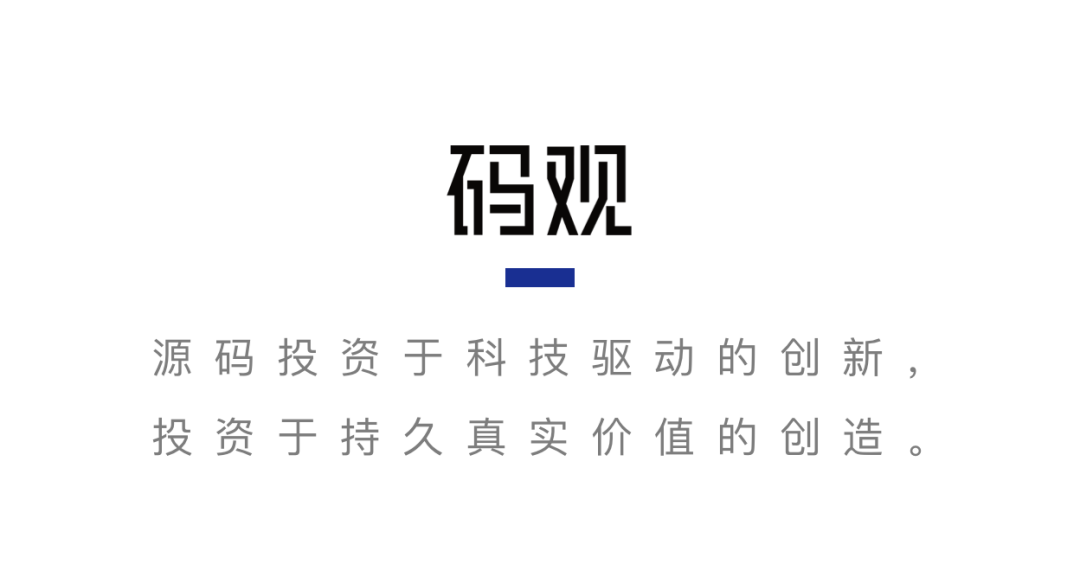
Source: Southern Daily
Reporting: Southern+ reporter Zhou Meilin, intern Wang Wei
A new round of capital market reforms is advancing steadily across the entire market and throughout the whole process. To balance the primary and secondary markets, since late August the CSRC has introduced optimized regulatory arrangements for IPOs and refinancing. Recently, IPO and refinancing volumes have declined year-on-year, and the fundraising pace in the primary market has noticeably slowed — playing a role in maintaining dynamic equilibrium between the two markets. But under the comprehensive registration-based system, revitalizing the capital market is a systematic long-term project. Maintaining balance between primary and secondary markets still depends critically on bringing more incremental capital into the investment side. How can the capital market's full chain be better connected and investor confidence boosted? In the "fundraise-invest-manage-exit" cycle of venture capital, how can the industry's foremost challenge — "fundraising difficulty" — be resolved? And which areas in China still offer worthwhile investment opportunities? To address these market concerns, Source Code Capital partner Wei Wang gave an exclusive interview to Southern+.
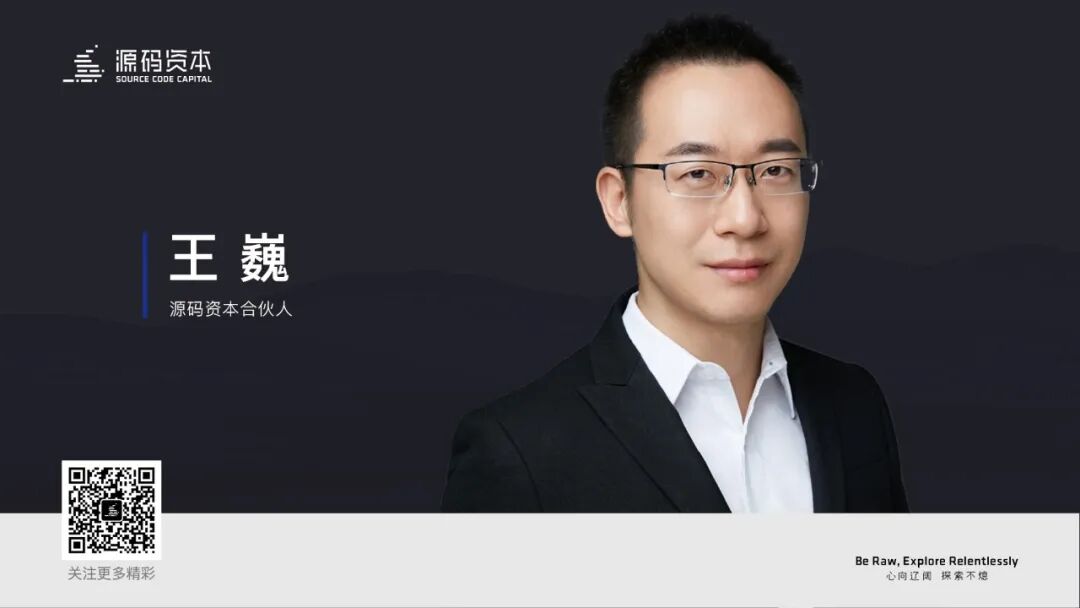
Source Code Capital Partner: Wei Wang
1
Boosting Investor Confidence on All Fronts
A vibrant capital market depends on investor confidence and capital support. In recent remarks, CSRC officials noted that, overall, the shortage of long-term capital remains a prominent constraint on the healthy development of capital markets. How can stable, long-duration capital that pursues steady long-term returns be better leveraged to inject fresh momentum into high-quality capital market development and boost investor confidence?
Wang said that as capital markets have gradually developed, long-term capital's breadth and depth of participation has continuously expanded. To bring more long-term capital into venture capital institutions, policy environments conducive to capital entering the market should be created, and long-term funding sources for VC institutions should be expanded through multiple channels.
"From the current situation, relying solely on market-oriented enterprises or private capital can no longer satisfy primary market demand," Wang said. To enliven the primary market, he expressed hope that more government guidance funds, state capital, and insurance capital could enter. These capital sources inherently have greater tolerance for investment cycles and place more emphasis on long-term industrial development goals and long-term returns. For investment institutions focused on "investing early, investing small, and investing in technology," the entry of long-term capital will make it easier to select investment targets with long-term growth potential rather than investing merely to achieve quick, short-term goals.
Additionally, regarding cooperation between state and private capital, Wang suggested introducing guiding mechanisms or systems that encourage better collaboration between the two, enhancing investment confidence on both sides. "Private capital has advantages in efficiency, while state capital has advantages in scale and industrial guidance — the two sides can form excellent complements," Wang said.
"We should also support and encourage private enterprises and entrepreneurship more — this is an important foundation for maintaining economic vitality and growth," Wang said. Only when industries and enterprises achieve development and improvement can investment industry confidence recover. This involves various sectors across the economy, especially key industries encouraged by the state.
2
Further Optimizing the M&A Ecosystem
This year, M&A activity in the A-share market has been particularly robust, with companies showing significantly greater willingness to pursue transactions. Data shows that over 80 A-share companies have disclosed major restructuring events for the first time this year.
From a policy perspective, regulators have made repeated statements this year and introduced relevant policies to deepen market-oriented reforms of listed company M&A. Recently, in response to questions about revitalizing capital markets and boosting investor confidence, CSRC officials stated that M&A is an important pathway for optimizing resource allocation and stimulating market vitality.
In Wang's view, sustained M&A activity results from multiple combined factors — market conditions, policy, and companies' own strategic considerations — and has positive significance for healthy capital market development. He expects more Chinese companies to achieve leapfrog development through M&A in the future.
Wang pointed out that from both demand and supply perspectives, the foundation for a wave of M&A in China has already been laid, with multiple industries entering a new round of consolidation.
On the demand side, numerous Chinese listed companies or industry leaders already possess the resources and capabilities to execute M&A. Companies are beginning to consider achieving product or technology iteration through diversified pathways, with external expansion being an important option.
"On the supply side, there is currently a group of listed companies in the secondary market whose valuations may no longer have market recognition and face difficulty breaking through. But they still retain advantages in products, technology, channels, or teams. If they can integrate with industry leaders, significant synergies could emerge. Primary market assets have long been a focus of M&A integration, and the large number of quality companies cultivated in the primary market over recent years will also be important participants in future M&A," Wang noted.
For M&A transactions, timing windows are crucial. "Currently, large-scale M&A approvals and transactions both require considerable time." To optimize the M&A ecosystem, Wang suggested further improving review efficiency while granting greater tolerance for cross-industry M&A, pricing mechanisms, and commercial terms, better helping companies seize M&A opportunities.
"Some entrepreneurs also need a shift in mindset — the path to going public can be diversified, and IPO isn't the only measure of success," Wang pointed out. Companies can make choices based on their own circumstances and market conditions. Achieving strong alliances with industry giants to create "1+1>2" industrial benefits is itself a sound path for realizing corporate value, improving industrial efficiency, and optimizing resource allocation.
3
China's Sci-Tech Sector Faces New Investment Opportunities
Southern+: What suggestions do you have for revitalizing capital markets?
Wang: At this stage, the most important thing may be restoring market confidence by letting investors see high-quality growth. Therefore, we should encourage listed company M&A, driving high-quality growth of existing listed companies through industrial integration and efficiency improvement.
Second, the smooth functioning of IPOs is also critical, since IPOs represent the node where corporate financing crosses from primary to secondary markets, fundamentally affecting corporate financing and industrial development. So we also hope that IPO acceptance, review, and registration can remain consistently smooth. This pathway can continuously bring new listed companies and new industries as incremental additions, which is enormously significant for facilitating corporate financing, achieving industrial development, enlivening markets, and activating the entire economy.
Southern+: Which sectors and tracks will you continue to favor for future investment?
Wang: We are very optimistic about China's technology investment opportunities overall — technology-driven innovation is the major trend. Specifically, we are focused on areas such as intelligent manufacturing, hard tech, AIGC (generative AI), and "dual carbon" green development.
Especially in the "dual carbon" space, China's dual carbon sector has very leading advantages globally from the most upstream to end markets. China's dual carbon sector should represent the highest global level. In this area, our investments are centered on "electricity" as the core, extending along its upstream and downstream to include materials, end products, operations, and more. We believe the wave of technology-driven innovation shows no signs of stopping, and increasingly more opportunities will emerge in the future.