MaHui AC | Gathering in the Greater Bay Area with CUHK-Shenzhen to Explore "New Energy and Green Development"

Building an Efficient Exchange Platform for Scientific Research Innovation and Industrial Development
#MaHui AC
Source Code Capital has long prioritized building and nurturing its ecosystem, establishing the MaHui "AC" (Alternating Current) event series to facilitate exchanges with industry players, universities, and other ecosystem partners — mutually sharpening perspectives and accelerating industrial integration and development.
The Greater Bay Area serves as a core engine for high-quality economic growth and is also a key region for dual energy consumption controls and environmental governance. To advance national dual-carbon strategy implementation, spotlight technological innovation and investment priorities in the dual-carbon domain, deepen industry-academia-research collaboration, and create an efficient exchange platform connecting scientific research with industrial development, Source Code Capital and The Chinese University of Hong Kong (Shenzhen) jointly hosted the inaugural "Industry-Finance Roundtable — New Energy and Green Development" on December 16.
Experts from China Merchants Capital, CGN, China Resources Power, the Chinese Academy of Sciences (Guangzhou) Institute of Energy, and Shenzhen Gas joined founders and executives from Source Code Capital's portfolio companies in the dual-carbon space — including Sunwoda Electronic Co.,Ltd., Ace Battery, and MakeSens — for a high-quality industry discussion.
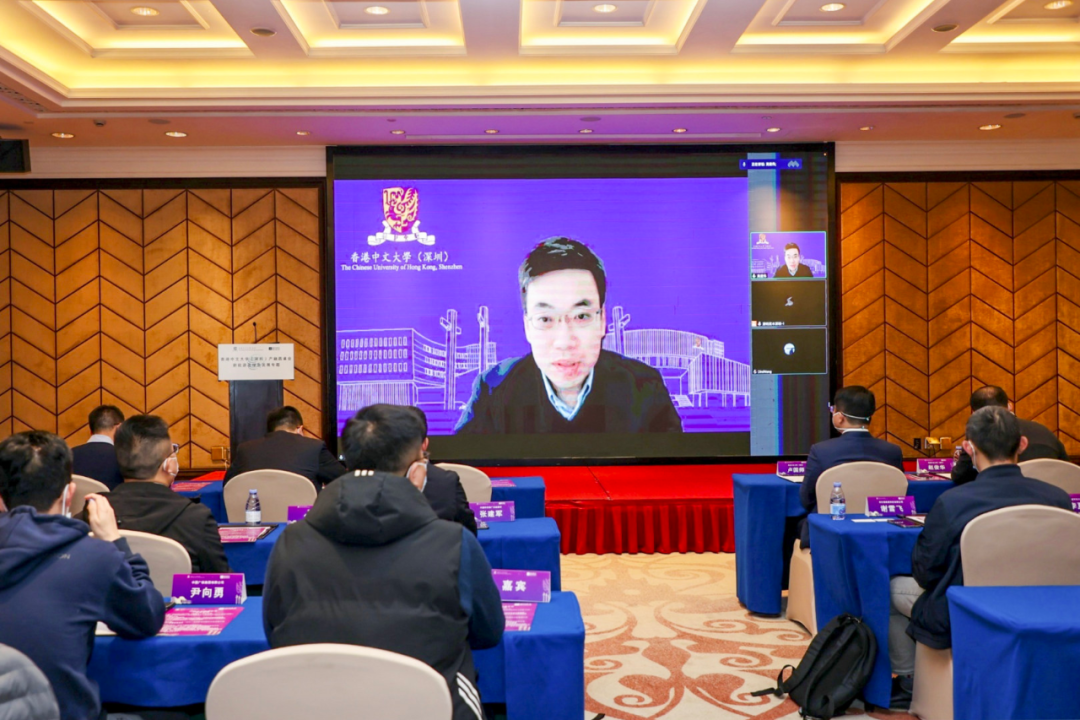
Professor Huang Jianwei, Associate Vice President, The Chinese University of Hong Kong (Shenzhen)
Professor Huang Jianwei, Associate Vice President of The Chinese University of Hong Kong (Shenzhen), delivered the opening remarks. He noted that the university has a highly active team engaged in new energy research, but that both technological and industrialization challenges continue to constrain the development and utilization of new energy. He expressed hope that this meeting would mark the beginning of closer ties between research, industry, and capital — sustained dialogue on critical issues — and welcomed Source Code Capital's initiative to launch industry-finance collaboration events across strategically important national domains, working alongside universities and broader society to build a promising future for high-quality research and commercialization.
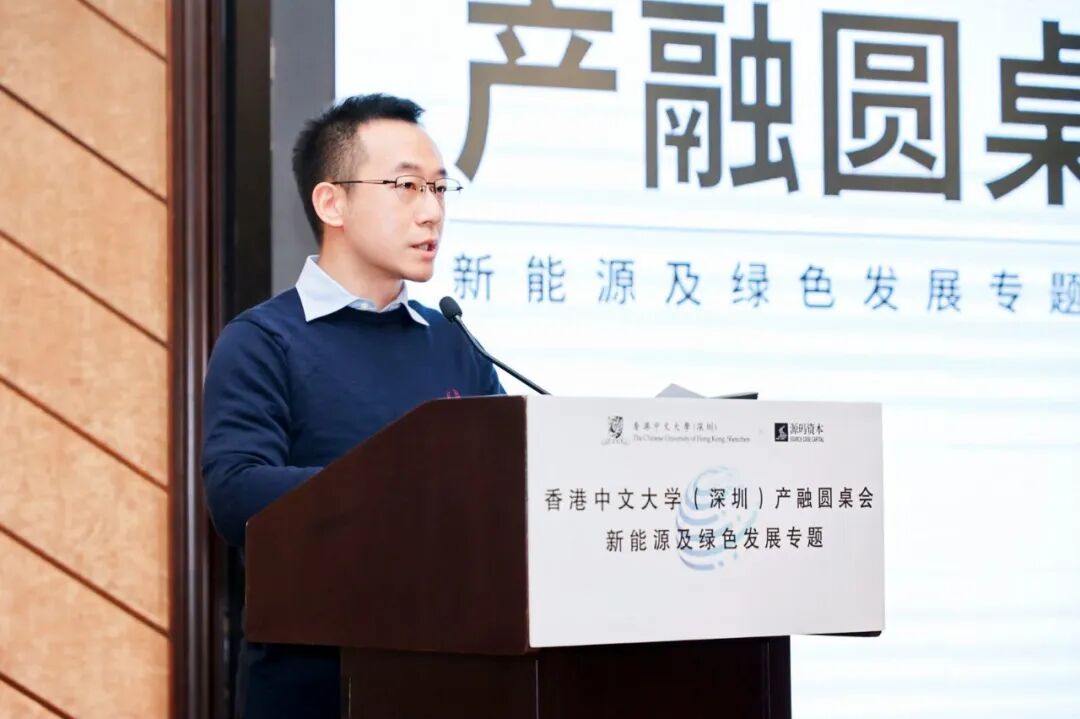
Wei Wang, Partner, Source Code Capital
Wei Wang, Partner at Source Code Capital, explained that the firm has built full-chain coverage in the dual-carbon sector. Beyond its core investment focus, it places strong emphasis on cultivating the MaHui ecosystem — enabling earlier and more precise identification of investment opportunities while sharing industry insights and experience to help scientists navigate from zero to one in entrepreneurship and accompany founders from one to one hundred. Source Code Capital has established regional innovation centers in the Greater Bay Area, the Yangtze River Delta, and the Beijing-Tianjin-Hebei region. This roundtable was organized by the Greater Bay Area Innovation Center as a regional industry-academia-research exchange. The firm has also developed "MaHui AC" as a dedicated IP for industry circle exchanges. Beyond industry roundtables like today's event, it invites seasoned entrepreneurs from major tech companies to share with researchers contemplating startups how to shift from a scientific mindset to managerial thinking, and organizes investor field trips to portfolio companies for frontline dialogue with operational teams about industry perspectives and trends.
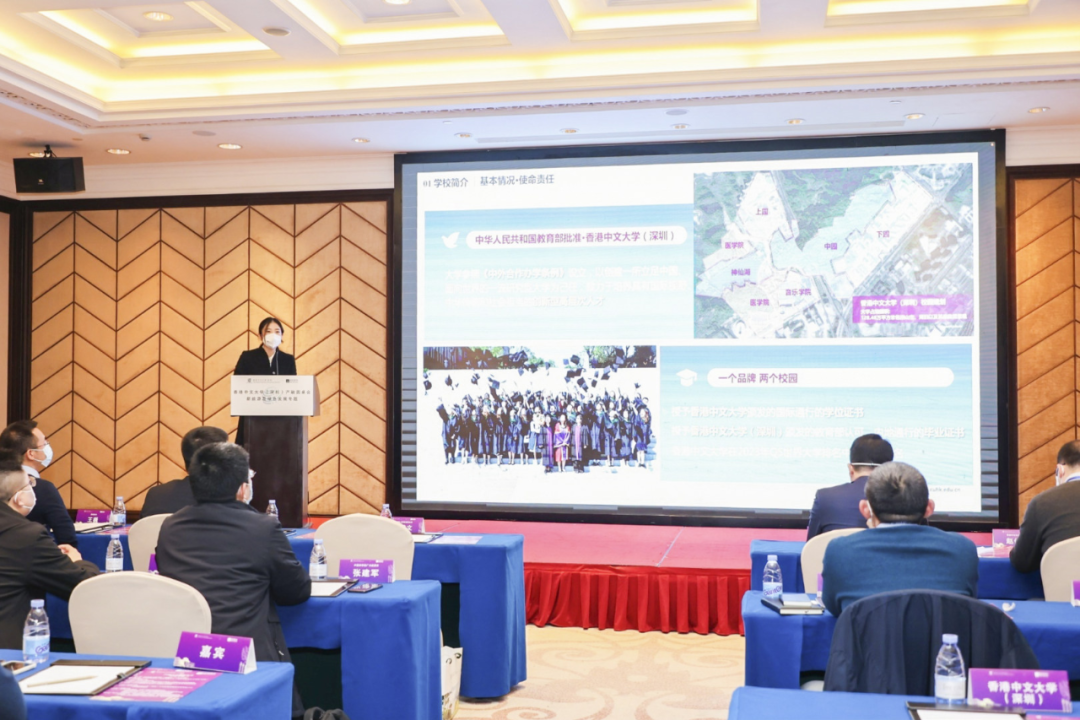
Liao Cuixia, Deputy Director of University Development, The Chinese University of Hong Kong (Shenzhen)
Liao Cuixia, Deputy Director of University Development at The Chinese University of Hong Kong (Shenzhen), provided a detailed overview of the university's profile and research capabilities. Across seven research domains — artificial intelligence, new materials, biomedicine, new energy, big data, and computer science — the university has built 64 research platforms and conducted over 150 industry collaboration projects.
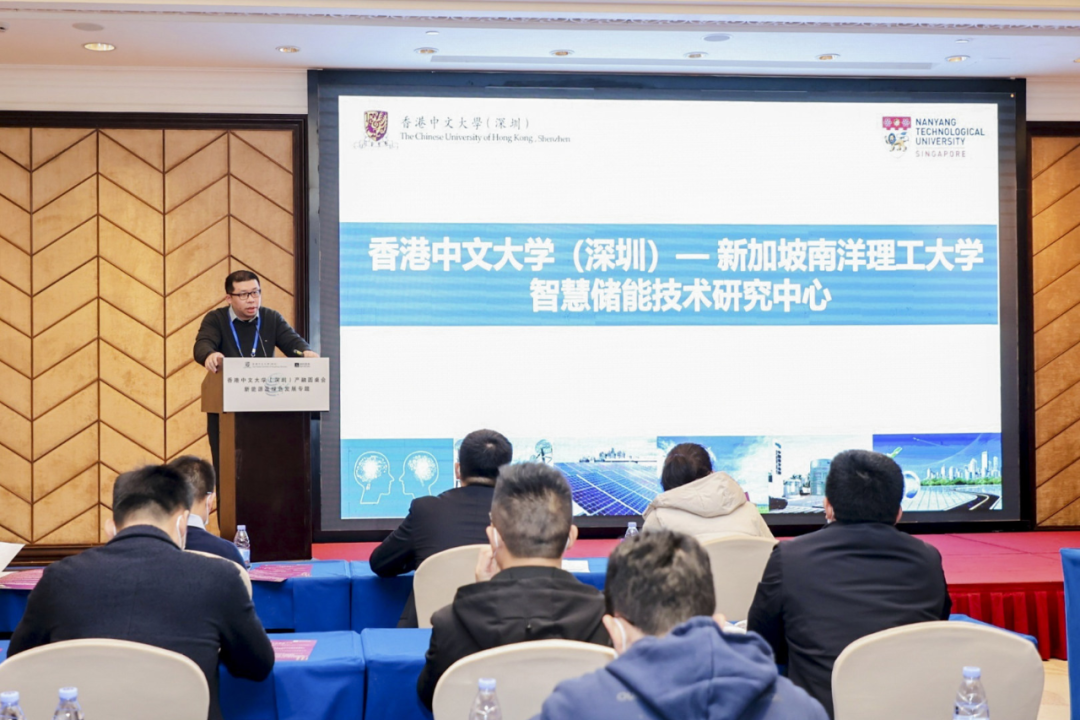
Professor Zhao Junhua, Director of the Energy Market and Energy Finance Laboratory, Shenzhen Institute of Advanced Financial Studies
Professor Zhao Junhua, Director of the Energy Market and Energy Finance Laboratory at the Shenzhen Institute of Advanced Financial Studies, introduced the university's joint energy storage center with Nanyang Technological University in Singapore, alongside his team's dual-carbon research progress — including AI models based on carbon satellites, a national carbon market simulation model developed in collaboration with State Grid Corporation of China, and renewable energy pricing.
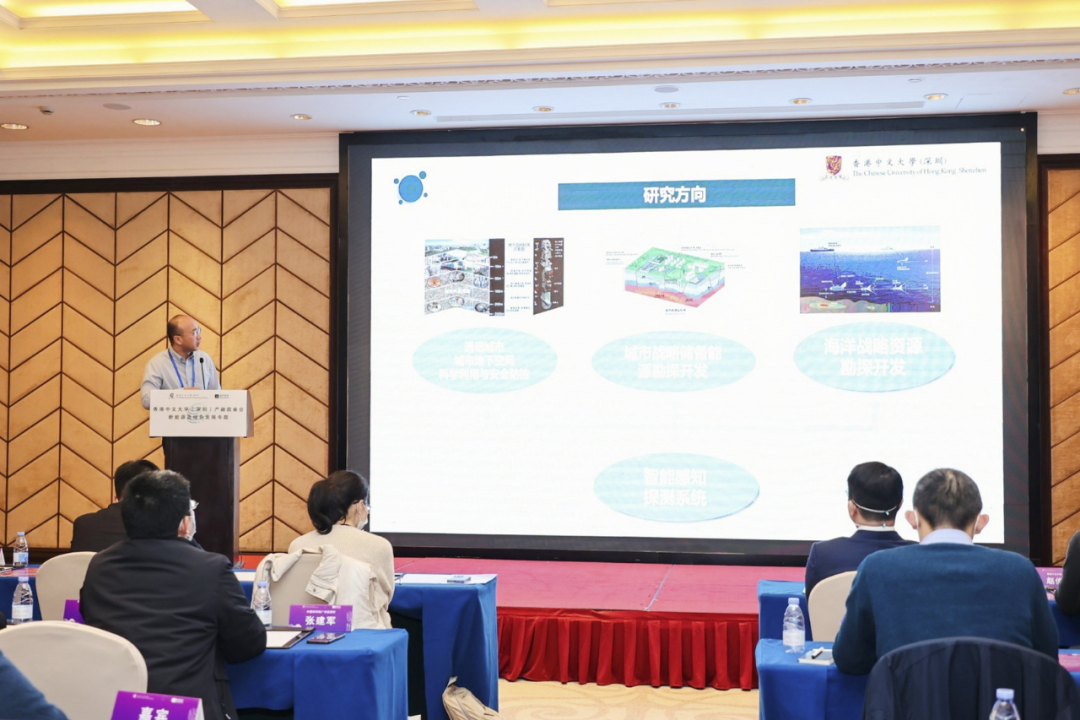
Professor Ji Dongxu, School of Science and Engineering, The Chinese University of Hong Kong (Shenzhen)
Professor Ji Dongxu of the School of Science and Engineering, representing the Near-Zero Carbon Energy Systems Laboratory, presented his team's R&D progress in energy exploration and power generation applications, building on the Wide-Field Electromagnetic Method — for which Academician He Jishan received the 2018 State Technological Invention Award (First Class).
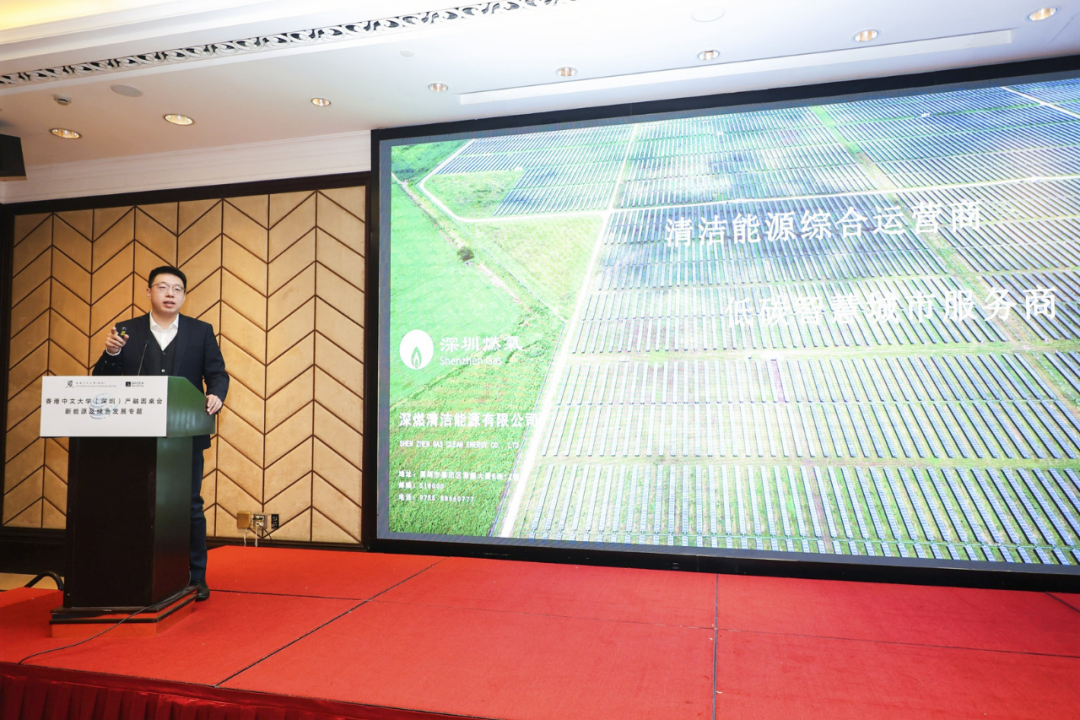
Ma Xinlong, Deputy General Manager, Shenzhen Gas Clean Energy Co., Ltd.
Ma Xinlong, Deputy General Manager of Shenzhen Gas Clean Energy Co., Ltd., shared the transformation journey of a traditional city gas company moving into new energy. Today, the clean energy business leverages city gas as its foundation, smart services as its support, and renewable energy as its driver to build an integrated supply system encompassing natural gas, green electricity, and hydrogen. By combining high-efficiency energy conservation, green low-carbon electricity, and other technical capabilities, it delivers customized zero-carbon integrated energy solutions — "gas when gas is optimal, electricity when electricity is optimal, solar when solar is optimal" — meeting diverse user needs for cooling, heating, and power while enabling green, low-carbon smart city development.
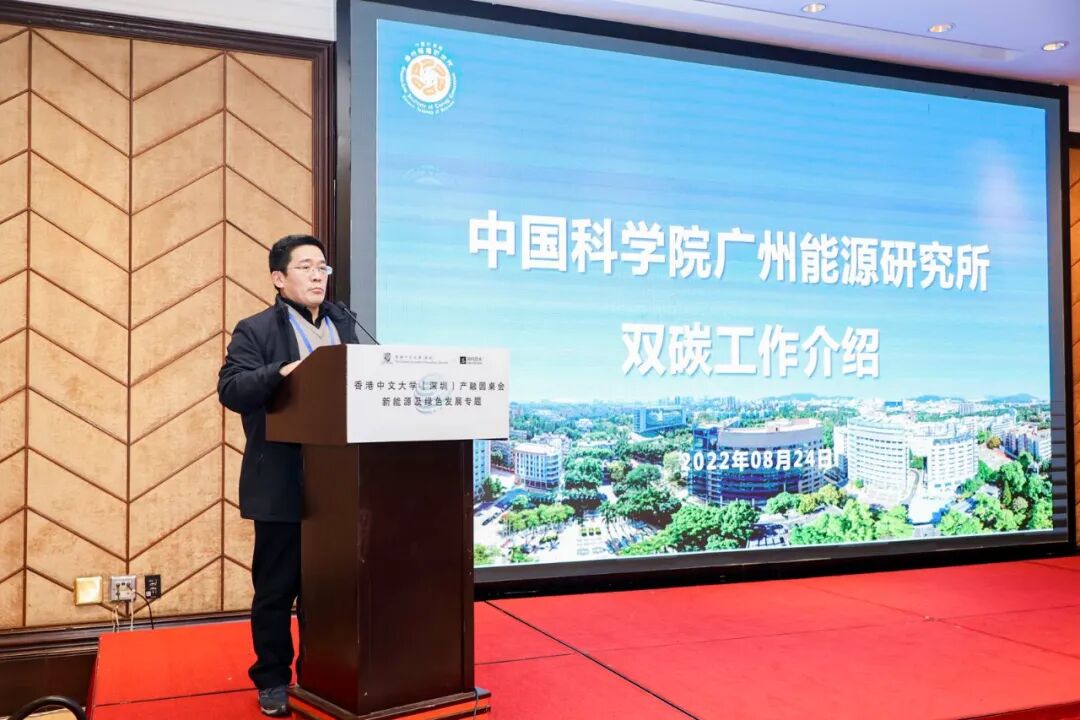
Zhang Jianjun, Deputy Director, Guangzhou Institute of Energy Conversion, Chinese Academy of Sciences
Zhang Jianjun from the energy storage technology team at the Guangzhou Institute of Energy Conversion, Chinese Academy of Sciences, introduced the institute's research across wave energy, gas hydrates, biomass energy, and energy conservation and environmental protection through rich case studies.
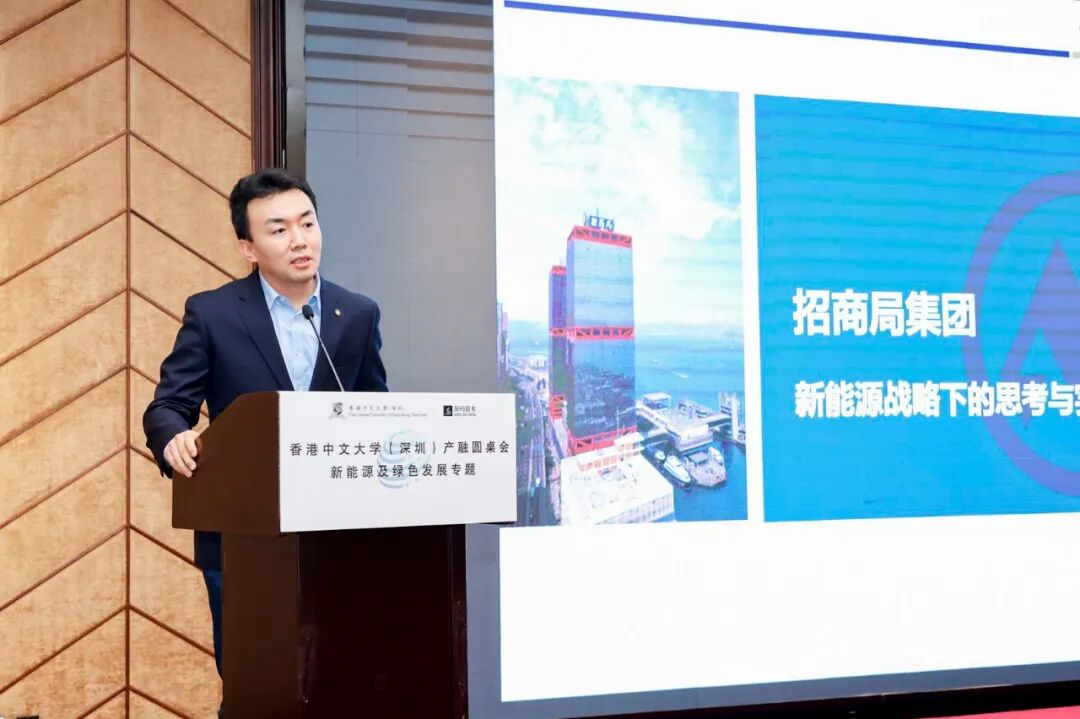
Lu Yiyang, Deputy General Manager, China Merchants Investment Development Co., Ltd.
Lu Yiyang, Deputy General Manager of China Merchants Investment Development Co., Ltd., presented on "Reflections and Practice Under China Merchants Group's New Energy Strategy." Against the backdrop of national dual-carbon goals, China Merchants aims to support China's dual-carbon targets through strategically significant, large-scale investments. The group has formulated a dual-carbon strategy focused on "cultivating new industries and leading new trends" while achieving its own transformation and upgrading.
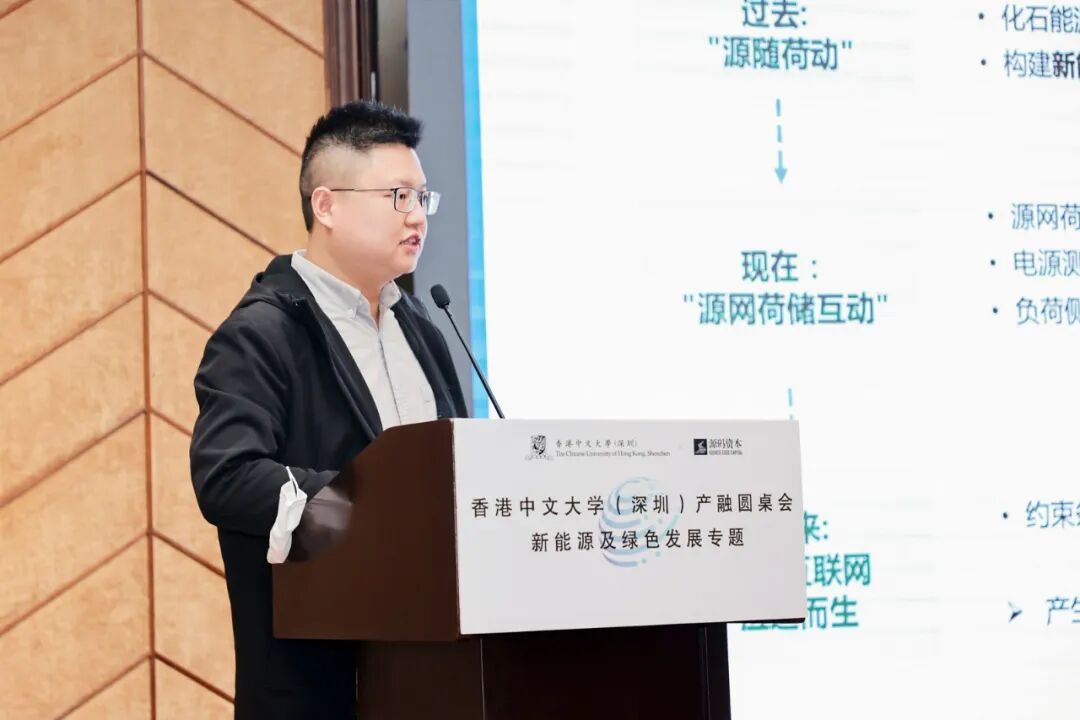
Lei Xin, Investment Vice President, Source Code Capital
Finally, Lei Xin, Investment Vice President at Source Code Capital, shared the firm's thinking and investment layout in the dual-carbon sector. Source Code Capital's full-chain coverage stems from long-term, deep research. The firm made its earliest investment in Li Auto and participated in multiple follow-on rounds, now ranking among its top institutional shareholders. Additional investments include leading lithium-ion battery company SEVB, distributed solar operator Unisun Energy Group, "blood-level" battery safety pre-diagnostic technology provider MakeSens, user-side energy storage player Poweroak, user-side virtual power plant operator Zheda Energy, deep energy efficiency and digital intelligence innovator DeepWise, and leading distributed energy storage company JD Energy.
In new energy, Source Code Capital's overall investment thesis centers on the user side — the arena where private enterprises can best leverage their capabilities and technological strengths.
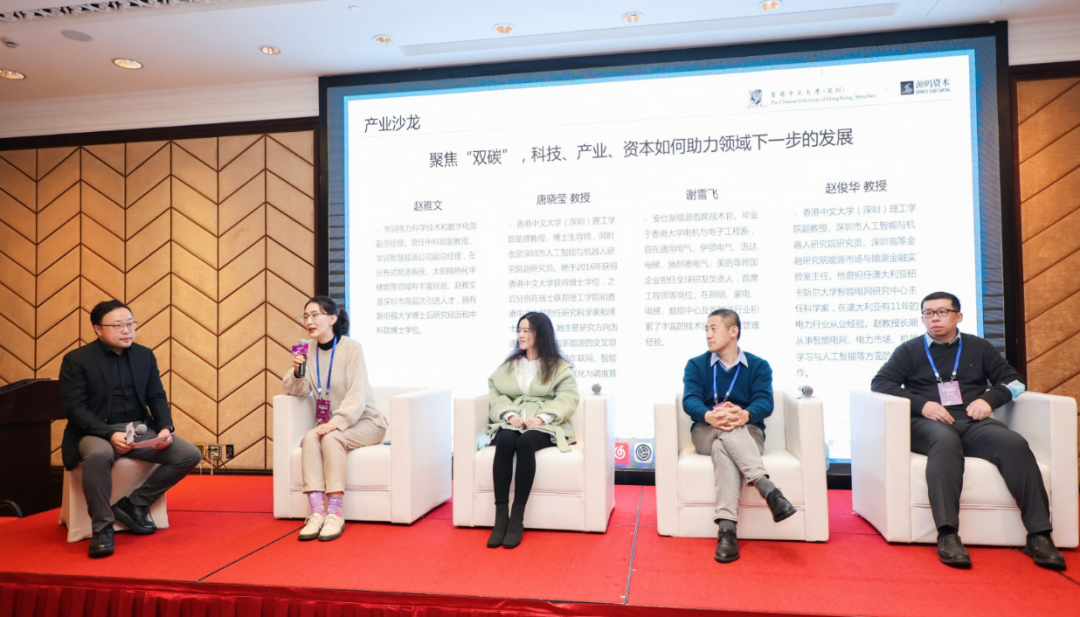
From left: Hu Jianjun, Executive Director, Source Code Capital; Zhao Yawen, Deputy General Manager of Science, Technology and Digitalization, China Resources Power; Professor Tang Xiaoying, School of Science and Engineering, The Chinese University of Hong Kong (Shenzhen); Xie Xuefei, Chief Technology Officer, Ace Battery; Professor Zhao Junhua, Director of the Energy Market and Energy Finance Laboratory, Shenzhen Institute of Advanced Financial Studies
The roundtable closed with a panel discussion on how technology, industry, and capital can advance the dual-carbon domain, featuring Hu Jianjun, Executive Director at Source Code Capital; Zhao Yawen, Deputy General Manager of Science, Technology and Digitalization at China Resources Power; Professor Tang Xiaoying of the School of Science and Engineering at The Chinese University of Hong Kong (Shenzhen); Xie Xuefei, Chief Technology Officer at Ace Battery; and Professor Zhao Junhua. As a power generation supplier, China Resources Power has deployed in thermal frequency regulation, electrochemical energy storage, and independent energy storage — areas where Professor Tang described progress in vehicle-grid integration research-industry collaboration. Xie Xuefei highlighted Ace Battery's technological advantages overseas and expectations for the domestic market ahead. Professor Zhao reflected on a common weakness among professor-founders: connecting with industry and navigating markets are not strengths for teams deeply versed in technology. "If venture capital institutions can play a meaningful role here, tripartite collaboration among industry, academia, and research becomes much more likely to materialize," he said.


- MaKe | YQN Logistics Debuts at 5th CIIE, Co-Releases 2022 International Logistics Industry Digitalization Development Report
- MaKe | Keyi Tech Launches Loona, Another Kickstarter Hit
- MaKe | Raysolve Successfully Lights Up Monolithic Full-Color Chip, Powering a Breakthrough for AR Glasses
- MaKe | MaHui Member HongJi Once Again Named in Gartner RPA Magic Quadrant
- MaKe | MaHui Member Biren Technology and Ping An Technology Form Strategic Partnership to Build a Benchmark for Domestic High-Performance Chip Industrial Deployment
- MaKe | MaHui Member DeepWise, HVAC Energy-Saving SaaS Technology Supporting Dual Carbon Goals
More Source Code Capital portfolio companies available via "Read Original" link