MaHui | Congratulations to MaHui member Pagoda Group on its successful listing on the Hong Kong Stock Exchange's main board, becoming "China's first fruit chain retail stock"



On January 16, Pagoda Group (Shenzhen Pagoda Industrial (Group) Co., Ltd.) held its Hong Kong listing ceremony simultaneously in both Hong Kong and Shenzhen. At 9:30 a.m., as the resounding gongs rang out in both cities, Pagoda Group officially began trading on the Hong Kong Exchanges and Clearing Limited, becoming "China's first listed fruit retail chain" and thus entering the international capital markets. Stock name: Pagoda Group. Stock code: 2411.HK.
Source Code Capital invested during the company's Series B round and has supported its growth ever since. Particularly between 2021 and 2022, as Pagoda accelerated its online integrated marketing, actively embraced local life and e-commerce businesses, and explored globalization, Source Code Capital upheld its entrepreneurial service ethos of "fully committed to you." The firm provided timely support in connecting key personnel across domestic and overseas platforms, developing marketing strategies that combined brand-building with performance, walking alongside Pagoda to co-create value. Chang Kaisi, Partner at Source Code Capital, said: "With the mission of 'letting everyone in the world enjoy a better life through fruit,' Pagoda has adhered to long-termism, continuously charted untapped territory, and integrated the upstream and downstream of the industry to become China's largest fruit retail enterprise. Source Code has accompanied and witnessed Pagoda's development throughout this journey, and looks forward to continuing our efforts to realize the vision of becoming the world's leading fruit company and creating lasting, genuine value."
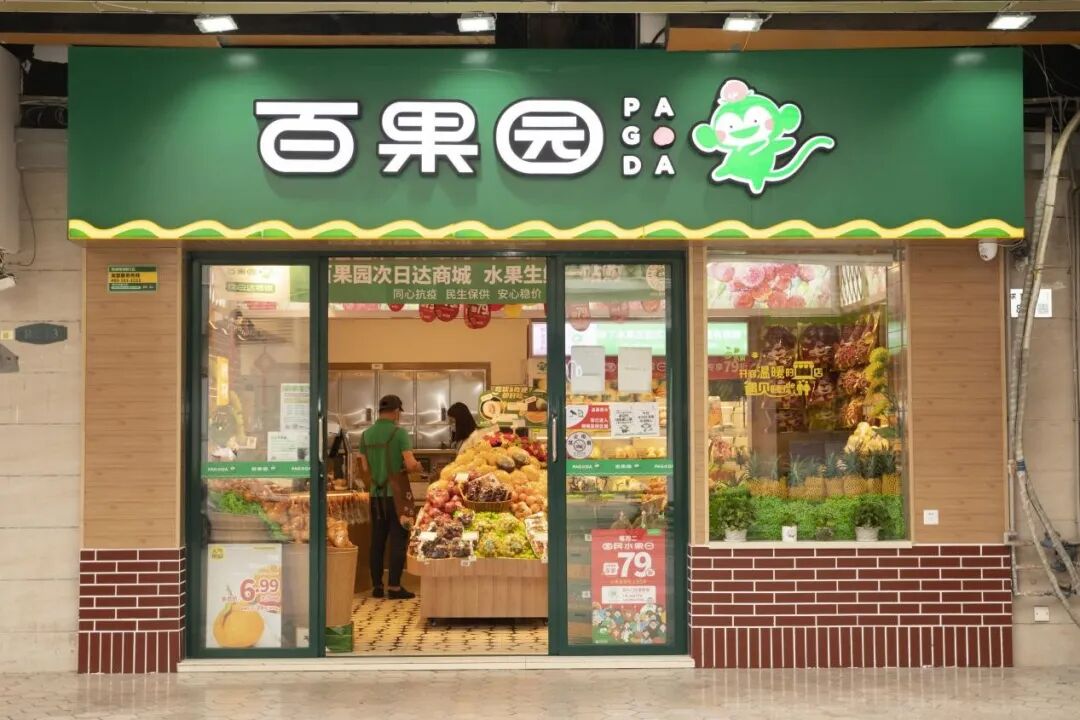
Pagoda is China's largest fruit retail enterprise and operates the country's largest fruit distribution network. Founded in Shenzhen in 2001, the company currently has 5,645 offline stores across more than 140 cities in 22 provinces nationwide. Pagoda's mission is "letting everyone in the world enjoy a better life through fruit" — enabling more and more people to enjoy delicious fruit, and bringing health and happiness to more lives through Pagoda.
Seizing this listing as an opportunity to capitalize on developments in the capital markets, Pagoda will continue to grow and expand its business. By building an ecosystem and empowering partners, the company will persist in its whole-industry-chain layout and development, striving to become the world's leading fruit company in sales volume, customer base, and number of fruit category brands.

At the Shenzhen main venue, Pagoda Group founder and chairman Yu Huiyong and group president Xu Yanlin struck the gong on behalf of the company. Group executive vice president and retail business group president Jiao Yue, representing the management team, joined other guests on stage to witness the moment.
That same day, Pagoda Group also held a listing celebration themed "Everyone's Orchard." Nearly 500 guests attended in person, including foreign embassy representatives in China, government departments at various levels, administrative and public institutions, domestic and international industry associations, universities and research institutions, shareholders, intermediaries, partner enterprises, and ecosystem collaborators. Notably, "Everyone's Orchard" was a slogan Yu Huiyong proposed in Pagoda's very first year, and also the theme of the company's tenth anniversary celebration. In Yu's view, to succeed, Pagoda must rely on the strength of many; and to harness that strength, the company must belong to everyone. This shows that from the startup phase to the tenth year and through to today, the company has never lost sight of its original aspiration.
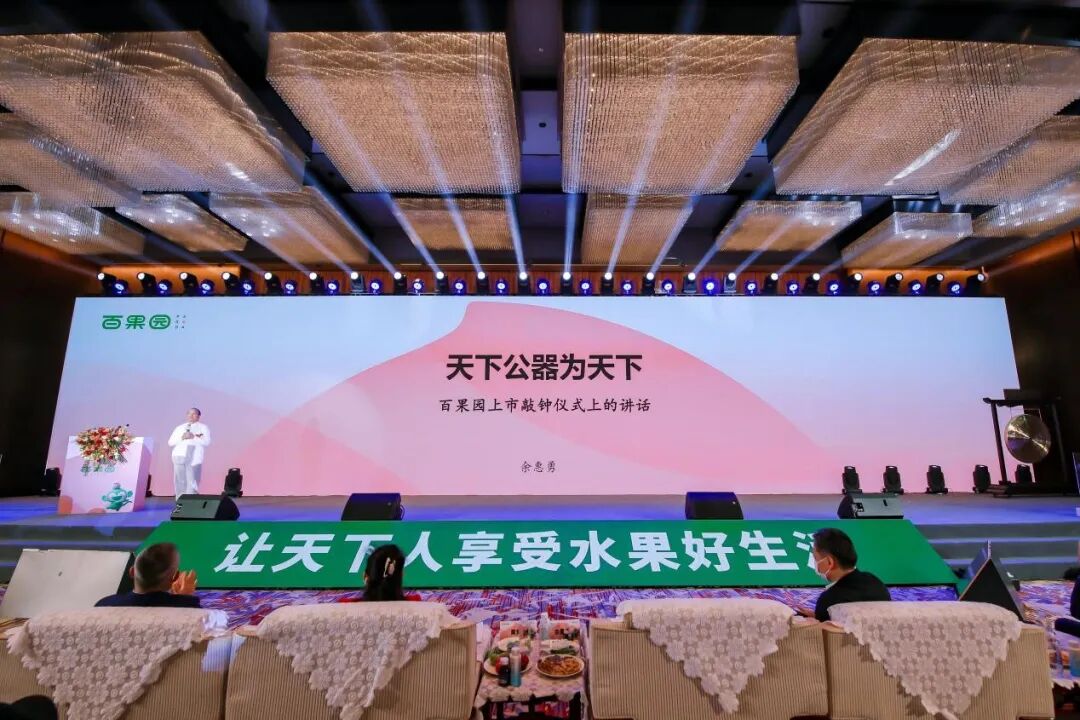
At the event, Yu Huiyong delivered a speech titled "The Public Instrument Serves the World." He said: "A listed company is a public company. From today forward, we must constantly remind ourselves — the public instrument serves the world — and thereby pursue Pagoda's long-term, stable, and sustainable development."
What does "serves the world" mean? He believes that serving customers is serving the world: firmly establishing the principle that "everything is for the customer," always pursuing customer satisfaction, and always holding gratitude and reverence for customers. At the same time, continuously reducing costs and pursuing high cost-performance — "delicious yet affordable." Serving employees is serving the world: the company must continue to develop steadily, providing vast and substantial growth opportunities for all types of talent. Pagoda must also uphold its family culture; its greatest achievement is not how many stores it opens, but cultivating upright Pagoda people as its primary task. Serving franchisees is serving the world: forming a community of shared destiny with franchisees where "we rise and fall together." Strengthening franchisees' identification with Pagoda's culture and strategy, elevating their character, and making them true Pagoda people. Serving suppliers is serving the world: selecting and cultivating like-minded suppliers through Pagoda's culture and philosophy. Supporting and empowering them with planting technology, financial capital, and other resources to promote their development and enhance their supply capabilities. Serving the industry is serving the world: fruit is a health industry, and fruit is a healthy food that needs no education. Firmly believing that "when the industry thrives, the enterprise thrives; when the industry prospers, the enterprise prospers," protecting the industry's long-term interests and guiding it in the right direction. Serving society is serving the world: Pagoda persists in "carrying both farmers and citizens on one shoulder," not only providing customers with delicious, nutritious, and safe food, but more importantly enabling growers to command good prices by striving to produce "delicious" fruit, thereby respecting nature, following natural laws, and holding reverence for both. Serving shareholders and investors is serving the world: Pagoda will continue to devote itself wholeheartedly to the business, seeking long-term stable returns for shareholders and investors. At the same time, believing in long-termism, persisting in doing what is difficult but right, and persevering until success.
Looking back at Pagoda's development, it is a history of continuously crossing "uncharted territory." When Pagoda was founded in 2001, there was no successful precedent for fruit chain retail anywhere in the world. Yu Huiyong once consulted a well-known economist and was met with cold water: "If the West hasn't succeeded at this, China certainly can't do it." But his vow to build a world-class fruit chain brand belonging to the Chinese people, and his sense of responsibility toward franchisees, sustained Yu and his team through the difficulties.
In this process, addressing the enormous variability in fruit quality, Pagoda first established China's first full-category fruit grading system based on taste, classifying fruit into four grades — Signature, A, B, and C — according to indicators including "sugar-acidity balance, freshness, crispness, tenderness, fragrance, safety, as well as size, color, and defect-free status," with pricing set accordingly. This standard system applies to standards-building across the entire industry chain, including category brand development.
In recent years, despite macroeconomic slowdown and pandemic factors that have continued to pressure offline businesses in some sectors, Pagoda has grown against the tide, with revenue rising year after year. In the first half of 2022, Pagoda's operating revenue grew 7% year-over-year to 5.915 billion yuan, with adjusted net profit of 205 million yuan, up 34%.
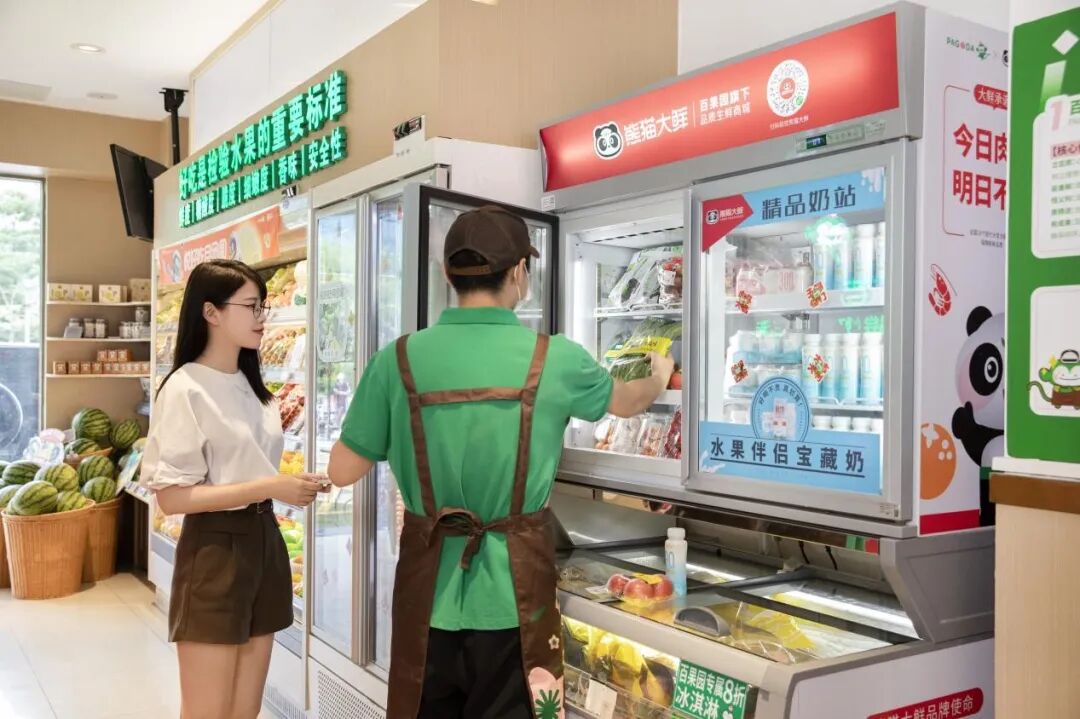
Beyond its strong performance, the company also expanded against the headwinds of the pandemic, adding over a thousand stores in the past three-plus years, concentrated in high-traffic locations such as residential areas and commercial streets. Meanwhile, Pagoda has built out rich online sales channels, including the Pagoda app, WeChat mini-programs, and official flagship stores on Tmall, JD.com, and Douyin. It also partners with third-party delivery and local services platforms such as Meituan, Ele.me, and Koubei to provide real-time fruit delivery to consumers. The company has established a nationwide fruit-specialized retail network that is community-close, online-offline integrated, store-warehouse unified, and combines same-day and next-day delivery.
This counter-cyclical growth and strong revenue momentum are underpinned by Pagoda's "two carriages + three pillars" development strategy. The "two carriages" are category brands and channel brands (Pagoda and Guoduomei); the "three pillars" are information technology, capital empowerment, and agricultural technology. To date, Pagoda Group has developed 31 exclusive Signature and Grade A private-label product brands. Drawing on its capabilities and investments in financial capital, information technology, and planting R&D, Pagoda Group has also established the "Industry Four Modernizations Research Institute," focusing on informatization, digitization, intelligence, and mechanization to transform the industry chain in depth.
The fruit industry may seem to have low barriers to entry, and in the past was difficult to take "seriously." After the Pagoda brand was founded, "selling fruit" gradually became standardized, quality-driven, and brand-oriented. Now, with Pagoda Group's listing on the Hong Kong Exchanges and Clearing Limited main board, it will greatly enhance the dignity and pride of fruit industry practitioners. Running a small fruit shop can indeed be a career.

Beyond elevating practitioners, as Pagoda Group grows and expands its market post-listing, its "no-questions-asked return for bad fruit" service standard will inevitably raise service levels for consumers across the entire industry. The no-questions-asked return was boldly proposed by Yu Huiyong ten years ago: as long as a customer buys fruit at Pagoda and finds it unsatisfactory, they can return it with "no product needed, no receipt needed, no reason needed." This sounds quite risky, even contrary to business logic, but behind it lies Pagoda's DNA of trust and altruism. Wherever Pagoda opens a store, its service standards and culture of trust and altruism follow. Of course, this trust has also yielded strong results for Pagoda: to date, the company has over 73 million members, including over 946,000 paid members. In 2021, average monthly active members exceeded 7 million, with an overall member repurchase rate of 49% — ranking first among fruit-specialized retailers.
Having passed this test, Pagoda Group has now "ridden the waves" in international capital markets and officially become a public company, which means it will bear greater social responsibility. The company attaches great importance to ESG development, with the board establishing a dedicated ESG committee to review and approve ESG objectives, strategies, priorities, initiatives, and targets. Beyond its ongoing "Spring Blossoms" charity programs, Pagoda will also promote BLOF ecologically harmonious planting technology, optimize product packaging, and establish a sound SGS management system, providing consumers with green, healthy, nutritious food. It will guide farmers to achieve "no chemical fertilizers, no chemical pesticides, no chemical hormones" in crop cultivation, contributing to sustainable social development.
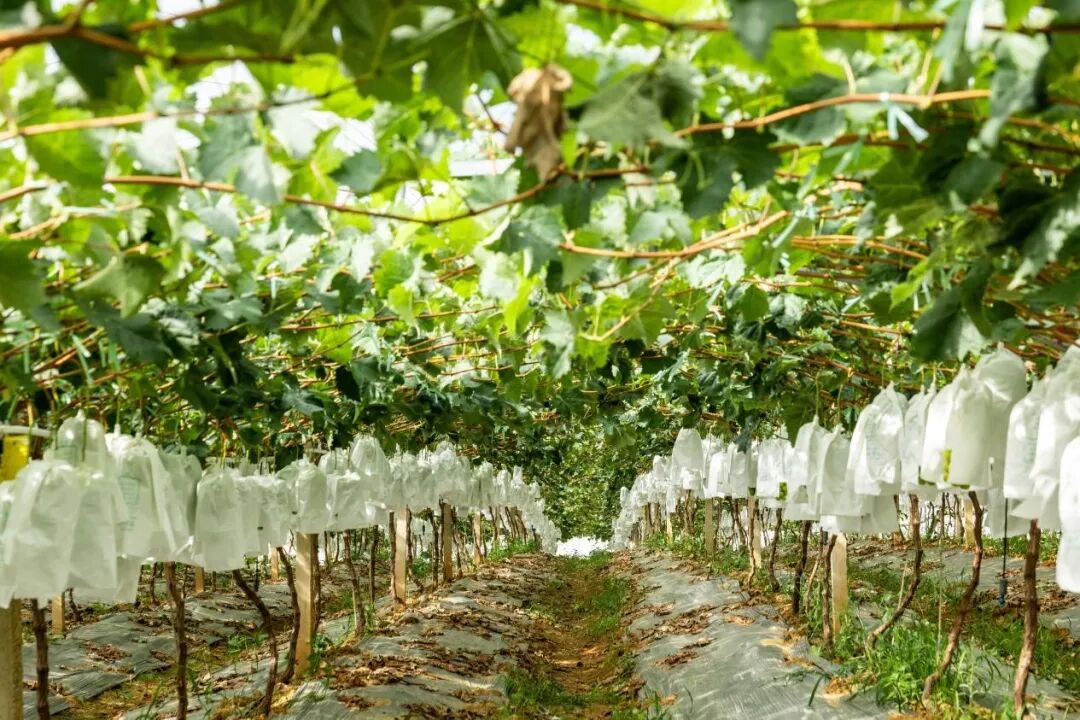
A new starting point, a new journey, and new hopes. Pagoda will tightly grasp "retail brand," "wholesale services," and "category brand," seeking better corporate development while contributing to the revitalization of China's fruit industry. After more than 20 years of development, Pagoda Group has become a large-scale chain enterprise integrating fruit and fresh produce procurement, planting technical support, post-harvest preservation, logistics and warehousing, standard grading, marketing expansion, brand operations, store retail, information technology, financial capital, and research and education. In 2023, having become a listed company, Pagoda Group will be more open, transparent, and standardized, further strengthening, expanding, and improving its operations. Through "Everyone's Orchard," it will better fulfill its mission of "letting everyone in the world enjoy a better life through fruit."