MaHui Entrepreneur Xingxing Wang: With Enough Focus, I Don't Believe There's Any Problem That Can't Be Solved

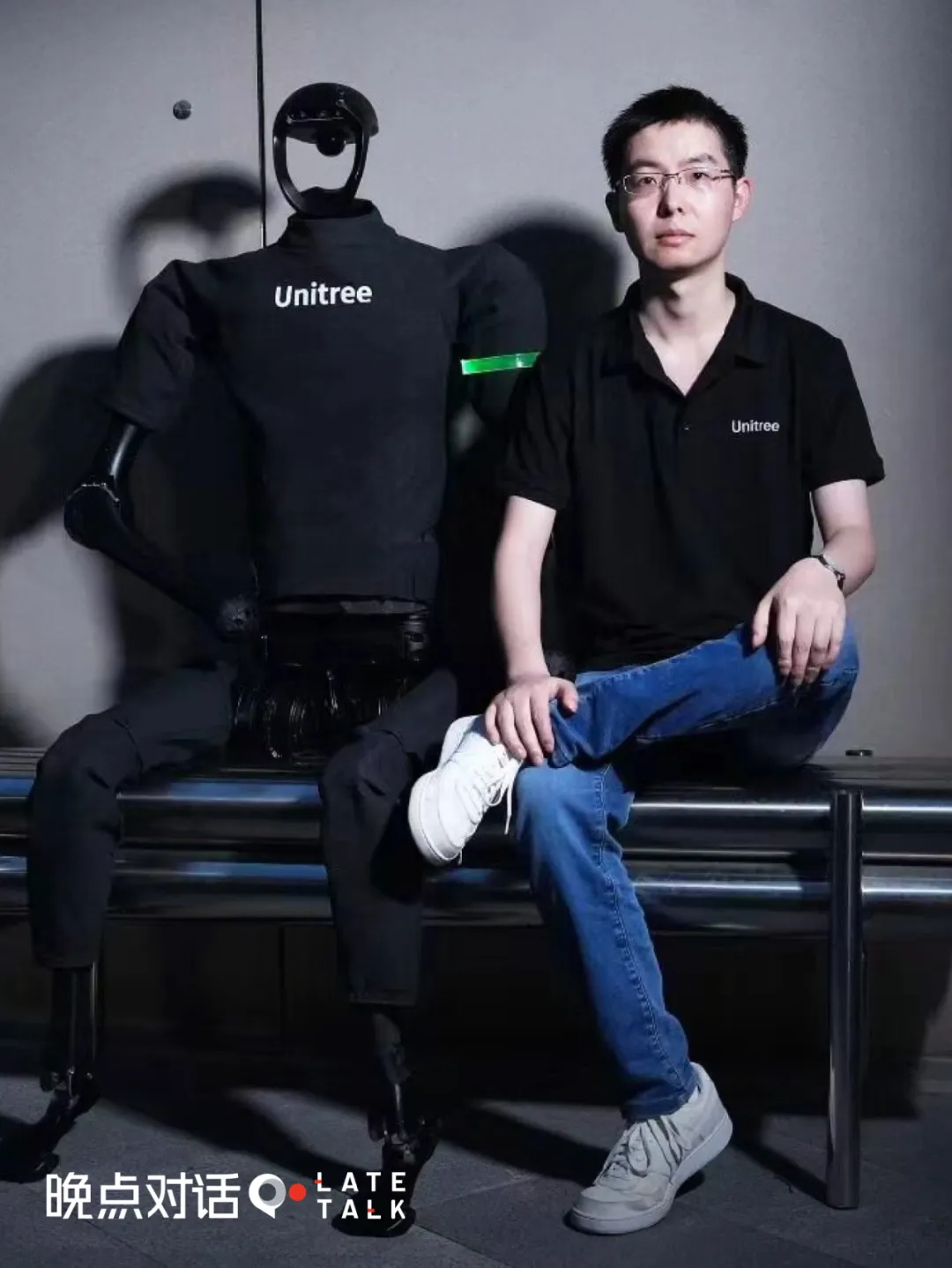
On the morning of February 17, a private enterprise symposium was held in Beijing. Xingxing Wang, a MaHui entrepreneur and CEO of Unitree, attended and spoke at the meeting.
At this year's Spring Festival Gala, Unitree's humanoid robot H1 took the stage. As a representative of new quality productive forces, the robot nimbly twirled and tossed handkerchiefs, capturing the nation's attention and showcasing cutting-edge technology in the field.
Source Code Capital is firmly bullish on robotics and invested in Unitree at the start of 2024 as a participant in its Series B round.
This article is an interview with Xingxing Wang conducted by LatePost. Over the past few years, Unitree has undergone a transformation: from a niche company focused on robotic dogs to a global leader in humanoid robots. Its products have appeared on the Spring Festival Gala stage twice and been sold to universities, research institutions, and AI companies worldwide. Source Code has supported and accompanied Unitree throughout, as it continues to achieve new breakthroughs.
Source Code consistently invests in technology-driven innovation and in the creation of lasting, genuine value.
This article is republished with permission from LatePost (ID: postlate); author: Qianming He, editor: Manqi Cheng.
Born in 1990, Xingxing Wang is not the stereotypical stellar-resume founder. Among his competitors are prodigies from Tsinghua University, Harbin Institute of Technology, and overseas institutions.
Wang graduated from Zhejiang Sci-Tech University for his undergraduate degree. Though his total score was sufficient for graduate school, he failed to get into Zhejiang University due to poor English and was assigned to Shanghai University instead.
"In three years of high school, I passed English exactly three times across all exams," he said.
This hasn't stopped some investors from considering him a genius. From 2013 to 2015, while pursuing his master's with minimal resources or budget, he single-handedly designed hardware and control algorithms from scratch, paired with industrial motors to create XDog — winning second prize at the Shanghai Robotics Design Competition. This was three years before MIT open-sourced its quadruped robot algorithms.
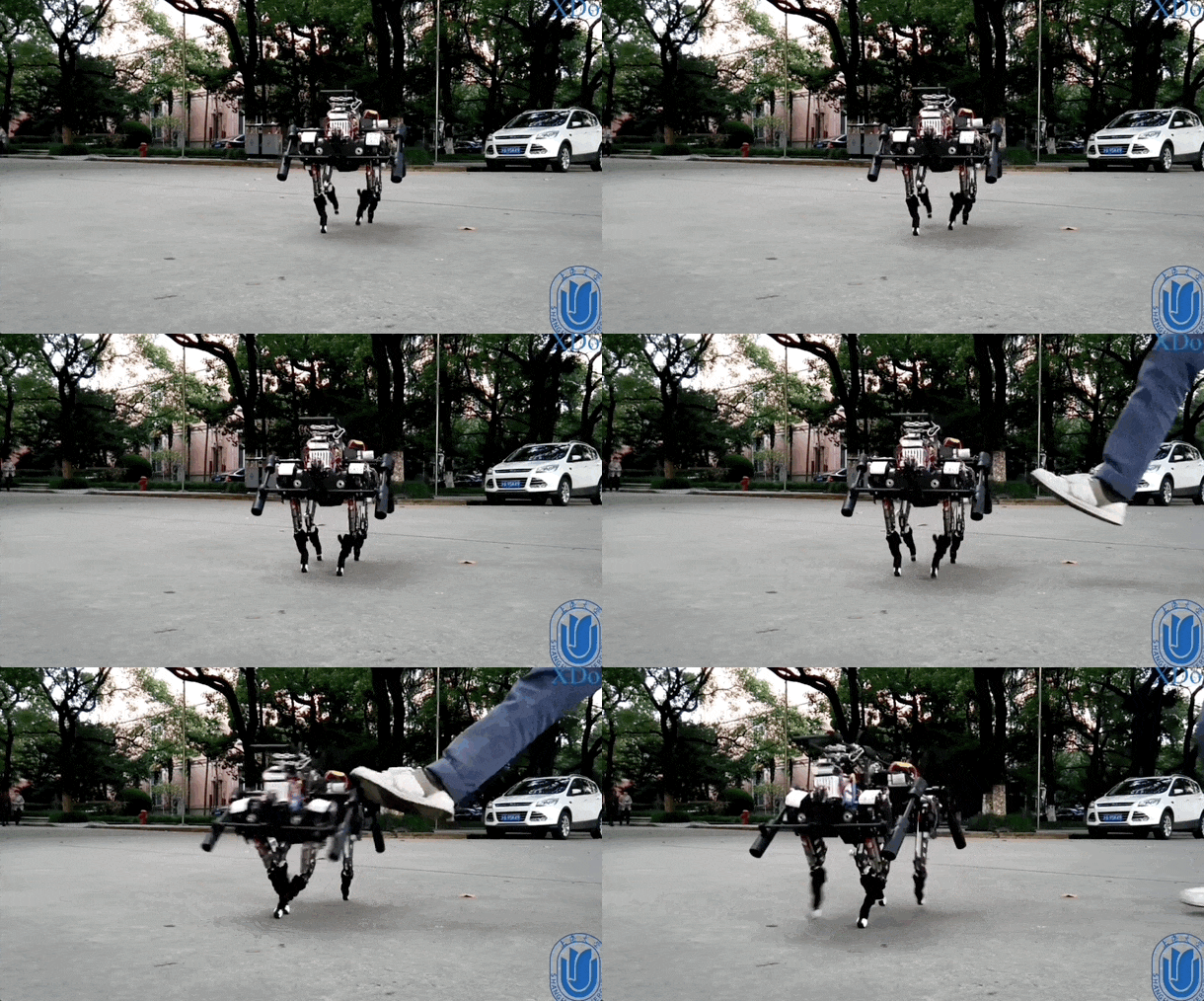
XDog, developed by Wang during his master's program. Video from Wang's Bilibili account.
After XDog gained attention, Wang secured 2 million yuan in angel funding and founded Unitree in 2016, serving as both CEO and CTO. Over the following eight years, he led the company to design most components used in its robotic dogs from scratch — motors, 3D LiDAR, and more — selling them worldwide, bringing them to the Spring Festival Gala and Asian Games stages, raising over one billion yuan in total funding, and becoming a top player in the quadruped robot industry.
Wang said that when Unitree built its first humanoid robot in 2023, they assigned only three full-time employees to the project, borrowing personnel from the quadruped robot team. Years of developing robotic dogs had given them substantial reusable hardware and software.
He attributes his current achievements to sufficient focus and hands-on experience cultivated since childhood. In 2024, Wang in his early thirties would say he has "over 20 years of mechanical design experience."
"Often it's just inspiration striking," he said. If you're focused enough, solutions come naturally. "If you're thinking about a problem 24 hours a day, I don't believe you can't solve it."
Wang still remembers his first drawing in kindergarten — a butterfly that astonished his parents — and how in elementary school he watched every cutting-edge documentary China imported on aerospace, biochemistry, and other scientific topics, using his pocket money to build electric toys. He says this was the beginning of his love for robotics, and the foundation for his current work developing low-cost, high-performance robots.
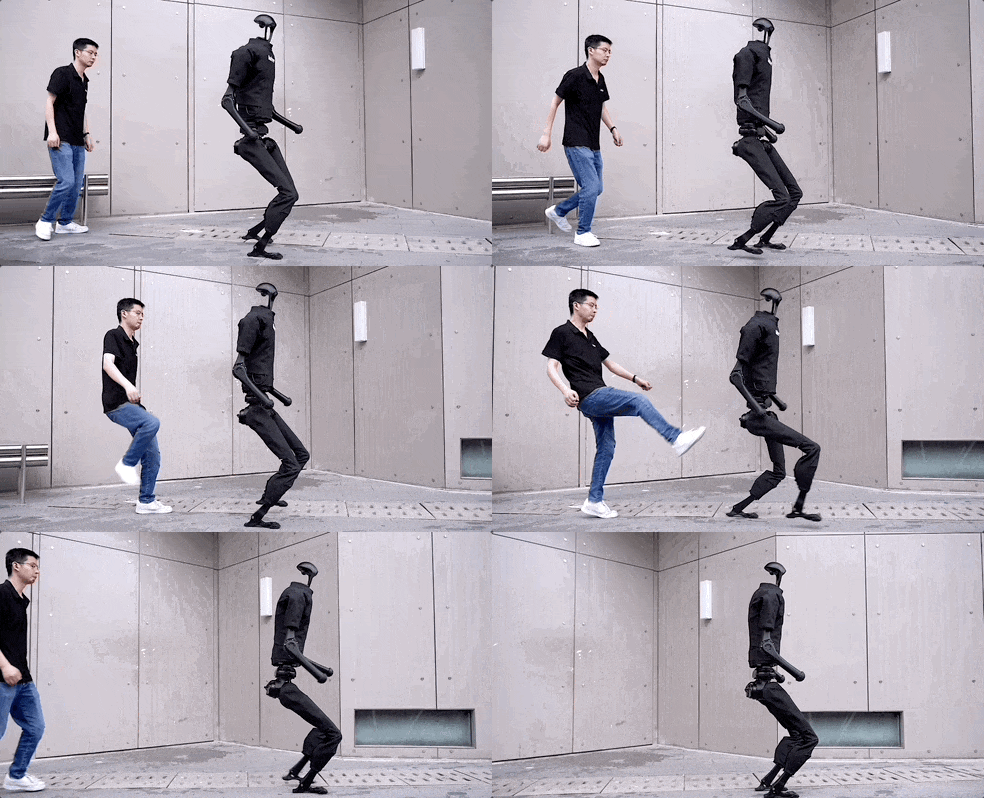
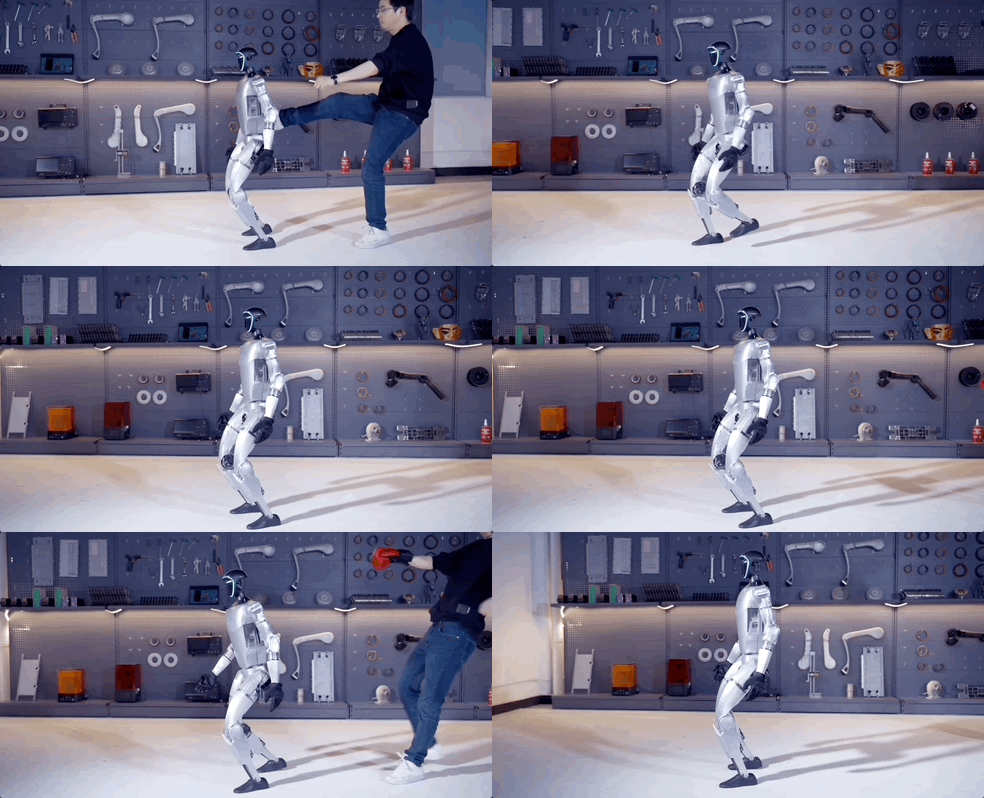
Above: Unitree's humanoid robot H1, released in August 2023. Below: G1, released in May 2024. Images from Unitree.
Q
"We only used 3 full-time employees to develop the first version of our humanoid robot"
LatePost: You once said you weren't optimistic about humanoid robots. Why are you involved now?
Xingxing Wang: Humanoid robots are hot now for two reasons: Elon Musk is doing it, and AI.
When Musk announced his plans in 2021, people asked if we'd do it too. Honestly, I wasn't particularly moved at the time. Humanoid robots had already been hyped for years and were in a downturn before Musk got involved. I hadn't heard of anyone buying them, and the industry was pessimistic.
What convinced me was growing belief in AI. In 2010, AI was in a slump, but I was already fascinated by neural networks and had dabbled with them myself. I later said at events that AI had huge potential, but I didn't actually believe it enough myself. Many people still don't believe it enough.
The technological progress in recent years has been genuinely rapid. Some may not have noticed, but there were already promising attempts at AI-controlled robots before ChatGPT.
LatePost: You started your humanoid robot project in February 2023 and released your first prototype by August — just six months?
Xingxing Wang: Actually, only three people worked on it full-time, with fewer than ten people involved overall. Our investment in humanoid robots was relatively small. Everything was already there — hardware and software algorithms accumulated from our previous work could be directly applied.
LatePost: Your robotic dog experience translated directly to humanoid robots?
Xingxing Wang: There weren't really major difficulties. The joint motors needed higher torque, perhaps. Going from four legs to two, each leg bears more load. Much of the control algorithm could be directly transferred from quadruped robots.
LatePost: So your first humanoid robot was essentially a dog standing up.
Xingxing Wang: Pretty much. Humans evolved from quadruped mammals too.
LatePost: Going directly from quadruped to biped, isn't falling a risk?
Xingxing Wang: Stability is definitely worse than quadruped, but walking is certainly possible. Of course, there's ongoing refinement and improvement. (Note: In March 2024, Unitree released a video of H1 doing a backflip.)
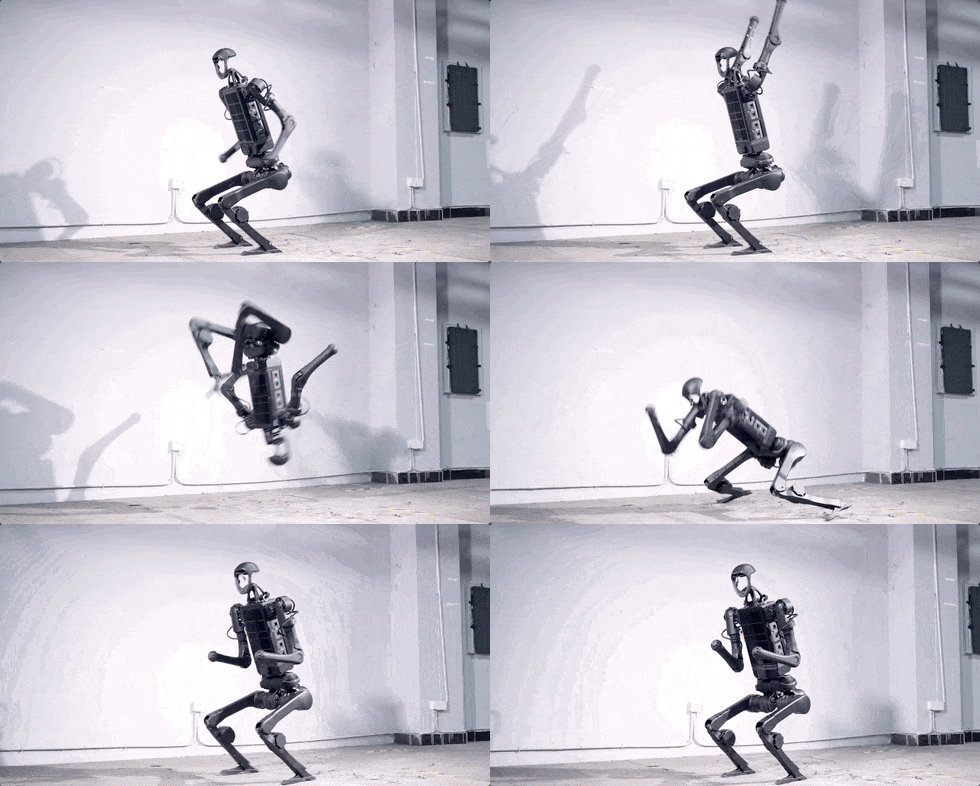
LatePost: You moved fast, but your first humanoid robot in 2023 had no outer shell, just a cloth cover — it looked quite crude.
Xingxing Wang: We were rushing for the World Robot Conference.
I think our approach was very distinctive and advantageous. First, ours was very durable. Some companies' shells break with any fall because they're plastic. We had impact-resistant foam padding under the cloth, which you could replace anytime. And the cost was extremely low — how much is a piece of cloth versus making a shell?
LatePost: It also lacked dexterous hands (simulated mechanical hands).
Xingxing Wang: At the time, many domestic competitors were buying third-party dexterous hands. We were developing our own but hadn't finished, so we held off on releasing them.
LatePost: One view is that while making a dog stand up into a human form gets you there quickly, it may have limited ceiling because human and canine movement patterns differ — humans can bend their knees backward to cross their legs, dogs can't. And limited movement patterns restrict the data you can collect and your software iteration speed. What's your response?
Xingxing Wang: This itself reflects a major misunderstanding. Nearly all domestic humanoid robot companies' mechanical structures and control algorithms are transplanted or borrowed from quadruped robots.
Also, our H1 was photographed crossing its legs as early as August 2023. Our latest G1 can even do many movements humans can't.
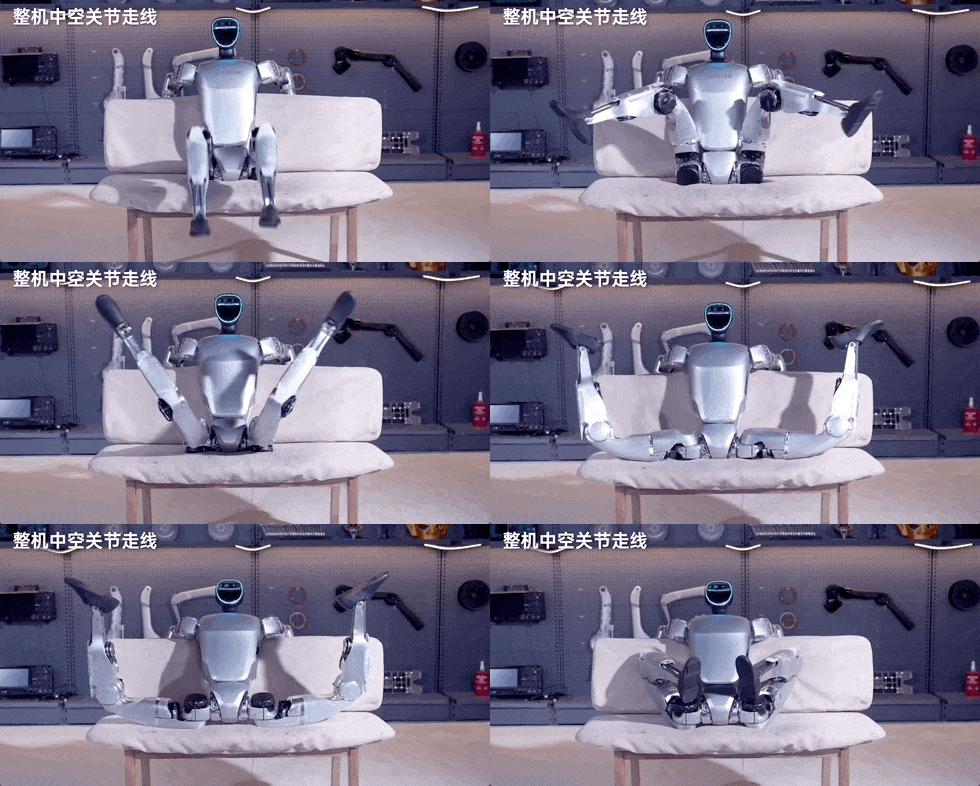
LatePost: You released the new humanoid robot G1 in May 2024, and it does look much more agile. Is it an optimization of the dog-standing-up approach, or a new technical direction?
Xingxing Wang: There's no dog versus human issue. If forced to say, again: all humans evolved from quadruped mammals.
LatePost: The G1 high-performance version has dexterous hands — are they self-developed? Why only three fingers?
Xingxing Wang: We developed them ourselves. Three fingers are sufficient for the vast majority of tasks. Also, Boston Dynamics' latest humanoid robot has three fingers, which from another angle shows three fingers are basically enough.
LatePost: When developing your first humanoid robot, you said your company's principle was "if it doesn't make money, we don't do it." That first crude-looking model cost $90,000. The lower-performance G1 sells for just 99,000 yuan. Can you still make money?
Xingxing Wang: H1 was our first formally developed humanoid robot. The industrial design philosophy was simplicity, so it wasn't particularly polished or attractive.
Our business logic is that commercial activity must have reasonable commercial profit. Cost has always been our KPI for everything — the core is making money.
LatePost: How will you continue reducing costs?
Xingxing Wang: I have a pretty good feel for cost reduction because I grew up spending my own pocket money on everything. In 2010, I built a bipedal robot with mechanical parts totaling about 200 yuan in costs. So don't compete with us on cost reduction — we can keep going much lower.
LatePost: That's your history of success. To summarize, what are the main methods for cost reduction?
Xingxing Wang: You need sufficient understanding of the entire production chain, manufacturing processes, and overall design.
LatePost: Isn't it about mass production?
Xingxing Wang: Design is definitely the primary factor; mass production is secondary. Relying solely on mass production is a detour.
Many people think volume brings down costs — that's pure illusion.
LatePost: Robotic dogs and humanoids can't really mass-produce at this stage; there may not be that much demand.
Xingxing Wang: Right. We already have substantial volume for dogs, but truly reducing costs depends most on design — that's the fundamental path. Using slightly cheaper materials, optimizing structures to lower some production costs, reducing mold costs.
LatePost: Many companies' cost-reduction logic is vertical integration — doing everything in-house.
Xingxing Wang: Industry integration is something we've been doing all along. When building XDog in 2015, I bought the motors but designed the motor drivers myself, so costs were very low. After founding the company, the motors in our first robot were our own design. In our 2017 robot, the lithium battery pack was also my own development. Later, some wireless communications, vision modules, and currently 3D LiDAR — we advance every year, self-developing everything we can. We also have our own factory.
LatePost: When did you start mass-producing and selling humanoid robots?
Xingxing Wang: We were already shipping in the second half of 2023.
LatePost: Who are the customers?
Xingxing Wang: Quite a mix — various companies, research institutions, including AI companies. All kinds.
LatePost: What do you think humanoid robots will ultimately look like?
Xingxing Wang: I don't think they necessarily need to be humanoid. Why humanoid now? We're just迎合社会共识 [meeting social consensus]. People currently believe intelligent robots, general-purpose robots should look like humans — this has the most social impact, because humans look like this.
Actually, the form doesn't matter to me. What matters is intelligence — whether in image processing or execution, it can do what humans do, even what humans can't.
I've always felt intelligence isn't scarce; it's quite broad, since all humans have it. Some animals have quite high intelligence levels too — many can use tools.
LatePost: No new intelligent species has emerged after humans.
Xingxing Wang: Humans haven't existed long — just a million years. Intelligent humans have existed for a very short time.
LatePost: You think given enough time, a second or third intelligent species will emerge?
Xingxing Wang: Yes. The probability is very high, and I think humans are also a fluke. I've had this thought since early in my studies: many animals can't speak largely due to physical constraints. Their brains are sufficient, but their vocal cords prevent interaction, so their culture can't develop.
LatePost: How far are we from the general-purpose robot you envision?
Xingxing Wang: Globally, progress is still relatively slow. I think AI technology is sufficient, but robotics lags AI research by at least ten years because hardware barriers are high and the talent pool is small, so the overall pace is much slower.
What everyone is doing now is simple: taking AI technology and applying it to robots. But I think the technical inflection point for AI-robotics integration hasn't arrived yet — the overall technical solution hasn't been proven out.
LatePost: When will it arrive?
Xingxing Wang: I think possibly within three to five years, if things move fast.
People are already seeing signs of general AI, and more want to combine robots with AI and join the industry.
LatePost: Many robotics company founders graduated from Tsinghua, Harbin Institute of Technology, or returned from overseas study. Your background is more "grassroots." Why is your progress still relatively leading?
Xingxing Wang: I'm severely lopsided academically — I failed English from childhood through college. In three years of high school, I passed exactly three times. But I've been playing with technology since I was young, drawing from age three or four, building things with my hands, playing with mechanics. In 2009, my freshman year, I built a small humanoid robot.
My school may not look particularly impressive, but I genuinely have more experience than others. I can casually say I have over 20 years of mechanical design experience.
LatePost: You're only in your thirties with over 20 years of mechanical design experience?
Xingxing Wang: Yes. I have extensive experience of this kind, and I like many types of technology — I play with all kinds, so my overall grasp is better.
LatePost: Is this how you compete with founders whose backgrounds look more impressive?
Xingxing Wang: Yes. Though my overall academic performance wasn't great, in areas I like, I've basically been at the cutting edge since childhood.
Before college I might have felt somewhat inferior, wondering if I was much worse than people from better schools. Later I stopped caring.
LatePost: What happened to make you stop feeling inferior?
Xingxing Wang: I originally lived in a small city; many things were self-taught with no teachers, at most finding a few books to read. I was someone suppressed by the education system — I had no sense of achievement in academics.
Later, in my freshman year I built a small robot. I didn't think it was particularly amazing, just doing it for fun.
Looking back now, it was already quite good. Plus building XDog in 2015, I could basically play at the same level as MIT master's and PhD students.
LatePost: Why do you think your XDog was comparable to what MIT master's and PhD students were doing?
Xingxing Wang: At least in that direction at that time, I did better than them. They invested many people, lots of time and money, and the results weren't very polished.
My XDog was very cheap to make — R&D costs were just 10,000 to 20,000 yuan, with full locomotion capabilities and good flexibility.
LatePost: What metrics did you use to compare your work with theirs?
Xingxing Wang: It's hard to compare directly. Their dogs were much larger, but mine had better movement flexibility and stability.
LatePost: You compared by watching their published videos?
Xingxing Wang: Yes. Later MIT released an open-source solution that many domestic robots basically adopted.
That open-source solution used the exact same motors as my XDog. In 2016, an MIT PhD even asked me for my master's thesis.
I pioneered the direction of low-cost, high-performance legged robots globally. That's why we sell well overseas. Our products were also the earliest to market, with the best cost-performance ratio.
LatePost: You said XDog R&D costs were only 10,000–20,000 yuan. How did you achieve that?
Xingxing Wang: I started in my first year of graduate school. My advisor originally wanted to do hydraulic robots, but conditions weren't sufficient. I always wanted to make better robots, so I rebuilt the hardware from scratch, took industrial-grade motors, made a small driver, integrated it with other components, and that became XDog. The overall mechanical structure and algorithms were my own development.
LatePost: How did you come up with combining these elements?
Xingxing Wang: I suddenly thought of this approach and felt it was good, worth doing. I even considered it worth commercializing, dropping out to start a company. I was supposed to graduate in late 2015, but this was only half done. I felt half-done had no value, so I voluntarily delayed graduation, entered a Shanghai competition, and won second prize.
LatePost: Coming up with this approach came naturally to you?
Xingxing Wang: Often it's inspiration striking. You're thinking about something and suddenly feel something is good, that you can combine things or find some innovation point.
LatePost: Have you since summarized your R&D methodology?
Xingxing Wang: I think the method is simple. Just think about it 24 hours a day. Now I'm quite busy. Back in school it was simpler — think more before sleeping, and suddenly inspiration would come.
LatePost: So do you have replicable methods for colleagues and your team?
Xingxing Wang: I think it mainly requires sufficient focus. If you're thinking about a problem 24 hours a day, I don't believe the problem can't be solved.
LatePost: In early-stage frontier tech, investors prefer founders with particularly strong technical backgrounds. Unitree's robotic dogs and robots fall in this category. Was it difficult to get your first investment?
Xingxing Wang: By 2015 XDog was done. I met some investors through competitions, wanted to raise funding to start a company, but they didn't invest.
I felt my personal capabilities, social resources, and finances weren't ready — starting a company then would be self-sabotage. So I worked at DJI for three months. I thought clearly then: gaining experience at a big company would be quite good.
In June 2016, XDog blew up in domestic and foreign media and robotics circles. Some wanted to buy my robot, some wanted to invest, so I started my own company.
LatePost: You didn't deliberately seek out investors — they came to you?
Xingxing Wang: I proactively contacted several myself, but results weren't great. Finally took money from an individual in Beijing who approached me. His terms were very loose; he transferred money without even signing an agreement.
LatePost: How much?
Xingxing Wang: Two million yuan.
LatePost: From founding until recently, most of the time your robotic dog users weren't clearly defined. How did you determine how to iterate each generation?
Xingxing Wang: Some came from customer feedback. The overall direction was actually better hardware performance, better software performance, lower costs, higher reliability — generally these directions.
LatePost: Low cost is a clear demand; what do you mean by good hardware and software?
Xingxing Wang: For example, hardware stability, better appearance, better overall structure — much of which is invisible. Many people can't even distinguish good from bad products. I think my ability in this area is quite good.
LatePost: How do you define good-looking? Some people thought early Unitree robotic dogs' heads looked a bit like cockroaches.
Xingxing Wang: Good-looking relates to industrial design, with some personal aesthetic or tech aesthetic in it. But sometimes for mass production you need compromise — you can't be like making cars. Though some car fronts are even stranger.
LatePost: Beyond stability, what metrics define good movement performance?
Xingxing Wang: Movement capabilities like adapting to various complex terrains, increasingly fast stair-climbing and running speeds, longer battery life; higher protection ratings for water and dust resistance; more user-friendly operation so customers don't have too much trouble. These are fairly direct metrics.
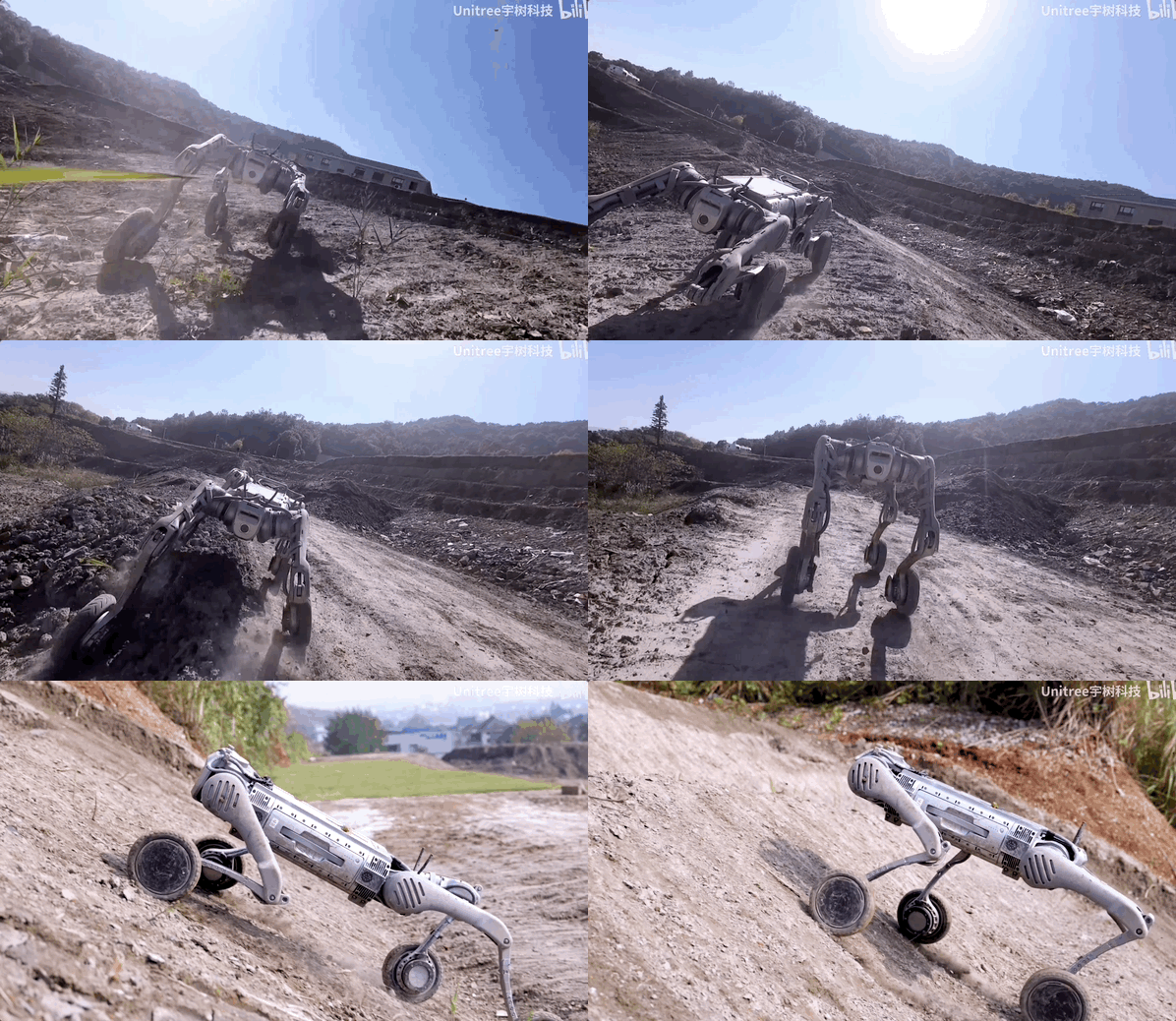
Unitree demonstrating B2-W robotic dog's movement performance in complex terrain. Image from Unitree.
LatePost: What pitfalls did you encounter in R&D, and how did you figure these things out?
Xingxing Wang: There were some pitfalls. For example, our pre-2019 products — I didn't pay enough attention, things were somewhat muddled. Load capacity was insufficient. Some products I think were a bit too large; smaller would have been better.
Now I feel product development is a very rational matter — appearance, various metrics, everything needs rational analysis. And you need to prove your product is competitive relative to others in this market. If you feel something is感性 [intuitive/emotional], you definitely haven't considered thoroughly enough.
LatePost: You started selling robotic dogs in 2016 with unclear users. Could pricing be very rational?
Xingxing Wang: Pricing was in the low hundreds of thousands of yuan. But there was no foundation then; our later pricing became more rational.
LatePost: What does "no foundation" mean?
Xingxing Wang: Prices were adjusted several times. Because that product wasn't for consumers to begin with, our initial pricing was磨出来的 [worked out] together with customers.
All product pricing is quite mysterious, very testing of human nature. Often cheaper isn't better — many situations are counterintuitive because in most people's cognition, higher price means better.
Sometimes selling cheap actually hurts you, affecting your brand positioning. That's why luxury goods can sell at such high prices.
LatePost: So you want to make luxury goods?
Xingxing Wang: No, our thinking is simple. Because this is a niche industry, I want to capture all the money this industry can make.
LatePost: What do people mainly use your products for?
Xingxing Wang: For dogs, there are mainly three markets. First, pure consumers — buying for fun or simple educational programming. Second, education and research — various universities or companies buying for research, publishing papers, or teaching. Third, industry applications — like power grid inspection, inspections at power plants and chemical plants.
LatePost: You mentioned these scenarios — each has companies specializing in them. Why do you do all three simultaneously?
Xingxing Wang: I think all three are quite important. Many people's misconception is that you only need to capture one part of an industry.
LatePost: Does this logic only apply to niche industries? For example, car brands generally anchor to one positioning, not doing low, mid, and high-end all at once. Apple also only does high-end, maintaining high R&D investment through high margins.
Xingxing Wang: People always think Apple doesn't have very low-end products, but I found Apple has a good approach: it sells products from one or two years ago as low-end options. So I think Apple also has this logic.
LatePost: In recent years, more companies are making robotic dogs. Have you adjusted company strategy?
Xingxing Wang: Our direction now is simple: our main competitor is ourselves — being better every day, every month, every year than we were before, and competitors basically can't catch up.
Also, past years have proven that competitors entering hasn't had much impact on our company.
LatePost: How was this proven?
Xingxing Wang: For example, shipment volume, social influence. When Xiaomi released its robotic dog in 2020, I told many people their entry was actually a good thing that would lock down the entire赛道 [track/sector].
Many people wanting to enter this industry would think: Xiaomi's doing it, so is my创业成功率 [entrepreneurial success rate] very low? Investors wanting to invest in this sector would also reflect: Xiaomi's doing it, so is my failure rate very high?
LatePost: Didn't Xiaomi put pressure on you?
Xingxing Wang: I think it was actually good. We can borrow resources and leverage from each other.
LatePost: What impact did appearing on the Spring Festival Gala in early 2021 have on robotic dog sales?
Xingxing Wang: There was definitely some impact, but no directly comparable data to prove it. Later we lowered prices — the cheapest was just over 9,000 yuan — and sales improved.

Unitree's humanoid robot H1 on the 2025 Spring Festival Gala.
Q
"When what you do aligns with the main theme, good resources tilt toward you"
LatePost: You previously said in interviews that entrepreneurship must find a point suitable for yourself that you have the capability to achieve. Finding something you both like and are good at isn't easy for most people. How did you do it?
Xingxing Wang: I knew this when I was a few years old.
LatePost: How?
Xingxing Wang: I think it should be a positive iterative process. For example, in kindergarten, my first painting shocked my parents — they called over neighbors to see.
I painted a butterfly. I hadn't learned painting; I only did one thing — I got the details right. Painting is about copying, right? Whatever they painted, I reproduced well.
LatePost: You remember kindergarten?
Xingxing Wang: I basically know what I was doing twenty years ago. Later in elementary school, I'd make things with my hands, draw casually. I'd learned nothing, yet could easily become the best in school.
At that time, the country imported many documentaries. My greatest hobby was watching documentaries on TV after school — before age ten, I'd watched everything on aviation, aerospace, biology.
So I'm very clear about what I'm good at. My language abilities, whether innate or from later thinking patterns — my English is poor, my Chinese isn't great either.
LatePost: You previously failed to get into Zhejiang University for graduate school because of English. Has poor English affected your entrepreneurship?
Xingxing Wang: I think there are benefits and drawbacks. Because my language and other abilities were weaker, I had to make other things better to generate self-worth and achievement. The drawback: with poor English, reading some literature and materials is more laborious than for others — that's definitely a disadvantage.
LatePost: Did you later try to improve your English?
Xingxing Wang: I tried many things. My politics were good in middle school because I discovered politics has logic — if you follow the logic you can do well without memorizing.
When preparing for graduate school entrance exams, I crammed English for a year, using every method possible. My English reached its lifetime best — I passed CET-4, but not CET-6.
LatePost: Have you made peace with it now?
Xingxing Wang: Pretty much. Anyway, I don't take English classes now. At most it's awkward communicating with foreigners when abroad.
LatePost: You had little work experience before entrepreneurship, only three months at DJI. How did you learn to manage a company and sell products?
Xingxing Wang: I've been relatively sensitive to human nature since childhood, so I understand people somewhat. Plus I'm from Ningbo, Zhejiang — I have some innate understanding of doing business.
LatePost: What inspired you most?
Xingxing Wang: I think business is quite rational — product, sales strategy, pricing. Execute everything according to rational standards.
LatePost: You always said you wanted to learn from DJI. What did you most want to learn?
Xingxing Wang: Actually there's quite a lot I want to learn. DJI is just one company; I pay attention to several companies that have done well. I've been repeatedly thinking: why can those few companies do so well, become so big.
LatePost: What was the most useful inspiration for you?
Xingxing Wang: For example, what Lei Jun always says about going with the flow — this is also something I thought of early on. When what you do aligns with the era's main theme, good resources will tilt toward you.
LatePost: What is the current flow?
Xingxing Wang: Humanoid robots.