MaKe | MaHui Member Galaxy Universal Completes 500 Million RMB Strategic Funding Round


Following its announcement in June of a 700 million RMB angel round, Galaxy Universal has now closed an additional 500 million RMB strategic round. The new investors include Hengxu Capital, HKIC (Hong Kong Investment Management Corporation Limited), Shanghai AI Industry Investment Fund, Shenzhen Capital Group, Beijing Robotics Industry Fund, CCB International, Zhiyou Scientists Fund, Rongyi Investment, and Jinjing Capital, among others. Existing shareholders IDG Capital, Matrix Partners China, BlueRun Ventures, and Beijing Artificial Intelligence Industry Investment Fund also significantly increased their stakes (listed in no particular order).
In just a year and a half since its founding, Galaxy Universal has secured investments from multiple parties, with cumulative funding exceeding 1.2 billion RMB. The company has received backing from government funds across several regions, alongside a roster of renowned domestic and international investors, prestigious research institutions, and powerful strategic industrial investors. Source Code Capital invested in the company's angel round.
The embodied AI sector is seeing fierce competition, and core technological competence remains the decisive factor in whether a company can break out.
As a leading enterprise in embodied foundation models, Galaxy Universal's popularity with investors stems from its continuous breakthroughs in embodied model training and the rapid iteration and real-world deployment of its robotic products.
1
Technology as the Core Driver
In the vision of He Wang, Peking University assistant professor and Galaxy Universal's founder & CTO, "With a general-purpose physical body, combining the 'cerebellum' of embodied robots — physical interaction skills like body control and dexterous manipulation — with the 'cerebrum' capabilities of cognition, understanding, and planning, represents the blueprint for future general-purpose robots."
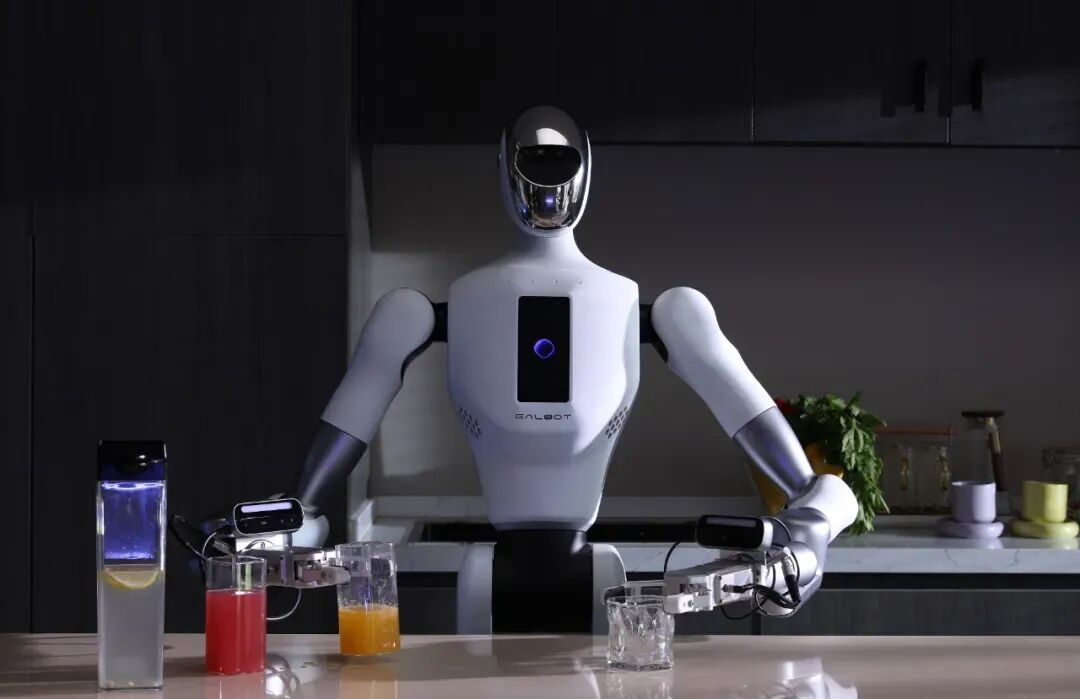
After a year of development, Galaxy Universal unveiled its first embodied foundation model robot, Galbot (G1), in June this year.
Galbot is a wheeled, dual-arm humanoid robot with a foldable body. Unlike legged robots that cannot bend or kneel, Galbot merges its two legs into a single foldable leg with greater stability and movement efficiency, paired with a 360° omnidirectional wheeled base. This allows the 1.73-meter-tall Galbot to reach up to 2.4 meters and bend down to touch the ground within a certain range, achieving a significantly larger workspace. Balancing performance and efficiency, it supports rapid iteration across multiple commercial scenarios.
Data collection represents the biggest challenge facing embodied AI development today. Major players like Tesla and Google rely on "teleoperation" to gather data, but this approach is prohibitively expensive and cannot yield data at scale.
To address this, Galaxy Universal has adhered to a technical approach of "synthesizing large-scale, high-quality data through physical simulation." To date, the company has accumulated tens of millions of scene-level data points and billions of action-level data points — two orders of magnitude beyond what peers globally have achieved. Using this synthetic data for skill learning, Galbot can directly generalize learned skills to the real world.
Galbot has achieved, for the first time internationally, a success rate above 95% in grasping randomly piled, previously unseen transparent and specular objects. It has further mastered generalized manipulation skills such as opening cabinets, opening drawers, and hanging clothes to dry, publicly demonstrating these capabilities on multiple occasions by grasping objects arbitrarily handed to it by thousands of attendees — coverage that included live broadcasts by CCTV and other media outlets.
Regarding its self-developed embodied foundation model, Galaxy Universal has made committed investments across spatial intelligence, action intelligence, and hardware intelligence in a full-stack layout, pioneering frontier exploration in embodied AI and laying solid groundwork for the sustainable breakthrough of its industrial application ceiling. The team has already achieved a series of breakthrough advances in embodied foundation model R&D, with multiple results leading globally, including but not limited to:
Developed Open6DOR, the world's first spatial intelligence foundation model system supporting open-vocabulary semantic instructions for six-degree-of-freedom pick-and-place, along with its corresponding benchmark.
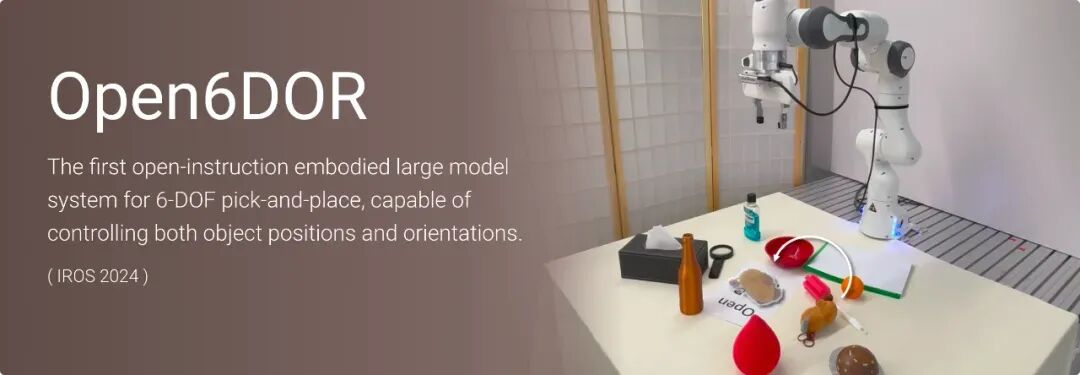
This foundation model system breaks through the limitation of Google's RT-2, which could only control object placement position, by further enabling fine-grained control over object orientation at target locations through open-vocabulary semantic instructions. It has achieved the pioneering leap in spatial intelligence from Positional Intelligence to Positional+Orientational Intelligence, opening greater imaginative space for the commercial application of embodied foundation models.
Developed Navid, the world's first end-to-end navigation foundation model based on single-view robot video streams.
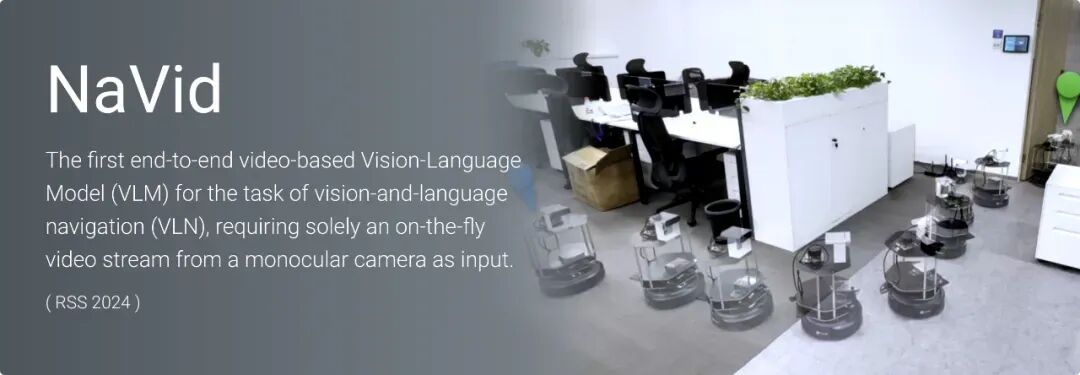
Without requiring mapping or any sensor signals beyond the robot's own RGB perspective, Navid has become the first to validate the feasibility of a pure-vision "FSD" model in the embodied AI domain. Notably, the model's action data comes entirely from synthetic simulation of the real world — achieving Zero-Shot cross-scene generalization in the real world without using a single piece of real-world action data.
Additionally, Galaxy Universal has multiple cross-scene generalization-oriented embodied navigation and manipulation foundation models, as well as a dual-system architecture supporting cerebrum-cerebellum collaborative operation, currently in internal testing. These provide solid frontier technical reserves for the sustainable breakthrough of its industrial application ceiling.
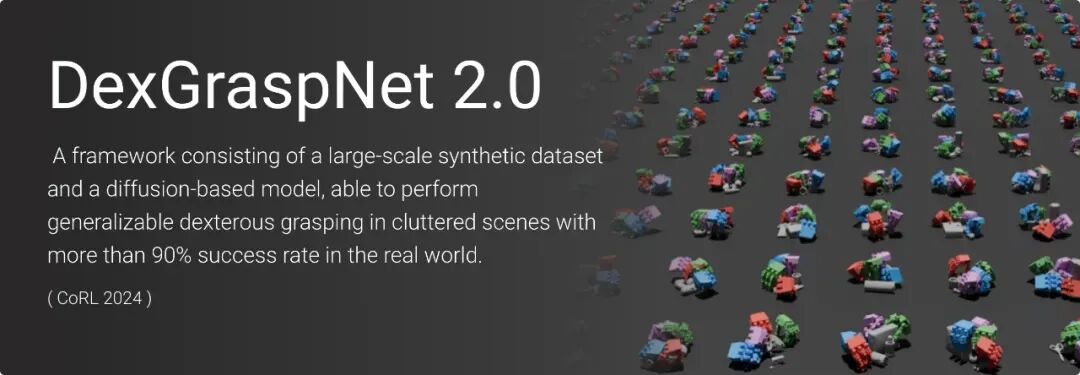
On the data front, the team has developed the world's largest-scale dexterous hand grasping dataset to date, and for the first time publicly revealed the "Scaling Law" for cross-scene generalization dexterous grasping at the billion-data scale, boldly exploring uncharted territory.
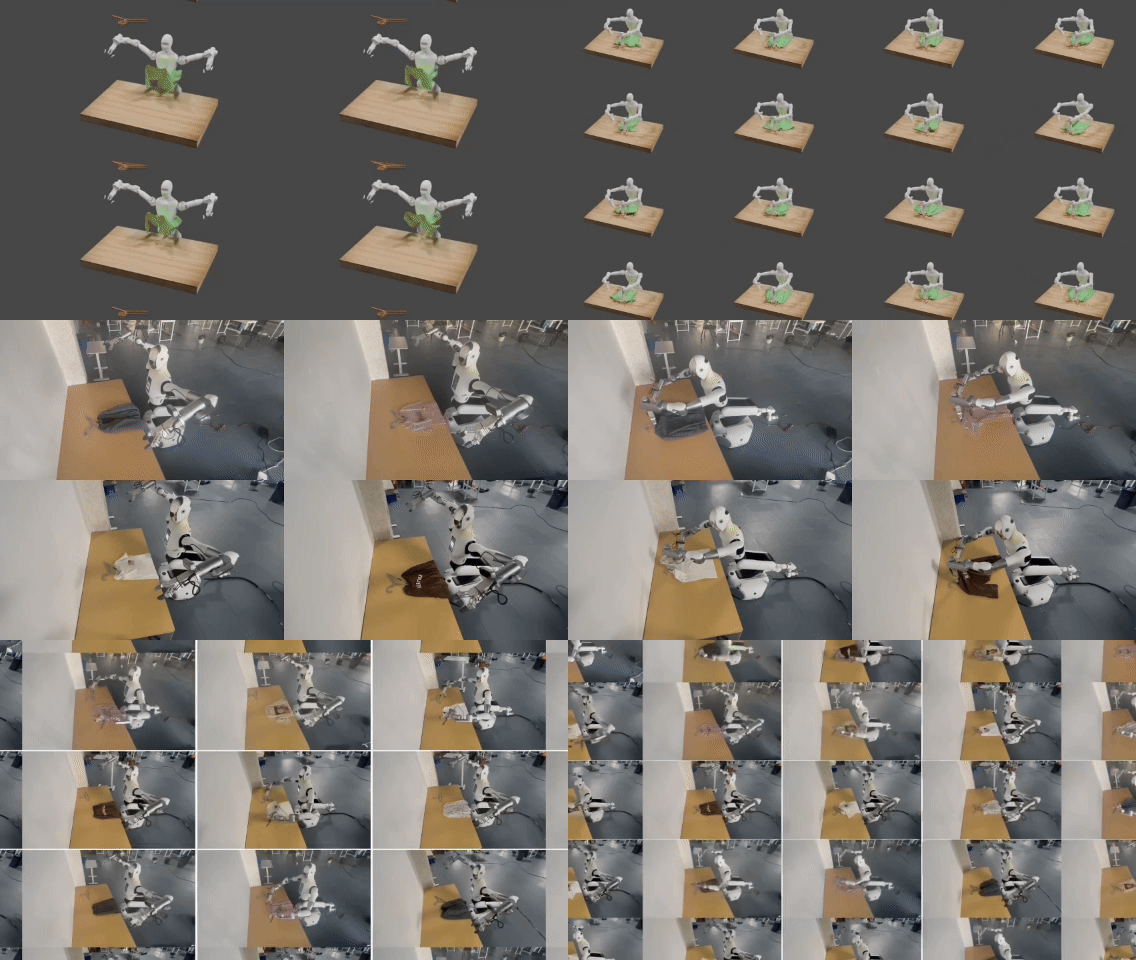
Grounding their work in application-driven coordination between large and small models, the team continues to strengthen foundational skill learning for cross-scene generalization, making continuous breakthroughs in whole-body motion control and dual-arm collaborative flexible object manipulation. While expanding their skill library, generalization for skills such as trash picking and clothes hanging has improved substantially, opening boundless imaginative space for the team's commercial deployment across various unstructured environments.

2
Realizing Diversified Commercial Scenarios
Galbot made its public debut at the 2024 BAAI Conference in Beijing this June. Galaxy Universal simulated a 24-hour unmanned retail scenario by setting up a simple convenience store, where the robot served free snacks and drinks to attendees. Over two days, Galbot operated for 18 hours total, serving more than 800 customers and completing over 1,000 tasks with a success rate exceeding 97%.
Since then, it has appeared at numerous major industry events: the 2024 World Artificial Intelligence Conference in July, the 2024 World Robot Conference in August, the China International Fair for Trade in Services & Apsara Conference in September, and the 2024 IROS exhibition in October...
Through continuous user interaction, Galbot has cumulatively served tens of thousands of customers and completed thousands of orders. Achieving commercial deployment hinges on three technical elements: generalization capability, natural language communication, and zero-code deployment.
He Wang has stated that the path to general-purpose humanoid robots will proceed from single-scenario multi-task, to multi-scenario multi-task, and ultimately to all scenarios. Galbot's product commercialization trajectory has largely followed this pattern — from early single laboratory scenarios, to slightly more complex temporary exhibition setups, and now to direct deployment in more complex real-world production environments.
In September this year, Galaxy Universal officially entered the commercial unmanned retail application space, partnering to create the world's first humanoid robot-powered smart pharmacy solution. Galbot handles picking, delivery, restocking, and inventory tasks, autonomously planning pickup and delivery routes to enable 24-hour unmanned operation.
The value of humanoid robots extends far beyond this. While rapidly advancing pilot deployments in commercial and industrial domains, Galaxy Universal continues exploring healthcare and eldercare, education and research, and home applications — steadily progressing toward its vision of serving thousands of industries and millions of households.