MaKe | MaHui Member GalaxySpace's Self-Developed Satellite Internet Technology Test Satellite Launched

Advancing China's commercial space sector to new milestones

- This article is republished from Economic Daily, with reporting by Jiang Tianjiao.
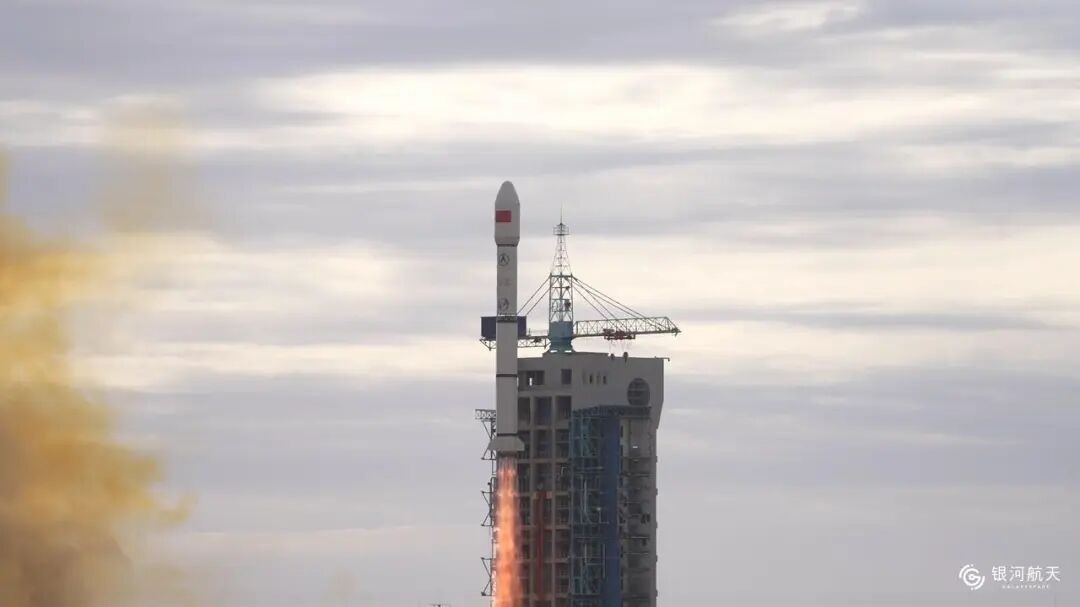
At 9:06 a.m. Beijing time on September 16, 2025, China successfully launched a satellite internet technology test satellite from the Jiuquan Satellite Launch Center. The satellite entered its planned orbit and the mission was completed successfully.
One of the satellite internet technology test satellites on this mission was developed by GalaxySpace, a commercial aerospace company and member of MaHui. According to Hu Zhao, chief engineer of the satellite model at GalaxySpace, the satellite achieved the world's first engineering application of an innovative configuration and new materials. All core components of the satellite were independently developed, representing a breakthrough in key core technologies for China's satellite development under the new national system, and injecting strong momentum into the nation's space power ambitions.
GalaxySpace's intelligent satellite factory features a complete satellite production line with strong batch manufacturing capabilities, complemented by component production lines for solar arrays, cables, and other subsystems. This significantly streamlines supply chain management, improves component delivery efficiency, and accelerates on-site troubleshooting — moving toward a future where satellites are produced like automobiles.
Currently, space infrastructure construction is gaining speed. China's 14th Five-Year Plan calls for building a global, high-performance space infrastructure system covering communications, navigation, and remote sensing. In recent years, under the new national system, GalaxySpace has continuously advanced space-based new infrastructure through technological innovation, making notable progress. To date, GalaxySpace — a leading company in China's commercial aerospace sector — has successfully launched 35 satellites, including China's first batch-produced low-earth orbit broadband communications satellites, China's first flat-stackable satellite with flexible solar arrays, and the world's first distributed multi-satellite formation SAR satellite.
Looking ahead to the 15th Five-Year Plan period, as key technologies such as direct-to-cell satellite connectivity and space-based cloud computing continue to mature, commercial aerospace companies are expected to play an even greater role in building China into a space power. Going forward, GalaxySpace will continue to drive technological innovation at the level of national strategic capabilities, concentrating on core technologies with major national demand including phased array antennas, constellation networking, high-power systems on orbit, and high-performance computing payloads. The company will further enhance its low-cost, high-volume production capabilities for satellites and critical equipment, continuing to contribute private-sector strength toward building self-controlled space infrastructure.