MaHui Moments | MaHui Member "Narwal" Launches New Product: Decoding the Logic Behind a Hit Product

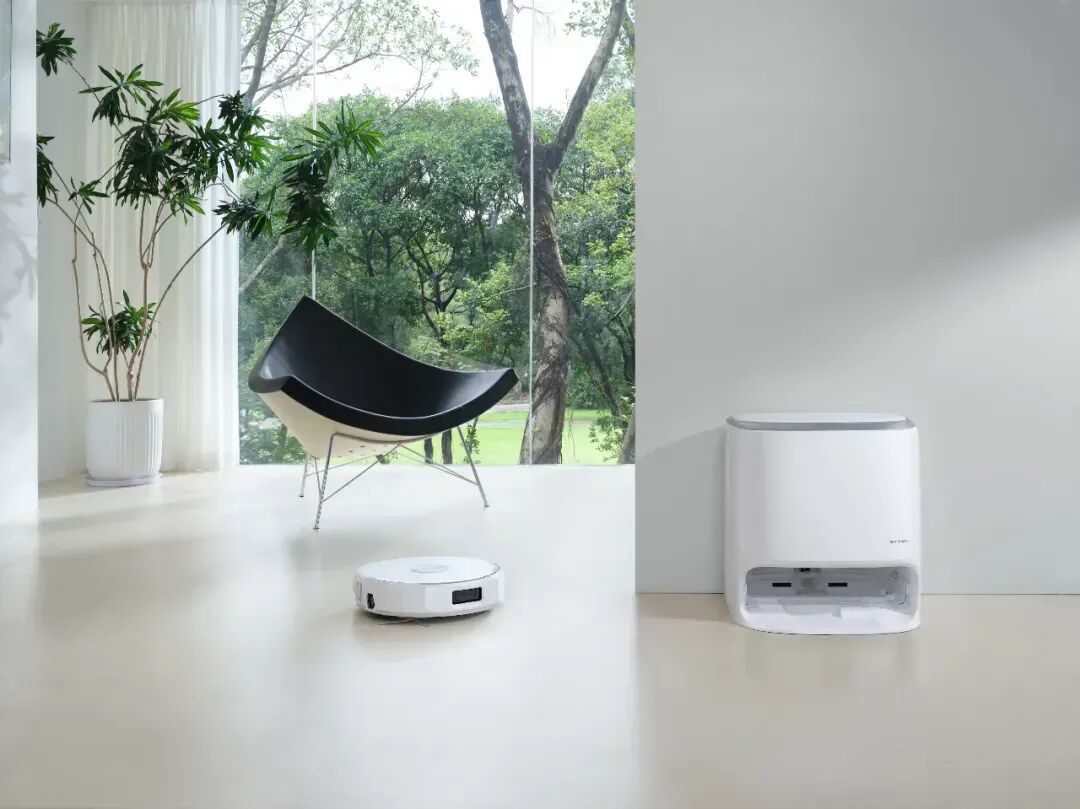
On August 25, Cloud Whale officially launched its new-generation J6 series robot vacuum, positioned as a "live-water track mopping robot."

- This article was originally published by Jiemian News
The "hit product machine" Cloud Whale is making moves again.
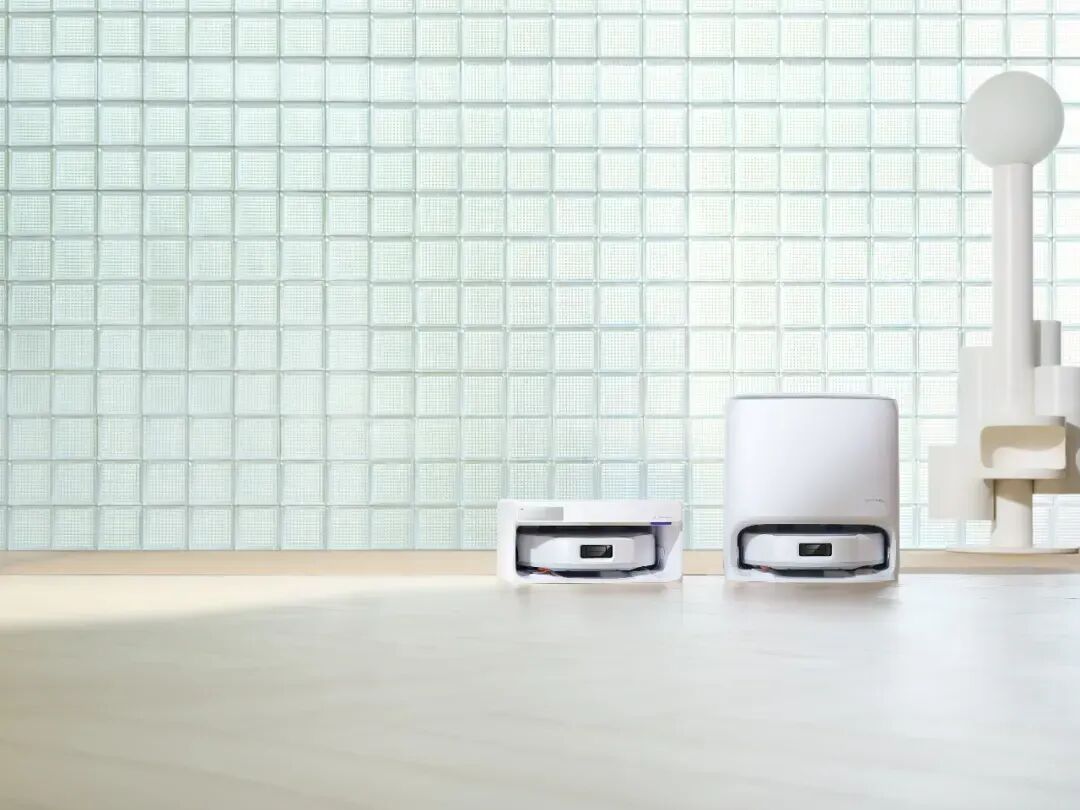
On August 25, MaHui member Cloud Whale unveiled its latest generation of robot vacuums, the J6 series. This is a live-water track mopping robot, available in two versions — a standard water tank model and an ultra-slim base station with auto water refill and drainage — starting at 3,799 yuan.
Consumers are already well familiar with the Cloud Whale name. In 2019, the company launched the industry's first robot vacuum that "washes its own mopping pads," the J1, which racked up 20 million yuan in sales within two months of launch and hit 800 million yuan in annual sales the following year. This catapulted the fledgling Cloud Whale out of the bloody red ocean of the robot vacuum market and into the top tier.
More than a decade of turbulence has winnowed the robot vacuum market down to a handful of survivors, and Cloud Whale is one of them — as well as a competitor that rivals have studied countless times, with the J series especially scrutinized. As one of Cloud Whale's most successful product lines, nearly every one of the five J-series generations has achieved hit-product status right out of the gate, which is rare in the hardware consumer goods industry.
What's the secret to creating blockbuster consumer products? Cloud Whale's answer is surprisingly simple.
Making Hits Isn't About Luck
The history of the Cloud Whale J series is, in many ways, a history of hit products.
The sensational J1 of 2019 was only the beginning. Two years later, the J2 — the first to support auto water refill and drainage — broke 100 million yuan in sales within one minute of going on sale. Since then, Cloud Whale has maintained a yearly update cadence for the J series. The J3 dominated its price segment during 2023's Double 11 shopping festival. The J4 claimed both sales volume and revenue top spots in the "robot vacuum" category on Tmall and JD.com. And last year's J5 also topped its product category on Tmall and Douyin.
The J series' success allowed Cloud Whale to rapidly capture market share. According to monitoring data from CMM and AVC, Cloud Whale's online market share in China's robot vacuum market was a mere 0.2% in 2019, jumping to 10.5% in 2020 and placing it fourth among online top brands. In 2021, Cloud Whale overtook Roborock, capturing 17.13% of the online market to become the second-ranked brand. By 2024, Cloud Whale's share of China's online robot vacuum retail market had grown to 18.6%.
Cloud Whale's achievements owe much to its string of hit products. But the truth is, the consumer electronics industry has never run on "guaranteed blockbuster" luck. And in the volatile robot vacuum market, making products with staying power is even harder.
Building hit products demands exceptional product capability and strategic discipline — Apple is the prime example. One of that company's defining characteristics is maintaining a ruthlessly streamlined SKU lineup, focusing energy on a single product. It may not chase victory on any single spec, but rather prioritizes the overall user experience. The iPhone's megapixel count may not be the highest, but its shooting experience is undeniably top-tier among smartphones.
This boutique mindset influenced Cloud Whale founder and CEO Junbin Zhang for a considerable time. Adhering to a streamlined SKU strategy like Apple's, with product experience pushed to the extreme, was the product strategy he established from the company's founding.
How does a product become a hit? Zhang's answer: a product's lifecycle is long, and success doesn't depend on one or two big marketing campaigns. What ultimately makes it "pop" in the market comes down to NPS (net promoter score) and repurchase rate. "Based on this underlying logic, there are many popular product features on the market that Cloud Whale chooses not to implement, or to implement more slowly."
This gives Cloud Whale more time to refine its products, with the ultimate starting point still being user experience.
Cloud Whale positions itself as "the cleaning expert that cares most about user experience." This breaks down into three methodologies: a user-centric perspective, with long-term deep cultivation of household user needs; an innovation perspective, pursuing innovations that users can actually perceive; and a product perspective, advocating scientific cleaning and achieving deep innovation from first principles of cleaning.
This isn't empty rhetoric — it's Cloud Whale's lived practice. While nearly all brands were iterating auto dust collection around base station designs, the Cloud Whale J4 launched two years ago chose a smart lightweight dust collection solution instead. This was the industry's first auto dust collection system completed inside the robot vacuum itself, achieving 90 days of maintenance-free operation while effectively solving the noise and dust bag mold/odor problems of traditional base station collection. It earned Cloud Whale genuine word-of-mouth praise — this is "innovation that users can perceive."

It's these details that form the underlying logic of Cloud Whale's sustained hit-making.
J6: The Next Phenomenon?
If you carefully review the standout features of each Cloud Whale J-series generation, you'll find this company has been making disruptions all along.
From the J1's "self-washing mopping pads," the J2's "auto water refill and drainage," the J3's "one-touch Narwal Butler" with smart dirt recognition, to the J4's "zero-tangle roller brush and robot lightweight dust collection," and the J5's "bionic human-hand mopping system" — every generation of the Cloud Whale J series has precisely hit the beat of evolving user needs.
This makes the J6 all the more anticipated. This time, Cloud Whale brings the "track hot live-water circulation cleaning system" to the J6, achieving major leaps in both cleaning power and intelligence.
The track-style mopping pad design is a key structural upgrade. Compared to the dual-spin mopping pad structure used in previous generations, the J6's large track mopping pad significantly increases ground contact area, which obviously translates to higher cleaning efficiency.
Track-style mopping pads aren't unheard of in the market, but they've all faced self-cleaning challenges. The J6 equips the robot body with separate clean and dirty water tanks, supporting 45°C hot live-water circulation mopping while also washing the mopping pad in real time. It also adds a squeegee blade for the mopping pad, scraping and separating dirt in real time. This not only solves the "cleaning with dirty water" problem of traditional mopping pad structures, but also means you don't have to worry about the track mopping pad developing odors even under long-term heavy-soil cleaning.
In fact, the live-water track technology was already featured in Cloud Whale's earlier flagship Narwal Xiao Yao 002. This reflects a unique philosophy behind Cloud Whale's hit product phenomenon: stay one generation ahead in technology R&D, and achieve rapid democratization. This "flagship first, fast普及" model allows Cloud Whale to continuously grasp the industry's cutting-edge trends, while also accelerating the penetration of advanced technology into the mass market.
The J6 also addresses pain points in robot vacuum coverage. Thanks to upgraded dual extension systems, the J6's ability to clean corners, furniture legs, and other dead zones is significantly stronger. And at 95mm thin, the body easily slips under furniture for cleaning. For obstacle avoidance, the J6 carries an AI monocular intelligent perception system, based on Cloud Whale's millions of real household scenario data points, that can accurately identify scattered shoes, cables, and other objects on the floor, avoiding 150+ types of household objects.
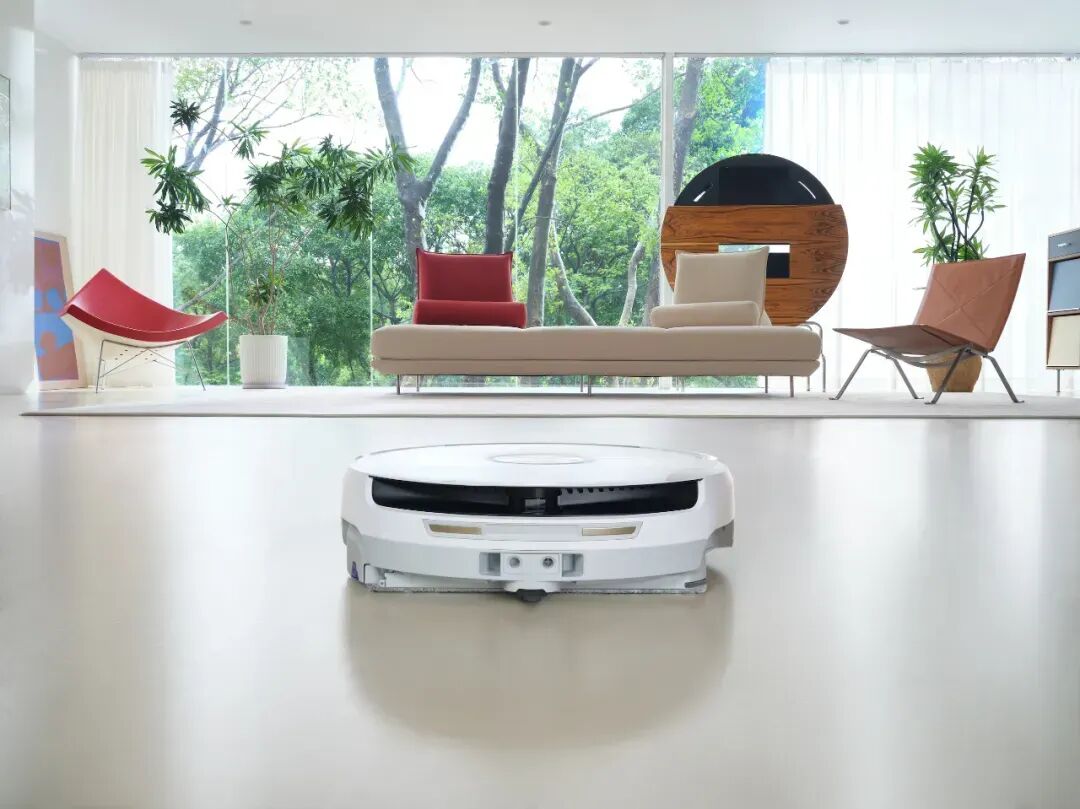
Another notable upgrade is human-robot interaction. The J6 features NarGPT 2.0, a fully intelligent voice assistant that enhances the robot's deep thinking capabilities. Users can resolve cleaning issues through simple conversation, letting the robot handle problems autonomously.
The evolution of cleaning robots toward highly intelligent robots has become something of an industry consensus, and Cloud Whale is also among the earliest top cleaning appliance manufacturers to lay out AI and Embodied Artificial Intelligence. For Cloud Whale, Embodied Artificial Intelligence is already an inevitable choice, and to some extent defines Cloud Whale's future.
From Hits to Longevity
The key factor determining a consumer electronics company's future ceiling isn't just the ability to create hit products. As industry competition intensifies, companies must focus not only on immediate market share, but also on technological shifts that will shape the industry's next five to ten years.
As early as 2021, Cloud Whale began laying out Embodied Artificial Intelligence-related technologies, including AI binocular vision, robotic arms, human-robot interaction, and AI models. In Zhang's view, Cloud Whale is fundamentally a robotics company — whether in underlying architecture, technical reserves, or future strategic planning, everything is arranged around Embodied Artificial Intelligence.
However, current robot vacuums are merely the "iPod stage" of cleaning intelligence. The true "iPhone moment" for the industry will be household Embodied Artificial Intelligence agents with three-dimensional spatial cognition and autonomous decision-making capabilities. Before that moment arrives, Cloud Whale will continue stockpiling "ammunition," preparing fully for future battles.
In April this year, Cloud Whale officially announced the completion of a new $100 million funding round, with proceeds mainly going toward development of Cloud Whale's first household Embodied Artificial Intelligence product, expected for release within two years. Reportedly, this will be a one-touch robot that solves cleaning and organization needs across three-dimensional household spaces — a current market white space. Zhang believes Cloud Whale's experience in supply chain integration and cost control can also significantly reduce development and manufacturing costs, an advantage that other emerging companies newly entering this space will struggle to match.
AI embodiment is just one facet of Cloud Whale's future. In its ninth year, the company is undergoing broader evolution: product matrix expansion, category diversification, and brand globalization are all major future development directions.
Unlike the "slow" approach of its early years, Cloud Whale began accelerating its category expansion pace in 2024, releasing more than 10 products within a single year. Cloud Whale's current robot vacuum lineup includes the Xiao Yao series, J series, R series, and K series, covering the 1,000–5,000 yuan price range; its wet-dry vacuum lineup includes the S series and F series, covering 1,500–3,000 yuan. In the first half of this year, Cloud Whale also launched its first vacuum cleaner, the V40 Station, entering the vacuum cleaner market.
Cloud Whale has gotten "faster," but this doesn't mean abandoning boutique quality. Zhang's response is that the accelerated product pace results from the maturation of the company's R&D system and product platformization. During this period, Cloud Whale has also cultivated a large cohort of excellent product managers. When decision-making mechanisms become more complete, innovative ideas also become more agile.
The richness of the product matrix is also paving the way for Cloud Whale's overseas expansion. Cloud Whale officially launched its international push in 2023. Phase one focused on North America, concentrating on marketing and sales to validate the overseas model. Phase two shifted to a functional structure, building teams by function — marketing, sales, etc. — with members divided by region (North America, Asia, Europe) for collaborative work. As regionalization began emerging, headquarters and regional functions (such as GTM, digital marketing center) were further enriched, forming a "dual-axis" structure with headquarters and regions equally weighted.
By phase three, Cloud Whale's overseas focus shifted toward regions, evolving into "region-led, function-supported," with the matrix taking shape. Except for pure center personnel, functional members report solid-line to regional managers and dotted-line to functional heads, forming a dual-reporting matrix. This phase echoes phase one's regional focus, but management complexity and coordination have significantly advanced.
This strategy has greatly reduced uncertainty in Cloud Whale's overseas expansion, ensuring each step of growth builds on solid experience and organizational capability, thereby achieving a steady transition from "going out" to "going in" to finally "putting down roots." With the organizational structure now basically stable, Cloud Whale's overseas business priority for the second half of this year is aligning its domestic and international product matrices — that is, rapidly expanding its product lineup overseas.
Reportedly, in 2024, Cloud Whale's overseas revenue grew nearly sevenfold year-over-year, with products now covering North America, Europe, Japan, South Korea, Australia, Southeast Asia, and other markets. Zhang revealed that in 2025, Cloud Whale's newly added overseas markets are expected to exceed 70, with overseas business projected to have three to four times growth room.
Bigger market, bigger challenges — and Cloud Whale's ambitions have grown bigger too. For Cloud Whale today, creating a single hit product is no longer the ultimate goal. What's more important is building systematic "longevity" capability. The J6 is a beginning, and Cloud Whale is already prepared for the longer battles ahead.