Qiheshengke Biotechnology Raises Over 100 Million RMB in Pre-A Round with Source Code Capital Participation

This round of funding will help Qiheshengke Biotechnology accelerate the commercialization of gene-edited bio-breeding.


Qiheshengke Biotechnology (hereafter "Qiheshengke") recently completed a Pre-A funding round exceeding RMB 100 million, led by Chunde Capital with participation from Source Code Capital, Gaorong Ventures, Zhongxin Capital, and Wuxi Xinshang Capital. The proceeds will primarily fund development of next-generation proprietary precision gene editing tools and expansion of the company's gene editing product pipeline. This round will further strengthen Qiheshengke's first-mover advantage in plant gene editing platform technology R&D and accelerate the commercialization of gene-edited crop breeding.
Founded in 2021 by internationally renowned gene editing scientists Caixia Gao and Dr. Kevin Zhao, Qiheshengke is a biotech company dedicated to developing proprietary novel gene editing technologies. The company has made serial advances in mining for next-generation gene editing tools, optimizing proprietary gene editing tools, developing safe and efficient delivery systems, and creating breakthrough germplasm resources — forming a high-tech industry chain centered on its SEEDIT™ platform.
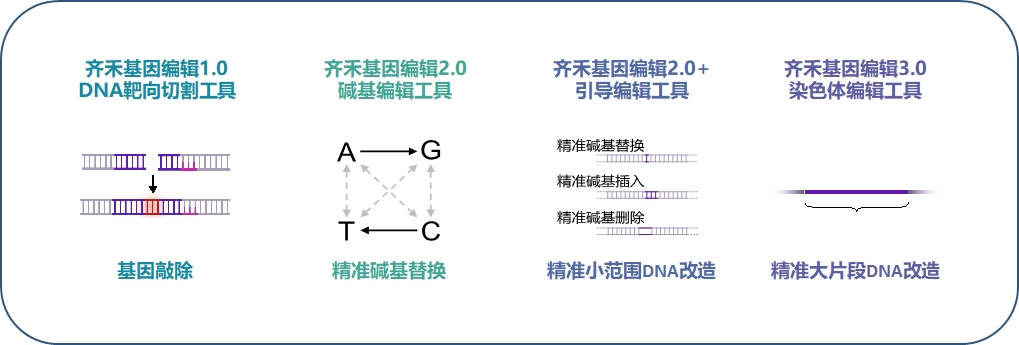
Pursuit of original innovation has always been the core element enabling Qiheshengke's rapid establishment in the industry. Building on years of R&D accumulation in plant gene editing technology, the company has developed a suite of core gene editing technologies based on CRISPR-Cas systems capable of gene knockout, precise base substitution, precise DNA fragment deletion, fine-tuned gene expression regulation, and precise long-fragment DNA knock-in in plants. Currently, scientists worldwide are exploring multidimensional strategies to develop tools enabling precise, efficient, and targetable large-fragment gene insertion. Qiheshengke has fully launched R&D of next-generation precise, efficient, and proprietary chromosome editing tools, designing and developing precise large-fragment gene site-specific insertion systems to enable site-specific insertion of multiple target genes across multiple plant species — rapidly achieving precise stacking of new traits while ensuring exogenous genes do not perturb plant growth.
Advancing the industrialization of gene editing breeding has always been the driving force behind Qiheshengke's progress toward national strategic goals. The company has built a complete crop development system addressing delivery technology R&D needs across multiple plant species, having established transient live editing efficiency validation systems based on protoplast or Agrobacterium rhizogenes-mediated transformation for over 30 plants. Notably, the company has achieved autonomous delivery capabilities for world-important food crops including rice, wheat, soybean, and maize, as well as plants widely considered recalcitrant to transformation such as sugar beet, mung bean, and Chinese cabbage. Based on its "advanced tools + precise delivery" product development system, Qiheshengke has already achieved precise improvement of yield and quality traits across multiple food and economic crops — including powdery mildew-resistant wheat, herbicide-resistant rice, sweeter strawberries, and high-vitamin C lettuce.

Dr. Kevin Zhao, Co-founder and CTO of Qiheshengke
Dr. Kevin Zhao, Co-founder and CTO, stated: "Since CRISPR-Cas9 was first applied to gene editing in 2012, the technology has undergone several iterations. First-generation CRISPR technology has been rapidly deployed across multiple domains of life sciences research, but its editing carries inherent randomness — the resulting mutation types are uncontrollable, making precise improvement of crop agronomic traits difficult. Second-generation gene editing technologies, primarily base editing and prime editing, have evolved to enable arbitrary substitution of all four bases and precise insertion or deletion of short DNA fragments, achieving the leap from imprecise to precise editing. Currently, global gene editing technology has entered a third-generation R&D phase. How to achieve efficient manipulation of large DNA fragments and even chromosome-level operations remains a major challenge in genome editing research — one that carries extraordinary significance for both gene therapy and agricultural breeding. This funding will further accelerate Qiheshengke's R&D pace for next-generation precise and efficient gene editing technologies. The company will deeply focus on large-fragment gene site-specific insertion technology, gaining greater breadth and diversity for our gene editing product development, and contributing to national biotech breeding industrialization."
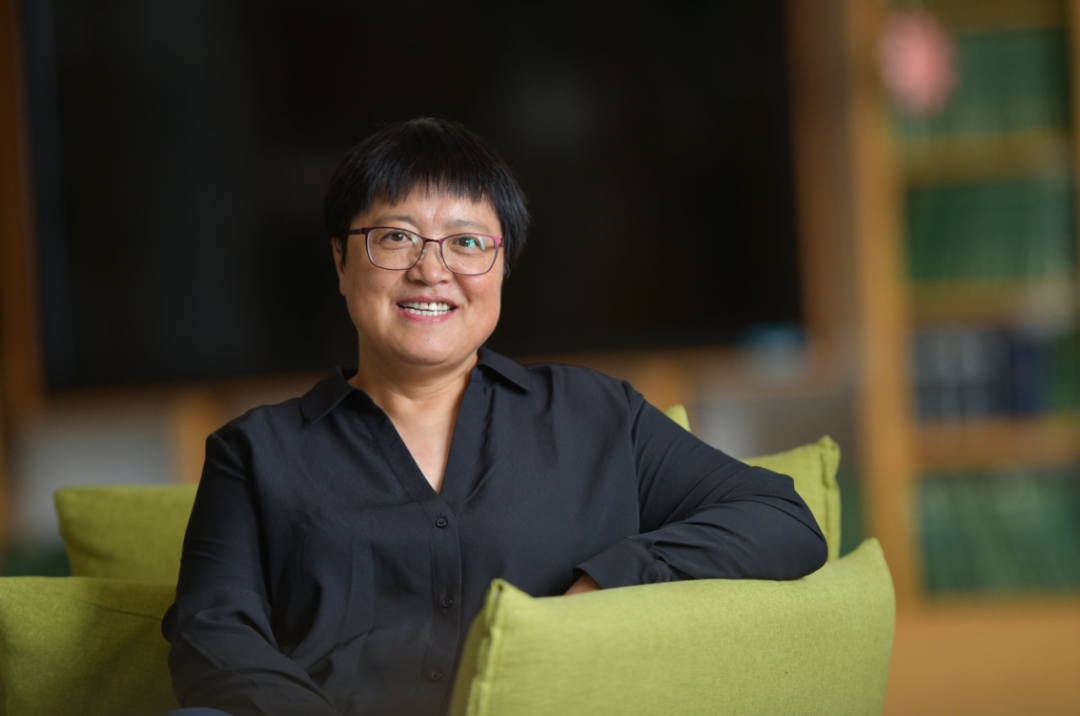
Caixia Gao, Co-founder and Chief Scientist of Qiheshengke
Caixia Gao, Co-founder and Chief Scientist, said: "We thank Chunde Capital and all our new and existing shareholders for their trust and support, and our team for their dedication and effort. This funding round holds significant meaning for Qiheshengke's development, reinforcing our strategic resolve to develop core gene editing technologies and lay out biotech breeding industrialization, and substantially enhancing and strengthening our comprehensive competitive advantages for future growth. Going forward, Qiheshengke will firmly seize the opportunity of national seed industry revitalization, oriented toward people's life and health as well as major national needs, always standing at the forefront of gene editing technology development, and striving to develop more gene editing products that benefit farmers in cultivation and consumers in their diets."
Yuhao Zhang of Source Code Capital commented: "Underlying technology innovation is the core driver of industrial transformation. Source Code believes biotechnology can deliver real value creation to the world. The Qiheshengke team possesses a world-renowned tool platform in plant gene editing. We are highly optimistic about the company's future translational potential in the biotech breeding industry — helping breeders develop super-varieties originating from Chinese soil, advancing the modernization of China's agricultural planting industry, safeguarding China's food security, and opening global biotechnology collaboration ecosystems."