A Profile of "Reliable" AI Startups | Source Code Capital Insider

Unearthing the lesser-known concerns behind the AI industry frenzy — an exclusive look at the second edition of the *Source Code Capital Internal Reference*.
Source Code Capital Internal Briefing
Issue 2
About the Author
Yiwen Hao
Vice President, Investment

Yiwen Hao joined Source Code Capital in 2014. Over his nearly decade-long career, he previously led corporate strategy and market growth consulting projects at ASG & Associates and Frost & Sullivan. With the backing of Sequoia Capital, he founded Ingle Games, one of China's earliest online game publishers targeting overseas markets. He also served at Tencent, overseeing product planning for the Enterprise QQ product line. Yiwen Hao holds a bachelor's degree in business administration from Tongji University.
Contact: yw@sourcecodecap.com
[ Editor's Note ]
Artificial intelligence was the hottest theme in China's venture capital circle in 2017. Beneath the industry frenzy, Source Code Capital believes there remain underappreciated concerns in AI investing. Following extensive analysis, we present Issue 2 of the [Source Code Capital Internal Briefing].
Key Takeaways
Profile of a "Solid" AI Startup
Research by/Source Code Capital
- Among the AI projects we've evaluated, most are still in the "hammer-making" phase of building technical tools, far from the "house-building" phase of productization.
- The biggest talent gap in AI today is technical talent, but the next gap will be commercialization talent.
- The primary exit for AI projects remains acquisition by tech giants (69 in 2015, 84 in 2016). No clear candidates for independent IPOs have emerged, and the exit outlook lags even the somewhat less hyped big data sector — unclear paths to fund liquidity.
1 AI: The Hottest Theme in VC for 2017
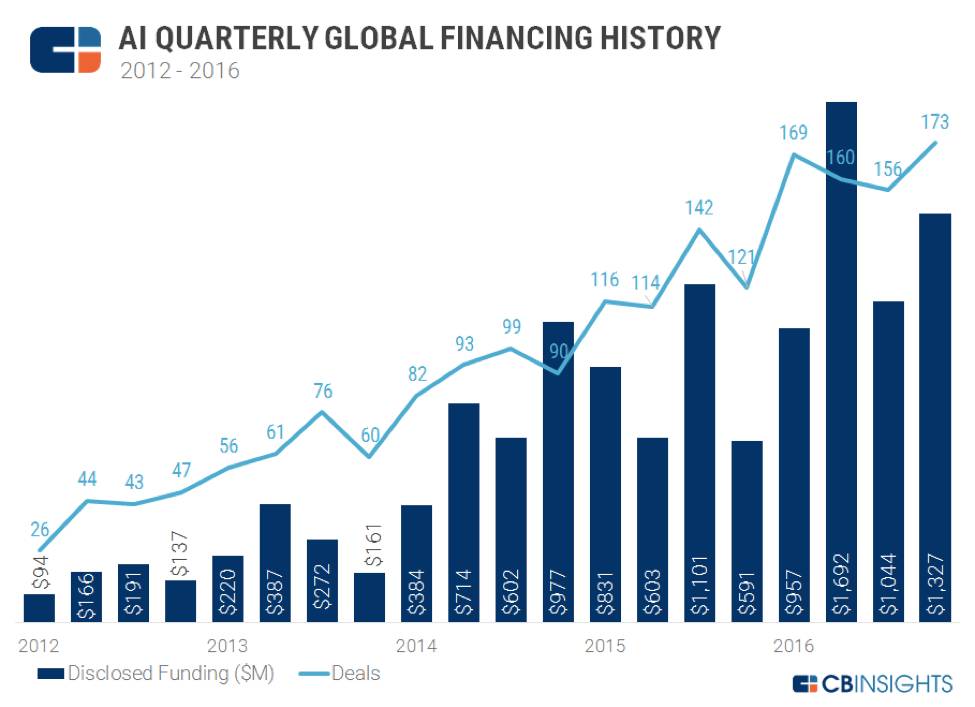
According to data from Xiniu Data, among 98 investment outlook discussions by major domestic institutions between late 2016 and early 2017, AI was mentioned 48 times — 1.8x the second-place category, "culture and entertainment."
Per Venture Scanner, global AI startups raised $5 billion in 2016 across 658 funded companies. The market heat is undeniable.
But prosperity carries hidden worries.
Source: CB Insights
2 Productization and Valuation Bubbles
We agree that the widespread adoption and explosive growth of AI technology is inevitable. But returning to the actual AI projects we've encountered, most remain in the "hammer-making" stage of building technical tools, far from the "house-building" stage of productization.
Compared to the SaaS industry — similarly B2B-focused and aimed at solving real enterprise problems — the AI sector shows signs of valuation froth.
The industry broadly accepts forward P/S multiples of 5–10x for SaaS companies. AI projects, by contrast, are still being priced based on headcount and résumés, with something like a "P/P" (Paper/Publication) method using paper count plus h-index as valuation metrics.
Moreover, numerous "pseudo-AI" projects with repackaged technology have flooded the market. Some consumer projects whose business model doesn't actually hinge on AI technology have jumped on the bandwagon during fundraising, throwing around technical jargon to "bamboozle" investors. This backfires by obscuring their real strengths, inviting unnecessary technical due diligence, and pitting their weaknesses against others' strengths.
3 Talent Bottlenecks
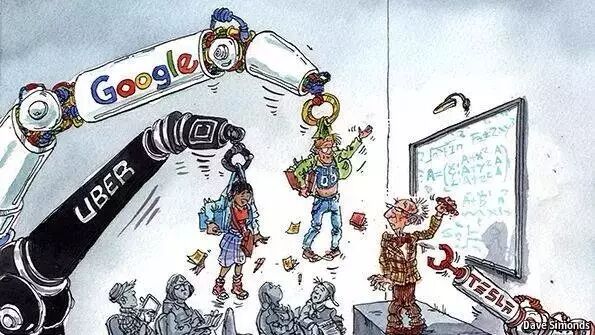
Talent demand has exploded, salaries have doubled, and startups struggle to hire. In North America in 2016, the supply-demand ratio for AI development roles was 3:10. The imbalance is even more severe domestically, possibly reaching 1:10. Academic talent is migrating en masse to industry, and many big-company veterans have grown restless and launched their own ventures.
Source: David Simonds
The biggest talent gap today is technical talent, but the next gap will be commercialization talent: "translators" who understand technical boundaries and implementation mechanisms while also grasping industry needs.
Founder profiles: The most widely accepted and commonly seen background is the academically credentialed overseas returnee PhD who spent 3–5 years in industry, rose quickly, and developed business acumen.
The next tier includes senior R&D executives from large companies and professor-founders — generally at the associate professor level, aged 30–40, with some academic influence and full commitment to leaving academia. Scientist-founders need to find business partners quickly who deeply understand their target industry.
4 Exit Paths
Globally, the primary exit for AI projects remains acquisition by tech giants (69 in 2015, 84 in 2016). No clear candidates for independent IPOs have emerged, and the outlook lags even the somewhat less hyped big data sector, leaving fund liquidity paths unclear. In the domestic environment, large companies still prefer acquiring resources and revenue; they remain unenthusiastic about talent and technology acquisitions.
The window from academic paper to product to industry common knowledge is shrinking rapidly, shortening the window for technology acquisitions with strategic value. Take last year's viral app Prisma: the style transfer technique it used was first published in an August 2015 paper, A Neural Algorithm for Artistic Style. Within 3–4 months, the open-source community had improved algorithm speed by orders of magnitude. In the first half of 2016, 2–3 startups possessed this technology; after Prisma exploded on social media in July, no fewer than 20 teams had launched in this space, and it became standard in all photo-editing apps. By then, the technology's acquisition value had dropped sharply. Overvalued companies that can't generate sufficient cash flow on their own face an awkward predicament.
5 Technology Maturity Cycles
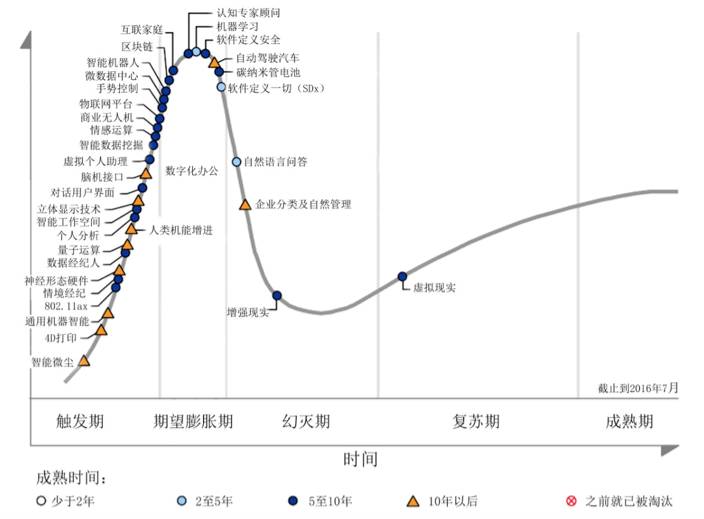
Frontier-tech startups must respect business fundamentals, identify value-creation points, and hold a healthy respect for technology maturity cycles. Gartner's annual Hype Cycle for emerging technologies should prompt founders to assess their own capabilities and target segments where the technology is closer to "arriving at the station," or at least has "intermediate stops" (commercial applications) along the way. Great companies begin by meeting customer needs, not by chasing world-class academic prestige.
Source: David Simonds
Tech giants are actively open-sourcing in AI, and platform-level technologies will rapidly commoditize. Frameworks like Google's TensorFlow are already being deployed by non-AI companies — much as Hadoop became ubiquitous three years ago. You can't build AlphaGo on such frameworks, but they're more than adequate for analyzing offline business data.
6 What Source Code Capital Looks For in AI Companies
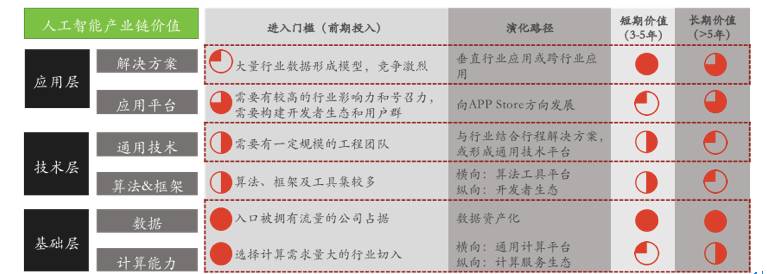
Data is the means of production; computing is the productive force. Across the full value chain, we favor application-layer industry solution providers that identify value-creation points in vertical industries and use AI to improve sector efficiency, or satisfy new demands only achievable through AI. We also favor companies that have accumulated substantial proprietary data that can unlock greater value through AI technology.
Source: NetEase, Wuzhen Institute, Source Code Capital
The following AI+verticals will see earlier inflection points: information distribution, finance, healthcare, education, security, logistics and human flow.
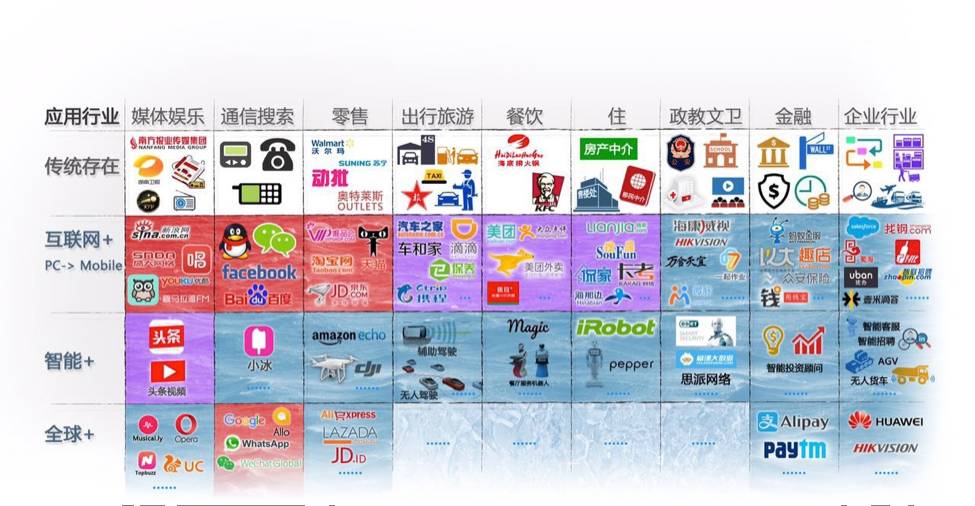
Source: Source Code Capital "Three Horizontals, Nine Verticals" Investment Map
AI investing will not remain a standalone track; it will disperse across application-domain investments. Source Code Capital firmly believes that AI technology represents the most exciting and transformative opportunity of our time. But in 2–3 years, AI as a distinct investment category will disappear. Like electricity in the Second Industrial Revolution, it will become foundational infrastructure — creating new commercial opportunities in every industry and liberating millions of existing jobs.
Profile of a "Solid" AI Startup
- Begins with technology entrepreneurship, enters at the technology layer, finds an advantage point, then moves into a specific industry for application;
- Strong entry point with a leadership team possessing deep industry know-how;
- Consciousness of securing a position at the data end;
- Reliable and cost-effective algorithms: foundational algorithms aren't behind the curve, and founders can roll up their sleeves to solve engineering problems;
- Overwhelmingly B2B; B2C is rare. Revenue is primarily project-based, with startups generally starting as subcontractors. Empowering traditional intermediaries/integrators/agents represents a sound business model in this track.