ROBOT+AI Summit Series | A Brief History of Humanoid Robot Development

Our imagination of the future cannot escape the gravitational pull of reality, yet the future also emerges step by step from the past and present.


No other human-made object embodies human awe, admiration, and fear quite like the humanoid robot: we expect them to make life more convenient and safe, yet at the same time, we cannot bring ourselves to trust them. We shape them so meticulously in our own image, yet simultaneously dread that they will replace us. Humanoid robots long remained confined to laboratories, but recently a shift has emerged — they are beginning to perform tasks in real-world environments, and to do so alongside humans. On July 28, Google DeepMind unveiled a new robot model, Robotics Transformer 2 (RT-2), a multimodal large model integrating vision, language, and action capabilities. Across more than 6,000 robot trials, researchers achieved direct robot control by combining VLM pre-training with robotics data. Through pre-training on vast amounts of internet knowledge, RT-2 developed generalization and emergent capabilities that enable robots to perform manipulation tasks on objects and in scenarios they have never encountered.
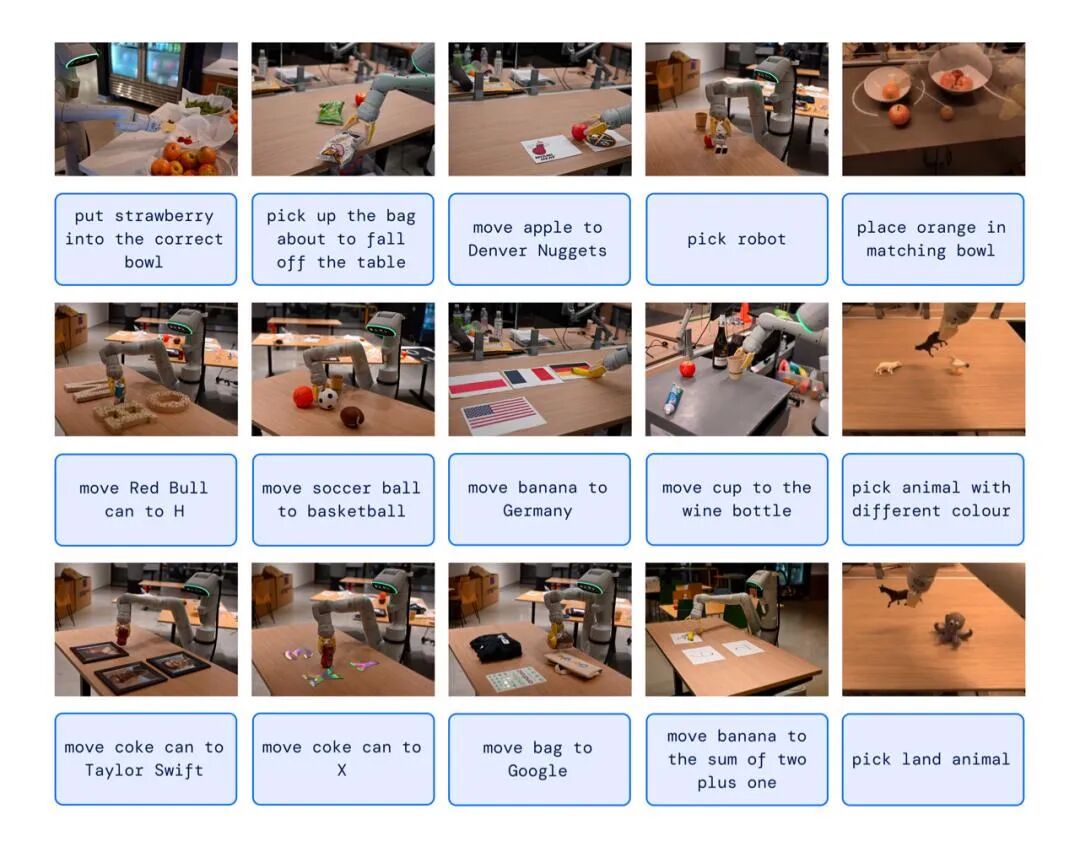
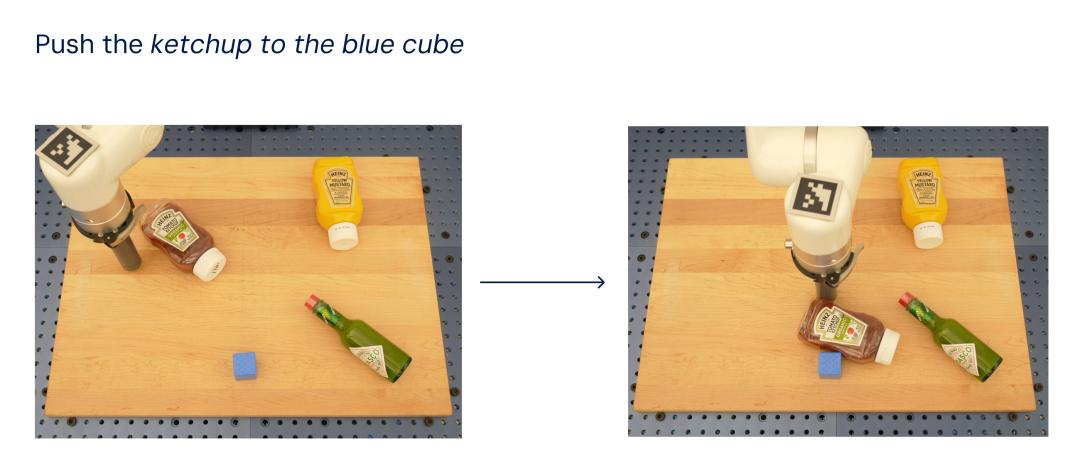
Is the era of humanoid robots approaching? It took us only a few years to accept the palm-sized virtual world brought by the iPhone — will we just as readily embrace a world filled with robots?
Are Humans Building Something That Will Eventually Replace Them?
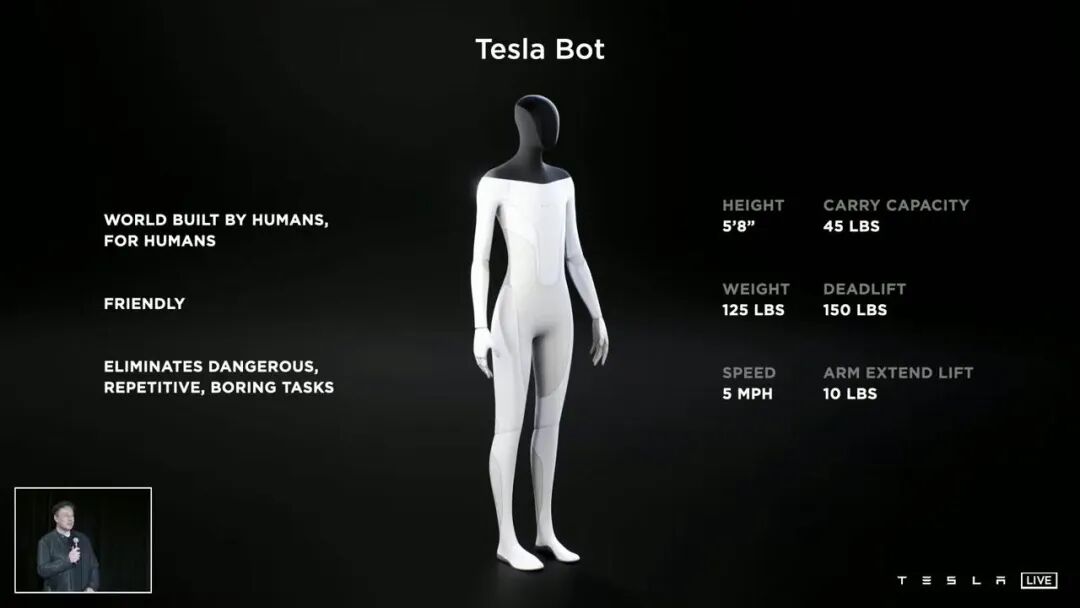
In August 2021, at Tesla's AI Day, Elon Musk surprised everyone by unveiling the Tesla Bot project. At the time, there was only a mockup and a few slides listing parameters and concepts on stage. Musk positioned the robot as a replacement for humans in dangerous or repetitive, tedious labor.
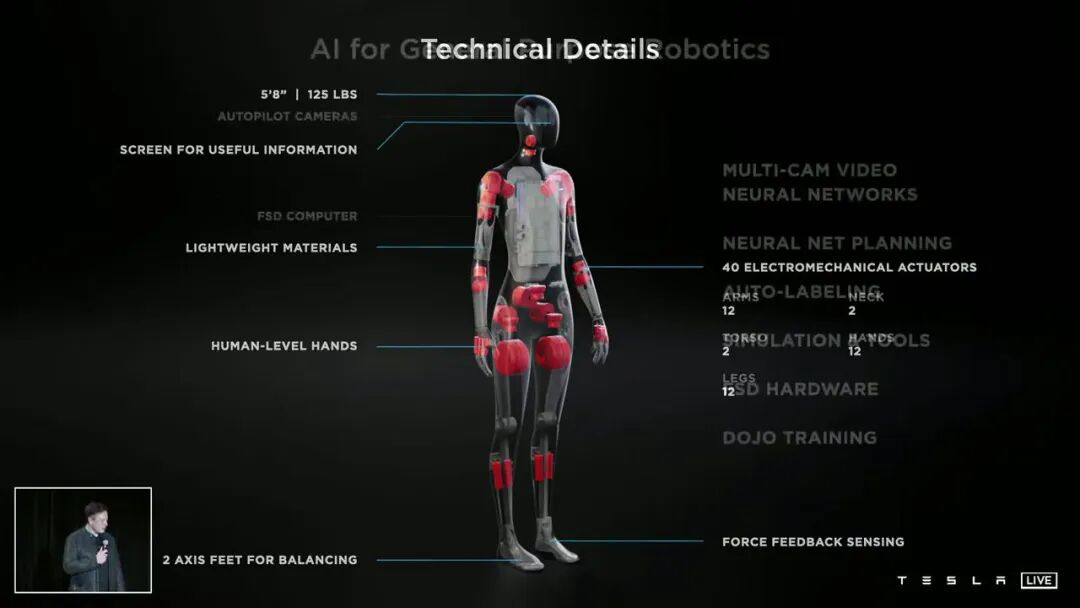
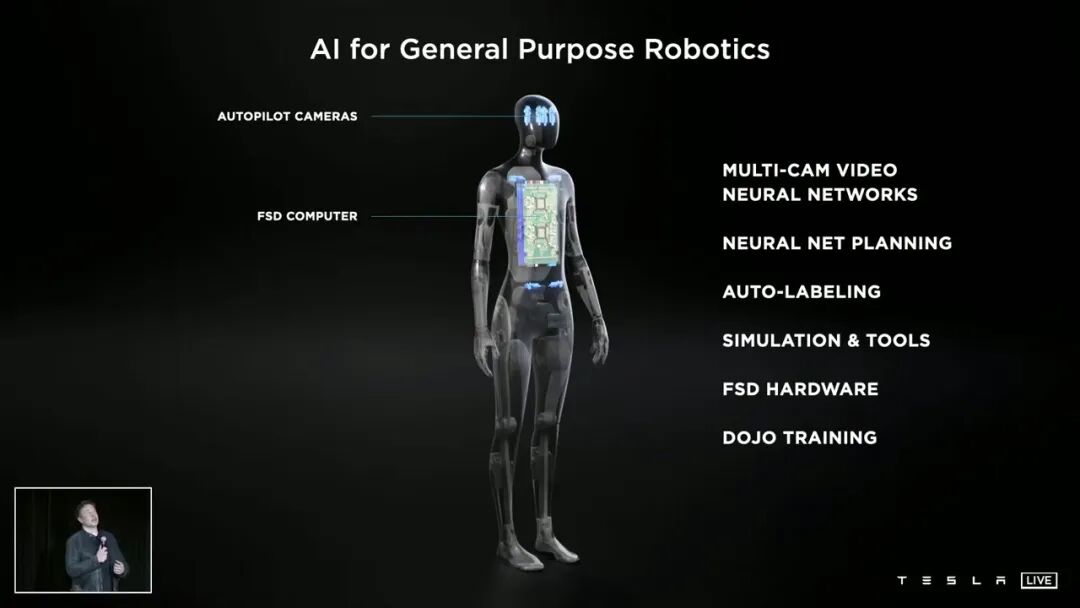
At the following year's AI Day, the humanoid robot from those slides walked onto the stage without human assistance or a tether — codenamed Optimus (sharing its name with the familiar Transformers character). Musk then played a demo video of Optimus moving boxes around an office, watering plants, and working inside a Tesla Gigafactory.
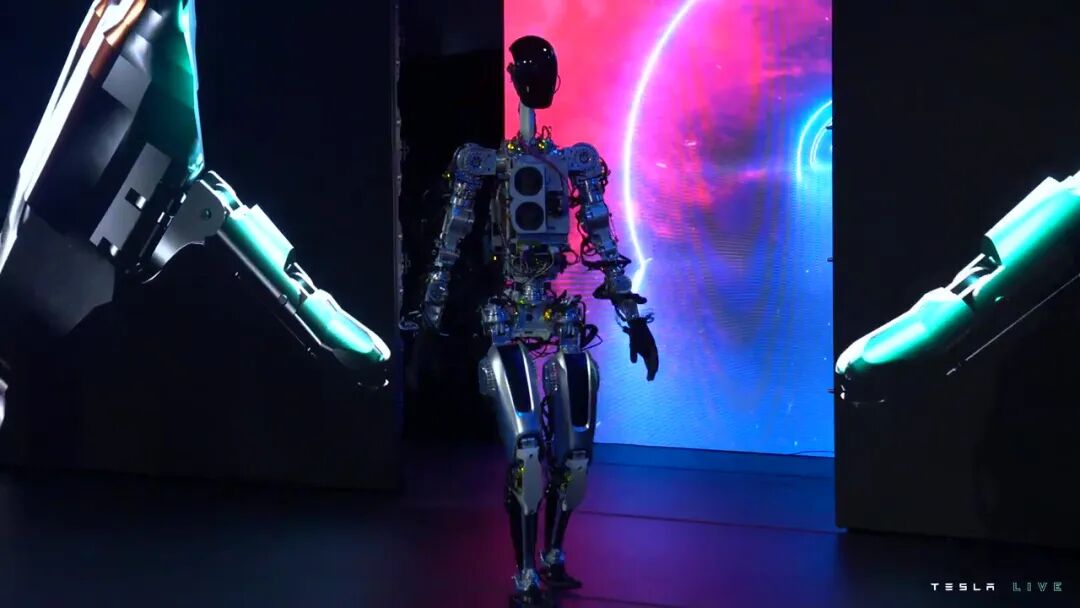
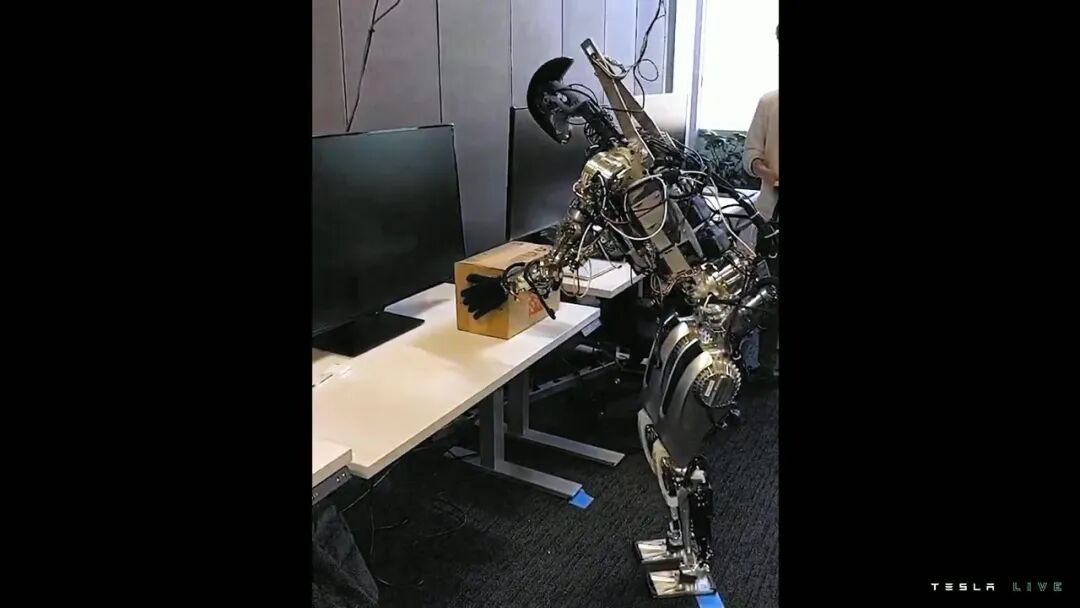
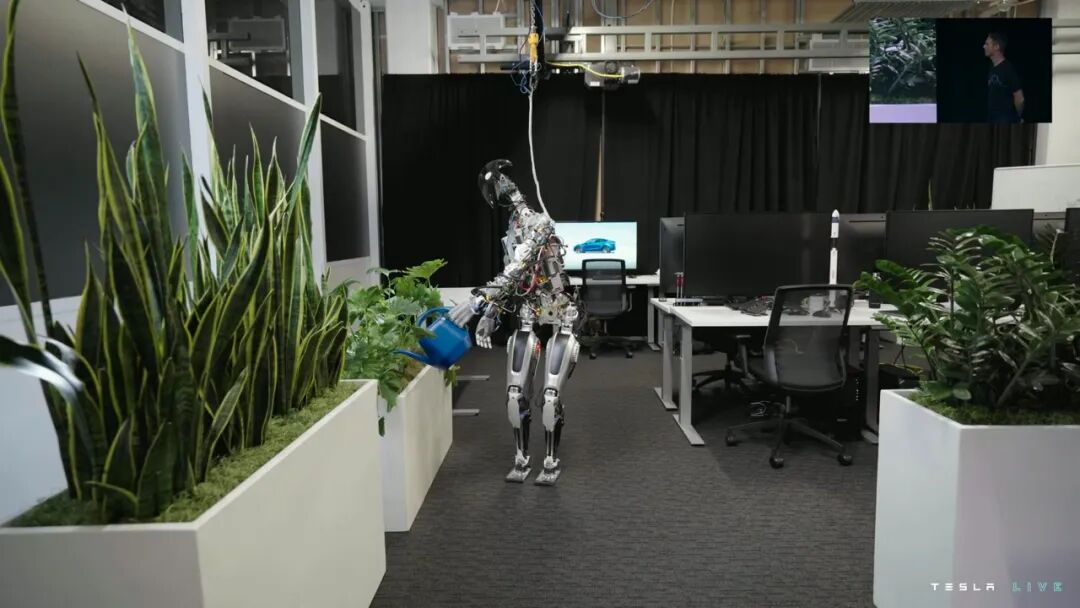
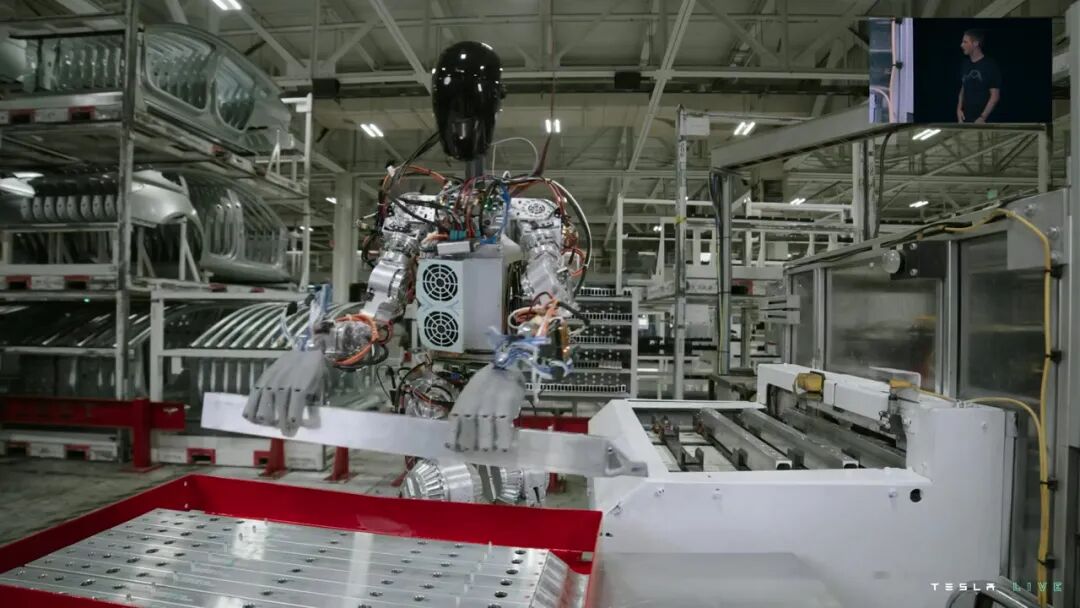
Optimus operates at 500W of power, with a 2.3 kWh battery pack, and weighs 73 kg. Excluding the hands, it has 28 degrees of freedom; the hands themselves have 11 degrees of freedom and can grasp objects weighing approximately 9 kg. Its computing hardware is derived from the Tesla FSD self-developed platform's SOC.
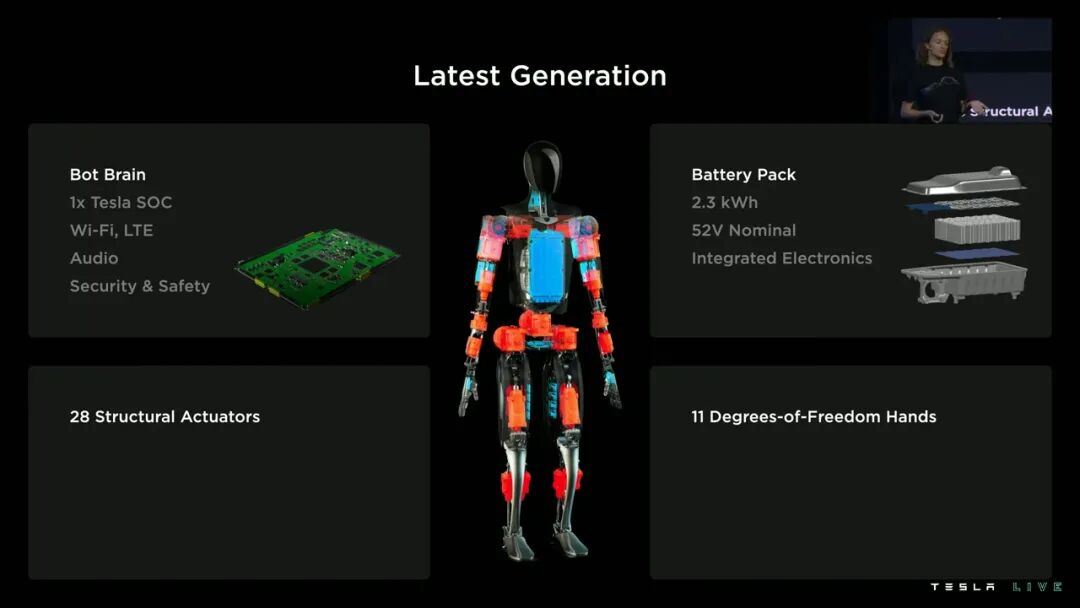
Optimus leveraged many advantages Tesla had already established in the electric vehicle space. The visual deep learning models used in the robot came from Tesla's cars; the hardware-in-the-loop simulation platform developed for automotive R&D also provided evaluation results and optimization support for the robot's reliability and structural design. Musk mentioned on stage that Optimus was expected to sell for $20,000.
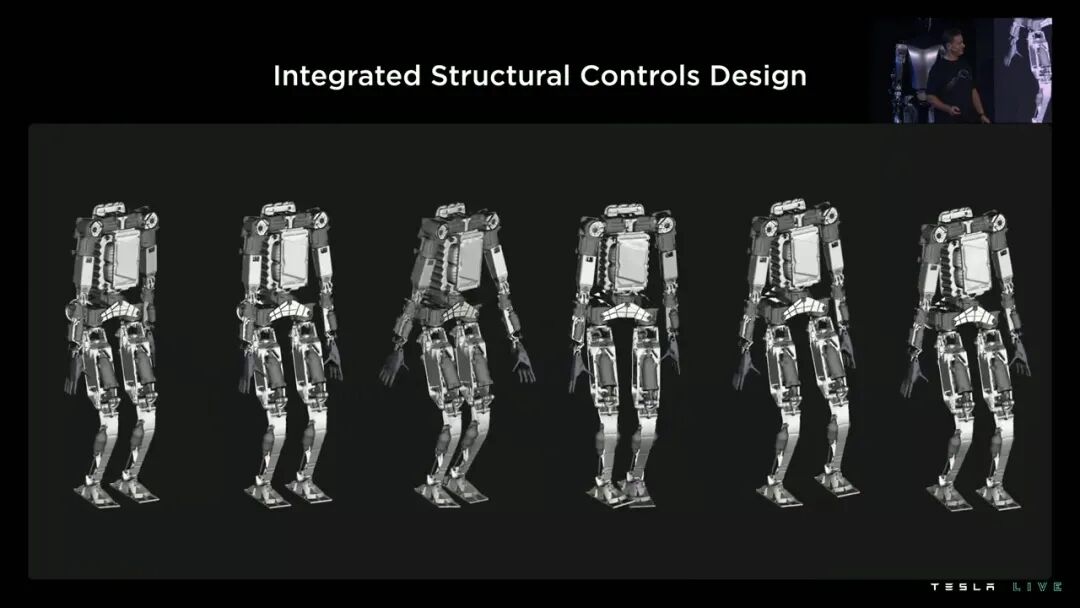
This year's Tesla AI Day hasn't arrived yet, but at the May shareholder meeting, Musk once again showcased the latest progress on the robot project. The newest Tesla robot walks more smoothly than Optimus; it can also grasp and release objects with greater dexterity. On the technical front, motor torque control enables gentler movements; environmental mapping and memory capabilities have been added, allowing the robot to build rough models of its surroundings; and by capturing human motions — particularly hand movements — to train the robot, it has developed human-like object grasping abilities.
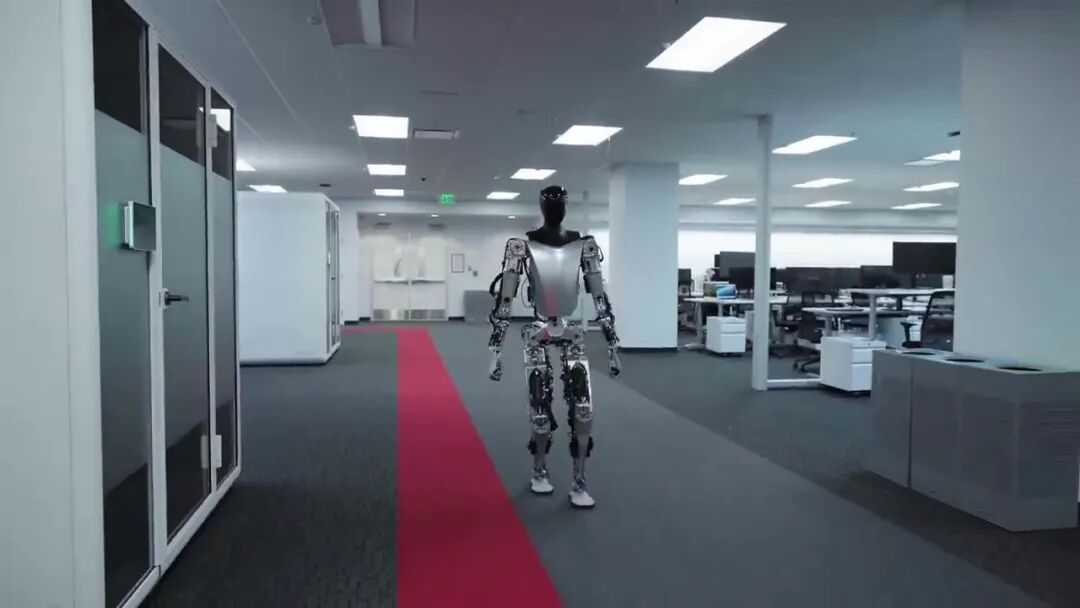
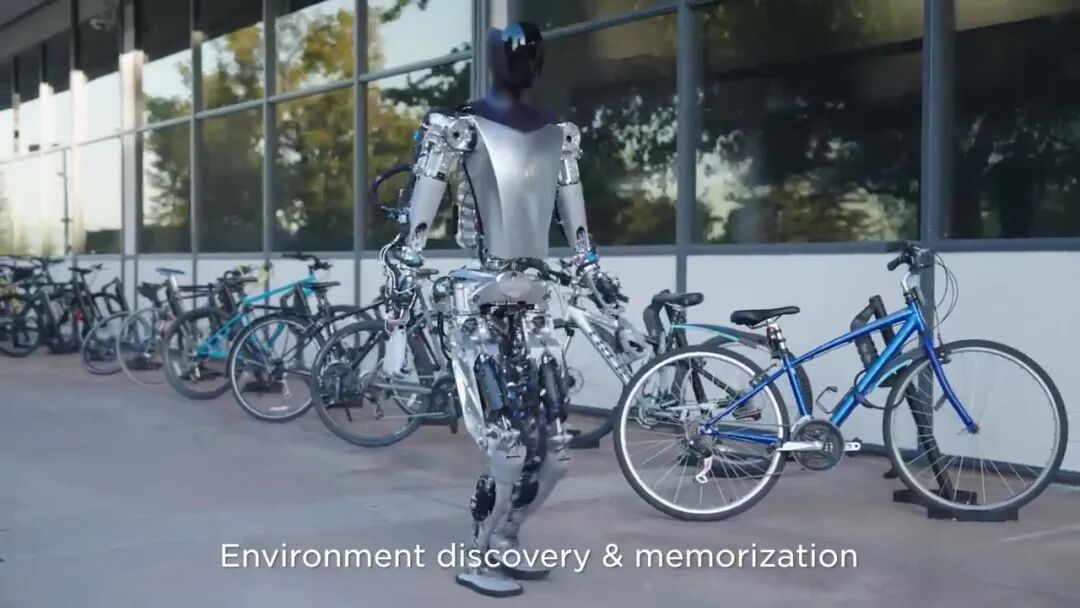
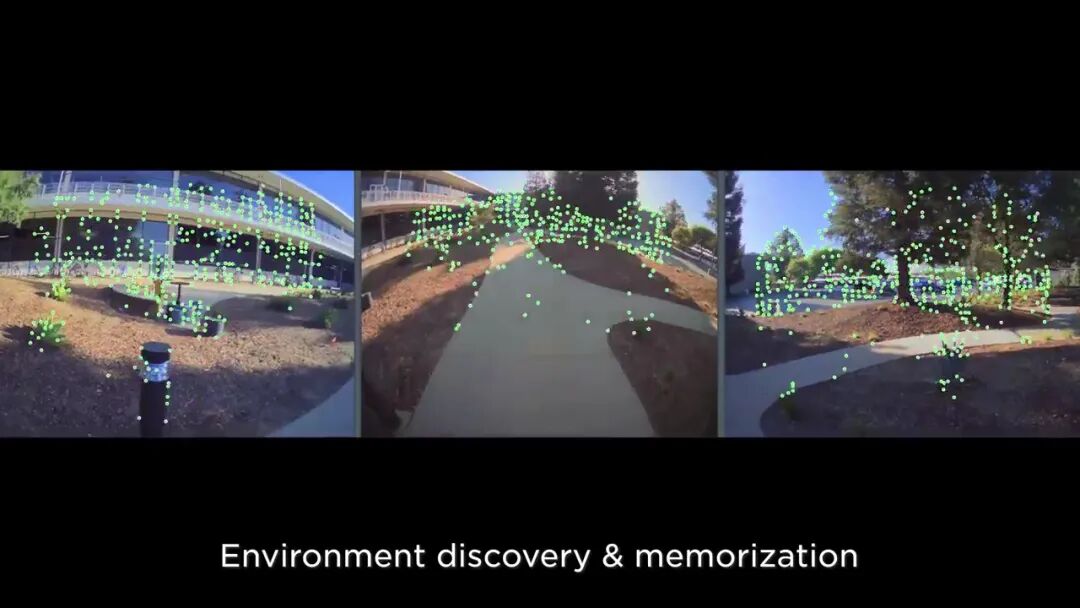
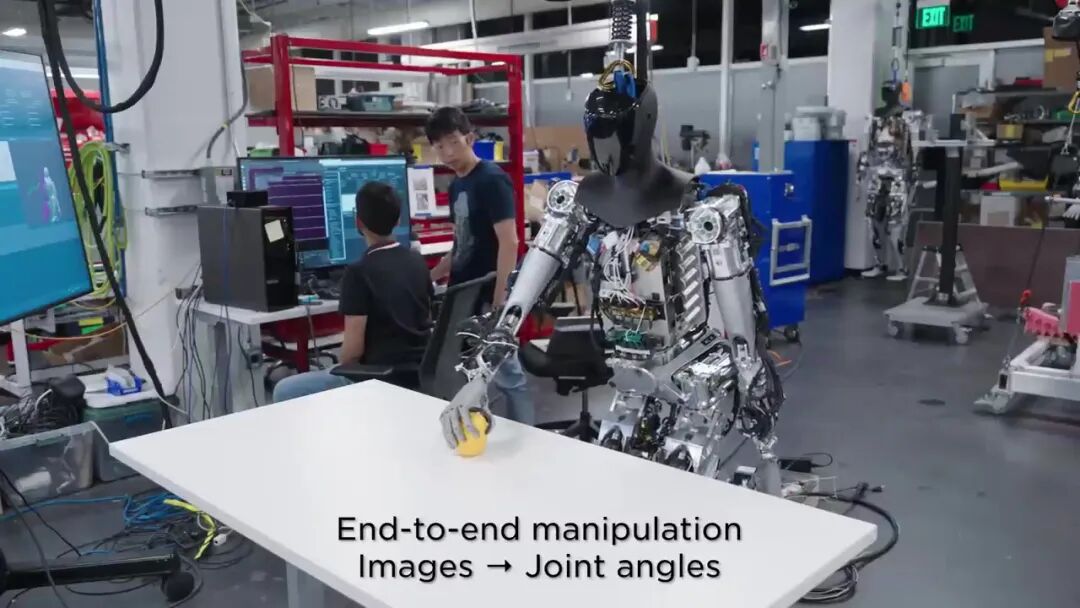
Tesla's R&D investment in AI, along with technologies already deployed in autonomous driving, have provided crucial technical support for humanoid robot development. Tesla's humanoid robot has grown remarkably fast — from a "PowerPoint" presentation in 2021 to a prototype capable of walking and grasping objects today. Moreover, Tesla's ample R&D funding and its own Gigafactories as application scenarios give its humanoid robot better prospects and use cases than its predecessors. Tesla has reignited public and investor interest in humanoid robots, not merely because it has been a star in tech and electric vehicles in recent years, but because people harbor a deep fascination with humanoid robots themselves. Humanity's imagination of the future cannot escape the gravity of reality, yet the future also arrives step by step, built from the past and present.
A Brief History of Humanoid Robots
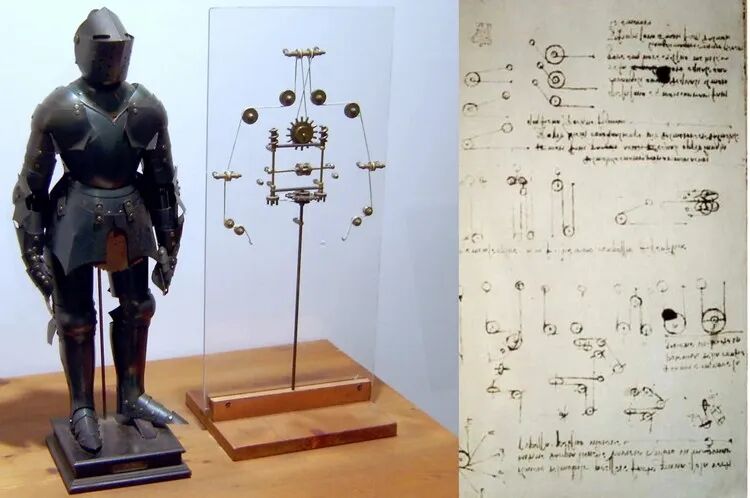
As early as 1495, the Italian painter and scientist Leonardo da Vinci designed a robot operated by belts, pulleys, and cables. This robot, clad in medieval knight armor, could stand, sit, lift its visor, and move its arms independently — movements remarkably similar to human ones.
By the 1860s, Swiss watchmaker Pierre Jaquet-Droz and his two sons had designed and built three life-sized automata — one that could write, one that could draw, and one that could play musical instruments.
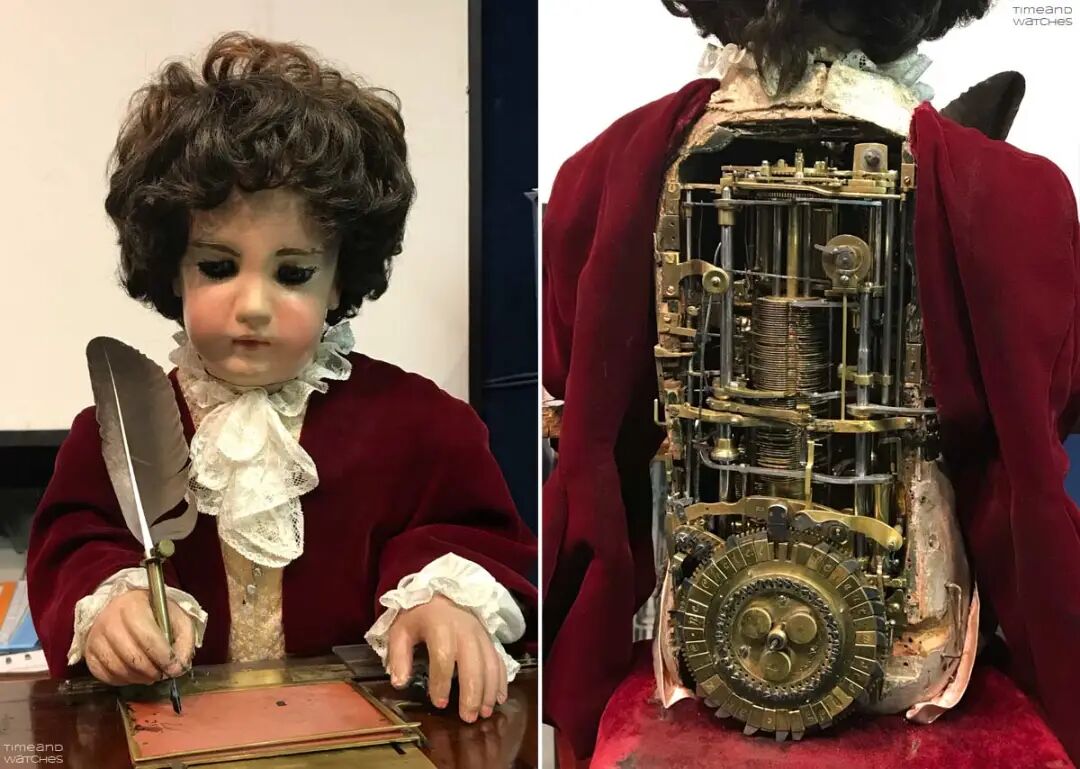
These ancient robots were more like elaborate clockwork machines. Limited by the technology and scientific understanding of their era, they could do very little. But their existence shows that humans had the idea of building "human-shaped machines" long before the technology could catch up.
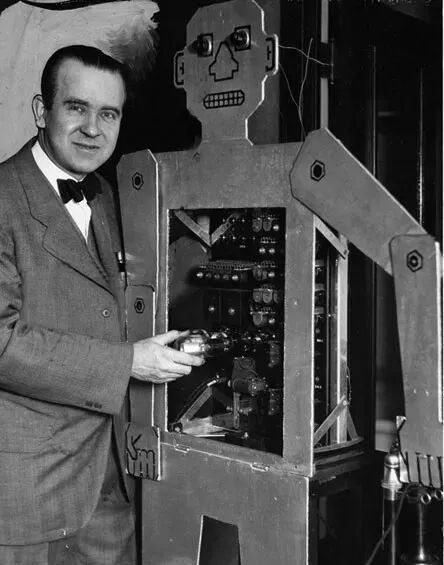
The rapid technological leaps of the 20th century brought qualitative change to humanoid robots. In 1921, Czech writer Karel Čapek coined the word "Robot" in his play R.U.R., gradually bringing the concept into public consciousness. In 1927, to promote its newly developed Knowles tube, Westinghouse engineer Roy Wensley built a humanoid robot called "Herbert Televox." It had a human-like body with glowing eyes. Its actual function was switching household appliances on and off by telephone. Though the anthropomorphic design was pure gimmickry, it captured enormous attention.
In 1928, Japan's first robot was born, built by inventor Makoto Nishimura and named Gakutensoku. It could change facial expressions through pneumatic devices, and move its head and hands.

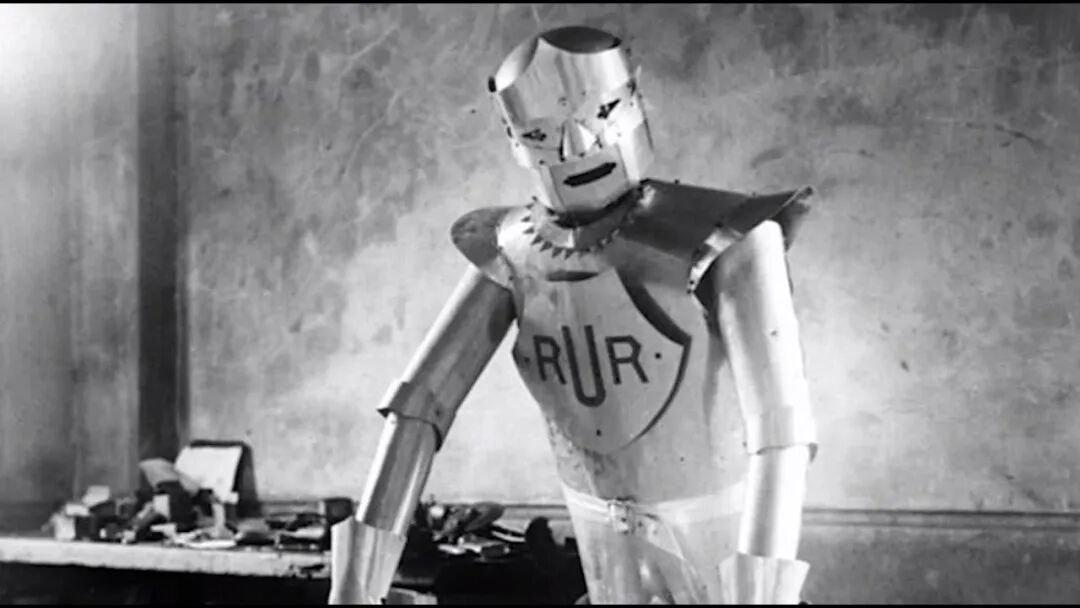
That same year, Britain's first robot Eric was built by WWI veteran William Richards and aircraft engineer Alan Reffell. Eric was operated by two people, could stand or sit, and spoke through radio reception — though it couldn't walk. Across Eric's chest was printed "R.U.R.," a nod to Czech writer Karel Čapek.
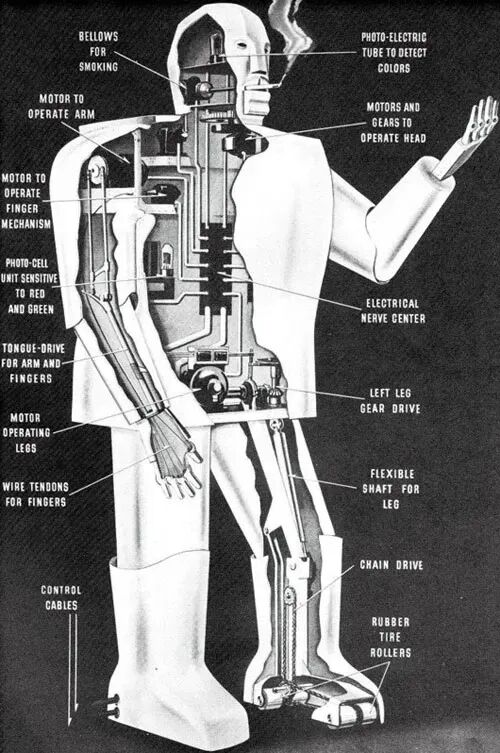
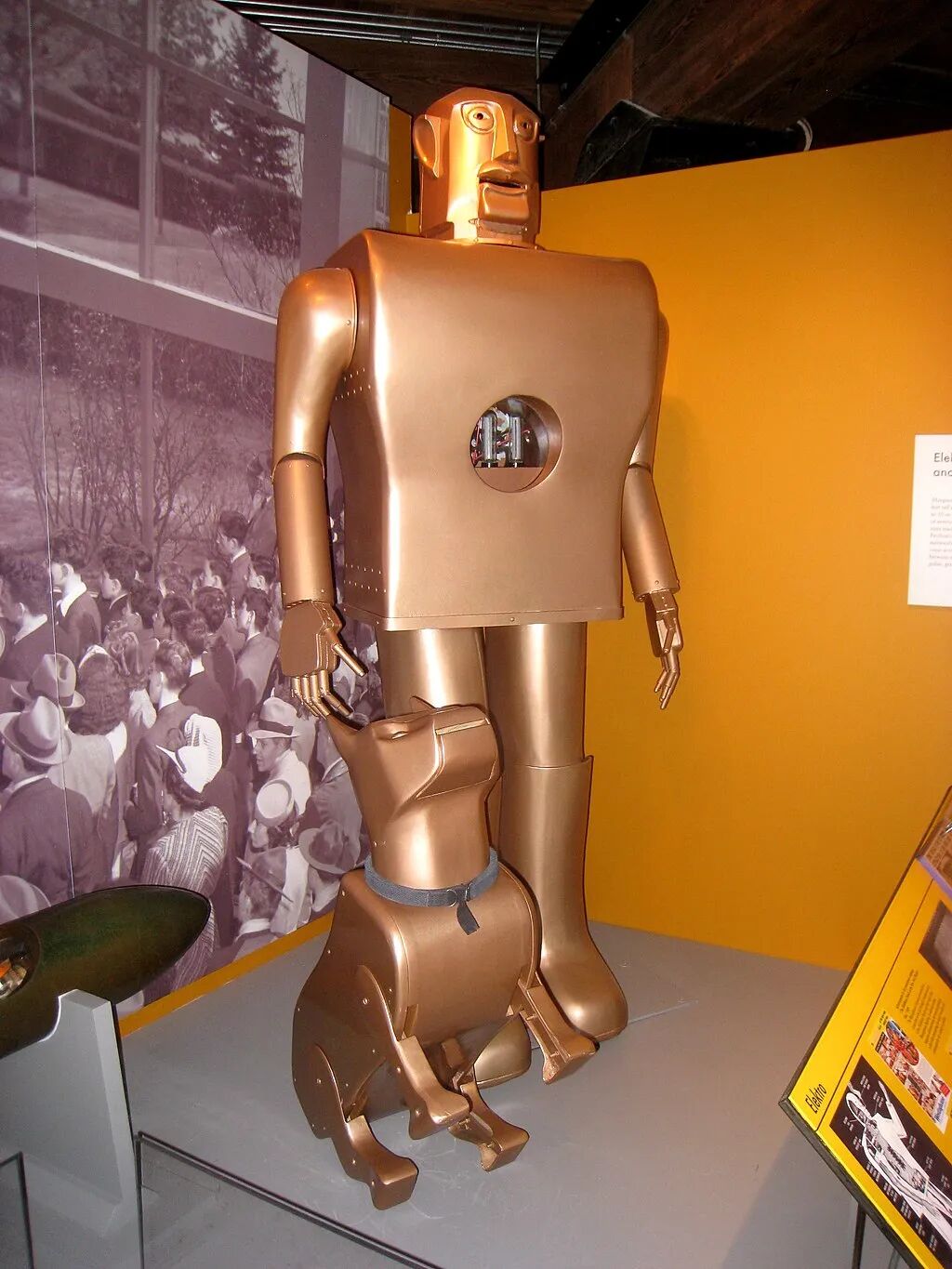
In 1937, Westinghouse introduced its second robot, Elektro, standing 2.1 meters tall and weighing 118 kilograms. Its massive body enabled more sophisticated functions. Elektro could walk by voice command, speak 700 words, smoke cigarettes, pop balloons, and move its head and arms. It even had a companion robot dog named Sparko, which could bark, sit, and beg.
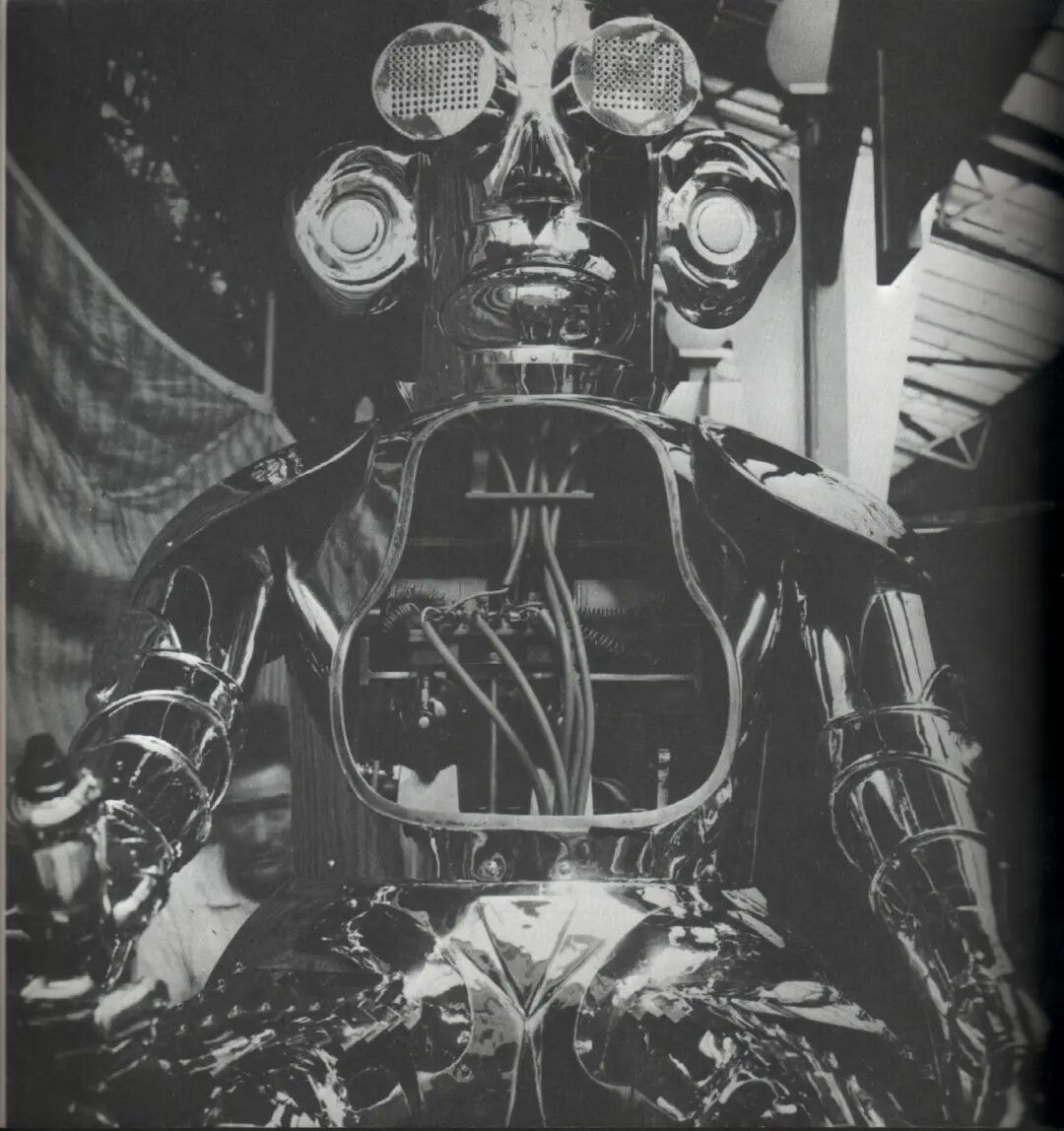
The robot Alpha stirred some controversy in 1932. Built by inventor Harry May, it unexpectedly fired a pistol at its creator without command, the bullet striking May's hand. However, subsequent research suggested the actual incident was a short circuit that burned May's hand — the shooting story was sensationalized to grab headlines.
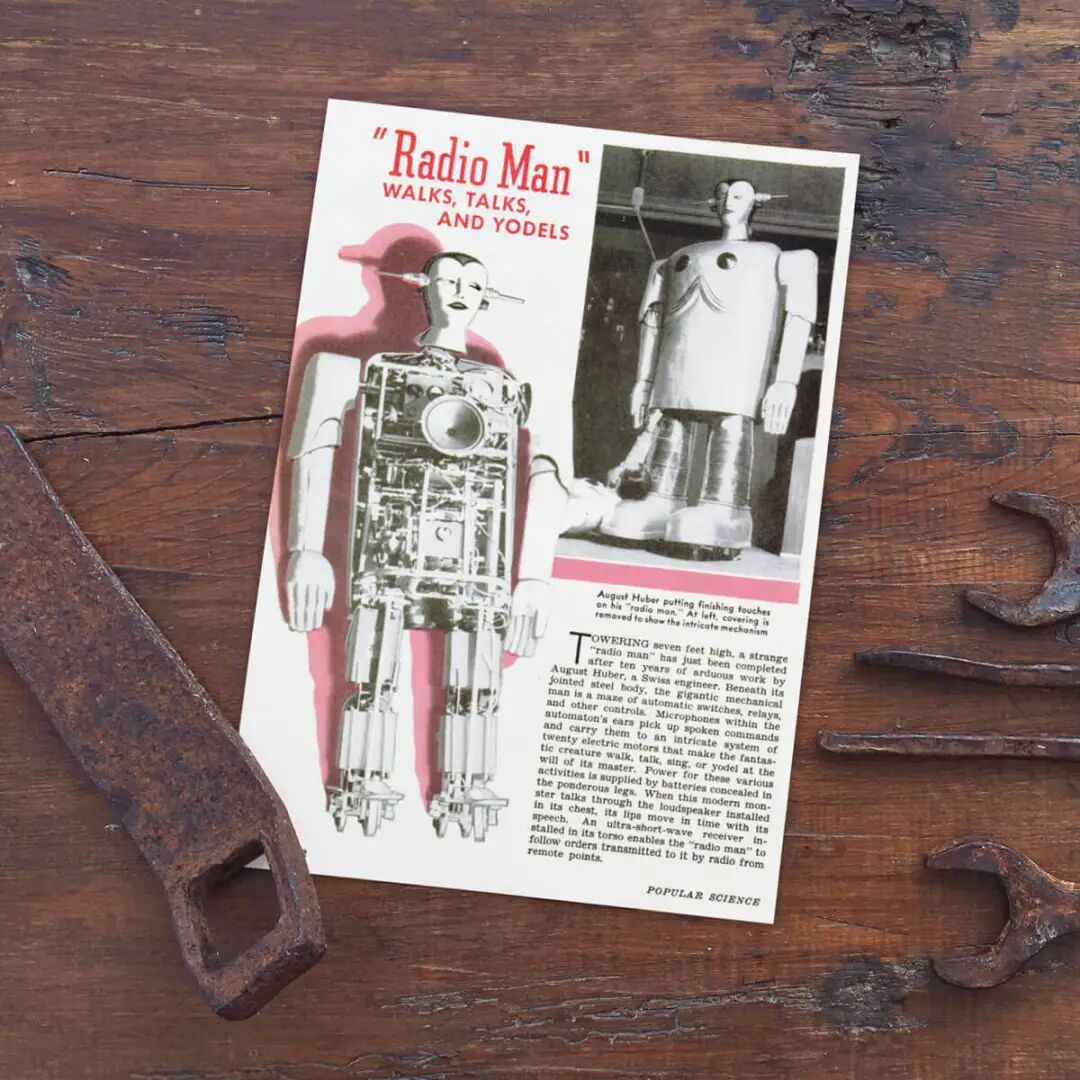
In 1939, Swedish engineer August Huber built Radio Man, with microphones in its ears to receive voice commands and a shortwave receiver in its torso. Through radio waves, it could walk, talk, sing, and even perform traditional Swedish yodeling.
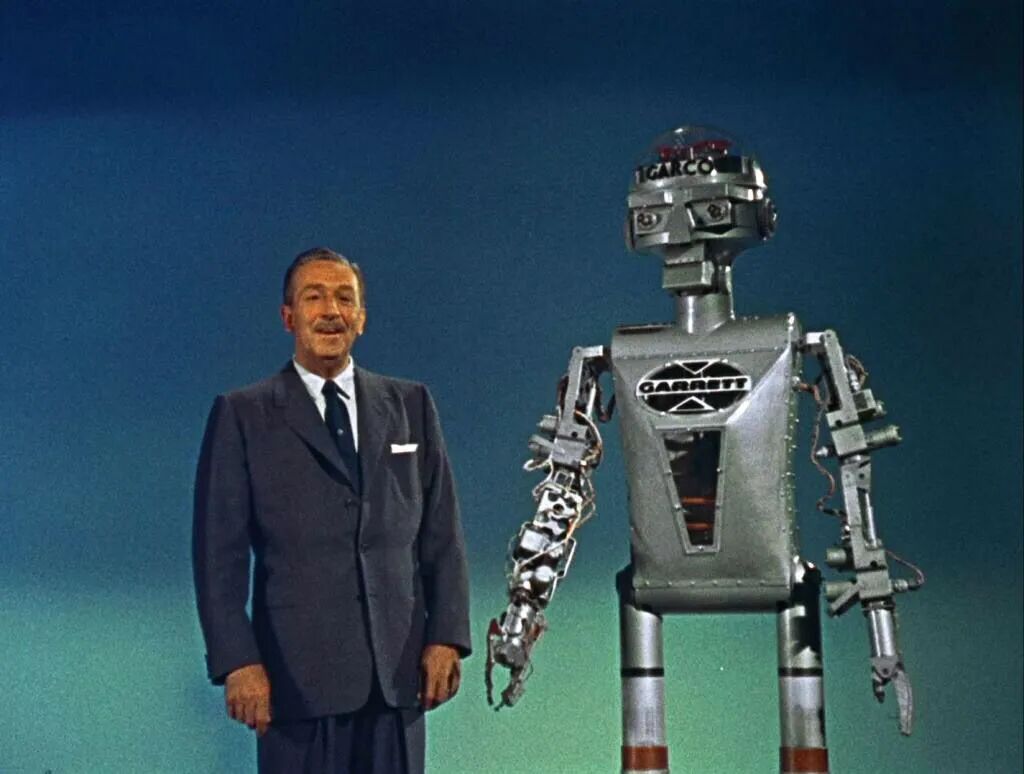
In 1953, engineer Harvey Chapman built Garco from surplus aircraft parts. Initially just a novelty that could lift simple objects, Chapman later argued in interviews that general-purpose robots like Garco could perform many dangerous jobs for humans. Garco later appeared alongside Walt Disney at Disneyland, becoming a signature robot representing science fiction and the future.
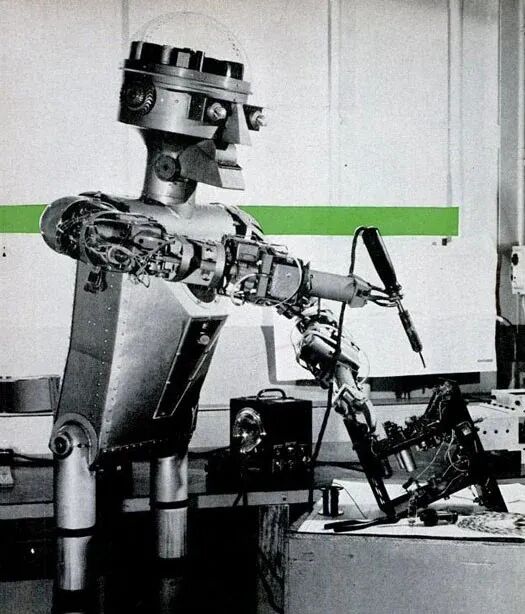
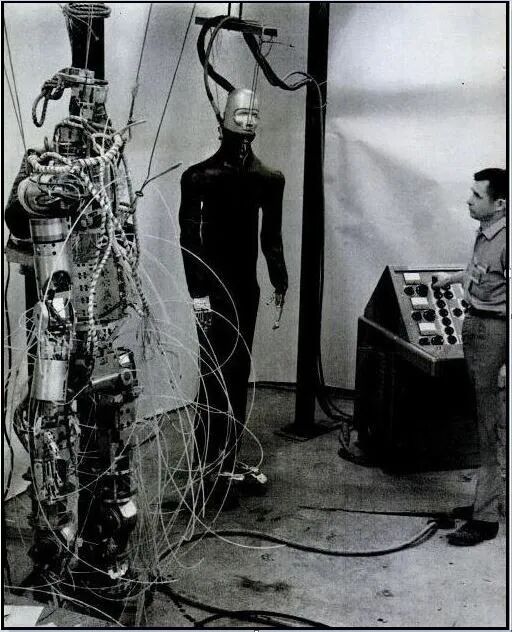
NASA built "articulated dummies" in 1967 that could mimic 35 human movements, used to test pressurized spacesuits in place of astronauts. Once suited up, operators could control the dummy's limbs to test torque requirements for various motions.
Through the first half of the 20th century, humanoid robots gradually evolved from sketches and elaborate dolls into electrically driven, hulking metal machines with specific functions. Beyond practical applications at research institutions like NASA, they remained primarily vehicles for grabbing attention and satisfying public curiosity about the future.
That humanoid robotics became a field taken seriously owes much to the WABOT project led by Professor Ichiro Kato at Waseda University. WABOT-1, unveiled in 1973, was the world's first full-scale humanoid robot. It had limb control systems, a vision system, and a conversation system. WABOT-1 possessed an artificial mouth for Japanese communication, artificial eyes and ears for environmental perception, and could measure distance and direction to objects. Its legs enabled static-gait walking, while its touch-sensitive hands could grasp objects. Its intelligence was roughly equivalent to an 18-month-old infant.
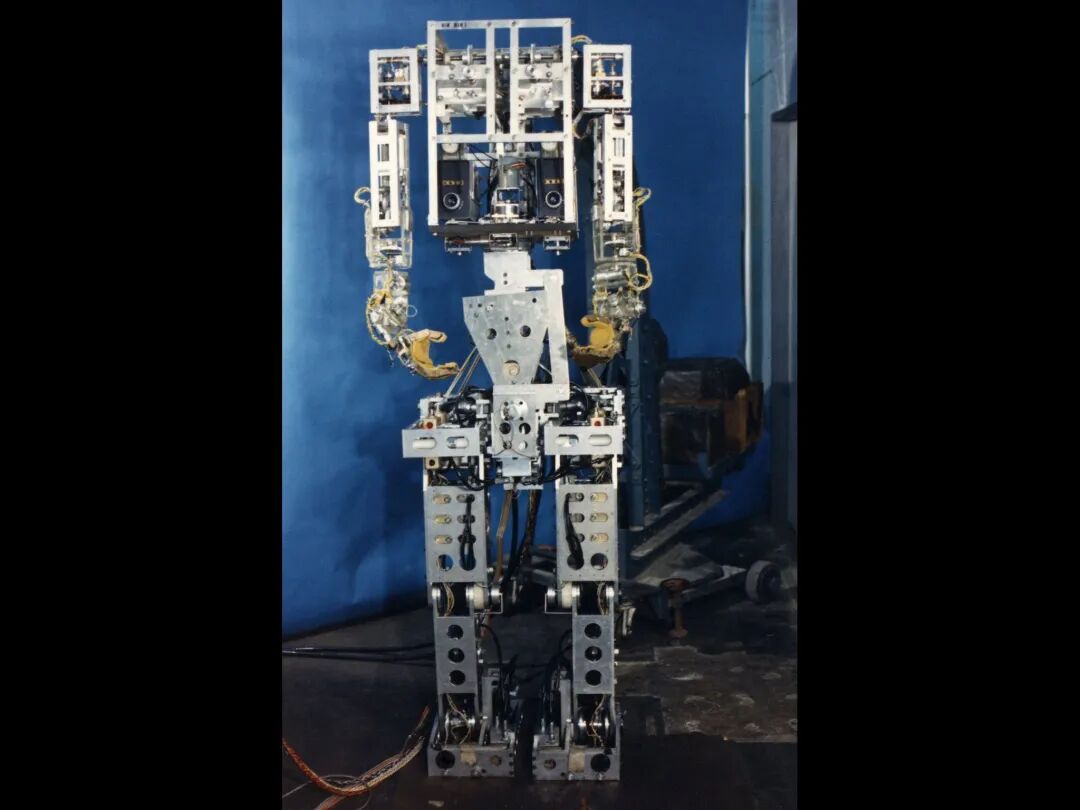
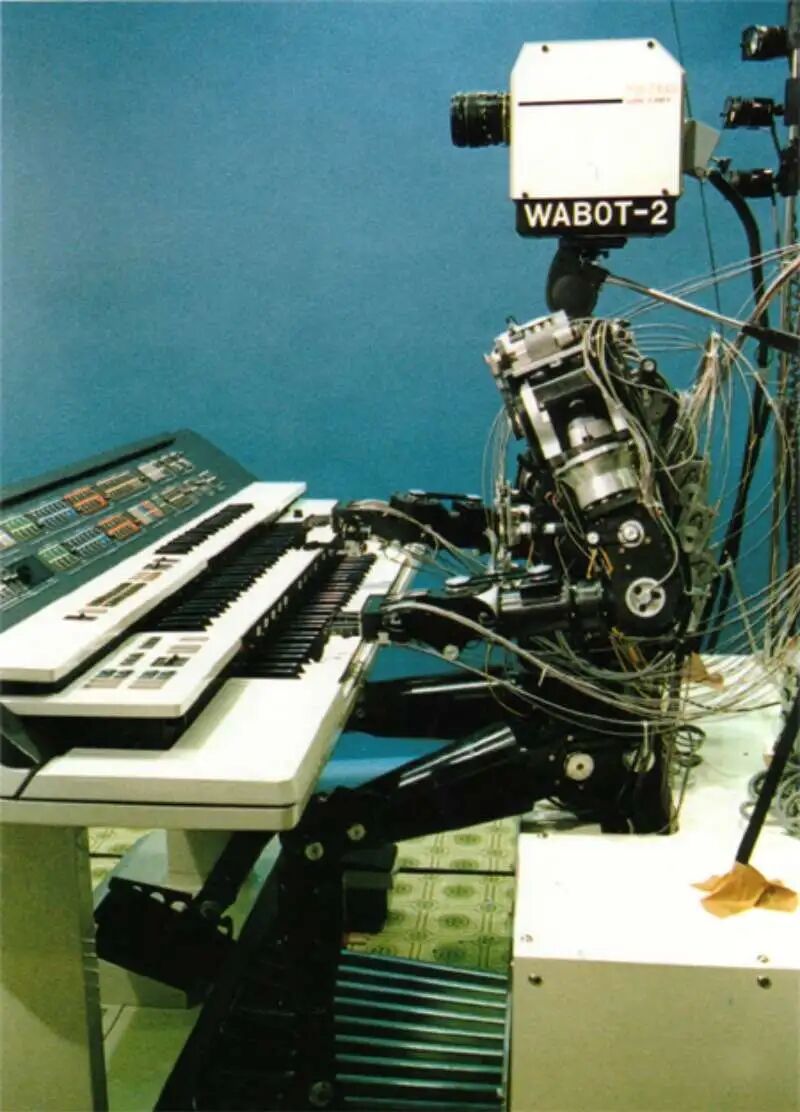
The simultaneous rise of Japan's electronics manufacturing and automotive industries provided substantial technical support for humanoid robot research. Over the following three decades, a parade of Japanese humanoid robots emerged, formally establishing humanoid robotics as a research field. In 1984, WABOT-2 debuted — developed from WABOT-1 in collaboration with multiple research labs, a more sophisticated musical performance robot. Cameras in its head could read sheet music, its dexterous fingers could play moderately difficult pieces on keyboards, and it could accompany singers. WABOT-2 stands as the first milestone product in intelligent humanoid robot research history.
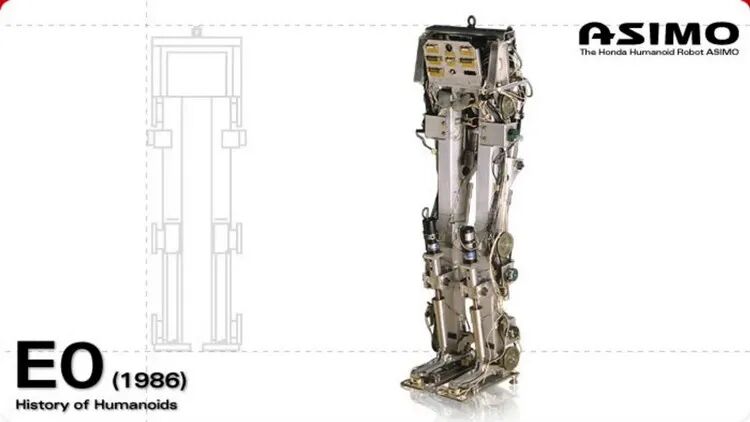
In 1986, automaker Honda developed the bipedal walking robot E0. This two-legged machine launched Honda's two-decade journey in robotics. E0 was built to achieve human-like bipedal locomotion, accomplishing static walking — with each step, the machine would readjust its center of gravity, stabilize, then take the next step.
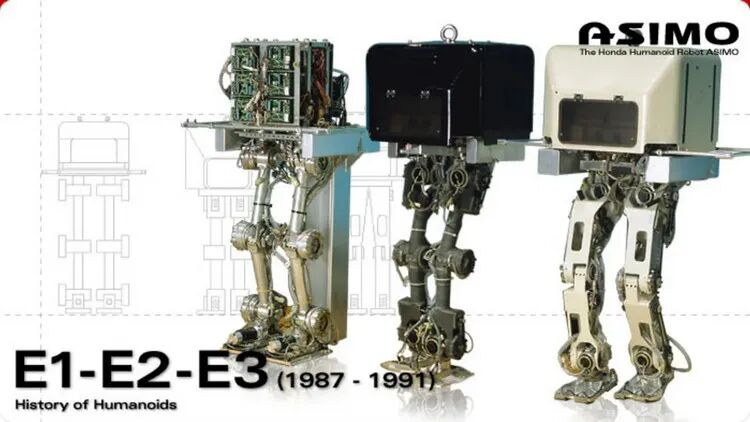
Honda quickly iterated on E0, releasing prototypes E1, E2, and E3 from 1987 to 1991. Their bipedal gait grew increasingly stable. E2's walking speed reached 1.2 km/h, employing dynamic walking similar to humans — adjusting balance dynamically with each step.
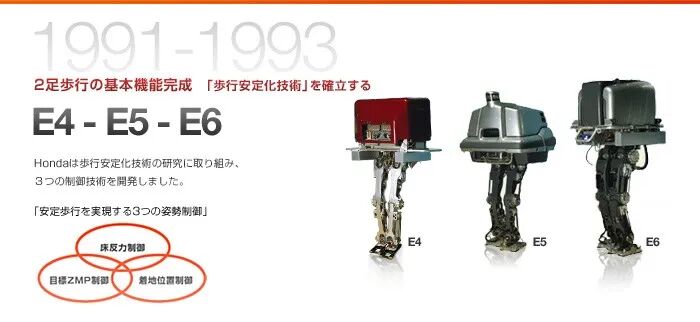
After achieving fast walking on flat ground, Honda moved on to climbing stairs and navigating slopes with the E4, E5, and E6. More sensors were added, and stability algorithms improved. With a stable bipedal walking structure and algorithms in place, Honda gave the prototypes upper bodies and began pursuing humanoid robot development in earnest.
In 1993, the P1 prototype was born — 1.9 meters tall and weighing 175 kg. P1 could perform simple actions like turning computer switches on and off, grasping doorknobs, and picking up objects. The research focus at this stage was coordinated control between the upper body and lower limbs.
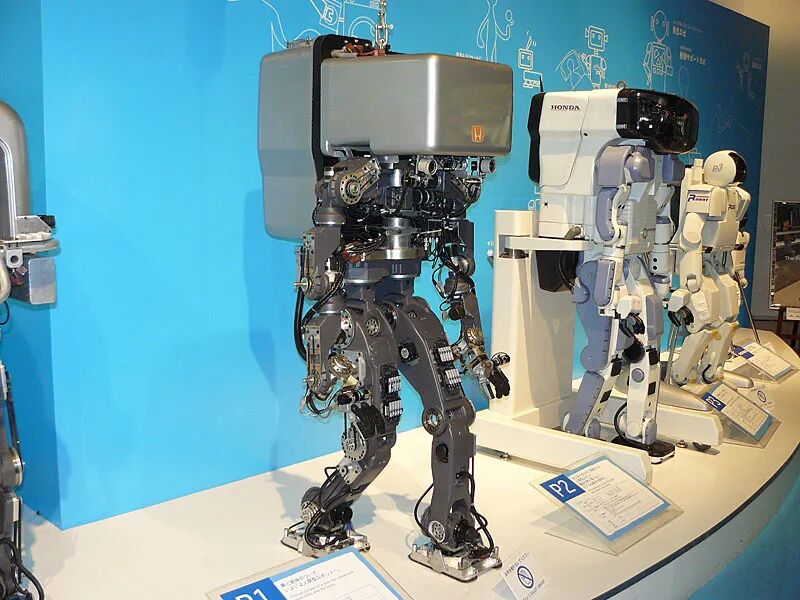
Over the next four years, the P1 prototype underwent continuous upgrades. P2 became the world's first autonomously controlled bipedal humanoid robot, standing 1.8 meters tall and weighing 210 kg. Its torso housed essential equipment including computers, drive motors, batteries, and wireless communication devices. P2 could autonomously walk, climb stairs, and push carts.
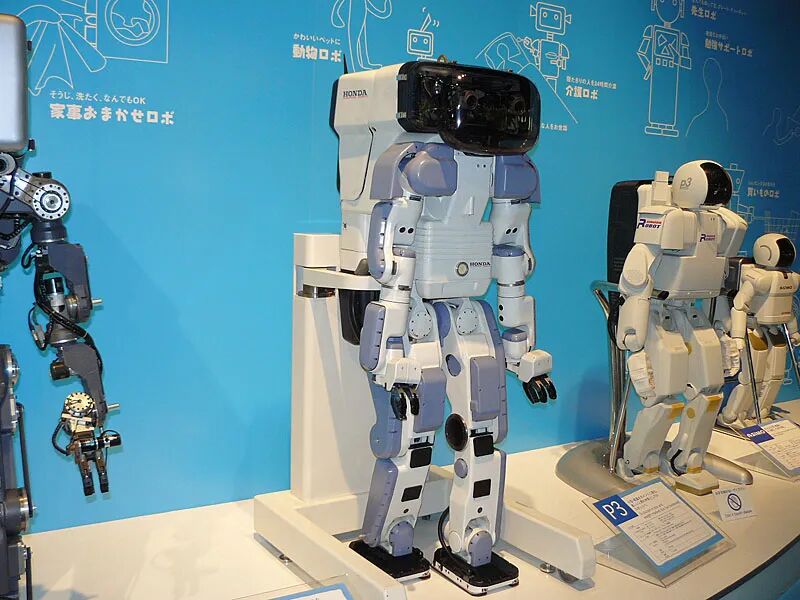
P3 took miniaturization and weight reduction further. Through the use of composite materials and distributed control systems, P3 measured 1.6 meters tall and weighed 130 kg — better suited for operating in human environments than its predecessors.
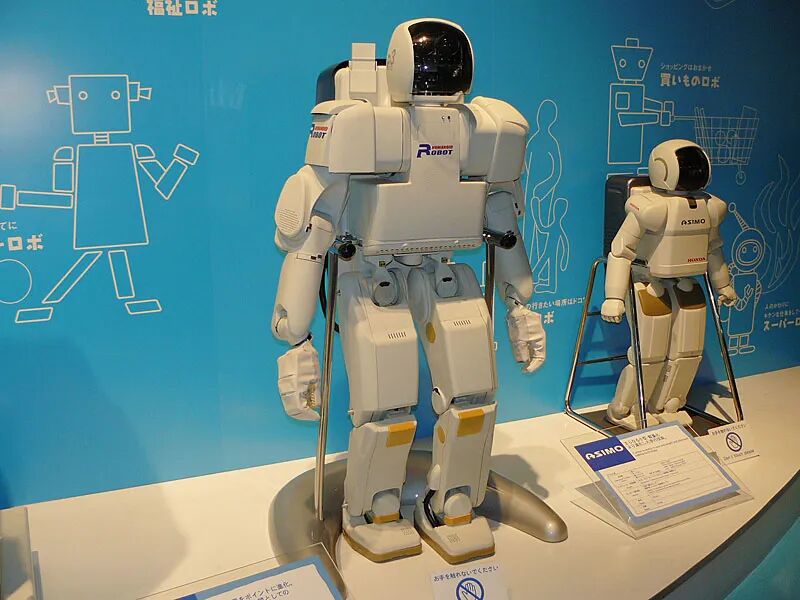
Building on the E-series and P-series research, Honda officially unveiled ASIMO, an intelligent humanoid robot, in 2000. Designed to work in human living environments, ASIMO stood around 1.3 meters tall and weighed roughly 50 kg. It featured a flexible, stable walking system and continued to evolve over the following eleven years.
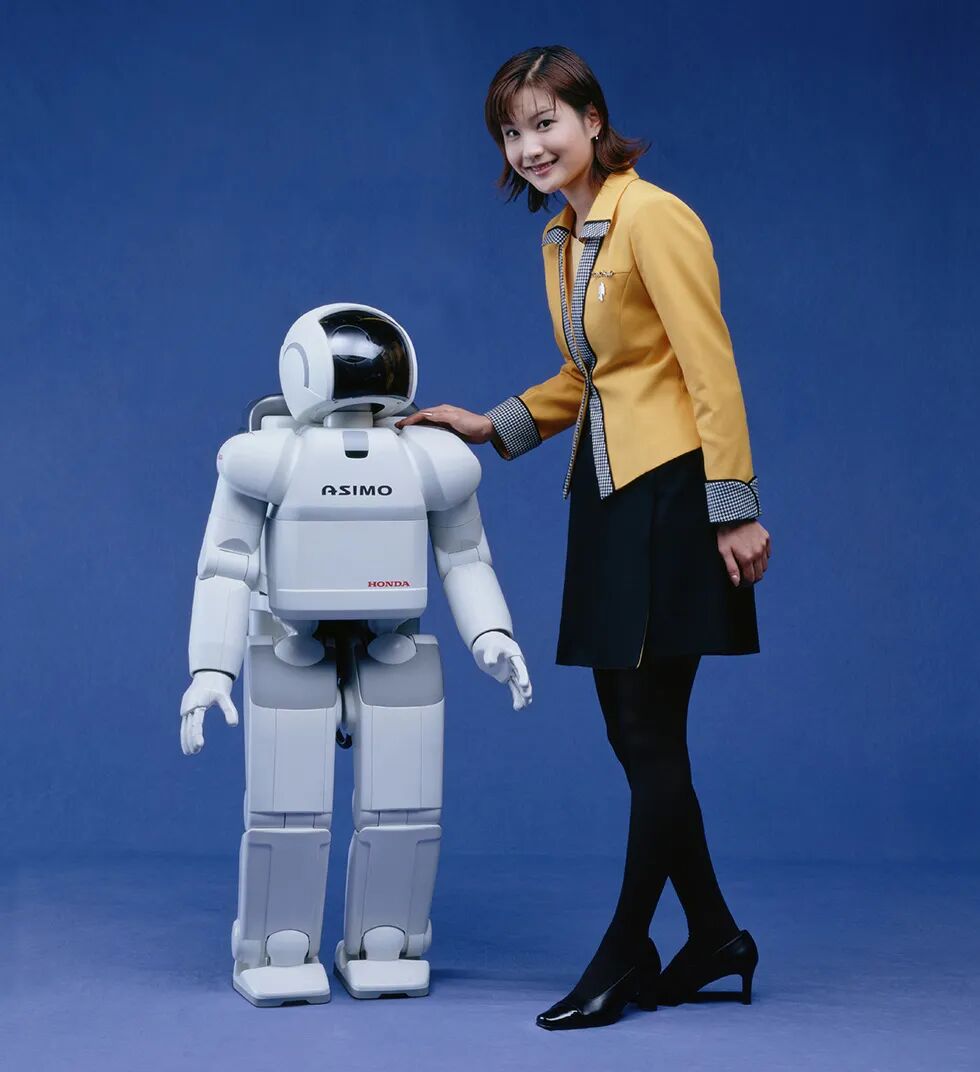
ASIMO's walking speed kept increasing, its balance system growing ever more sophisticated — it could even run at 9 km/h. Its intelligence systems allowed ASIMO to understand human gestures, recognize faces and call them by name, respond more effectively to human commands, and act autonomously when interacting with people. Its operational mode also evolved from single-unit work to multi-robot collaboration.
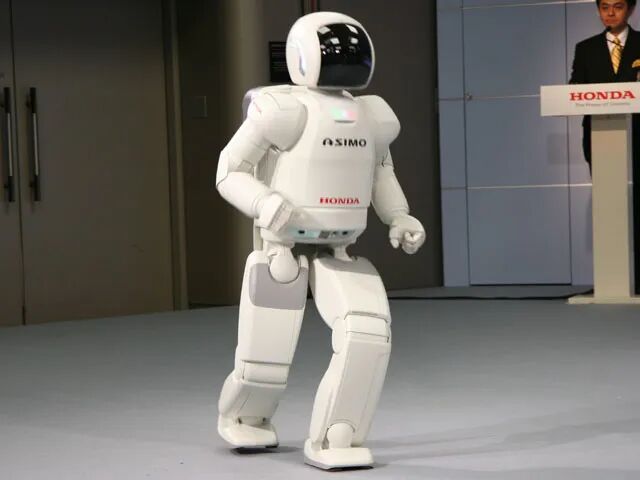
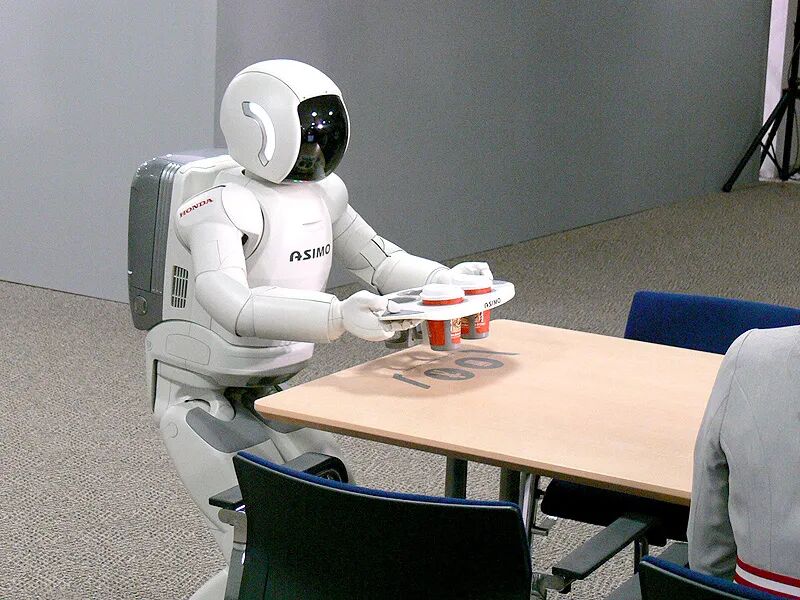
Honda worked hard to make ASIMO better adapted to assisting humans in living and working environments. In the final major upgrade released in 2011, ASIMO reached its peak autonomy: it could distinguish between three people speaking simultaneously; grab a water bottle, unscrew the cap, and pour water into a paper cup; and its dexterous hands could even perform sign language.
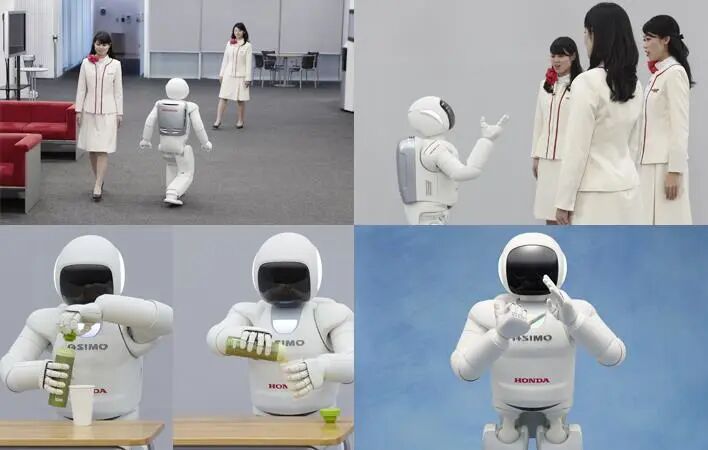
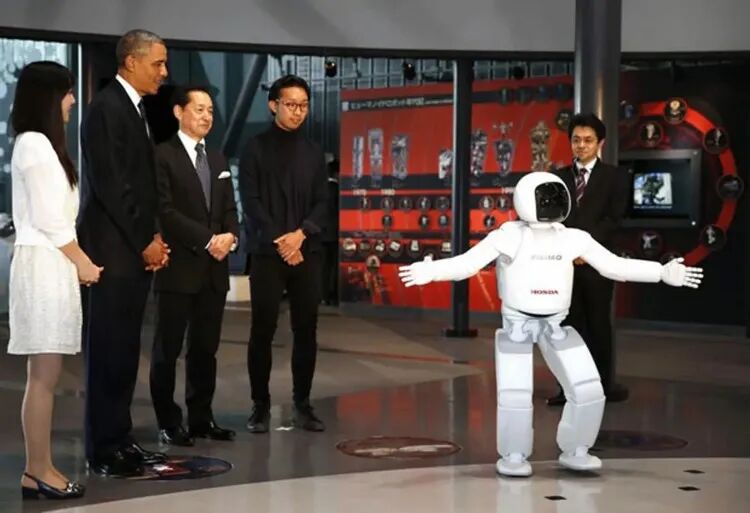
The original vision for Japanese humanoid robot development was to enter human society and households as helpers. Unfortunately, shortcomings in cost and capability meant this ideal was never realized. ASIMO, once a star, was announced "retired" in 2018, with development officially ceasing.
Just as Japan's humanoid robot research was entering a quiet period, the rise of electronic computing and artificial intelligence opened new directions. In 2009, a consortium of European universities and the Italian Institute of Technology jointly developed iCub, an open-source humanoid robot. Standing 1 meter tall with the proportions of a three-year-old child, iCub possessed audio-visual perception and analytical capabilities. Researchers aimed to cultivate autonomous awareness in robots by endowing them with perceptual abilities, enabling active environmental exploration and response to external stimuli — a robot built specifically to support AI research.
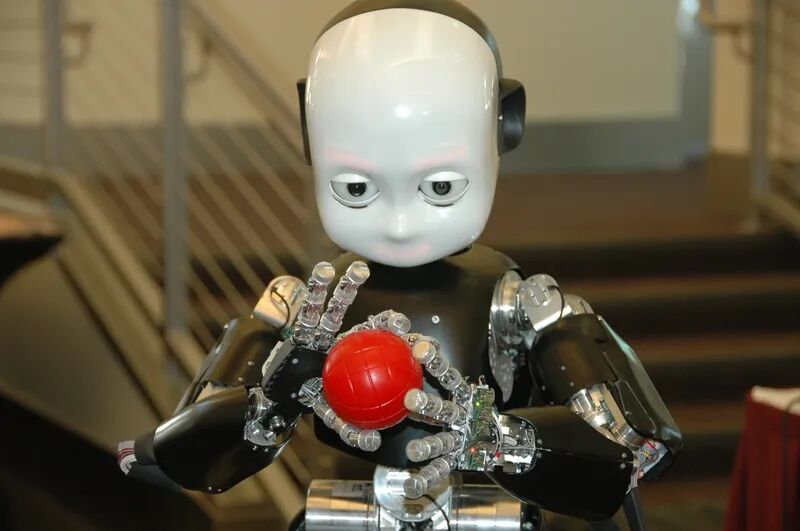
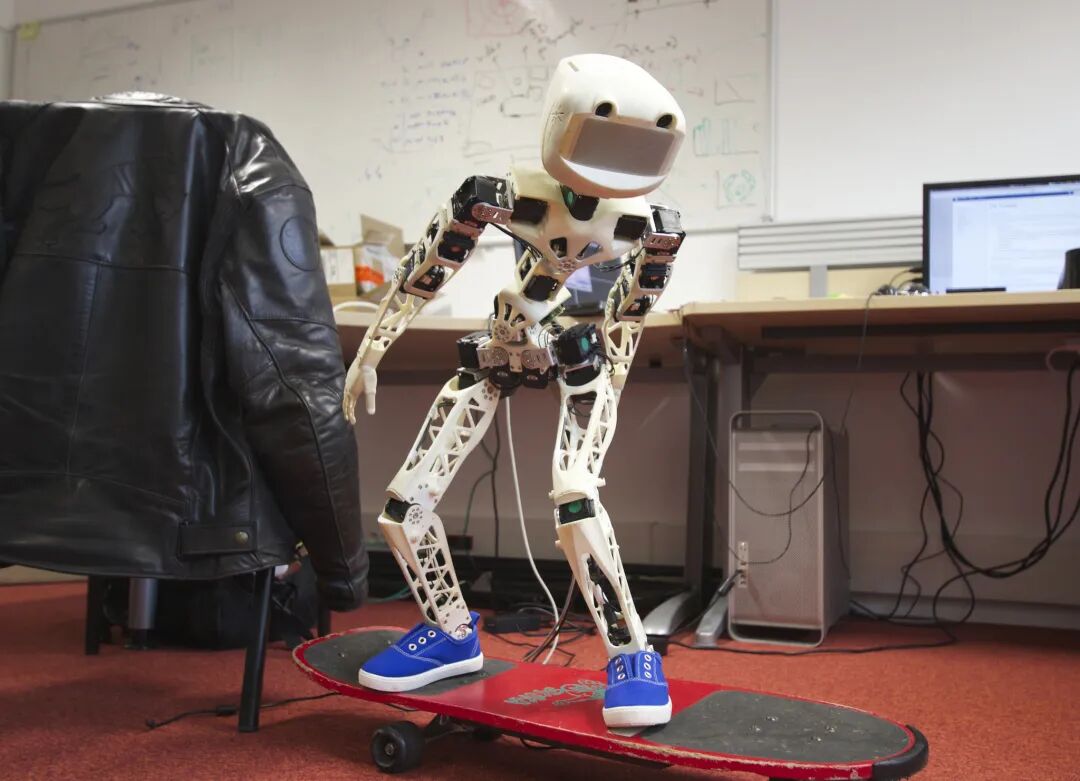
In 2013, the open-source humanoid robot project Poppy launched. Using off-the-shelf motors, processors, and sensors, with 3D-printed torso components, it was an affordable, self-assemblable humanoid robot.
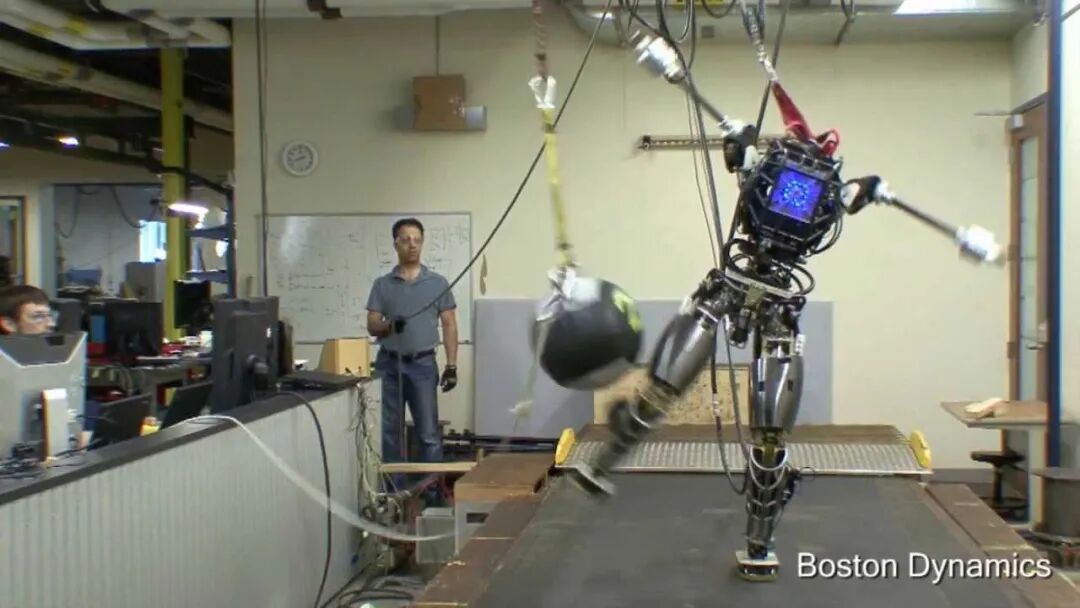
That same year, Boston Dynamics' Atlas robot emerged as the new star. This powered robot demonstrated remarkable locomotive stability, able to walk over rugged, rock-strewn terrain and maintain single-leg balance even when disturbed by external forces.
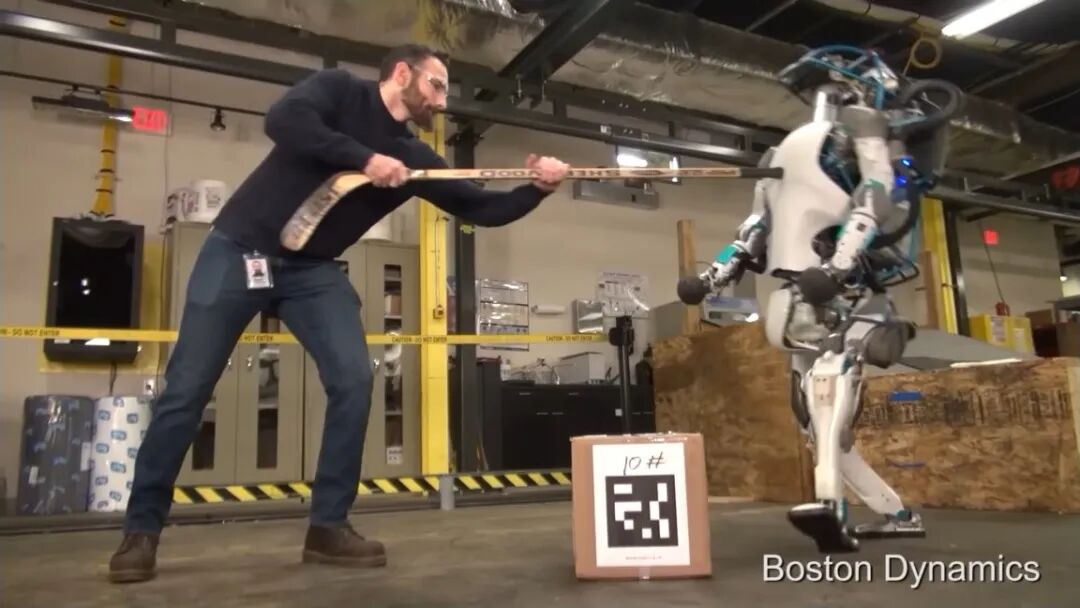
An improved Atlas debuted in 2016 with even stronger balance capabilities. In a demonstration video, a worker knocked a box from Atlas's hands and shoved it hard, yet Atlas stumbled backward several steps and remained standing.
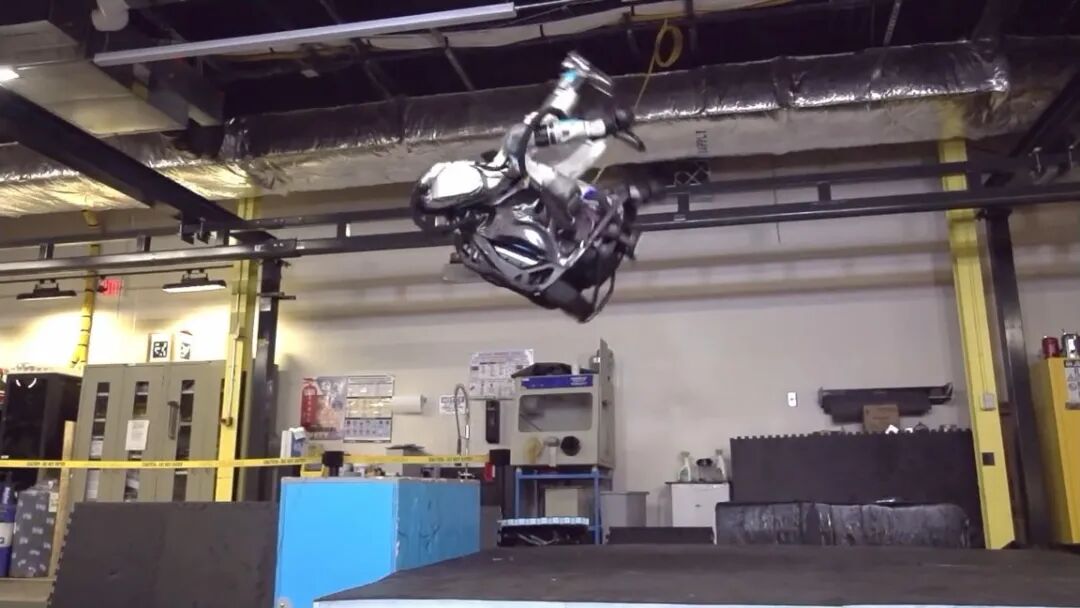
In 2017, Atlas demonstrated jumping ability in video footage — leaping from one box to another, vaulting onto platforms, even backflipping off a platform and landing steadily. In subsequent years, Atlas's athletic capabilities continued to strengthen: it could jog over obstacles, leap across staggered platforms, and execute parkour moves including handstands and front flips.
Advances in algorithms and machine learning were among the driving forces behind Atlas's growing capabilities. In a 2021 demonstration, Atlas could already recognize its environment, autonomously plan paths, and identify landing points for movements. 3D printing reduced costs while giving the team possibilities for customized component development. Atlas's leg structures and several key parts were all developed and produced in-house using 3D printing technology.
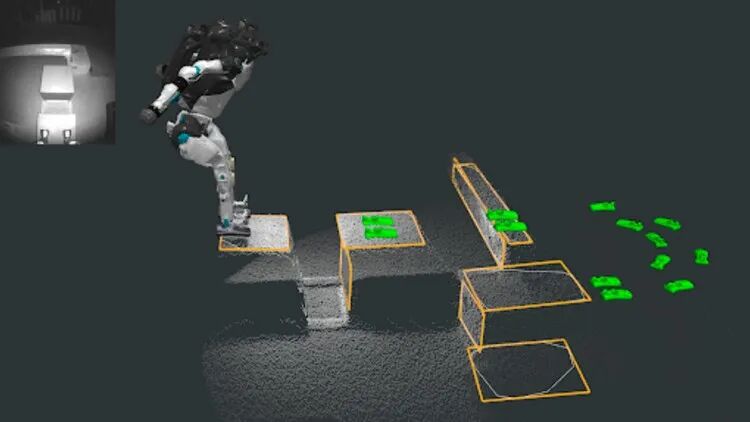
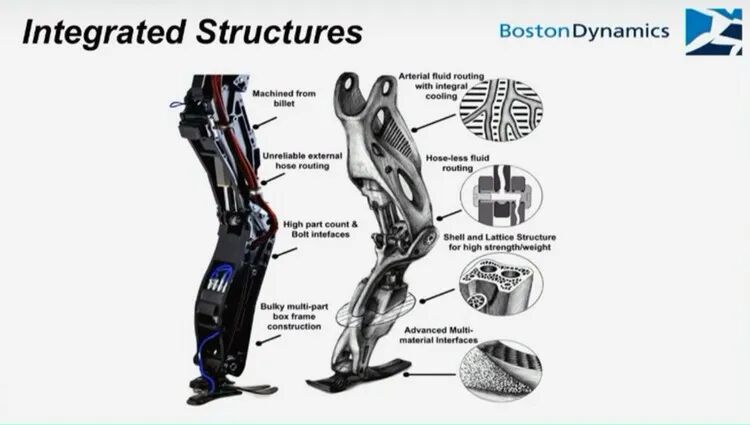
With the help of these new technologies, humanoid robot development never stalled.
Today, the rapid advances in artificial intelligence are opening new doors for humanoid robots. Powerful machine learning and ever-more-capable chips are making new levels of robot intelligence possible. New sensors and related technologies are letting robots gather richer environmental information and better perceive the outside world. As AGI matures, it too needs more real-world applications — and humanoid robots could become a parallel industry to AI, much as autonomous driving has.
Humanoid robot R&D has had its ups and downs. Institutions have repeatedly tried deploying humanoid robots in practical scenarios, searching for domains where they could prove useful. In 2011, NASA sent Robonaut 2 to the International Space Station, hoping the robot could work alongside astronauts on dangerous spacewalks. In 2014, SoftBank sold Pepper, a robot marketed to the general public as capable of emotional interaction.
In a recent report, Goldman Sachs estimates that the humanoid robot market could reach $6 billion (or more) within the next 10 to 15 years. By 2030, such a market could fill an estimated 4% of the projected U.S. manufacturing labor gap; by 2035, it could address 2% of global elder care demand. And if the industry can fully overcome hurdles in product design, use cases, technology, affordability, and broad public acceptance, Goldman Sachs projects the humanoid robot market could hit $154 billion by 2035. A market of that scale could fill 48% to 126% of labor gaps and up to 53% of elder care shortfalls.
Yet to date, no humanoid robot has achieved commercial success in the entire history of the field. The impressive performance Boston Dynamics showcases in its videos remains laboratory-bound.
One of the most advanced robot technologies in the commercial market is the autonomous vehicle — but humanoid robots require intelligence and processing power far beyond what self-driving cars need. Previous attempts have mostly ended in failure. But now that the emergent capabilities of large models have been validated, manufacturers with exceptional engineering prowess and deep data reserves may yield different results. This echoes Japan's era of economic and technological dominance, when a solid manufacturing foundation poured into humanoid robot R&D and produced breakthroughs compared to what came before.
References: [1] Honda ASIMO official website https://www.honda.co.jp/ASIMO/ [2] Boston Dynamics official blog https://bostondynamics.com/blog/flipping-the-script-with-atlas/ [3] iCub official website https://icub.iit.it/ [4] Waseda University WABOT introduction https://www.humanoid.waseda.ac.jp/booklet/kato_2.html [5] ASIMO analysis, by Xiaotu https://gaoyichao.com/Xiaotu/book=robot_cases&title=asimo [6] NIPPONIA, robotics special feature https://webjapan.org/nipponia/nipponia38/zh/feature/feature05.html
