WANGBAOBAO, a Source Code Capital portfolio company, closes nearly 100 million yuan Series B with continued follow-on from Source Code Capital

After reaching number one in Taobao's cereal category, they kept replicating the "zero to one" playbook.

Healthy food brand WANGBAOBAO has announced the completion of a nearly 100 million yuan Series B round. The round was led by Black Ant Capital, with continued participation from existing investors Source Code Capital, Vertex Ventures China, and Decent Capital. Source Code Capital, which co-led WANGBAOBAO's Series A, doubled down in this round.
Since entering the meal replacement grain market, WANGBAOBAO has consistently delivered strong performance. Starting in the second half of last year, it has held the top spot in the cereal category and drove year-over-year sales growth of over 50% for Taobao's cereal category in 2019. WANGBAOBAO's rapid rise has also prompted follow-on moves from across the food industry — traditional brands like Yili Group, Xiang Piao Piao, and Joyoung have crossed over into the "cereal" category, launching competing products. On e-commerce platforms like Tmall, numerous WANGBAOBAO copycats have also emerged.

WANGBAOBAO baked granola. Image source: WANGBAOBAO
Following this funding round, WANGBAOBAO plans to accelerate its push into offline channels, strengthen its supply chain and team, maintain its product development edge, and explore opportunities to expand into new categories and build a multi-brand portfolio. After a year of rapid growth, WANGBAOBAO has entered a new phase of development.
"Trendy, fun, youthful, guilt-free — these were our ideas from day one," said WANGBAOBAO founder Yao Jing. "And they will remain the brand's core identity going forward."
The Replicable Ability to Build "Category-Defining Brands"
WANGBAOBAO was founded in May 2018; its Tmall flagship store opened in August. By June 2019, it ranked first among Tmall's instant drink and cereal shops, and by September, it reached number one by brand. During its first official Double 11 on Tmall in 2019, WANGBAOBAO surpassed 10 million yuan in sales within 69 minutes, taking the top spot in its category.
On the keys to its zero-to-one success, Yao Jing identified two factors:
First, "dual tailwinds": the fragmentation of traffic and the rise of domestic brands. The current trend is that traffic is becoming increasingly dispersed, with more diverse formats and vastly different preferences across consumer segments. Large FMCG companies struggle to achieve精细化运营 in the short term, creating a window of opportunity for startups. WANGBAOBAO's approach is to target specific niche audiences with sufficient, dedicated exposure, making it easier for consumers to remember the product and brand. Additionally, in the new consumption space, domestic brands are entering a golden decade.
Second, choosing cereal — a category that appears "unremarkable" at first glance. Yao Jing and co-founder He Yaxi spent months selecting their category, evaluating factors like room for product transformation, margin structure, market size, and user brand loyalty. They found that cereal actually offered substantial room for reinvention: existing products on the market weren't fully meeting consumer demands for taste and health.

"Most of WANGBAOBAO's users are actually new cereal consumers — meaning people buy cereal because of WANGBAOBAO, not the other way around," Yao Jing said. The team captured consumer demand for products combining health, taste, and aesthetics. Based on this, she believes the cereal market still has significant room for growth. "We've basically saturated the 18-25 female demographic. Going forward, we'll develop products tailored to the needs of more segments, including 25-35 women, men, and others."
Building on this, Yao Jing's vision is to create a food group with multiple "category-defining brands." "Making the brand synonymous with the category is more efficient and gives consumers a clearer impression," she said, noting that the complete zero-to-one playbook developed with WANGBAOBAO is highly replicable.
According to Euromonitor data, China's packaged food market exceeds 700 billion yuan overall. Many categories within it offer room for reinvention to create new brands that better appeal to young consumers. Meanwhile, health-related consumption is growing across all age groups, with younger consumers showing the steepest increases. Per CBNdata, post-95s spend more on fitness and body sculpting than other groups; the 80-90 cohort shows relatively higher demand for grain-based snacks; and both post-85s and post-95s are showing markedly increased interest in sugar reduction. These macro trends all provide tailwinds for WANGBAOBAO's future growth.
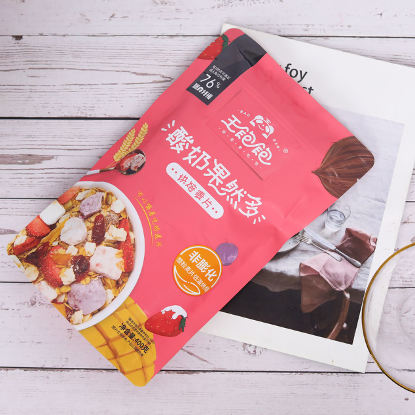
WANGBAOBAO baked granola. Image source: WANGBAOBAO
"A Non-Traditional Food Company"
Neither Yao Jing nor He Yaxi came from the food industry, which presented considerable challenges early on — for instance, having to build a factory from scratch with zero prior experience.
But this also became the team's core advantage: the ability to make key decisions outside the traditional frameworks of the food industry. Their emphasis on product aesthetics, for example, stemmed from their previous experience as beauty bloggers. "When we ultimately judge whether a product is good, an important consideration is how beautiful it looks when plated," Yao Jing said. The beauty industry as a whole operates at a higher level of brand-building than food, and they applied beauty-industry standards to food.
Learning from large food companies on channel strategy, and from internet data logic and A/B testing on product derivation and precise audience matching — "I feel every industry has something we need to learn from, so we've always felt there isn't a great comparable company out there. WANGBAOBAO is 'a non-traditional food company.'"
Product innovation stems from this "non-traditional" mindset. When food companies develop products, they typically start from R&D — how to deliver a better product to the customer. WANGBAOBAO inverts this logic, starting first with users' real needs. "Say you want watermelon right now — is that because you're thirsty, or because you genuinely want that specific watermelon? If it's thirst, wouldn't a glass of water be better?" Yao Jing explained.
Over the past decade, China's consumer market has completed its infrastructure build-out and entered a "new consumption" development cycle, creating more opportunities for本土新兴 brands to grow. What these new consumption brands share is founding teams with deep understanding of product and brand fundamentals, enabling potentially disruptive innovation.
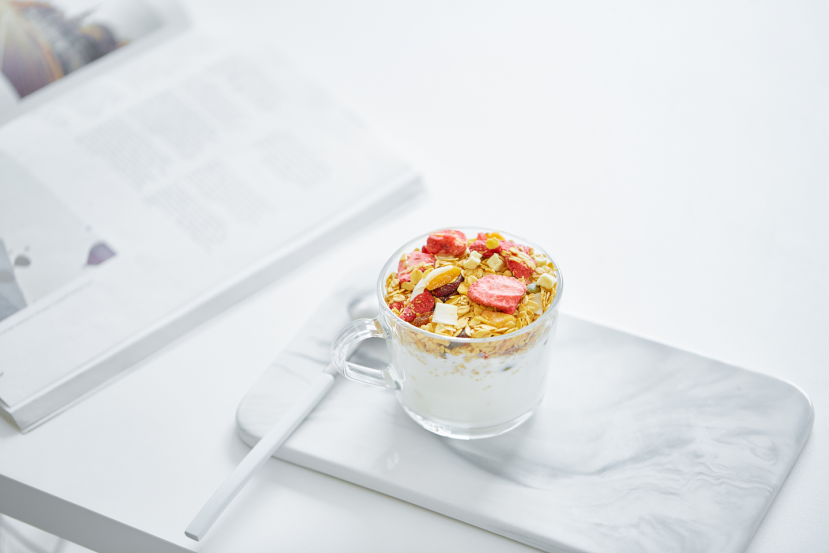
WANGBAOBAO baked granola. Image source: WANGBAOBAO
The Pandemic Has Accelerated Consumer Demand for Healthy Foods
During the pandemic, WANGBAOBAO announced its nearly 100 million yuan Series B round. It then accelerated its push into offline channels, applying the精细化运营 strategies honed online and using accumulated consumer data to build user profiles, matching differentiated products to different offline channel types.
Whether for market expansion or brand recognition, Yao Jing believes offline channels are critical for digital-native brands. After months of preparation, WANGBAOBAO has entered premium supermarkets including Freshippo and Ole, as well as regional chains like Century Lianhua, with more offline channels in negotiation.
According to the latest data from the National Bureau of Statistics of China, online retail of physical goods accounted for 23.6% of total retail sales of consumer goods in Q1 2020 — offline remains a massive incremental market.
"Overall, the pandemic has slowed the offline tempo," Yao Jing said. Industry trade shows have been postponed, for example. But offline channel expansion has progressed better than expected. In the pandemic environment, offline channels are actively seeking differentiated competitive strategies, and introducing brands with health attributes that appeal to younger consumers is one such approach. Building offline presence helps improve overall consumer satisfaction and meets demand for more consumption scenarios, such as impulse and immediate purchases.
Jihong Zhang, Director at WANGBAOBAO and Source Code Capital, said: "As a dark horse in the snack food industry in recent years, completing this counter-cyclical funding round further solidifies WANGBAOBAO's industry-leading position. Throughout its rapid growth, we have been honored and delighted to witness the team's continuous evolution and growth, its steadfast commitment to its original entrepreneurial vision, and its consumer-centric approach. Pragmatism, humility, openness, and innovation have become deeply ingrained in the team's DNA. We look forward to even greater breakthroughs ahead."
Xu Ying, Executive Partner at Vertex Ventures China, said: "WANGBAOBAO's ability to complete this funding round amid the pandemic stems partly from its precise product positioning and accumulated brand momentum, and partly because the pandemic has fully demonstrated the advantages and resilience of its digitally-driven brand-building approach. Investors have seen that WANGBAOBAO's supply chain, operations management, and marketing strategy can all withstand stress tests. This pandemic has also further stimulated consumer demand for healthy foods. We believe this will be a new period of accelerated growth for WANGBAOBAO, and look forward to its positive performance this year in brand-building and offline channel development."
Yang Cheng, Partner at Black Ant Capital, said: "Healthy food is a key focus area for Black Ant Capital. Cereal, as a category with broad accessibility within healthy foods, has substantial market potential ahead. The essence of this opportunity is: major trends, new demographics, and a strong category. Food is a traditional industry that needs new species. The WANGBAOBAO team has impressed us deeply with its ability to stay focused on product and business fundamentals while also daring to innovate. We believe the team will continue to push its own boundaries, bring consumers more health-oriented quality products, and become a trusted domestic food brand in consumers' minds."



Chinese Heritage Content E-Commerce Platform "Wanwudezhi"
Completes Tens of Millions of Dollars in Series B Funding
Led by Source Code Capital

Source Code Capital Portfolio Company "inDeco"
Announces $20 Million Series C Round
Existing Investor Source Code Capital Continues to Increase Stake
 World's First Smart Mopping Robot Cloud Whale Announces Nearly 100 Million Yuan Series B Round Led by Source Code Capital and ByteDance
 AI-Driven Drug Formulation Development Company METiS Announces Several Million Dollar Angel Round Source Code Capital Participates
 Source Code Capital Portfolio Company Qingzhu Announces Tens of Millions of Dollars in Series B Funding Source Code Capital Was Sole Investor in Angel Round
Click "Read More" to view more Source Code Capital portfolio companies