Source Code Capital Portfolio | Semiconductor Firm "Raytron" Announces Two Rounds Totaling Tens of Millions of USD, Set to Release Monolithic Full-Color Chip — Source Code Capital Sole Seed-Round Investor
Powering AR Products Into a New Dimension
#CodeMark Key Updates from Source Code Capital and CodeMeet Members
Recently, Raysolve announced the completion of tens of millions of dollars in Pre-A+ and Pre-A++ funding rounds, led by Inno-Chip and AAC Technologies respectively, with Source Code Capital as the sole seed-round investor. The proceeds will accelerate Raysolve's R&D iteration of full-color Micro-LED microdisplay chips, team expansion, and preparations for upcoming small-scale production.
Raysolve completed seed and Pre-A rounds in 2021, attracting investments from Source Code Capital, Gaorong Ventures, Yaotu Capital, and other prominent institutions. Within a year, the company has now completed multiple consecutive funding rounds. Meanwhile, with the strategic investment and industrial resources from Inno-Chip and AAC Technologies in this round, the three parties will collaborate to leverage industrial synergies, providing the global market with unprecedented Micro-LED solutions and helping AR products enter an entirely new dimension.
Founded in 2019, Raysolve is a high-tech enterprise focused on Micro-LED microdisplay CMOS chip architecture design, process development, and monolithic full-color technology research. The company's core team originates from the Department of Electronic and Computer Engineering at The Hong Kong University of Science and Technology, bringing years of experience in cutting-edge optical chip design and manufacturing. Raysolve independently developed the world's first monolithic full-color QD Micro-LED microdisplay chip, establishing globally leading full-color Micro-LED display technology and solutions. The company is committed to solving core bottlenecks in near-eye display technology and accelerating the maturation of consumer-grade AR devices.
As the metaverse concept continues to gain traction, AR glasses remain the indispensable terminal for the metaverse. The accelerated deployment of major domestic and international tech giants in the AR/XR space has driven innovation across the entire supply chain, with smart products represented by AR glasses emerging continuously. Unlike VR headsets commonly seen in the consumer market, AR glasses have been constrained by technology, cost, form factor, and other objective factors, with most priced prohibitively high. Previously, they were primarily purchased by B-end users less sensitive to price, and their form factors remained far from approaching the appearance and weight of ordinary glasses or sunglasses. However, notable changes in market technology have occurred this year. Google recently released an AR concept device targeting special-needs users, and Qualcomm unveiled a reference design for all-in-one AR glasses — consumer-grade AR is gradually becoming the focus for both tech giants and innovative enterprises.

"Lightweight design, high brightness, full-color display, and long battery life are inevitable requirements for AR glasses to reach consumers," said Dr. Yongzhang Zhuang, founder and CEO of Raysolve. "The technical path for optical display components not only determines the overall display quality of AR glasses but also directly impacts battery life, exterior design, and user experience."
In optical systems, "Micro-LED + optical waveguide" is considered the optimal combination currently available. While Micro-LED technology offers significant advantages, achieving full-color display and high-yield mass production remains one of the industry's urgent technical challenges. The industry has attempted various full-color solutions, with the more common approach being trichromatic combined-light Micro-LED display technology. However, due to large optical engine volume, high cost, and the need for precise alignment of three color Micro-LED microdisplays, future lightweight AR glasses require a more "slim" applicable solution.
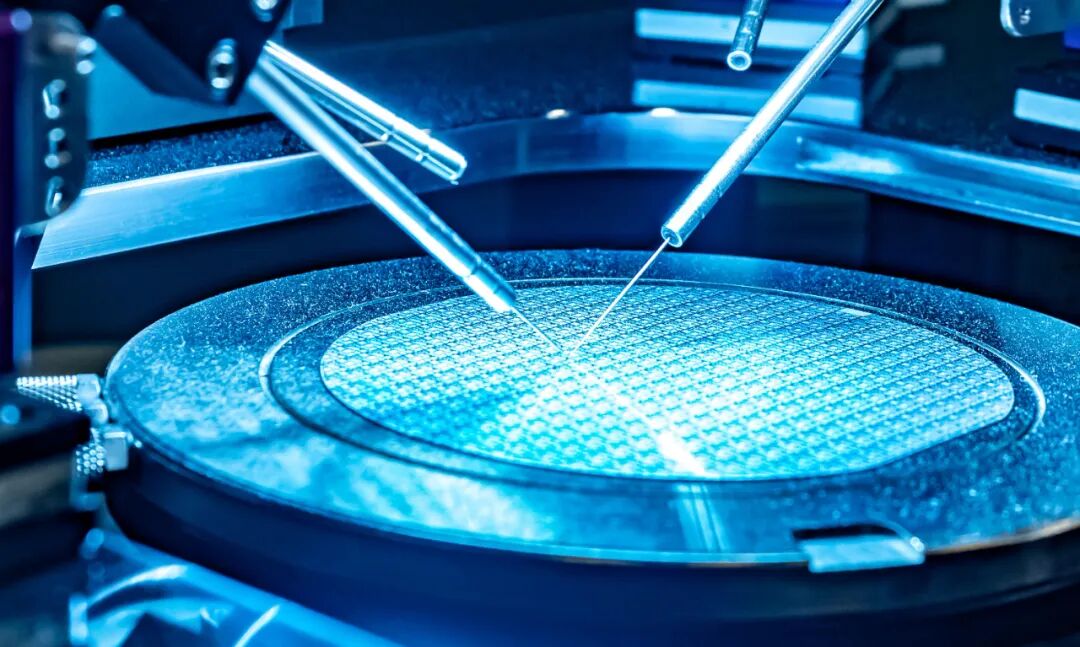
Raysolve innovatively employs quantum dot color conversion, reconstructing monolithic integration technology to achieve full-color display within a smaller chip package volume — facilitating further miniaturization of AR glasses. Existing 8-inch wafer bonding technology enables high-yield mass production, and continuous technological iteration will allow for larger process sizes in the future to reduce costs. Raysolve's monolithic full-color Micro-LED microdisplay chip will greatly simplify optical modules and the entire display system, providing more optimization space for next-generation AR glasses and delivering the performance and superior experience users expect.
Dr. Zhuang stated, "The official deployment of global 5G has led to VR/AR, as a core 5G commercial scenario, being reevaluated and taken seriously. We are pleased to see numerous leading enterprises continuously driving the AR industry forward — this aligns perfectly with Raysolve's years-long commitment to the Micro-LED field."
For the AR industry, collaboration across the upstream and downstream supply chain is equally important. Dr. Zhuang noted: "Raysolve is fortunate to receive strategic investment from Inno-Chip and AAC Technologies. Inno-Chip has received cornerstone investment and support from Will Semiconductor, a leading Chinese semiconductor enterprise, with strong market presence and investment deployment in the semiconductor sector. AAC Technologies is one of the few manufacturers capable of mass-producing high-precision micro-optical components for consumer-grade applications, with extensive experience in large-scale custom optical components, scaling, and efficient operations, as well as specialized expertise in novel and highly complex wafer-level optical manufacturing processes. Raysolve will fully leverage its own advantages combined with strategic investors' resources to better understand future market demands, starting from breakthroughs in foundational technology, becoming a driving force in the development of next-generation smart platforms, and welcoming the inflection point of rapid AR market growth."

CodeMark | "TBDx Inc"
Completes Two Rounds Totaling $15 Million
Source Code Capital Leads Seed Round and Continues Investment

CodeMark | "Yueshu Technology"
Completes Tens of Millions of Dollars in Series A Funding
Existing Shareholder Source Code Capital Continues to Increase Stake
CodeMark | Energy Storage Company "Delanminghai"
Completes Multiple Consecutive Funding Rounds
Source Code Capital Leads Two Rounds and Continues to Increase Stake
CodeMark | "GalaxySpace"
Completes New Funding Round
Source Code Capital as Pre-A Round Investor

Announces Completion of Million-Dollar Angel Round
More Source Code Capital portfolio companies available via "Read Original"