The Complete CFO Playbook: From H-Share IPO to Post-Listing Market Value Management

A CFO's End-to-End IPO Playbook: From Capital Market Selection and Pre-Listing Preparation to Post-Listing Market Value Management and Equity Incentive Plans.

Since the registration-based IPO systems were successively implemented on the STAR Market and ChiNext, the A-share market has seen a surge in listings. Influenced by factors including the international political and economic environment, some Chinese concept stocks have rerouted their listing strategies, choosing secondary listings in Hong Kong or returning to A-shares; meanwhile, the US stock market, with its mature capital market system, remains favored.
To help Ma Hui growth-stage member companies timely and comprehensively understand evolving capital market trends, Source Code Capital's post-investment energy center, from April to September this year, invited senior experts from top investment banks including CICC, Morgan Stanley, and Huatai International, as well as experienced practitioners such as CFOs and board secretaries from well-known enterprises. From multiple dimensions, they hosted six closed-door themed sessions for CEOs and senior executives of Source Code Capital's growth-stage member companies.
We have distilled the essential insights into five articles, to be shared sequentially. We hope to learn and progress together with you through this connected learning experience.
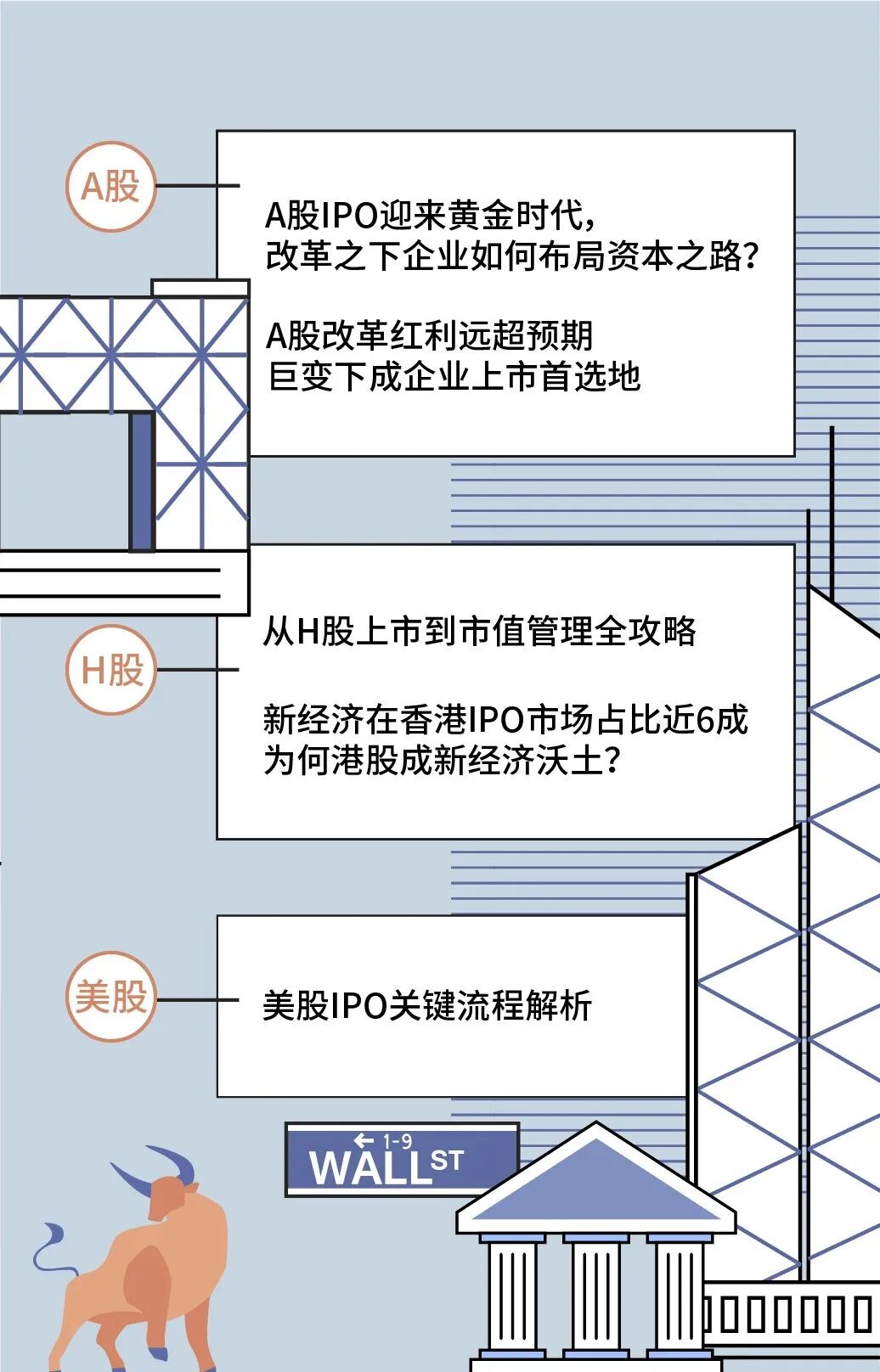
Preview of Key Points from Each Session
To secure more operating capital and broader development platforms, companies increasingly turn to IPO financing as their preferred option. In the IPO process, the CFO plays a "number one" role — coordinating internally with the CEO on business operations, team building, and financial matters, while externally liaising with investment banks and accounting firms to drive the process forward. After a successful listing, market cap management becomes an advanced exam that every CFO must seriously address.
Code Brain invited Shirley Lu, CFO of WuXi Biologics, to share from a practical perspective a comprehensive CFO playbook on IPO strategy — from capital market selection and pre-listing preparation to post-listing market cap management and equity incentive plans.
Selected highlights from the sharing session:
Choosing a Listing Venue
The moment an IPO decision is made, a series of planning and preparations begin. As the saying goes, sharpening the axe won't delay the cutting of firewood — the initial architecture setup may take considerable time. The choice of capital market is crucial: whether through a red-chip structure or China structure, tax matters, tax planning, and restructuring must all be addressed in advance. Once the listing venue is selected and the IPO process launched, subsequent steps will flow naturally. So for a CFO, what are the respective advantages of Hong Kong, US, and A-share markets? What additional considerations are needed when selecting a listing venue?
Hong Kong Advantages: Capital Operation Flexibility, Access to Quality Global Capital Platform, Northbound Capital Inflows Enhancing Stock Liquidity
-
Greater IPO process certainty than A-shares, with execution typically taking 6 months.
-
Fully market-driven IPO pricing mechanism maximizing company and shareholder value at listing. Strategic and financial investors can be introduced as cornerstone investors, enhancing basic success probability and lending credibility to the capital story.
-
Highly flexible offshore capital market platform. At IPO, flexible choices between issuing new shares and/or selling existing shares; post-listing refinancing tools are flexible with high execution efficiency, and subsequent share issuances can be made through general mandates without prior regulatory approval.
-
Post-listing opportunity for inclusion in Stock Connect programs, further supported by southbound capital inflows. Northbound-southbound flows can constitute a significant portion of trading volume. When foreign investors have substantial concerns about Chinese concept stocks, quality domestic institutional investors such as China Life, National Social Security Fund, China Universal Asset Management, and E Fund can provide support through Stock Connect.
-
As an international financial center, Hong Kong Stock Exchange IPOs attract quality global institutional investors, including international and Chinese funds; most IPO shares are allocated to fundamentally-driven institutional investors. Long-term oriented international institutions include Capital Group, Fidelity, Wellington Management, Hillhouse, Schroders plc, among others. Meanwhile, Chinese funds generally have higher recognition and trust in Hong Kong-listed companies, so when international markets need more time to build sufficient confidence, quality Chinese funds can still provide strong support.
-
Fundraising proceeds remain offshore in HKD, facilitating flexible deployment for overseas expansion and acquisitions.
Considerations for Hong Kong Listing:
-
Overseas market valuations have historically been lower than A-share market valuations.
-
Companies of comparable market cap generally achieve higher trading volumes in A-shares.
US Advantages: Market Depth and Strong Liquidity
-
SEC procedures are disclosure-based, with fewer due diligence requirements than Hong Kong or A-shares, faster and more direct process, high schedule certainty, typically 5-7 months.
-
Similarly fully market-driven IPO pricing mechanism, with ability to introduce investors in Concurrent Private Placement ("CPP"), equivalent to cornerstone investors in Hong Kong listings, to endorse the issuer.
-
High listing flexibility across scale, pricing, and existing shareholder participation.
-
Market depth and strong liquidity.
-
Less need for Chinese regulatory-level support or approvals.
-
Fundraising proceeds remain offshore in USD, facilitating overseas expansion and acquisitions.
Considerations for US Listing:
-
Chinese companies listed in the US are primarily in technology and related sectors; cross-industry listings are relatively rare.
-
Compared to Hong Kong and A-shares, greater need to consider US-China geopolitical impacts. Increasing numbers of US-listed Chinese concept stock companies are returning to Hong Kong for secondary listings.
-
IPO process may be affected by Kennedy Act amendments. While the act did not immediately restrict IPOs, it stipulates that listed companies failing to meet PCAOB inspection requirements for three consecutive years cannot continue trading and will be delisted.
-
Must satisfy Sarbanes-Oxley Act compliance requirements, otherwise facing risk of class action lawsuits.
-
More limited participation by Chinese domestic investors compared to Hong Kong.
A-Share Advantages: Higher Secondary Market Valuations and Potential Issuance Valuations
-
Higher secondary market valuations and potential issuance valuations. Additionally, STAR Market/new ChiNext IPOs may enjoy certain valuation premiums over traditional A-share IPOs.
-
Innovation-friendly orientation, with CSRC paying more attention to reform and innovative enterprises.
-
STAR Market/new ChiNext registration-based systems lowered listing thresholds, significantly shortened project execution timelines, and improved execution predictability.
-
If future development focuses more on domestic market, A-share listing can more clearly communicate company direction to the market.
-
Secondary market liquidity generally strong.
Considerations for A-Share Listing:
-
More stock issuance restrictions. First, IPOs generally can only issue new shares. Second, IPO lock-up periods are longer. Hong Kong and US markets typically have 6-month lock-ups, but A-share controlling shareholders face 36-month lock-ups, strategic investors generally 12 months, making equity incentive plans difficult to implement.
-
Listing rules impose more restrictions on subsequent capital operations. First, post-listing share issuances require regulatory review with more restrictions. Second, future follow-on financing or shareholder reductions may require investors to accept lock-ups, potentially affecting final pricing. Third, for red-chip enterprises, subsequent A-share reduction of shares held by pre-IPO offshore shareholders involves additional regulatory approvals with unclear detailed rules.
-
A-share market trading is retail-driven, with less institutional participation than overseas listings, and relatively greater stock price volatility.
Compared to A-shares and US markets, Hong Kong listings offer offshore capital market platform flexibility with less geopolitical risk, making Hong Kong highly favored by Chinese issuers.
Recent Hong Kong and US Listing Trends
Despite COVID-19 impacts early this year, against favorable market conditions beginning in Q2, equity issuances by quality enterprises in US and Hong Kong markets attracted strong investor demand, with equity issuance markets particularly active in H2 2020.
Hong Kong Equity Issuance Market
Hong Kong Exchanges and Clearing Limited's 2018 listing regime reform, which first allowed biotech companies and weighted voting right structures to list on the Main Board, triggered competitive dynamics among global exchanges and fostered quality competition. Consequently, 2018-2019 saw record IPO issuance volumes, with 64 IPOs and follow-on offerings in 2018 and 57 in 2019.
Due to COVID-19 impacts early this year, IPO projects decreased somewhat compared to the previous two years, but the follow-on offering market became more active. Combined with accelerated economic stabilization from China's effective pandemic control in H2, IPO transactions became more active in the second half, including numerous US-to-Hong Kong secondary listings, bringing total IPOs and follow-on offerings to 55 year-to-date. Full-year equity issuance scale is expected to exceed last year's.
This year's Hong Kong listings featured more cornerstone investor participation than in the past, including many quality global long-only funds and industry specialist investors. This quality investor structure helped companies achieve excellent post-listing stock performance. Additionally, numerous quality companies achieved record oversubscription multiples in the retail tranche.
Key trends this year: Three main categories of Hong Kong-listed enterprises.
First, the healthcare and biotech sector remains highly active in Hong Kong.
Second, Hong Kong continues attracting leading enterprises across Chinese industries for offshore financing. For example, Nongfu Spring's $1.1 billion IPO was the largest consumer goods company IPO in Hong Kong history, which will help fund its next stage of international expansion and utilize offshore financing for overseas planning and deployment. E-cigarette e-commerce company SMIC International listed in November with an $1.1 billion IPO, becoming China's e-cigarette pioneer. The much-anticipated Ant Group is also expected to become the largest IPO in Hong Kong history.
Third, many companies are returning to Hong Kong for secondary listings due to US-China geopolitical policy risks. This category includes NetEase, JD.com, Huazhu Group, and ZTO Express.
US Equity Issuance Market
Over the past five years, US market issuance scale has seen minor year-to-year fluctuations while maintaining generally stable growth. In the first nine months of this year, transaction issuance scale has already surpassed previous years, driven primarily by follow-on equity offerings. Chinese concept stock issuance was not affected by the May Kennedy Act, with multiple listing projects pricing above their indicated ranges and showing strong aftermarket performance.
Pre-Listing Internal Team Building and External Advisor Selection
First, integration between CEO, CFO, and the entire team is paramount. From an internal perspective, the CEO's primary role is storyteller, with the CFO as facilitator. CEOs generally fundamentally believe in their entrepreneurial vision and have the passion and ability to articulate the story clearly, full of vision and conviction. Capital markets on one hand highly value CEO passion, confidence, and steadfast commitment; on the other hand, they require a "reliable" CFO to verify with numerical models whether these visions are implementable and can become quantifiable, deliverable valuations. Therefore, during investor meetings (pre-roadshows and roadshows), the coordination between CEO and CFO, team integration, and consistency of messaging will all be tested.
Second, developing internal controls helps improve financial forecasting accuracy. Finance must collaborate closely with business operations, understanding business rhythms. Pre-IPO finance staff should not limit themselves to traditional accounting work, but actively transform, developing financial modeling and forecasting capabilities. During pre-IPO financing rounds — Series A, B, C — particularly through engagement and training with major institutional investors, companies can develop internal controls and refine financial forecasting accuracy.
Third, complete finance and legal infrastructure early. Given listing's rigorous financial requirements, IPO preparations should engage professional accounting firms early to prepare financial statements under standardized accounting standards. Professional accountants can also provide internal finance teams with training on international accounting standards and commence audit work. These efforts help CFOs more precisely grasp financial rhythms and plan and execute more robust, reasonable IPO timelines.
Fourth, during placement, identify intermediaries who are bullish on the company and willing to hold long-term. Some institutional investors quickly sell shares post-IPO, depriving companies of aftermarket stability. Therefore, during share placement, beyond controlling placement pacing and volume, careful selection of quality long-term investors is essential. Prioritize institutions with confidence in the company, long-term relationship maintenance capabilities, and willingness to hold shares long-term. Fundamentally, however, long-term confidence still depends on the core management team's operational capabilities.
Market Cap Maintenance and Post-Listing Investor Relations and Public Communication Skills
Generally, profit (net income) multiplied by PE ratio equals market cap. Thus high profit does not equal high valuation. This requires internal coordination to improve profitability while also getting capital markets to recognize company prospects, thereby increasing PE multiples. Higher PE multiples indicate capital markets judge better company prospects; a key CFO responsibility is educating and building investor confidence in the company.
Keys to enhancing investor confidence include:
First, credibility is the most important metric in capital markets. Credibility means delivering on business commitments — in plain terms, "doing what you say." Credibility typically requires sustained time, such as 8 consecutive quarters, 12 consecutive quarters, to prove management reliability through accurate financial forecasts and actual business delivery. Reliable credibility is the foundation for subsequent CEO and CFO outlook presentations, the basis for operating capital, and the confidence for capital market placements and trading.
Second, tell a consistent, clear, and transparent company story. Treat all stakeholders equally with consistent messaging. When management can clearly articulate business models and profitability, and make entire industries transparent, the company gains trust and market cap expands. As CFO, two points merit attention: first, use simple communication language, avoiding inefficiency from overly obscure professional terminology. Second, prepare for patience and time investment in communication — financial situations involve modeling and many details, inevitably requiring multiple conversations; understanding isn't achieved in one sitting, so strong communication skills and psychological resilience are needed.
Third, post-listing requires building public relations and investor relations capabilities. As CFO, help the company and directors avoid class action lawsuits. A major difference between US and Hong Kong listings is that the US has a class action mechanism while Hong Kong does not. As mentioned in the capital market selection section, US listing is trust-based — following listing rules for disclosure, lawyer-certified, exchange-accepted. But if subsequent discovery of falsehoods in prospectuses occurs, investors can immediately initiate class actions, representing major blows to entire industries, companies, and all directors and executives — as seen in this year's Luckin Coffee incident. Therefore from listing venue selection onward, CFOs must consider post-listing investor relations maintenance risks and countermeasures.
Fourth, enhance stock liquidity through reasonable founder share reductions. Many view major shareholder reduction as negative signal, but this isn't necessarily so. Liquidity is a crucial dimension of market cap management. The stock market is like a pool — if shares remain in founders' hands without circulation, two situations arise: first, investors who like the company cannot buy shares; second, investors who bought shares dare not sell, as selling would be like a small stone thrown into a small pool, causing large ripples. Therefore, provided the company has fully established credibility and proper market cap management as described above, founders can actually follow established steps for gradual reduction, making the pool increasingly large with higher liquidity.
Effectively Using Equity Incentive Plan Tools
To "Attract Talent" and "Retain Talent"
Equity incentive plans are powerful tools for attracting and retaining talent, highly effective in both Hong Kong and US markets. When people can see personal wealth participating in company wealth, with hope for financial freedom, their work initiative and focus are completely different. For talent-intensive enterprises (such as service industries, R&D companies, professional consulting), talent is the most important factor in core competitiveness, so equity can be distributed to core teams and key retention targets as powerful incentives.
The most common pre-listing equity incentive tool is stock options. At this stage, companies can achieve strong results at low cost; founders can distribute from existing pools to employees with core retention value based on contribution or importance. They will focus on the value of their options post-successful IPO. As company valuation rises, their value appreciation increases, undoubtedly enhancing initiative. Meanwhile, most companies may not continue using stock options post-listing, as post-listing option value equals market price; if post-listing stock price is high, employees' expected appreciation diminishes, or if market volatility causes price declines below grant price, expected incentive effects fail to materialize.
Post-listing, companies will attract more talent, but stock option grant costs will be priced at post-listing market prices — too high for employees, potentially failing to achieve incentive effects. Therefore, post-listing in Hong Kong and US markets, the most common equity incentive tool is restricted stock units (RSUs). RSU benefits include no cost to acquire, and regardless of stock price movement, shares can be granted at market price with vesting periods. RSU advantages include aligned interests, future returns as motivation, and engagement. Since employees incur no cost, they won't experience anxiety from stock fluctuations.
When designing equity incentive plans, consider both company circumstances and employee needs. Generally, regular employees have greater demand for cash incentives, while equity availability has greater psychological impact on core team members. Especially after stock price rises, the equity gap inevitably creates psychological disparity. However, some core employees may still prefer cash incentives post-listing. Companies can consider designing mechanisms for employees eligible for but declining stock to access future cash incentives. Stock options' greatest advantage is lock-up periods, i.e., retention periods; cash incentive mechanisms can similarly be designed with different amounts based on retention duration, achieving retention effects. For core executives, specialized advanced equity incentive designs can be tied to company performance. Since core executives are key participants driving enterprise performance, these can be tied to company profit, revenue, etc., requiring judgment and design based on actual company circumstances.

【Comment Interaction】 We welcome your exchange and interaction with us on startups' path to listing. The top 5 most-liked commenters will receive a copy of Civilization, Modernization, Value Investing and China from Code Brain.
"About Code Brain"
Code Brain is a key component of Source Code Capital's systematic, productized post-investment service system, and a star post-investment service product dedicated to helping Ma Hui entrepreneurs upgrade their cognition. At every stage, we deeply appreciate and continuously explore entrepreneurs' needs, iterating Code Brain in real-time so entrepreneurs at different stages receive sustained nutritional input, achieving our important goal of post-investment services that "truly help," and creating unique value for entrepreneurs.