Yi Cao: "Internet Plus" Has Run Its Course — The Next Waves Are "Intelligence Plus" and "Global Plus"

The "Internet Plus" initiative is entering its final handover phase.

In 2014, Yi Cao founded Source Code Capital, with investments spanning multiple sectors including internet finance, industrial internet, gaming and entertainment, O2O, and cross-border internet.
Source Code Capital focuses on early-stage TMT investments, currently managing approximately $500 million and 1.5 billion RMB. One of its distinguishing features is its assembly of nearly 30 IT industry leaders — founders and executives of major tech companies — forming the "Ma Hui" ecosystem that bridges industrial capital with financial capital, creating what Cao calls a "super-connector" for industrial capital.
Cao previously worked at Sequoia Capital and has over a decade of venture investment experience. Over the past two-plus years, Source Code Capital has invested in:
New finance companies including Qu Fenqi, Geshang Wealth Management, Yinke Network, Yongqianbao, Ether Capital, Nongfenqi, and Suishouji;
Industrial internet companies including Yijiupi, Kakao, Youban, WeiMai, Baibu, and Ruigu;
Service e-commerce companies including Meituan, Lianjia, CHJ Automotive, Jiaoer Food Delivery, Hai Nei Bian, and MOGU;
And digital cross-border companies including Toutiao, Mobimagic (360 Security), and Zenjoy.
Cao has developed his own distinctive investment philosophy. He notes:
Industrial capital typically doesn't invest in many early-stage projects. They usually wait until a clear winner emerges before making their move.
Startups should avoid picking sides too early. First build your own foundation, and only then can you engage with the giants as equals — as brothers and partners.
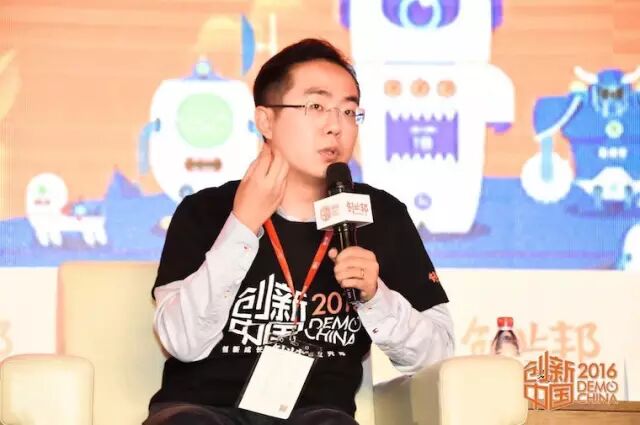
Our correspondent interviews Yi Cao at the 2016 Demo China Finals and Autumn Summit
I. New Investment Trends
Investors and startups constitute the supply and demand sides of venture capital. In recent years, both have been undergoing significant shifts. Cao believes that on the investment side:
More and more industrial capital and traditional financial institutions are entering the VC and PE space.
At the same time, insurance companies and banks are also showing signs of moving into equity investment, potentially bringing tens of trillions of RMB into the market.
Cao told our correspondent that this surge in capital supply benefits leading companies that have already broken away from the pack the most, with mature "Internet Plus" sectors receiving further funding to capture market share faster.
- Alibaba, Tencent, Meituan, Toutiao, DiDi, and JD.com possess formidable capital mobilization capabilities and will be the biggest beneficiaries;
- The top two companies in each industry will also receive certain funding support;
- More conservative sectors with clearer investment outlooks or lower company risk will benefit as well, though competition will intensify.
Due to long payback periods and high risk, early-stage venture capital won't see massive capital inflows. "Competition in early-stage VC is relatively lighter, but every investment institution should choose its most competitive angle of entry — you can't operate without a clear competitive strategy."
II. A New Wave of Entrepreneurship
While the buzz around "Internet Plus" remains loud, in the view of Source Code Capital founder Yi Cao, "Internet Plus" has actually entered its endgame. "'Internet Plus' has built excellent infrastructure for society as a whole, creating connections across many industries and laying solid groundwork for the second half of this new entrepreneurial wave."
Based on this assessment, Cao identifies two major future directions for entrepreneurship: "Intelligence Plus" and "Global Plus."
- Intelligence Plus. "Internet Plus" refers to internet plus offline industries — using the internet to help offline industries achieve better resource matching, thereby improving economic efficiency.
Once "Internet Plus" has established connections and accumulated data, artificial intelligence can begin to play its role — that is, "Intelligence Plus." Where humans once allocated resources, machines and algorithms will now do so more intelligently.
Cao believes this year marks the beginning of the AI era. The industry is still in early spring, but AI is already showing innovative promise in education, finance, security, and other sectors.
- Global Plus. The world is getting flatter. One world, one dream; one startup, one global market. The overseas gold rush is heating up. First-wave cross-border companies like 360 and Cheetah Mobile have already achieved impressive results.
Cao believes this innovative force will only grow stronger, with more and more companies going global. From BAT down to nascent startups, many are adopting "dimensional reduction" strategies or leveraging cost advantages to capture overseas markets.
Cao notes that both of these major entrepreneurial themes will persist for five to ten years, and won't explode quickly in the next one to two years. The entrepreneurial opportunities in the immediate future still lie in "Internet Plus," which is in its closing phase. Of course, entrepreneurs should adopt a long-term mindset in participating in the coming "Intelligence Plus" and "Global Plus" investment wave.
III. The Industrial Capital Super-Connector
Cao defines Source Code Capital's approach and strategic positioning as the "industrial capital super-connector" — when startups and industrial capital aren't yet ready to collaborate directly, Source Code Capital serves as the intermediary, helping startups partner with industrial capital and using both financial and industrial capital to fuel their growth.
Source Code Capital's LPs come from over 30 top-tier companies, including A-share, US-listed, and Hong Kong-listed companies, as well as BAT executives, with extensive accumulated resources in funding, business operations, and licenses.
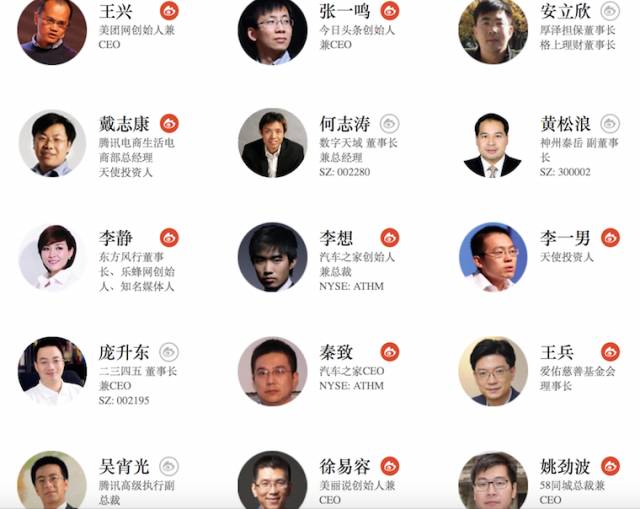
The "upperclassmen" of Ma Hui
One of Source Code Capital's core competitive advantages is the entrepreneurial service ecosystem it has built through the "Ma Hui" organization.
"Ma Hui" is a fraternity-style alliance for entrepreneurial exchange and mutual assistance. The LPs are like upperclassmen, portfolio companies like underclassmen. "Ma Hui" facilitates connections between them through internal sharing sessions, regular communication, and brainstorming to achieve resource exchange and mutual support.
Take Source Code's portfolio company Yijiupi as an example. It supplies fast-moving consumer goods — primarily alcohol — to 15 million restaurants and convenience stores across China. Source Code helped introduce Meituan as a strategic investor in Yijiupi. The business synergy was direct and powerful: Meituan's 4 million merchants became Yijiupi's most direct and effective customer base. This promising growth trajectory with industrial capital helped Yijiupi quickly close its Series C round.
IV. Finding Investment Opportunities in 27 Grid Squares
Cao describes his investment framework as "three horizontals and nine verticals, mapping out an investment landscape."
The three horizontals are the three horizontal dimensions: "Internet Plus," "Intelligence Plus," and "Global Plus";
The nine verticals are nine industries: media; communications and search; transportation; dining, clothing, housing, and travel; industrial B2B; enterprise IT; finance; and education, culture, and healthcare.
Three horizontals times nine verticals create 27 grid squares. Each square sits at a different stage with a different level of maturity:
Some are fully ripe — the square goes gray;
Some are red oceans;
Some are blue oceans;
And some are so immature they're still icebergs.
"When the water temperature reaches a certain point, that's when Source Code devotes its energy," Cao says.
Some squares emerged five years ago. Take media: the "Internet Plus" version of traditional magazines and newspapers was online media, but when "Intelligence Plus" arrived, new investment space opened up — for instance, using intelligent algorithms to generate personalized content recommendations. That's why Cao chose to invest in Toutiao.
"Global Plus" will similarly create opportunities in media venture capital. "Where is the global Toutiao? That's the investment opportunity we need to find now."
V. The Era Demands Entrepreneurs with Three Heads and Six Arms
Cao's biggest realization after two years of running his fund: entrepreneurs today are different from before.
On one hand, the era demands more well-rounded entrepreneurs. Years ago, one strength could hide a hundred weaknesses. Even if an entrepreneur had obvious shortcomings in other areas, the relatively fewer success factors required in those industries meant entrepreneurship was comparatively simpler.
But now teams need to deliver on many fronts:
Technical capability, team building, and the ability to attract social resources;
The ability to communicate with government;
Deep understanding of traditional industry development trajectories;
More comprehensive resource integration, greater internationalization, and more.
On the other hand, the growth model for companies has changed. Future startup growth won't rely solely on VC and PE to reach IPO, but rather on partnering with industrial capital to drive growth through M&A or IPO. Investment institutions should better adapt to this trend.
500+ investment luminaries, over 2,000 investors, 500 VC institutions, 12 angel teams, 8 specialized tracks, and 109 startup projects in ultimate competition — interpreting the boundless allure of innovative China.