Yi Cao, Source Code Capital: VCs Must Keep Learning and Embrace a Far-Reaching Sense of Mission

Yi Cao pointed out that in the future, energy won't be scarce, land won't be scarce, and housing won't be scarce either. What will be truly scarce is good technology, the ability to allocate resources well, and people who continuously strive to create value.
China's venture capital industry went from zero to a crowded field of competing players in just over a decade. Why did VC explode here? What does it take to become a great investor? Young people are eager to find out.
Yi Cao, founding partner of Source Code Capital, is well positioned to answer. He entered the industry before he even graduated from university, becoming one of China's first homegrown venture capitalists, and witnessed the sector's entire journey from nothing.
On the evening of November 3, students from universities across Beijing packed the auditorium at PBC School of Finance, Tsinghua University, for Source Code Capital's first campus recruiting event. Cao drew on twelve years of investing experience to share what he's learned.
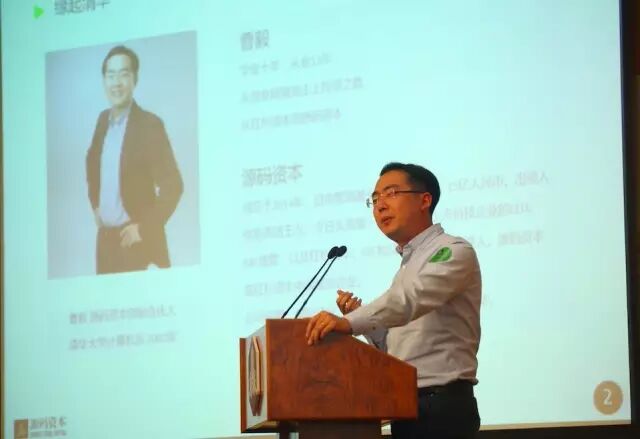
Yi Cao, Founding Partner of Source Code Capital
Cao recalled that when he started out as a computer science graduate, fewer than ten active VC firms existed in all of China. His 7,000-yuan monthly salary couldn't compete with what classmates were making at Baidu, Tencent, and Microsoft. But he'd already decided — "This was the best vantage point for me to participate in the technology transformation. Investing in companies and helping those entrepreneurs and founders grow — that was the best path for me."
Do the Right Thing in the Right Era
Cao believes that how far a person rises depends on the convergence of timing, positioning, and people. When individual capability and vision resonate with the moment and the landscape, the combined force is enormous. Conversely, someone in the wrong place at the wrong time can grind away with little to show for it.
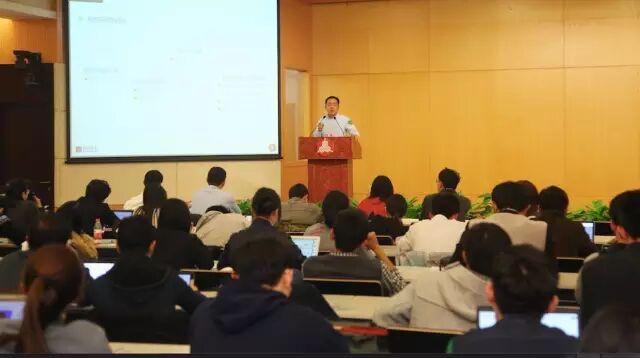
Cao introducing Source Code Capital's origins and growth to students
So when choosing your path, start by paying attention to external change and identifying the main thread of the era. Only after that should you think about which industry, which specific company.
Once you've found that throughline and heard the strongest signal the world is sending, you need to locate where you can best receive that signal and generate feedback — that's the industry and company you should choose. Do the right thing in the right era, or your impact will be severely limited.
Every future choice, every hour, every minute — ask yourself whether you're in the right place at the right time doing the right thing.
Find Industries That Can Keep Creating Value
Cao also used his own experience to caution young people: the transition from campus to working life demands finding an angle that resonates with industry development, an industry that keeps climbing and can sustain value creation.
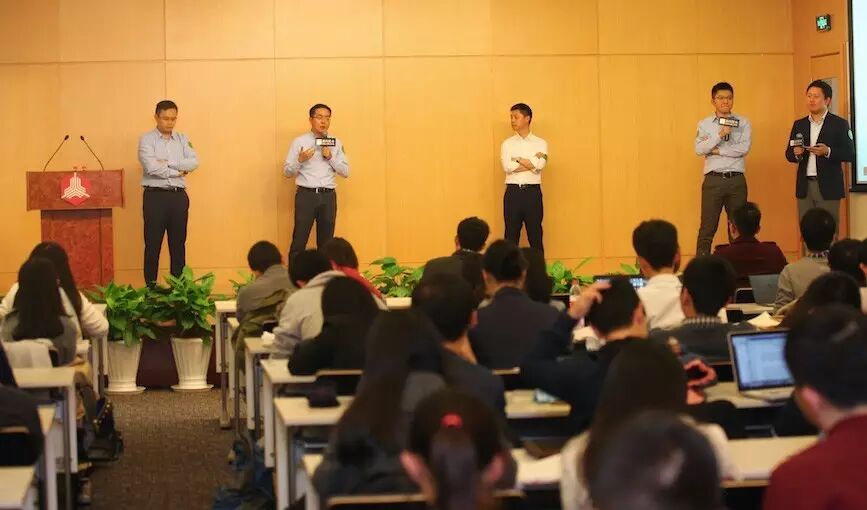
Cao and Source Code colleagues taking questions from students
Where does value come from? Cao sees two sources. The first is the development of new resources. The second comes from resource allocation. Optimizing existing resources is itself a form of creation, and its power and contribution can exceed imagination. What equity investment does is resource allocation — constantly seeking how to allocate better.
Cao pointed out that very few factors in human history have nonlinear developmental effects.
The first is technology. Tools and technological power can transform things qualitatively, making what was once worthless suddenly valuable. The second is capital. Capital can make the impossible possible. If DiDi had grown through the traditional corporate reinvestment model, the company probably wouldn't exist today. An egg left in blazing sun for ten hours won't cook, but boiled in water it's done in ten minutes. Capital's role is to rapidly concentrate massive force, allowing something difficult to break through at critical junctures and advance to the next stage.
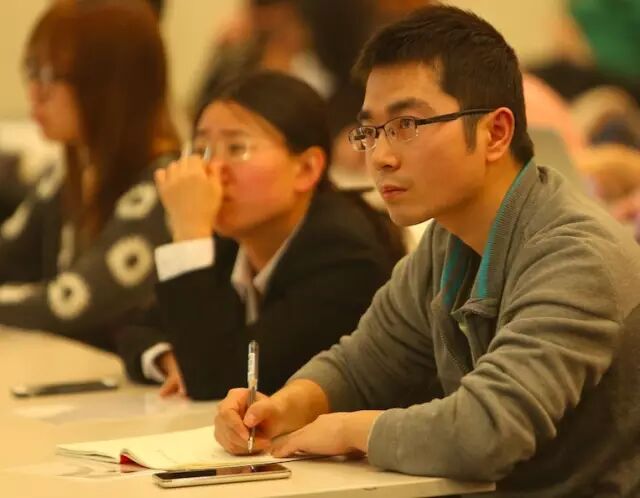
Students attending the recruiting event
When humanity combines these two nonlinear forces, it creates a dual engine of technology multiplied by capital. The resulting massive force can transform impossible economic models into possible ones, accelerating social evolution.
A VC Can Never Stop
To everyone preparing to enter or already in the venture industry, Cao offered one final piece of advice: never stop. Never Settle!
You may have reached a comfortable life, attained enviable social status, and start feeling pleased with yourself, indulging in pleasure. If you stop then, it's like setting up camp at 5,000 meters on Everest. The view is spectacular, but you haven't seen the world from the best angle. The height, breadth, and depth of your personal universe get frozen at 5,000 meters.
So never stop. Always think about how to expand your universe, how to better fulfill the value of this life — keep thinking, keep trying, keep breaking through!
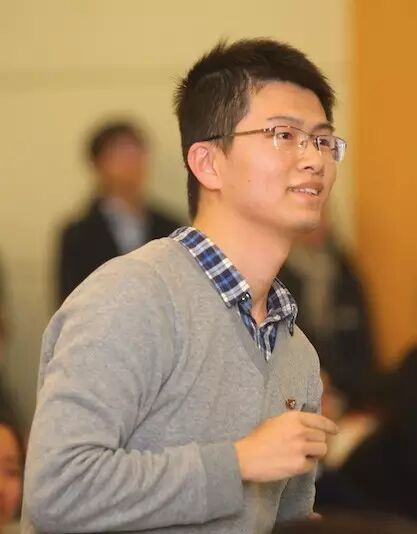
Students asking questions of the Source Code team
Among scarce resources — technology, capital — the most important is people. Energy won't be scarce in the future, nor land, nor housing. But exceptional technology, strong resource allocation capability, and people who relentlessly pursue value creation — these will always be scarce. These are the three elements Source Code Capital believes drive world change: capital, technology, and people.
If a venture capitalist lacks self-drive, fails to constantly learn and challenge themselves, that is a waste of capital and technology. Some capital sits idle. Some flows to backward industries. Some goes to the wrong founders. Every investment, every yuan deployed poorly — Cao considers that a kind of crime.
So Cao kept emphasizing that every self-driven investor must keep learning and embrace deep purpose: the mission to create lasting, real value for society and the world, to use technology and capital to advance economic evolution. Only such purpose, combined with continuous learning and execution, can enable better resource allocation.


Collecting resumes on-site
Special notice —
Students who couldn't attend the recruiting event in person can also send resumes to:
We will have dedicated staff process them promptly.
We warmly look forward to more fresh talent joining the Source Code Capital family!