Source Code Rhythm's Yungang Huang: From Gobi Desert Youth to Fund Captain

The rhythm moves because we believe the world has its own laws.

Editor's Note: Among investors, Yungang Huang stands out as different.
His childhood began with an involuntary migration: his parents, seeking livelihood, moved the family from a small mountain village in Sichuan-Chongqing region to Aksu, Xinjiang — a small city surrounded by the Gobi Desert. There was no extra money at home; winters were heated by burning coal. After school, he was often alone doing homework, with sandstorms and endless silence outside the window. He learned early to be alone, and grew accustomed to observing rules and discerning right from wrong in silence.
Later, he rode a green-skinned train for seven days and six nights, bumping all the way from the northwestern frontier to Hangzhou, walking through the gates of Zhejiang University. After graduation, he stumbled into the investment industry more or less by accident, and now independently helms a fund. There were no halos along this path — only reverence for rules, empathy for the weak, and a nearly stubborn long-termism...
Today, we specially share this in-depth interview from elsewhere, where veteran journalist Jing Liu speaks with Yungang Huang, Managing Partner of Source Code Rhythm. In this article, Huang recounts his growth trajectory and investment career for the first time: from the teenager gazing at stars in a small northwestern city, to an early pioneer in Kuaidi Dache; from investing in RELX and Moonshot AI, to the spiritual origins behind the name "Source Code Rhythm."
As he puts it: "The world has its own laws; one must hold oneself steady." May you, too, feel that simple yet resolute strength after reading this.
Below is the full text from elsewhere, with a modified headline:
This is a true investor's story. Yet it's so true that it doesn't seem like an investor's story at all.
In 1986, Yungang Huang was born in Sichuan. At age 9, he followed his parents to Aksu, Xinjiang. But this was hardly a fond memory: in his youth, he had to move bricks and pick cotton alongside his farming parents. Not until age 18, when Huang was admitted to Zhejiang University, did he leave. Before departing, he didn't even know that Zhejiang University was in Hangzhou.
Then he joined Matrix Partners China and Source Code Capital, became a partner, and invested in a string of era-defining companies: Kuaidi Dache, RELX, Moonshot AI, Unitree, and Ladder Medical.
Yes, this is a classic tale of education changing one's fate.
We have no intention of slapping labels on any industry or group of people. But one can't help the stereotype: if this had happened before the 1990s, something like Weijian Shan's Out of the Gobi would be imaginable enough. Yet most of this story unfolded after 2000.
Among Huang's many past experiences, the most narratively rich are his journeys on green-skinned trains. On trips ranging from several hours to seven days and nights, he witnessed brutal fights, real human nature, and once nearly died himself. To this day, he keeps those ticket stubs.
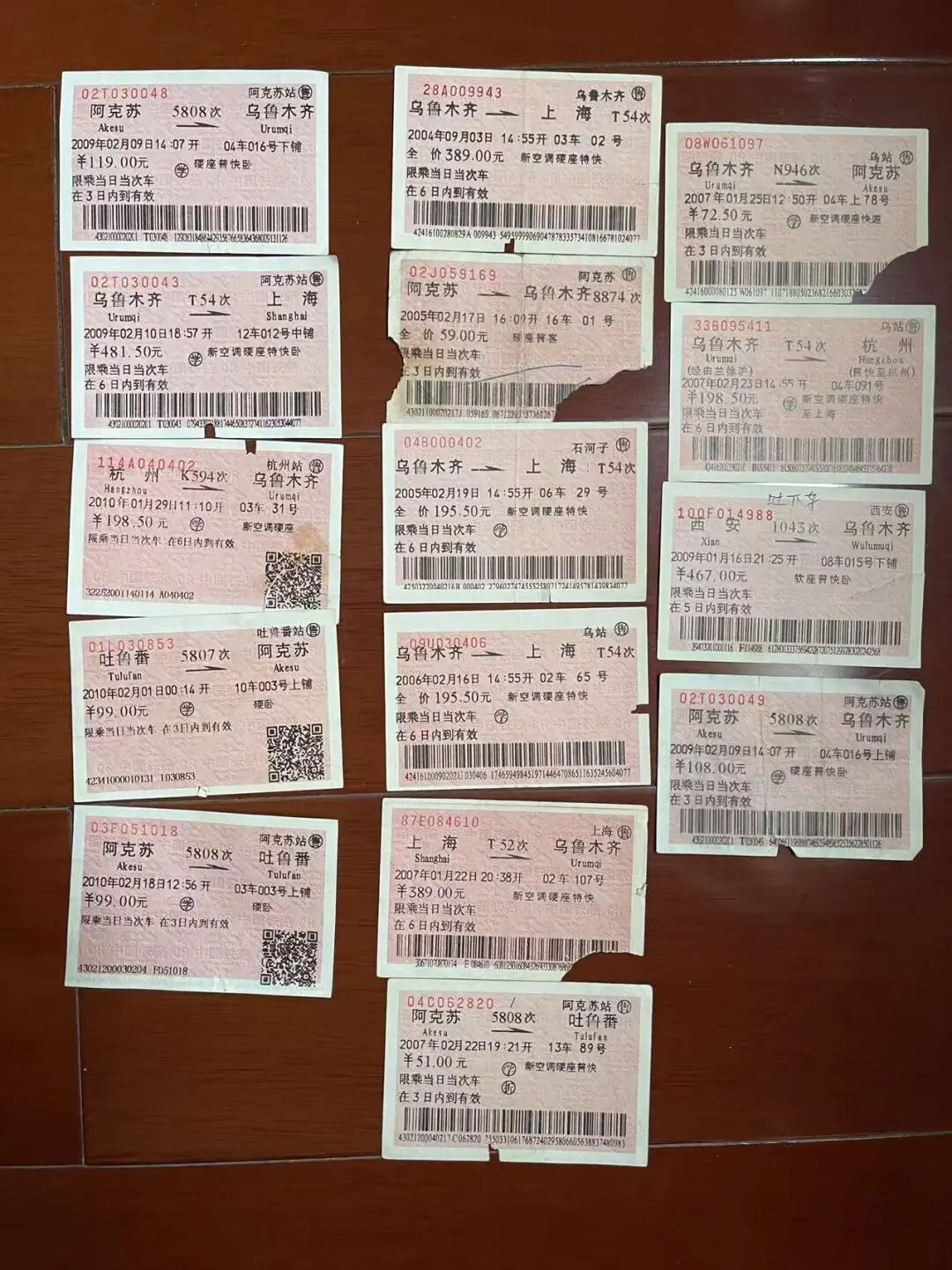
Train tickets, 2004–2010
He says that when society is in flux, some people might gain higher returns by breaking rules. But he doesn't believe in that. He believes: the world still operates by laws; and one must hold oneself steady. So when he decided to start his own fund, he named it Source Code Rhythm.
Source Code Rhythm is an independently raised, independently decided, independently operated fund, focused on early-stage investments in three main directions: AI applications, robotics and smart hardware (tech-enabled consumer products).
Before doing a video podcast with Huang, I asked several people around him. Some said he's like Xu Zhu; others said Fu Hongxue — though Huang himself disagrees with the latter, finding Gu Long's characterization of Fu Hongxue too tragic. But these assessments all point to one thing: Huang is a man with a sense of destiny.
Perhaps because of this, Huang often reveals a value orientation rarely seen in investment circles. His sense of "being deserving" seems low; he has an innate empathy for the weak; he is drawn to seemingly incredible acts of kindness.
The following is the full text:
01
A Destitute Yet Sun-Drenched Childhood
The elementary school in memory had only three classrooms. To attend middle school, one had to walk an hour on mountain roads, ride a boat for an hour, then walk another hour.
This was where Yungang Huang was born: a small mountain village in the Sichuan-Chongqing region. Later his parents decided to go to Xinjiang — at least the roads there were flat. At age 8, Huang rode a train for several days and nights to reach Aksu. There, his parents were simple laborers: picking cotton while moving bricks at a brick factory.
Perhaps it was a gift, or perhaps he simply realized early that "this is the only path to change one's fate," but Huang always excelled at school. He almost never ranked second.
One day in the second semester of senior year, dawn was breaking. Lying in his dormitory bed, surrounded by thunderous snoring, he felt confused for the first time in his life. He asked himself: What do I want to do in the future? What if I don't get into university?
This scene somewhat resembles Gao Jialin in路遥's novel Life. But that was the 1970s; Huang's story came after the millennium.
When the results came out, Huang ranked third in his school — the top two were repeat students. He chose Zhejiang University because he had seen the honor board from previous years, where Zhejiang University ranked very high. But he says he didn't even know then that Zhejiang University was in Hangzhou.
Huang says that despite the poor environment and economic hardship, he had that feral-child kind of beautiful childhood: riding bikes with friends for three to five hours from one place to another; catching jerboas and hares, picking mushrooms; running across mountains and fields; lying under poplar trees and in alfalfa fields, gazing at the sky.
To this day, he maintains 5.3 vision in both eyes. He attributes this to all the sun he got during childhood.

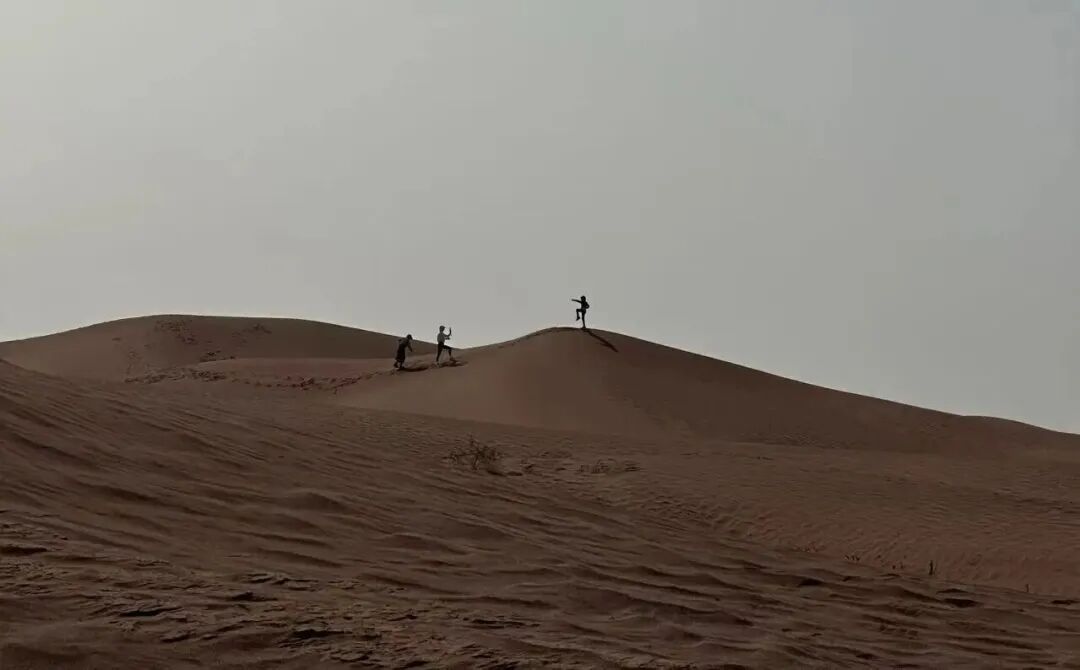
Cotton fields and Gobi desert in Aksu
02
Escaping Bullying and Timing in Investing
In his youth, Huang also experienced bullying — though the word may sound too severe.
The worst incident: on his way home from biking, two older kids came up and beat him up for no reason. He still remembers, after being hit, his bicycle lying on the ground with its wheels spinning in the air. He lay there for a while, then got up, righted the bike, and kept riding.
This was very powerless. He drew an analogy for me: just as in investing, one inevitably encounters people skilled at gaming situations. Some colleagues naively believe what the other party says, but he would always ask as a bottom-line question: If a low-probability event occurs, what is the ultimate enforceability?
What he means is: some things have no rhyme or reason, so one must still specify in the terms what the worst-case scenario is and what to do about it.
I digress. For a year or two during school, he lived in constant fear. The moment school ended, he would tense up. Until he gradually learned a precise escape technique: slipping out of the classroom two minutes before the teacher announced dismissal, then climbing over the side wall.
Huang even feels this resembles the grasp of timing in investing. He put it in investment industry terms: "The best positive feedback is when your judgment [of timing] gets better and better, and these things simply stop happening."
03
Green-Skinned Trains, Sons and Daughters of the Rivers and Lakes
Green-skinned trains are the central element of Huang's story.
To this day, he can clearly recall what each letter — G, Z, D, K, N — represents in train classifications. Those journeys, ranging from four days and nights to seven days and six nights, spanned almost his entire university years. In that era without WeChat or Douyin, too many strange tales occurred.
There was pain. He once suffered a sudden gastroenteritis attack on the train, fainted in the bathroom, and wasn't taken to a hospital in Zhengzhou by 120 until the train passed through. When he woke, he felt reborn; the two nurses before him nearly made him cry out in astonishment: as beautiful as celestial beings.
There was cruelty. A young couple and a father-daughter pair fought fiercely over seats; he watched the young man beat the girl's father until his face was covered in blood. For a long time afterward, Huang regretted this deeply: if he had proactively offered his own seat, perhaps it wouldn't have happened.
There were lessons in how the world works. He returned from the bathroom to find his seat taken by four burly men. He had wanted to protest, but seeing them "open beer bottles with their eyelids," he shrank back. So he stood for five hours.
Huang has told these stories to many people. What he reflects on is that green-skinned trains, as a kind of collective memory for Chinese people, were essentially a concentrated society: sons and daughters of the rivers and lakes, from all corners of the land, some studying, some doing business, some leaving home, some returning.
The first time he took the train from Aksu to Hangzhou, he saw West Lake. He says he was enchanted at that moment, "wanting to jump in."
So many years later, when he saw Feng Xiaogang's A World Without Thieves, he felt a deep kinship, "like hearing an old song that brings back so many memories."
To this day, Huang still keeps his university-era train tickets. He finds it strange that he started being nostalgic from a very young age, though his uncle once said on the train platform when seeing him off: "The farther you go from home, the closer you get to your dreams."
He thought about it — perhaps it's because he was always leaving old places behind.
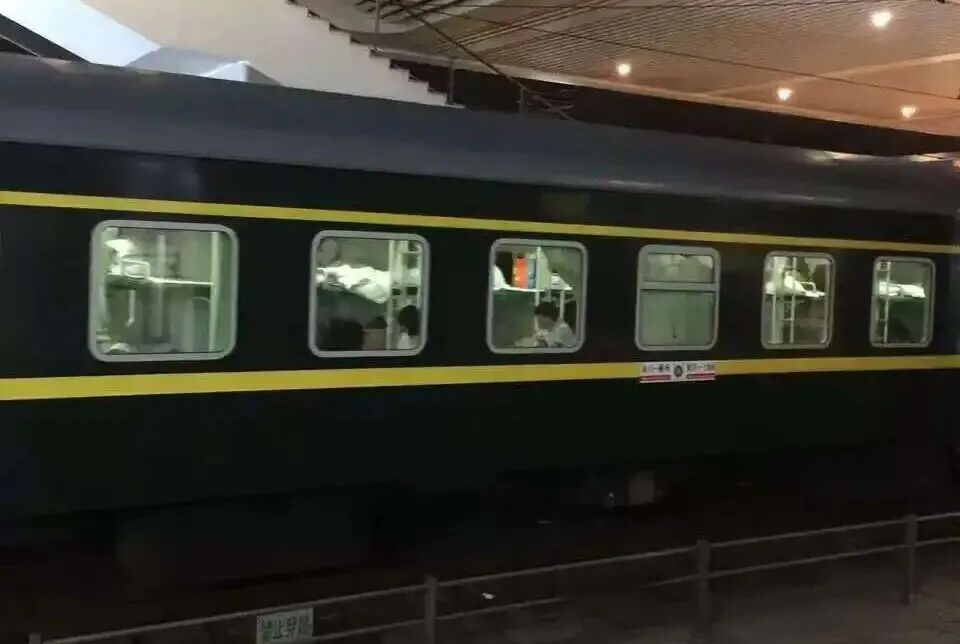
A certain green-skinned train, a journey Huang repeatedly took
04
Rhythm, Because He Believes the World Has Its Laws
The name Source Code Rhythm also has something to do with Huang's green-skinned train memories.
The full spectrum of humanity he witnessed on those trains made him feel: sometimes rules don't work. Yet Huang happens to be someone who believes in rules.
So "rhythm" means laws. He says that when society is in flux, some people can gain higher returns by breaking rules. But he doesn't agree. He wanted this word to remind himself: this world still operates by laws; and one must hold oneself steady.
05
"I Got Too Deep Into the Role"
The opportunity to enter investing came by chance.
In university, Huang interned at Tencent's HR department. Because he had to sift through massive numbers of resumes, he tried every recruitment website on the market. So when he got a chance to intern at Matrix Partners China, he immediately applied what he'd learned, recommending two recruitment websites — one of which was Liepin, which Matrix later invested in.
However, compared to some peers of his generation, Huang wasn't particularly strong at sourcing. In his first year or two, he made virtually no noise. Until a company that colleagues had looked at and passed on appeared: Kuaidi Dache.
The initial pass wasn't without reason: at the time, Kuaidi's management structure had some issues. But by the time Huang got involved, this problem had been clarified. Still, the investment process was bumpy: from initially understanding the model, to nearly closing, then having another fund swoop in. The cooked duck nearly flew away.
But the most dramatic chapter of the Kuaidi story was the great merger.
At the time, the sustained battle between DiDi and Kuaidi was largely fueled by excess capital. So eventually, both sides' investors decided to negotiate a merger.
On the night of negotiations, the final conclusion had long been set: DiDi would absorb Kuaidi. Huang and Lü Chuanwei first walked to the hotel lobby. Just then, the DiDi team came over in high spirits. Huang and Lü Chuanwei glanced at each other, then silently looked away.
Rationally, the ride-hailing war no longer needed to be fought. But emotionally, for Lü Chuanwei and Kuaidi's investors, it felt like handing over their child.
Even many years later, Huang says that when choosing payment methods, he always uses Alipay instead of WeChat whenever possible — simply because Alipay supported Kuaidi back then.
"I feel like I got too deep into the role," Huang says.
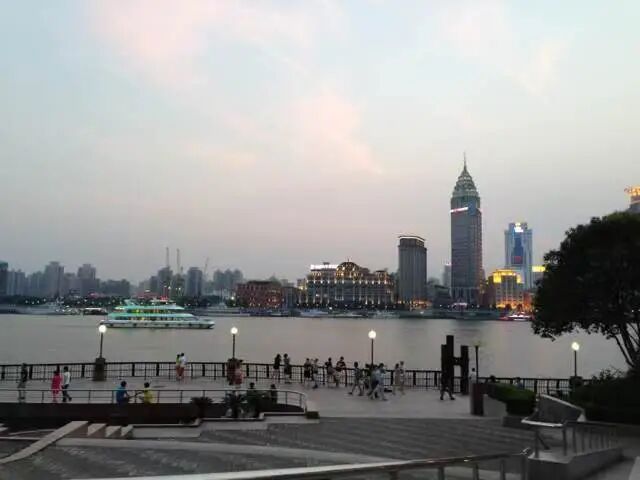
The evening of 2013, by the Huangpu River, when the decision to invest in Kuaidi Dache was made
06
Between Sorrow and Joy
After Kuaidi, Huang's next signature deal was RELX. This was his first investment after moving from Matrix to Source Code Capital.
RELX founder Ying Wang had previously worked at Uber, so this was also a continuation of his mobility-era investments. But what's interesting is that Huang himself neither smokes nor drinks, yet he invested in e-cigarettes.
As the first partner Source Code Capital brought in from outside, Huang once endured enormous pressure.
It was around 2018, when online education was white-hot. Huang also invested in a one-on-one online education company. But in hindsight, online education was already in its second half by then; the one-on-one model barely worked.
Soon, this company ran into trouble. But RELX hadn't yet broken out. The pressure peaked at this point.
During that period, Huang recalled something Kobe Bryant said: "Even if you go 0 for 20, keep shooting." He copied this into a small notebook as encouragement to himself.
Not until 2021, when RELX went public with a market cap once exceeding $50 billion, was Huang's pressure instantly released. He says, strangely, that day felt like playing a video game, but the next day he returned to calm.
07
Babaoshan and Liang Qichao
He had proven himself. But soon, Huang felt pressure once again.
This was in 2021, when people thought Source Code Capital was riding high. The entire market was flooded with capital, but Huang — on one hand sensing the frenzy, on the other feeling increasingly exhausted. "It was simply, tired of loving," he said, using such a zeitgeisty phrase.
Huang says that during that period, he was having nearly 10 IC meetings a day, his brain buzzing afterward. He even began suffering insomnia at one point.
So he decided to seek answers in books. He read no business or finance books; instead he read biographies of figures from the Republican and early PRC periods, such as Liang Qichao. Then one afternoon, on a whim, he decided to visit the Babaoshan Revolutionary Cemetery.
There, he saw those legendary heroes, feeling the vastness of life, "very震撼." After returning, he was释怀.
This story sounds almost like a strange tale. Perhaps similar to how some people go to hospitals to witness the comings and goings of humanity?
It was also during this period that Huang was reading a book about Liang Qichao, in which one story left a deep impression. Through this memory, perhaps we can better understand Huang.
He says that when Liang Qichao fell ill and went to Peking Union Medical College Hospital, his kidney was unfortunately removed by mistake, causing his condition to rapidly deteriorate. Liang's family had planned to contest this, but Liang stopped them. Because he didn't want to affect the hospital because of himself.
In Huang's view, this is "great kindness."
08
Return to Aksu
In mid-2023, Huang returned to Aksu once more. The last time had been over a decade ago: after graduating from university, he had never gone back.
Upon landing, he said "that fold was opened": Sichuan, Aksu, Hangzhou, Beijing. These four landmarks instantly connected.
This was also his first time flying back to Aksu. What once took days and nights now took only four or five hours.
At the time, he had a foot injury and went back on crutches. Old classmates drove him around, but he discovered with sadness: the brick factory of his youth was gone, replaced by brand-new residential complexes. In just over a decade, so much seemed to have happened.
After returning, he decided to found his own fund: Source Code Rhythm. Targeting early stage, small team with fast decisions, focused on AI and robotics.
Returning to Xinjiang in 2023, with a torn ankle ligament, but still went horseback riding
09
"I Want to Become the Best Investor"
Before the video podcast with Huang, I asked several people around him. Some said he's like Xu Zhu; others said Fu Hongxue. One close friend even suggested we ask about his ambition — not because he actually wanted to ask, but because he was certain Huang would likely evade the question.
These assessments all point to one thing: Huang is an introverted, or "low sense of deservingness," person.
For example, at his first meeting with RELX founder Ying Wang, the two talked for over three hours, hitting it off wonderfully, but Huang never mustered the courage to ask if she planned to start a company. He said: "How could I ask that on a first meeting? Even if I asked, why would she choose me?"
One founder's assessment of Huang: many people make themselves the center of attention, but Huang doesn't. He's the one who quietly listens to you.
But when we threw his friend's question at him, he answered: I want to become the best investor in this industry.
He says this is very unlike something he would say. This is him once again trying to break through himself. Just like over twenty years ago, when he decided to leave Aksu after days and nights on the train.