Gross Margin Is Your HP Bar: 8 Real Questions From Unity Ventures' AI Hardware Night

Finding Certain Answers in an Uncertain Market
In 2026, AI hardware is entering a new phase. After the last wave of hardware enthusiasm cooled, every entrepreneur must confront the reality of bringing products to market. From demo to delivered product, from technical feasibility to customers actually paying real money — there's a long list of concrete problems to solve in between.
Continued breakthroughs in large language models open new possibilities for hardware, but slapping AI onto hardware doesn't make it an AI-native species. So entrepreneurship circles back to some fundamental questions. Is the demand real? How do you define the product? Where do the first users come from? How do you break into overseas markets?
During the 2026 WTCC Shanghai West Bund Tech & Consumer Carnival, Unity Ventures partnered with BEYOND and Airwallex to host "AI Wonder Night · Hardware Edition," a gathering for hardware entrepreneurs. From the on-site discussions, we've selected eight representative questions to share with founders exploring hardware.
Entrepreneurship is a process of constantly raising new questions and attempting to solve them in new ways. This is also the space "Unity Ventures AI Wonder Night" aims to create: entrepreneurs arrive with questions, start from inquiry, hear different experiences, and see more possibilities. Through exchange and mutual inspiration, each person searches for their own answers.

In the wave of AI reshaping hardware, the one constant is reverence for users' real needs. As the entrepreneurs shared, whether it's renting an RV to experience firsthand or continuously honing the team's ability to generate cash flow, the endgame for AI hardware remains a comprehensive contest of product, supply chain, and commercial efficiency. As an early-stage investment firm, Unity Ventures will continue to accompany entrepreneurs in finding certainty amid market uncertainty.

Q1
Where do you find opportunities in AI hardware?
In the past, certain needs were difficult to meet through hardware due to technical limitations, interaction methods, or cost. With advances in large language models, new product forms and application scenarios are emerging.
Unity Ventures has been continuously investing in smart hardware, from AI glasses, AI rings, and smart lawn mowers to Embodied Artificial Intelligence, home robots, industrial collaborative robots, and large-scale smart hardware like RVs and yachts — betting on dozens of hardware startups. In the early stage, we invested in companies like Independent Variable Robotics, D-Robotics, Squirrel Power, Lymow, and CYBERSIGHT. Throughout this technological evolution, we've spoken with thousands of hardware projects, and our core focus is always on what needs they satisfy.
For early-stage entrepreneurs, technological progress offers new possibilities, but the most fundamental starting point must return to the user: first answer clearly who you're serving, then consider what product to build and what technology to adopt.
Sidi, a Unity Ventures investor focused on smart hardware, believes that when searching for entrepreneurial opportunities, you can look at different groups — the elderly, young people, children, outdoor sports enthusiasts, professionals in specialized fields — observe how they live and work, understand the shortcomings of existing products, and then judge whether there's an opportunity to create better solutions with AI.
Q2
How do you choose a direction from among numerous user needs?
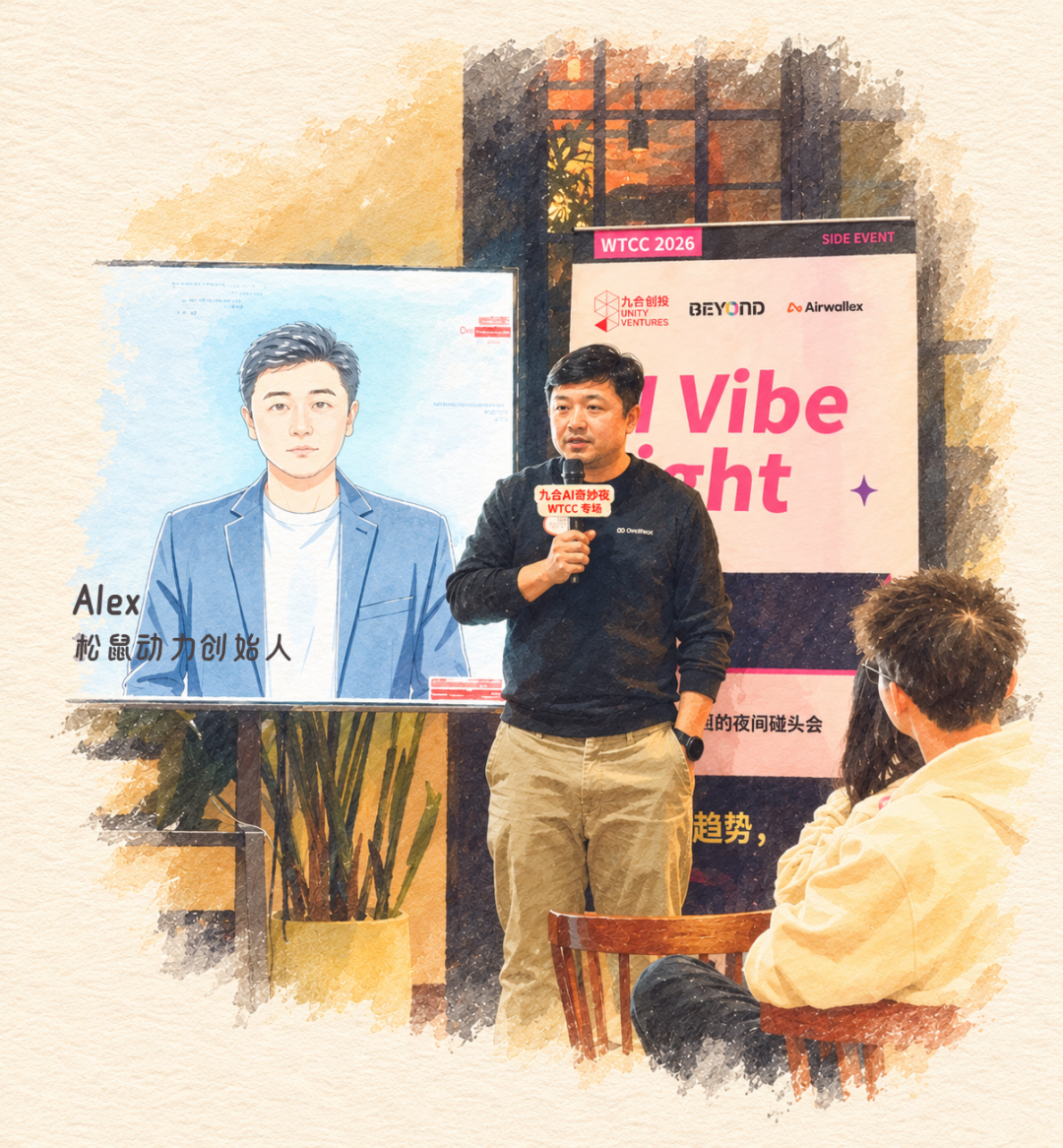
Alex, founder of Squirrel Power, was Anker's first product manager and product line general manager. After leaving Anker, he founded Squirrel Power, a smart RV brand targeting the North American market, and recently completed a funding round exceeding 200 million RMB.
Alex evaluates a potential entrepreneurial direction on three dimensions: first, whether there's opportunity in this direction; second, whether the team has the capability to execute it, and whether the direction matches the team's abilities; third, whether you genuinely love what you're doing. The last point is especially important — you'll encounter countless difficulties in the entrepreneurial journey, and only genuine passion will carry you through.
When assessing whether a direction has opportunity, you need to go deep into specific users and scenarios. Sidi used smart lawn mowers as an example: while this appears to be a fiercely competitive category, competition is actually concentrated in the European market. North America's large lawns and European usage scenarios are completely different. Lymow敏锐ly identified this overlooked demand and found a new market entry point.
Q3
After settling on a direction, how do you define the product?
Alex believes product definition must be built on understanding real users and usage scenarios. Especially for hardware targeting overseas markets, differences in geography, lifestyle, consumption habits, and usage scenarios across markets can all affect how you define the product.
He shared his experience researching the RV market in the United States. They once organized six focus groups and spoke with over 30 RV users, but gained limited insights. Later, he rented an RV himself and lived in it for several months, observing users' actual usage scenarios and discussing problems they encountered in daily use — only then did he develop clearer judgment on product direction.
User research isn't just a pre-development task; it should run through product iteration and market expansion. After a product enters the market, new feedback continues to surface previously undiscovered problems, helping the team refine their understanding of users.
Q4
The demo is ready — how do you find the first users?
Where users are, what they pay attention to, and what influences their purchase decisions are all questions that need to be researched in advance for marketing. Tarin, sales lead at CYBERSIGHT, noted that for smart hardware in vertical scenarios, finding people who truly understand the product's value and have genuine related needs often helps more in building that first user base.
CYBERSIGHT develops smart glasses for sports scenarios, focusing on cycling and other athletic communities with relatively clear target users. Therefore, before officially launching their crowdfunding campaign, the team began entering sports communities in target markets, understanding their pain points and usage needs, and gradually accumulated a group of potential users interested in the product.
When driving product growth, KOL selection also needs to center on core audiences. Tarin's experience is to prioritize finding people with real influence in target scenarios — cyclists with demanding requirements for sports data, sports enthusiasts who frequently participate in competitions, or creators with strong influence in professional communities. For vertical categories, precisely reaching core audiences helps teams use their marketing resources more effectively.
Q5
How do you choose the right marketing approach for your product?
Not all hardware products are suited to the path of online crowdfunding and KOL promotion. Alex believes that for high-ticket, experience-heavy products like smart RVs, marketing isn't just about reaching more users — it requires building trust through sustained interaction. Therefore, overseas promotion needs to combine online and offline channels.
Online, you introduce the product through your official website and complete user education. Offline, you regularly participate in exhibitions and host events, letting users experience the product firsthand, with the founder personally explaining product features and brand philosophy, engaging in deep conversation with potential customers, and moving them from understanding the product to making a purchase.
The significance of first users extends beyond initial sales. They can also become participants in product iteration, helping the team validate demand, accumulate word-of-mouth, and provide a foundation for subsequent growth.

Q6
Going global with hardware — how do you handle policy changes?
Alex said trade policy changes have affected fundraising, but the impact on operations has been relatively limited. One important reason is that Squirrel Power's smart RV products are positioned in the premium segment, with sufficient gross margin built in.
Alex believes that for a hardware startup's first product, gross margin matters most — "gross margin is your health bar." Even if tariffs increase, the added costs can be absorbed through reserved margin space. In the long term, Squirrel Power will also gradually increase the proportion of U.S.-based manufacturing to reduce the impact of policy changes.
Q7
What capabilities should a hardware founder have?
Sidi pointed out that beyond whether a赛道 has sufficient room for growth, hardware entrepreneurship also depends on whether the founder has capabilities matching that赛道 — different赛道 require different core competencies. In technically demanding fields, you need relatively strong R&D capabilities; in competitive fields where you need to quickly open markets, marketing ability matters more.
Beyond hard skills, founder resilience is particularly important. Nearly every great company has gone through moments of near-death. Early in his entrepreneurial journey, Alex also experienced periods of tight capital. With Unity Ventures' support, he withstood the pressure and built the prototype vehicle. Once the product was validated, more investors began to trust the team's delivery capability, and subsequent fundraising gradually smoothed out.
Q8
How do early teams build and attract talent?
The pace of team building depends on product complexity and what capabilities the founding team already possesses — matching people to needs is key.
Alex believes team building should unfold around the capabilities the product requires. For projects with simple products and shorter chains, keeping the team lean early on helps reduce costs and improve communication efficiency, avoiding heavy organizational costs before the product and demand have been validated.
But for hardware projects with longer chains, the founding team needs a more comprehensive combination of capabilities. Founders must understand both what they excel at and which links in the product chain remain uncovered, then bring in senior partners to fill those gaps.
Alex noted that attracting talent is one of a founder's core responsibilities — charisma, shared vision, and sufficient empowerment all matter. To find a technical co-founder, Alex once spoke with 30 people one-on-one within 10 days, screening for the right fit. When the co-founder expressed a desire to stay in Shanghai, Alex comprehensively considered factors including supply chain and chose to set up an office in Shanghai, moving himself from Shenzhen to Shanghai.
James, founder of VVANTECH, shared his own practice: in the early stages, a team's strength lies not in headcount but in whether it can accomplish more with fewer resources. Before establishing its own brand, VVANTECH participated in product R&D and mass production for multiple leading tech companies, drawing experience from mature IPD systems and exploring agile development methods suited to small teams. A team's value lies not in scale but in its ability to turn ideas into mass-produced products.