INMO CEO Yang Longsheng: Smart Glasses Will Be the Next 'Phone,' With AI + Social as the Ultimate Function | Unity Ventures Portfolio

INMO enters breakout year, with Q1 orders surpassing 100,000 units
"
Ray-Ban Meta has set the benchmark for the smart glasses industry. Mark Zuckerberg recently stated that at some point ten years from now, nearly every pair of glasses will be smart glasses.
Smart glasses will no longer be just toys for geeks. They could become the next core gateway for human interaction with the digital world, following the smartphone.
Domestically, smart glasses are also entering a period of vigorous growth, catching up faster than expected. Unity Ventures portfolio company INMO Technology is among the early movers.
2025 is undoubtedly a breakout year for INMO Technology. In the first quarter alone, total orders across all product lines have surpassed 100,000 units.
In April, INMO Technology formally established a strategic partnership with China Mobile. Leveraging the latter's extensive channel resources and ecosystem support, INMO aims to achieve cumulative sales exceeding one million units over the next three years and further expand its market share.
INMO Technology's flagship product, the INMO AIR3, recently launched and its first batch has already sold out. It topped the JD.com 618 XR & AI Glasses rankings.
As the world's first all-in-one 1080P full-color smart glasses, the INMO AIR3 delivers breakthroughs on both hardware and software levels. It is the only company globally to achieve mass production of array light-guide optical technology. AI semantic interaction has been comprehensively upgraded, delivering an innovative spatial multi-screen collaborative experience.
INMO Technology founder and CEO Yang Longsheng recently sat down with QbitAI to share his perspectives on hardware form factors, software ecosystems, competitive dynamics in the AI glasses space, and INMO's new strategy amid the generative AI wave.
Key Takeaways:
- AI is more of an underlying capability than a focused feature;
- By functionality, AI glasses development can be divided into three tiers: AI + tools, AI + lifestyle services, and ultimately AI + social;
- By hardware form factor, three stages: no-display, lightweight display, and full-color spatial computing;
- In 5 to 10 years, AI glasses will begin replacing phones as the new interaction gateway.
"
Source: QbitAI | WeChat Official Account: QbitAI
Author: Keleixi


The Ultimate Application Scenario for AI Glasses: AI + Social

How do you define AI glasses? When you hear the term "AI glasses," what's the first thing that comes to mind?
Yang Longsheng: For the general public, the first reaction is probably Iron Man's glasses or J.A.R.V.I.S. glasses — essentially an AI personal assistant.
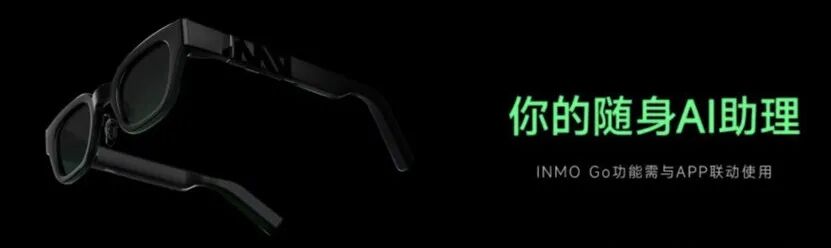
We believe AI isn't a focused feature so much as an underlying capability, a system-level interactive capacity upon which various intelligent agents can be built. Large models primarily serve functional pathways — after we give a command, the glasses can quickly parse human intent, identify user needs, and precisely deliver answers.
Take our INMO GO series, for example. AI is integrated into two functional scenarios: teleprompting and translation. Say you're in a meeting — put on the glasses and they'll automatically extract the core points of the entire discussion, helping you better respond to client questions and providing better support when you step up to present. These are the kinds of improvements that come from combining AI with functional scenarios.
Our other products, like the INMO AIR3, also target AI while adding entertainment applications. Among our investors are shareholders like 37 Interactive Entertainment, who lean toward social entertainment. We're exploring how to use AI on the AIR3 to create an entirely new way of socializing with strangers.
What new thinking has DeepSeek brought to the AI glasses industry?
Yang Longsheng: First, the explosion of large models like DeepSeek has brought a massive wave of traffic and momentum to the AI glasses industry.
The most direct physical载体 for AI落地 currently appears to be primarily glasses and Embodied Artificial Intelligence. Large models like DeepSeek can help glasses interact more naturally. Based on AI capabilities, combined with glasses as a form factor that's closer to the eyes, you can call up relevant functions and get the content you want with a single sentence. This has played a huge role in promoting smart glasses development.
Second, AI has helped with some of our functional scenarios. For example, in the GO series' AI translation feature, it can recognize more minority languages and dialects, as well as vocabulary that users personally use frequently, enabling better iteration toward each user's individual habits.

We started exploring AI combined with glasses very early. Beginning with our first-generation product, the INMO GO, in September 2023, we integrated AI large models — this was also the first mass-produced AI glasses in China. We've always wanted to push the GO series forward and make glasses into an AI assistant.
After the GO 2 launched last year, the explosion in AI drove massive growth in our product sales. The boost from AI exceeded our expectations.
Application scenarios are one of the most important aspects for AI glasses. What scenarios is INMO exploring?
Yang Longsheng: For the development of AI glasses application scenarios, I divide it into roughly three tiers.
The first tier, AI + tools, represents currently deployable scenarios. These tools might include some office scenarios — for example, taking meeting minutes during conferences, or doing translation when communicating with foreigners.
The second tier is AI combined with local lifestyle services, related to daily necessities like clothing, food, housing, and transportation. We hope AI assistants can help users order meals, perform actions in daily life. This is already happening, and we'll be releasing related products.
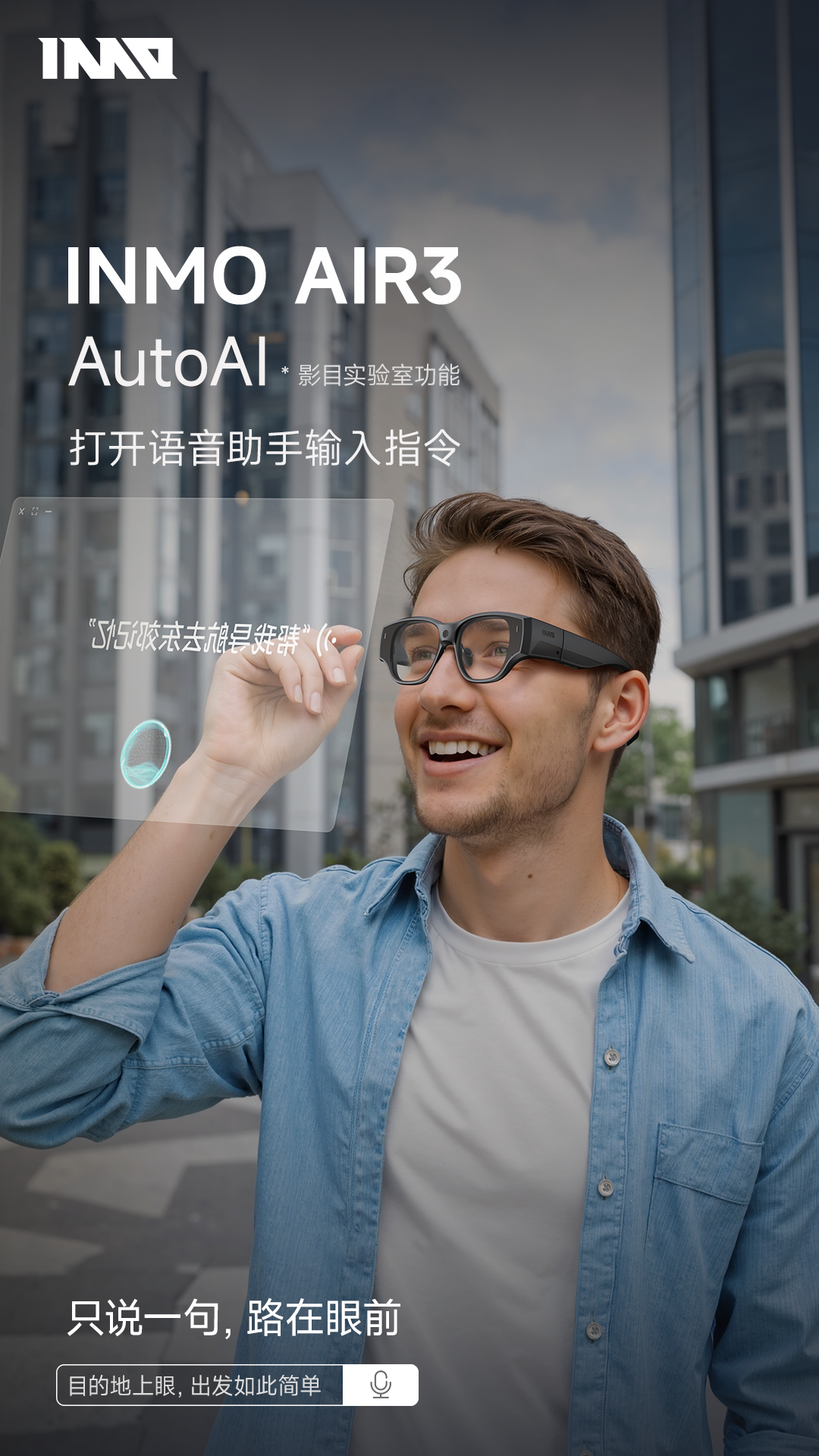
The ultimate application scenario is AI + social. This will be a disruptive experience. In the past, social interaction was generally between real people. Based on improvements in AI and virtual human technologies, I believe that in the near future — perhaps as soon as four or five years — people will be able to socialize with virtual intelligent agents.
I could create a dream virtual image, imbue it with personality, and interact with it in a world that blends virtual and real. This is also a scenario we've been continuously advancing.
The second and third tiers you mentioned probably can't be achieved through hardware manufacturers' efforts alone. How do you address this? How does INMO work with suppliers?
Yang Longsheng: Based on current tier progression and market development, we're starting with some local lifestyle scenarios, solving simple, high-frequency use cases, while simultaneously laying groundwork for more ultimate scenarios like AI social in the future.
Currently, we're collaborating with some app marketplaces on content ecosystem construction. Internet content providers are also very excited about the next wave of development trends and have already begun making some investments.
If this year's total industry shipments reach over ten million units, or if several leading brands can achieve shipments above one million units, once there's sufficient user base, major companies' willingness to invest will become even stronger.
The current AI technology transformation cycle is moving very fast. Major companies are exploring AI applications and intelligent agents. They need to find landing points for these agents, and glasses are undoubtedly the best form factor currently available. This also motivates them to make more attempts on glasses.
Spatial Computing + Full-Color Display: The Ultimate Form of AI Glasses
AI glasses have many different hardware form factors. INMO favors the screen-display route. Choosing this path means more challenges than non-display solutions — battery life, weight, heat dissipation, and other practical issues. What explorations has INMO made?
Yang Longsheng: The development of glasses hardware form factors can also be divided into several stages. What's currently easiest for consumers to accept is screen-less camera glasses, which is also the wave of popularity that Meta has driven. The core function of this form factor is photography, paired with basic AI capabilities like simple Q&A and multimodal recognition. The AI experience isn't great — you can't quickly get answers and feedback through a screen in front of your eyes.
What the industry is targeting now is the second stage, AI plus lightweight display products. Meta will also release a product like this this year — adding some simple information prompts on top of photography. The benefit is that as long as there's a display, you can get some quick feedback. For example, if I ask the glasses to buy me a coffee, I need to see whether the coffee was successfully ordered. Our current GO series also focuses on some scenarios like this.

Of course, the ultimate goal is something like our AIR series, with spatial computing and full-color display capabilities.
From the perspective of current technical limitations, tier-one and tier-two glasses can already be made very lightweight. Even photography plus display products can be kept under 40 grams — basically no different in weight from pure camera glasses, without involving battery life or heat dissipation issues.
So the hardware bottleneck is mainly full-color display based on spatial computing, which probably still needs about two to three years of accumulation.
What do you think are the characteristics of the user groups for these three hardware form factors?
Yang Longsheng: For the first tier, maybe half the users are tech enthusiasts, mainly wanting to try out some AI capabilities and prove that they're at the cutting edge of industry technology. The other half are primarily photography-oriented users — for example, capturing exciting moments while traveling. There's actually some overlap with the action camera market.
In the second stage, beyond tech enthusiasts and frequent photographers, there can be a broader user base — for example, some smartwatch users who get WeChat messages in real-time through glasses, or quickly send out some commands, having a better assistant in daily life. I believe this group's size is far larger than the first tier.
In 5 to 10 Years, AI Glasses Will Begin Replacing Phones
What do you think is the most critical factor in determining whether AI glasses products can succeed?
Yang Longsheng: Only by being both fashionable and functional can you get consumers to spend money.
First, as everyday wear, glasses must be very fashionable. This places extremely high demands on product weight and appearance. We're currently collaborating with the EssilorLuxottica Group, including their design team, to make INMO glasses look like ordinary glasses and align with international fashion trends.
On the functionality dimension, we believe 1,500 yuan is a watershed for consumer electronics. Under 1,500 yuan, users can accept buying a toy. Above that amount, there needs to be practicality.
What is INMO's biggest advantage in the "hundred-glasses war"?
Yang Longsheng: First, we're among the earliest companies in this industry. We're the first company in the industry to propose wireless AR glasses, or AR smart glasses, and mass-produce them, having accumulated four to five years of experience.
We've invested enormous time and effort at the hardware level and in light-guide optical design. We're now the first domestic company to mass-produce array light-guide technology, and we possess core technical capabilities including diffractive light-guide anti-leakage design.
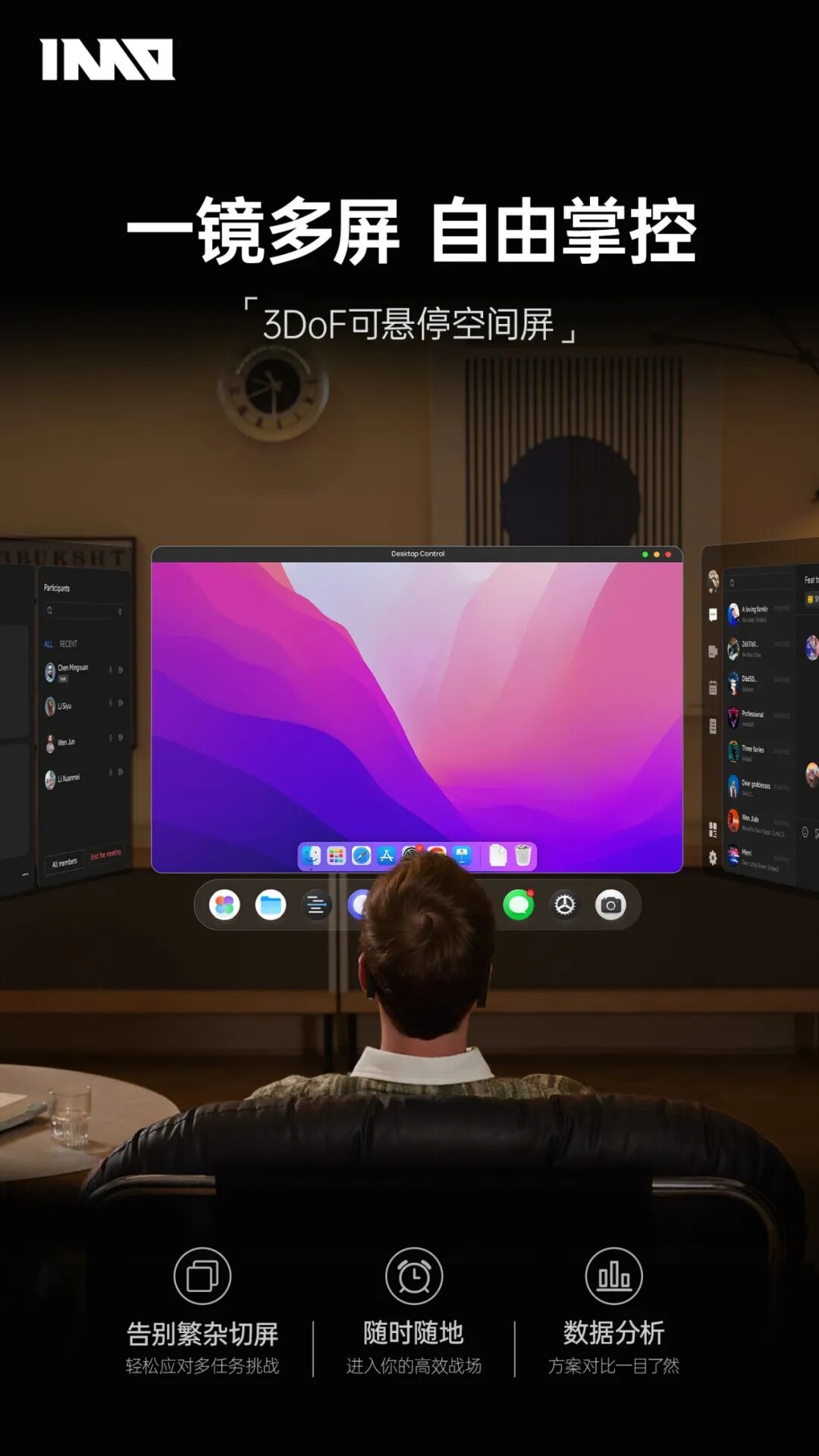
Additionally, we've accumulated substantial experience in system OS. We're the first domestic glasses company to achieve 6DoF effects on integrated glasses. Furthermore, some of our accumulated technical advantages enable us to make products lighter, more compact, and more power-efficient.
Third, our company team's background is from the phone manufacturer Coolpad. During the Coolpad era, we accumulated over ten years of supply chain experience. We use many domestic solutions and have very good relationships with suppliers, enabling extensive customization in areas like chips and sensors. This ensures our cost advantage exceeds that of competitors.
Based on our accumulation in hardware, optics, and system OS, plus our price advantage, we have very strong confidence in leading from the front in the upcoming "hundred-glasses war."
How do you view major manufacturers like Xiaomi and Huawei entering the AI glasses industry?
Yang Longsheng: When Xiaomi, Huawei, and similar manufacturers enter, they'll have their own advantages — primarily brand channels and ecosystem capabilities built up from their phone businesses.
But the smart glasses industry won't necessarily end up being dominated by Xiaomi, Huawei, and similar manufacturers. Fashion accounts for more than 50% — everyone likes different styles and brands. Established brands can sometimes be a drag; some users may find them insufficiently fashionable. The smart glasses track will give rise to many new brands, each with its own user base.
We tend to target young people and the new middle class, roughly ages 25 to 35. These groups don't have such strong attachment to established brands and prefer to see new brands with their own distinctive character emerge. This is also our path to survival in the future.
Some people believe AI glasses might replace phones and become the next human-computer interaction gateway; others think even AI phones aren't mature yet, so replacing phones with a new form factor is still very difficult. What's your view on this?
Yang Longsheng: I firmly believe that smart glasses can replace phones in the future, because I've worked in phones and watches for so many years. I understand that the current phone industry is nearing a bottleneck. Users are eager for an entirely new terminal that has both the ecosystem and functionality of phones, plus entirely new interactions including visual experiences.
Glasses currently haven't reached extremes in weight and fashionability. We still need two to three years to make the optical engine smaller, extend battery life, and achieve a 40-gram form factor that can be worn 24 hours a day, while being compatible with the phone content ecosystem and having split-screen spatial interaction effects.
At that moment, it will definitely be able to replace phones. I believe this replacement will gradually emerge over the next 5 to 10 years. There will be a portion of trendsetters aged 25 to 35 who can go out without their phones and are more willing to accept new things. Of course, completely replacing current usage habits will take even longer.