Anker's First Product Manager Builds RVs: Being Born in China Is Hardware Founders' Biggest Break | Founders Talk
Squirrel Power's Xiao Ang Builds RVs With a Consumer Electronics Mindset
Over the past three decades of China's outward expansion, we've watched waves of change — from low-cost contract manufacturing to product exports, then to brand-building abroad. Today, a new generation of entrepreneurs thinks globally from day one, leveraging domestic supply chains while quietly making serious money overseas.
Xiao Ang was Anker's first product manager. He spent ten years at the company, once overseeing nearly half its business, and lived through its growth from a 30-person startup to a public company. In 2021, after witnessing Anker's IPO, Xiao — barely into his thirties — left to start his own venture: Squirrel Dynamics, a smart electric RV brand.
The decision won support from several investors. Unity Ventures was Squirrel Dynamics' angel investor and has continued to double down. Recently, the company announced its Pre-A round; notably, its first round of funding drew support from both founders of his former employer, Anker.
RVs sound capital-intensive to outsiders, but Xiao is building them with a consumer electronics mindset — dramatically lowering the barrier to entry and making the ROI attractive. The company's development and "vehicle-building" speed have been staggering. Just over a year since its founding, Squirrel Dynamics' first RV is about to complete testing and will be exhibited overseas.
More intriguing, perhaps, is what this venture represents metaphorically. Chinese companies going global are undergoing a qualitative shift from "borrowing boats to sail" to "building their own ships." The iteration speed of consumer electronics, powerful supply chain systems, plus deep technological innovation — this cross-disciplinary fusion capability is becoming the core competitive advantage of a new generation of global-facing enterprises. Teams like Squirrel Dynamics already move fluidly within the closed loop of "demand insight + technology integration + brand building."
As Xiao sees it, "The greatest fortune of our generation is having been trained in China's 'hardware paradise,' tackling global problems with a global perspective from day one." Behind this lies an unprecedented confidence. A new generation of Chinese entrepreneurs no longer looks up to Western giants; instead, they bring methodologies validated in global markets to solve problems that even established incumbents can't crack.
Going forward, cases like Squirrel Dynamics will become increasingly common: founders treating the world as their testing ground, confronting the most mature overseas markets with product strength. This confidence may well mark China's shift from "surviving" abroad to "winning" abroad.

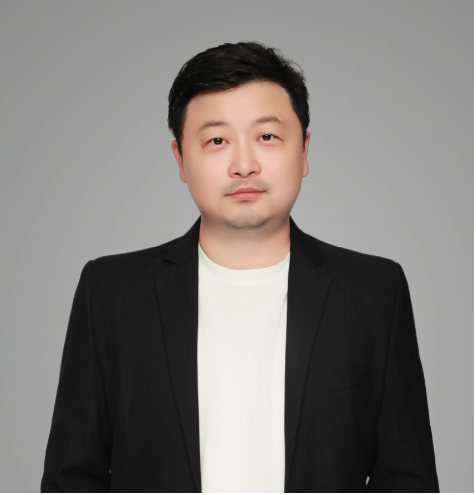
Xiao Ang, founder of Squirrel Dynamics
01
When Anker's First Product Manager Decides to Start a Company

You were based in Shenzhen for a long time. Why did you move to Shanghai this year?
Xiao Ang: Our CTO's family is in Shanghai. When he joined, he had just one condition — he needed to be close to home, and he wouldn't go to Shenzhen. The Yangtze River Delta also has advantages for vehicle manufacturing; basically the entire industrial cluster is in this region. I'd been in Shenzhen for over a decade, but when I decided to build smart RVs, I made up my mind to come here. So we set up an office in Shanghai and relocated the whole team.
There are many companies going global from Shenzhen. You joined Anker while working there. You were the first product manager?
Xiao Ang: Yes. In my senior year of college, I found an internship at Anker's predecessor company. After the internship ended, I stayed on — ten years straight, through the IPO. I joined when there were about 30 people; by the IPO, there were over 2,000. At that point the company had about 9 billion RMB in revenue, and I was responsible for roughly 4 billion, managing nearly half the business. I was Anker's first product manager, and later Anker's first product line general manager.
One thing that stuck with me was something Anker's founder Yang said internally: Seventy years ago, the world's manufacturing center was in Europe and America, and Americans and Europeans built global brands — like General Motors and Ford. Forty years ago, the center shifted to Japan and Korea, and the Japanese and Koreans built their own global brands, like Sony and Samsung. Today, the world's manufacturing and industrial center is in China, right in our generation. It's our mission to build global companies and brands. So that seed was planted back then. Today, when I talk to my colleagues about our mission and vision, I'm still repeating those words.
The most valuable experience Anker gave me was being part of the wave of "day one globalization" companies. We weren't a company that grew to a certain scale domestically and then went abroad. From our founding day we were overseas, defining products based on overseas market demand, using Chinese technology and supply chains to execute, and serving global consumers through global commercialization capabilities — so we were a global company from day one. I did this for ten years, so when I started my own company, going "global" came naturally.
So you already had a global perspective for doing global things. What made you decide to start a company?
Xiao Ang: After Anker went public, I'd already been working for ten years, and I was in my early thirties — for me, that was a critical decision point.
RVs or new energy mobility seem like a heavy industry to outsiders. Why enter this track?
Xiao Ang: After leaving, I explored several directions, and eventually reached a conclusion: people can only do what they love and what they're good at. So I thought about what I loved and what I was good at. At Anker I worked on charging and energy storage, and I love road trips and the outdoors. So something related to energy and the outdoors suited me well.
I discovered RVs during road trips. In 2021, I drove from Shenzhen to Lhasa, Tibet along the 318 route — the whole loop. In 2022, I traveled around Xinjiang. I rented RVs along the way, and the experience was unsatisfying. Coming from a product management background, I'm naturally sensitive to these pain points. I originally wanted to buy an RV and customize it, but none of the custom shops could deliver what I wanted. Looking into it, I found that RVs operate on an interior decoration logic — you buy a vehicle and then renovate it inside: lay flooring, install screens, water heaters, and so on.
I realized that RVs could be rebuilt from the ground up using the consumer electronics approach I knew — forward design. That was an opportunity. But it couldn't be done in China, both due to regulatory constraints and because the Chinese RV market is too small. The opportunity overseas is much larger — there was a chance to redefine and redesign an RV product.
At the same time, when I researched the space last year, I found structural shifts on the demand side and in the consumer demographic. Before 2021, the average RV user was 55 years old; by 2024, it was 40 — a full generational gap, and trending younger. In 2022 and 2023, pure electric pickups started appearing. In the US, towing an RV with a Cybertruck cuts range by two-thirds, meaning you need to charge as soon as you leave home — which creates a very concrete opportunity for electrified RVs designed for pure electric pickups. At that point, I realized the demand was completely different from traditional RVs.
I spent about half a year on industry research, and studying China's automotive industry gave me confidence. Because of how cutthroat competition has become in China's auto industry, supply chains, technology, and talent are all in surplus. Taking the technology and supply chains forged in this hyper-competitive environment, we can dramatically lower the barrier across the entire chain. Compared to building a passenger car, the upfront investment is two orders of magnitude lower. So measured by consumer electronics investment standards, this was achievable — and today, we've actually done it.
Finally, there's Chinese companies' capability to go global. The earliest wave was twenty years ago, when foreign companies found contract manufacturers in China. The next wave was Chinese companies selling products overseas through cross-border e-commerce — the chain shortened, Chinese companies could access overseas markets, and brands emerged, though mostly based on products already proven in China. The current wave, represented by Anker, started with US-registered companies that looked overseas from day one, defining products based on overseas demand, executing with Chinese technology and supply chains, and selling back overseas. Today many startups begin as pure overseas companies, then register R&D and supply chain branches in China — this type is increasing.
Previously, RVs were an inaccessible track — the chain is heavier, involving not just technology, R&D, and manufacturing, but also after-sales service, financing, and other links. It's extremely complex. The easy things have already been done; only these harder things remain, requiring people who've accumulated capabilities along the way to have any shot at pulling them off. So this represents an era's dividend — those of us trained in this third generation of going global, now doing the next generation of global-facing ventures.
02
He Wants to Build an RV That's Actually Comfortable
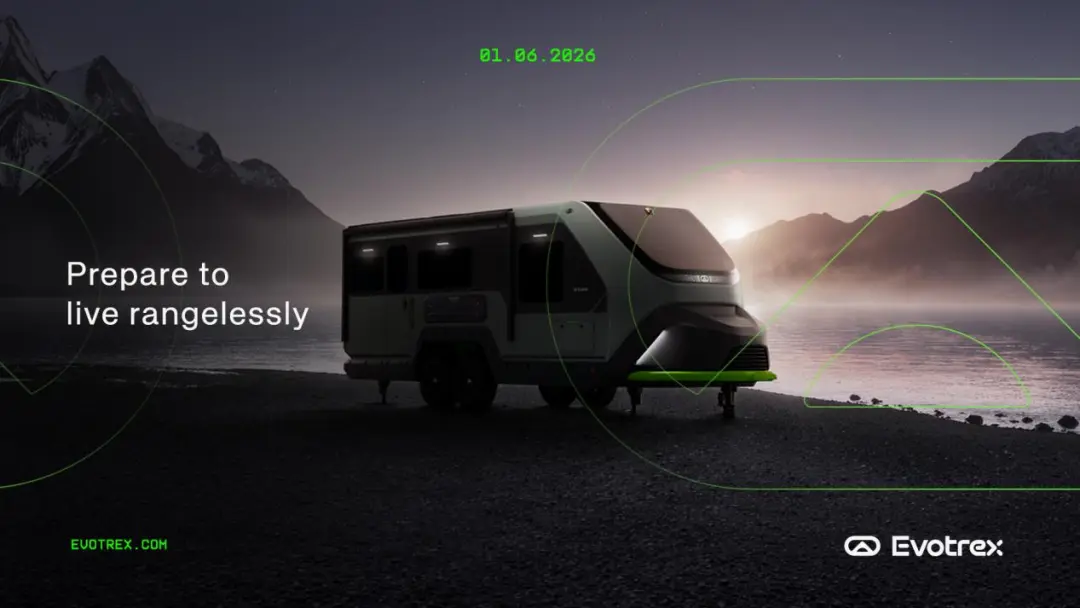
Image source: Squirrel Dynamics
What kind of RV brand do you want to create? Or put another way — how is Squirrel Dynamics different from RVs of the past?
Xiao Ang: Squirrel Dynamics' mission is to "reimagine outdoor living through electrification and intelligence, making extraordinary experiences possible."
In the past, if you wanted a real outdoor adventure, you had to rough it — carry a tent into the mountains for a couple of days, no showers, instant noodles and steamed buns for meals. Plenty of people overseas live that way; they worship nature. But human nature craves comfort. The conditions just didn't exist before.
I noticed that post-pandemic, people are spending longer stretches outdoors. When more and more folks want to stay out for four or five days, even a week or more, three things become non-negotiable: sleeping, showering, and eating. You need a real bed, not a tent. You need hot water. You can't survive on steamed buns. That leaves RVs as the only option. And anything beyond two days means massive water and power demands — something traditional RVs simply can't support. That's our opening.
The biggest difference between Squirrel Dynamics and existing RVs is energy: you can immerse yourself in the outdoors, stay even longer, and live as comfortably as you do at home — ample electricity and water, air conditioning, hot meals. I used to run charging and energy storage at Anker, so I deeply understand this pain point. Energy anxiety is real, especially off-grid. In markets like the US, Europe, and Australia, you can lose cell signal just outside city limits, let alone find power. Beyond providing a place to sleep, eat, and shower, an RV's critical function is supplying electricity.
How exactly do you achieve this?
Xiao Ang: We're using range-extender technology and power batteries from the automotive industry. Each vehicle carries nearly 300 kWh of combined battery and range-extender generation capacity. For one person outdoors, comfortable sleeping, showering, eating, plus lighting and air conditioning — it all adds up to roughly 20 kWh per day on average. Basically no different from being home.
Energy management and storage represent Squirrel Dynamics' biggest breakthrough. What other innovations do you have?
Xiao Ang: We have several major core technology pillars. First, we're using passenger-car wire-controlled chassis technology — our RV chassis is a complete wire-controlled system with autonomous motion control.
I mentioned a major industry catalyst earlier: when your tow vehicle is electric, hooking up an RV kills two-thirds of your range. One solution people proposed before us was adding electric assist to the trailer, getting the lead vehicle back to 70% range. That requires matching the trailer's power and electricity. What we've seen abroad are all-electric solutions, but the trailer itself has range limitations — about 100 miles — so it doesn't actually solve the problem.
The range-extender approach that's particularly popular domestically is the ultimate answer to this, and we can adapt it for RVs. A range extender is a more efficient, more integrated, quieter, and cleaner generator. We can even recycle the waste heat from range-extender operation back into cabin heating — same thinking as passenger cars. Unimaginable in traditional RVs.
Is this level of innovation beyond what foreign RV brands can match? Where is Squirrel Dynamics in terms of progress, and when do you start production?
Xiao Ang: We've essentially completed technology verification. We've built two rounds of prototype vehicles and largely validated our design. Next comes small-batch production, plus durability testing, high and low temperature testing, winter testing, and high-altitude testing — about another year to nail down reliability and durability. Mass production should be around Q4 next year.
Can you share anything about input-output ratio, profitability?
Xiao Ang: Product investment in this sector is relatively large compared to the consumer electronics I'm familiar with. Consumer electronics might cost millions; something bigger like robot vacuums, tens of millions; the heaviest, hundreds of millions. We're in the middle — two orders of magnitude less than cars. They say you need 20 billion to build a car; knock two zeros off and that's our investment, roughly 200 million.
Two hundred million is enough? How? RVs are extremely heavy, and there's interior fit-out involved.
Xiao Ang: Because we can leverage mature technology and talent spilling over from the automotive supply chain. The efficiency gains are massive — we're not reinventing everything from scratch. Developing a battery pack for passenger cars costs tens of millions; if we did that ourselves, the project would lose money. Instead, we combine and apply already-mature passenger-car battery technology. For us, the biggest investment is architectural design, the overall system architecture — that's our core technology and IP, and that's where the weight lies.
Looking at ROI, we're at a sweet spot: medium investment, medium-to-large market scale — one order of magnitude smaller than passenger cars. And it's operationally heavier than most consumer hardware post-launch. The US market alone is roughly 200 billion; globally around 500 billion. No consumer electronics category comes close, but it's one order of magnitude below passenger cars (20 trillion). So it balances out: two zeros less investment than cars, two zeros smaller market; one zero more investment than consumer electronics, but two zeros larger market. The ROI math works.
To your knowledge, are there domestic companies working in a similar space?
Xiao Ang: Very few at the moment.
You've announced two funding rounds in the past six months — a relatively fast pace. The prototype isn't in mass production yet. How did you win over investors?
Xiao Ang: Our first advantage is insight into overseas markets and product definition capability. If you ranked hardware product managers working globally, I'd place pretty high — that's our strongest capability. On localization, we have solid consumer insight capabilities on the ground.
Also, this business has tremendous industrial depth. The auto industry is mature and spilling over, but mobilizing those supply chains isn't something a newcomer can negotiate — it takes deep industry capability. Product definition converges three inputs: market, user, and technology/supply chain. You need to know which suppliers do good work, at what cost, with stable quality and delivery — that knowledge lets you find resources and execute quickly.
Investment is fundamentally about betting on people. When we did our first two rounds, product verification wasn't complete. You invest in people. If the person is solid, they'll make it happen. Existing shareholders have backed me for three consecutive rounds. They support you to do this; if the opportunity is real, a reliable person will see it through to reliability.
Built It — Now How to Sell It
Image source: Squirrel Dynamics
Does Squirrel Dynamics have any plans for advertising or marketing?
Xiao Ang: We're launching January 6th next year. Our website went live for预热 on November 6th — you can visit it now.
There are many established overseas RV brands with strong brand loyalty. What's your strategy as a new brand?
Xiao Ang: Our research shows the opposite — most brands in this sector actually have no real loyalty. There are over 2,000 RV brands in the US precisely because consumers don't care about brands. What we found is that the biggest pain point plaguing the RV industry for years is quality. Because RVs are essentially the construction industry — in the US they use carpentry, wood-framed walls and floors. The quality is terrible, and everyone knows it. So if you build a product using passenger-car technology and manufacturing, the product advantage is crushing. The most important way to break brand loyalty is overwhelming product superiority. When your product is a generational leap ahead, any brand strength collapses.
So it's still product that does the talking. Would Squirrel Dynamics consider crowdfunding?
Xiao Ang: Our target audience doesn't really overlap with the crowdfunding crowd. As a product manager, I've spent ten years developing a methodology: for any business problem, the first question is always "who is the user?" We define our user as someone who goes outdoors, stays out longer, and has higher net worth — and that demographic isn't active on crowdfunding platforms. Since our users aren't there, there's no point in us being there either.
How do you reach those precise users?
Xiao Ang: It's actually very similar to launching traditional big-ticket items — like cars, it'll be an omnichannel strategy combining online and offline. New RV brands and brands going global almost exclusively market online; traditional RV brands almost exclusively use offline channels. We need to leverage our strengths and innovate here too, doing full-spectrum reach. Product launches, media coverage, exposure and reviews through professional partners, content — all of it needs to happen.
In the RV industry, offline marketing and reach capabilities matter even more. Because RV consumers want to see the actual vehicle, even stay in it for a few days to experience it. So our local team has already laid out a multi-channel offline marketing strategy. From trade shows and offline community events to showrooms and even future owner experience programs — we're already preparing all of this.
Have you connected with future users yet?
Xiao Ang: The first thing I did when I decided to enter this space was go to the US to do user and market research locally. We screened thousands of people and found several dozen of the most representative potential users for in-depth online interviews. Beyond users, we also examined every link in the industry chain and ecosystem — from manufacturing to sales and service, validating every node comprehensively. We've stayed in touch with every person in that network, because this actually needs to be a co-creation process, not something we just dreamed up ourselves.
I rented a car, hitched up an RV, and drove a loop through three western states. Everywhere I saw people with RVs, I'd pull over and go chat with them. Many of those people I still keep in touch with — potential seed users for the future.
Squirrel Dynamics is focused on the US market now, but people are observing that the US seems a bit difficult right now.
Xiao Ang: That's a perception issue. First, today virtually no Chinese RV brands have made it into the US market, yet 95% of US domestic RV brands' supply chain is in China — the components are basically all Chinese. So tariff policy is fair to everyone. If tariffs go up, the whole industry raises prices together — this already happened this past April. The entire industry raised prices then; no company moved its supply chain out, no company abandoned the US market. If everyone raises prices, the advantage actually goes to companies with higher gross margins. We've done the math: if we raise prices, our increase would likely be the smallest, because our gross margin is the highest and costs make up the smallest share of our price, so our advantage would actually grow.
What about the current US RV giants — if they reform and upgrade, would you have giant-phobia?
Xiao Ang: The company that first proposed the electrified RV concept was actually Thor Industries, the global number one in the industry. They proposed it in 2019, but the project was killed in 2021. The reason: they chose to partner with a company in Germany. In 2021, even China's EV supply chain might not have been able to pull it off, let alone Germany's. Because the US RV industry is essentially the construction industry — it doesn't inherently possess the capability to achieve electrification and intelligence; it needs partner companies to develop solutions. What we're doing here, there's no company in the industry that can supply this; you have to build it from scratch yourself. Only China has the soil to make this happen today.
Why does only China have this soil? Is it the demographic dividend?
Xiao Ang: Actually, what's most powerful in China right now isn't manufacturing — it's engineering talent. No country in the world has engineers at China's scale. I've been doing global expansion for over a decade. When I started, Chinese products represented cheap and low quality, but that completely changed within a few years. In the vast majority of industries, China can now produce technology-leading products that simply don't exist anywhere else in the world. At Anker, the products I defined were always more expensive but better quality — and consumers bought them, outsold competitors. So the era of China being a cheap product representative passed long ago, ten years ago. China's strongest capability now is engineering talent — it's a manufacturing superpower leading in technology and innovation.
Beyond the pre-sale, launch, and mass production plans, what other layouts or industry plans do you have?
Xiao Ang: For the next three to five years, we'll stay focused on this single track. It's deep enough that there's an opportunity to achieve an IPO. We're unlikely to diversify quickly — we'll focus on building and solidifying our moat in one赛道. After three to five years, we'll consider returning to our mission and vision: serving the entire outdoor lifestyle user base, facing the global market.
RVs are currently the largest single market with the best timing, so we chose them as our entry point. They're the central node of the outdoor lifestyle — you do so many things from your RV base (cycling, skiing, fishing, hunting, surfing), which can spin off into many outdoor product categories, all with electrification and intelligence opportunities. We're using a central node to drive the entire outdoor ecosystem toward electrification and intelligence — this is a massive赛道.
04
On Entrepreneurship, Struggle, Going Global, and Our Generation's Mission
Since formally starting your company, do you think you're someone suited for entrepreneurship?
Xiao Ang: I think I was born to be an entrepreneur. During my ten years working, I never once saw myself as just an employee. For example, at Anker, several new businesses weren't assignments from the boss or company planning — they were things I mulled over after work, thinking the company should do something new. The boss agreed it should be done and let me lead a team to do it, and the business was born. So it was always me building from zero to one — that's innovation.
There are many entrepreneurs now coming out of giants like Anker, DJI, and Huawei — do you have any advice or warnings for them?
Xiao Ang: First thing is find something you love or something you're good at. Also, choosing beats hustling. Before deciding what to do, try as many things as possible to find what you'll ultimately commit to. Once you find it, dig in and root yourself there for ten-plus years.
Besides RVs, what other areas have opportunity for Chinese companies going global?
Xiao Ang: Many industries are going through transformation and reshuffling right now. From a market perspective, nearly all hardware is worth rebuilding — these companies are all going global one by one. Anything hardware-related, it currently looks like it can only happen in China.
Should you build brand first or product first?
Xiao Ang: The prerequisite for building a brand is building a product. A brand without product is a castle in the air; the endgame of building product is building a brand, and product without brand is a tree without roots — they're inseparable.
For founders building global brands today, do they need to physically go abroad like you did and truly experience local life?
Xiao Ang: The founder absolutely has to do this. The biggest fear in going global is working in isolation — you can't imagine many things from inside China. It's especially obvious in our space: there's no domestic market, no usage scenarios. Many products going global have no usage scenarios in China — lawnmowers, pool cleaning robots. Sitting in a Chinese office, even chatting with users online, you just don't get the feel for it.
There are also many brands going global now — they reach a certain scale domestically first, then expand overseas. What kinds of brands are suited for overseas development?
Xiao Ang: This was common in many industries in the past — you'd grow to a certain scale and then develop global capabilities, typically by hiring people with global experience. But for the sectors where companies can still achieve meaningful domestic scale today, there are very few left that haven't already gone overseas. That wave of opportunity was gradually exhausted across every sector over the past decade. Where future opportunity still exists is with products that have no consumer market in China but rely on Chinese supply chains — ventures run by a new wave of "global-native" operators who see overseas demand from day one and fulfill it using domestic technology and manufacturing.
Being forged in China's "hardware paradise" and tackling global problems with a global mindset from day one — that's the greatest fortune of our generation of entrepreneurs.
Why can Chinese enterprises shine on the world stage now? What qualities or advantages do we have?
Xiao Ang: Having spent considerable time overseas, I've observed how different peoples live. When I worked in the United States, I'd arrive first around 9 a.m., leave at 6 p.m., then have evening calls with my China team — twelve-hour days. My local colleagues might roll in at 10 or 11 a.m., and by 4 p.m. I'd be the only one left in the office. So Chinese people have, at the national character level, one enormous strength: we are genuinely hardworking, and we're not less intelligent than anyone else. When it ultimately comes down to who is smarter and who works harder — we're not behind on smarts, and we're several times ahead on diligence — there's no reason China shouldn't break through.
Young people today, fresh out of school and starting work, often feel uncertain. What advice do you have for them? What opportunities do young people have?
Xiao Ang: I believe every era has different opportunities — it depends on each person's choices, and ultimately on character. There's no right or wrong choice; once you make it, own it courageously. As for opportunities, I see them everywhere. The danger is swinging wildly from one thing to another. Everything requires long-term accumulation before results show — the so-called 10,000-hour rule.
Before starting my own business, I spent ten years doing one thing at one company, and that profoundly shaped me. For young people, my advice is: first identify a promising sector, then join a company with real potential in that sector. Don't worry too much about your initial role — just get in. Once you're inside, opportunities will naturally arise. Focus on doing one thing well, push it to excellence, accumulate experience over time, and then broaden your horizons.