Laimou Tech closes tens of millions in Series A+ funding led by Unity Ventures, fourth round in a year | Unity Ventures portfolio news

Aiming for 100,000 Units Next Year
Smart lawn-mowing robot manufacturer Lymow Technology announced today that it has completed a tens-of-millions RMB Series A+ funding round led by Unity Ventures, which doubled down after its earlier Series A investment.
While current robotic mower vendors are fiercely competing for share in Europe's small-lawn market, Lymow has taken a differentiated approach based on deep insights into user pain points and cultural habits. The company is targeting North America's thousand-square-meter-plus large-lawn segment, creating a错位竞争 (positioning gap) against other brands. Having already crossed the mass production threshold, Lymow is now sprinting to capture higher market share in North America.
Unity Ventures believes Lymow's team brings extensive experience in North American product design and mass production, and has broken through with a differentiated product strategy that has withstood the recent industry-wide shakeout. The founding team has demonstrated exceptional adaptability and entrepreneurial resilience, making Lymow a dark horse contender in the landscaping equipment赛道. Unity Ventures remains bullish on Chinese smart hardware and brand globalization, betting on outstanding entrepreneurs with product definition capabilities who dare to stick with "non-consensus" bets.

Lymow may be the most frequently funded new company in the robotic mower space this year.
Hard Kr has learned exclusively that Lymow Technology recently completed its tens-of-millions RMB Series A+ round, led by Unity Ventures with participation from Qingbo Capital, Xingfu Capital, and Zhengjing Capital. This marks the company's fourth funding round since 2025, bringing total raised to several hundred million RMB. Maple Pledge has served as long-term exclusive financial advisor.
The company checks multiple attractive boxes: its founder is a former co-founder of Cloud Whale, a serial entrepreneur with an engineering background; its products have high technical barriers; and it's targeting overseas markets. Yet contrary to expectations, Lymow chose to enter what appears to be a fiercely competitive lawn mower market.
In reality, the leading brands are currently focused on battling for Europe. Lymow CEO Wangshu Gao told Hard Kr that robotic mower penetration in Europe is five times that of the United States — a phenomenon that directly contradicts the typical pattern where the US market exceeds Europe in other categories.
Behind this anomalous data may lie the most critical growth code for the smart robotic mower赛道. North America, a market with over 80 million private yards, is only just beginning to open up.
The persistently low penetration of robotic mowers in North America stems from a fundamental mismatch: lawns vary enormously in size, vegetation is diverse, and environments are complex. As a result, many lawns are still maintained with gasoline-powered riding mowers. Consequently, major distributors remain观望 (watchful) toward smart robotic mowers.
When Lymow was founded in 2022, the robotic mower赛道 was just heating up. Established leaders like Mammotion and Weilan Daxing were only beginning small-batch shipments. Lymow sidestepped the European battlefield, seized the timing window, and built initial traction in the US.
Once a smart robotic mower company captures this North American user base, it establishes an extremely defensible fortress. Late entrants will find it nearly impossible to shake their loyalty. Lymow has now reached a critical juncture, preparing to sprint for volume in the North American market next year.
The following is Hard Kr's conversation with Wangshu Gao, edited for clarity:
Targeting Suburban Middle-Class Large Lawns
Hard Kr: European users have developed preliminary category and brand awareness. By comparison, what stage is the North American market at?
Gao: This September, our team spent over a month in the US conducting market research and more than 100 hours of user interviews. I can say America remains in an education phase — user understanding of product forms and functions is still immature. Therefore, the ability to educate users at lower cost is a critical capability.
Products must let users immediately grasp their value and intuitively understand what problem they solve.
I believe making great products requires understanding the target group's cultural background and underlying needs, not just superficial conversations with users.
Each user presents different requests. In the communication process, companies receive massive specific demands mixed with noise — user expressions carry strong subjectivity and situational limitations, with small sample sizes and significant bias, easily causing product definition to deviate from essence.
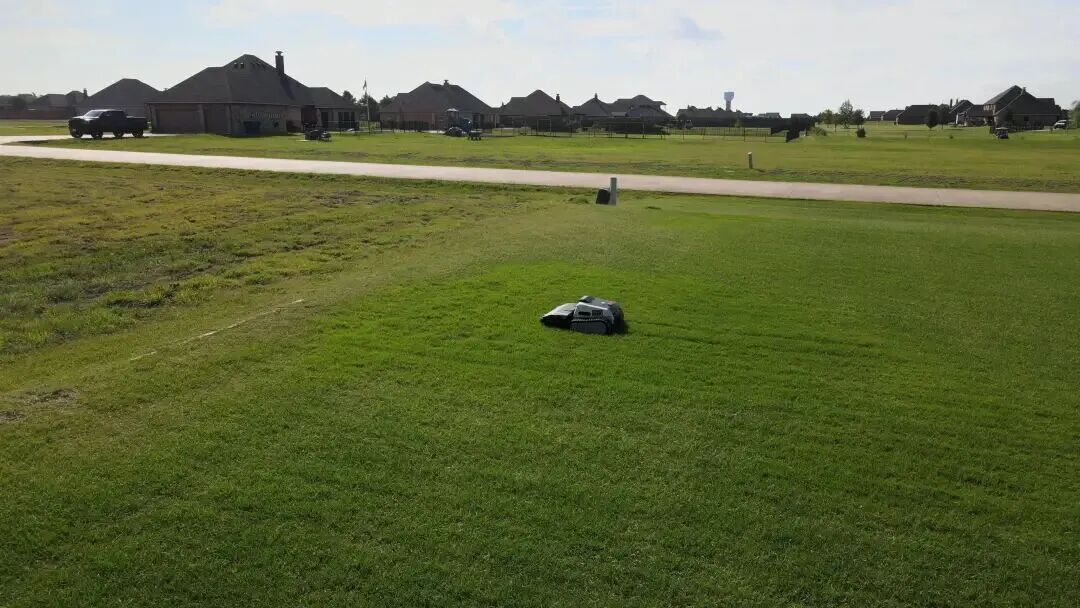
Lymow One robotic mower
Hard Kr: What opportunities did you discover in the US?
Gao: Honestly, Lymow's earlier fundraising difficulties stemmed largely from our non-consensus product at the time. Even now, some investors ask, "If large-scene applications are so promising, why aren't the leading companies doing it?"
Combining public data with market analysis, we found that nearly half of US potential users have thousand-square-meter-plus large lawn scenarios — in Europe, this proportion is less than one-third. This user group demonstrates the strongest purchase intent.
Because maintaining large lawns is extremely tedious physical labor, the larger the yard, the more acute the user pain point, and therefore the clearest their willingness to pay for a solution.
Hard Kr: For these users, what's the core decision driver for switching from traditional mowing tools to smart robotic solutions?
Gao: ROI — they'll calculate whether the purchase makes financial sense. The more ROI-focused users actually show greater willingness to buy our product, which is quite counterintuitive.
Many assume that $2,000-plus robotic mowers target only affluent consumers, but in the US market, this price point isn't actually prohibitive. Compared to luxury items like RVs, pools, or yachts, the acquisition cost is lower. It solves the maximum pain point of manual mowing — essentially an efficient labor replacement tool, highly attractive to users with high-frequency usage scenarios.
What truly determines purchase intent is scenario demand intensity and usage cost. Take America's top-tier wealthy enclaves on the West Coast — even when these wealthy residents have lawns, they're typically small-area. Their demand for large-scene products is inherently low; one meal's cost covers weekly or biweekly professional mowing. For them, mowing simply isn't a "pain point."
Our core target users are actually middle-class suburbanites with thousand-square-meter-plus large lawns.
Hard Kr: What's distinctive about this user profile?
Gao: This is a massive yet frequently overlooked demographic. They're mostly commuting professionals living in low-density suburban communities — developments of just seven or eight, maybe a dozen households, each with large front and back lawns. Professional mowing costs are exorbitant, exceeding $100 per visit.
Even if they buy riding mowers, users must operate them personally, consuming time and energy. And when encountering uneven ground or slopes above 20 degrees (where standard riding mowers risk tipping), they need additional push mowers to compensate.
Currently, US annual riding mower sales reach 2.5 million units, confirming the rigid demand for large-lawn scenarios. By precisely targeting suburban middle-class users, their demand intensity and ROI perception form our product's direct purchasing power.

Complex terrain traversal challenges
Hard Kr: How do these needs translate to specific product performance dimensions?
Gao: Durability. Durability and ROI are directly proportional — higher durability makes long-term value more perceptible in purchase decisions, tilting users toward Lymow.
Hard Kr: How did you discover these needs?
Gao: Behind such differences, we conduct deep insights into user pain points and cultural habits.
First, more data. Through quantitative verification and systematic analysis, we identify the shared core pain point and quantify its intensity. Sufficient data effectively prevents being misled by scattered individual requests, ensuring objective, practical judgments when setting product development and iteration priorities.
Second, deep understanding of user cultural patterns — knowing who your target users are. What cars they drive, what kind of yards they have, their weekend labor habits and the lifestyle values these carry. This understanding only comes from immersive observation accumulated over time.
For example, sensitivity to machine noise differs between Europe and North America. In Europe, with generally smaller yards, quiet operation is genuinely essential. But in North America, with expansive lawns, distant sounds become nearly inaudible.
Hard Kr: Which voices or demands actually enter product iteration?
Gao: Recognition capability, for instance. Optimizing recognition features has an obvious "data accumulation dependency" — initially we could only train models through manually arranged scenarios with limited coverage. As users deploy in real scenarios, richer authentic data continuously improves model recognition accuracy and adaptability.
There's no shortcut to solving these problems; they require long-term investment to mature. It's a systematic engineering challenge, not merely technical difficulty at a single point.
From business problem monitoring and data collection decisions, to legally compliant data transmission, subsequent data cleaning and core element extraction, then determining solutions — only then can closed-loop feedback reach users.
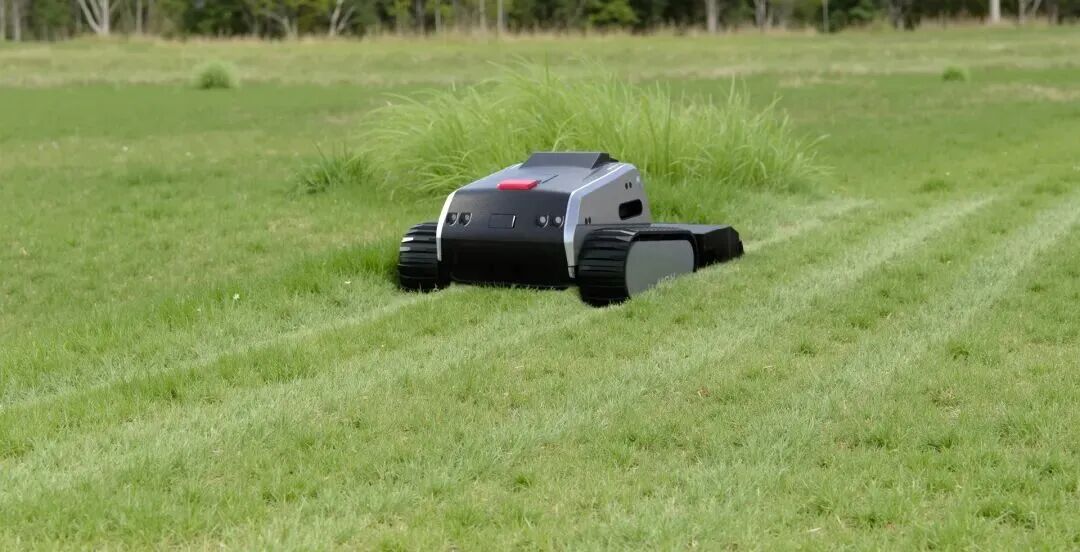
Precise spatial awareness of surrounding environment
Hard Kr: What's the situation with US offline channels?
Gao: From the US market's characteristics, with current robotic mower penetration below 10%, low user awareness and limited sell-through rates mean major KA channels like Home Depot currently lack motivation to carry this category.
For such major KAs, category penetration typically needs to reach 20% before they'll consider introduction, so this isn't the right entry timing. The current priority should be starting online and through niche channels, gradually cultivating the market and building user awareness.
White-Hot Market
Hard Kr: Competition in smart mowers has intensified dramatically this year. As a participant, what changes has Lymow observed?
Gao: The landscape aligns with our predictions. Several major players, fighting for share, are focused on the European market and engaged in fierce price wars at the sub-€1,000 entry level.
Lymow's greatest advantage is错位竞争 (positioning differentiation), and our entry timing was right, so we haven't been drawn into direct combat with leaders — this gives us room to maneuver.
Currently, Lymow's primary market remains North America. We've learned a key data point: in the yard equipment category, European robotic mower penetration is five times America's, which inverts the normal pattern where US markets exceed Europe. This alone demonstrates North America's room for explosive growth.
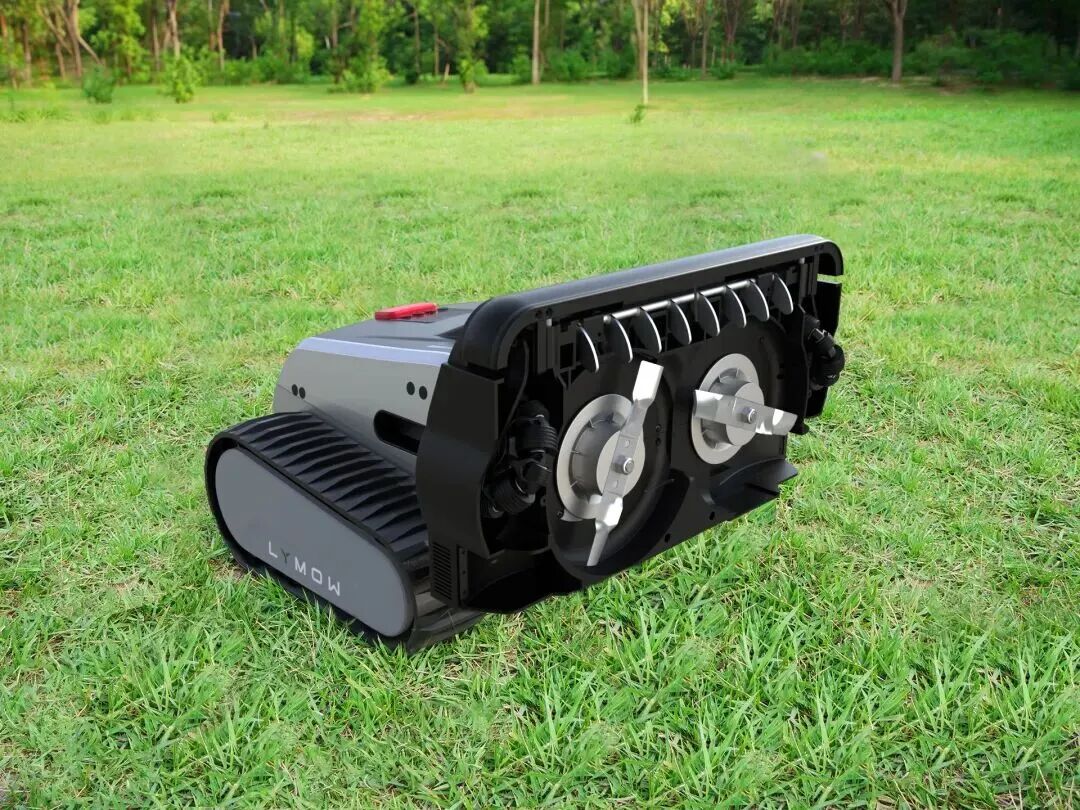
Proprietary grass-mulching straight blades and dual cutting deck structure
Hard Kr: Most market players pursue multi-SKU strategies, yet Lymow still has only one product.
Gao: The era of single blockbuster products has ended — this judgment is clear. Multi-product line布局 is an inevitable choice for all industry players. We'll follow this trend, but the core depends on team resource readiness. Next year Lymow will form a multi-SKU product matrix for further completeness.
Ultimately, competition will converge on comprehensive strength across product lines — whether each product line, which specific product, can achieve industry-leading position.
Hard Kr: For users, are functional extensions or ecosystem product matrices essential needs?
Gao: The key to functional extensions becoming essential is whether they can replace pain-point scenarios. Precisely hitting users' high-frequency frustration scenarios makes product value instantly perceptible, fully highlighting its essential nature.
But realistically, users care not just about how many functional concepts are realized, but about implementation quality.
Therefore, our team is very sober about ecosystem extension. At this stage, Lymow's focus remains on mowing itself — solving recognition problems, complex terrain traversal. These, in my view, are our users' most acute pain points.
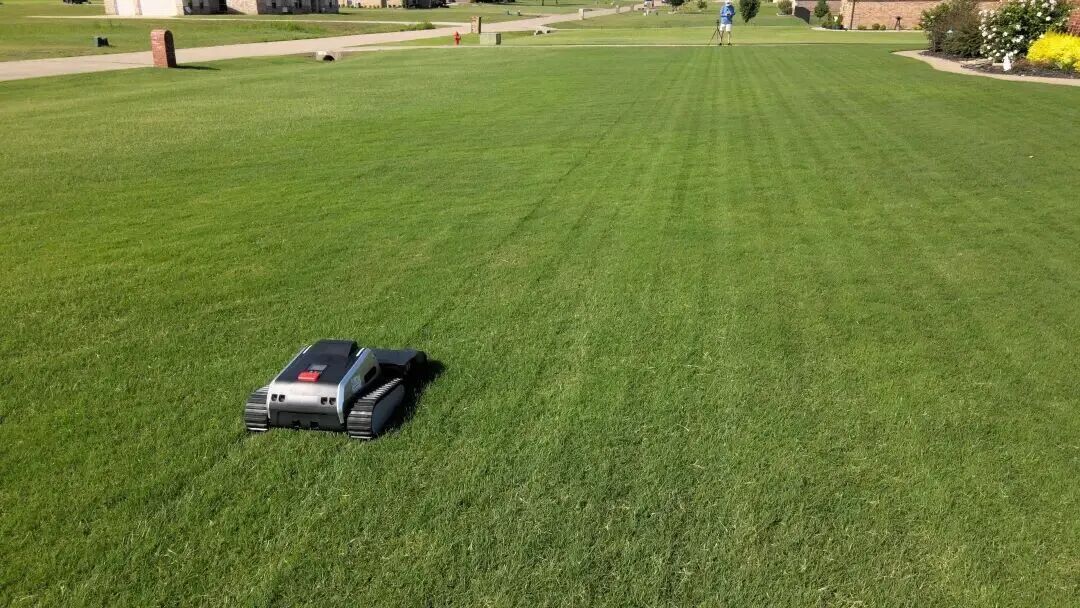
Lymow One robotic mower
Hard Kr: Do new companies still have opportunities?
Gao: It's very difficult. I believe Lymow has already occupied the last ecological niche.
Market evolution divides into three stages. Stage one is exploration. For the US market product form, we've preliminarily validated direction correctness and received positive feedback from seed users.
Over the next one to two years, Lymow's core strategy remains using precise product definition to move users — making products that users immediately perceive as "this thing works" and that highly align with their mental models.
Stage two is deep user experience refinement and brand consolidation, aiming to establish user recognition that "this brand truly works well." Referencing high-iteration industries like smartphones, product口碑 (word-of-mouth) establishment takes one to two years. Given mower category characteristics and relatively slower American user acceptance of new information, we estimate this process may require three to four years.
Only at stage three does competition mature to focus on supply chain efficiency and channel争夺. Then market格局 (structure) stabilizes.
Next year we'll sprint for 100,000 units, estimating over 10% market share in North America, staying at the table.