MatriQ Secures Angel Round, 2048 Defect-Free Physical Qubit Array Advances Neutral-Atom Quantum Computing Commercialization | New Unity Ventures Portfolio Company

Frontier Tech Companies Betting on Next-Generation Quantum Computing
MatriQ (原子矩阵) announced it has raised an angel round with participation from Unity Ventures. The company focuses on full-stack neutral-atom quantum computing solutions, covering modular design and integration capabilities from core devices and quantum algorithms to complete systems, with continued deep investment in the practical implementation and systematic engineering of neutral-atom quantum computing.
Unity Ventures believes that neutral atoms offer multiple validated fundamental advantages, including strong scalability and long coherence times. Supported by China's supply chain, the neutral-atom approach also demonstrates significant latecomer technological advantages, making it one of the fastest-progressing paths in quantum computing. As one of China's earliest neutral-atom system startups, MatriQ is rapidly iterating and commercializing more than a decade of technical expertise accumulated at top-tier physics research institutions, with the potential to be among the first to achieve commercial operation of quantum computers.

Recently, Hangzhou MatriQ Computing Co., Ltd. (MatriQ, hereinafter referred to as "MatriQ") announced the completion of its angel funding round. This round was led by Vertex Ventures China, with Unity Ventures participating as a co-investor. Existing investors LightSource Capital, Fibonacci Capital, and Yuanhe Origin continued to invest additional capital beyond their pro-rata shares.
The proceeds will be primarily directed toward upgrading and iterating MatriQ's quantum computing platform, commercial deployment, and team expansion — deepening the company's industrial ecosystem in neutral-atom quantum computing and further solidifying its foundation in this core track.
MatriQ's team members come from leading institutions at home and abroad, including the Max Planck Institute in Germany, Imperial College London in the United Kingdom, Carnegie Mellon University in the United States, and the University of Strasbourg in France. They bring deep interdisciplinary backgrounds in quantum physics, optical engineering, precision manufacturing, and quantum algorithms, with cumulative technical expertise spanning more than a decade.
The company focuses on full-stack neutral-atom quantum computing solutions, covering modular design and integration capabilities from core devices and quantum algorithms to complete systems. Since its founding, it has continued to deepen its work on the practical implementation and systematic engineering of neutral-atom quantum computing.
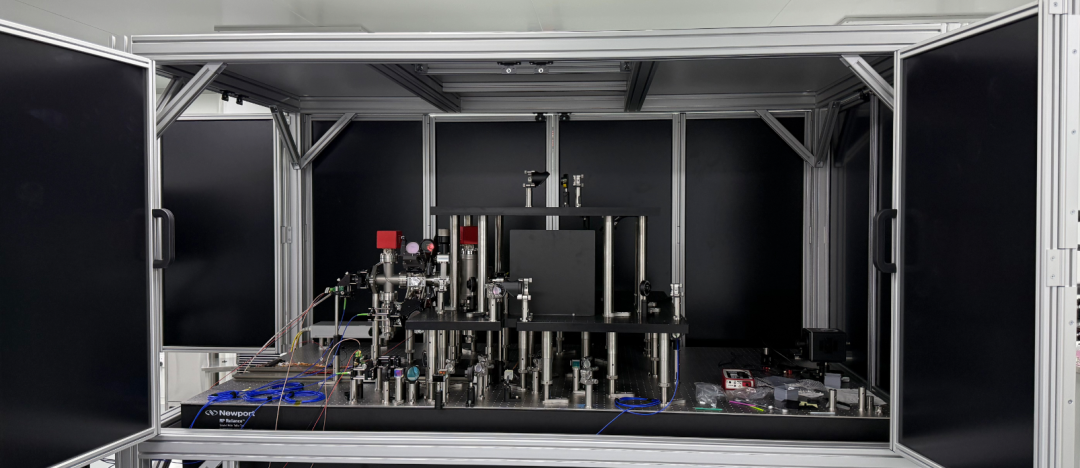
To date, the MatriQ team has stably constructed and is operating a 2,048-defect-free-physical-qubit array, successfully implementing a zoned architecture with storage and entanglement regions — representing a significant leap in both system scale and stability compared to the earlier 1,000-qubit prototype stage. The array system is capable of high-fidelity global and local single-qubit gates, as well as global two-qubit gate operations. It supports both analog Hamiltonian simulation (AHS) and digital quantum circuit execution via quantum assembly language (QASM), providing a solid foundation for large-scale quantum circuit operation.
The neutral-atom quantum computing approach has achieved a series of milestone breakthroughs globally in recent years: in 2022, its feasibility for programmable quantum computing was first demonstrated; in 2023, two-qubit gate fidelity reached the 0.999 level, and 48 logical qubits were prepared; in 2024, qubit count increased to 6,100, making it the approach with the highest qubit count among existing technical routes; and by 2025, a 3,000-qubit array had achieved continuous operation for over two hours, far exceeding traditional atom trap lifetimes. MatriQ's realization of a 2,048-defect-free-qubit array represents a critical breakthrough for China on the neutral-atom quantum computing path, marking an important coordinate on this technology's evolution curve.
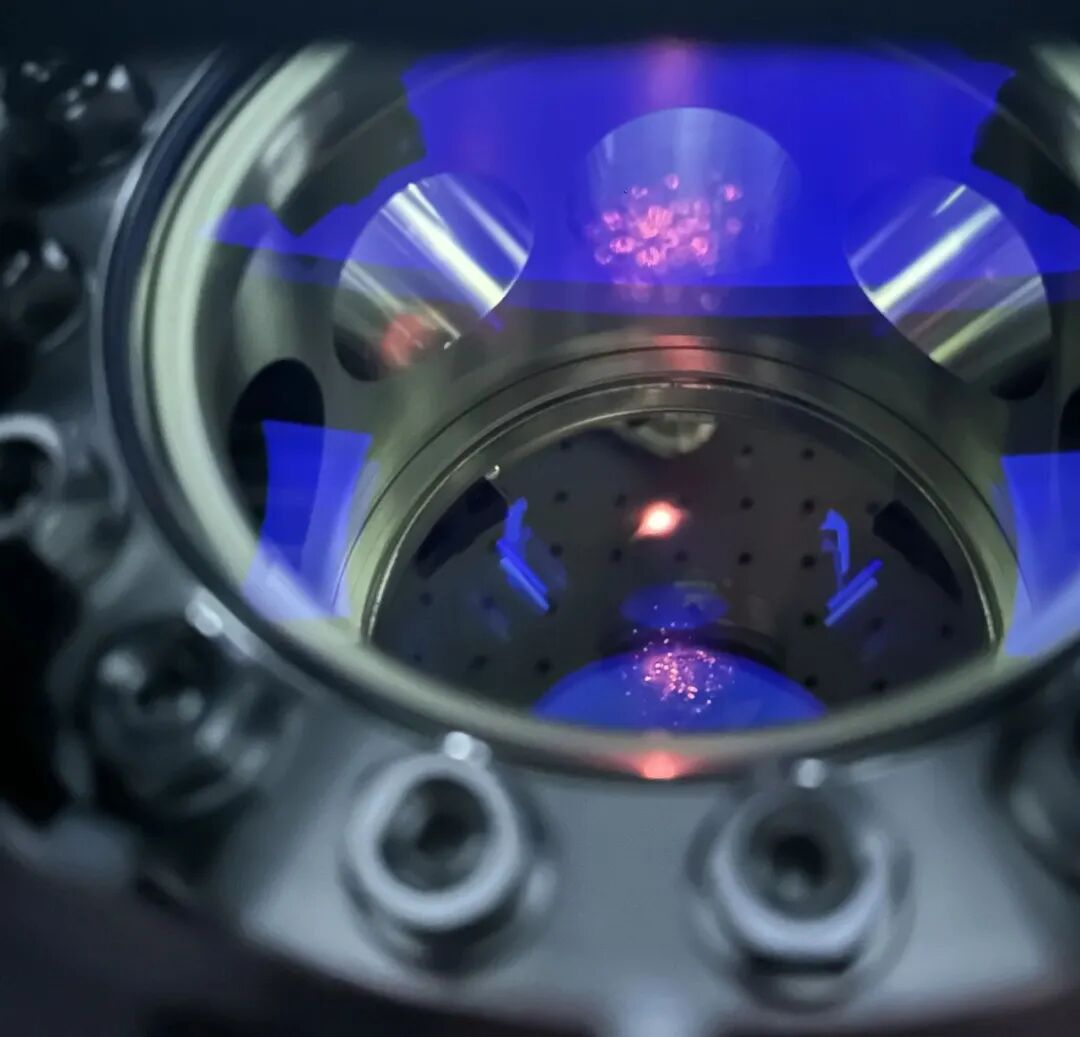
Neutral-atom quantum computing is based on laser cooling and magnetic field manipulation techniques, using far-detuned optical dipole trap arrays in an ultra-high-vacuum chamber to capture and confine ultracold atoms, with quantum bits encoded in the magnetic sublevels of the hyperfine ground states. Compared to other technical approaches, neutral atoms offer core advantages including strong scalability, long coherence times, no need for cryogenic environments, and natural identicality, gradually making them one of the most promising platforms for general-purpose quantum computing. Supported by China's well-developed supply chain ecosystem, the domestic neutral-atom approach also demonstrates significant latecomer technological advantages.
With the support of both new and existing shareholders, MatriQ will comprehensively accelerate core technology breakthroughs and engineering commercialization of neutral-atom quantum computing, steadily advance full-stack capability building, deepen industrial collaboration and commercial scenario exploration, and fully commit to becoming a frontier technology company for next-generation quantum computing.
Unity Ventures believes that neutral atoms offer numerous validated fundamental advantages, including exceptional scalability, natural qubit identicality, long coherence times, full connectivity, high fidelity, and no requirement for extreme cryogenic temperatures or expensive equipment. Supported by China's supply chain, the neutral-atom approach demonstrates significant latecomer technological advantages and is one of the fastest-progressing paths in quantum computing, having preliminarily achieved sustainably scalable system operation. As one of China's earliest neutral-atom system startups, MatriQ has been dedicated to developing complete operational quantum computer systems. Composed of a young expert team with system-level to module-level engineering capabilities, the company is rapidly iterating and commercializing more than a decade of technical expertise accumulated at top-tier physics research institutions, with the potential to be among the first to achieve commercial operation of quantum computers.