PicoClaw: Shrinking an AI Agent to Fit in a 10MB, $10 Device — Even a Lobster Farm | Unity Ventures Portfolio

Is Everything an Agent? PicoClaw Is Making It Happen
Since OpenClaw went viral at the start of the year, it hasn't just reshaped the Agent ecosystem — its impact on hardware is starting to show, too. Entrepreneurs are now trying to answer: Can an Agent escape the Mac Mini and run on more kinds of hardware?
The PicoClaw team's answer is — 10MB of RAM, $10 worth of hardware, that's enough. Less than two months after launch, PicoClaw has surpassed 27K GitHub Stars, and community developers are already stuffing it into all kinds of "impossible" devices.

Starting from a Real Problem
The story begins just before Chinese New Year.
PicoClaw didn't start with a grand vision. It started with a very concrete engineering problem: the team wanted to run OpenClaw on their edge AI camera, the MaixCAM2, and found it simply couldn't handle the load.
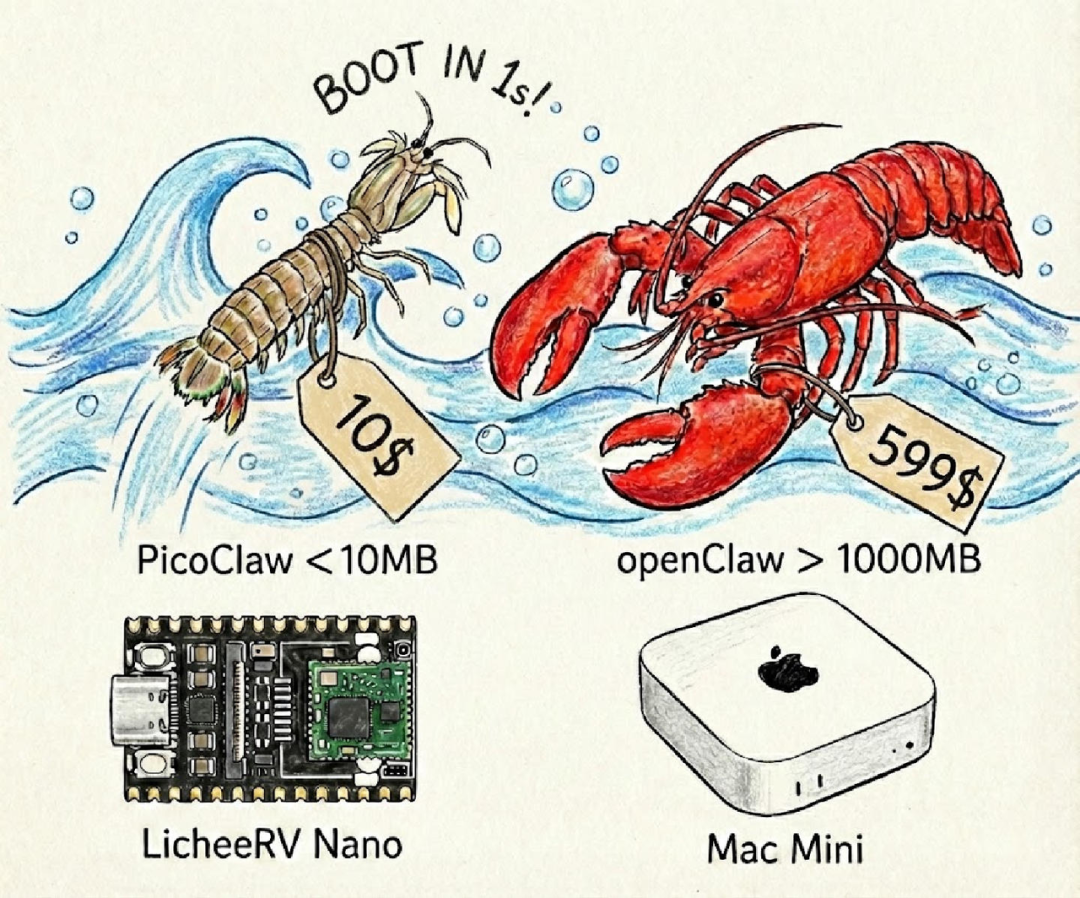
OpenClaw's memory usage spiked above 2GB at startup, and it needed 1GB just to run stably. On mainstream edge chips like the ARM A53, boot-up alone took five minutes.
What does that mean? To run OpenClaw, a device needs at least 4GB of RAM. But with memory prices surging in 2026, the BOM cost for 4GB has already exceeded 500 RMB. Countless lightweight edge devices were effectively locked out of the AI Agent world.
After digging through OpenClaw's codebase, the team decided on a different approach: rather than forking the upstream project and optimizing from there, they'd rewrite something lightweight from the ground up.
Using OpenCode+GLM and iterating through repeated conversational fine-tuning, the team built a runnable, stripped-down prototype based on OpenClaw's core logic in just one day — a minimum viable version that validated a critical insight: AI Agent resource consumption could be pushed down to practically any Linux device.
They named the project PicoClaw, a pun on "pipixia" (皮皮虾, mantis shrimp). Written in Go, the "Let's Go, PicoClaw" joke quickly caught on in the community.
PicoClaw open-source repo: github.com/sipeed/picoclaw
PicoClaw download & install: picoclaw.io
Real-world Performance
- Memory footprint: ~10MB, a 99% reduction from OpenClaw
- Startup speed: millisecond-level, feels instant to users
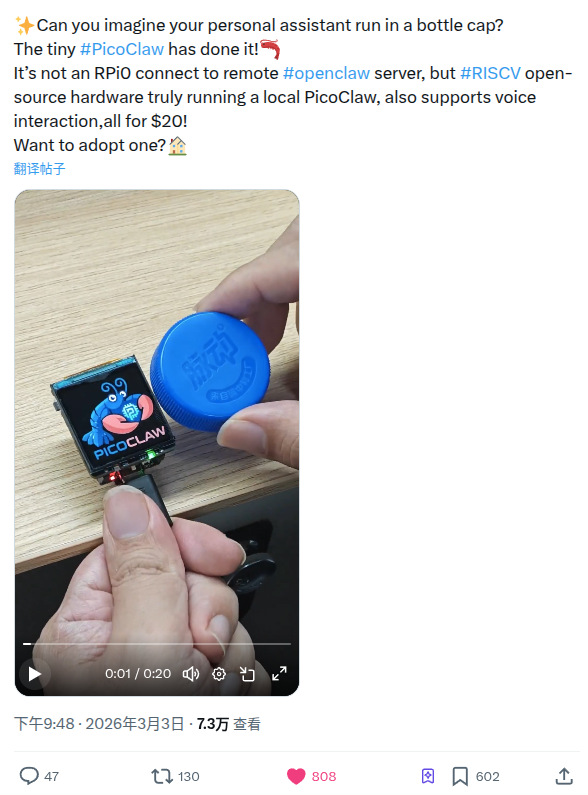
- Hardware cost: under $10, boots in seconds even on RISC-V C906 @ 0.8GHz
A Grassroots "Hardware Revival Movement"
PicoClaw dropped two days before the Lunar New Year holiday. Nobody expected what happened next.
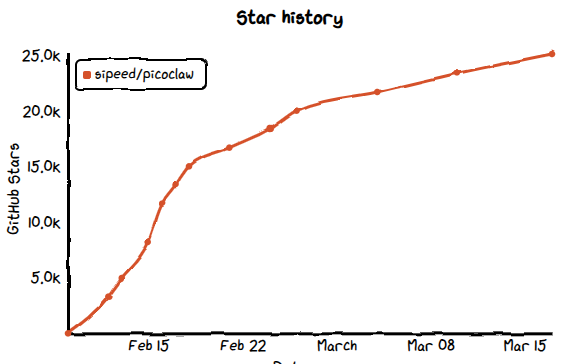
It hit 12K Stars in its first week, gained over 3K in a single day at peak, and has now broken through 27K total. Within a week of launch, the developer community had attracted more than 200 active contributors.
One telling detail: while PicoClaw's initial version was AI-reconstructed, the team insisted on rigorous human code review for all community contributions — every line of merge-bound code had to pass human eyes. AI can write code; quality control stays human.
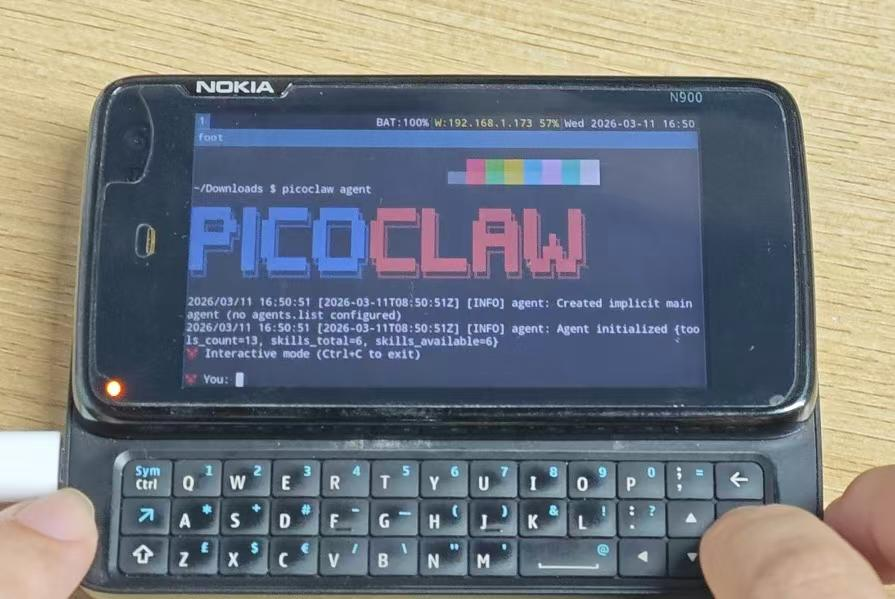
What really pushed PicoClaw into the spotlight was a grassroots "hardware revival movement" that sprang up in the community:
- A 17-year-old Nokia N900
- A 14-year-old Samsung phone
- A 10-year-old Xiaomi router
- An 8-year-old Phicomm N1
These devices, idle in drawers for years, were one by one made to run PicoClaw by developers.
The rule is simple — if a device can run Linux, it can almost certainly run PicoClaw in full, tapping into OpenClaw's existing Skill ecosystem and interacting with users through Lark, QQ, Telegram, Discord, and other channels, with core features fully intact.
PicoClaw's significance isn't just that "old devices can run." The key is that it drops the AI Agent barrier from "buy a Mac Mini" to "dig out an old device from your drawer." Once the threshold falls that low, the game changes completely.
When Every Device Around You Can Run an Agent
When an AI Agent needs only 10MB of memory to run, scenarios that once seemed impossible suddenly become obvious.
Take the most straightforward example — think about it: what device in your home is always plugged in, found in virtually every household, and can run third-party apps?
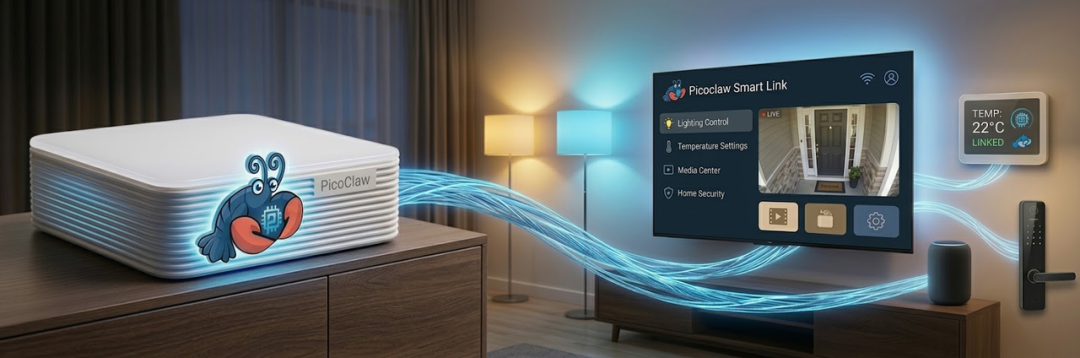
Look at that idle set-top box in your TV cabinet.
China alone has over 100 million set-top boxes installed. Most of these legacy devices pack 1GB RAM + 8GB storage, with less than 100MB free after Android boots. Traditional AI Agent solutions can't touch them, but PicoClaw at 10MB? More than enough headroom.
Users install one Android app, and their idle TV box becomes a always-on, low-power AI assistant — no interference with regular TV watching, plus smart home integration. That's a localized experience pure cloud solutions simply can't deliver.
And it's not just set-top boxes. Routers, industrial gateways, thin clients, old office PCs — there are far more Linux-capable edge devices around us than most people realize. If you can fit 10MB, you can run an AI Agent.
The PicoClaw team is already in talks with multiple set-top box manufacturers, exploring ways to bring AI Agent capabilities into home terminals.
If this path works out, tens of millions of dust-collecting set-top boxes could undergo an unexpected identity transformation.
From Living Room to Desk
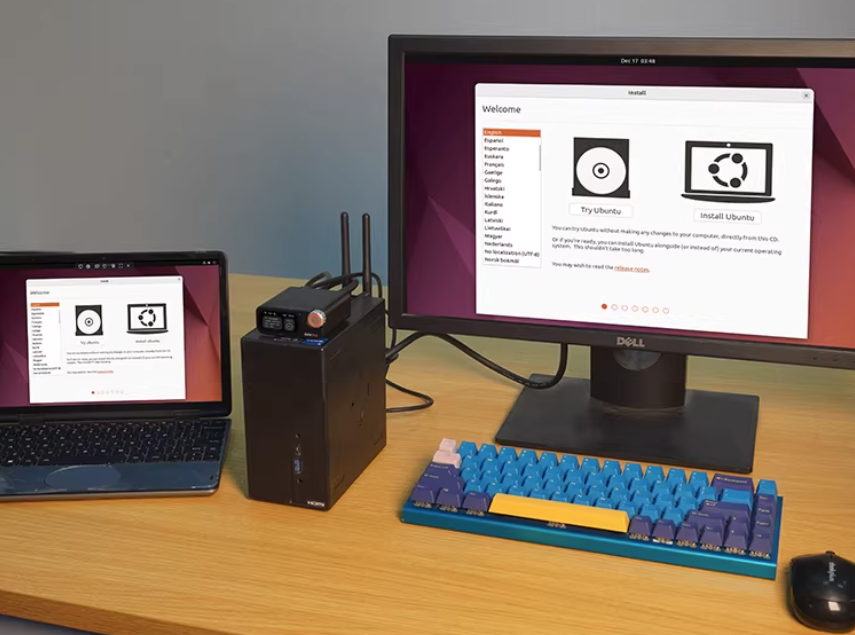
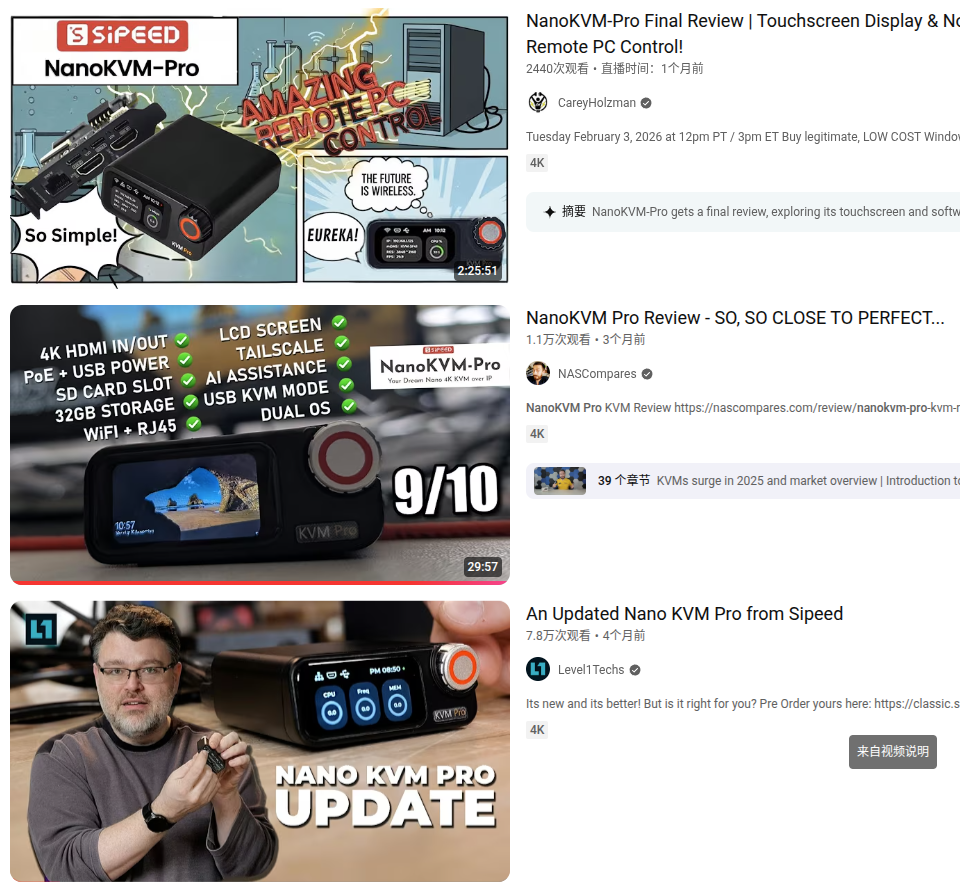
The team behind PicoClaw, Sipeed, has deep experience in AI hardware. Their NanoKVM series of open-source remote management hardware has strong recognition in the global Homelab community, with cumulative shipments nearing 200,000 units and over 3 million YouTube views on related reviews.
NanoKVM has a natural advantage: it can capture desktop images at the hardware level (including BIOS screens) and simulate keyboard and mouse input. In other words, it has "eyes" to see the screen and "hands" to operate the computer — making it a natural vehicle for AI Agents to perform automated operations and become digital workers.
The NanoKVM-Pro goes further with 4K30 loop-in/loop-out capability, YOLO detection and OCR recognition speeds triple that of the RK3588 (6TOPS), enabling local preprocessing of desktop images that significantly reduces multimodal LLM token consumption and speeds up response times.
In the second half of 2025, NanoKVM-Pro experimented with integrating vision-language model-based automated ops tools, drawing considerable attention in overseas tech communities.
With PicoClaw, this capability expands from ops circles into everyday office scenarios. Non-technical users can now reap real benefits from automation.
Compared to recent competing products, Sipeed has several advantages that won't be easily closed soon:
- Nearly 200,000 NanoKVM users can upgrade to AI Agent functionality via OTA
- Years of hardware engineering yielding relative advantages: 1/5 the power consumption, 1/10 the price, 1/20 the volume
- Dual transparency of open-source software + open-source hardware, addressing security concerns about high-privilege devices
PicoClaw's team is also preparing to launch a new hardware product designed specifically for automated office work — watch-sized, plug-and-play, capable of taking over Android/iOS phones, Windows/Mac/Linux computers, and all other platforms, building the perfect office Agent entry point from the hardware level up.
PicoClaw's Aha Moment
Looking back, PicoClaw ("pipixia") got one thing right:
By infinitely lowering the barrier to run an AI Agent, it surfaced hundreds of millions of edge devices, ultimately triggering that "Aha Moment" where quantity becomes quality.
For developers, it's a 27K-Star, 200+ contributor open-source community still growing fast.
For hardware manufacturers, it's the shortest path to giving legacy devices AI capabilities.
For model providers, it's a token traffic entry point for the LLM era.
For ordinary users, it may be their first AI Agent terminal that reaches deep into the physical world and stays with them around the clock.
The era where everything can be an Agent isn't the future — PicoClaw is making it happen now.