Noetix Robotics Closes Nearly RMB 300 Million Pre-B Round, Sells Out First 500 Units of USD 1,399 "Bumi" Humanoid Robot in Two Days on JD.com | Unity Ventures Portfolio

Production guarantees and the ammunition depot are both in place.
"
At 8 p.m. on October 23, Noetix Robotics's "Bumi" humanoid robot — a portfolio company of Unity Ventures — quietly launched on JD.com, priced at 9,998 yuan. Within one hour, orders surpassed 100 units; within two days, the first batch of 500 units sold out.
As the product ignited the market, Noetix Robotics announced another bombshell: the company has completed a nearly 300 million yuan Pre-B funding round, backed by a roster of heavyweight investors.
With this one-two punch of product success and fresh capital, Noetix Robotics has fired the opening shot in the popularization of humanoid robots.
"

01
The 9,998 Yuan Pricing Shockwave and Nearly 300 Million Yuan in New Funding
While the humanoid robot track was still fiercely competing in the tens-of-thousands-of-yuan price band, a new benchmark appeared that threatened to rewrite industry assumptions. At 8 p.m. on October 23, Noetix Robotics's "Bumi" humanoid robot quietly launched on JD.com, priced at 9,998 yuan.
The market response was practically instantaneous. Official data shows that orders surpassed 100 units within one hour, and the first batch of 500 units sold out within two days. Just as the product was setting the market ablaze, Noetix Robotics followed up with another major announcement: the company has completed a nearly 300 million yuan Pre-B funding round, led by F&G Capital with follow-on investments from Vertex Ventures China, CRRC Capital Transformation and Upgrading Fund, Juhe Capital, Orient Capital, CCTV Convergence Media Industry Investment Fund, Jiadao Capital, and Kuanqiao Hengsong, among other well-known institutions.
With real money from the market on one side and strong backing from capital on the other, Noetix Robotics used this dual victory to kick off its "popularization storm."
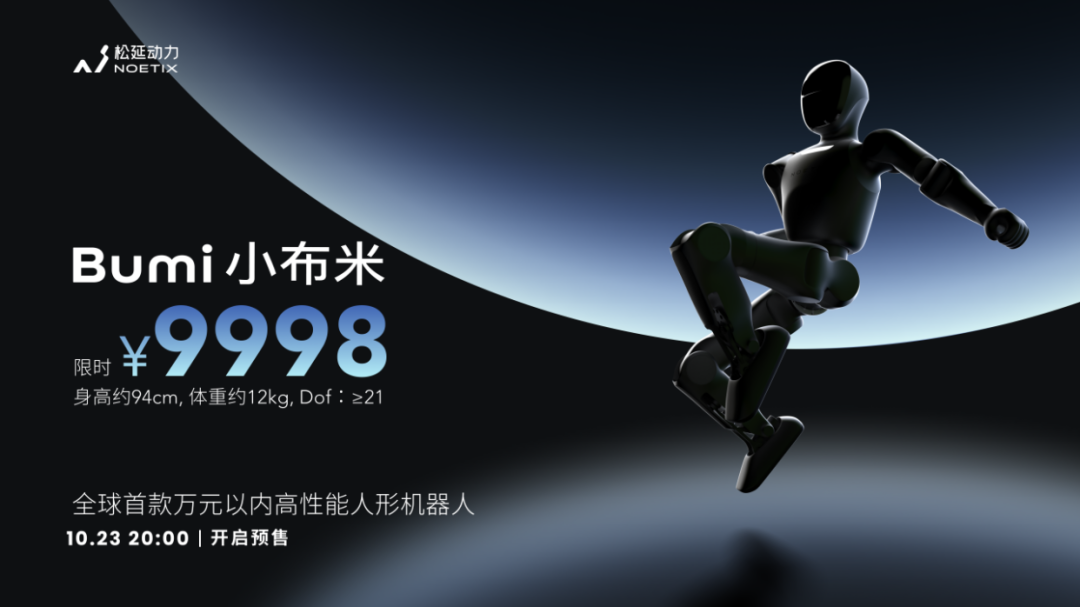
Standing 94 cm tall and weighing approximately 12 kg, this robot features over 21 degrees of freedom, enabling it to flexibly perform complex movements including walking, running, and dancing. It also integrates fluid voice interaction and zero-barrier graphical programming capabilities. According to the official introduction, Bumi is positioned as a family companion providing emotional value and educational enlightenment, designed to accompany children's growth, spark creativity, and serve as a technological medium connecting two generations.
02
How Was 9,998 Yuan Achieved?
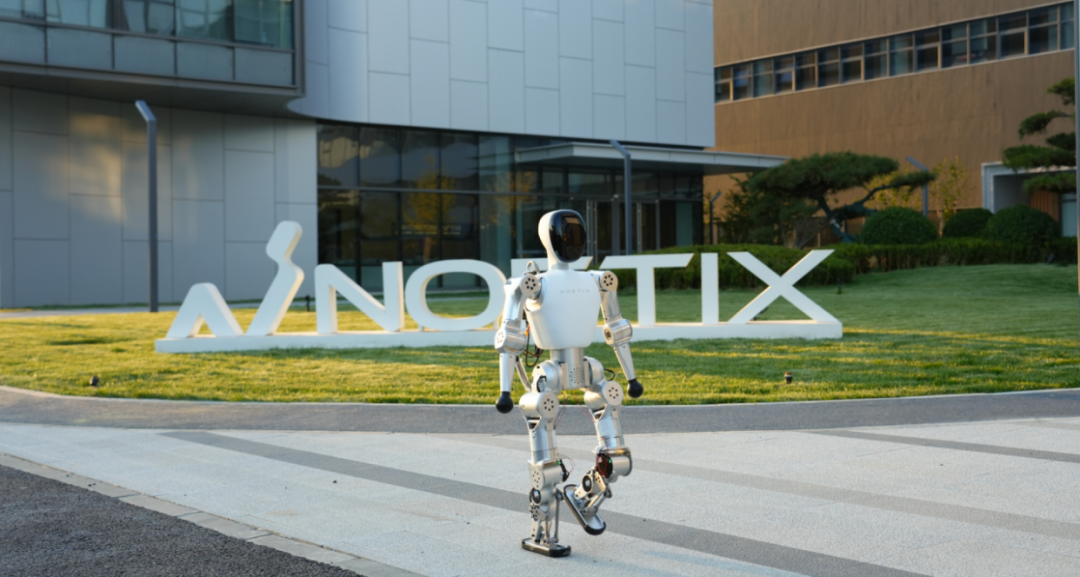
"At its core, a humanoid robot is plastic, aluminum, iron, copper wire, magnets, and chips — it shouldn't be that expensive." At a recent media briefing, Noetix Robotics founder Zheyuan Jiang's remark sounded like a direct homage to Elon Musk's "first principles." He even offered a more stringent engineering maxim: "For any product, multiply the gross weight of every material by its futures unit price and add them up to get the theoretical minimum cost. The ratio of actual cost to this theoretical cost is what Musk calls the Idiot Index. If a product's Idiot Index is too high, there's massive room for cost reduction."
This was not mere PR rhetoric but the core of Noetix Robotics's cost-control philosophy. To compress Bumi's cost below the 10,000-yuan threshold, the company deployed three decisive moves, each striking at the industry's cost vulnerabilities.
First, increasing the proportion of self-developed components. "Noetix Robotics will continue to push vertical integration," Jiang stated frankly. "Unlike other robotics companies that purchase computing development boards or core boards, we buy computing chips directly at the main control circuit level and build our own core boards." Once this vertically integrated model matures, it maximizes internalized cost control, avoiding the layered premiums of external procurement while ensuring deep hardware-software synergy to squeeze every drop of performance.
Second, a thorough revolution in materials and structure. Traditional humanoid robots, in pursuit of high-dynamic performance, typically use expensive aerospace aluminum or even titanium alloy for the body, directly driving up costs. Bumi took the opposite approach, extensively using composite materials. This was not simple "plasticization" downgrading but "thorough innovation" based on deep engineering understanding. Jiang explained that the team comprehensively optimized the structural design, "using metal reinforcement in some parts and composites in others," achieving extreme lightweighting at 12 kg while maintaining core strength. Reduced weight further drives down cost, creating a virtuous cycle.
Finally, supply chain "kung fu." When asked about the localization rate of core components, Jiang gave a definitive answer: "Almost 100%." From motors and chips to precision structural parts, Noetix leveraged the cost advantages, rapid response, and high synergy of domestic supply chains to achieve deep supply chain restructuring. Take the "brain" chip: Noetix's previous product used the domestic Rockchip RK3588S, for clear and pragmatic reasons — controllable cost (dozens of dollars per chip), mature ecosystem (RKNN inference framework with comprehensive documentation), and sufficient performance (quad-core A76 + quad-core A55 CPU and 6 TOPS AI compute). Bumi followed this same approach, selecting another RK-series chip. This pragmatic component selection stands in sharp contrast to routes relying on expensive imported chips, demonstrating its determination for "cost reconstruction." This is not merely lower procurement costs but firmly grasping supply chain initiative.
03
The "Precision Detonation" of Scenarios: Why Small Size? Why "Quasi-Consumer-Grade"?
If cost control is the "technique," then scenario selection is the "principle." Bumi's 94 cm height and approachable design were not a designer's sudden inspiration but the product of profound market insight.
Jiang shared a highly illustrative story. During the National Day holiday, he took the company's other small-to-medium-sized robot, N2, for a pop-up on the streets of Paris. "The moment the robot stepped out of the car, within five minutes there would definitely be a crowd of over 100 people." He found that adults found the robot cool and cute, approaching to shake hands and pat its head. But the dramatic scene occurred with children: "Kids would be interested when they encountered N2, but when the robot ran closer, they'd get scared and hide behind their parents."
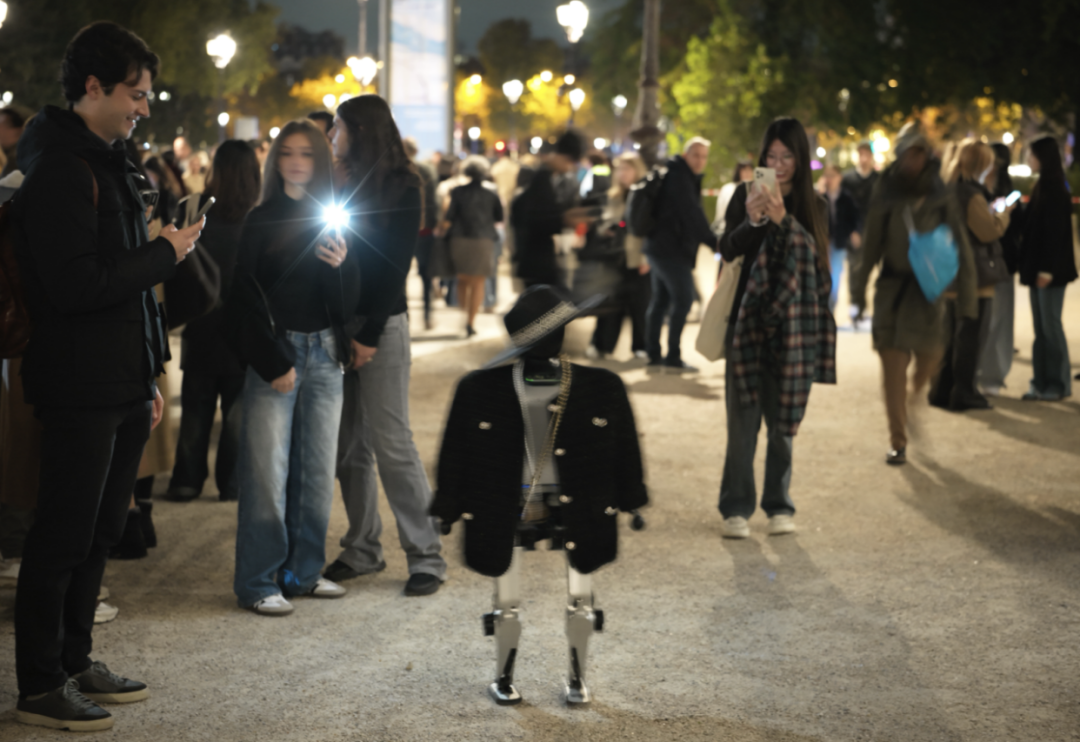
The reason is simple: for a child around one meter tall, a robot of similar or greater height naturally carries a sense of oppression and threat. This "uncanny valley" effect stemming from physical dimensions is an invisible barrier to humanoid robots entering homes. Bumi's compact size fundamentally solves this problem, transforming "threat" into "affinity."
This positioning precisely targets the two most viable markets today: education and home entertainment. Noetix Robotics is clear-eyed that the "ultimate C-end scenario" of robots serving tea, pouring water, doing laundry, and cooking still requires time, with core bottlenecks lying in model generalization capabilities and physical interaction safety. Jiang put it directly: "If the robot can't do these tasks yet, let it first bring people emotional value."
Therefore, Bumi's strategic positioning is exceptionally clever — it doesn't try to be an "all-purpose nanny" but rather a "tech playmate" and "programming teaching tool." This is a "quasi-consumer-grade" product occupying the middle ground between consumer and non-consumer. For families, it's a high-tech toy that can spark children's programming interest and accompany exercise; for educational institutions and maker spaces, it's a highly cost-effective kit and development platform. This move aims to "highlight education + embodied AI beginning to gain traction," precisely its first step in capturing user mindshare and completing market education.
The deeper layout lies in ecosystem. Through open graphical programming interfaces and secondary development capabilities, Bumi is no longer a functionally rigid closed hardware device but an open creation platform. Access to JD Joy Inside 2.0 means it will integrate into a broader intelligent IoT ecosystem. Noetix is selling not just a robot but a "robot embryo," betting on a future co-created by massive numbers of users and developers.
04
After the First Shot: Mass Production Assurance and Ammunition Depot Ready
According to the latest official data, Bumi sold over 100 units within one hour of launching on JD.com, with the first batch of 500 units selling out within two days. Behind the booming orders, Noetix Robotics has made ample mass production preparations for delivery. Jiang emphasized that "from receiving customer intent and deposit, to handing the robot to the customer and receiving final payment, closing this loop counts as true commercial delivery."
For this, Noetix has clear plans: its Beijing factory already has monthly delivery capacity exceeding 200 units, and its Changzhou factory Phase 1 is expected to reach 300 units per month by December 2025. This means monthly delivery capacity will reach 500 units by year-end. This is not all — a third factory with planned capacity of 500 units per month is also in preparation. Combined delivery capacity will then exceed 1,000 units per month. This figure is "massive" by current humanoid robot industry standards and represents the core confidence enabling its entry into the consumer market.
Of course, the path to mass production is never smooth. Jiang candidly stated that the biggest delivery difficulty comes from the supply chain: "Some components rely on external procurement, and external suppliers are under heavy delivery pressure." At the same time, he attributes 99% of delivery issues to design problems, optimizing production line design so that "anyone can assemble it without much learning or being particularly careful," keeping the pressure on the design side. This extreme pursuit of production details is precisely the key to scaled manufacturing.
Meanwhile, capital markets have also cast their vote of confidence with real money. Coinciding with the product launch, Noetix Robotics announced the completion of its nearly 300 million yuan Pre-B funding round. The investor lineup is nothing short of stellar: led by F&G Capital with follow-on investments from Vertex Ventures China, CRRC Capital Transformation and Upgrading Fund, Juhe Capital, Orient Capital, CCTV Convergence Media Industry Investment Fund, Jiadao Capital, and Kuanqiao Hengsong, among other well-known institutions. This includes both deep-tech VCs and state-backed industrial funds and media funds, demonstrating capital markets' high consensus on its strategy.
The lead investor F&G Capital's perspective is highly representative: "Noetix Robotics's core competitiveness lies in getting three things right simultaneously: technologically, its motion control and interaction capabilities are sufficiently cutting-edge; product-wise, its 10,000-yuan pricing pierces the market in one blow; commercially, this creates a rapid closed loop of 'market revenue driving technological iteration.'" What capital sees is not merely a low-priced product but a business model that has already validated a "technology-product-market" closed loop. It is no longer burning money to tell stories but using market revenue and user feedback to drive technological iteration, forming healthy self-sustaining capability.
Returning to the initial question. Bumi's launch is not a "price war" of fighting for existing market share against competitors, but rather using a shockingly aggressive price to activate an entirely new incremental market. It is betting that through extreme cost-performance, it can rapidly mature the market, educate users, and perfect the supply chain, thereby seizing the most advantageous strategic high ground in the future true "embodied AI" endgame battle.
The "iPhone moment" for humanoid robots has not yet arrived, but the affordable highway leading to that moment has been paved with its first solid foundation stone by Noetix Robotics. As Jiang put it, embodied AI is a ten-year-cycle industry; there's no need to care about short-term sentiment fluctuations. This price revolution initiated by Noetix Robotics may profoundly transform the competitive dimensions of the industry, shifting the race's finish line from "who's cooler" to "who can be the first to enter millions of households."