九合创投王啸:具身智能狂热的终局,和早期投资的“模糊正确”|九合分享
The Investment Philosophy Behind a Leading Embodied Artificial Intelligence Company
Barely into 2026, the Embodied Artificial Intelligence sector is already seeing a fundraising frenzy, with capital accelerating toward the industry's top players.
Unity Ventures' early-stage portfolio company Independent Variable Robotics announced in January that it had raised a billion yuan in funding from investors including ByteDance and HSG, then secured another round of several hundred million yuan within just a month—this time led by industrial capital including SAIC Financial Holdings and CICC SAIC Fund.
Another portfolio company, Noetix Robotics, made its Spring Festival Gala debut and announced yesterday the completion of its Series B round led by CD Capital, the industrial investment platform of CATL. The total funding in this round has reached nearly a billion yuan.
As far back as eight or nine years ago, Unity Ventures had already invested in Moying Technology, a mobile collaborative robotics company. When the Embodied Artificial Intelligence wave arrived, it placed early bets on Independent Variable Robotics and Noetix Robotics, riding through the robotics industry's decade-long development cycle.
Xiao Wang, founder of Unity Ventures, recently sat down with QbitAI to share his judgments and reflections on the future of Embodied Artificial Intelligence and AI:
- How long will the valuation bubble in Embodied Artificial Intelligence last?
- When will humanoid robots enter ordinary households?
- Do later-stage startups in this space still have a chance?
- How to identify promising projects at the early stage?
- How to view the coming wave of Embodied Artificial Intelligence IPOs?
- What money does Unity Ventures refuse to take?
...
Below is the edited interview transcript:

Amid the capital frenzy swirling around Embodied Artificial Intelligence and AI, truly qualified investors who can offer professional judgment and anchor long-term trends are few and far between.
Xiao Wang is one of them.
More than a decade ago, before artificial intelligence had become a buzzword, he began positioning Unity Ventures in AI-related sectors.
When they invested in OneFlow, the underlying framework for large models hadn't yet become an industry focus. The company's self-developed OneFlow later became the world's first AI computing framework designed for large models and big data, and was subsequently acquired by Lightyears Away.
When Embodied Artificial Intelligence was still a niche topic in venture capital circles, he made a heavy bet on Independent Variable Robotics—now the only domestic Embodied Artificial Intelligence company simultaneously backed by three major tech giants: ByteDance, Alibaba, and Meituan.
Noetix Robotics, which appeared on this year's Spring Festival Gala, was also among Wang's earliest investments. The day QbitAI met with him, he had just finished a huddle with Jiang Zheyuan, founder of Noetix Robotics.
"If you step on a cat in the dark,
it will meow.
"
Years ago, Wang used this metaphor to describe his instinct for spotting opportunities.
Before becoming the behind-the-scenes force driving these Embodied Artificial Intelligence projects, he was best known as one of Baidu's "Seven Musketeers"—the founding team. He was deeply involved in developing Baidu's first-generation search engine, and his name became part of the shared memory of an entire generation of internet professionals.
With his exceptionally strong technical background, Wang became widely recognized in venture capital circles as a "technically-minded" investor after leaving Baidu.
Since founding Unity Ventures in 2011, he has spent 15 years leading his team in persistent early-stage investing in technology, backing dozens of intelligence-related projects—including D-Robotics, a provider of general-purpose robotics software and hardware infrastructure; Moying Technology, an industrial Embodied Artificial Intelligence base system and infrastructure company; Fuzhi Technology, a companion robot developer and manufacturer; Aoshark Intelligence, an exoskeleton robotics technology company; Momenta, a unicorn in autonomous driving; and Tungee, a large model intelligent agent platform.
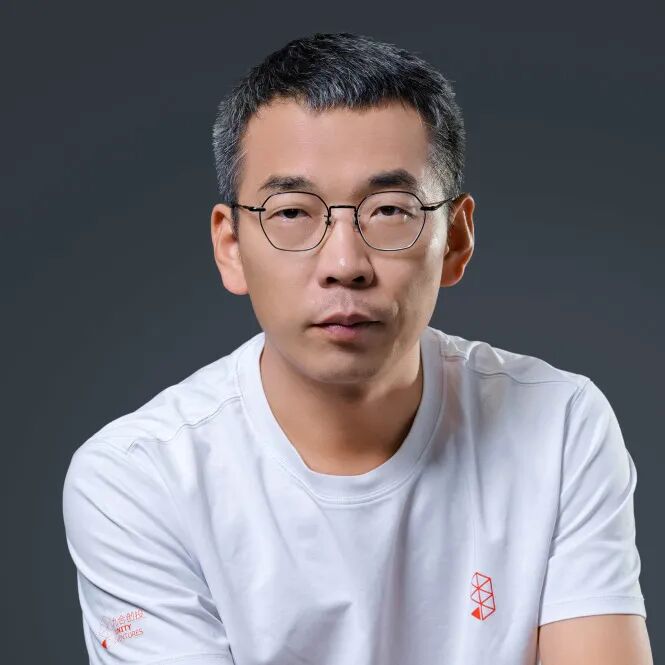
Outsiders often assume Unity Ventures relies primarily on deep technical research to decide which projects to back, but Wang says: "I constantly remind my colleagues that understanding technology is important, but you can't study the details like an expert. What's more critical is judging the big trends in technological evolution—being roughly right."
If you understand technology too well, you can't invest, "because everywhere you look, there are pitfalls, haha," Wang jokes.
Like staring at the tip of a needle until you can no longer see the whole cloth. The more familiar you are with a domain, the more likely you are to suffer from "blind spots right under the lamp."
This is Wang's investment philosophy.
Even seasoned investors sometimes step on a cat's tail without hearing it meow, and Wang doesn't shy away from acknowledging this. The myriad changes in the tech industry and investment environment over the years have long accustomed him to "change."
It used to be dollar funds, individual LPs, and market-driven forces, with heavy bets on consumer and internet sectors that could quickly acquire users. Most institutions barely invested in tech companies, and IPOs clustered on U.S. exchanges.
Now it's RMB funds and state capital dominating, with a focus on tech sectors and IPOs targeting Hong Kong and China's STAR Market.
Amid these changes, Wang has spent these years restraining his desire to scale up his fund.
Yet another philosophy.
01
Where There's Foam, There's Good Beer
QbitAI: When did you first start paying attention to the Embodied Artificial Intelligence sector?
Xiao Wang: When we first looked at it, the sector wasn't even called Embodied Artificial Intelligence—it was collaborative robotics and such. The first robotics company we invested in was Moying Technology, about eight or nine years ago.
QbitAI: How did you realize this might become a hot industry?
Xiao Wang: We were certain it was an industry with room for imagination. Every sci-fi film has a robot concept—one of humanity's dreams is having robots help with work.
QbitAI: Any regrets about not investing in Unitree?
Xiao Wang: We actually looked at Unitree even earlier. Various reasons—the lead investor at the time dropped out.
Don't regret missing out. Investing is about long-term structural judgment; don't get hung up on individual wins or losses.
QbitAI: How does the regret compare to missing out on ofo back then?
Xiao Wang: The little yellow bikes weren't a miss—we were lucky to dodge that bullet.
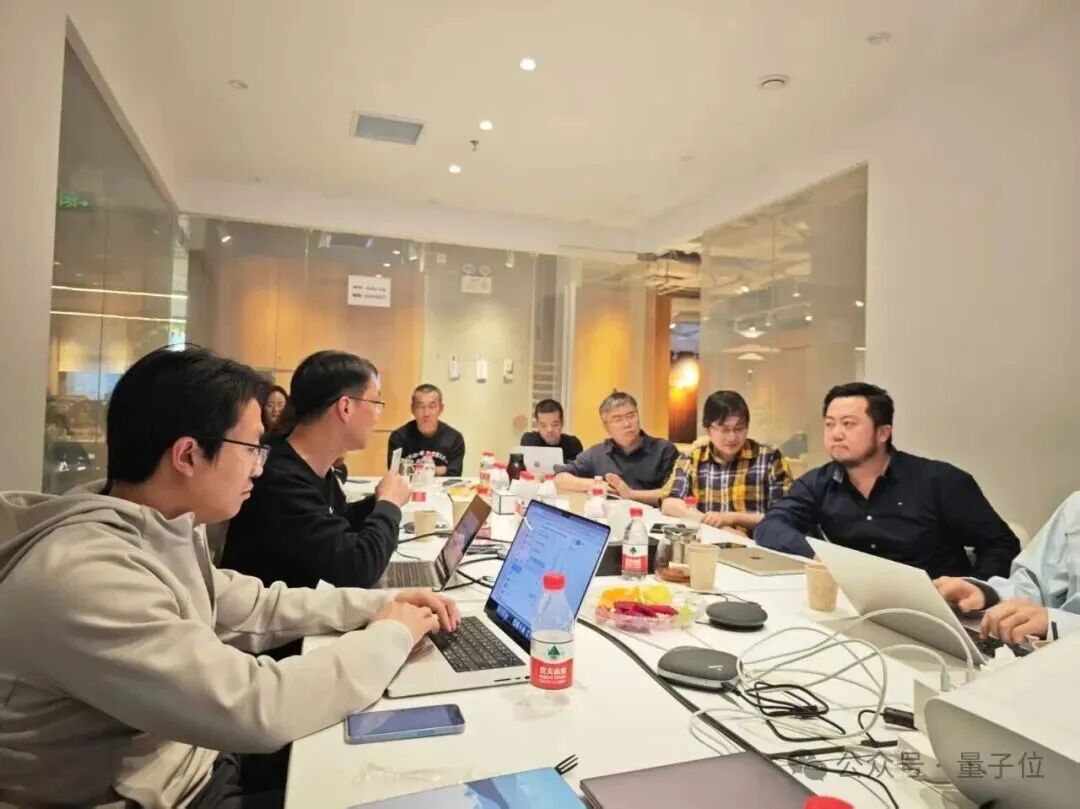
After the large model explosion, Unity Ventures held a seminar with founders of its AI portfolio companies
QbitAI: Looking back now, sure, but how did you feel at the time?
Xiao Wang: I did post-mortems, but I always felt that business would struggle to achieve commercial profitability. Actually, with some projects, when you get it right, you can feel that moment—all kinds of signals tell you it's right. With ones that don't work out, you can feel that too: everyone's killing themselves working, but it's just not happening.
QbitAI: What do failed projects have in common?
Xiao Wang: For example, the direction might not have enough momentum, or the founder's limitations are significant and difficult to overcome through learning and change. Or they're too self-absorbed and won't listen to others. Various issues, really.
QbitAI: How do you view the valuation bubble in the Embodied Artificial Intelligence sector?
Xiao Wang: Essentially, VCs are using current valuations to buy future dreams. From a certain numerical perspective, all VC projects are bubbles. Like beer—there's always foam, and maybe it's exactly where there's foam that you find good beer. If the foam stops altogether, something's wrong with the beer.
Right now it looks like there's quite a bubble in the secondary market too. That could lead to violent fluctuations when sentiment reverses—that kind of bubble warrants caution. But primary market bubbles are just investors digesting them.
QbitAI: You've said "appropriate technology bubbles can drive industry progress." How much valuation premium does Unity Ventures tolerate when investing?
Xiao Wang: We definitely still try to invest early, so the bubble isn't too big. Even if the founder is impressive, a $100 million valuation, or even $200 million, is still relatively controllable. But late-stage bubbles can get blown sky-high—no one even talks about PE or PS anymore, valuations shoot straight to thousands of times PS. That's genuinely tough, but it will always normalize.
QbitAI: Many Embodied Artificial Intelligence companies have recently announced share restructuring. What are your observations on the potential coming wave of Embodied Artificial Intelligence IPOs?
Xiao Wang: It's good—the stronger companies, the sooner the better. Primary market dreams need to be realized in secondary markets. And with this positive feedback, other tech sectors in China can develop just as rapidly.
Going public too fast definitely has its problems too—whether performance meets standards, whether scenarios have delivered. In the end, the companies that remain will be the ones that got down to solid work.

QbitAI: Do you prefer the companies you've invested in to be more cautious about going public, or to push faster?
Xiao Wang: Fundamentally, it's a capital lever. If everyone else has leverage and you don't—if they're already in the car and you're still running—how can you expect to come in first? Not likely.
The premise of competition is that everyone's on the same platform. Ultimately, this isn't about what a company subjectively wants. If you want to compete, you have to keep up. After all, everyone starts with different resources; only by mastering more resources can you develop more sustainably.
02
The Embodied Artificial Intelligence Frenzy Is Far From Over
QbitAI: Compared to sectors you've previously invested in, what's special about Embodied Artificial Intelligence?
Xiao Wang: It's both hardware and software, so both need to be strong, and you also need good scenario adaptation. But what's unique about this sector is that everyone sees it as the next biggest opportunity after automobiles, with huge expectations—one of the largest terminals.
QbitAI: Cars have now entered millions of households. How long until humanoid robots are widely普及 and飞入寻常百姓家?
Xiao Wang: Five to ten years.
QbitAI: Looking at the number and speed of company growth, does this resemble the early madness of the Mobile Internet era?
Xiao Wang: I don't think Embodied Artificial Intelligence is there yet. And hardware isn't comparable to Mobile Internet—you can't draw that analogy.
QbitAI: But Embodied Artificial Intelligence is developing fast too. What risks does this bring?
Xiao Wang: The upside is that robots can quickly enter homes or application scenarios. The risk is that of the 100-plus companies emerging in this wave, not all will survive—maybe three to five will remain.
For me, the risk is whether I've invested in those three to five. This is the inevitable risk of entrepreneurship and innovation: over 90% of companies may not survive, but driving innovation requires sufficient money and resources.

QbitAI: So later-stage startups have no chance?
Xiao Wang: It's difficult unless there's a shift in technological paradigm. Why was ChatGPT so powerful? Because it followed the Transformer paradigm.
When there's a technological paradigm shift, small companies have opportunities. Without one, in the current赛道, it's about who has more money, higher talent density, who can go public, who's most attractive.
QbitAI: Are the companies you've invested in among the three to five that will survive?
Xiao Wang: At minimum, they're currently in the top ten.
QbitAI: What do these companies need to do to break into the top five?
Xiao Wang: Execute more meticulously within scenario闭环, and don't fall behind on capital operations either—both need to be strong.
QbitAI: Scenario闭环—are they B2B or B2C?
Xiao Wang: Noetix Robotics leans B2C; Independent Variable Robotics currently covers both B2C and B2B.
QbitAI: Which has more room for growth, B2B or B2C Embodied Artificial Intelligence companies?
Xiao Wang: B2C is bigger.
QbitAI: That seems different from what I've been hearing.
Xiao Wang: The answer to every question changes over time. Take computers: which market is bigger, industrial or personal computers? In the short term, definitely industrial, B2B.
But stretch the time horizon, and ultimately personal computers, B2C, are bigger. Same with phones. The core is which time window and dimension you're measuring against.
Humanoid robots follow the same logic: currently, B2B orders have high unit prices, so the market seems larger—after all, at 200,000 yuan, ordinary people won't buy them. But when prices drop to 20,000 yuan and they can handle housework, the market landscape completely changes.
Among China's nearly 500 million households, even if only 10% purchase, that's 50 million units—a scale far beyond what the B2B market can match.
03
Are Barriers to Entry in Embodied Artificial Intelligence Lower?
QbitAI: Are barriers to entry high in the Embodied Artificial Intelligence industry?
Xiao Wang: Pure hardware barriers aren't as high as before, because many algorithms are open-source now, so assembling a本体 isn't hard. But achieving mass production, adapting to various scenarios, driving down costs, while maintaining high safety—that's still a very difficult road.

QbitAI: As players begin working on大小脑, some Embodied Artificial Intelligence startups are choosing to start with dexterous hands. Is there still room for this?
Xiao Wang: It's hard to conclude now. Dexterous hands might be a differentiation opportunity; in the short term, there seems to be room. But ultimately it will integrate into the本体—it's essentially a component with limited bargaining power.
QbitAI: How do you view the competition among domestic Embodied Artificial Intelligence cloud providers?
Xiao Wang: Embodied Artificial Intelligence fundamentally relies on intelligent infrastructure services. At this stage, it ultimately can't do without cloud computing power to ensure the robot "brain" operates normally. Of course, computing power will gradually shift toward edge deployment, enabling partial local independent operation—just like humans don't need internet for routine movements, only when encountering something unfamiliar, like learning to cook, do you need to look things up online. Robots follow the same computing logic.
So the core foundational value of cloud computing power will always exist, and competition in this area will continue long-term. Moreover, cloud computing power itself is like water, electricity, and gas—essential infrastructure. The final market structure will likely see multiple leading players coexisting; a monopoly is unlikely.
QbitAI: In the Embodied Artificial Intelligence sector, what topics do outsiders rarely pay attention to but you consider important?
Xiao Wang: Currently, world model research hasn't formed clear solution approaches or technical路线. Whether through video generation or approaches like Fei-Fei Li's team building simulated world engines, none have touched the core of truly solving the problem.
World models are still in continuous evolution; breakthrough solutions will likely require entirely new technical路线.
And current attempts mostly just repurpose the Transformer architecture from large language models for trial and error—try it first, figure out if it works later. Right now, none of them seem to be working.
04
What Traits Do Founders in Embodied Artificial Intelligence Have?
QbitAI: Which Embodied Artificial Intelligence company founder has impressed you most?
Xiao Wang: I met with Jiang Zheyuan (founder of Noetix Robotics) today. A Tsinghua University dropout PhD, a post-98 born young person who's never worked a job. Smart, strong execution, quick to bring in executives, good organizational structure, fast fundraising rhythm.
Good order volume now too. Many details handled well, with a wolf-like spirit and that hunger of young entrepreneurs, growing fast.
QbitAI: How has he changed compared to two years ago?
Xiao Wang: Gained weight, grown a lot.
QbitAI: Noetix Robotics quickly broke through in the humanoid robot market with extremely cost-effective, low-priced products. Is this healthy competition?
Xiao Wang: Competition in this market will only intensify; right now, whoever can seize position is what matters.
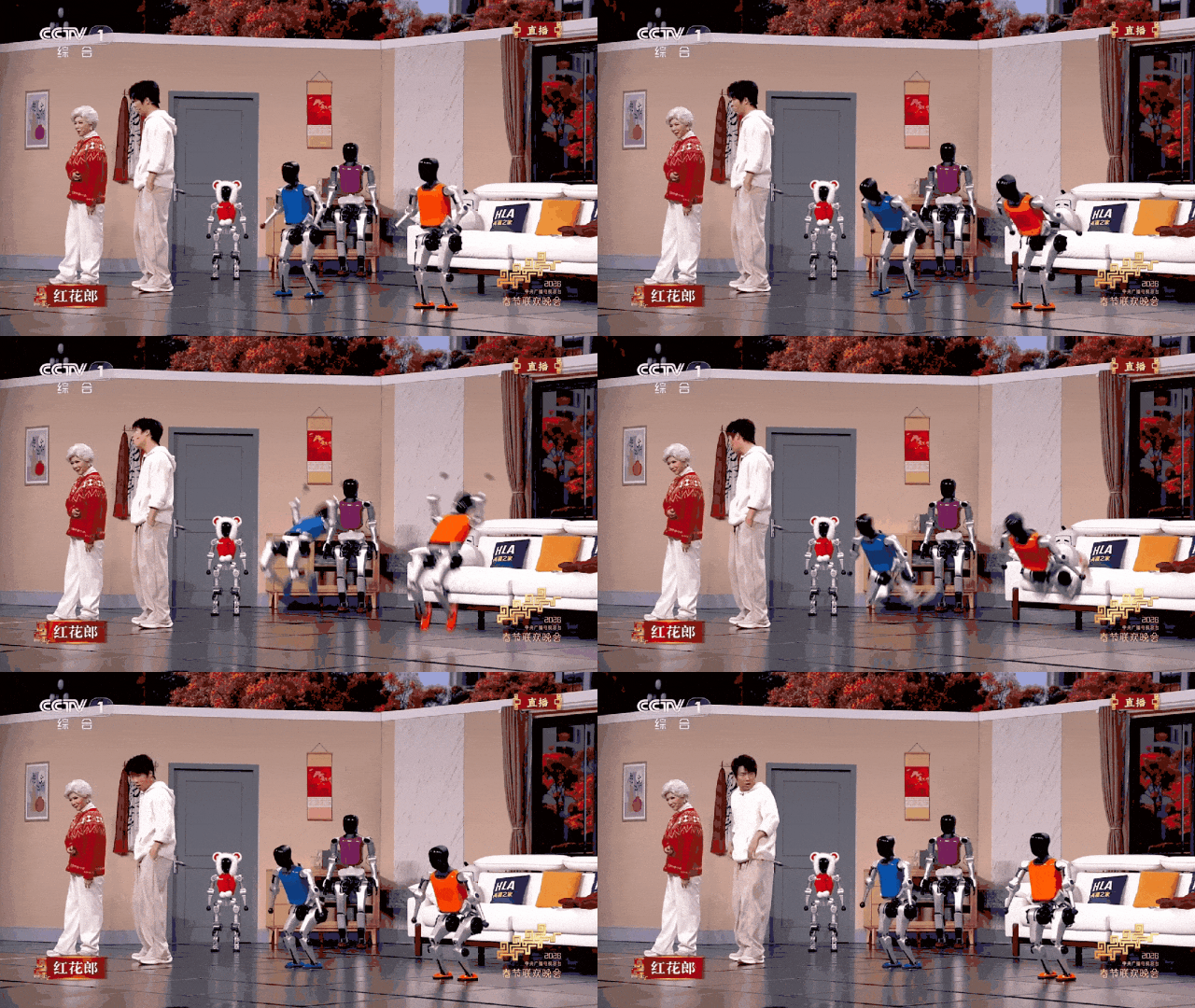
QbitAI: Many founders in the Embodied Artificial Intelligence sector are post-00s or post-95s. What's it like interacting with them?
Xiao Wang: Brave—every time I meet them, I see leaps in thinking and cognition.
QbitAI: Do you communicate smoothly with young people?
Xiao Wang: No problem; you just have to be willing to listen to them.
QbitAI: What discoveries from talking with them have refreshed your understanding?
Xiao Wang: Embodied Artificial Intelligence is still fundamentally a new sector; everyone's playbook is new. The technical aspects are manageable; the core is that each company's strategy, positioning, and thinking need differentiation.
And to do this sector, you must have big dreams—this is inherently a big endeavor; small dreams can't sustain it, and you'll easily shrink back as you go. Big dreams match big endeavors, small dreams match small ones. In this sector, you need big vision and the guts to charge forward.
QbitAI: When you first met Qian Wang (founder of Independent Variable Robotics), what attracted you to him?
Xiao Wang: When I evaluate founders, the core is their internal drive. Only with sufficient drive will they be willing to keep working hard, to seriously build a company, and more critically, to be willing to change themselves—and changing oneself is the hardest thing. Qian Wang is like this.
Why do many people become stubborn and stop growing as they age? Essentially, their drive is insufficient. But drive is hard to assess from a single dimension—many people deliberately appear highly motivated when you meet them, but along the way they easily become complacent with small gains and give up halfway.
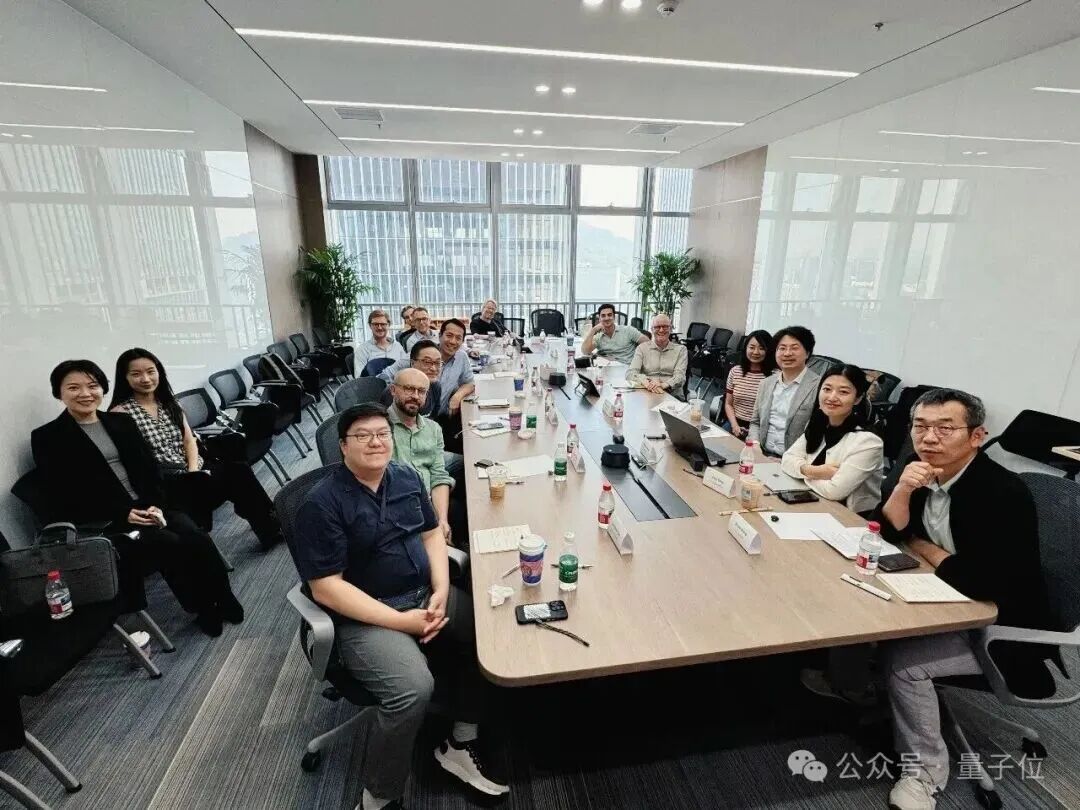
Xiao Wang leading European companies on a visit to Independent Variable Robotics
QbitAI: What does "complacent with small gains" look like?
Xiao Wang: For example, after raising money, renovating the office to look beautiful, hiring a driver, then playing golf every day. You can't build a company this way.
QbitAI: Have you seen signs of this in the Embodied Artificial Intelligence sector?
Xiao Wang: Everyone's still hustling; maybe when they can't keep up and fall behind, it'll appear.
QbitAI: Is being acquired considered "complacent with small gains"?
Xiao Wang: If a company can only get as far as being acquired, then insisting on going public would be wrong. Being acquired doesn't mean complacency. Someone might have had big dreams, then realized this truly couldn't scale, so better to be acquired and move on to something else.
QbitAI: Have you misjudged founding teams over the years?
Xiao Wang: Of course. Teams change, founders change—I've stayed on the front lines, constantly honing my judgment.
05
Early-Stage Investing Requires Being "Roughly Right"
QbitAI: How do you get in early on good projects?
Xiao Wang: Look one to two years ahead on certain trends, then be bold—worry less about early commercialization.
You can't have both commercialization and technological advancement, or both cheap valuations and huge imagination space. There are trade-offs.
QbitAI: How do you prioritize?
Xiao Wang: Priority is a big story, plus an interesting team, plus a reasonable entry timing window.
QbitAI: What's a "big story"?
Xiao Wang: Big demand, big imagination space.
QbitAI: What does "timing window" mean?
Xiao Wang: When I get involved, it's the right time for this company to be doing this thing. If the hype has already passed, it's not worth investing.
2023 and the first half of 2024 were good timing for investing in Embodied Artificial Intelligence. Generally, a sector's timing window doesn't exceed half a year to a year. If you miss it, after the hype passes, either valuations shoot up too fast or companies die. Neither situation suits early-stage investors.
QbitAI: You seem consistently optimistic about investing.
Xiao Wang: You have to be, or you can't do early-stage at all. Early-stage teams are often three or four people who haven't built anything yet, trying to raise tens of millions.
Of course, optimism requires positive feedback—projects you've invested in running well and making money. If you're getting beaten up every day, you won't stay optimistic.
QbitAI: What do "unoptimistic" moments look like?
Xiao Wang: During the pandemic, many projects struggled to raise funding, yet we still invested in many companies—operating counter-cyclically. Because investors are fundamentally like this: you can always find positive factors, keeping a small candle burning inside.
Essentially it's one thing: I naturally believe in the power of technology, in societal progress. Though there may be setbacks, I believe in human creativity and agency.
QbitAI: In Embodied Artificial Intelligence, various technical路线 have been contentious. How do you judge whether a company can succeed?
Xiao Wang: First, look at the big direction—whether this is truly something valuable and in demand.
Second, technical路线—we have our own judgment. For example, which route for world models has the best chance; we research this and won't choose obviously wrong路线.
But technical route contention is genuinely difficult. We place bets across multiple technical lines. Now we're betting on本体, brains, industrial robots, various scenarios; some VLA, and we're also looking at world models.
QbitAI: To quickly find good Embodied Artificial Intelligence companies, have you hired experts?
Xiao Wang: This is a new industry; no one has done Embodied Artificial Intelligence before. We have existing people learn. And I tell colleagues: our research shouldn't go deeper and deeper without boundaries.
Everything has bottlenecks. Like nuclear fusion—we invested three years ago. If you had to fully understand it before investing, you'd never get in.
QbitAI: Venture capital still has a bit of gambling to it.
Xiao Wang: Not a bit—a great big bit.
QbitAI: How much is luck?
Xiao Wang: If I have 50 projects and all have bad luck, that's tough. If all 50 have good luck, that's also unlikely. So I think individual projects involve luck, but at the portfolio level, it comes down to team caliber and methodology.
QbitAI: Most institutional capital is now clustered in AI and Embodied Artificial Intelligence. What adjustments will Unity Ventures' strategy and approach make?
Xiao Wang: We've already positioned in Embodied Artificial Intelligence. Next we'll look at intelligent hardware, AI application layers, and industries related to the "15th Five-Year Plan": quantum technology, brain-computer interfaces, nuclear fusion, 6G communications, biomanufacturing... we have companies in discussion for all of these.
06
Maintain Your Own Rhythm, Control the Desire to Scale
QbitAI: How has the investment environment changed compared to 15 years ago?
Xiao Wang: A complete reversal: before, it was dollar funds, individual LPs, market-driven forces, heavy bets on consumer and internet sectors that could quickly acquire users. Most institutions barely invested in tech companies, and IPOs clustered on U.S. exchanges. Now it's RMB and state capital dominating, focused on tech sectors, with IPOs targeting Hong Kong and A-share STAR Market. Quite an interesting shift.
QbitAI: After the old and new fundraising structures switched, what challenges have you faced?
Xiao Wang: Every GP faces a core question: do you take government guidance funds or not? Do you meet their reinvestment requirements?
If you do, can you maintain objective project judgment? Long-term, will the fund's survival be affected? How do you choose in that situation?
QbitAI: You chose to do it.
Xiao Wang: Of course—take care of the present before worrying about the future. But the core is maintaining diversified LP channels, preserving various channels as much as possible.
QbitAI: Is maintaining LP diversification difficult?
Xiao Wang: Extremely. The input-output ratio for diversification is completely disproportionate—you interface with hundreds of LPs, then filter down to dozens. The workload difference is astronomical.
QbitAI: Easy money is hard for anyone to refuse.
Xiao Wang: Exactly. Money you can get immediately—why refuse? Facing easy money, you have to give up gnawing on hard bones. But I need to be clear: some money, once taken, only makes things harder down the line.
QbitAI: What money won't you take?
Xiao Wang: Regional government guidance funds with extremely difficult reinvestment requirements.
QbitAI: How do you refuse when you can't avoid certain situations?
Xiao Wang: The core is controlling your desire to scale up the fund. No matter how much money they offer or how big the pool, if it's not suitable, firmly decline.
You can adopt more flexible fundraising strategies, just maintaining scale—this avoids high constraints while ensuring normal fund operations.
QbitAI: Controlling desires—that's somewhat philosophical.
Xiao Wang: Indeed. From an industry规律 perspective, there's a natural negative correlation between fund size and returns—this is iron law. Of course, this doesn't mean scale can't grow; through extra effort, with team capabilities improving in tandem, you can expand scale while preserving returns. But if capabilities haven't caught up and you're blindly scaling fast, project quality will definitely deteriorate.
I've always believed in controlling scale—not refusing to grow, but thinking through your capability boundaries and development logic before gradually expanding. That's the most stable approach.
QbitAI: What's the most attractive aspect of being a VC for you?
Xiao Wang: Seeing through time and space is an extremely difficult capability. Most of us can only see the causes and effects of present problems in our current时空, but struggle to penetrate five or ten years into the future to see decisions in complex systems. This is a fascinating, challenging endeavor.
QbitAI: This year you gave every founder a copy of The Next 10,000 Days. Why this book?
Xiao Wang: I hope everyone can face the future. The country is continuously pushing future technology industries; we need to keep pace. And I've always felt people must have a forward-looking mindset.
Each of us must look ahead. No matter how accomplished your past, you must keep moving forward, or you'll stagnate and end up a油腻 middle-aged person.