Life Goes On: Oasis Capital's 2022 Annual General Meeting (AGM) Held in Shanghai

Counselor Vitality
On November 24, Oasis Capital held its 2022 Annual General Meeting (AGM) in Shanghai. The event combined in-person and online formats, centered on the theme "Sustaining Vitality," sharing China insights and future outlooks with investors. The meeting also invited representatives from all Oasis portfolio companies and ecosystem partners to attend in person for sharing and exchange.
The conference featured a keynote address by special guest Lan Xiaohuan, author of Inside the Chinese Economy and professor of economics at Fudan University, on "The Logic and Prospects of China's Economic Transformation." Founders from Oasis portfolio companies Polly Polymer founder Wenbin Wang and Yunqi Wuyin founder Kaiwen Shen delivered keynote speeches on "Ultra-High-Speed 3D Printing Technology" and "Building Critical Supply Chain Security in the Digital Age" respectively, addressing their specialized fields. In the final session, serial entrepreneurs including Zhibin Cai, Zhiyan Xu, Haozhi Chen — founders of Oasis portfolio companies Chenfeng Information, Foursmile, and Seed — along with Zhixiong Chen, founder of Oasis ecosystem partner Qiaofang, participated in a roundtable discussion on "Entrepreneurial Spirit: Endless Vitality."

"Three hundred million people were born in China between 1980 and 1995 — roughly equal to the entire population of the United States. We are the main force of Chinese consumption, and also a unique generation: only children from dual-income households, growing up when our parents had neither money nor free time; by the time they achieved modest success, we had already grown up. Looking inward, we are a generation caught between two eras; looking outward, we are a generation that bridges past and future. The median age at which founders of America's top 100 companies by market cap started their businesses was 33 — they belong to this very generation. At this moment of China's structural upgrading, believe in China, believe in young people, believe in their vision, resilience, and vitality, and support China's digital transformation."
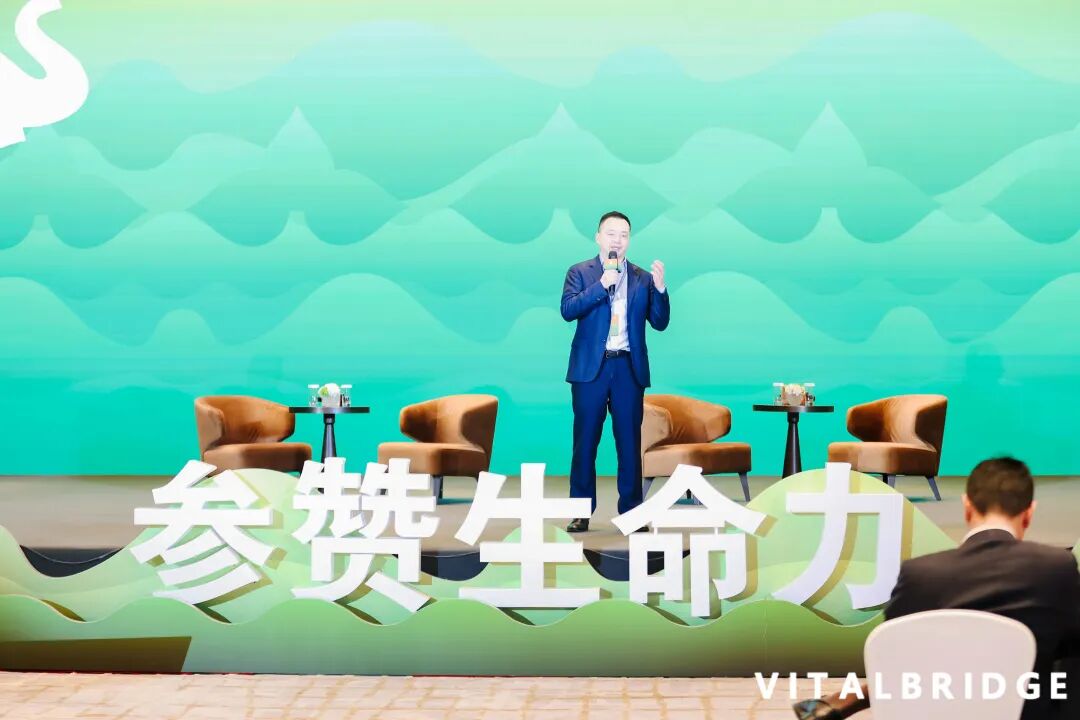
"There are many problems in life — some are cyclical, some are structural. China's dynamic zero-COVID policy, its policy shifts — these are cyclical issues. As early-stage investors, we should pay more attention to structural problems. Policy, demographics, and technology — these three drivers together create structural investment opportunities, and this has always been our investment framework."
"Over the past 20 years, China's urban population grew from 450 million to 900 million. In the 15 years between 1980 and 1995, China added 300 million people — equal to the entire current population of the United States. Three hundred million moved from rural to urban areas, from having nothing to having something. It was this demographic dividend that created investment opportunities over the past two decades. But this dividend is diminishing, so national policy is changing accordingly."
"From 2015 to 2020, employment in construction fell from 58 million to 52 million, while the average age rose from 38.6 to 41.4. What do you notice? It's the same cohort from start to finish. The people who built our homes 20 years ago are the same ones renovating them today. The average age of Chinese construction workers has increased by more than ten years over the past two decades. This is the reality of China's labor force."
"China's digital opportunity has already shifted from an efficiency tool to a labor replacement tool — from a 'nice-to-have' to a 'must-have' technology. This is the transformation happening in China right now, and it will be the dominant theme for the next decade."
"This year has been brutal for many industries. Looking back, it's also a form of refinement. A person who has had smooth sailing their whole life achieves no refinement; neither does one who has known only suffering. Only through the interplay of joy and hardship does true refinement occur."
"Investment and competition both exist within markets. Without the living water of market resources, there is no source of life — and this is China's greatest advantage." — Lan Xiaohuan, Professor of Economics, Fudan University
"For the future, uncertainty is enormous. How you view the future is fundamentally a matter of belief and values, and beliefs and values are largely shaped by personal experience — it's not a particularly logical process."
"China has two things that no other country has. First, Chinese culture is the only one that has remained unbroken for two thousand years. Second, the Chinese people have never left the land where they live. Whether you're investing or building businesses, when we face the future, what exactly is investment value? What is capital value? Money and food are merely manifestations of capital. The essential value of capital is a psychological activity — an expectation of the future based on the present. If this expectation disappears, any form of wealth will burst like a bubble. But based on the present, where does this expectation of the future come from? How do you see the future? Fundamentally, it's a psychological activity constructed from society, politics, and culture. With these values, with this psychological activity, you then interpret so-called economic data. Any economic data before you — you can always find positive readings, negative readings. The data itself isn't that important; what matters is how you interpret it, and your interpretive framework comes from your psychological activity."
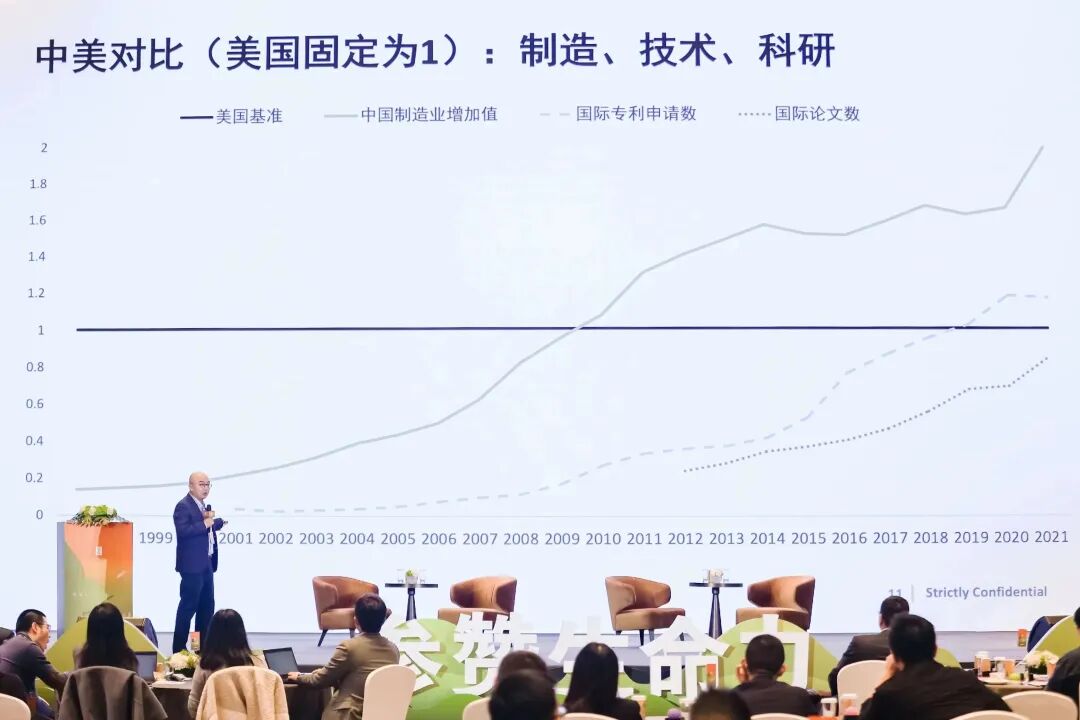
"China's technological upgrading follows the most mainstream and most boring path: step by step, down to earth, nothing else — just scaling up, constantly expanding scale, reducing costs. In this process, learning iterates step by step."
"Looking at 200 years of global manufacturing distribution: in 1800, we were the world's largest, at 30%; today we are again the world's largest, at 30%. When you feel pessimistic about the future, I ask you to remember: China is the only country that was knocked down and got back up, the only one to return to the world's top position."
"Through our efforts in 3D printing infrastructure, we hope to help more Chinese cities become creative capitals, truly achieving intelligent manufacturing, Chinese brands, and comprehensive upgrading. Within the global landscape, we want to contribute what we can. We hope this technology belongs not just to China, but to all humanity." — Wenbin Wang, Founder of Polly Polymer
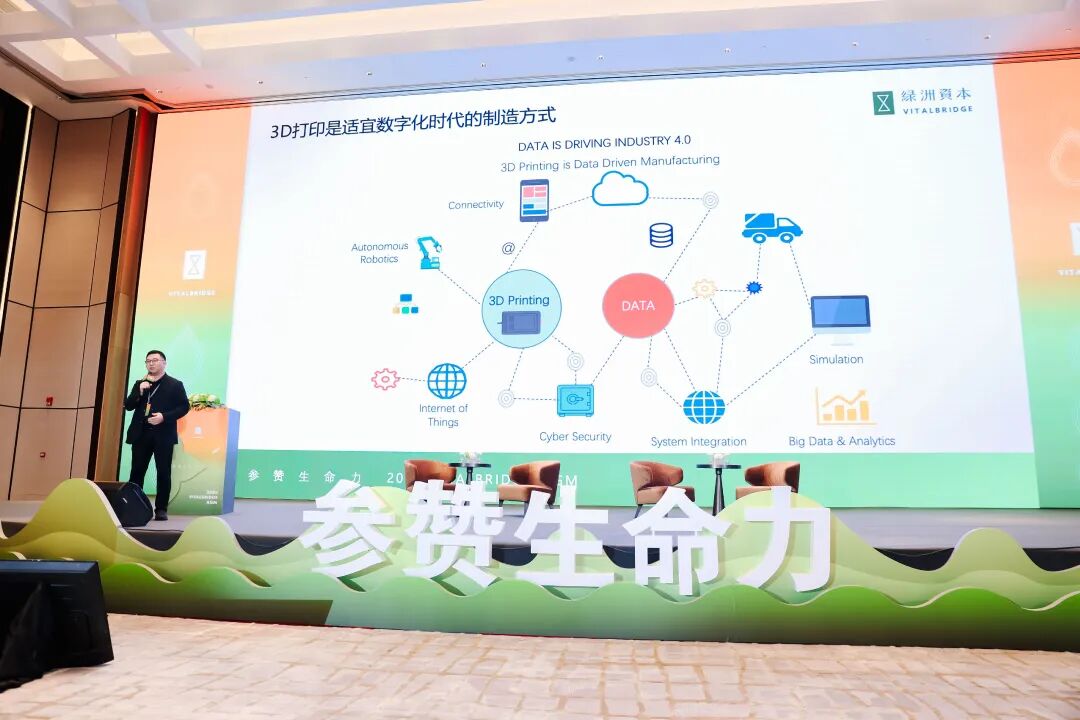
"Polly Polymer started from materials, building our own equipment and software, forming a methodology for constructing new substances based on chemical reactions."
"3D printing's greatest advantage is that it easily produces complex products — its cost has no relation to product complexity or quantity. On this foundation, it's an entirely new manufacturing paradigm. Our productive force is actually data; data constitutes a mode of production."
"As a 3D printing practitioner, I'm filled with pride. Because I feel we are witnessing, and possibly participating in creating, a historic opportunity for all of human manufacturing."
"I'm somewhat idealistic — I want to build a product that can truly create massive value for cybersecurity. We position ourselves as leaders in next-generation software supply chain security. We founded Yunqi Wuyin to make software safer and security smarter through AI-powered automated testing technology."
— Kaiwen Shen, Founder of Yunqi Wuyin
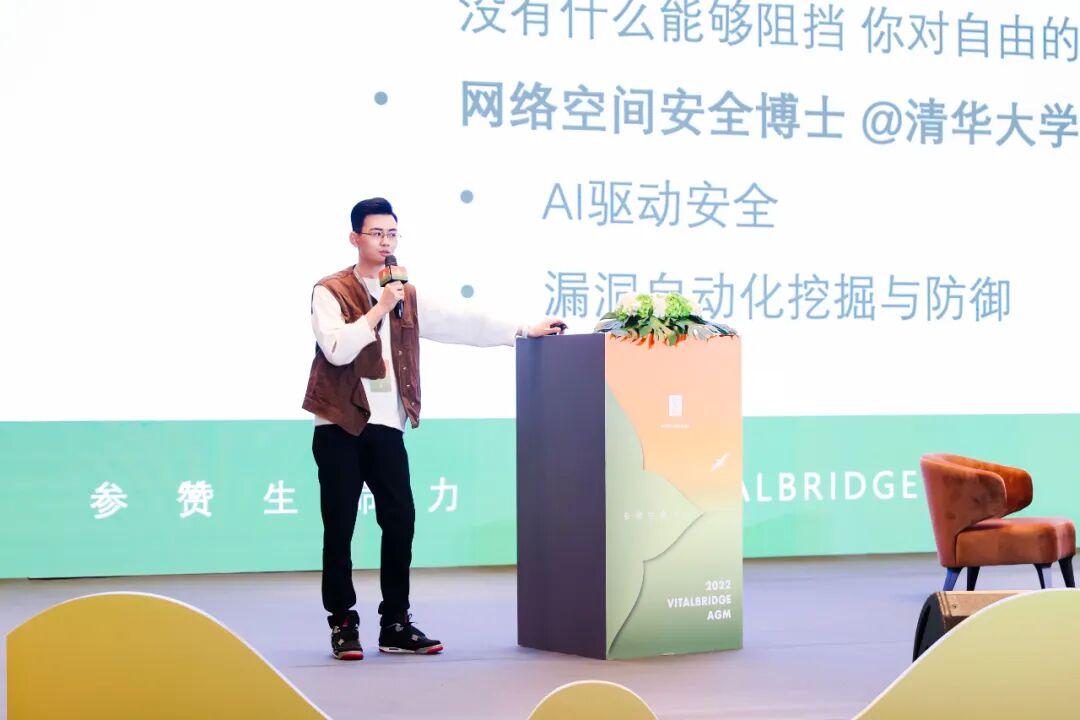
"As digitalization deepens and systems become increasingly interdependent — whether industrial systems, foundational software, or voice preference platforms — anything using Java's Log4j component is vulnerable to attack. The scope of impact is unprecedented."
"In 2017, the NotPetya ransomware attack, conducted through upgrade hijacking, caused over $10 billion in economic losses. The 2020 SolarWinds incident, through source code contamination, directly impacted 18,000 critical infrastructure entities and enterprises. In 2021, the Log4j vulnerability disclosed by Alibaba Cloud affected virtually all business systems developed using Java, from Google Search down to Apple's WiFi modules. Software supply chains connect the entire digital world — when an upstream component is attacked, nearly all downstream software becomes vulnerable, causing massive economic losses and social impact."
"Currently, 97% of codebases contain open-source code. We must acknowledge that open-source code has become the primary reference in development processes. Shockingly, statistics show 14 bugs per 1,000 lines of code. These bugs are like ticking time bombs — we never know when attackers will exploit them to trigger the next software gray rhino event, causing catastrophic economic damage."
"Public data shows there are currently 1.11 trillion lines of code globally, with an average of 2 billion new lines added weekly. The scale and speed of iteration continue accelerating, and humans are gradually unable to keep pace with this production rhythm. AI and automation technologies will become a new wave to address this problem. We continuously update and iterate our libraries to ensure we can keep pace with software supply chain capabilities. Simply put, open-source software libraries and security vulnerability databases will be the core vitality of entire software supply chain security."
"I want to work with excellent people, including my partners — with outstanding people to turn the future into reality."
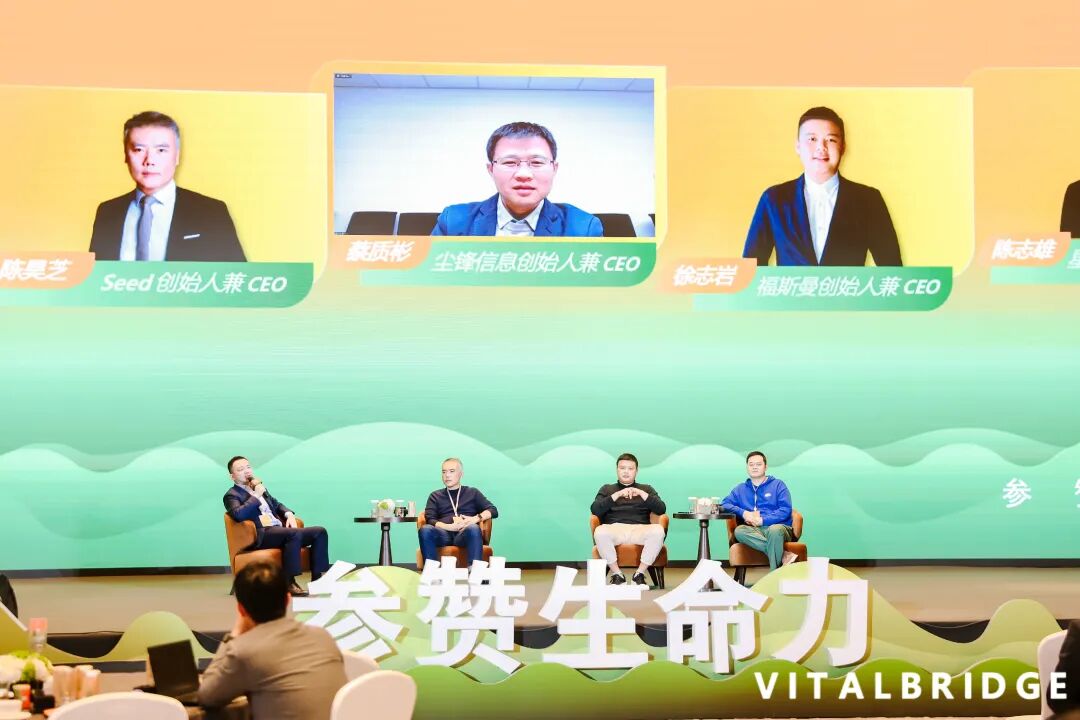
Entrepreneur Roundtable: "Endless Vitality"
Q: From your first startup to now, what differences and changes do you see in your state of mind?
Zhiyan Xu, Founder of Foursmile: "Accumulating all lessons into current operations — I find this incredibly fulfilling, incredibly grounding. Aggregating more energized people, leveraging every resource available."
Zhixiong Chen, Founder of Qiaofang: "In my first startup, we focused more on the 'what' — I did a lot of hands-on work myself. This time, our understanding is that people matter far more than the 'what,' so we invest enormous time on people."
Haozhi Chen, Founder of Seed: "The biggest mental shift this time is that first, I want to do the right thing. I genuinely believe in what we're doing — this is probably the biggest change across my three entrepreneurial journeys. I'd rather people not know what I'm doing, but I'll genuinely position myself alongside the most resourced technical capabilities, strongest supply chain capabilities, and strongest algorithm capabilities in the shortest possible time."
Zhibin Cai, Founder of Chenfeng Information: "For our second startup, we actually decided during the first one that there would definitely be a second — the first was purely for making money. What's different in the second: first, everything has two sides; any external development should be viewed from both angles — good can turn bad, bad can turn good, depending on which direction you approach it from and what measures you take in your own interest. Second, capabilities change significantly — accumulated experience and knowledge help enormously for the second venture. Of course, you still have to walk into pitfalls yourself, but if you're more conservative and slower, you won't fall as hard. The biggest difference is perspective — preparing for the future."
Q: If you could give your first-time-entrepreneur self one piece of advice, what would it be?
Cai: "If there's only one suggestion: just persist. Persist, and anything can be solved. Just persist."
Xu: "First, don't mistake macro tailwinds for your own ability — that's not your ability. Second, focus more, much more."
Chen: "Believe in yourself. First, believe what you're doing is right; second, believe I have the ability to do it."
Chen Zhixiong: "You should think bigger, think further, think deeper about your own affairs."
"What is vitality? Vitality is your ability to constantly break through yourself and work with more people. If in the end only you alone are strong, you won't go far. Only when a group of people are strong can you truly become an oasis."
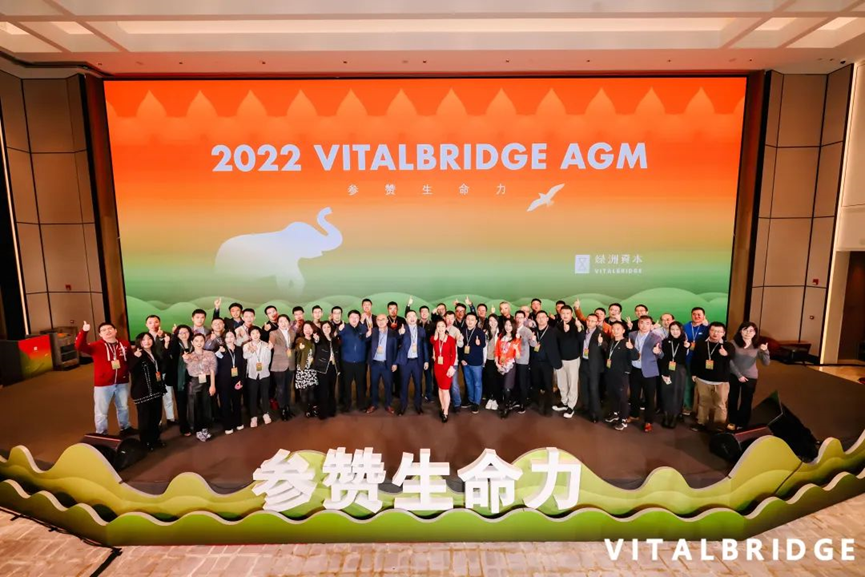
What is Oasis looking for?
China is transitioning from a consumer internet era driven by technology and demographics to an industrial internet upgrade driven by technology and policy — encompassing digital equipment, intelligent manufacturing, and enterprise services. Digitalization is evolving from an efficiency tool into an inevitable industrial engine to help China become a global technology power. Oasis hopes to identify technology companies born in China, rooted in China, yet with global vision serving global markets.
Sustaining Vitality.





Oasis Capital is a new-generation venture capital firm in China, dedicated to discovering the most vital entrepreneurs of the next decade and growing alongside them to create long-term value. "Sustaining Vitality" is Oasis's vision and mission. This vitality is both the direction of structural transformation in our era and the resilience and evolutionary power of entrepreneurs.
Oasis Capital focuses on early and growth-stage investments, with individual ticket sizes ranging from $3 million to $30 million, concentrating on technology-enabled services including healthcare and enterprise services, supporting China's new service upgrade driven by technology.