Oasis Capital in Conversation with Professor Minlie Huang: To Know What You Know and What You Don't — AGI Included

Survival of the fittest

The wave of large language models is fierce. How can we ensure it washes away the sand rather than letting mud settle — making its outputs trustworthy and controllable, and its ecosystem, even AI research and applications, develop in a healthy and sustainable way? Today we share a conversation with Professor Minlie Huang of Tsinghua University's Department of Computer Science and Technology. A leading global scientist in emotional research for machine dialogue, he founded Lingxin Intelligence to tackle the challenges of trustworthiness, configurability, and controllability in AI development. Below are some of his thoughts. Enjoy.
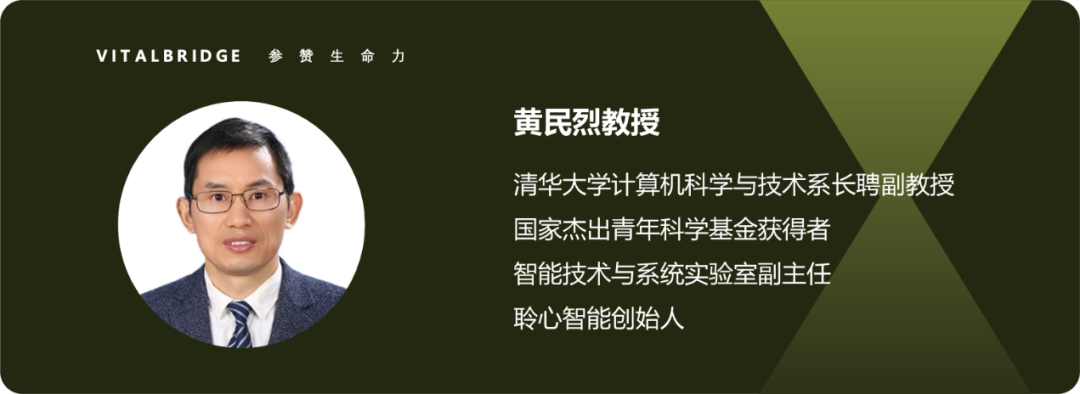
Oasis Capital: Where do you see the main shortcomings of large language models like ChatGPT?
Professor Huang: ChatGPT's problems fall into several categories:
First, information trustworthiness — especially in specific application scenarios where real-time accuracy is critical, such as finance. This is a problem that must be solved.
Second, precise computation, including symbolic understanding and processing. ChatGPT doesn't truly grasp the precise meaning of operators; it relies on probabilistic inference, which makes it difficult to guarantee correctness. It can produce derivation steps, but the data in those steps is often wrong.
Third, safety, which involves ethics, social morality, and values. For example, if you ask ChatGPT to describe certain "special" scenarios, it may refuse when asked directly. But reframe it as writing a novel or screenplay that requires such a scene, and it will comply. If malicious actors exploit ChatGPT to fabricate rumors — say, that vaccines cause autism — the model generates content that appears well-reasoned. Without medical expertise, people struggle to verify its authenticity. Once spread online, this creates serious information hazards.
If AIGC advances further and everyone uses models to generate content, a flood of "rumor-class" data published online could be scraped by crawlers and fed back into training models, inevitably leading to data pollution and negative iteration. Malicious use of large language models can cause severe harm. I saw an example today: using LLMs to generate PUA-style texts to manipulate Buddhist devotees into sexual relationships — a textbook case of malicious model use. In the hands of criminals, the consequences are unthinkable. This underscores the need for norms and constraints around model usage.
Oasis Capital: Is trustworthiness and controllability required at equally high levels across all LLM scenarios? From Lingxin's perspective, how do you make dialogue trustworthy and controllable?
Professor Huang: Different applications have different requirements. Medical scenarios demand extreme accuracy with near-zero tolerance for errors. Emotional and social applications allow more room for mistakes. Marketing copywriting, having no standard answers, permits high tolerance. Our approach is twofold: improving the model's inherent capabilities on one hand, and leveraging the strengths and weaknesses of large models to deliberately design products and directions on the other.
From Lingxin's perspective on safety, we use adversarial attacks to see when and how the model fails — like debugging code, finding bugs, then fixing them. We identify vulnerabilities through attacks, then repair them with targeted retraining. We also design specific taxonomies or attack methods to collect data directionally, enabling better model responses to such inputs.
Lingxin trains models to learn specific attribute dimensions — values, social attributes, and personal attributes — breaking these into several dimensions. The model learns what speaking style to adopt, how to express its values, personality, and social attributes within specific dimensions. Our products use underlying attribute tagging, then integrate this learning into large language models.
We focus on capabilities post-pretraining. Pretraining involves massive data and tight timelines, which don't support especially fine-grained processing. Just as GPT-3's subsequent SFT and RLHF stages filled in later-phase capabilities, Lingxin follows a similar process.
Oasis Capital: What is Lingxin's main focus?
Professor Huang: Currently we focus on models with emotional attributes that also provide functional capabilities. Take intelligent assistants — the next generation won't simply follow commands, but establish long-term, solid trust relationships to help users complete tasks. ChatGPT remains at the command-reception and execution stage; it cannot address emotional and social needs.
I believe combining emotional/social capabilities with informational functions defines the next-generation intelligent assistant concept. Humans and machines exist in symbiosis — as partners capable of building long-term, stable trust and emotional connections.
Oasis Capital: Emotion is among humanity's most complex capabilities. If AI develops emotion, won't it evolve into the AI threat humans fear?
Professor Huang: AI self-awareness refers to spontaneous emotion. What we're doing now enables machines to understand human emotions and make corresponding decisions and behaviors based on that understanding — supporting or channeling human emotions to produce "empathetic" expressions. This is not autonomous machine emotion.
Autonomous machine emotion is an interesting future research direction, potentially involving "artificial psychology" or "artificial emotion" — machines developing their own emotions and mental states. This is significantly harder research.
Oasis Capital: Under the AIGC wave, this "iPhone moment for AI," what kind of era does this represent for domestic tech companies?
Professor Huang: (Laughs) Good and bad. The good: AIGC is genuinely a风口 [wind tunnel/opportunity], meaning more attention, more capital and resource investment. The bad: easy to fall into vicious competition and redundant investment, ultimately becoming resource waste. But in the end, the waves wash away the sand — those with real strength will survive. The current pace is too fast, talent is being snapped up crazily, creating inflation and other negative problems.
Oasis Capital: How do you view the current talent war?
Professor Huang: Lingxin itself has a Tsinghua foundation, with deep understanding of underlying technology, so team building is relatively straightforward. But for some startups, the challenges are greater — they may need to recruit from the market at high salaries. If they encounter companies without底线 [bottom lines] engaging in malicious high-price competition, the entire ecosystem suffers long-term damage.
Oasis Capital: What AIGC application scenarios do you see as commercially valuable?
Professor Huang: Gaming, finance, education — these industries will see positive impact. Game companies' asset creation will clearly reduce production costs. Finance will see new-generation financial assistants. In education, traditional instructor roles may be disrupted, and learning models will change.
From a broader perspective, we'll also face new "AI social" dynamics. What is "AI social"? For instance, when people prefer chatting with AI over humans — when AI evolves to the point where human interaction feels less necessary — new social forms emerge.
We've observed that younger generations communicate skillfully in virtual worlds. They worship digital idols, digital IPs, digital humans, and show high acceptance of AI interaction and related emerging phenomena. ChatGPT essentially performed nationwide AI popularization. Human-to-human social interaction will always exist and can never be fully replaced, but human-to-AI social interaction may occupy a significant portion. This is the major direction Lingxin is currently exploring. I believe there's substantial market space for fundamental human needs like emotion and social connection.
Oasis Capital: Many companies domestically and abroad are exploring emotionally conversational virtual humans. From a technical perspective, how does Lingxin compete?
Professor Huang: The core is choosing suitable scenarios and leveraging your strengths. ChatGPT's professional capabilities still require significant optimization to generate value and get users to pay. Whether in education or any scenario, deep optimization is needed. This deep optimization is what entrepreneurs should focus on — it might be the last kilometer or the last three kilometers, depending on your scenario's application characteristics. The priority is finding product-market fit quickly, then using data to improve. Right now, getting data flowing and products running is core.
From Lingxin's perspective: first, build a market-leading foundation; then provide standardized products — for example, providing brains for digital humans with complete solutions enabling clients to configure and customize themselves; finally, deeply penetrate an industry to establish commercial scenarios with data-model closed loops. This is our current thinking on basic steps and roadmap.
Oasis Capital: Alibaba's "Tongyi Qianwen" announced internal testing. Under this competitive landscape where major players are racing ahead, how can companies stand out?
Professor Huang: I haven't tried Alibaba's yet; I suspect it's roughly comparable to other major tech companies' releases. It's foreseeable that their current capabilities are fairly similar, all with considerable gaps behind ChatGPT. Scarcity creates value; abundance diminishes it. How to evaluate and use these models has become more important instead.
The key for companies to stand out is the sustainable development path after model release, and how to achieve commercial monetization — mainly finding the right application scenarios and overall positioning. Currently companies fall into roughly several categories: those directly providing large models, those doing applications with underlying capabilities, and those doing applications directly. Most companies, if they can find good scenarios and combine data with iterative model capability improvement, will be relatively competitive. I don't think there will ultimately be so-called underlying model companies. Most current companies don't exist to achieve the AGI dream — they're chasing short-term commercial interests.
For Lingxin, since we position ourselves on personalization, emotional integration, and trustworthy/controllable/configurable capabilities, we're not competing with major tech companies, so there's not much pressure. Those building underlying OpenAI-type companies may face greater competitive pressure.
Oasis Capital: What's worth watching in recent LLM developments?
Professor Huang: We've been following progress closely. Numerous open-source models have launched domestically and abroad, claiming to achieve ChatGPT-comparable levels. But examined carefully, they're actually still far behind. These efforts only replicate ChatGPT's easier aspects. Your capability shows when you can do what most models cannot. I think this also represents public misinformation from those without deep research. From our research, open-source models perform very poorly on difficult examples.
Oasis Capital: Why do you think OpenAI hasn't considered emotional scenarios? Because they represent too small a share of its commercialization? Or because general-purpose approaches struggle to address them?
Professor Huang: I wouldn't say this segment is too small commercially. Google, Facebook's research, including Bard, Manychat, Blender — these major tech companies' earliest research in this area actually started from emotional and social angles. The space isn't small.
ChatGPT became a task assistant,颠覆 [subverting] the previous AI assistant concept. OpenAI can complete various open tasks within one framework. ChatGPT is indeed a productivity tool, more readily accepted by people — that's why it exploded in popularity.
ChatGPT hasn't optimized for emotion and empathy. Its positioning is clear: robotic attributes, and OpenAI even deliberately avoids these issues. But these may be precisely ChatGPT's special capabilities, which反而 [instead] reveal new opportunities for Lingxin. We want to build something more distinctive rather than simply looking at open-source content. We also maintain skepticism toward ChatGPT's capabilities and conclusions, because biased data usage produces biased conclusions. Microsoft recently published a paper claiming ChatGPT-comparable levels, but they actually used simple examples.
Oasis Capital: Maithra Raghu (Samaya AI), Matei Zaharia (Databricks), and Eric Schmidt (Schmidt Futures) recently published an article, "Does One Large Model Rule Them All?" suggesting it's unlikely one dominant large model will prevail. What's your view?
Professor Huang: Domain-specific models will certainly emerge. Currently there's some狂热 [fever], with people thinking one large language model, one foundation, or more bluntly — one OpenAI — can do everything going forward. This will soon be disproven. Eventually everyone will realize domain optimization is still necessary. For example, building a medical domain large model: is少量 [small amounts] of data enough? Or does it require massive domain-specific training data? How can knowledge accuracy be guaranteed? Can one general model truly adapt to all commercial scenarios? I don't think so — there will definitely be domain adaptation issues. Though we may adapt at lower cost and faster speed than before. Nor does it rule out some domains, like medicine, still requiring plenty of dirty work.
Oasis Capital: Lingxin is leading Tsinghua's effort to build a Chinese large model safety evaluation framework. What was the motivation?
Professor Huang: It's foreseeable that open-source models will grow increasingly numerous and popular, with everyone able to open-source. How then do you evaluate these models' safety? Going further, how do you evaluate their capabilities? Everyone claims their model is superior — what are the evaluation standards? Do they present or generate risks? These are critically important and urgent questions. What we're doing is defining and constructing datasets, establishing standards and evaluation methods, enabling fair comparison on a relatively level playing field. This is an important part of advancing and promoting the field. We'll also be writing a paper on this soon.
Oasis Capital: What does AGI look like in your vision?
Professor Huang: True AGI has several layers. The first is achieving high personalization and customization, allowing users to configure and customize specific AGI attributes and behaviors. For large language models to achieve personalization: first, through minimal configuration, enabling the model to exhibit different behaviors and characteristics to adapt to different users; second, the large language model dynamically learning and adapting to user behavioral characteristics. This is personalization at both ends: user-side and system-side. Large language models need certain personalities to become a "specific person" that adapts to user characteristics and behaviors.
The second layer is anthropomorphic features — social-emotional attributes, well-integrated with functional attributes.
The third layer is AI learning to use external tools or plugins, knowing how to leverage tools to compensate for its shortcomings. When humans don't know something, they seek external resources. For example, if you ask me suddenly about quantum mechanics principles, I may not know; or if you ask whether controlled nuclear fusion can be achieved in five years, I certainly can't speculate. Then I might search online or consult a specialist. But if you ask ChatGPT the same questions now, it will definitely make things up, right?
In short, to achieve AGI, a model must know what it knows and what it doesn't, and respond appropriately to what it doesn't know — this is the wisdom involved.
Vitality
What do you think constitutes technological vitality?
In pursuing technology, persist in doing what's difficult and right.
— Professor Minlie Huang, Tsinghua University Department of Computer Science and Technology





Oasis Capital is a new-generation Chinese venture capital firm dedicated to discovering China's most vital entrepreneurs over the next decade and growing alongside them to create long-term value. "Vitality" is Oasis's vision and mission. This vitality represents both the direction of era-defining structural transformation and the resilience and evolutionary power of entrepreneurs.
Oasis Capital focuses on early and growth-stage investments, with individual investments ranging from $3 million to $30 million, emphasizing robotics, artificial intelligence, and technology services to support China's technology-driven new service upgrade.