AIGC Company "Tiamat" Closes Nearly $10 Million Series A Round | Led by Oasis Capital

A frontrunner in AI-generated imagery

Tiamat has recently closed a Series A round of nearly $10 million, co-led by DCM and Oasis Capital, with Farsighted Capital serving as the exclusive financial advisor. The proceeds will go toward continued product refinement and proprietary large model development, as well as expanding commercialization capabilities. Qinggan, founder and CEO of Tiamat, said: "Tiamat is a generative AI platform focused on exploring how artificial intelligence can extend the boundaries of human imagination, keeping creativity vibrant and energized, so that inspiration exists, grows, and manifests at every moment. Oasis Capital is a young, adventurous investor whose temperament and understanding of AI align very closely with our team. We have maintained a leading position in domestic commercialization, and we're confident we can stay sharp through this era of rapid technological change."
An investment principal at Oasis Capital said: "Tiamat uses generative AI to automatically produce new digital image content by combining existing text or image files, breaking through the efficiency bottlenecks that professional illustrators, designers, and digital artists face in their creative work. Oasis Capital began tracking the underlying changes AIGC would bring to industries in the first half of last year. We believe that Tiamat's accumulation of specific style pipelines and its broad influence among community users position it to deliver a new generation of creative design tools to users. Tiamat is gradually building out an 'AIGC-based' workflow around vertical design scenarios, and we believe this will bring enormous transformation to the entire creative industry."

Founded in 2021, Tiamat is a domestic AI image generation technology service provider. Its self-developed MorpherVLM is China's first nearly ten-billion-parameter cross-modal generation model based on the concept fusion paradigm. Through a heterogeneous visual encoding-decoding network architecture, and by introducing reinforcement learning from human feedback (RLHF) and fine-grained prompt-latent alignment techniques, the model improves its ability to model multi-scale image information and has made advances in understanding user prompt inputs.

Image generated by Tiamat
Last summer, AI Art suddenly became the hottest emerging technology, with an impact in design, illustration, and other specialized fields rivaling the universal frenzy that ChatGPT has since generated. Under the structural opportunity of AIGC, "not chasing the hype, but waiting for it" is exactly the kind of innovation-embracing approach that technical entrepreneurs and capital most want to see. On timing, Tiamat began model training in 2021, keeping pace with overseas technical developments and the open-source community through self-developed, independently trained foundational models. "We were desperately trying to tell everyone that this would become the next big thing very soon," said Qinggan. In the first half of last year, when they were fundraising, they still had to spend considerable effort educating the market — explaining what AI generation was, what multimodality meant, why they were doing images. At that point, Stable Diffusion, MidJourney, and other products that would lead industry transformation were still months away from launch.
As one of China's first teams in AI-generated images, Tiamat has now become one of the few technology service providers to successfully raise funding and achieve commercialization. From the perspective of Tiamat's self-developed large model and its阶段性 commercialization成果, Qinggan and co-founder Eric discussed the future applicability of AIGC in the domestic market.
Q: Starting from large models, what are the differences between AI image generation and conversational AI represented by ChatGPT?
Qinggan: There are actually many nuanced differences between tracks within AIGC. First, whether these models involve a single modality or multiple modalities. Our model bridges multiple modalities — users can guide image generation with text, or get new generation results from a sketch. ChatGPT, as a model focused on understanding and generation in the text domain, has only one modality: text. At the same time, it has enormous parameter counts, requiring massive time and data to clean harmful information, so the actual time, effort, and compute spent is far greater than in our AI Art domain. From an intuitive perspective, if text contains logical errors or conversational distortions, users can detect them quickly, whereas they tend to be more forgiving of minor flaws in images.
The text-to-image model we're developing at Tiamat has roughly billions of parameters, an order of magnitude nearly 100 times lower than ChatGPT's text model. In terms of their historical development, that would place it roughly between GPT-1 and GPT-2. So although both are called large models, there's actually a huge difference in data and parameter scale. On this basis, constantly expanding our model's parameter count isn't our most important metric.
Eric: Beyond modality and input variety, the generation task itself is another useful dimension. When we talk about AI, there's actually a lot of interpretive space — facial recognition, large-scale text analysis, and so on are more about understanding data. But returning to the AIGC domain, it's more about generation on top of understanding. ChatGPT first achieves strong understanding of your input, then draws on knowledge embedded in its parameters to respond to human input. We can draw an analogy here. We use multiple different networks to place user input into a space that's natural for AI, then find appropriate solutions from that space. This is quite different from previous generation-understanding AI.

Image generated by Tiamat
Q: For AI-generated images, what are the more important metrics?
Qinggan: The more important metrics are whether you can achieve better precision and controllability in vertical domains, whether you can better make images display human-desired compositions, or consistent characters, and so on. Beyond that, our decision to self-develop also comes from how to make R&D cost structures leaner and more controllable. From this perspective, startups also have more opportunities. As mentioned, the image-text multimodal generation domain has lower parameter scales, and costs for annotation data and training can be effectively compressed. Innovation in image-based AIGC focuses more on specific technical paths and commercialization breakthroughs, with relatively less cost pressure. Meanwhile, a single training run in the text domain currently might cost several hundred thousand to millions of dollars — enormous costs.
Eric: Yes, controllability is also a metric closely tied to commercial application. When we talk about large models, there's a problem: many are built on massive datasets, mostly drawn from internet-sourced knowledge. The question that follows: how do we make these models do what they can do in a human-controllable way? We all know that OpenAI's GPT-3 and ChatGPT are technically同源, but ChatGPT's results are noticeably better, and everyone has intuitively felt its applications across industries. On the technical side, this is because ChatGPT adds a process of self-learning from human feedback compared to GPT-3, making its applications better align with expectations. So when we build Tiamat's generation model, we pay particular attention to this — how to make generation results match user expectations.
Q: Since the second half of last year, AIGC has moved extremely fast, with the entire industry being pushed by capital. A widely validated business model may not have had time to emerge yet. How does Tiamat think about commercialization?
Qinggan: From the start of our venture, we've been self-developing image models, training them ourselves, optimizing and iterating step by step. So far, we should be the fastest in commercialization among domestic AI image companies. In Q4 last year, we had several million yuan in contract orders. Because the image domain actually requires more professionalized, verticalized understanding and generation. Take the apparel domain we're currently commercializing, for example. Apparel now needs AI to replace designers or help designers find inspiration, so their input methods are necessarily "jargon" from the fashion design domain — what kind of neckline styles, silhouettes — industry knowledge that outsiders might not understand. So when we build industry models, we first need to understand the communication language between designers, then understand the corresponding images, during which we may need to reconstruct some image-text pairs as training datasets.
Additionally, we enhance AI's understanding of industries through various methods, adjusting based on large models, before we can build industry-specific models. So compared to other non-self-developed image generation companies, this is where we can demonstrate advantage.
Q: In the current open-source trend, what are the drawbacks of non-self-developed models?
Qinggan: The text-to-image generation domain basically began public testing around February or March last year. In July or August, when open-source models like SD (Stable Diffusion) were released, large numbers of entrepreneurs quickly entered. But open-source model parameters are fixed — the models themselves don't encompass specific industry knowledge or terminology, and without further effective training, many user inputs are difficult to understand. And from our perspective, pure open-source models still have some issues with image precision and controllability. So a common situation in the domestic market is: some manufacturers need image generation suppliers, they might approach companies using open-source models, find they can't achieve good results, then come to us. So self-development is also one reason our commercialization has gone relatively smoothly — non-self-developed service providers can't directly generate what an industry wants.
Eric: Another problem with open-source is the difficulty of replicating data training details. Although Stable Diffusion's model outputs are open-source, many specific training methods and details remain unclear. It's like saying, if we wanted to build a ChatGPT, the series of papers are all published, and people roughly know the parameter and data scales used, but actually building ChatGPT from scratch would be far more difficult than simply collecting that much data. So when we emphasize self-development, it also means we've stepped on many landmines in image generation engineering to reach our current relatively good results.

Image generated by Tiamat
Q: After a period of commercialization沉淀, which specific industries have shown commercial potential? Qinggan: We initially focused on small and medium enterprises in vertical domains, because they have many customized attributes or cross-boundary collaboration needs, are most active in market movements, have higher acceptance, and provide more customer feedback. Among these, the best-performing industries are still advertising and related design industries, because across dimensions of tone, interest level, demand intensity, and budget, SMEs in this domain perform relatively well. Most partnerships come from inbound inquiries, with customized cases helping us more deeply understand pain points in specific commercial scenarios.
Q: Is accumulation in industry models the core barrier to AIGC commercialization? Qinggan: From our perspective, yes — and industry data will become increasingly important. Because as more people want to possess AI technology, what may differentiate them is data volume, how to filter effective data, which data is proprietary, including positive and negative user feedback data. These will gradually become barriers for various AI companies, and will increasingly move toward different vertical domains. Different types of data collection will also produce different impacts.
Q: Does entry of "big tech" into AIGC create pressure for startups? Qinggan: Our goal in training large models is to find a more effective, more advantageous functional definition. For big tech, based on product ecosystems, they have certain advantages in training corpus data volume, but not necessarily in usability. Plus, Chinese vocabulary environments are more complex, data cleaning is very difficult, and currently the actually usable text volume isn't that high — perhaps only 1/20 of English-context usability. Meanwhile, for image generation, we haven't observed the qualitative leap driven by parameter counts that we've seen in the text domain. Therefore, in data cleaning and data selection, big tech has to go through processes not fundamentally different from startups. Of course, this doesn't rule out that big tech may have better drive and more people skilled at data cleaning. But from our technical perspective, we often joke that what we actually worry about isn't big tech suddenly producing something very powerful, but rather another very smart young person using limited resources to create an interesting technology or direction that solves a complex problem. Because right now, AI may seem closer to modern technology, but if a technology's engineering potential isn't that strong, any fantasies about it will quickly be iterated away when the next generation of technology emerges.
Q: How do you evaluate the "AI wave" triggered by ChatGPT? Eric: Current AI technology is actually somewhat like previous imaging technology — after reaching a key technical inflection point, there naturally emerge different trajectories. Some make cameras, some make video cameras, and ChatGPT in productization is like directly making a television. People's current impulse may come from one day seeing television, seeing an imaging presentation inside that interests them very much, sparking interest in the entire imaging technology. But behind user interest, different technologies in different trajectories each have their own development. Simply making images or cameras themselves can also develop into application-end companies like Leica and Canon, with intermediate layers like Zeiss lenses. Different extensions in细分 markets mean everyone has their own proprietary data, but the market space after a technical inflection point will be extremely vast, with the potential to birth very large companies in each track. One very important meaning of ChatGPT is that it has increased people's acceptance of AI. Previously AI only helped humans solve auxiliary problems, like recognition, analysis, and judgment. But now discussions about AI have developed to how to organically integrate with human workflows, which stages should be directly handed to AI, to what degree, and what kind of interactive or interdependent relationships to form. But these all require接入 specific commercial scenarios and workflows.
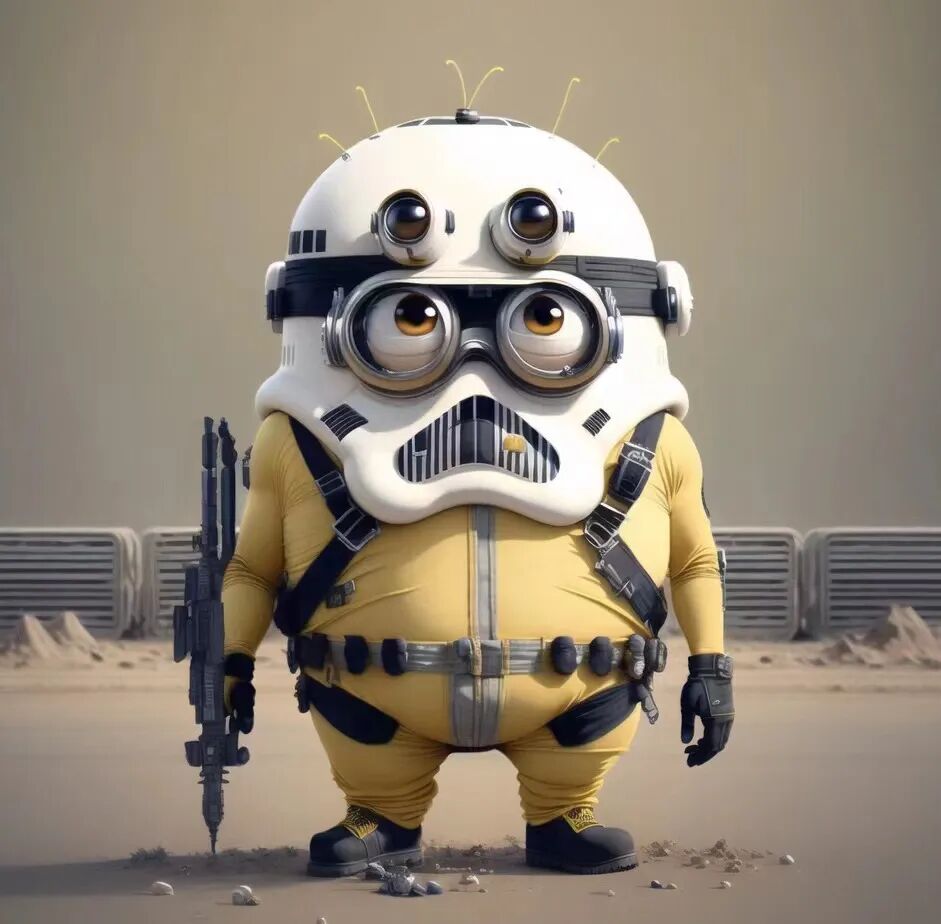
Image generated by Tiamat
Q: How should we understand the importance of integrating AIGC into workflows? Qinggan: On this point, image generation and text may have relatively large differences. For example, if AI helps me write an email or a piece of text, it can smoothly integrate into productivity tools and improve editing efficiency, like Notion AI. But the ultimate criterion for image generation is the image itself — compared to how good the tool experience is, people probably care more about image quality. Because after SD open-sourced, people actually made many plugins for Blender, Figma, and other productivity environments, but more users didn't smoothly adopt these plugins, instead preferring to generate an image in MidJourney and copy-download it into their tools. The fundamental reason is that MidJourney's generation quality is much better. Of course, some quick secondary editing features after image generation are things people are willing to use, but these don't conflict with software they've used in the past. Overall, my feeling is that in the image generation domain, tool-based integration methods haven't yet become a focus for users.
Q: Will Tiamat consider building text language models in the future? Qinggan: Our company's overall style and directional choices are relatively focused. We deeply believe in frontier technology, but pay more attention to whether current technology can solve current problems. Perhaps capable people will strive to become "China's OpenAI," but currently, we don't have reason to build text large models like ChatGPT. Because for a startup, if we can achieve the best controllability, precision, and consistency in image models, that alone can bring commercial applications in many vertical industries and scenarios. For example, supporting more细分, specific design industries and helping them achieve productivity gains. Something that makes us quite happy is seeing AI technology advancing toward a form of "new internet," and we'll be more prudent in product strategy. A very representative phenomenon is that OpenAI may not yet have figured out ChatGPT's commercialization scenarios, while domestic startups反而 think through these questions more clearly. Overall, AI is a new theme, every细分 domain deserves serious refinement, and everyone focusing on their respective strengths can form a better industry.
Source: 36kr, YuJie Liu
Sponsoring Vitality
What do you think vitality is?
For creators, vitality is the primal instinct that sustains creation, giving it sustainable breakthrough and innovation, breaking through灵感瓶颈期, or the固化思维 of repeating oneself. For Tiamat, vitality is technological iteration, flexibility of thinking, and curiosity and desire to explore. Therefore, Tiamat hopes to provide creators with new perspectives and creative experiences in the AIGC domain, reigniting the desire to create and the energy of inspiration, letting AI truly empower human creation.
— Qinggan, Founder and CEO of Tiamat




Oasis Capital is a new-generation Chinese venture capital firm dedicated to discovering the most vital entrepreneurs of China's next decade, growing alongside them to create long-term value. "Sponsoring Vitality" is Oasis's vision and mission. This vitality is both the direction of era-defining structural transformation and the resilience and evolutionary power of entrepreneurs.
Oasis Capital focuses on early and growth-stage investments, with individual investments ranging from $3 million to $30 million, concentrating on healthcare, biotechnology, enterprise services, and other technology-enabled service sectors, supporting China's technology-driven new service upgrade.