Biosys Biotechnology Closes Angel Round, Total Funding Exceeds 100 Million Yuan | Oasis Capital

Counselor Vitality

Biosynth, a synthetic biology company focused on species design and application, has closed two consecutive funding rounds within six months. Its angel round was jointly invested by Oasis Capital, HSG, and Linear Capital; its seed round was led by HSG Seed Fund, with MiraclePlus and Sky9 Capital as co-investors. MiraclePlus and Sky9 Capital, both seed-round investors, doubled down in the subsequent round. The two rounds collectively raised over RMB 100 million.
Dr. Yu Chen, founder and CEO of Biosynth, said: "Oasis Capital possesses a steadfast bottom-up pursuit of technology and the future, exceptional insight into industry and macroeconomic trends, and a distinctive taste in investment sectors and targets. Working with Oasis Capital has been thoroughly enjoyable. The Oasis team brings highly diverse backgrounds and can genuinely stand in the shoes of startups to provide targeted support, saving companies from many detours. Oasis Capital is not merely an investment institution, but also a steadfast companion to us early-stage enterprises."
Oasis Capital stated: "Strain quality determines the future of the industry. Biosynth is building the underlying systems for strains through a systematic platform approach, accelerating industry evolution. This is a difficult path, and Oasis is deeply honored to explore it alongside a team with such global vision and complementary backgrounds."
Biosynth's long-term goal is to build a complete biotechnology ecosystem based on the ArchiCel® architecture — creating the equivalent of a Windows + x86 platform for the biotech industry.
Founded in 2019, Biosynth focuses on applying software engineering principles to guide the global rational design of industrial microorganisms, using ArchiCel® to fully unlock the productive potential of the bio-industry. "ArchiCel®" stands for "Material Processing CELl with ARCHItected Genome," meaning "architected-genome material processing unit." Dr. Kang Kang, co-founder and Chief Information Scientist of Biosynth, explained that Biosynth's products are ArchiCel® strain libraries and related pipelines designed for specific industrial purposes, with primary focus on food, personal care, and biopharmaceutical applications. Building a complete biotechnology ecosystem based on the ArchiCel® architecture is its long-term objective.
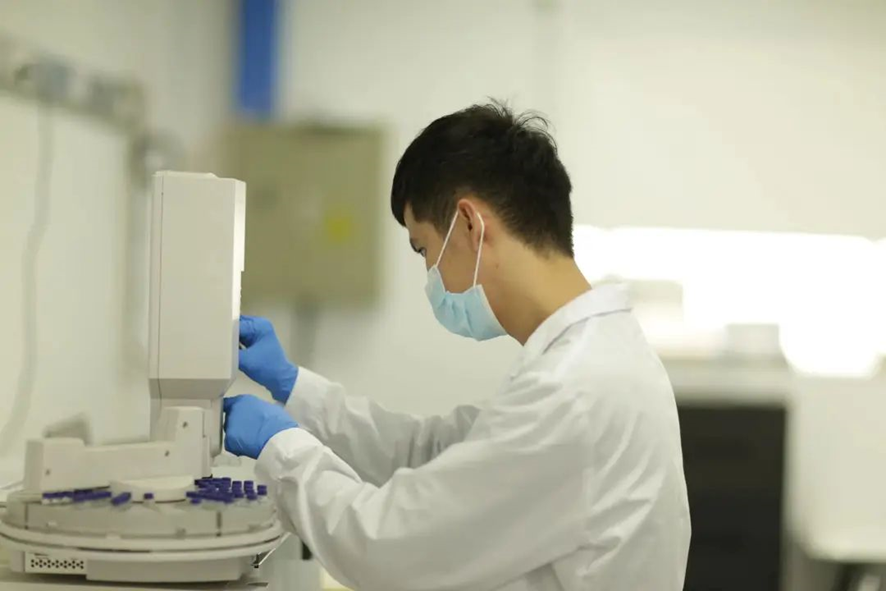
Biosynth laboratory researchers
Simply put, strain engineering is something every synthetic biology manufacturing company does. But Kang emphasized that Biosynth's core differentiation lies in the rational design of "Architected Genomes" — potentially the foundational technological solution to usher humanity into an era of bioengineering civilization and achieve "creation for utility." Currently, most mature biomanufacturing companies use natural strains as production tools: yeast for brewing, Corynebacterium glutamicum for MSG production, acetic acid bacteria for vinegar, and so on. In recent years, emerging synthetic biology companies have mainly engineered model strains (typically E. coli and Saccharomyces cerevisiae) with artificial metabolic pathways to achieve production goals.
Natural strains present two prominent problems: they are difficult to edit and modify for greater value, and humanity has nearly exhausted their industrial potential. Model strains, meanwhile, have limited metabolic network plasticity, leading to long R&D paths and low success rates from lab to fab for specific products. No microorganism exists in nature that combines the metabolic diversity of hundreds of millions of natural species with the genetic tractability of model strains. Therefore, humanity needs an entirely new, rationally designed production tool to serve as infrastructure for the future bio-industry.
"Just as the hardware and software transformed human civilization in the IT industry, biology as a future production tool should also be highly architected. The genome and cellular structure of organisms themselves constitute a hardware-software integrated architecture. We aim to create a bioengineering architecture closer to IT industry principles — one that enables the design, build, and test of entire life processes. That's how ArchiCel® came into being."
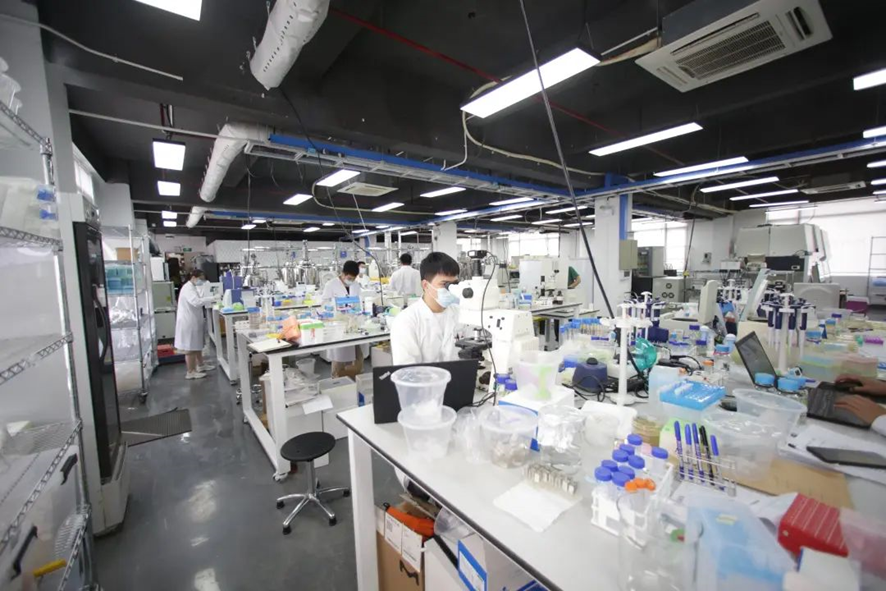
Biosynth laboratory
In Kang's view, to balance the longer R&D cycle required for foundational technologies like ArchiCel® while demonstrating industrialization capability in a shorter timeframe, most synthetic biology companies with core technologies may adopt a "platform + pipeline" model to balance investment and output. Accordingly, Biosynth's main business products fall into three directions: platform technology commercialization, proprietary pipeline incubation, and strain licensing.
Platform technology commercialization represents "laying eggs along the road." Biosynth's four core technology platforms — high-throughput synthetic biology platform (Wet-lab), information and data platform (Dry-lab), omics analysis platform (OMICs-lab), and refined fermentation pilot base (Ferm-Foundry) — each contain multiple core technologies that can be spun out as products. Wet-lab and OMICs-lab have already achieved 80%–95% cost reduction in R&D reagents for synthetic biology construction and testing. Dry-lab has developed engineering databases (REFERENCED), experimental assistance systems (CASPAR), ArchiCel® design systems (CODONS), and automation and IoT hardware-software systems (BIOTA), all of which can be commercialized as general tools for R&D institutions. The proprietary fermentation systems, central control systems, and IoT tools used in Ferm-Foundry also have revenue-generating potential.
Proprietary pipelines, particularly in food and beverage and personal care chemicals, represent Biosynth's primary early-stage industrialization focus.
Early on, Biosynth was often misunderstood as "a beer company." Asked why they initially chose craft beer and soda beverages, Kang laughed and said, "Because we love drinking them" — both Dr. Yu Chen and Dr. Kang Kang had lived in Germany, where people are famously fond of beer and sparkling water. "Rather than plunging headlong into medical and chemical fields where we had less understanding of the industry chain and were further from downstream demand, we believed choosing a manufacturing domain where we had more knowledge and which, from the perspective of billions of years of biological evolution, was more suitable for biological production — that would be the more prudent option, and one where we could validate and iterate our technology more quickly."
Biosynth believes that compared to the chemical and medical fields currently popular in synthetic biology circles, industries like food and agriculture have been notably slower to embrace technological innovation. The food direction, however, offers advantages including shorter industry chains, lower R&D failure rates, high product diversity, formulas and SKUs suitable for quantitative R&D, and rapid product iteration — making it an excellent early opportunity for technology-driven companies like Biosynth. "Rather than saying our pipeline products are alcoholic beverages, it's more accurate to say they are mass-producible fermented food flavor systems, nutrition systems, digitized formulas, and production solutions," Kang described Biosynth's output.
Beyond fermented beverages and flavor systems, Biosynth has also laid groundwork in formulated fermented foods, functional liquid and solid fermented foods, and alternative proteins.
Compared to the food and beverage industry, the trend of technological innovation has emerged earlier in the personal care and beauty industry. The rise of "ingredient-savvy" consumers is forcing brands to increase R&D investment and launch products with genuine efficacy. Kang believes the term "ingredients" will inevitably undergo a process of separating genuine from fake, with new-generation consumers increasingly favoring beauty and personal care products backed by scientific evidence. The component system design and testing capabilities, SKU batch R&D capabilities, and refined fermentation capabilities Biosynth has accumulated in the food domain can be directly transferred to personal care to meet real demands in beauty and personal care products.
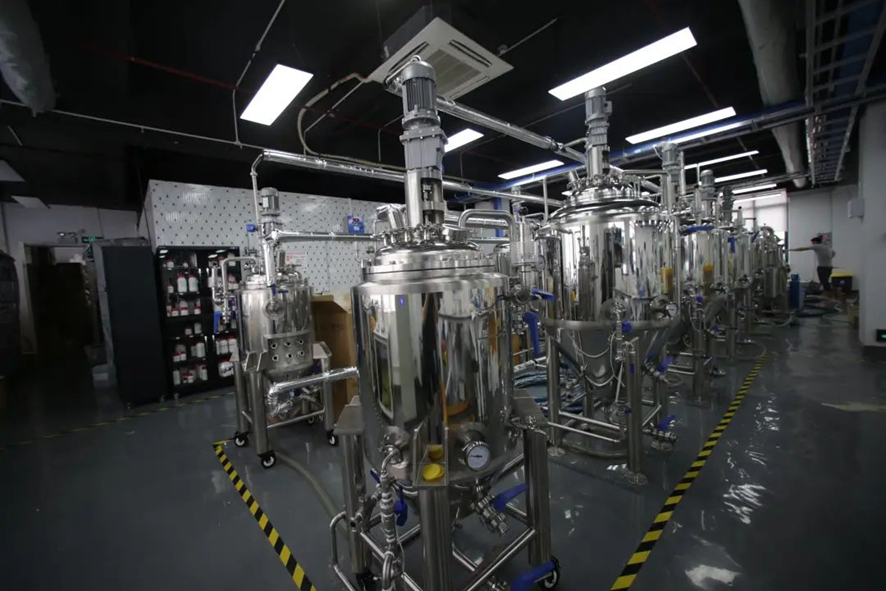
Biosynth R&D testing fermentation system
Once Biosynth completes multi-version replacement and testing of ArchiCel® core metabolic modules, it will obtain thousands of ArchiCel® strains with different metabolic network topologies and material-energy flows. These ArchiCel® strains will serve as engineering starting points for different industrial applications. At that point, the omics data from these thousands of ArchiCel® strains will drive Biosynth's incubation of biomanufacturing product pipelines — such as important compound molecules and their derivatives, pharmaceutical intermediates, and biopolymer materials.
Biosynth's long-term goal is to build a complete biotechnology ecosystem based on the ArchiCel® architecture, creating the equivalent of a Windows + x86 platform for the biotech industry. Kang candidly noted that as a single company, Biosynth's R&D capabilities are ultimately limited, and it cannot alone fully exploit the industrial value of ArchiCel®'s extraordinary metabolic diversity. Therefore, Biosynth hopes to incubate broader applications of ArchiCel® through strain licensing, joint development, and other means. Its primary partners at that stage will be biomanufacturing enterprises, bulk chemical suppliers, pharmaceutical companies, and others.
From basic research to industrial application, synthetic biology remains in early stages of development both in China and globally. Biosynth aims to enhance its capabilities in global rational design of strains, pipelines, and products to bring more possibilities to humanity. "Microorganisms capable of transforming Martian soil and atmosphere certainly couldn't have evolved naturally on Earth. Perhaps only ArchiCel® could achieve such a goal," Kang half-jokingly remarked when discussing the ultimate vision of synthetic biology.
Source: 36Kr, by Yao Lan
Vitality in Partnership
What do you think vitality is?
Emerging from chaos and disorder, standing out through dissipation, interlinked, embracing matter, receiving information, integrating energy — emergence.
Vitality is flowing matter, information, and energy; vitality is the invisible hand; vitality is the objective law of development of things.
— Dr. Yu Chen, Founder and CEO of Biosynth





Oasis Capital is a new-generation Chinese venture capital firm dedicated to discovering the most vital entrepreneurs of the coming decade in China, growing alongside them to create long-term value. "Vitality in Partnership" is Oasis's vision and mission. This vitality represents both the direction of structural transformation in the era and the resilience and evolutionary power of entrepreneurs.
Oasis Capital focuses on early and growth-stage investments, with individual ticket sizes ranging from $3 million to $30 million, concentrating on technology-enabled services in healthcare, enterprise services, and other sectors, supporting China's new service upgrade driven by technology.