Consensus and Non-Consensus in Enterprise Software Investing

Enterprise services are just getting started.

In 2020, a sudden pandemic turned the venture capital market, which should have been emerging from winter into spring, into a landscape full of "black swans." If the core of an investor's work has always been finding certainty within uncertainty, the present moment may be the most extreme macro environment they could encounter. As partners and talent scouts who have always held entrepreneurs' hands, how will investors navigate through the undercurrents where challenges and opportunities coexist, and leap across Swan Lake? On August 26-27, 36Kr held the "2020 China Investors Future Summit" in Shanghai, bringing together over a hundred mainstream investment institutions to share how to maintain long-term thinking amid short-term industry volatility and pursue long-term growth opportunities.
As investment fads lose their mystique and rationality returns, the turbulent external environment has prompted companies to consider how to increase revenue and reduce costs, to become leaner and more efficient. Looking further ahead, China has 35 million registered enterprises — a broader base for the enterprise services market than the United States. At current penetration rates, there is still at least 10x room for growth. How can investors identify the right targets and make clear judgments in this vast domain? What valuable opportunities still lie ahead?
At the recent 2020 China Investors Future Summit, Jinjian Zhang, Partner at Oasis Capital, was invited to participate in the panel discussion "Enterprise Services Roundtable: Consensus and Non-Consensus in Enterprise Services Investing," joining Cai Zhemin, Senior Director of Corporate Banking at SPD Silicon Valley Bank; Yubin Huang, Founding Partner at Yunqi Capital; Harry Wang, Founder and CEO of Linear Capital; Yuhui Li, Founding Managing Partner at Panlin Capital; Zhao Lei, Partner at DCM; and Xiao Ran, Partner at Delian Capital for a lively discussion.
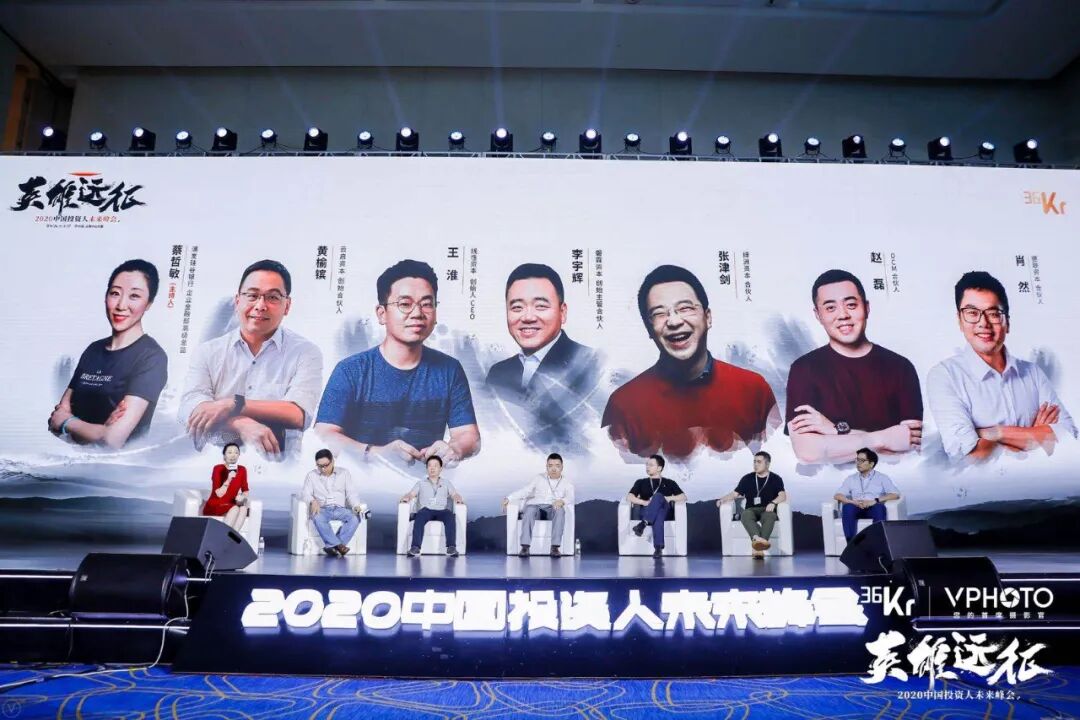
Roundtable Discussion
The following is a transcript of the roundtable dialogue, edited and compiled by 36Kr:
Cai Zhemin: Today's theme is consensus and non-consensus in enterprise services investing. First, let's ask each guest to name one company they consider a "most" in the enterprise services domain.
Jinjian Zhang: Hello everyone, I'm Jinjian Zhang from Oasis Capital. I started learning about investing in 2012 and have been thinking about whether there are common signals across different companies and asset classes. After observing for many years, I realized that the greatest signal of an era is vitality — the innate capacity for self-evolution and endurance that every life and every entrepreneur possesses. So in 2019, we went further and founded Oasis Capital. If I had to name one company, it would be Yuntongxun (Cloopen). When we discovered and invested in it in 2014, it had only 2 million RMB in revenue; last year it reached 1 billion. It does online-offline integrated communications, which is strictly regulated, and its journey has been extremely bumpy. If we're talking "most," I think it's the ultimate cockroach — it faces different challenges every year, evolves every year, and is a company with tremendous vitality.
Yubin Huang: Hello everyone, I'm Yubin Huang, partner at Yunqi Capital. Yunqi Capital has been committed to early and mid-stage investments in technology-driven industrial upgrading, with enterprise services being one of our sustained focus areas. The definition of enterprise services is very broad, so I'll mention one portfolio company we think is excellent — PingCAP. It's an open-source database that can empower enterprises' digital transformation from the底层 up, serving a wide range of clients including traditional ones like JD.com and Meituan, newer ones like Pinduoduo and ByteDance, overseas ones like PayPal, and even more traditional enterprises like banks. Perhaps most people here haven't heard of this company — it's a Beijing-based startup. Why do I mention it? Because enterprise services is such a broad category, and I want to use this opportunity to help those who invest in hard tech and B2B to further segment their understanding.
Harry Wang: I'm Harry Wang, founder of Linear Capital. Linear is an early-stage fund focused on how data technology and AI technology can be combined with critical decision points in industries to improve decision-making efficiency by 10x, 100x, even 1000x. Our understanding of enterprise services, literally, is companies that serve enterprises. But we've chosen one slice of that. There are many ways to serve enterprises — workflow management, machine automation, etc. — that aren't in Linear's core focus. What we care deeply about is which areas, after being digitized, can massively improve decision-making processes through algorithms. This process requires the coordination of software and hardware — that's our perspective. We're very focused on massive efficiency gains in enterprises' decision-making workflows.
One example is Sensors Data. About 90% of our portfolio companies are founded by technical rock stars, but these technical rock stars have a natural flaw: they think their technology is amazing every day, but when it comes to commercial落地, they often get beaten black and blue. If they don't survive past Series A or B, they're done — many die this way. The founding team at Sensors Data spent six or seven years building Baidu's user log big data platform from scratch. Their technology is incredible. They wanted to make big data frameworks as accessible as water and electricity for Chinese enterprises large and small. A beautiful vision, but an extremely arduous process. From zero customers initially, to serving many e-commerce and internet companies, then expanding from internet clients to traditional industries, banks, and pure traditional manufacturing — this path is extraordinarily difficult.
I mention this because Sensors Data is a typical example of starting from technology and ultimately bringing massive efficiency gains to data-based decision-making in an industry (focused mainly on marketing). We've watched it slowly make progress. This process is the hardest part. I'm deeply moved by this. It's a classic example — if the full score is 100, it's probably at 40 or 50 now. But the vast majority of technical rock star founders fall at 10 or 20.
Yuhui Li: I'm Yuhui Li from Panlin Capital. We have two investment directions: healthcare, where we invest in innovative drugs; and B2B, where we invest in the intelligent and digital transformation of consumer supply chains, a theme we've been following since 2016. During the pandemic, our portfolio companies performed very well. One example is Ruiyun Cold Chain, a project I personally led this year. The founder is an industry veteran who just came out of JD Fresh. What he wants to do is use big data, artificial intelligence, and other technologies to achieve integration in the cold chain logistics domain. On one hand, consumption upgrading is driving cold chain demand; on the other hand, intelligentization requirements are pushing the industry to do more efficiency-enhancing work. The goal is to become a DiDi for cold chain. Thank you!
Cai Zhemin: Enterprise services covers many B2B services and companies preparing for IPO. Very few have annual revenue exceeding 1.5 billion RMB. I'd like to ask: among your current investments, how can companies break through this ceiling? Or is annual revenue not what you pursue, or a dimension you use to judge value?
Jinjian Zhang: This is related to the stage of industry development. In the early stages of an industry, understanding of metrics is completely different. Today we see 100,000 RMB per square meter for housing and think it's normal; ten years ago, 10,000 seemed unaffordable. The quantitative standards for things constantly change. Today when people talk about enterprise services, they often mention ERP. But ERP wasn't called ERP before 1963 — it was called inventory management. From 1963 to 1983, it changed again to MR, shifting from inventory management to material requirements. In the third stage it became ERP. Many things change as infrastructure changes, and corresponding revenue models change as well. For us, 1.5 billion won't be an important threshold for whether we invest in a company, because it's just a result and metric at today's stage. We firmly believe that great enterprise services companies will grow on Chinese soil — today is just the beginning.
Zhao Lei: First, let me define revenue. Revenue is an accounting concept that everyone understands. But different revenues correspond to different underlying commercial values. If you're a software outsourcing or project-based company with 100 million in revenue but 80 million in labor costs, your gross margin is only 20%. If you're a SaaS company, gross margin might be 80%, and you have recurring revenue every year afterward. Compare that to a traditional software company: 100 million in year one, but only 10% in year two.
From another dimension, if you're a transaction company, revenue might be a gross revenue or GMV concept. Such a company's gross margin might be directly comparable to what a SaaS company calls revenue. Generally, for companies going public in the U.S. or Hong Kong, enterprise companies are more common in the U.S. A hundred million USD in net revenue is a suitable threshold — with 50-100% growth, you might get a 1-2 billion USD valuation, which would be a decent IPO example.
By the same token, for a transaction platform, if you can achieve a hundred million USD in gross profit, we think that might also be at a stage where you can go public.
Of course revenue is an important indicator that reflects current scale. Beyond revenue, there are other metrics we value highly: growth rate, unit economics, whether revenue is healthy — for example, if you lose two dollars to make one dollar... If revenue isn't sustainable, it's meaningless. There's a lot to look at behind the numbers.
Currently, if we're talking about 1.5 billion in net revenue that is recurring, there are still relatively few such companies. But we see many companies growing in this direction, and in a few years we may see more reaching this standard.
Cai Zhemin: SPD Silicon Valley Bank is a technology bank jointly established by SPD Bank and Silicon Valley Bank. Silicon Valley Bank serves many technology companies in the U.S., including in the enterprise services track. SPD Silicon Valley Bank uses the same business model to serve many Chinese technology companies. From U.S. data, many enterprise services companies in the American market command very high valuations — for example, Zoom today has an 81.9 billion USD market cap. In China's enterprise services track, will any companies replicate the success of these high-valuation American companies? If not yet, what are the obstacles? Can they be overcome?
Jinjian Zhang: China and the U.S. differ greatly. First, industrial structure differs significantly. If you rank all American companies, you'll find an olive-shaped structure: many mid-sized companies, many with 50-500 employees, very few large companies with 500+, and very few small companies under 50. Any single function of a mid-layer company can be carved out. But China's enterprise services market is inverted: there are many large and mega-large companies, and many micro-enterprises under 50 employees. What Chinese enterprise services companies end up lacking isn't renewal rates, but the survival rate of small companies. This makes it difficult for Chinese enterprise services to go very deep or very large in a single function, because the market doesn't allow it.
Second, there's a significant cultural difference. China is an agrarian civilization, centered on internal management and internal compatibility. Maritime civilization is characterized by external management and external compatibility. So you'll find that maritime civilizations have structures like Lego — built for mutual convenience, hence "best practices." Agrarian civilizations are different: a thousand structures have a thousand different organizational forms, built for self-convenience. In enterprise services, if a European or American small company adopts a system and finds it doesn't work with Salesforce, the entrepreneur will think they're behind and want to reshape their organization to match the system. Conversely, if a Chinese company can't use Salesforce, the entrepreneur will say: "Salesforce, come over and modify yourself to match my organization." These civilizational cultural differences create different enterprise services markets, but we believe these things will also converge as certain elements change.
Xiao Ran: Personally, I think complete replication is relatively unlikely because the macroeconomic and business environments differ greatly. But there are still plenty of opportunities to grow to considerable scale. One important internal factor is that over the years, through constant grinding and training in China's relatively harsh enterprise services environment, a cohort of quite resilient entrepreneurs has emerged. These entrepreneurs actually have the potential to build product matrices, platformize, and even create ecosystems. Of course not every company should become a platform, so a future micro-trend is that we'll see some M&A in enterprise services. These won't necessarily be the traditional listed company acquisitions of the past, but may occur between relatively mid-stage or even early-stage enterprise services projects. All these opportunities will help enterprise services companies gradually grow larger.
Zhao Lei: The biggest difference between Chinese and American enterprise services markets lies in pricing. The same enterprise service might sell for $100,000 in the U.S., but in China, charging 100,000 RMB can be very difficult. On one hand, this relates to labor costs — ultimately, when you do the math, after implementing a system, how many employees did you save, how much efficiency did you gain? This directly benchmarks against people's salaries.
Second, in China, especially in the early stage of a field, competition is fiercer than in the U.S. If everyone sees a good赛道, it's easy for a dozen or so companies to pile in. At that point, people often engage in price wars, sparing no cost to win over top-tier clients, making life miserable for everyone. The U.S. enterprise services market has many companies at the tens of billions of USD level. Even though Chinese prices are much lower than U.S. prices — roughly one-sixth or one-seventh — and considering competitive factors, we're still optimistic about the emergence of several companies at the one to several billion USD level in the future. It's just that because of lower average contract values, it will take longer. A U.S. company with $100,000 ACV only needs 1,000 customers to reach $100 million; a Chinese company with 100,000 RMB ACV, to reach 600 million RMB, might need 6,000 customers, and the timeline will likely be longer.
Yubin Huang: I'm still relatively optimistic. After the wave of enterprise services hype passes, I hope things calm down a bit next year — this is a long road. Whether in open-source software, technical software, or B2B supply chain service platforms, including companies like Meicai and Baibu, some enterprise services companies are starting to achieve considerable revenue. They may not have reached 1.5 billion yet, but there should be some at 1 billion, and quite a few at 500 million to 1 billion.
Second, in 2002-2003, I was in Silicon Valley just starting my investment career. A company went public then with not a large market cap — Salesforce. They grew slowly, and through more than a decade of effort, now have a $200 billion market cap. So the growth trajectory of B2B companies differs from B2C companies. They start slower, but once enterprises adopt the product, stickiness can be extremely high. So I remain consistently bullish.
Cai Zhemin: We're out of time, but reflection and practice are always on the road, always continuing. Thank you to all our guests!
Click "Read Original" for the full roundtable discussion.

Oasis Capital is a new-generation Chinese venture capital firm dedicated to discovering the most vital entrepreneurs of the next decade in China, growing alongside them to create long-term value. "Championing Vitality" is Oasis's vision and mission. This vitality is both the direction of structural transformation in the era and the power of entrepreneurs' resilience and evolution. Oasis Capital focuses on early and growth-stage investments, with individual ticket sizes of $3 million to $30 million USD, concentrating on technology-enabled services in education, healthcare, enterprise services, and other domains, empowering China's new service upgrade driven by technology.