Current Robotics: Humanoid Intelligence Starts with Humans | Oasis Capital

I need to translate this Chinese text to English. "参赞" can mean several things: - A counselor/diplomat (参赞 is a diplomatic rank: counselor/minister-counselor) - To participate and assist/advise "生命力" means vitality, life force, vigor. Given the context of elsewheres.news covering China's tech, VC, and creator economy, this appears to be a title or heading. Without more context, I'll consider the most likely interpretations: If this is about a diplomatic figure discussing vitality: "Counselor on Vitality" or "A Counselor's Take on Vitality" If this is using "参赞" in a more literary/archaic sense of participating in/admiring: "In Praise of Vitality" or "On Vitality" However, looking at this as a potential title for a piece about assessing or reflecting on vitality (perhaps in a business/cultural context), a more natural English rendering might be: "**The Vitality Counselor**"

Current Robotics (Yuanliu) recently announced the completion of multiple funding rounds — seed, angel, and Pre-A — totaling over RMB 100 million.
Oasis Capital was the sole investor in the angel round and is the company's largest institutional shareholder.
The Pre-A round was joined by Baidu Venture, Hillhouse, Monolith, and other institutional and strategic investors, with Oasis Capital continuing to significantly increase its stake in subsequent rounds.
Embodied AI is now entering a critical phase, moving from capability validation toward scaled deployment. The central challenge facing the industry is how to equip robots with real-world experience and enable continuous learning. Current Robotics is built around the philosophy that "humanoid intelligence begins with humans," constructing a technical system spanning human behavior data collection, robot foundation model training, and world model evaluation — exploring a path toward general-purpose humanoid intelligence.
Humanoid intelligence company Current Robotics (Yuanliu) has disclosed its funding progress for the first time: the company has completed seed, angel, and Pre-A rounds, raising several hundred million RMB in total. From an investment structure perspective, financial institutions are focused on long-term technological evolution opportunities in embodied AI, while the participation of strategic players reflects that the industry is moving toward deeper layouts around data, models, and application ecosystems.
Ivy, Partner at Oasis Capital, said: "The Current Robotics team possesses deep academic foundations and sustained innovation capabilities, having developed distinctive expertise in embodied AI data loops and systematic capacity building. Taking mobile manipulation as their entry point, the team has been making continuous breakthroughs in high-quality data acquisition, whole-body coordinated control, and policy evaluation — exploring new pathways for humanoid robots to enter real-world scenarios. Oasis is committed to discovering and accompanying the most vital entrepreneurs over the long term. We believe Current Robotics will continue to innovate and accelerate the application of humanoid robots in the real world."
Current Robotics stated that proceeds from this round will primarily fund the scaled collection of whole-body human data, with focused investment in core technologies including whole-body dexterous manipulation foundation models and interactive world simulators.

From VLA Research to Embodied AI Applications: Team Experience Underpins the Technical Approach
Current Robotics's current data, model, and evaluation approach stems from the team's years of continuous exploration around robot intelligence problems.
Founder and CEO Yichen Zhu, former head of Embodied AI at Midea Group and a University of Toronto graduate, was among the earliest researchers in China to work on VLA and robot world models. He has published over 40 top-tier conference papers with more than 5,200 academic citations. He proposed the world's first VLA paradigm combining VLM with diffusion models, and was the first to extend VLA to CoT. His 2025 paper WorldEval was the earliest to propose using world models for embodied policy evaluation, with related papers accepted at ICML, CoRL, CVPR, and other venues. The π0 paper from Physical Intelligence cited only one Chinese team's research — Zhu's team's TinyVLA and ScaleDP work.
These research efforts, extending from VLA models and human demonstration data to whole-body robot learning, have become the technical foundation of Current Robotics.
These studies address critical stages in the development of robot intelligence: from foundation model task understanding to action generation, then to real-world data acquisition and policy evaluation, and further extending to human demonstration data, whole-body robot learning, and world model evaluation — forming Current Robotics's current technical approach built around data, models, and evaluation.

Embodied AI Enters the Final Form: Humanoid Configuration with High-DOF Dexterous Hands
As humanoid robots move from laboratory demonstrations to real-world scenarios, industry competition is shifting from robot hardware capabilities to robot intelligence. As numerous companies enter more general-purpose physical intelligence scenarios — such as homes and commercial spaces — robots must confront increasingly complex continuous tasks. The new challenge is how to endow humanoid robots with human-like capabilities: understanding environments, coordinating their bodies, controlling their hands with dexterity, and completing tasks with stability and persistence.
Addressing this industry need, Current Robotics has chosen to enter from the direction of Loco-dexterous Manipulation (whole-body dexterous manipulation), exploring a path where robotic mobility, body coordination, and fine manipulation capabilities develop in tandem.

Curr-0: What Happens When Bipedal Humanoids Meet Dexterous Hands?
Currently, the domestic industry generally uses robot configurations with two-finger grippers, three-finger grippers, and mobile bases to complete tasks. However, numerous overseas manufacturers — including Figure, Tesla, 1X, and DeepMind — have reached a consensus: high-DOF dexterous hands combined with bipedal humanoids represent the final form. This human-like robot configuration can most perfectly adapt to human-designed spaces, rapidly integrating into human life without requiring environmental modifications.
In this direction, Current Robotics has introduced the whole-body dexterous manipulation foundation model Curr-0, exploring the genuine integration of bipedal humanoids with 20+ DOF dexterous hands into a single model for learning, reasoning, and task completion. Curr-0 operates on a 70+ DOF humanoid robot platform and is trained end-to-end on large-scale real-world data, completing diverse tasks through shared-weight policies — achieving unified learning of mobility, body coordination, and hand-based physical interaction.
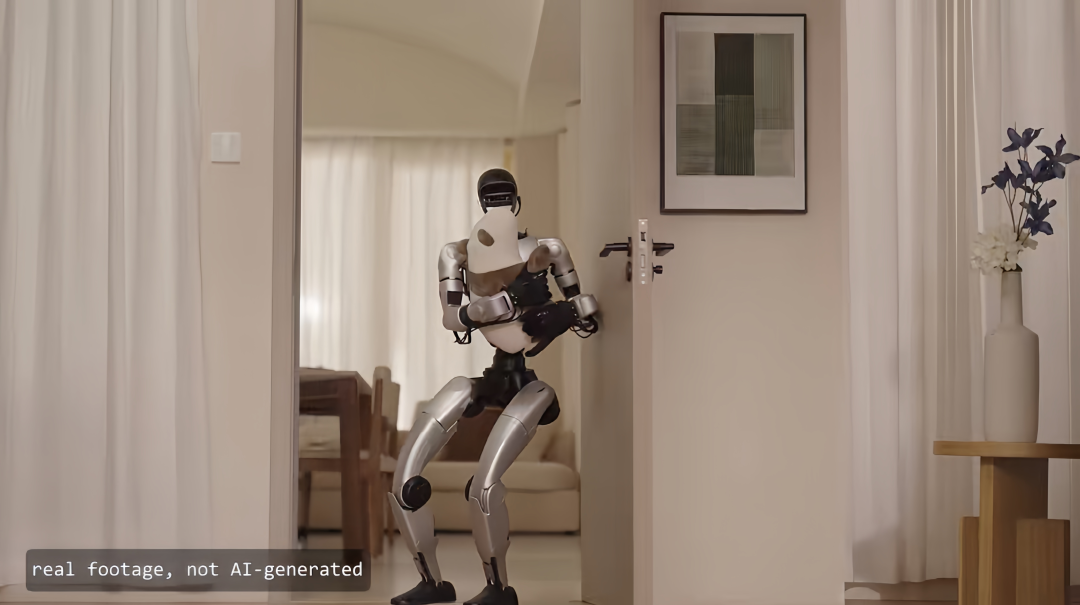
Robot carrying an object through a doorway and placing it at a specific location

From Humanoids and Dexterous Hands to Force-Tactile Sensing: CurrentWorld-0 World Simulator Accelerates Model Evaluation and Post-Training Collection
As robot models continue to scale, how to rapidly validate policy effectiveness and convert evaluation results into new training data is becoming a critical link in the continuous iteration of embodied AI.
Unlike traditional algorithm evaluation, humanoid robots face a constantly changing physical world. In real environments, identical tasks are often difficult to fully reproduce, and each test consumes substantial robot, facility, and labor costs — limiting evaluation scale and iteration efficiency. For robots, capability improvement depends on continuous data feedback and model updates, while the evaluation system determines how quickly problems are discovered and how rapidly they can re-enter training. Therefore, world models used for robot evaluation must not only generate visually realistic scenes but also continue to produce physically consistent results as robot actions, observation perspectives, and contact states change.
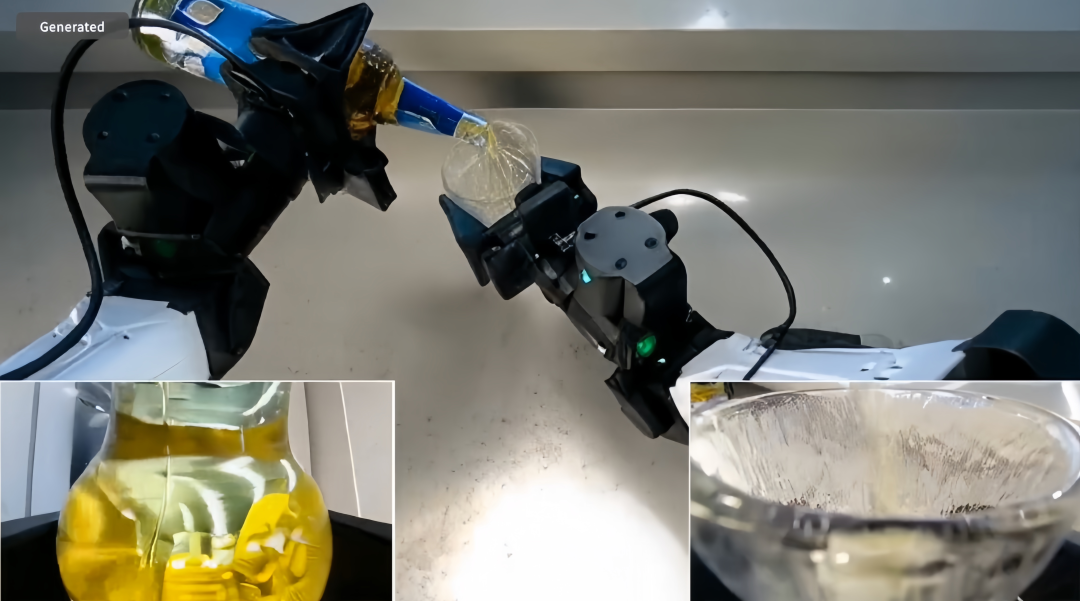
Opening bottles and pouring wine, peeling cucumbers — all images generated by the model
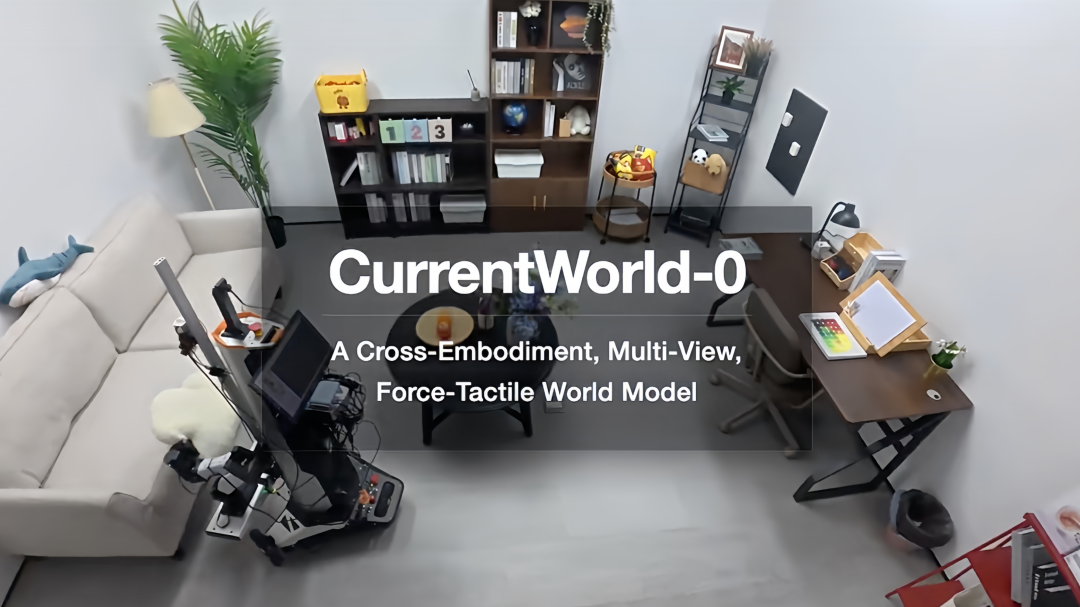
This week, Current Robotics released its latest interactive world simulator CurrentWorld-0, designed precisely around this problem. It extends world model applications to robot validation and continuous iteration, and for the first time integrates Cross-Embodiment, Multi-View, and Force-Tactile capabilities into a single world simulator.
At the embodiment level, CurrentWorld-0 covers dual-arm grippers, mobile robots, bipedal humanoids equipped with dexterous hands, and other platforms — with each robot embodiment retaining its own action space while learning shared environmental dynamics; at the visual level, head-mounted, wrist-mounted, and third-person perspectives must continuously correspond to the same task state; and when robots actually contact objects, force and tactile sensations beyond vision enter the prediction, supplementing the tactile and force changes that RGB alone cannot fully describe.
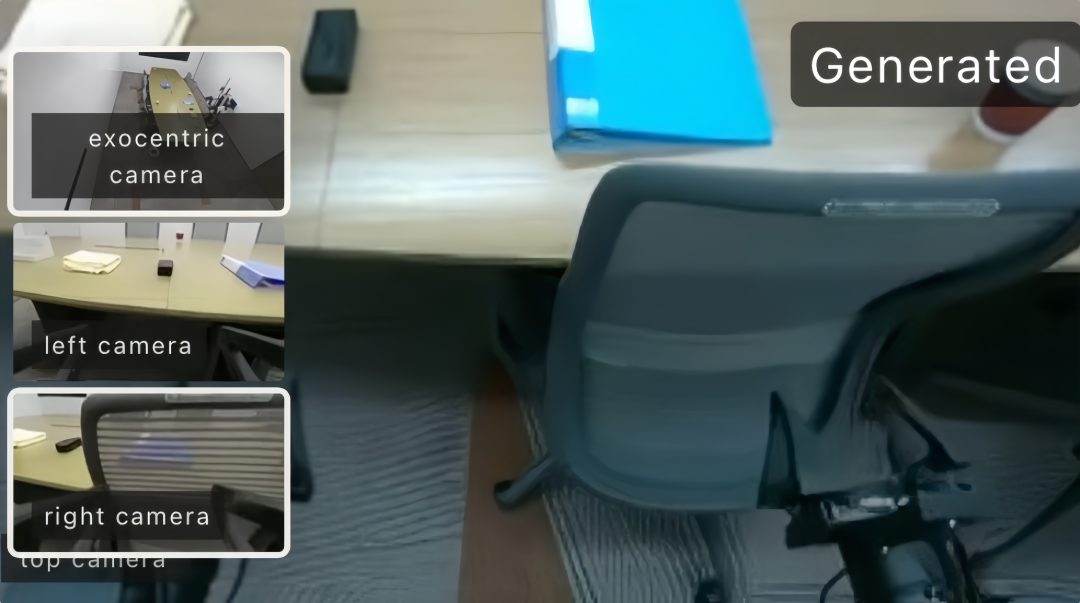
This means that when robots change embodiments, shift observation perspectives, or even encounter deformable objects, liquids, and complex contact tasks, the model must still ensure subsequent states continue the physical interactions that have already occurred. What CurrentWorld-0 aims to expand is precisely the space where robot policies can be repeatedly executed, compared, and validated — providing a more scalable evaluation environment for subsequent model iteration.
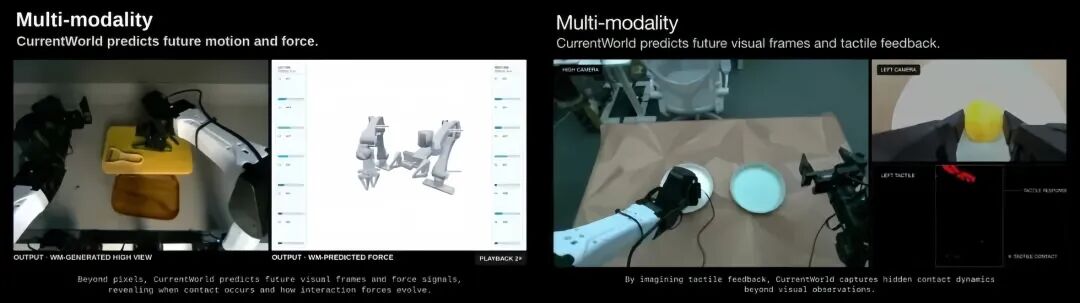
CurrentWorld-0 simultaneously predicts future visuals, force signals, and tactile feedback
Beyond evaluation, CurrentWorld-0 also feeds failures back into post-training.
When policies enter potentially failed states, human operators can take over via teleoperation to directly correct them; intermediate states in the generated environment can be saved, rolled back, and different recovery approaches attempted from the same position. This continues the approach from Current Robotics's earlier Hi-WM work (Human-in-the-World-Model, published at RSS 2026 Robot World Models Workshop): repeatedly exploring around positions where failures actually occur, generating more targeted correction trajectories.
These human takeover data can then be used for policy post-training. In this way, problems discovered during evaluation can directly enter the next training cycle: where robots fail, new experience is supplemented around those points, and through post-training, the policy is optimized again.
For Current Robotics, CurrentWorld-0 fills precisely this gap — connecting policy evaluation, failure correction, and post-training into a continuous process, enabling world models to further participate in the sustained iteration of robot capabilities.

When Gripper Data Is Dominated by UMI, Where Should Humanoid Dexterous Hand Data Come From?
In the embodied AI industry, real-world data is becoming a critical resource that determines the upper limits of model capabilities. Only companies that can continuously obtain high-quality human data can establish long-term model iteration advantages and moats. However, current data collection methods have limitations: first-person visual data cannot fully record human motion states and contact forces; robot teleoperation, while precise, is constrained by equipment costs and deployment conditions that prevent scaled implementation; and simulated data can scale action data but can never replicate real-world visuals and human movements.
Addressing this data bottleneck, Current Robotics has introduced a human data collection system that captures first-person vision, body motion, hand movements, and interaction information through wearable devices — converting naturally occurring human behavior into robot training data.
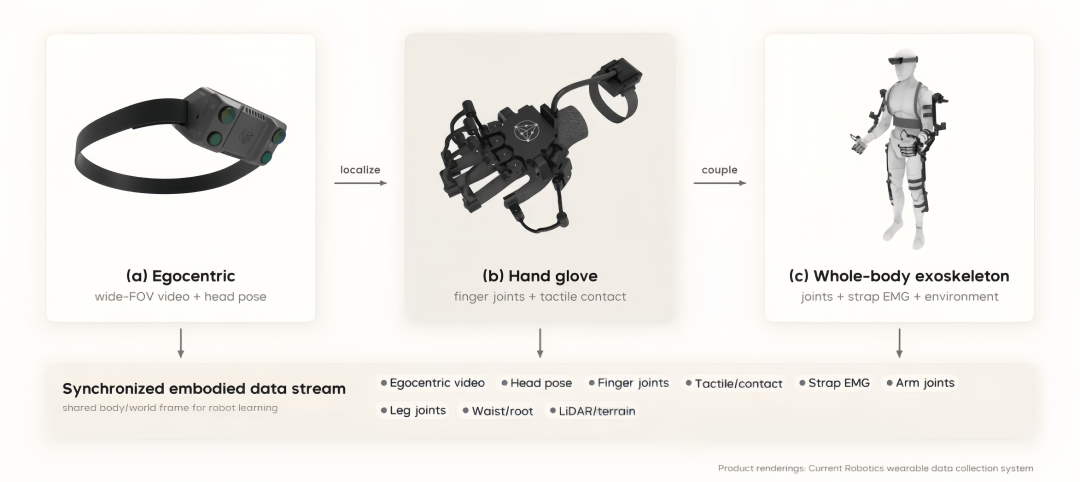
HumanEx wearable system

The Moat of Humanoid Intelligence Lies in Systems: Hardware, Data, Algorithms, and Evaluation Are All Indispensable
Once robots truly enter the real world, capability improvement rarely depends on any single link. Data determines how much real-world experience robots can access; models convert that experience into capabilities; and evaluation and post-training continuously expose problems in policies, absorb new feedback, and feed into the next iteration cycle.
Current Robotics is currently building out this chain. HumanEx collects human behavior data from real environments; Curr-0 explores unified whole-body dexterous capabilities combining mobility and manipulation; and CurrentWorld-0 further fills in policy evaluation and post-training collection, bringing different embodiments, different perspectives, and physical information including vision, force, and touch into an environment for sustained validation and correction.
These efforts all address the same fundamental problem: how to let robots gain experience from the real world, and continuously convert that experience into more stable, more generalizable action capabilities.
This also reflects the team's consistent view on humanoid intelligence — humanoid intelligence begins with humans. The behavioral experience that humans have accumulated over time, combined with the similarities between humanoid robots and humans in body structure, manipulation methods, and real-world tasks, makes human data an important source for training general-purpose humanoid intelligence; and whether data collection, model learning, policy evaluation, and continuous correction can truly form a closed loop determines how much of this experience can ultimately be converted into robot capabilities.
What is vitality?
For a startup, vitality is growing new answers from the cracks. — Yichen Zhu, Current Robotics