Spirit AI Releases First Demo, Aiming to Build Generalizable Robots | Oasis Capital Vitality

Counselor Vitality

Recently, Oasis Capital portfolio company Spirit AI released its first demo, aiming to build robots with genuine generalization capabilities that can handle diverse scenarios. With the cooperation of researchers, Xinzhiyuan recorded the demo on-site at the interview. The following content comes from the Xinzhiyuan WeChat account, with some edits. Enjoy.
A young man holding a white paper cup approaches the robot and requests "an espresso." While distracted by his phone, he accidentally knocks the cup over.
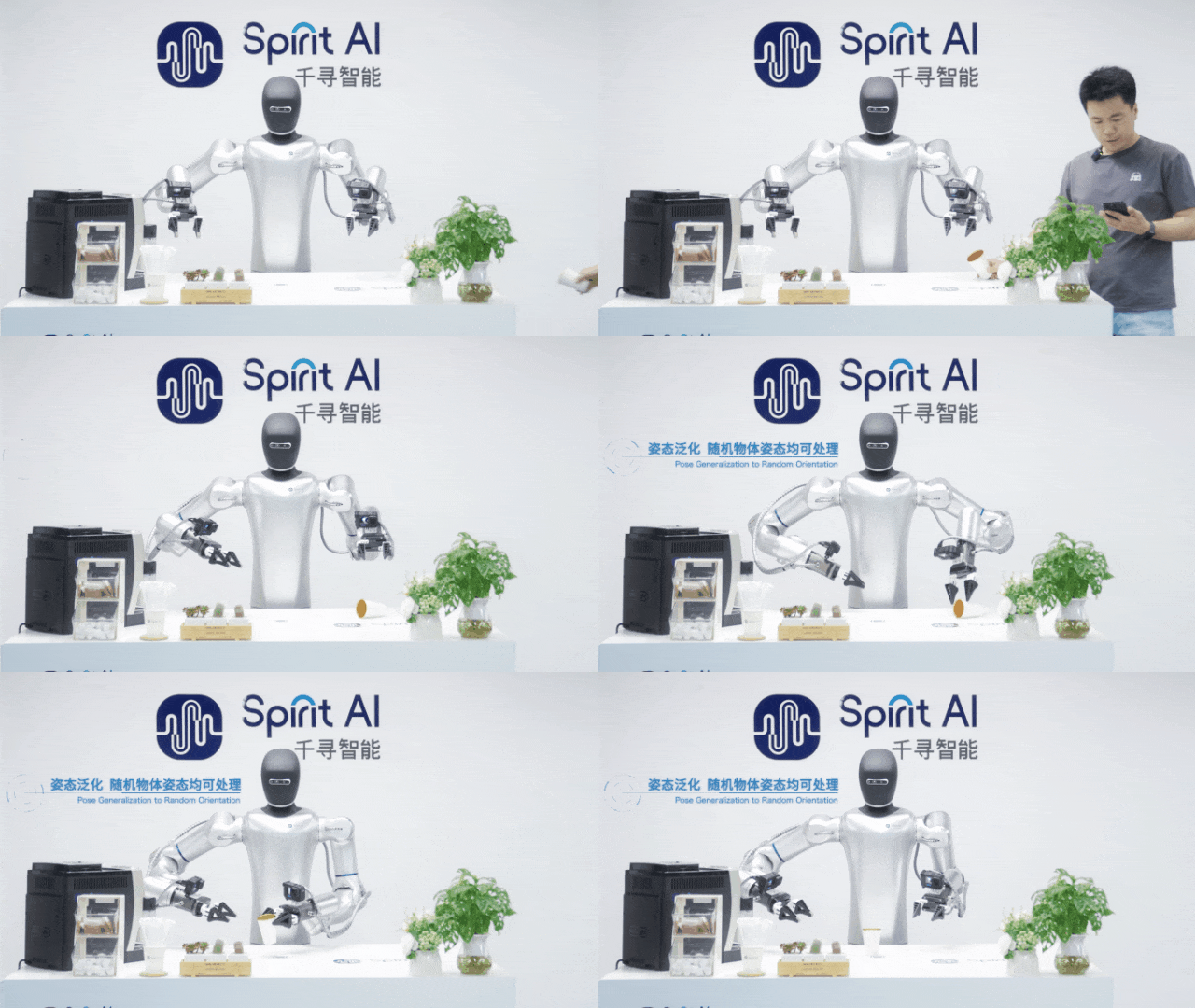
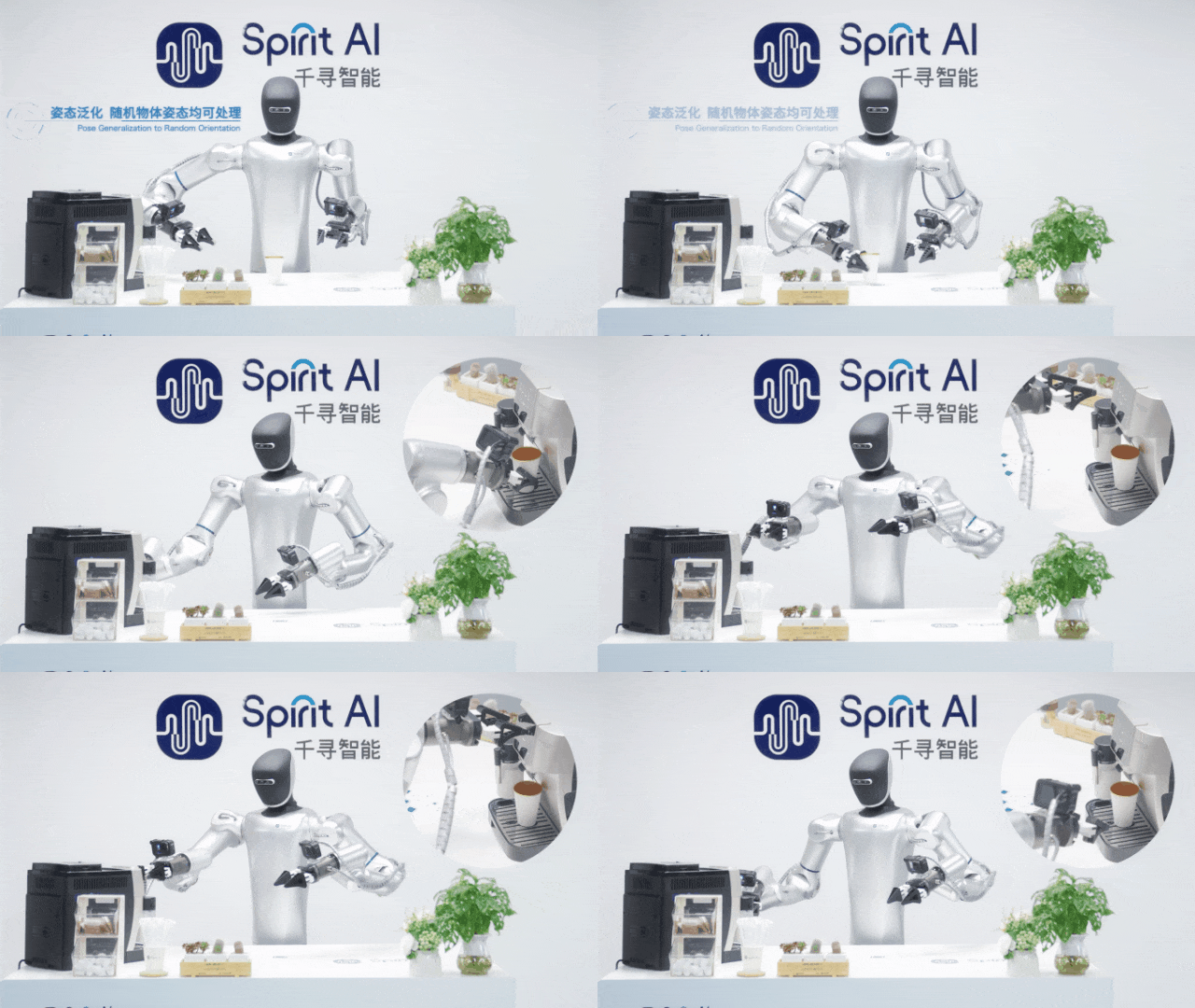
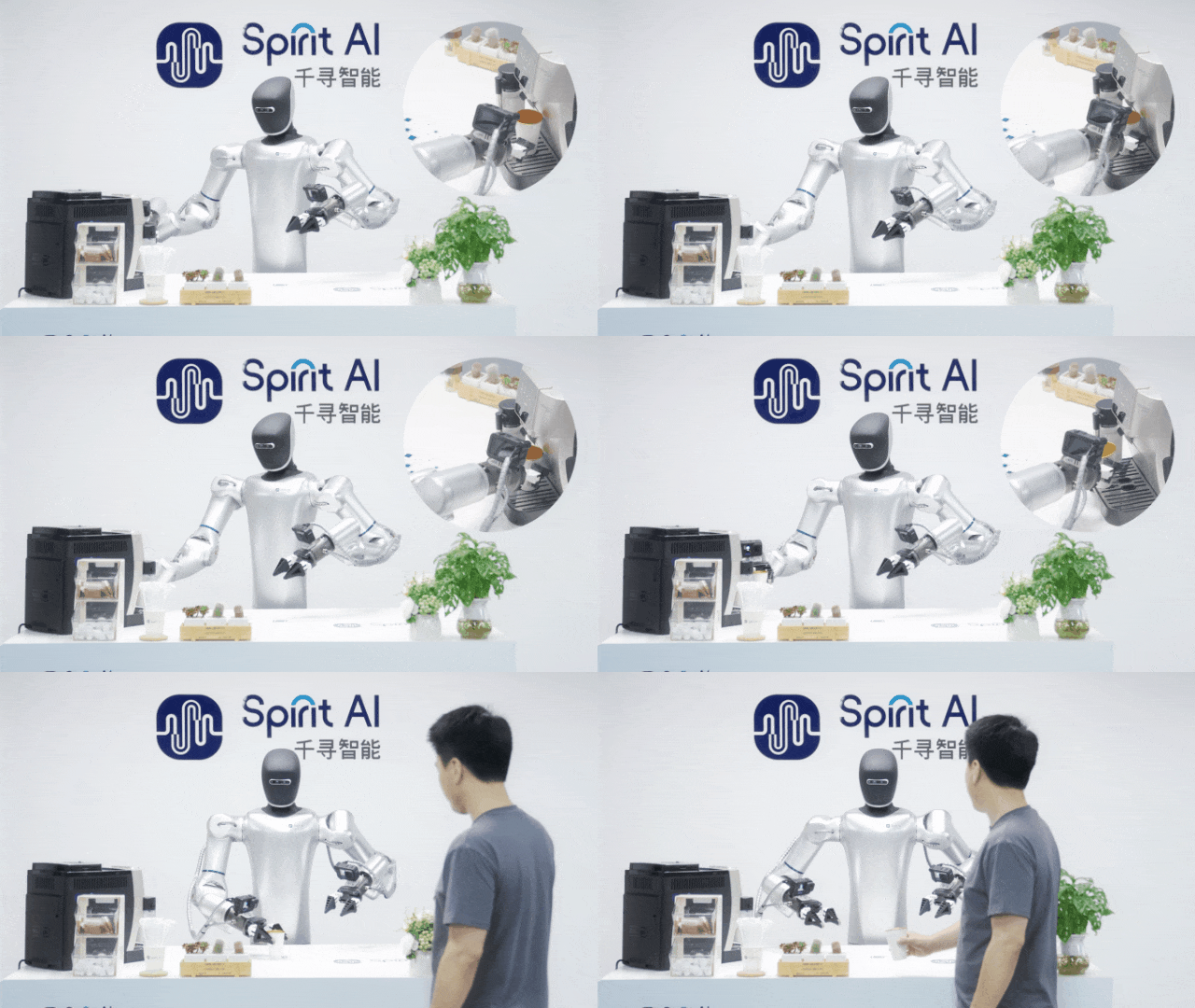
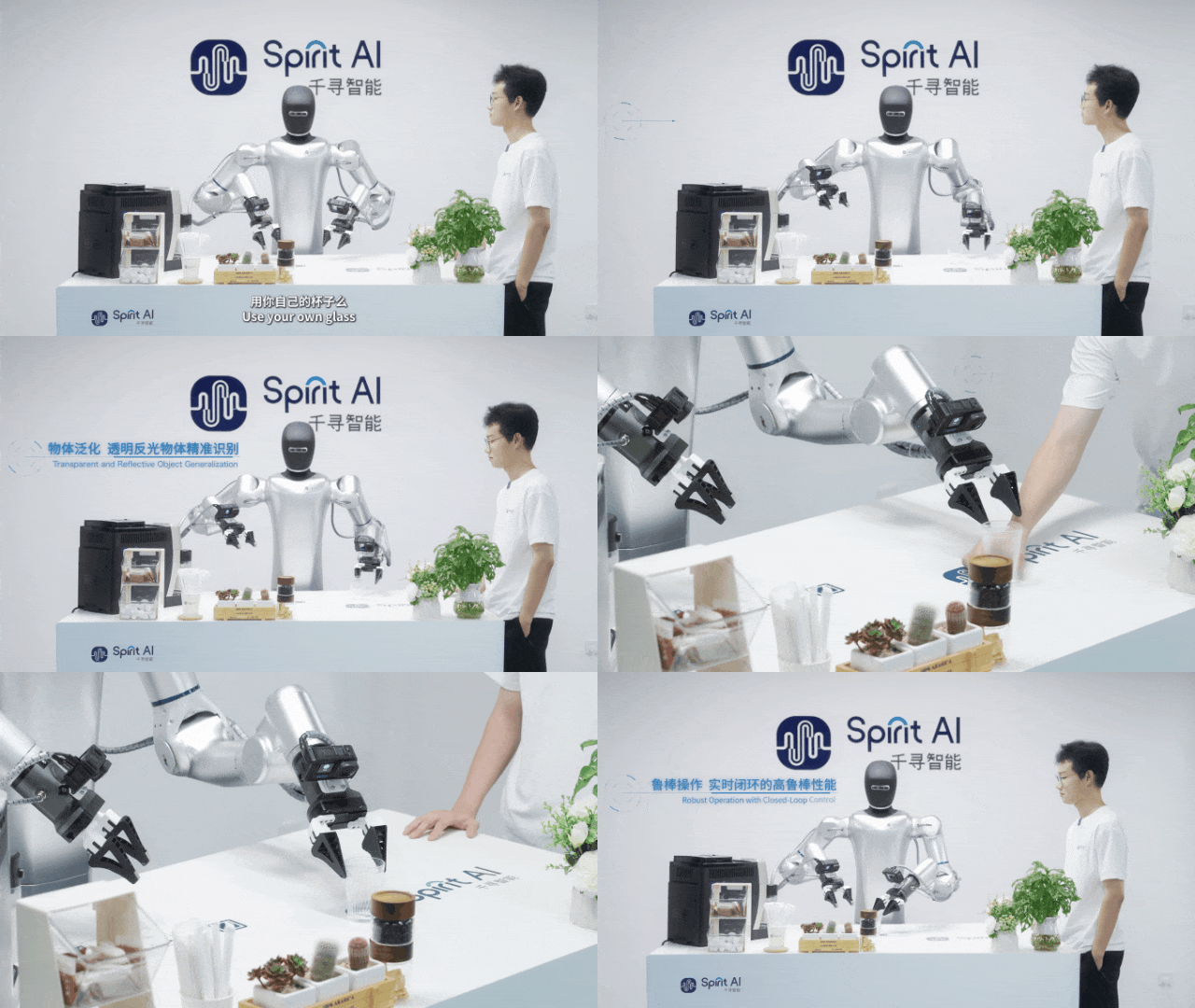
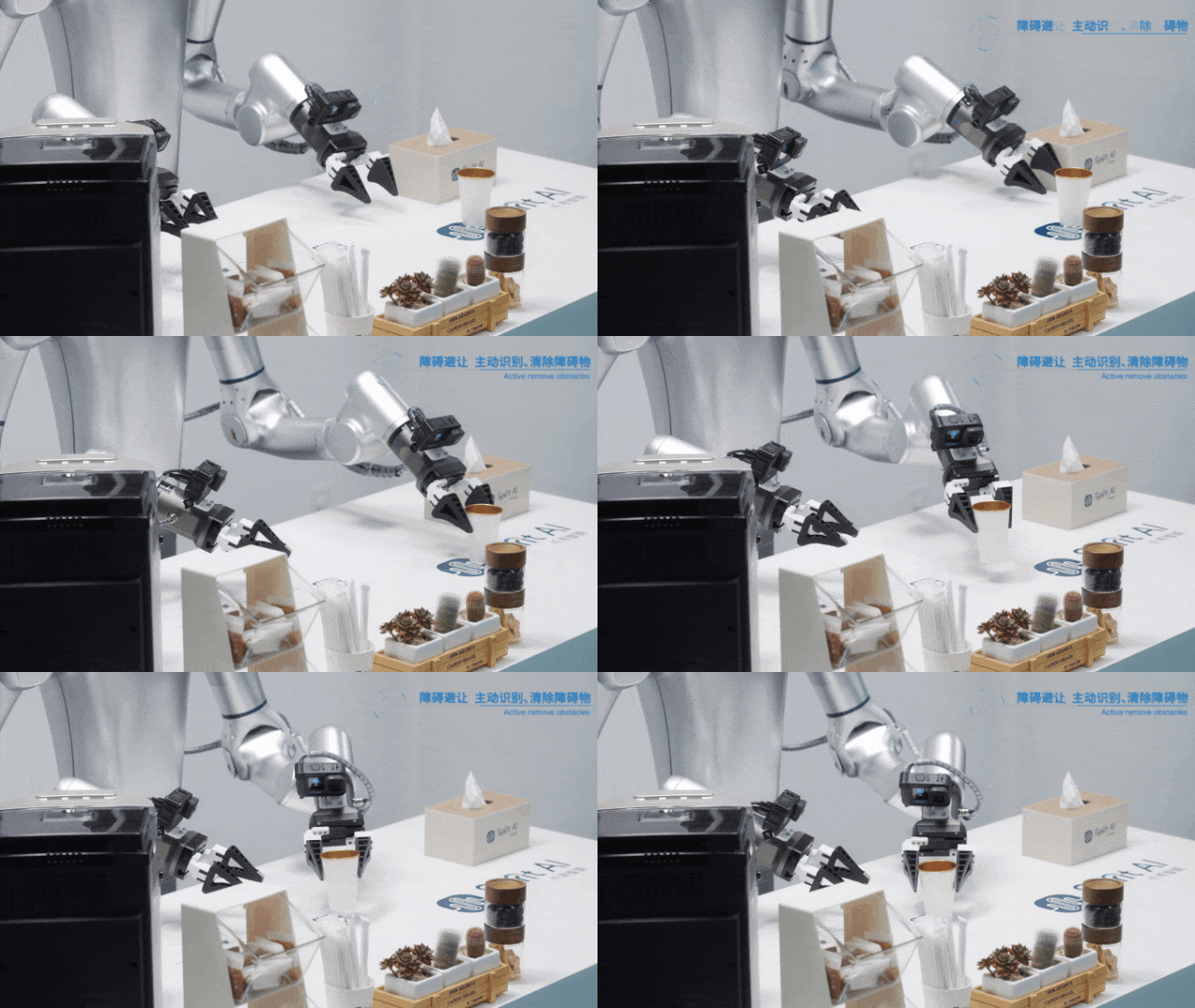
All movements are automatically generated by neural networks
Spirit AI's robot "gripper" can also be swapped for a dexterous hand. It not only picks up an apple with precision but can also toss and catch it. Moreover, the company claims that regardless of hand type — two-finger, three-finger, or five-finger — continuous multi-task generalization is achievable, with the goal of helping people complete various tasks in the future.
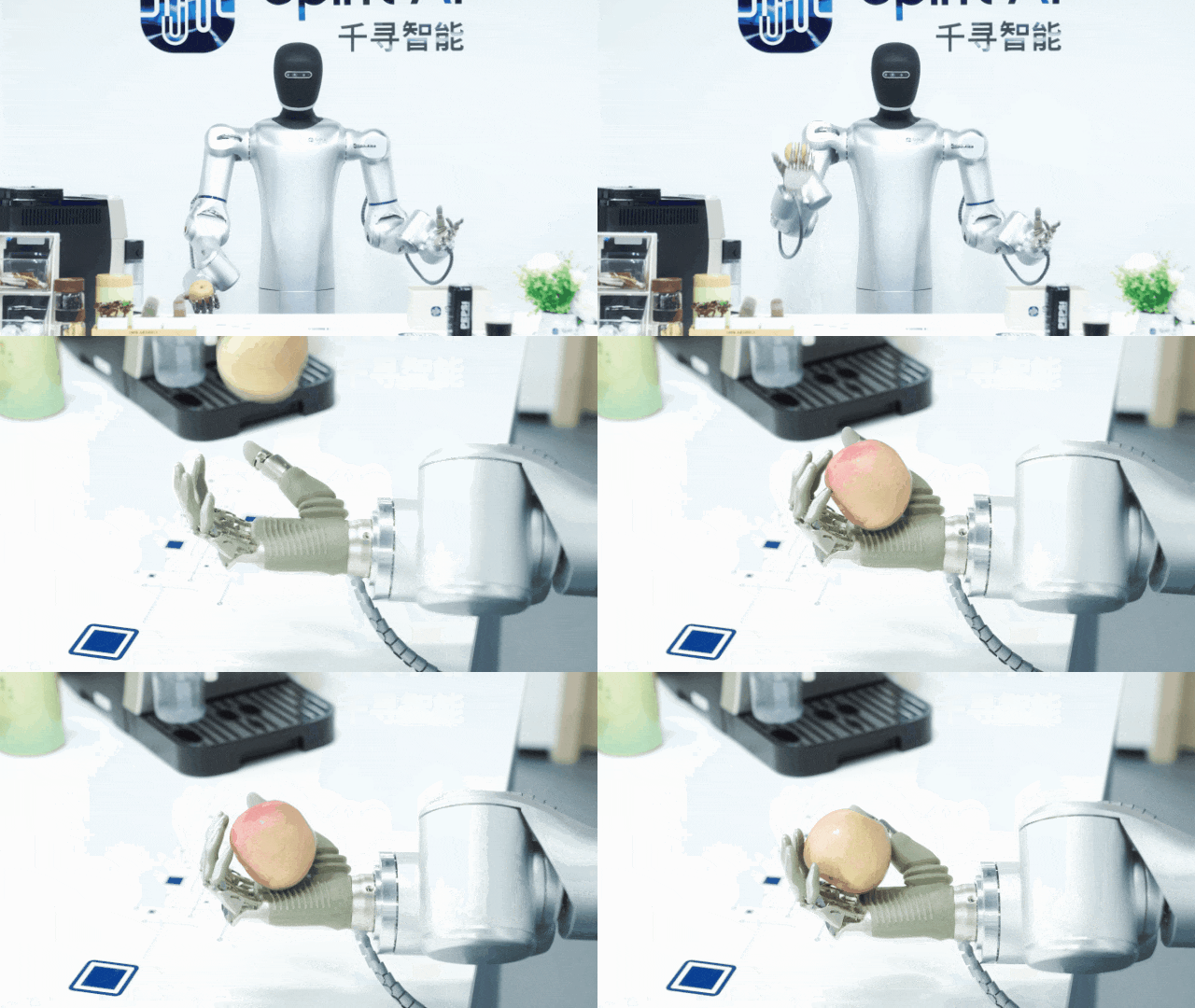
All movements are automatically generated by neural networks
A Star-Studded Team with Full-Stack AI Capabilities
This embodied intelligence company, dubbed "China's Figure," has assembled a brain trust that would be considered exceptionally rare anywhere in the world. Its technical team hails from top institutions and companies including UC Berkeley, CMU, NTU, Zhejiang University, Tsinghua University, Peking University, Huawei, Tencent, DJI, and Xiaomi. In embodied foundation models, robotics R&D, and practical deployment, this blend of academic elites and industry veterans has demonstrated remarkable strength. They possess not only core competencies in foundation model pre-training, RL, and IL, but also sit at the frontier of robotic arm system design, robot safety, and control architecture. It is precisely this combination that enables Spirit AI to deliver full-stack AI engineering capabilities.
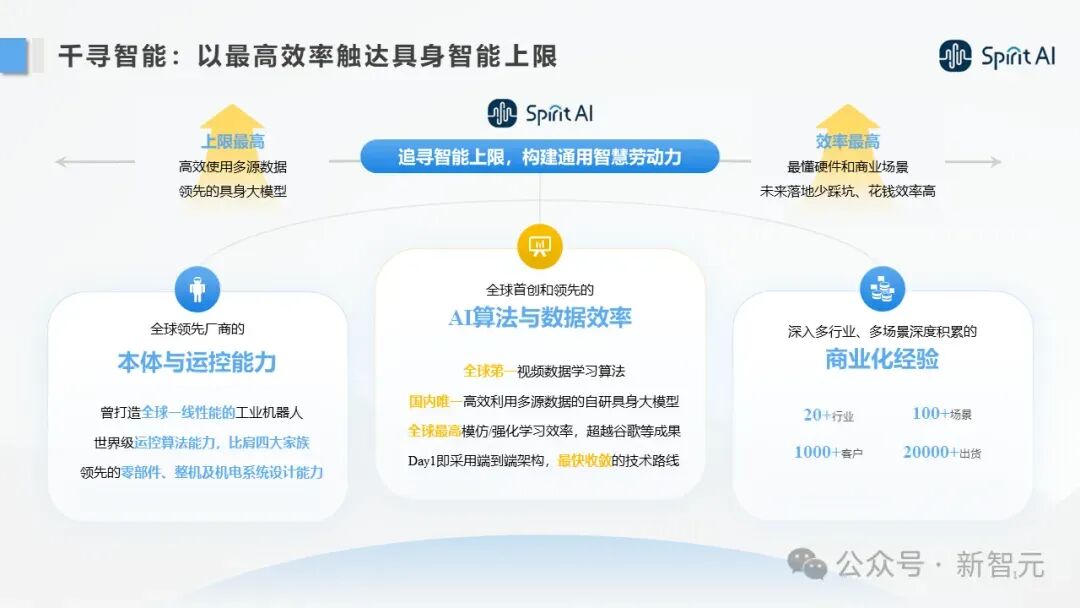
Let's meet the key figures on this stellar leadership team.
Fengtao Han, Founder and CEO
Founder and CEO Fengtao Han studied under robotics academic titan Academician Han Ding, and has spent over a decade in the robotics field. He previously served as co-founder and CTO of珞石机器人 (Rokae), a leader in China's high-performance lightweight industrial robots and the first in the country to mass-produce force-controlled collaborative robots, successfully delivering over 20,000 units across dozens of product models.
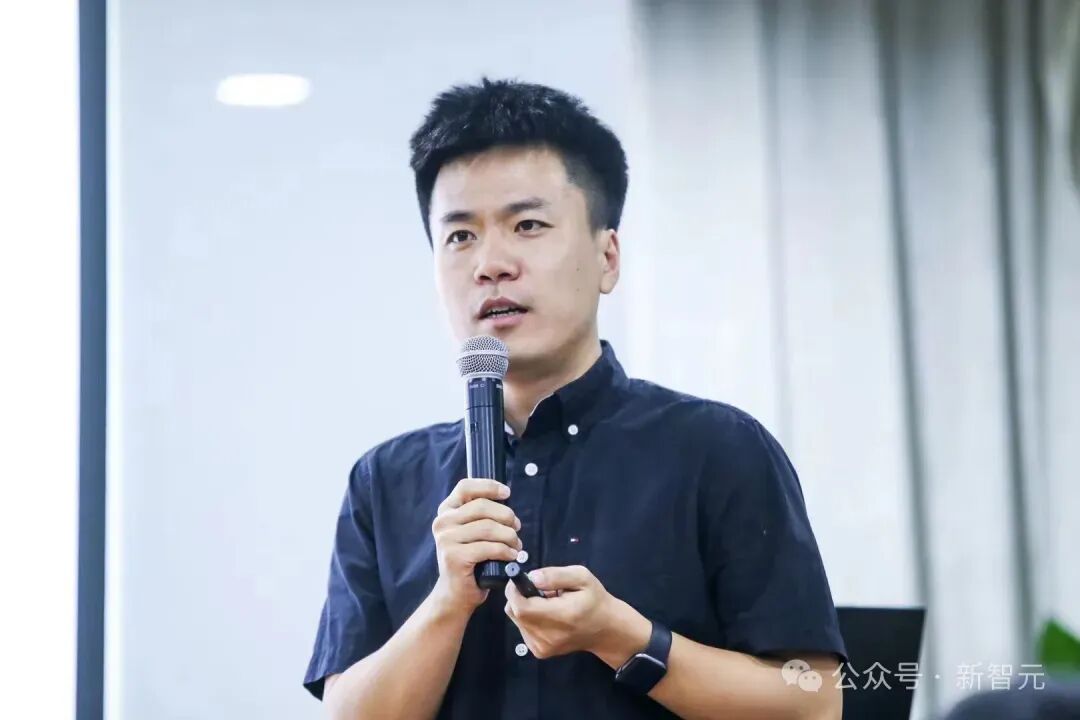
Notably, these products obtained 43 domestic and international certifications, including the medical-direction IEC60601 safety certification — held by only two companies globally and uniquely in China. The in-house autonomy rate for complete machines exceeded 90%. On the applications front, Dr. Han led his team to achieve commercialization across 20+ industries, 100+ scenarios, and 1,000+ customers. Beyond his extensive practical experience, he has actively participated in numerous national-level research projects. In February this year, Dr. Han founded Spirit AI, aiming to build an industry-leading general-purpose robot AI system and humanoid robots.
Yang Gao, Chief Scientist
On the AI capabilities front, another core figure demands attention — Chief Scientist Yang Gao, also a co-founder of Spirit AI. He completed his undergraduate studies at Tsinghua University's Department of Computer Science, where he studied under renowned ML scholar Professor Jun Zhu. His outstanding performance earned him a full scholarship to UC Berkeley's Computer Science PhD program.
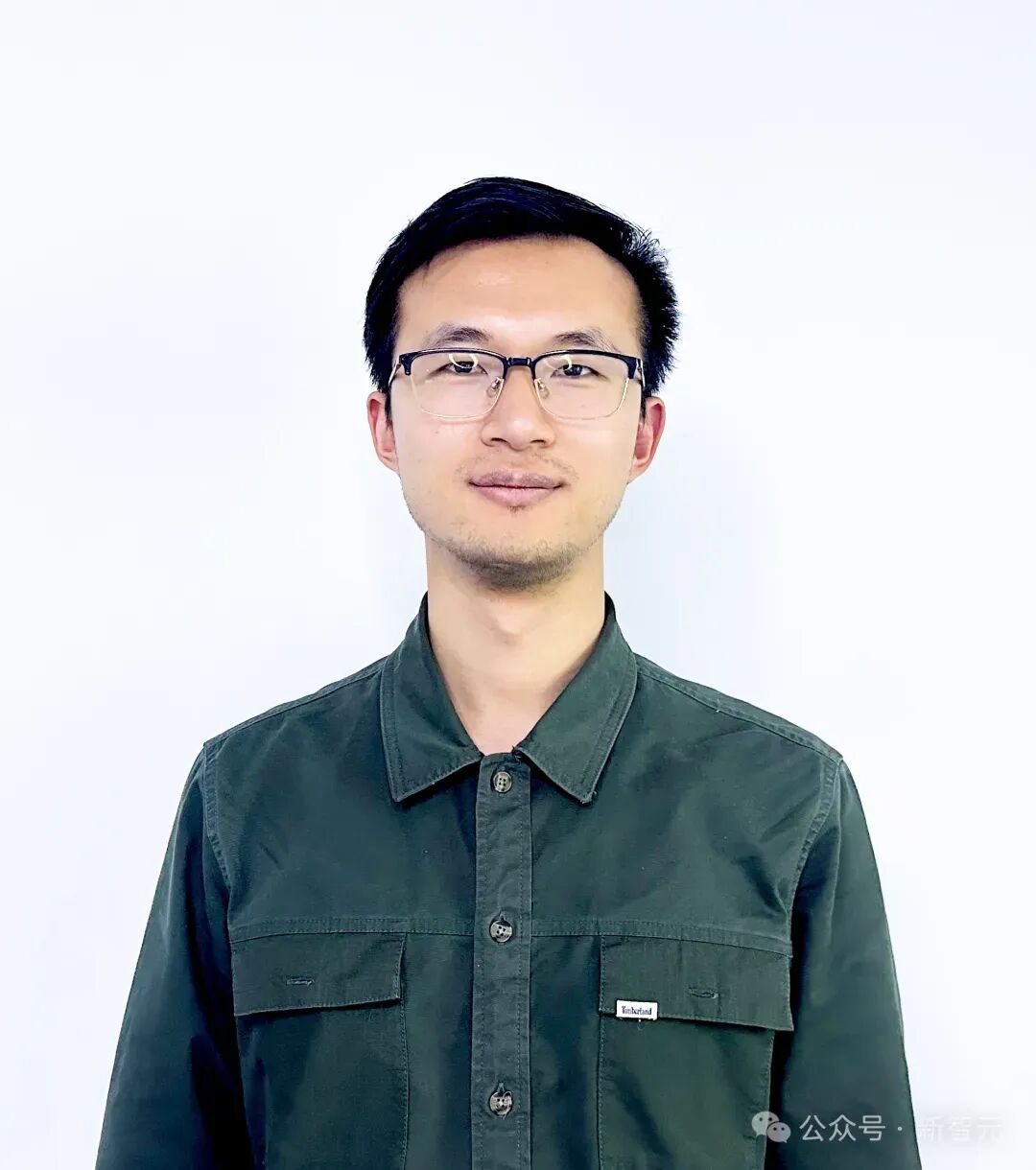
There, Gao studied under international computer vision master Professor Trevor Darrell (who mentored numerous prominent vision researchers including Yangqing Jia). During his PhD and postdoctoral work, he also collaborated deeply with top robot learning scholars Professor Sergey Levine and Professor Pieter Abbeel. Abbeel is among the originators of diffusion models — the core technology behind Sora and Stable Diffusion — and his students include Aravind Srinivas, founder of the viral AI search startup Perplexity AI, and former OpenAI co-founder John Schulman. The Spirit AI team as a whole possesses not only world-class robot motion control system development capabilities but also top-tier system-level electromechanical design expertise.
Most importantly, they bring deep experience in industrial and medical robotics, enabling what amounts to "dimensional reduction" in technical capability. In short, Spirit AI's combined hardware-software advantages have become a key factor in continuously attracting and winning capital backing.
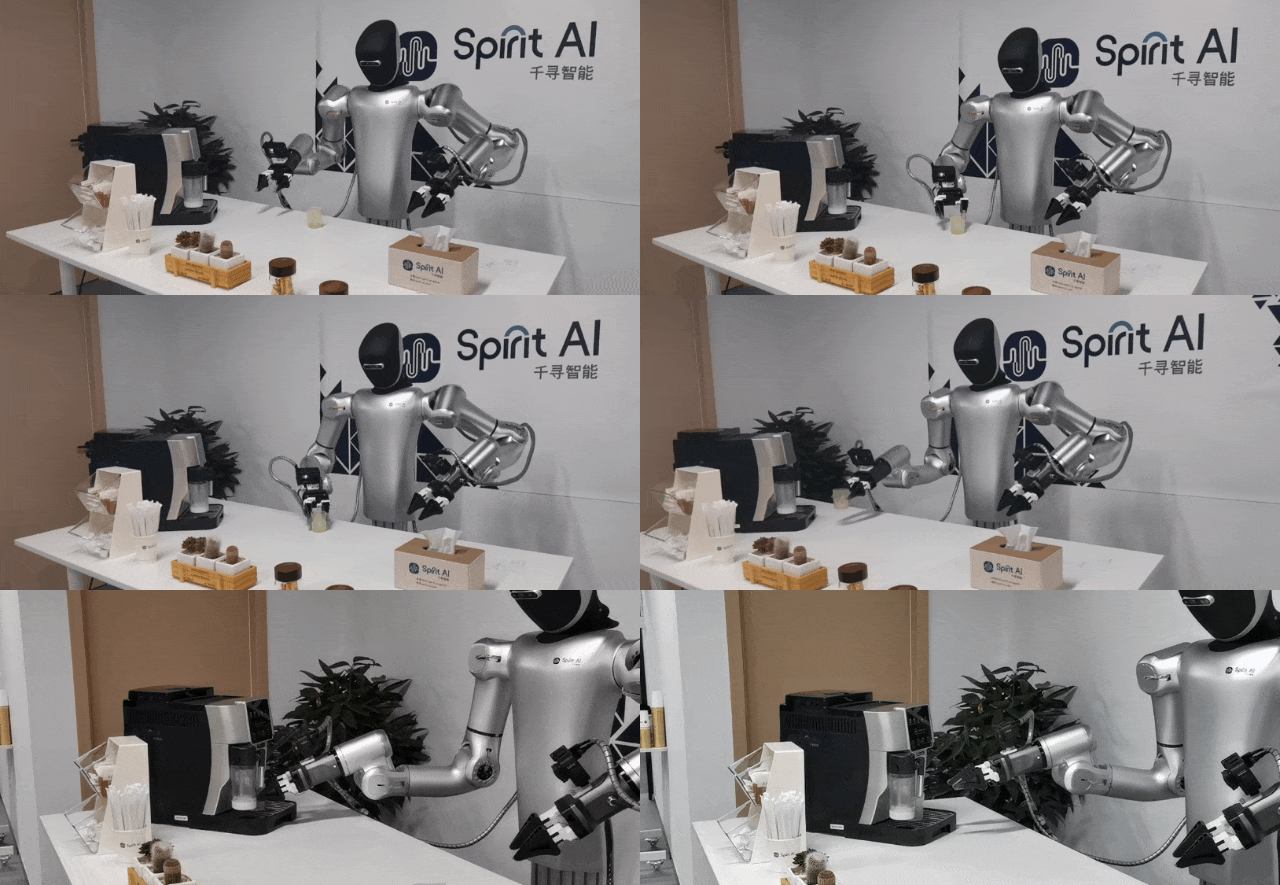
All movements are automatically generated by neural networks
200 Million in Funding, 4 Months
This angel round for Spirit AI was led by HLC, with Fortune Venture Capital and QianSheng Capital participating. Meanwhile, Shunwei Capital and Oasis Capital continued to double down as existing seed-round investors. The next inflection point for embodied intelligence is right before us. Mass deployment in commercial and household services could happen within three to five years. From industrial to service to home applications, a trillion-dollar market waiting to be opened up is unfolding before everyone's eyes. With industry-leading embodied foundation model technology and exceptional robotics R&D capabilities, Spirit AI aims to complete the commercial closed loop from technology development to product marketization with maximum efficiency. The moment when general-purpose robots become intimate companions for humanity is about to leap from science fiction into reality — the world is already entering the era of intelligent robots. The moment when robots become as accessible as the iPhone may be right around the corner!
And having watched the robot autonomously make coffee, we gain a more concrete understanding of what convinced investors to back Spirit AI. From HLC's investment team perspective, embodied intelligence represents a critical application scenario for AGI with vast market potential. In the past, robot manipulation relied heavily on manual programming workflows with numerous scenario constraints. Intelligent agents combining embodied foundation model algorithms with hardware represent a massive leap in task generalization compared to traditional robots. Such agents offer the optimal path toward spatial intelligence. And China holds a leading position in robot hardware supply chains. The team eagerly anticipates that mass production of next-generation intelligent robots is within reach, sparking a new industrial revolution. Shunwei Capital's investment team is also highly optimistic about the Spirit AI founding team's combined background and industry experience.
Similarly, an Oasis Capital investment lead noted that Spirit AI's team merges industrial understanding with cutting-edge technical accumulation — which is precisely why the company has demonstrated such rapid growth and iteration in a short period. Fortune Venture Capital's team affirmed Spirit AI's scarcity in the market — a team that simultaneously possesses robotics hardware, embodied AI algorithm capabilities, and commercialization experience, tightly integrating past robotics engineering insights with frontier academic knowledge. In just half a year, the company's embodied foundation model capabilities and rapid hardware-software iteration have made a striking impression. QianSheng Capital's team expressed strong confidence in Spirit AI. In their view, the revolutionary breakthroughs in AI foundation models have endowed robots with greater intelligence and agility, demonstrating generalization and adaptability. In humanoid robotics, the next trillion-dollar track, Spirit AI undoubtedly stands at the industry's forefront.