
🎙 [Episode Introduction]
In this new episode, we're joined by Li Bin, founder of Home Butler (好慷在家), to talk about his 20-year entrepreneurial journey and 15 years of building the company.
From "creating the 86 International Domestic Workers' Day just to give employees a holiday" to the future vision of "six-figure salaries, millions of jobs, tens of millions of households" — from the "spirit of the jianghu" as a personal philosophy to "bankruptcy drills" as a management philosophy — Li Bin, in almost plainspoken language, reveals the authentic convictions of a service-industry entrepreneur.
This is a deep conversation about trust systems, organic growth, and professional dignity.
If you're also persisting in something that doesn't look like it's succeeding quickly, come listen to Li Bin's rhythm and understand the passionate "jianghu heart" behind his approach to entrepreneurship.
👤 [Guest Bio]
Li Bin is a serial entrepreneur and the founder and chairman of Home Butler.
With a background in computer science, he founded Home Butler in 2010 with the mission to "make both those who serve and those who are served feel happy." Through a self-operated system, he built a nationwide domestic service network, driving the professionalization and standardization of the cleaning industry.
He launched the "86 Domestic Workers' Day," created a licensing system for service workers, and promoted internal management concepts like "bankruptcy drills" and the "three dimensions of organizational quality." He has long been committed to advancing the service industry as a systematic undertaking with deep social value.
🕒 [Selected Timestamps]
03:50 — "Childhood doesn't get a do-over": The impact of a five-year-old boy
08:20 — What did Li Bin learn from his first entrepreneurial failure?
13:10 — "No repeat customers, no compounding": How Li Bin redefined a "good business"
20:00 — Why will "services move from luxury to necessity"?
33:20 — Why reject the platform model and insist on a self-operated system?
34:50 — Why does "production relations determine service quality"?
40:50 — Surviving three years of pandemic losses: what kept them alive
53:00 — A company's Qingming Festival: What is a "bankruptcy drill"?
58:30 — Anxiety isn't suffering; doing wrong is suffering
01:14:26 — We're not disrupting demand, just finding new solutions
01:21:48 — Entrepreneurship isn't about winning market share, but whether you can survive ten years
📚 [References]
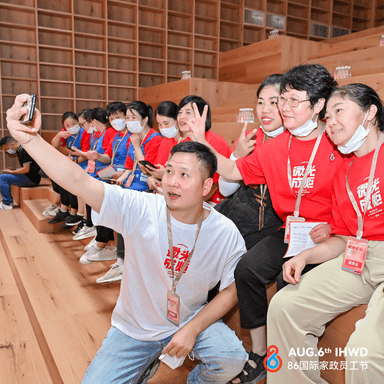
86 International Domestic Workers' Day: Founded by Home Butler, held annually on August 6. It is the first national festival in China focused on frontline service workers, aimed at enhancing social recognition and professional dignity for cleaners and similar professions. It has been held for 14 consecutive years.
Three Elements of Production Relations: Derived from Marxist economics, Li Bin uses this theory to understand management: ownership of the means of production, status of laborers, and distribution methods — in the cleaning industry, this refers to whether workers have autonomy, professional respect, and income mechanisms.
Smile Curve: A concept in industrial chain division of labor proposed by Stan Shih, founder of Acer. The highest value lies at both ends — R&D/design and brand marketing — while the middle manufacturing segment holds lower value. Li Bin uses this to reflect on how the service industry can break through low value-add.
🎵 [Music]
Jordan Critz - Beau Et Rapide (Piano)
🎤 [Production Team]
Host | Jinjian Zhang
Produced by | Oasis Capital
Editing & Production | Shengdu Studio Podcast Workshop
💬 [Join the Conversation]
Are you also working on something "slow but right" — and how do you judge whether you're still on the correct path?
Through data, feedback, intuition, or some unshakable set of values?
Feel free to leave a comment: What gives you the confidence to "keep going" on what you're persisting in?
[Scan QR code to join the listener community and participate in more discussions]
[Or add assistant on WeChat: VB20240606, note "listener community"]
Disclaimer
All investment-related content in this podcast is for exchange and sharing purposes only, for reference, and does not constitute any market prediction, judgment, or investment or consulting advice. Thank you for your appreciation of this podcast's original content! If you wish to repost or quote content from this podcast, please indicate the source. Please contact Oasis for permission before reposting.
[View episode transcript on Xiaoyuzhou]