Introducing a Book, the Kind That Flows With Vitality

Counselor Vitality (Note: "参赞" is a diplomatic title — Counselor or Counsellor. Without additional context, this appears to be a section heading or title. If this refers to a specific person or role within a particular organization, please provide more context for a more precise translation.)

In 2019, when we decided to start our fund, we asked ourselves: what is the biggest problem of our era?
We believe the greatest problem of our time is the loss of vitality brought about by information overload.
Looking back, vitality is the most core, most fundamental capability of a founder. Oasis's mission is to find the most vital entrepreneurs in this era and grow alongside them.
This era is itself fertile ground. When these lives, these entrepreneurs, flourish and their vitality blossoms, this era naturally becomes an oasis.
Thus, to nourish vitality is the vision and mission of Oasis.
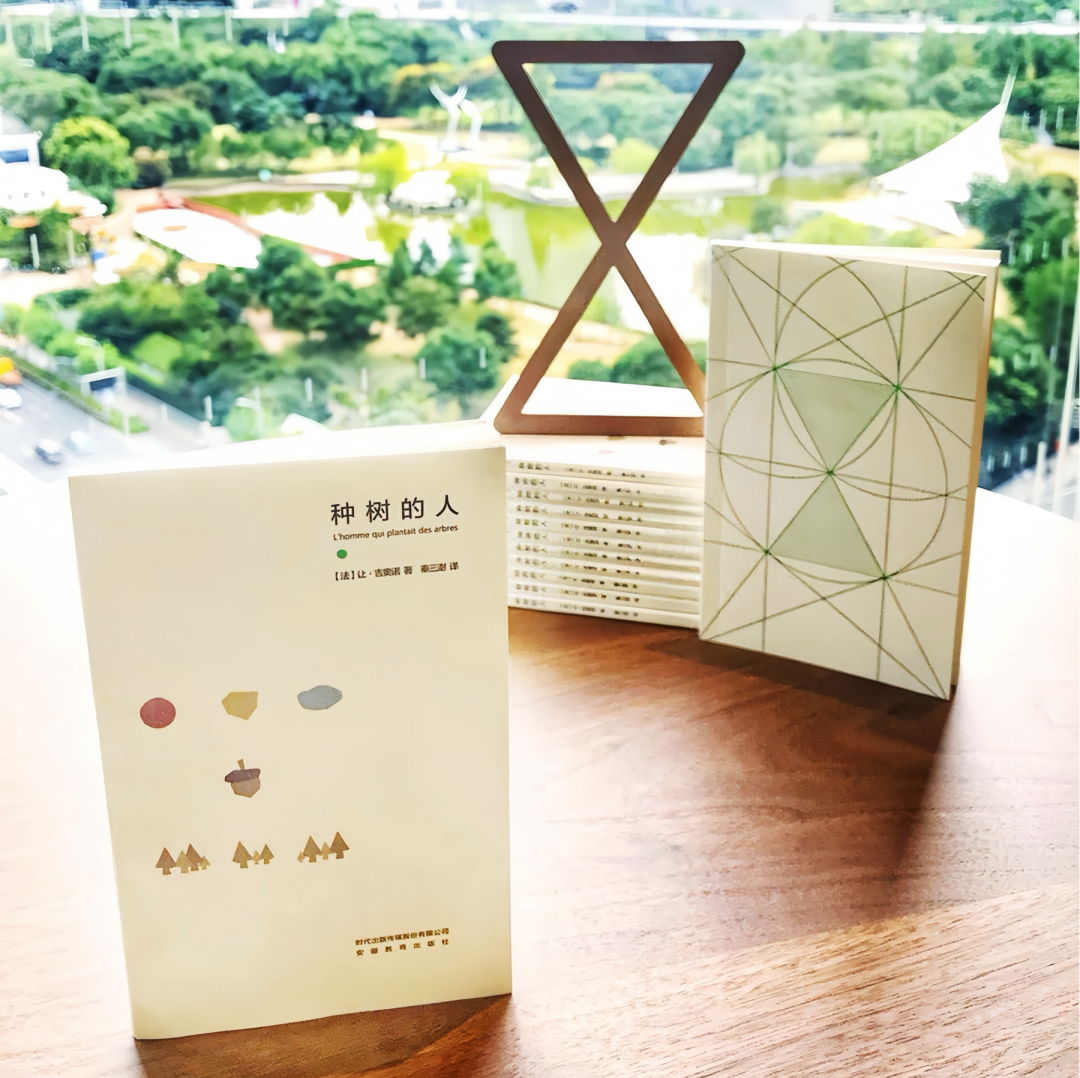
An LP recommended a small book to us when the fund was first established — The Man Who Planted Trees. Though often shelved as children's literature in many places, it is in fact a moving story about vitality.
We had it translated and brought back into the world. Over the years, it has touched many friends.
This also became the impetus for our "Nourishing Vitality" book series.
In 2022, Oasis threw itself more actively into the AI wave. The further we go, the more we feel the immensity of this wave — beyond what we had imagined.
AI is not merely a technological revolution, nor even a scientific one. It is a social revolution. It will profoundly affect each of our lives, behaviors, and thoughts.
In this process, we may traverse 300 years of human history in the next 15 years. Are we truly ready?
In this process, the greatest difficulty we see is that the further acceleration of information has caused a further loss of attention and vitality, even creating some greater rupture.
With this question, we read many books and met many people. We explored not only the future of AI, but also the future of life itself.
Then we encountered The Wisdom of Insecurity.
Alan Watts's analysis of the "natural self" and the "conscious self" saw today's problems nearly a century ago, and proposed his solution.
This summer, we reprinted this book, hoping that amid this AI wave, it might also help you return to your own way of the heart.
For The Wisdom of Insecurity, we wrote three prefaces in total.
These prefaces will be shared with you over the next three weeks as WeChat articles.
Today is the first. Enjoy.
Preface
Jinjian Zhang
The moment humanity stepped into the industrial age, it also stepped onto a path from physical to mental labor.
Machines replaced our muscles; the mind was developed and revered as never before. This was a mark of civilizational progress, yet also like a dam blocking the river of life — our inner "natural self" and "conscious self" quietly drifted apart.
We often find our bodies mechanically doing one thing while our minds have already fled elsewhere: thinking about work while eating, immersed in a phone screen while walking, the brain's ruminations buzzing like a machine that never powers down. The authentic signals of life are drowned out by the noise of thought. The natural signals our bodies send — fatigue, pleasure — are often masked by rational calculation and anxious worry. The original harmony between the "natural self" and the "conscious self" is broken.
Now this conflict has grown more severe. With the rise of artificial intelligence, large models display astonishing intelligence. People who make their living by "brainpower" are beginning to anxiety: our relied-upon "intelligence" is no longer unique. When large language models (like DeepSeek) can equally write, compose, and diagnose disease, we must ask ourselves: if even "thinking" can be replicated, what value does the "conscious self" have? Clearly, this triggers intense insecurity in the "conscious self." The more insecure it feels, the tighter it clings to control. It must grasp "the meaning of life," further suppressing the voice of the "natural self."
The river of life is completely dammed.
We are unprecedentedly anxious and divided: intoxicated by rapidly advancing technology and logic, yet dimly feeling disconnected from life. We seem to have entered an era of towering buildings yet depleted vitality.
Withdraw into ascetic practice, or press forward in anxiety?

With such questions, we searched for prophets in global history and philosophy.
Alan Watts left behind a different answer half a century ago: he did not ask us to flee the modern world, nor to make an enemy of technology. Instead, he invited us to see self and life through an entirely new lens.
He advocated returning to the most fundamental experience — returning to the flow of life.
We suffer because we have forgotten that we are inseparable from the whole world. He put it plainly: "The meaning of life is simply living." So simple, yet obscured by our minds.
We always think life is after something else, always trying to grasp something, yet thereby miss the authentic existence of the present moment. As he said, "When swimming, if you clutch at the water you will sink; only by relaxing your body and trusting the water's buoyancy can you float upon the surface. Likewise, in life, the more we struggle to control all that is uncertain, the more easily we are dragged under by fear and anxiety. Conversely, if we can trust in the carrying capacity of life's flow and dance with it, we more easily reach a place of stability."
Watts once warned: "Technology is destructive only in the hands of people who do not realize that they are one and the same process as the universe." In other words, the problem lies not in technology itself, but in the consciousness of those who use it. If we embrace the awareness of oneness, understanding our connection with all things in heaven and earth, we will not see artificial intelligence as a threat, but as part of the flow of life — to be used well, to dance with.
In this anxiety-permeated age, we have decided to reprint his The Wisdom of Insecurity.
We believe he offers precisely what this era lacks: not a prescription from the mind, but a clear spring that awakens vitality. In plain yet penetrating language, he leads us to peel away layer by layer the disguised "conscious self," to filter the signal from the noise of life, and to return to the natural, unadorned vitality within.
This path may not eliminate the changes of the era, but it can help us maintain inner integration and peace amid great transformation. When the "natural self" and the "conscious self" shake hands in reconciliation, we will discover that unchanging stability has always been hidden within the flowing present.
Life is a river.
Return to the flow of life.
Nourish vitality.
After reading this preface, if you would like to share your reflections with us, we will select 6 users from the comments with the most likes to receive a copy of The Wisdom of Insecurity.
May we all recover the natural flow of vitality, and recover the way of the heart.