Salute to Cho-yun Hsu: A Tribute to the Reflection of Life

Counselor Vitality
We are always asking: What is vitality?
It is not an outcome, but a state — never losing one's essence amid change, quietly pressing forward through the noise.
Cho-yun Hsu spent his entire life embodying vitality.
He used history as a path, not merely to look back, but to find bearings for the present. He cared about humanity, about civilization, and never stopped believing in human dignity and freedom. His warmth came from the depth of his knowledge, and from the height of his character.
This essay is both a remembrance and a tribute.
In Praise of Vitality.
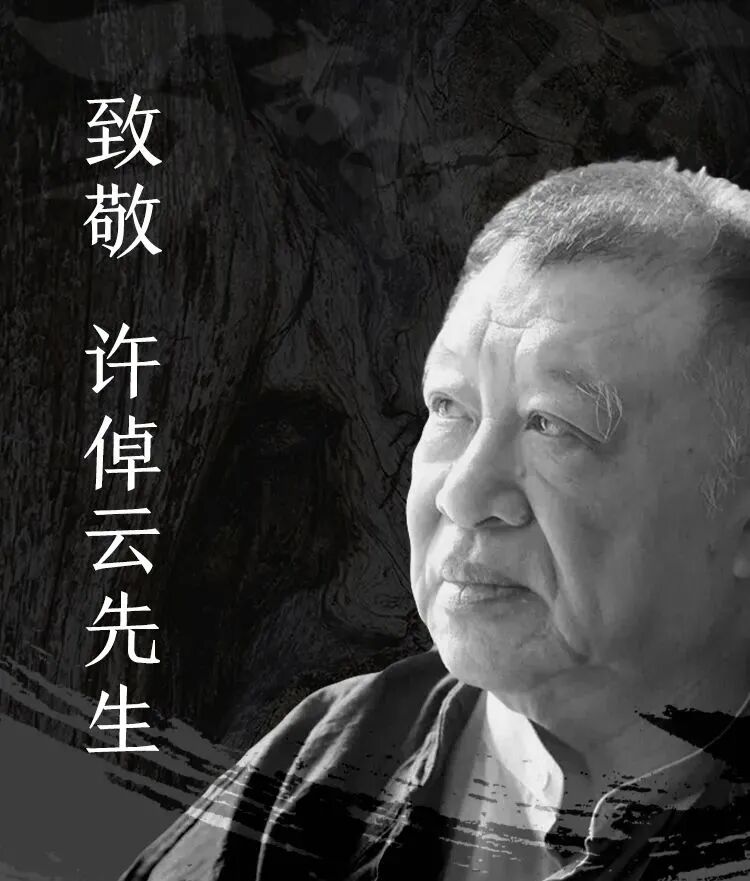
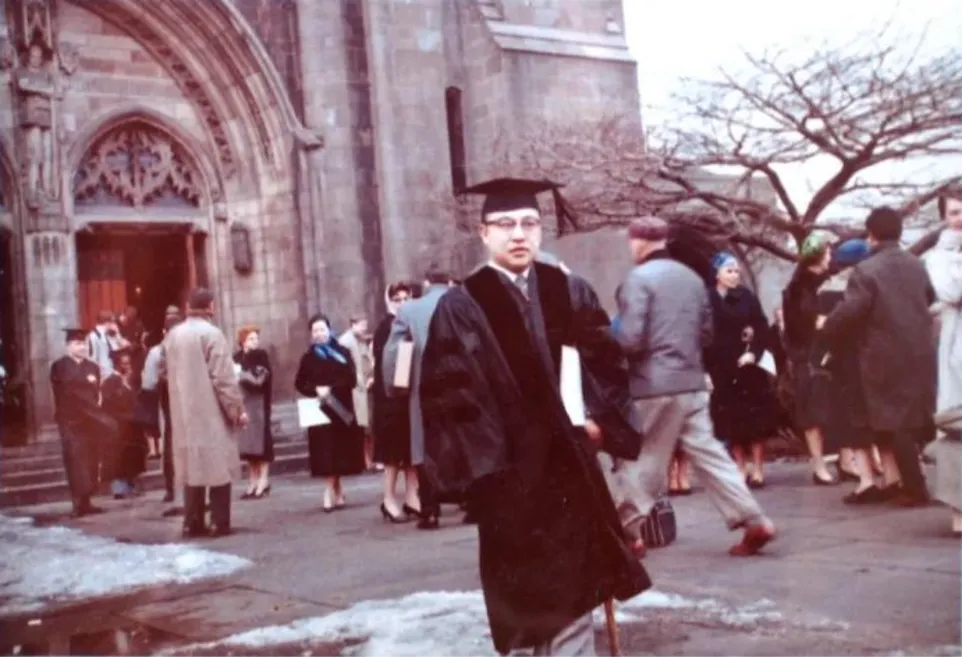
The renowned historian Cho-yun Hsu passed away in the early morning of August 4, 2025, in Pittsburgh, United States, at the age of 95.
Hsu had previously been a guest at Hundun, where he shared with the public his life experiences and his philosophy of scholarship. What follows is a recounting of his legendary life.

My path of learning was highly atypical, very non-standard, quite different from ordinary people's. I was born disabled, so I couldn't start school early. Then came the War of Resistance Against Japan, and fleeing to Taiwan — my educational journey was unlike anyone else's. I left Xiamen when I was about four. At that time, my younger brother and I only knew a few hundred Chinese characters. By around five, I could read some children's stories.
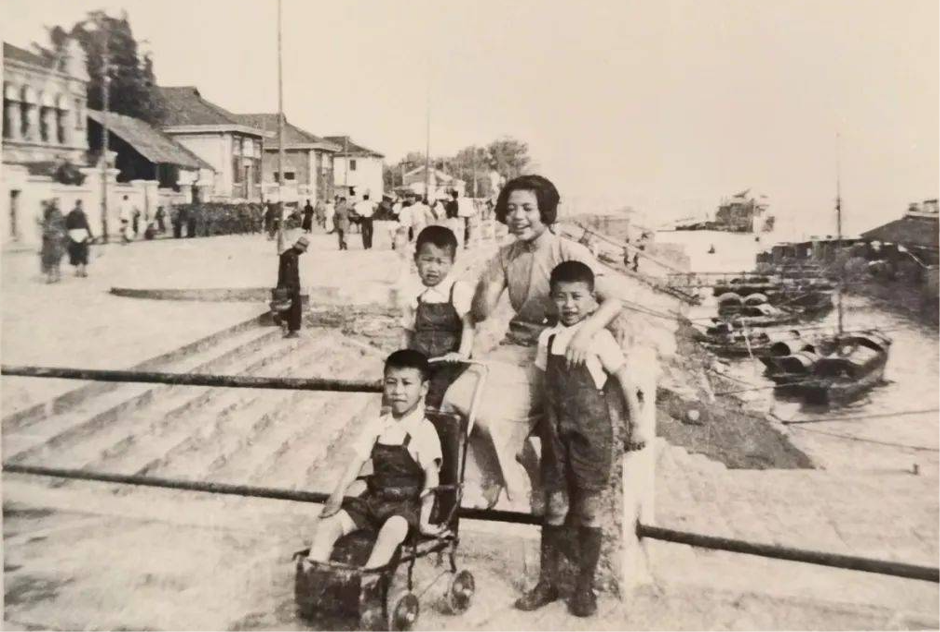
I never read those simple primers for small children. Right from the start, I read proper chapter books — children's stories translated from English or in Chinese, myths, games, legends, everything. Before long, my brother and I had jumped into the martial arts novels my uncle was reading. I remember my first wuxia novel was The Swordsmen of Wudang. By the time my brother was six or seven and starting elementary school, he already had quite a few storybooks in his head. He'd bring his homework back for me to see, and I could keep up without much trouble.

The education I received during those roughly three years in Laohekou is something I've been grateful for my entire life. I would sit on the threshing ground outside our door — northerners would know this — there's a millstone that the whole village shares, and next to it a well where mothers and young women draw water, wash clothes, rinse rice. There was always company. I'd sit on that bluestone millstone watching how people farmed, how they ate, how oxen were muzzled, how weeds were pulled, how children caught caterpillars in the rice paddies. I watched the entire agricultural process from dawn to dusk, learning life's lessons as a bystander. Though I couldn't go down and participate, I felt it all deeply.
Years later, when I wrote Han Agriculture, I used my practical rural experience to explain things: how fertilizer should be used — too much is bad, too little is bad; with excessive fertilizer, the grain and crops will wither; roots too dense are bad, they'll suffocate; plant too shallow and they'll fall over; plant too deep and the water below is too much, they won't emerge above. The cycle between nature and humanity is just. Give the crops one part attention, one part care, and they return one part harvest. The farmer's work never wastes time, never squanders labor. The Chinese farmer is the most industrious farmer. The farmer gives labor to the land, and the land returns crops to the farmer — no loss. I grow rice, you grow wheat, we trade fairly, neither exploiting the other. So people in agricultural society don't waste people, don't waste things, don't take from others. We've been practicing agriculture for far more than 5,000 years; humans began cultivating crops around 10,000 BCE. The national character we've developed is one of closeness with nature, not opposition to it. Our relationship with heaven and earth is not master and servant, but coordination. Heaven gives us wind and rain, earth provides soil, and humanity stands between them — heaven, earth, and humanity are the "three powers." This is cooperation, not contention, not exploitation.
Our 5,000-year tradition of the unity of heaven and humanity is completely different from America's impulse to conquer and overcome nature.

We spent roughly four and a half to five years in war zones, constantly preparing to flee. Throughout this time, I was always listening to news, reading newspapers, overhearing adult conversations. When word came that enemy artillery was somewhere, my father would place a small red pin on the map. Those place names were not book knowledge to me — they were barriers where our army shed blood and gave their lives to resist the enemy, mountains to rely on, rivers to depend upon. Geographic terms held life-and-death meaning for me; this was entirely different from reading geography books.
Even in ordinary conversation, you'll notice I'm very attentive to terrain, because we needed to know where the enemy wouldn't come in emergencies. Deep in the old forests was Shennongjia, forests untouched for thousands of years. When Japanese planes came, we had to hide in the riverbanks along the Han River, backs pressed against the sandy soil, digging a body-shaped pit as deep as a person with a shovel — children sitting inside would be safe, unless they strafed directly with machine guns, and so on.
This geographic education was fused with my very life. Later, reading history books — this area was Henan or Hubei, the advances and retreats in Romance of the Three Kingdoms happened countless times, Red Cliff in Hubei, the flight from Xinye, Qutang Gorge and Baidicheng in Sichuan, the remnant plank roads in Shaanxi — these events from books seemed to appear before my eyes. I was stranded below Red Cliff for nearly three months, so I have special feelings for it. I cannot forget Red Cliff, nor Xunyang River mouth, nor Poyang Lake. These experiences cannot be recreated, cannot be arranged.
In Laohekou, I read newspapers delivered once a week, and through my father's radio learned what was happening in the outside world. My father was a naval officer very familiar with Western history and geography. He explained to me the tank battles in Africa, the tank battles in Europe — German tanks, Soviet tanks, their tactics, how they used terrain. These were living things to me. When I arrived in Chongqing and saw the books in my uncle's study, it was like finding treasure.
Later, when I formally started school, I never had to study history or geography — with eyes closed I knew where each city was, what happened in each place. The specialized papers by scholars like Chen Yinke dealt with governmental structures, social hierarchies, the division and unification of states, all inseparable from personal and place names, never abandoning history and geography.
In my uncle's study, I began to read papers by professors from Lianda — Fei Xiaotong, Zhou Gengsheng, and others. The essays in newspapers mixed current affairs with theory. Reading Zhang Jiluan's editorials in Ta Kung Pao, my father would tell me how well-written they were. He would read them aloud to me, with ringing cadence — an editorial of roughly a thousand characters, and as he read, I understood. This education could not be provided by schools.

When I entered Furen Middle School in the first year, I first systematically studied English. But our English teacher, Mr. Shen, didn't teach grammar or reading — he had us make sentences. Each class, he'd randomly call on one student to supply a subject, the next to add a verb, and so a sentence would form. By the end of class, we'd have written several sentences on the blackboard, eventually a whole short story. We collaboratively created little stories or events. This is how we learned English — no memorizing grammar books, no memorizing English compositions, just sentence-making. Quite different from others' approaches. Mr. Shen was remarkable. After 1950, he was transferred to Soochow University in Suzhou as chair of the English department — promoted directly from middle school teacher to university department chair. Very impressive.
Starting in our second year, our textbook was the first-year text from St. John's University — quite a leap. After class every day, we didn't go home. We formed groups of ten to tutor each other, going through the day's homework again — those good at math explained math, those good at English explained English, those good at Chinese explained Chinese. I was often assigned to explain geography and history. The teachers said I didn't need to study geography or history, but had me read Gu Tinglin's (that is, Gu Yanwu's) Daily Knowledge. I found it quite interesting, and it greatly helped my later studies.

At National Taiwan University, compared to students with ordinary middle school backgrounds, I became quite unusual. My main characteristic was being scattered and eclectic — teachers never knew what I'd come up with, so they started paying attention to me. Every teacher took special notice of me, letting me do work I sought out for myself. But they also instructed me that I must read specialized papers — every paper from the Institute of History and Philology, every issue of every journal, Yenching Journal, Tsinghua Journal, The Eastern Miscellany. Every day I'd randomly pick up a book to read in the bathroom.
Later, Mr. Dong (Dong Zuobin, 1895–1963, oracle bone scholar, ancient historian, one of the "Four Masters of Oracle Bones") taught me Shang and Zhou history, taught me chronology. Mr. Dong asked whether I wanted to learn characters or chronology. I said chronology was more important than learning oracle bones — oracle bones are just one era, Shang and Zhou, but chronology I could pursue to the end. And chronology required understanding the relationships among celestial bodies. Mr. Dong couldn't teach this himself, so he invited Gao Pingzi, director of the Purple Mountain Observatory, to teach me the positions of stars. Mr. Gao arranged the books, benches, inkstones, and electric lamp in his room, using the lamp to represent the sun, and explained the distances of the stars to me.
Rui Yifu (formerly professor of history and archaeology/anthropology at National Taiwan University) studied anthropology and ethnology. He approached the Spring and Autumn Annals through ethnic concepts, having me copy events from the Zuo Zhuan onto cards one by one. Thus I read through the entire Zuo Zhuan several times. Mr. Rui taught me rituals and customs. When I went to Chicago for my doctorate, I used those more than two thousand name cards from the Zuo Zhuan as my capital, arranging every person who appeared in it, tracking the rises and falls of their status, the periods and reasons for these changes, the cycles of rise and fall — all extra assignments.
Li Zongtong (formerly professor of history at National Taiwan University) had studied in France — ancient customs, Greek city-state history, and so on. He used city-state history to teach how to analyze the relationships between rituals, beliefs, and the city-state itself. For me, this was not only studying ethnology but also studying Greek history, and so forth.

When I became an assistant at the Institute of History and Philology, they required that in the first year we only read, not write. Chen Pan (then a researcher at the Institute) was the group leader. He said he knew I'd mastered the Zuo Zhuan; I said I'd only read it, not mastered it. He said he knew the Four Books and Five Classics were nothing to me; I said I'd only read them. He said he'd give me the most difficult text — Sun Yirang's Orthodox Meaning of the Rites of Zhou. For every sentence, Sun provided annotations with matching citations, using rituals and ceremonial law as the thread, incorporating the entire corpus of pre-Qin classics, including oracle bone inscriptions, bronze inscriptions, transmitted texts, later scholars' explanations — everything. As I read, I had to take a matchstick and an ink pad, reading each sentence and marking it. If I couldn't mark it, it meant I hadn't understood it. Mr. Chen would check every week. Reading Orthodox Meaning of the Rites of Zhou from beginning to end took me two full semesters.
Lao Gan (style name Zhenyi, renowned historian, formerly professor at National Taiwan University) assigned me work on the Records of the Grand Historian, Book of Han, Book of the Later Han, and Records of the Three Kingdoms — the first four histories, reading them together to find their differences and similarities. In terms of studying ancient history, the help I received was what ordinary students could not obtain; even doctoral students' coursework would not be so comprehensive.
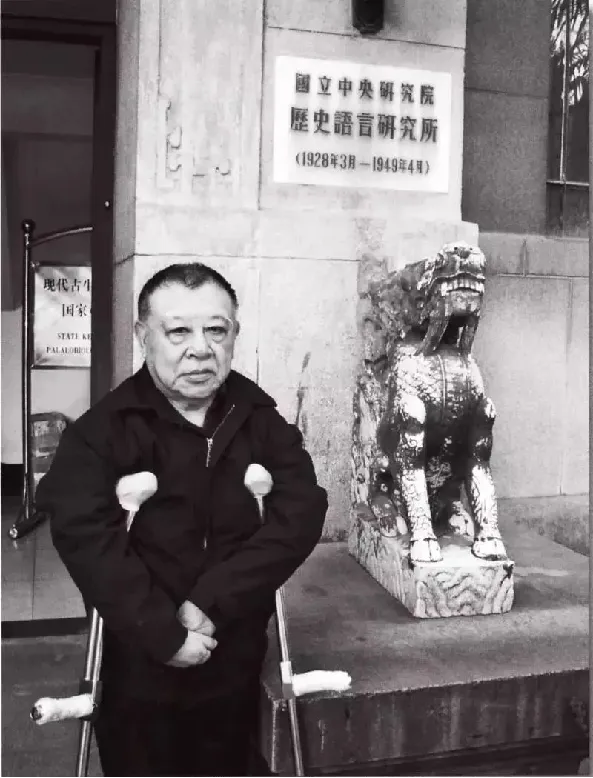

In the United States, I studied at the Oriental Institute. Because Americans had also collected more than 200 oracle bone fragments, and they had the complete Chinese Siku Quanshu, I immersed myself in it.
I read Mesopotamian history, Egyptian history, which gave me the concept of comparative culture. Mesopotamia and Egypt had different lifestyles, different developmental processes, different ethnic backgrounds. Through comparison, my experience was that the paths their histories took differed from China's — different mountains and rivers. Their mountains, rivers, deserts, and seas were all different from ours, creating enormous differences. People's self-understandings differed, their self-expectations differed, their classifications of nature differed.
Mesopotamia was dualistic: dry and wet, farmland and desert, city-state and war, mountain forest and plain, dry season and wet season. So Mesopotamia was a dual system, later realized in Persia as duality.
Egypt was unitary: one Nile valley, the same environment from beginning to end, all of Egypt's cultural history occurring in this valley, so it was unitary, simple. But within this unitary simplicity, each small tribe had its own interpretation. They took an animal from the river, a beast from the mountains, as their tribe's protective deity, so it became many protective deities within a large circle, with above them the pharaoh's primal spirit, the sun.
Later, I "encountered" Max Weber. No Chinese scholar studying in the West could escape Weber's circle. Weber compiled five books, each designed to contrast with the previous one. The Protestant ethic was just a small part of the first book. Below that were Protestant versus Catholic, Catholic versus Greco-Roman, monotheism versus polytheism, Buddhism versus Islam, Zoroastrianism versus Judaism, and finally Chinese Confucianism versus India. Scholars in literature and history probably only remember Weber's Protestant ethic, because they haven't done comparative research.
At the Oriental Institute, I learned to compare. My room had two things: on one side was one exhibition room, on the other side another exhibition room. Step across the threshold and you're comparing. Different legends, different human statuses, different state structures, different foods — how could you not compare? Europe had no agriculture; it was all borrowed. It was a conquerors' killing field, a battlefield of mutual conflict, a place for going out to plunder others, a port for Vikings, and so on.
At other schools, ancient history departments might have at most one professor. We had many. This environment and training made it impossible for me to ever abandon comparison. So after Weber, I immediately jumped to Jaspers (1883–1969, also translated as Karl Jaspers, German existentialist philosopher), after Jaspers to Aelian (also known as Claudius Aelianus, 175–235, Greek writer and rhetoric teacher of the Roman period, orator), after Aelian to the French Annales school of history — politics is the shortest, least interesting; economy and society are longer; longest is geography; longer still is the cosmos. This is the length of time, the thread of change.
So my ancient history and modern world concepts have five or six different comparative studies, so I don't need to bother with Toynbee (1889–1975, renowned British historian, once praised as "the greatest historian of modern times"), don't need to bother with the fall of Rome in Western history — I have my own world.

My family lived in Wuxi for several hundred years; I too was born in Wuxi. Wuxi had a group of intellectuals who, from the Ming dynasty onward, upheld the right path in human affairs, hoping to help the court, scholars, and ordinary people walk the right path. Several of these leaders were executed by the court; one leader drowned himself in a pool resisting the court's injustice. These people exchanged their lives for the principles of being human that they held in their hearts. This tradition was passed down in Wuxi.
So those who studied in Wuxi, who grew up in Wuxi — nearly every scholarly family remembered two characters: Donglin. These two characters were principles that must be followed in living, the right path of being human: no deceit, no fraud, no oppression of others, no exploitation of others, no bullying of others.

Walking the right path also has principles. For Confucians, two things: loyalty and reciprocity.
Loyalty (zhong) — following the principles of being human that you have set in your own heart, doing your utmost. If you carve an artwork, you can't stop halfway or throw it away — you'll never achieve it. Your heart is also an artwork, through constant refinement, constant protection, making the heart bright and upright. The heart must be true not only to oneself, but more importantly, treating others with that same truthfulness. This loyalty is not loyalty to a master, nor to others, but doing one's utmost.
Second, think of others. I don't want to be bullied, so I don't bully others. I want others to treat me well, so I treat others well. This is reciprocity (shu). Forgiveness uses a broad measure for how I get along with others — a broad measure to forgive others' mistakes, a strict measure to understand others by putting myself in their place. This is the basic principle of being human.
Our family had another saying: "Whether you're right or wrong, if in word or deed you've hurt someone, you must say sorry to them — I caused you harm."
Loyalty and reciprocity together constitute benevolence (ren) — the way two people get along. Love is the offering of heart to heart, holding out your heart and placing it in the other's hand. Only offering heart is love; benevolence and love are connected. This love is not limited to romantic love; it is human feeling between people, mutual love and mutual respect.
This principle is the same as the Donglin principle I just spoke of: one must walk the right path in being human. It's not only one-on-one relationships, but also relationships with the masses. In the Donglin shrine hung a couplet: "The sounds of wind, rain, and reading — every sound enters the ear; affairs of family, country, and the world — every affair concerns the heart." You must care not only about your own affairs, not only family affairs, but affairs of the world. The sounds of wind, rain, and reading — regardless of weather, reading is a path to temper yourself, cultivate yourself, guide yourself.

In 1932, my father was working in Xiamen. I was just two then. A great plague struck Wuxi, countless died — my uncles, aunts, uncle-in-law, older brother all passed away. The burdens of three or four families fell on his shoulders alone.
At that time, the Japanese repeatedly violated China, step by step forcing us toward resistance. We were the weak ones; we knew we would lose, but we could not lose. For my father, a military man from the navy, what was his state of mind? National humiliation and family grief arrived together. Only recently did we learn that my father had gone to a Buddhist temple and left four characters: "open heart, pleasant spirit" (xin kuang shen yi).
These four characters are not uncommon. The old monk at the temple carved them into the cliff face. Recently, friends in Xiamen photographed them and sent them to me. I pondered my father's state of mind. Perhaps the old monk had advised him, for in that environment he gained the insight that though sorrowful, he must not let sorrow overwhelm him. Sorrow must be kept in the heart; life must go on. Several family members were on his back — if he didn't bear this burden, who would? And having borne it, he couldn't wear a frown all day. He had to expand his heart and mind, making them large enough to bear both sorrow and joy, to withstand hardship and hope for improvement. With a broad heart, one becomes pleasant, becomes magnanimous.
I feel these four characters suddenly arriving before me also seem to be an arrangement by my father's spirit in heaven. My mood is not positive, not comfortable. Old age doesn't matter; paralysis can't be helped. When I see the various things in the world, it pains me — natural disasters and man-made calamities, conflicts between nations, disputes between peoples, fraud between individuals — seeing this truly discomforts me. But thinking of these four characters, I feel my father is teaching me, that in the unseen world he is guiding my steps. The world is so full of causes for worry and bitterness, but you cannot let go, abandon, or leave. Since you cannot leave, you must be a good person, do your utmost, and not be overwhelmed by sorrow and bitterness.
Right when I was in sorrow and bitterness, these four characters arrived at exactly the right time. Seeing my father's writing of these four characters, the brushstrokes are vigorous and forceful, as if all his strength were in them. The strokes and hooks of the character "yi" (pleasant) are indeed enormous encouragement to me, and also an instruction, helping me leave sorrow and bitterness behind.

I want to tell you something: besides people, there are many things in the world you can appreciate. Right now I'm facing the window, and the colors and light of the scene outside bring joy. The crisp autumn air, leaves falling — this is not the end, but a beginning. The fruits on the trees, the seeds growing, all are nurturing; come next spring they will bloom. Year after year, how beautiful life is, how lovely the world. This costs no effort — open your eyes and you see it, your mood opens up. There are too many pleasant things around, too many things to be happy about.
When people are sad, suffering, think of this: "Walk to where water ends, sit and watch clouds rise." Water exhausted, path ended — wisps of white clouds rising thread by thread in the blue sky, how delightful. When you've reached a dead end, you discover another world. Nature connects with you, consoles you, tells you to be at peace, tells you to be happy. So seeking happiness, seeking scenes to emulate — not only in people, but in nature too.
What I often like to say is that Su Shi, below Red Cliff, broke away from his companions in the boat, suddenly realizing the impermanence of the universe, yet within impermanence thinking of permanence. His mood merged with nature, with the universe. I hope friends will open their eyes and open their hearts — you can see good people, good deeds, good skies, good lands, good sunshine, good breezes anytime, anywhere, helping wash away your troubles, helping smooth your wounds. You see the vast white snow, and think of the new life nurturing beneath it; think of the full courtyard of blossoms when spring comes. You feel this stage of white snow is cold, yet it has its beauty.

Although our parents brought us into this world, living depends on ourselves. You must be worthy of this journey through the world. When you leave, you can say thank you — I can finally rest, hoping that in this life I didn't waste others, nor did I waste myself. What I want to emphasize is "don't waste yourself."
In life, you can have a career, can have your own happiness, but most importantly, "you are a human being" — this is the most crucial thing. Among all people, being human includes: how to treat others kindly; how to make yourself a positive number among people, not a negative one; how to treat yourself well, so that your life is lived positively, not negatively.
Recently, a disaster occurred in Seoul, South Korea — more than 150 young people died in a stampede, all because of a nonsensical Halloween. Everyone only remembers to look West, celebrating whatever holidays they celebrate. For those who were trampled, it wasn't worth it.
We come into this world to play roles worthy of our own hearts, to have opportunities to develop our abilities, to pursue our ideals — this is the best thing.
But this ideal and career must fit your abilities just right. Overestimating or underestimating yourself is unrealistic.
What we must do is our utmost, as ourselves.